作者: admin

  • Tearful goodbyes as Japan returns pandas to China amid worsening ties

    Tearful goodbyes as Japan returns pandas to China amid worsening ties

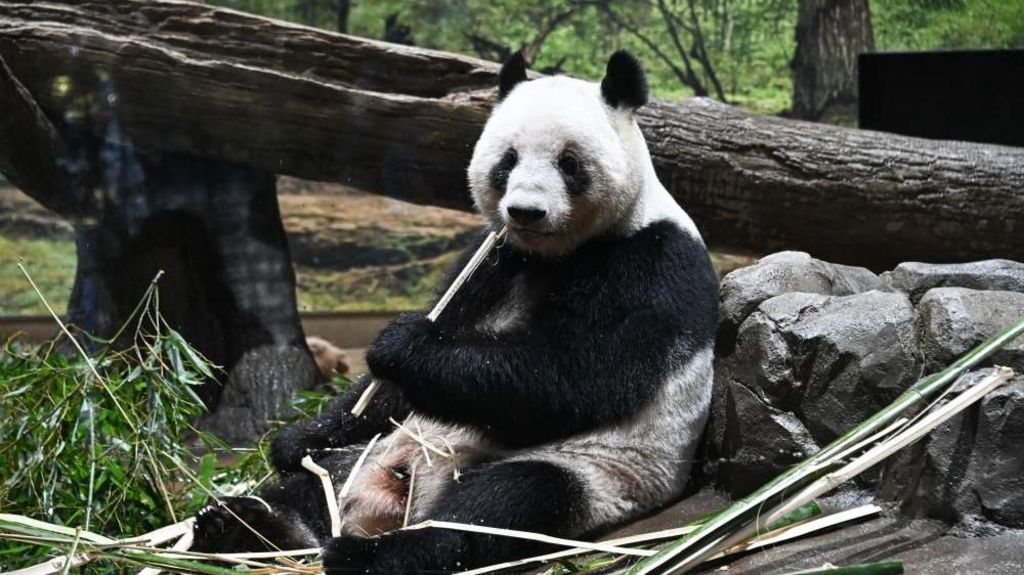
    Thousands of Japanese citizens formed emotional queues at Tokyo’s Ueno Zoo on Sunday, waiting up to three-and-a-half hours for a final glimpse of the nation’s last remaining giant pandas. The twin cubs Xiao Xiao and Lei Lei are scheduled to return to China on Tuesday, marking the first time since 1972 that Japan will be without any pandas—a symbolic milestone coinciding with deteriorating Sino-Japanese relations.

    The departure occurs against a backdrop of heightened diplomatic tensions following Japanese Prime Minister Sanae Takaichi’s recent statements regarding potential military involvement if China attacks Taiwan. Beijing, which considers Taiwan part of its territory, has responded with increasingly hostile rhetoric and recently tightened restrictions on rare earth exports to Japan.

    China has employed panda diplomacy since 1949, using the beloved animals as instruments of soft power and goodwill gestures toward both allies and competitors. Under this program, China retains ownership of all pandas loaned abroad, including those born overseas, while host countries pay approximately $1 million annually per pair. The current situation illustrates how these cultural exchanges intersect with geopolitical realities.

    Tokyo’s metropolitan government reported overwhelming public interest, with approximately 108,000 people competing for just 4,400 available viewing slots. Visitors expressed profound emotional connections to the bears, with one mother telling media she hoped the experience would become a cherished memory for her son. Another visitor reflected on the joy of witnessing the pandas’ growth since their birth in 2021 to parents Shin Shin and Ri Ri, both on loan for breeding research.

    Historically, panda loans have frequently coincided with major trade agreements, as seen in 2011 when China loaned pandas to Edinburgh Zoo during negotiations involving salmon, Land Rovers, and energy technology. While standard loan agreements typically span 10 years with possible extensions, the current diplomatic climate casts uncertainty on future panda exchanges between China and Japan.

  • Australia’s Day: Local lad Michael Dickson on the verge of history after the Seahawks qualify for the Super Bowl

    Australia’s Day: Local lad Michael Dickson on the verge of history after the Seahawks qualify for the Super Bowl

    Australian punter Michael Dickson stands on the precipice of NFL immortality after helping the Seattle Seahawks secure a dramatic 31-27 victory over the Los Angeles Rams in Sunday’s NFC Championship game. The triumph propels the Seahawks into the Super Bowl against the New England Patriots, where Dickson could become Australia’s second consecutive Super Bowl champion following Jordan Mailata’s achievement last year.

    The highest-paid punter in the NFL following his four-year, $16.2 million contract signed in June, Dickson demonstrated his value beyond mere financial metrics. His five punts for 226 yards included a crucial second-half kick that forced a Rams error directly resulting in a Seahawks touchdown. While quarterback Sam Darnold delivered an outstanding performance with 346 passing yards and three touchdowns, and receiver Jaxon Smith-Njigba dominated with 10 catches for 153 yards, Dickson’s specialized contributions proved equally vital to the victory.

    The championship matchup nearly featured two Australian punters, but Jeremy Crawshaw’s Denver Broncos fell 10-7 to the Patriots in a snow-affected AFC Championship game marked by controversial coaching decisions and missed scoring opportunities. This outcome denied what would have been a guaranteed Australian winner in the upcoming Super Bowl.

    Dickson now aims to emulate countryman Jordan Mailata, who became the first Australian to both play and win in a Super Bowl when his Philadelphia Eagles claimed victory last year. Several other Australians have participated in the championship event, including Jesse Williams who earned a ring with the Seahawks despite not playing.

    The upcoming Super Bowl matchup (February 9 Australian time) represents a rematch of one of the most memorable championships in NFL history, when the Patriots defeated the Seahawks eleven years ago on a last-minute interception.

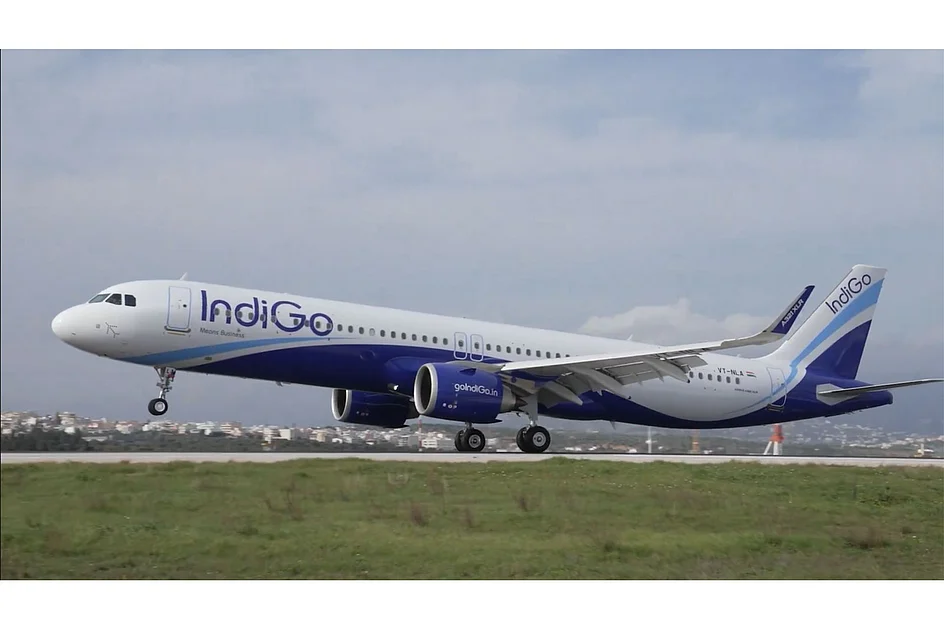
  • India flights: Indigo cancels, changes international flights due to tensions in Iran

    India flights: Indigo cancels, changes international flights due to tensions in Iran

    Amid escalating geopolitical tensions surrounding Iran, India’s largest carrier IndiGo has implemented significant operational changes to its international flight network. The airline announced multiple cancellations and strategic rerouting measures on January 25-26, 2026, prioritizing passenger safety above all operational considerations.

    Effective immediately, IndiGo cancelled all January 25 flights operating between Delhi and Tbilisi, plus Mumbai-Almaty routes and their return journeys. The airline further disclosed that flights scheduled for January 26 serving Tbilisi, Almaty, Baku, and Tashkent may incorporate unscheduled technical stops in Doha for refueling purposes, potentially extending travel durations significantly.

    Through official communications on social media platform X, IndiGo characterized these adjustments as ‘proactive changes’ implemented under their ‘continued focus on safety.’ The airline advised affected passengers to consistently monitor real-time flight status updates through official channels and explore alternative travel arrangements via their website.

    The aviation disruptions coincide with heightened military alertness in the Persian Gulf region. United States President Donald Trump confirmed close monitoring of Iranian naval movements, describing a ‘massive fleet’ deployment toward Gulf waters. Speaking aboard Air Force One following the World Economic Forum in Davos, Trump emphasized the naval presence served as a deterrent while acknowledging hopes for peaceful resolution.

    These aviation safety measures unfold against a complex backdrop of regional instability. Recent protests in Iran, initially triggered by economic grievances including currency devaluation and rising living costs, have evolved into broader anti-government demonstrations. According to HRANA reports referenced by Al Jazeera, approximately 9,049 fatalities remain under investigation alongside previously confirmed casualties. The international community, including President Trump, has condemned governmental responses to civil unrest, with explicit threats of potential intervention in support of protesters.

    IndiGo’s operational adjustments demonstrate how regional geopolitical tensions directly impact global aviation logistics, forcing airlines to balance schedule reliability with uncompromising safety protocols during periods of elevated risk.

  • India to slash tariffs on cars to 40% in trade deal with EU, Reuters report

    India to slash tariffs on cars to 40% in trade deal with EU, Reuters report

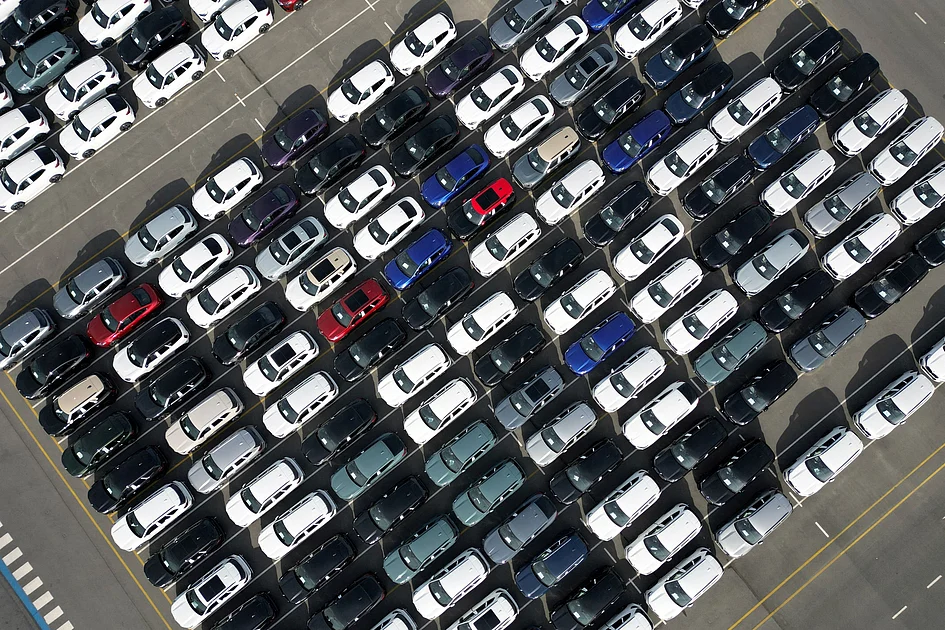
    In a historic move poised to reshape global trade dynamics, India has agreed to dramatically reduce import tariffs on European Union automobiles as part of a comprehensive free trade agreement expected to be finalized imminently. According to sources familiar with the negotiations, New Delhi will slash levies on EU-sourced vehicles from their current peak of 110% down to 40%, marking the most significant opening of India’s protected automotive market in decades.

    The breakthrough agreement, potentially announced as early as Tuesday, will immediately benefit premium European automakers including Volkswagen, Mercedes-Benz, and BMW. The reduced tariffs will apply to combustion-engine vehicles with an import value exceeding €15,000 ($17,739), with approximately 200,000 units annually qualifying under the new framework. The duty reduction represents a phased approach, with further decreases to 10% planned over subsequent years.

    This monumental pact, informally dubbed the ‘Mother Of All Deals’ by negotiators, extends beyond automotive trade. The agreement is expected to substantially boost bilateral commerce between the world’s largest trading bloc and one of its fastest-growing economies. Indian export sectors previously hampered by recent 50% U.S. tariffs—particularly textiles and jewelry—stand to gain significant market access to European consumers.

    Notably, battery electric vehicles (EVs) will be excluded from the tariff reductions for an initial five-year period. This protective measure aims to safeguard investments by domestic manufacturers Mahindra & Mahindra and Tata Motors in India’s emerging electric vehicle sector before eventually aligning with the reduced duty structure.

    The tariff reduction promises to transform market dynamics in India’s 4.4-million-unit automotive market, currently dominated by Japan’s Suzuki and domestic brands controlling two-thirds of sales. European manufacturers presently hold less than 4% market share, constrained by prohibitive import costs. The new framework will enable automakers to introduce broader product portfolios at competitive prices while testing consumer demand before committing to expanded local manufacturing.

    With India’s automotive market projected to reach 6 million annual units by 2030, several European manufacturers are already preparing increased investment. Renault is implementing a renewed India strategy seeking growth beyond Europe, while Volkswagen Group is finalizing additional investment plans through its Skoda brand. The agreement signifies India’s strategic pivot toward deeper economic integration with Western markets amid shifting global trade alliances.

  • Smart money pivots to Dubai offices, logistics, retail as investors recalibrate

    Smart money pivots to Dubai offices, logistics, retail as investors recalibrate

    Dubai’s commercial property sector is experiencing a strategic repositioning as sophisticated investors recalibrate their portfolios toward income-generating assets with strong fundamentals. Market data reveals a pronounced pivot toward off-plan offices, logistics hubs, and community retail centers, signaling a departure from speculative residential investments toward stable, long-term returns.

    The emirate’s real estate market recorded transactions exceeding Dh760 billion in 2025, with commercial and industrial assets contributing an estimated Dh90-100 billion according to Dubai Land Department statistics. This substantial commercial segment growth reflects deepening institutional confidence in Dubai’s non-residential property market.

    Office market dynamics show particular strength in prime locations. CBRE reports Grade A offices in central business districts like DIFC and Business Bay achieved high single-digit rental growth in 2025, driven by constrained new supply. Savills projects this supply limitation will persist through 2027, creating competitive conditions for premium space. Commercial lease registrations have increased year-on-year, with strongest demand for modern, energy-efficient buildings featuring flexible layouts and premium amenities.

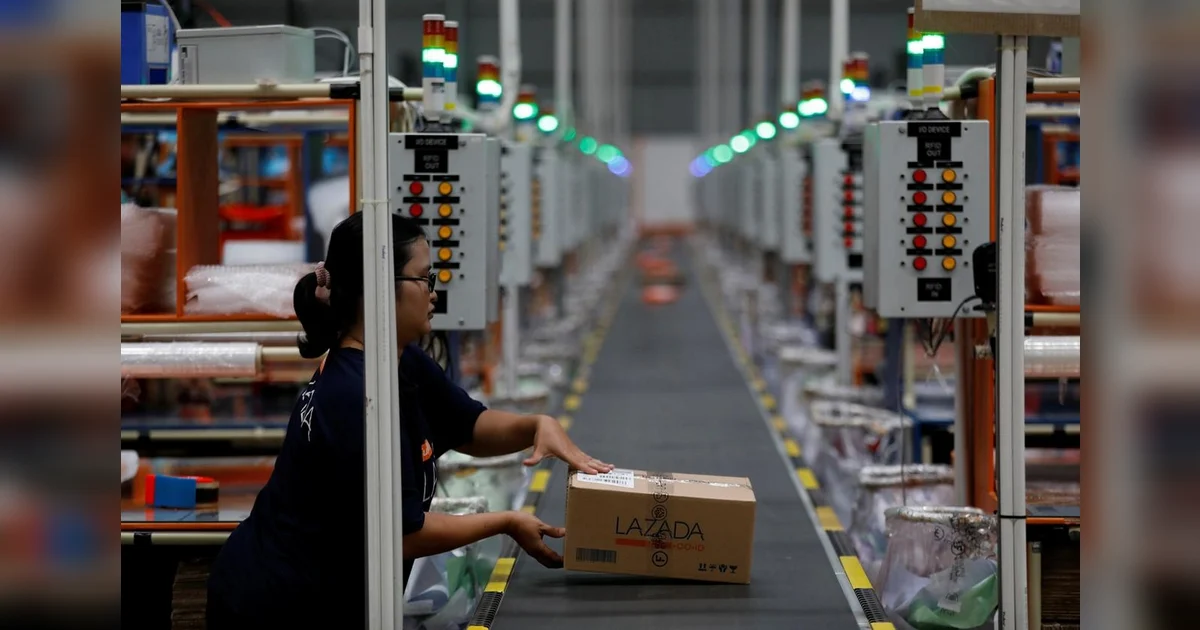
    Logistics real estate demonstrates even more vigorous performance, with JLL reporting prime warehouse rents surging over 15% annually in key submarkets. This growth stems from Dubai’s expanding role as a global trade hub, supported by Jebel Ali Port, Dubai South logistics corridor, and growing air cargo volumes. Supply chain diversification and e-commerce expansion are structurally boosting demand for modern distribution facilities across the Gulf region.

    Retail investment patterns are evolving toward neighborhood centers embedded within residential communities rather than destination malls. Knight Frank data indicates these community assets deliver stable yields supported by daily consumer spending and population-driven footfall, making them less vulnerable to tourism fluctuations.

    Geographically, investment remains concentrated in established commercial districts including Business Bay, Jumeirah Lake Towers, and Barsha Heights, while emerging residential corridors like Jumeirah Village Circle and Dubai South are witnessing their first purpose-built commercial developments.

    Investor profiles are becoming increasingly segmented. International capital favors stabilized office and retail assets offering predictable income streams, while domestic investors are pursuing development-led strategies in the industrial sector where supply remains constrained.

    Market analysts emphasize this shift toward quality, location, and long-term performance indicates market maturation. With population growth exceeding 3.7 million, infrastructure expansion, and robust trade activity, Dubai’s commercial real estate fundamentals remain strong heading into 2026.

  • Geopolitics overshadows mood at global financial markets

    Geopolitics overshadows mood at global financial markets

    Global financial markets are commencing 2026 under the substantial weight of geopolitical tensions, creating an investment landscape where political narratives increasingly override fundamental economic indicators. This paradigm shift represents a fundamental transformation in market behavior, with political risk premiums expanding across asset classes at unprecedented velocity and scale.

    The current environment reflects a convergence of concerning developments: softening US economic metrics, ongoing earnings season uncertainties, and escalating geopolitical flashpoints. These include renewed discussions regarding US-Greenland acquisition ambitions, Middle Eastern regime instability following Venezuela’s political transition, and persistent Russia-Ukraine tensions. This complex backdrop has created a market exceptionally sensitive to headline-driven volatility rather than traditional valuation metrics.

    Market technicals reveal extraordinary conditions. Gold maintains historically elevated positions above $4,500, silver demonstrates exponential price structures approaching triple-digit territory, while crude oil rebounds toward $60 amid heightened hedging demand. US equity indices test record highs despite visible momentum deterioration, with the Dow approaching 50,000, Nasdaq near 26,300, and S&P 500 around 7,000. Even the US dollar defies rate-cut expectations through sustained safe-haven demand.

    Razan Hilal, Market Analyst and CMT at FOREX.com, observes: ‘These conditions reveal the limitations of conventional forecasting. When overnight sentiment shifts can reverse market directions, disciplined exposure management and scenario planning surpass directional predictions in importance.’

    This transformation manifests across investment vehicles. Precious metals, traditional geopolitical hedges, exhibit increasingly volatile trajectories. Silver’s dual nature as monetary and industrial asset attracts particular attention, though exponential advances carry significant correction risks. Crude oil’s price strength appears driven more by temporary supply concerns than structural narrative changes.

    Equity markets display growing fragility beneath surface-level strength. Technology-heavy benchmarks show concerning divergences as capital rotates toward defensive positions. Market participants increasingly view stability above technical thresholds as conditional rather than guaranteed.

    Hilal emphasizes: ‘This environment demands investment restraint. Successful navigation requires renewed focus on capital preservation fundamentals: defined invalidation levels, multi-timeframe analysis, and volatility-absorbing hedging strategies. Flexibility in exposure management becomes paramount as narratives evolve.’

    As 2026 progresses, the primary challenge transforms from interpreting individual geopolitical events to managing their cumulative market impact. In this new paradigm, sophisticated risk management emerges as the primary strategic approach rather than secondary consideration.

  • 80yo man charged with murder of woman found dead in Melbourne home

    80yo man charged with murder of woman found dead in Melbourne home

    An 80-year-old man from Wollert, a northern suburb of Melbourne, faces murder charges following the discovery of a 77-year-old woman’s body in a residential property early Sunday morning. Emergency services responded to a distress call at a residence on Saltlake Boulevard approximately at 6:30 a.m., where they found the woman unresponsive. Despite immediate medical attention, she was pronounced deceased at the scene.

    Victoria Police confirmed that investigators apprehended and charged a local Wollert man at the location. Authorities have indicated that the individuals involved were acquainted with each other, though the precise nature of their relationship remains undisclosed. The suspect is scheduled for a preliminary hearing at the Melbourne Magistrates Court on Monday.

    This incident has sent shockwaves through the typically quiet community of Wollert. Local law enforcement is continuing its investigation and has appealed to the public for any relevant information, urging potential witnesses to contact Crime Stoppers anonymously to assist with the ongoing case.

  • Unrwa chief: Gaza ‘deadliest’ place for journalists, aid workers

    Unrwa chief: Gaza ‘deadliest’ place for journalists, aid workers

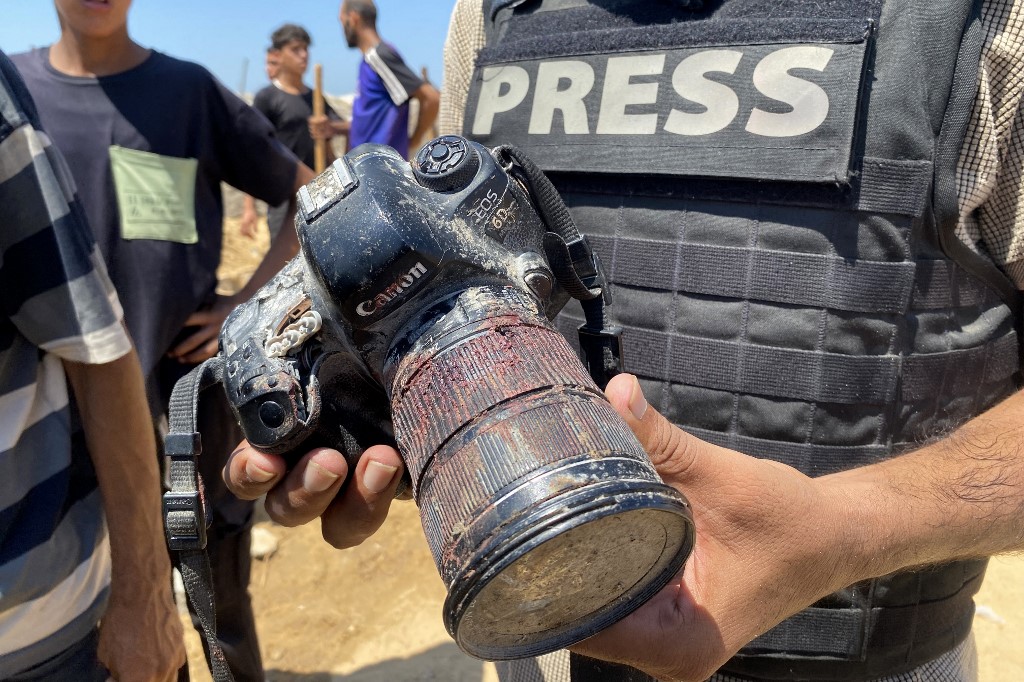
    The head of the United Nations agency for Palestinian refugees has declared Gaza the world’s most perilous environment for journalists and humanitarian personnel. Philippe Lazzarini, Commissioner-General of UNRWA, issued this grave assessment on Sunday while demanding Israel lift its prohibition on independent international media access to the besieged territory.

    Lazzarini revealed that over 230 media professionals have lost their lives since the onset of Israel’s military operations in Gaza, characterizing Palestinian reporters as indispensable chroniclers of conflict realities. ‘These journalists have demonstrated extraordinary courage under unimaginable circumstances,’ Lazzarini stated in a social media post, noting they ‘paid the ultimate price’ for their documentation efforts.

    This condemnation follows Israel’s Supreme Court rejection of a petition by the Foreign Press Association in early January seeking independent journalist access to Gaza. The court upheld the ban citing security concerns, maintaining restrictions that have prevented foreign journalists from entering the devastated territory since October 2023, except for limited, military-escorted visits.

    The UN official emphasized that journalist access constitutes ‘a fundamental pillar of media freedom,’ asserting that ‘this prolonged prohibition on international correspondents has persisted far too long.’ According to Reporters Without Borders, Israeli forces killed at least 29 Palestinian journalists in Gaza during a one-year period through December 2025.

    Lazzarini further warned that media isolation compounds humanitarian crises, noting Gaza has simultaneously become the most dangerous location for aid workers. ‘This media blackout fosters disinformation campaigns and polarized narratives,’ he contended, suggesting it aims to ‘undermine first-hand data and eyewitness accounts, including testimony from international humanitarian organizations.’

    UNRWA’s latest reports indicate 382 personnel associated with its humanitarian operations have been killed since the war’s inception, including 309 staff members. The situation worsened in 2024 when Israel’s parliament passed legislation banning UNRWA from operating in Israel and occupied Palestinian territories, potentially severing essential services for millions of Palestinian refugees. Israeli forces subsequently demolished UNRWA’s headquarters in occupied East Jerusalem.

    The commissioner cautioned that ‘today’s targeting of UNRWA establishes a concerning precedent for tomorrow’s treatment of any international organization or diplomatic mission, whether in Palestinian territories or globally.’

    In a related development, Israel announced in December 2025 a ban on 37 humanitarian NGOs operating in Palestine for alleged failure to meet registration requirements. Under mounting pressure, Médecins Sans Frontières (MSF) has agreed to provide Israel with complete staff lists to resume operations in Gaza and the West Bank—a decision raising safety concerns after at least 15 Palestinian MSF staff members were killed by Israeli forces since October 2023.

  • Frozen in time: Olympic legends on ice

    Frozen in time: Olympic legends on ice

    As the world anticipates the Milan-Cortina Winter Olympic Games opening ceremony on February 6, a retrospective examination reveals how certain legendary athletes fundamentally transformed figure skating. These pioneers not only claimed Olympic glory but also reshaped the sport’s technical, artistic, and cultural dimensions.

    Norwegian sensation Sonja Henie emerged as the sport’s first global celebrity, achieving an unprecedented triple gold medal streak in individual figure skating. Her innovative adoption of white boots and shorter skirts revolutionized athletic apparel, enhancing both movement and presentation. Beyond the rink, Henie successfully transitioned to Hollywood, becoming one of its highest-paid stars and introducing cinematic audiences to skating through her signature swirling routines. Her career, however, was not without controversy, particularly regarding her 1936 meeting with Adolf Hitler following her victory in Garmisch.

    American Dick Button revolutionized skating’s technical aspects while becoming its definitive voice. The athletic pioneer secured the first U.S. skating gold in 1948 at St. Moritz, where he debuted the groundbreaking double Axel jump. Four years later in Oslo, he achieved perfection with the first successfully landed triple jump. Following his competitive career, Button became the sport’s authoritative television commentator, providing passionate and insightful analysis that educated generations of viewers over six decades.

    East German champion Katarina Witt dominated 1980s figure skating with four world titles and back-to-back Olympic gold medals, matching Henie’s historic achievement. Her 1984 victory over American Rosalynn Summers in Sarajevo and the dramatic 1988 ‘Battle of the Carmens’ against Debi Thomas in Calgary became defining moments in skating history. Witt’s fashion choices proved equally impactful—her feather-trimmed one-piece costume prompted the International Skating Union to establish the ‘Katarina rule’ mandating skirts for female competitors. Following German reunification, Witt made an emotional comeback at Lillehammer in 1994, performing a routine dedicated to war-torn Sarajevo that symbolized both personal and political transformation.

    British ice dancers Jayne Torvill and Christopher Dean fundamentally reimagined their discipline with narrative-driven performances. Their 1984 Sarajevo routine set to Ravel’s Bolero earned perfect artistic scores from all nine judges through innovative choreography that built anticipation before technically beginning. The former insurance clerk and policeman abandoned conventional musical fragmentation in favor of cohesive storytelling, earning the first perfect score under the old marking system at the 1983 World Championships. Their professional success culminated in an unexpected Olympic return in 1994, where they captured bronze while in their mid-30s.

  • Living like sultans: Istanbul’s pampered street cats

    Living like sultans: Istanbul’s pampered street cats

    In the bustling metropolis of Istanbul, an extraordinary urban symbiosis flourishes between humans and felines, where approximately 160,000 street cats enjoy near-royal treatment from the city’s 16 million residents. This unique cultural phenomenon transforms the city into what locals proudly call ‘the city of cats,’ where feline residents freely inhabit shopping centers, restaurants, and even historic landmarks with unparalleled acceptance.

    The recent case of Kanyon, a white cat with distinctive grey markings, exemplifies this special relationship. After the theft of his sleeping basket from an Istanbul shopping center, concerned citizens mobilized to provide not just replacement comforts but an abundance of snacks, toys, and even a dedicated Instagram page managed by an admirer. His newly created corner now resembles a child’s playroom more than animal shelter.

    This cultural tradition traces its roots to pre-Ottoman history. According to Altan Armutak, an expert from Istanbul University’s veterinary history department, the deep affection for cats connects to both religious significance and historical practice. ‘When Ottomans captured Constantinople in 1453, they discovered cats waiting patiently outside fish markets and butcher shops,’ Armutak explains. ‘Feeding these animals became regarded as a spiritual offering in devotion to God.’

    Throughout the city, from the European to Asian districts and aboard the connecting ferries, cats enjoy privileged status. They nap undisturbed on restaurant chairs, wander through supermarkets, and curl up in shop windows displaying expensive fabrics. Many have become neighborhood mascots, with some achieving posthumous recognition like Tombili, a portly feline memorialized with a bronze statue in Kadikoy for her iconic lounging pose that became an internet sensation.

    Even historic landmarks participate in this tradition. The sixth-century Hagia Sophia had its beloved tabby mascot, Gli, who received presidential attention from Barack Obama during his 2009 visit. Meanwhile, Topkapi Palace, former residence of Ottoman sultans, recently restored a centuries-old cat flap, maintaining architectural features specifically designed for feline access.

    Modern municipal authorities now balance this cultural heritage with practical urban management. The city government sterilized over 43,000 cats in the past year alone—a twelve-fold increase since 2015—to humanely manage the population. Officials have expressed concern about overfeeding attracting rodents, with Regional Governor Davut Gul noting the unusual phenomenon of rats eating alongside cats, though many residents report minimal rodent issues.

    As 22-year-old German student Fatime Ozarslan observed while placing food in Macka Park, home to至少100 cats: ‘In Germany, we have many rats, but here, with so many cats, they must be afraid.’ This enduring relationship, where humans and cats coexist as equals, remains an integral part of Istanbul’s identity that residents believe defines their city’s character.