作者: admin

  • UAE gets first win in T20 World Cup with 5-wicket victory over Canada

    UAE gets first win in T20 World Cup with 5-wicket victory over Canada

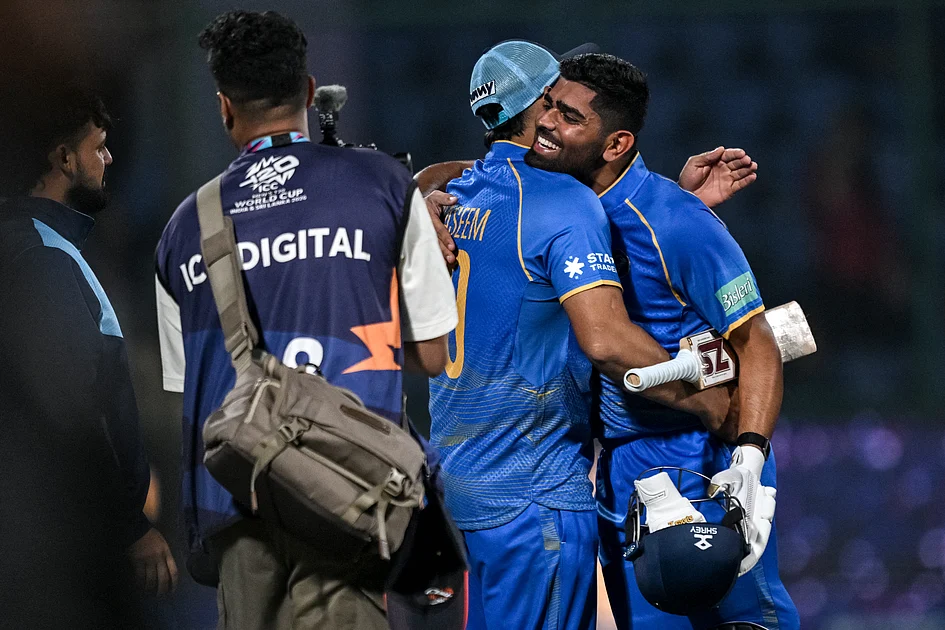
    In a thrilling Group D encounter at Delhi’s Arun Jaitley Stadium on Friday, the United Arab Emirates cricket team celebrated their maiden Twenty20 World Cup triumph with a hard-fought five-wicket victory over Canada. The match culminated in a dramatic final-over finish that saw UAE overcome early setbacks to chase down Canada’s target of 151 runs with just two deliveries remaining.

    The victory was orchestrated by a spectacular 84-run partnership between wicketkeeper-batsman Aryansh Sharma, who remained unbeaten on 74, and Sohaib Khan, whose explosive 51 came from just 29 deliveries. Their middle-order resilience proved decisive after UAE found themselves struggling at 66-4 in the 13th over, thanks to Canadian left-arm spinner Saad Bin Zafar’s destructive spell that dismantled the top order.

    Earlier in the match, Canada had posted a competitive 150-7 after electing to bat first. Harsh Thaker’s composed half-century (50) and Navneet Dhaliwal’s contribution of 34 formed the backbone of their innings. However, their efforts were overshadowed by UAE seamer Junaid Siddique’s magnificent bowling performance, claiming five wickets for 35 runs in his four-over spell.

    The result has significant implications for Group D standings, propelling UAE past Afghanistan into third position behind tournament favorites New Zealand and South Africa, both maintaining perfect records with four points from two matches each.

  • British couple held by Taliban describe ‘culture shock’ returning to UK

    British couple held by Taliban describe ‘culture shock’ returning to UK

    A British couple detained by Taliban authorities in Afghanistan for over seven months has broken their silence about the harrowing experience and their subsequent reintegration into Western society. Peter Reynolds, 80, and his wife Barbie, 76, were held without formal charges from February to September 2025 before being unexpectedly released through Qatari diplomatic channels.

    The Reynolds, who operated charitable programs in Afghanistan for nearly twenty years, described their captivity across ten different detention facilities, including the notorious Pul-e-Charkhi maximum security prison. Their ordeal included two months in windowless basement cells before being transferred to above-ground accommodations with improved conditions during their final weeks of detention.

    Barbie Reynolds provided disturbing details about the prison conditions, revealing she shared a block with 240 women while numerous other blocks housed additional female prisoners and approximately 40 children. Sanitation was severely inadequate with only seven toilets available for hundreds of inmates, malfunctioning showers, and consistently overflowing drainage systems.

    The couple’s health deteriorated significantly during captivity. Barbie developed severe anemia and malnutrition, particularly during Ramadan when meals were restricted. Peter remarked that his wife appeared to have aged two decades when they were reunited, noting she could barely walk due to her deteriorated condition.

    Despite Taliban officials maintaining that the couple received adequate medical care and that their human rights were respected, the Reynolds characterized their detention reason as ‘a complete mystery.’ They were initially arrested after chartering a flight from Kabul to Bamiyan province alongside friends Faye Hall and their translator, who were subsequently released.

    Now back in the United Kingdom after five months, the couple experiences profound ‘cultural shock’ regarding Western freedoms. Barbie specifically noted the striking contrast between Taliban-enforced dress codes and behavioral restrictions versus the liberty to ‘wear what they want, go where they want’ in Britain.

    In a remarkable display of forgiveness, the Reynolds expressed willingness to embrace their captors and continue supporting Afghan people. They also sent a message of hope to Craig and Lindsay Foreman, another British couple detained by the Taliban in January 2025, urging them to ‘hang in there’ and maintain hope.

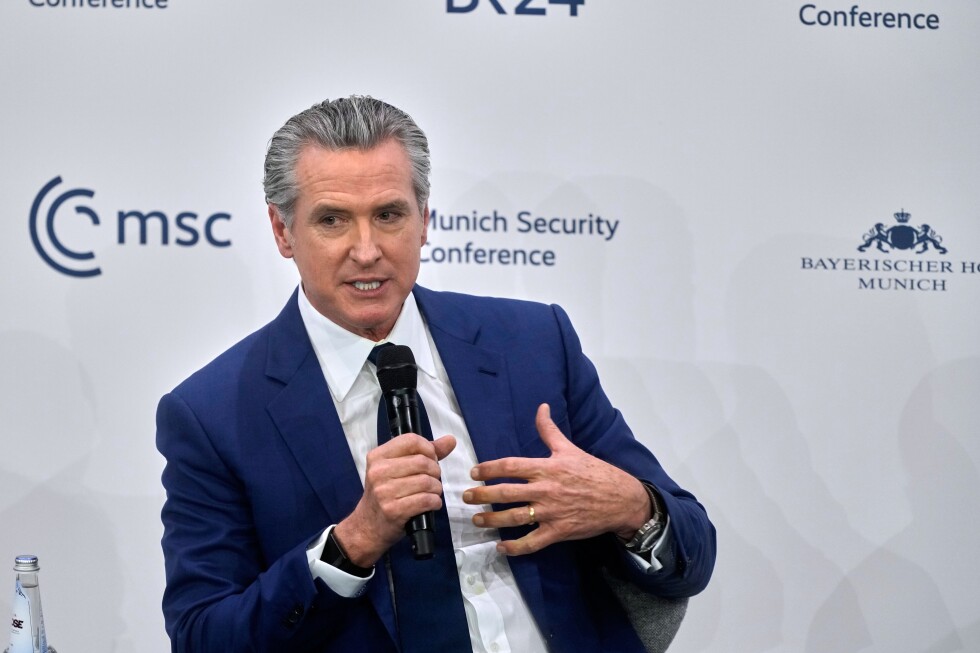
  • Newsom takes his anti-Trump arguments to Europe during Munich Security Conference

    Newsom takes his anti-Trump arguments to Europe during Munich Security Conference

    California Governor Gavin Newsom has embarked on an international diplomatic offensive, leveraging high-profile European platforms to establish himself as the Democratic Party’s foremost antagonist to former President Donald Trump. During his appearance at the Munich Security Conference, the second-term governor delivered scathing critiques of Trump’s environmental policies, characterizing them as “doubling down on stupid” for dismantling carbon pollution regulations.

    Newsom’s European itinerary represents a strategic expansion of his political ambitions beyond California’s borders. Following his recent appearance at the World Economic Forum in Davos, where he urged the international community to resist Trump’s influence, the governor now plans to formalize a partnership with Ukraine. This memorandum of understanding focuses on economic recovery, innovation, and resilience—a move that signals Newsom’s commitment to international cooperation amid global tensions.

    Political analysts interpret these maneuvers as calculated steps toward building foreign policy credentials essential for potential presidential aspirations. Democratic pollster Zac McCrary, who has worked with prominent Democratic campaigns, observes that Newsom is projecting “front-runner vibes” while using foreign policy as a proxy for gravitas and stability—qualities that could position him as the antithesis to Trump in the 2028 election cycle.

    The governor’s climate remarks in Munich served dual purposes: reinforcing his environmental credentials with Democratic base voters while appealing to broader audiences through economic arguments. Newsom emphasized California’s historical leadership in environmental regulation, tracing policies back to Republican presidents Ronald Reagan and Richard Nixon—a strategic framing that transcends partisan divisions.

    Newsom’s international appearances coincide with domestic political maneuvers, including his upcoming return to South Carolina, a key primary state, and his use of gubernatorial power to redraw California’s congressional maps in Democrats’ favor. These coordinated efforts suggest a comprehensive strategy to establish national and international prominence as the Democratic Party seeks its post-Biden leadership.

  • Sharjah retailer allocates Dh35 million to Ramadan discounts, cuts prices up to 75%

    Sharjah retailer allocates Dh35 million to Ramadan discounts, cuts prices up to 75%

    In preparation for the upcoming holy month of Ramadan, major UAE retailers have unveiled substantial discount programs totaling Dh35 million to alleviate consumer expenses. Sharjah Coop announced price reductions of up to 75% across more than 10,000 essential consumer products as part of its “Ramadan Togetherness” campaign.

    Salem Al Junaid, CEO of Sharjah Coop, emphasized that the initiative ensures competitive pricing for essential food, grocery, and consumer goods across more than 75 retail outlets throughout Sharjah, in addition to their online platform. The retailer has secured sufficient stock of promotional items to meet anticipated consumer demand throughout the month.

    Faisal Khalid Al Naboodah, Director of Marketing and Public Relations at Sharjah Cooperative, revealed that this year’s allocation represents a Dh5 million increase over previous years, extending beyond staple items like rice, oil, sugar, and flour to include diverse product categories.

    Simultaneously, Dubai-based Union Coop announced complementary measures including discounts up to 60% on over 3,000 food and non-food products. The retailer has frozen prices on more than 160 essential goods to ensure price stability throughout Ramadan. CEO Mohamed Al Hashemi confirmed the continuation of price reduction initiatives launched three years ago, with product lists reviewed monthly based on consumer demand patterns.

    Union Coop will also maintain its sustainability-focused “Your Iftar is Their Suhoor” initiative for the eighth consecutive year, aimed at reducing food waste. The retailer has strengthened its supply chain through partnerships with over 33 local farms and an international network to enhance food security while maintaining delivery services to reduce congestion.

    Both retailers emphasized their commitment to supporting community welfare during Ramadan through these comprehensive economic and social initiatives.

  • Dubai’s University of Wollongong halts 100% parking fee hike after student feedback

    Dubai’s University of Wollongong halts 100% parking fee hike after student feedback

    In a significant victory for student advocacy, the University of Wollongong in Dubai has suspended its planned 100% parking fee increase following substantial backlash from its student body. The institution had initially announced that underground parking rates would double from Dh10 to Dh20 per hour, a decision that prompted immediate student mobilization including petitions and social media campaigns.

    University President Professor Mohamed-Vall M. Salem Zein confirmed the reversal, stating that student feedback regarding parking arrangements had been taken seriously. The university is collaborating with its facility partner, Dubai Knowledge Park (DKP), to develop a revised parking model that prioritizes student needs. DKP has assured that students will be categorized separately from general visitors to create more favorable parking arrangements.

    The proposed increase would have dramatically impacted student finances. Engineering student Ahmed illustrated the potential burden, noting his current Dh20 daily parking expense would have quadrupled to Dh80. Parents expressed similar concerns, with one mother calculating that her son’s weekly parking costs would have reached Dh380 for three days of classes.

    While an alternative parking option exists near the tram station at Dh5 per hour, students noted the limited capacity and crowding issues that would have been exacerbated by the price changes. The university’s initial plan included only 160 students receiving two hours of free parking on a first-come, first-served basis, a provision that students found insufficient.

    The decision to maintain current parking arrangements represents a successful case of institutional responsiveness to student concerns, highlighting the power of collective action in addressing campus accessibility issues.

  • UK Home Office graph reveals shocking scale of Palestine Action arrests

    UK Home Office graph reveals shocking scale of Palestine Action arrests

    A dramatic escalation in UK counterterrorism operations has emerged following the government’s controversial proscription of Palestine Action in July 2025, with Home Office statistics revealing an unprecedented 660% year-on-year increase in terrorism-related arrests. The data shows 1,886 individuals were detained for alleged terrorism offenses between January and September 2025, with approximately 1,630 arrests directly linked to activities associated with the banned protest organization.

    The statistical surge gained legal context on Friday when the High Court delivered a landmark ruling declaring the government’s ban on the direct action group ‘discriminatory and unlawful.’ Despite this judicial finding, the prohibition remains temporarily in effect pending the government’s appeal, which Home Secretary Shabana Mahmood confirmed would be pursued through the Court of Appeal.

    Analysis of arrest patterns reveals a significant demographic shift in UK terrorism enforcement. Unlike previous years where arrestees were predominantly male, nearly half of those detained in connection with Palestine Action activities were female. Most arrests occurred during demonstrations in London and other urban centers, where participants displayed placards stating ‘I oppose genocide. I support Palestine Action.’

    Legal documents indicate the majority faced charges under Section 13 of the Terrorism Act 2000, which prohibits displaying symbols supporting proscribed organizations. The 237 Section 13 charges brought in the first nine months of 2025 nearly equal the total number of such charges (271) brought since the legislation’s inception following the September 2001 attacks.

    Human rights organizations celebrated the High Court’s decision, which resulted from a judicial review initiated by Palestine Action co-founder Huda Ammori. In a statement outside the courthouse, Ammori characterized the ruling as ‘a monumental victory both for our fundamental freedoms here in Britain and in the struggle for freedom for the Palestinian people.’

    The advocacy group Defend our Juries estimates that approximately 2,787 arrests may now be considered unlawful following the court’s determination. A spokesperson for the organization stated: ‘Thousands of people of conscience saw that branding protest as terrorism was a move straight out of the dictator’s playbook. Together we took action at great personal risk.’

    Of those arrested in connection with Palestine Action activities, 1,362 individuals were released on bail while remaining under investigation. The cases continue to develop as the government prepares its appeal against the High Court’s ruling.

  • Indian man pleads guilty in assassination plot against prominent Sikh separatist leader in New York

    Indian man pleads guilty in assassination plot against prominent Sikh separatist leader in New York

    In a significant development in international security and diplomatic relations, Nikhil Gupta, a 54-year-old Indian national, has pleaded guilty to conspiracy charges in a high-profile assassination plot targeting Gurpatwant Singh Pannun, a prominent Sikh separatist leader and American citizen residing in New York. The admission came during proceedings at Manhattan federal court on Friday, revealing a complex transnational conspiracy allegedly orchestrated with the involvement of an Indian government operative.

    U.S. Attorney Jay Clayton issued a stern warning following the plea, declaring: “Our message to nefarious foreign actors should be clear: steer clear of the United States and our people.” The case has escalated into a major diplomatic concern, highlighting foreign interference on American soil.

    According to court documents, Gupta, while in India during 2023, transferred $15,000 through digital channels to an individual he believed to be a contract killer. Unbeknownst to him, this supposed assassin was actually an undercover federal agent. FBI New York Field Office Director James C. Barnacle Jr. stated that Gupta “coordinated with an Indian government employee, who directed him to carry out the killing,” describing it as an attempt by a “foreign adversary to silence a vocal critic of the Indian government.”

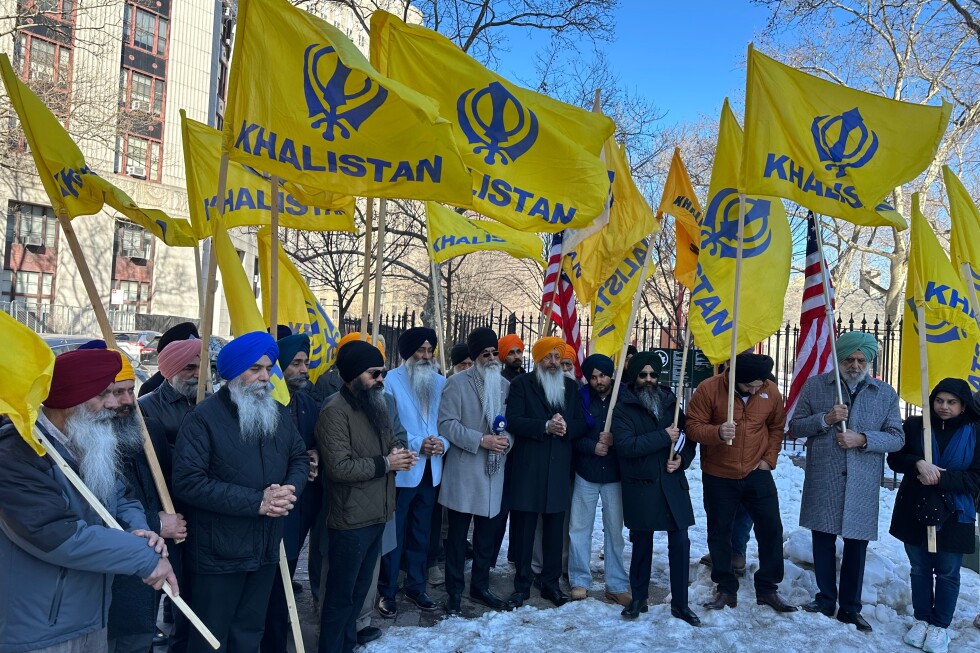
    The courtroom proceedings drew approximately two dozen Sikh supporters from both the United States and Canada, who share Pannun’s vision of establishing an independent Sikh state called Khalistan in India’s Punjab region. Following the hearing, attendees conducted prayer services outside the courthouse, displaying yellow Khalistan flags alongside American flags.

    Pannun, who India designates as a terrorist but describes himself as a human rights lawyer advocating for religious equality, stated in a post-hearing interview: “I’m not a terrorist. I am ready to take India’s bullet rather than take a step back and live like a slave.” He characterized Gupta as “just a foot soldier” and called for investigation into higher-ranking Indian officials allegedly behind the plot.

    Court records indicate Gupta connected the plot to the June 2023 killing of Hardeep Singh Nijjar outside a Sikh temple in British Columbia, suggesting both operations were coordinated by the same individuals. Gupta has been detained without bail since his extradition from the Czech Republic in June 2023 and faces a potential sentence of at least twenty years imprisonment under his plea agreement, with sentencing scheduled for May 29.

  • Philippines moves to abolish 50-year-old travel tax and cut cost for Filipino travellers

    Philippines moves to abolish 50-year-old travel tax and cut cost for Filipino travellers

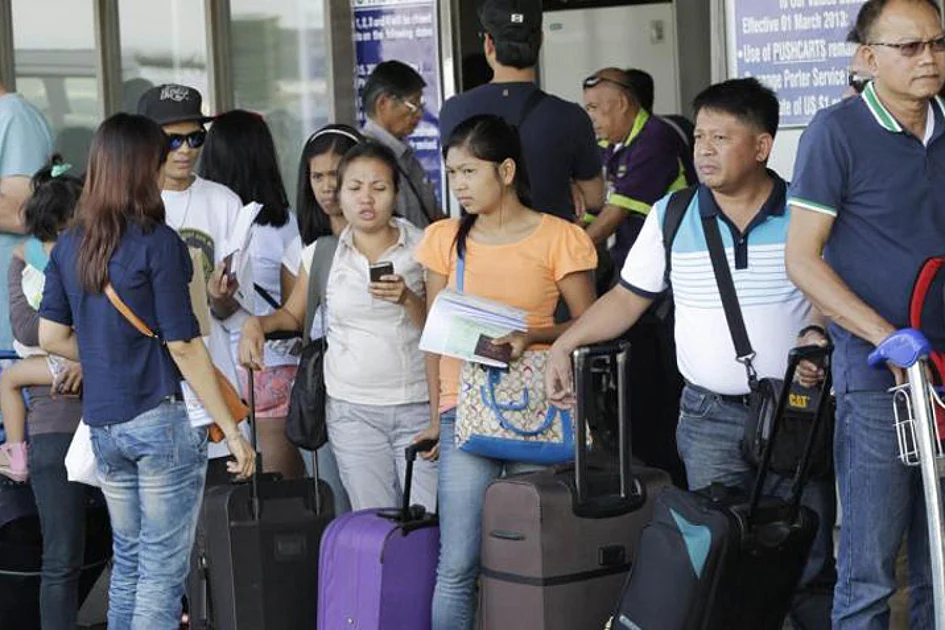
    In a significant policy shift, the Philippine administration under President Ferdinand ‘Bongbong’ Marcos Jr. has formally proposed the abolition of the nation’s long-standing travel tax. This landmark initiative, included among 21 priority legislative measures endorsed by the government this week, aims to alleviate financial pressures on citizens traveling abroad for diverse purposes including employment, leisure, and urgent family matters.

    Palace press officer Claire Castro emphasized the administration’s recognition that contemporary travel patterns extend beyond tourism, with many Filipinos requiring international mobility for work and emergency situations. The current tax structure imposes a levy of ₱1,620 (approximately Dh102.50) for economy class passengers and ₱2,700 (Dh170) for business and first-class travelers, creating substantial financial barriers for families. A family of four, for instance, currently faces combined travel tax and terminal fee expenses exceeding ₱10,280 (Dh650) before departure.

    Historically implemented in 1977 during the presidency of Ferdinand Marcos Sr., the tax originally functioned as an economic mechanism to regulate foreign currency outflow and finance tourism infrastructure. Initially conceived as a ‘luxury tax’ during an era when international travel was predominantly accessible to affluent segments of society, the levy currently allocates 50% of revenues to tourism projects through the Tourism Infrastructure and Enterprise Zone Authority (TIEZA), with 40% supporting educational assistance programs and 10% dedicated to cultural preservation.

    The proposed abolition acknowledges fundamental changes in global mobility patterns and economic conditions since the tax’s inception nearly five decades ago. Should the measure pass into law, the government has committed to securing alternative funding through the national budget to maintain support for previously tax-funded initiatives, with detailed revenue impact assessments to be conducted during legislative deliberations.

  • DEA quietly resumes anti-drug coordination with Bolivia almost 20 years since its expulsion

    DEA quietly resumes anti-drug coordination with Bolivia almost 20 years since its expulsion

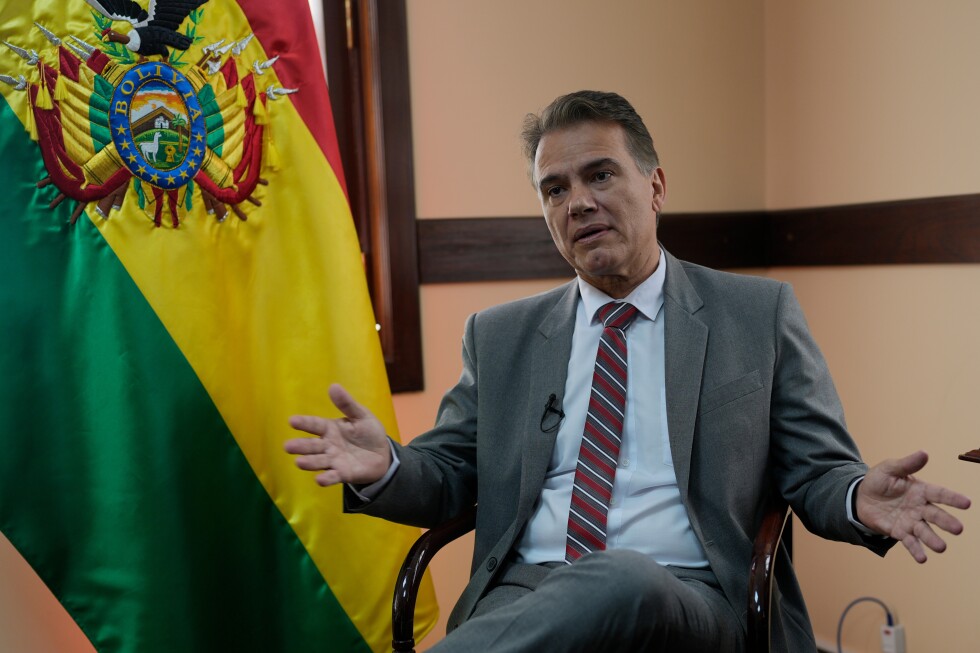
    In a significant diplomatic shift, the United States has quietly resumed intelligence cooperation with Bolivia on counternarcotics operations, ending a nearly 20-year hiatus that began when leftist President Evo Morales expelled American anti-drug agents from the cocaine-producing nation.

    Bolivian Vice Minister of Social Defense and Controlled Substances Ernesto Justiniano confirmed to The Associated Press that while formal agreements are still being finalized, Washington has already begun sharing intelligence on transnational criminal networks with Bolivian law enforcement. The cooperation includes personnel vetting procedures and specialized training programs for narcotics officers.

    “We are already receiving support in various ways, in the training and integrity analysis of personnel,” Justiniano stated. “There is a lot of intelligence, resources, they can provide us, and we need it.”

    This intelligence collaboration marks a dramatic reversal in bilateral relations under Bolivia’s conservative President Rodrigo Paz, who took office last November. The centrist leader has moved to restore full diplomatic ties with Washington after nearly two decades during which Morales’ Movement Toward Socialism party cultivated alliances with China, Russia, Cuba and Iran while distancing itself from Western nations.

    The renewed partnership carries historical sensitivities dating to the 1990s, when DEA-backed operations resulted in deadly clashes with coca farmers in the Chapare region. Justiniano acknowledged these tensions, particularly in the coca-growing jungles near Cochabamba where resentment lingers over Washington’s previously militarized approach.

    “In Bolivia, when it comes to language, you have to be very careful,” Justiniano noted, explicitly ruling out the establishment of U.S. military bases. However, he confirmed that Bolivia “would welcome” DEA participation in joint interdiction operations.

    The agency’s return represents a substantial foreign policy achievement for the U.S. in Latin America, according to regional experts. Retired U.S. diplomat Daniel Foote, who served in Bolivia during the cocaine heyday, emphasized the strategic importance: “We have little idea what’s been going on these past 20 years, so having the DEA back there can open a lot of other doors for the U.S.”

    Meanwhile, former President Morales remains in hiding in the Chapare region, evading an arrest warrant linked to allegations he denies. His disappearance from public view coincides with increased U.S. pressure on allied leftist leaders in the region, including the recent seizure of former Venezuelan president Nicolás Maduro.

    As officials finalize the details of the DEA’s formal return, questions remain about how the agency’s approach will differ from its controversial 1990s operations. Former U.S. Ambassador Robert Gelbard expressed hope that the renewed cooperation would avoid “the sort of aggressive approach we followed in the 1990s,” even as coca growers’ leaders vow to resist any perceived foreign intervention.

  • Pentagon to move world’s largest carrier to Middle East, US officials say

    Pentagon to move world’s largest carrier to Middle East, US officials say

    In a significant military repositioning, the Pentagon is deploying the USS Gerald R. Ford—the world’s largest and most advanced aircraft carrier—from the Caribbean to the Middle East, according to two U.S. officials speaking anonymously to Reuters on Friday. This strategic movement will place two American carrier strike groups in the region simultaneously as diplomatic tensions with Iran intensify.

    The nuclear-powered Gerald R. Ford, accompanied by its escort vessels, has been operating in Caribbean waters where it participated in operations near Venezuela earlier this year. The carrier’s transition to Middle Eastern waters is expected to require at least one week of transit time.

    This deployment represents a substantial commitment of military resources, particularly given that the U.S. Navy maintains only eleven aircraft carriers total, with schedules typically planned far in advance. The Ford will join the USS Abraham Lincoln carrier group, which recently arrived in the region alongside multiple guided-missile destroyers, fighter aircraft, and surveillance platforms.

    The decision follows statements from President Donald Trump, who indicated earlier this week that he was considering deploying additional carrier support to the Middle East if diplomatic progress with Iran stalled. However, on Thursday, Trump suggested a potential breakthrough, noting that an agreement with Iran might be achievable within the coming month. ‘We have to make a deal, otherwise it’s going to be very traumatic,’ the president told reporters.

    The Ford’s extended deployment—continuously at sea since June 2025—highlights the operational strain on naval assets. Originally slated for European operations, the carrier was unexpectedly redirected to the Caribbean in November. While standard carrier deployments typically span nine months, extensions during periods of heightened military activity are not uncommon, though Navy officials have repeatedly warned that prolonged sea duty can adversely affect crew morale.

    Administration officials reportedly considered deploying the USS Bush instead, but certification requirements would have delayed its arrival by over a month. The Ford’s advanced capabilities include capacity for more than 75 military aircraft, sophisticated radar systems for air traffic control and navigation, and the escort support of cruisers and destroyers equipped with comprehensive surface-to-air, surface-to-surface, and anti-submarine warfare systems.