作者: admin

  • Shooter of former Japanese PM Abe appeals life sentence

    Shooter of former Japanese PM Abe appeals life sentence

    Tetsuya Yamagami, the convicted assassin of former Japanese Prime Minister Shinzo Abe, has formally appealed his life sentence through legal representatives. The appeal filing on Wednesday marks the latest development in a case that shocked the international community and triggered nationwide security reassessments.

    The Nara District Court had delivered its verdict on January 21st, sentencing the 45-year-old defendant to life imprisonment after convicting him on murder charges and additional criminal counts. The judicial outcome followed exhaustive courtroom proceedings that examined the July 2022 assassination in meticulous detail.

    Yamagami carried out the lethal attack using a custom-built firearm during a public campaign event in Nara, western Japan. The former prime minister was delivering a political speech in support of parliamentary candidates when Yamagami approached from behind and fired multiple shots at close range. Emergency medical teams transported Abe to nearby medical facilities, where he was pronounced dead hours later despite extensive resuscitation efforts.

    The assassination prompted immediate scrutiny of protective security protocols for public figures in Japan, a nation historically recognized for its low incidence of gun violence and political violence. Subsequent investigations revealed the assailant had constructed the lethal weapon using commercially available components, bypassing Japan’s stringent firearm regulations.

    Legal analysts note that appeals processes within Japan’s judicial system typically require several months before reaching higher courts. The appeal will likely focus on sentencing considerations rather than challenging the fundamental murder conviction, as Yamagami had previously acknowledged intentionality regarding the attack.

    Prosecutors during the original trial had emphasized the calculated nature of the crime and its devastating impact on Japan’s political landscape. The defense team had entered pleas for reduced sentencing based on psychological evaluations, though these arguments ultimately failed to persuade the district court panel.

    The upcoming appellate proceedings will unfold against the backdrop of continued public interest and media scrutiny, with international observers closely monitoring Japan’s judicial handling of its most significant political assassination in postwar history.

  • The US and UN launch a humanitarian fund with $700 million for war-ravaged Sudan

    The US and UN launch a humanitarian fund with $700 million for war-ravaged Sudan

    In a coordinated international response to Sudan’s escalating humanitarian catastrophe, the United States and United Nations have jointly established a new Sudan Humanitarian Fund with initial contributions totaling $700 million. The United Arab Emirates pledged $500 million while the United States committed $200 million toward the initiative, drawing from a $2 billion global humanitarian assistance fund established late last year.

    The fundraising event, co-hosted in Washington by U.N. humanitarian chief Tom Fletcher and U.S. senior adviser for Arab and African affairs Massad Boulos, aimed to galvanize global support for Sudan’s war-ravaged population. Saudi Arabia and several other nations indicated they would make additional pledges, though specific amounts remain undisclosed.

    Fletcher, who heads the U.N. Office for the Coordination of Humanitarian Affairs (OCHA), emphasized the urgency of the situation, setting the beginning of Ramadan on February 17 as a target date for demonstrating tangible progress. “Today we are signaling that the international community will work together to bring this suffering to an end,” Fletcher stated during the event.

    The humanitarian crisis stems from the ongoing power struggle between Sudan’s military and the Rapid Support Forces paramilitary group, which has plunged the nation into conflict since 2023. UN estimates indicate at least 40,000 fatalities, though actual numbers are believed to be significantly higher.

    This conflict has created the world’s largest displacement crisis, forcing over 14 million people from their homes and triggering famine declarations across multiple regions. Recent fighting has concentrated in the Kordofan regions following the RSF’s capture of el-Fasher, one of the military’s last strongholds in Darfur.

    In a concerning development, the RSF launched a drone attack on Tuesday that struck a medical center in Kadugli, killing 15 people including seven children according to the Sudan Doctors Network. This occurred despite the military’s recent gains in breaking the RSF’s siege of Kadugli and reopening a crucial supply route to the neighboring town of Dilling.

    Boulos revealed that the U.S. has presented a “comprehensive proposal” for a humanitarian truce that could be finalized within weeks, offering potential relief to millions facing starvation and violence.

  • HK retains appeal for US multinationals

    HK retains appeal for US multinationals

    Hong Kong continues to solidify its position as a premier regional headquarters destination for American multinational corporations, with overwhelming majority expressing commitment to maintaining operations in the Asian financial hub. According to recent survey data from the American Chamber of Commerce in Hong Kong, approximately 92% of US companies with regional headquarters in the city have confirmed no plans to relocate elsewhere within the next three years—a significant increase from the 79% recorded in 2025.

    The comprehensive two-month study, conducted between November 11 and January 16 and encompassing responses from over 450 member companies, reveals strengthening confidence in Hong Kong’s business environment. More than half of surveyed executives expressed optimism about the city’s commercial prospects for the coming year, marking a substantial jump from 33% in the previous year’s assessment.

    Critical findings demonstrate growing trust in Hong Kong’s legal framework, with 94% of respondents affirming confidence in the Special Administrative Region’s rule of law—continuing an upward trajectory from 83% in 2025. Notably, 74% of companies reported no adverse operational impacts from the implementation of the National Security Law.

    Lynn Song, Chief Economist for Greater China at ING Bank, emphasized that “the survey findings indicate Hong Kong’s international reputation is steadily recovering, with its legal system and competitive advantages remaining fully intact. The city continues to offer an exceptional environment for business operations.”

    The research further indicates that 86% of companies endorse Hong Kong’s fundamental strengths as Asia’s competitive business hub, representing an 11-percentage-point improvement from 2025. Song additionally noted that “the most challenging phase of Hong Kong’s economic cycle has concluded,” citing improving conditions including the US Federal Reserve’s policy shift and China’s consistent growth performance.

    While US-China trade tensions remain identified as the primary operational challenge by 59% of respondents (down from 70% in 2025), the overall pessimism has noticeably moderated. The findings align with recent AmCham China surveys showing 71% of companies maintaining operations in mainland China without relocation plans.

    The data collectively suggests that post-pandemic recovery, border reopenings, and stabilized financial markets have provided clearer operational visibility, reinforcing Hong Kong’s resilience as an international business center despite ongoing geopolitical considerations.

  • Hybrid cargo drone aces test flight

    Hybrid cargo drone aces test flight

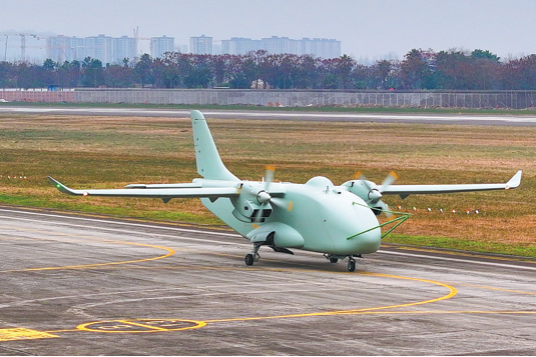
    In a significant advancement for unmanned aerial logistics, China has successfully conducted the inaugural test flight of the world’s first hybrid-powered cargo drone. The CH-YH1000S aircraft, developed by the China Academy of Aerospace Aerodynamics (CAAA), completed its maiden voyage from a Chongqing airport on Sunday, marking a breakthrough in sustainable aviation technology.

    The innovative drone represents an evolution of the CH-YH1000 model that first flew in May 2025, now enhanced with a hybrid propulsion system that intelligently switches between electric and gasoline power sources. This dual-power approach enables optimized performance across different flight regimes, with electric motors providing efficiency at lower speeds and conventional engines delivering power during high-speed operations.

    Notably, the propulsion technology emerged from an unprecedented collaboration between aerospace engineers and a leading Chinese electric vehicle manufacturer, representing the nation’s first cross-industrial partnership on core unmanned aircraft technologies. This synergy has enabled shared supply chain resources and modular production methods that substantially reduce both development costs and manufacturing expenses.

    The hybrid configuration confers multiple operational advantages, including shortened takeoff and landing requirements, increased payload capacity, and extended operational range compared to conventional drones. The aircraft maintains the practical design features of its predecessor, including upward-opening nose sections for cargo loading and underside openings for aerial delivery missions.

    CAAA officials outlined diverse applications for the new platform, ranging from international logistics and emergency response operations to weather modification, maritime enforcement, and environmental monitoring. The development continues the Academy’s drone program that began in 1999, leveraging expertise originally cultivated in missile design and aerodynamics research.

    The successful test flight demonstrates China’s growing capabilities in both sustainable aviation technology and cross-industrial innovation, potentially setting new standards for efficiency and versatility in the global cargo drone market.

  • Confrontation still shadows potential talks

    Confrontation still shadows potential talks

    The prospect of US-Iran negotiations remains clouded by escalating military threats and diplomatic uncertainty. Recent developments indicate that while diplomatic channels remain theoretically open, the environment for productive dialogue has deteriorated significantly due to heightened military posturing.

    According to reports from news website Axios, US President Donald Trump’s special envoy Steve Witkoff and Iranian Foreign Minister Seyyed Abbas Araghchi were planning to meet in Istanbul on Friday to discuss potential nuclear agreements. However, Iranian media outlets including Tasnim News Agency quickly challenged these reports, characterizing any potential talks as being in their preliminary stages without finalized details or framework.

    The diplomatic uncertainty coincides with increased US military activity in the region. The Pentagon deployed an aircraft carrier strike group and multiple warships to the Middle East in late January, while Israel announced joint naval exercises with US forces in the Red Sea. President Trump himself hinted at potential military action if Iran refuses to negotiate terms regarding its nuclear program.

    Regional security experts warn that the current situation creates substantial risks for broader conflict. Professor Sun Degang, Director of the Center for Middle Eastern Studies at Fudan University, notes that the US appears fully prepared for potential military action against Iran. Such action could involve precision strikes on high-value targets, followed by systematic degradation of Iran’s missile capabilities, drone production facilities, and air defense systems.

    Iran maintains multiple response options, including targeting US naval assets in the Gulf, striking US military bases throughout the region, or disrupting maritime traffic through the strategically critical Strait of Hormuz. Such actions could severely impact global energy supplies and destabilize markets.

    Academic analysts suggest that Washington’s approach reflects a strategy of “maximum pressure” and brinkmanship designed to force Tehran back to negotiations. However, this approach carries significant risks for regional stability and international law. Military action against Iran would represent a serious breach of the post-World War II global governance framework centered on the United Nations, potentially eroding the authority of international institutions and creating a more power-driven international order.

    The current tensions highlight the complex interplay between diplomatic efforts and military posturing in one of the world’s most volatile regions, with potential consequences for global security architecture and economic stability.

  • Muammar Gaddafi’s son, Saif al-Islam, killed in Libya

    Muammar Gaddafi’s son, Saif al-Islam, killed in Libya

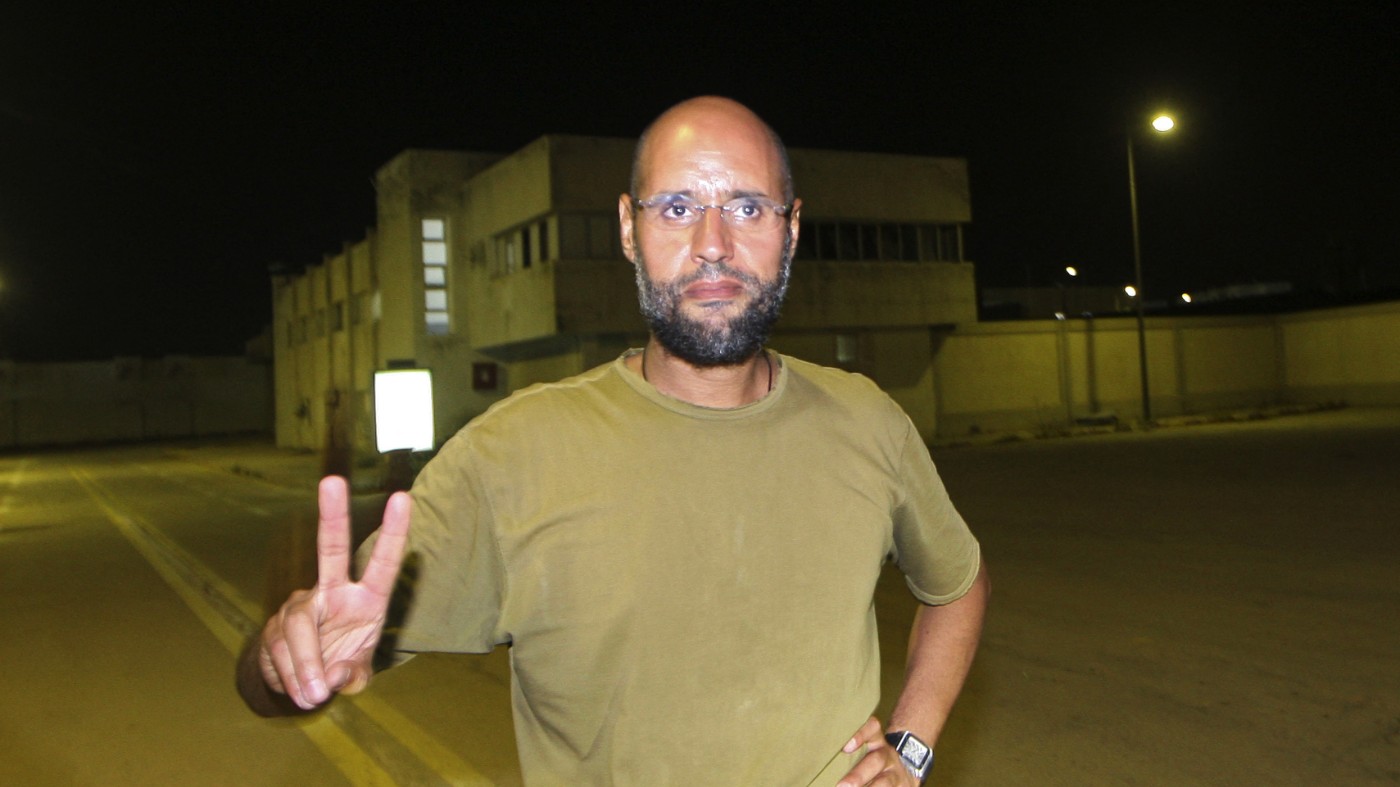
    Saif al-Islam al-Gaddafi, the once-presumed heir to Libya’s former leader Muammar Gaddafi, has been assassinated by a commando unit at his residence in Zintan, according to his political advisor. The 53-year-old was killed on Tuesday at approximately 2:00 pm local time (1200 GMT) in an operation that saw four unidentified assailants disable security systems before executing the attack.

    His French legal representative, Marcel Ceccaldi, confirmed to AFP that Gaddafi had received security warnings in recent days from close associates about potential threats to his safety. The assassination occurs against the backdrop of Libya’s deeply fractured political landscape, where competing governments in Tripoli and the east vie for control and oil revenues.

    Saif al-Islam had resided in Zintan since his 2017 pardon and release from imprisonment, following his capture during the 2011 Arab Spring uprising that resulted in his father’s death. During the Gaddafi regime, he was widely regarded as the successor-in-waiting and positioned himself as a reformist figure, notably negotiating Libya’s nuclear program abandonment.

    The London School of Economics-educated politician faced serious international charges, including an ICC arrest warrant issued in 2011 for alleged torture of protesters and dissidents. Though convicted in absentia in 2015 for war crimes, he was scheduled to face trial within Libya’s judicial system.

    His death comes at a particularly volatile moment in Libyan politics. Prime Minister Abdul Hamid Dbeibeh’s internationally recognized government, which came to power in 2021 with a mandate to organize democratic elections, has struggled to maintain stability while competing with Khalifa Haftar’s eastern-based administration for control of the country’s valuable oil resources. No official government statement has yet been issued regarding the assassination.

  • Khalifa Haftar makes landmark visit to Pakistan for security cooperation

    Khalifa Haftar makes landmark visit to Pakistan for security cooperation

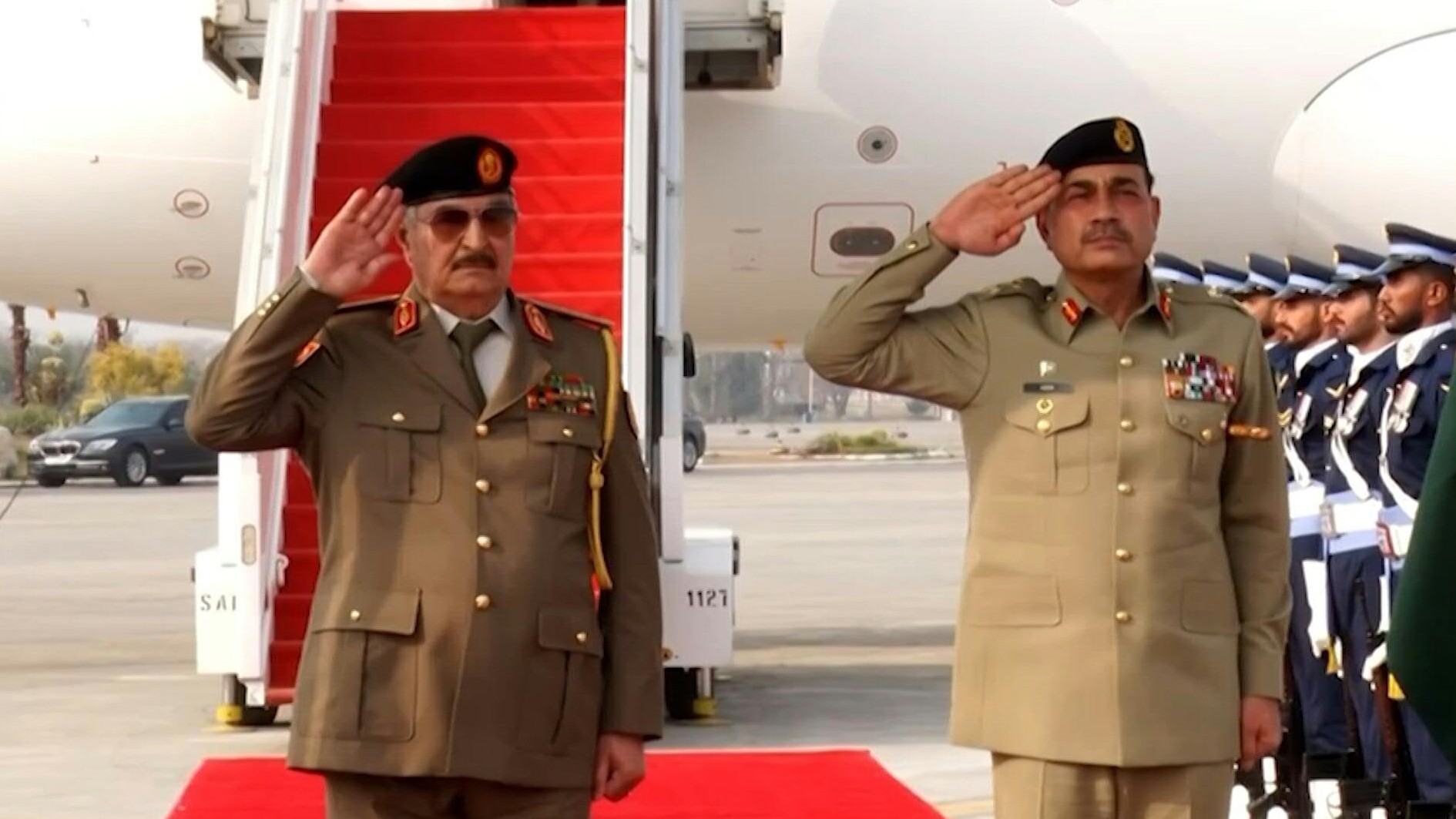
    In a significant diplomatic development, Libyan Field Marshal Khalifa Haftar undertook an unusual visit to Pakistan this Monday, signaling a potential strategic realignment in regional security partnerships. The eastern Libyan leader, accompanied by his son Saddam Haftar—viewed as his likely successor—and Eastern Libyan Prime Minister Osama Saad Hamad, engaged in high-level talks with Pakistani military and civilian leadership.

    The delegation met with Pakistan’s Army Chief Field Marshal Asim Munir at the General Headquarters in Rawalpindi, where both parties discussed mutual security interests and professional cooperation frameworks. This meeting followed reports by Reuters indicating a substantial $4 billion arms agreement between Haftar’s administration and Pakistan—potentially Islamabad’s largest defense contract—initiated during Munir’s December visit to Benghazi.

    Subsequent discussions with Pakistani Prime Minister Shehbaz Sharif in Islamabad emphasized strengthening bilateral relations and enhancing cooperation in areas of common concern. Both governments expressed commitment to promoting regional peace, stability, and development through deepened partnership.

    Haftar’s journey to South Asia marks a notable expansion of his diplomatic outreach beyond his regular visits to Egypt and Russia. The development occurs against the backdrop of Libya’s political division between the internationally recognized government in Tripoli led by Prime Minister Abdul Hamid Dbeibeh and Haftar’s eastern-based administration.

    This emerging Pakistan-Libya security relationship introduces complex dynamics to regional alliances. Haftar maintains close ties with the UAE and has supported the Abu Dhabi-backed Rapid Support Forces in Sudan, creating tensions with Saudi Arabia and Egypt—both traditional Haftar supporters who now back the opposing Sudanese Armed Forces. Pakistan’s evolving position, balancing relationships with Riyadh, Abu Dhabi, and Ankara while pursuing new partnerships with Libyan factions, reflects the ongoing recalibration of Middle Eastern and North African security architectures.

  • Trump signs funding package, ending brief partial government shutdown

    Trump signs funding package, ending brief partial government shutdown

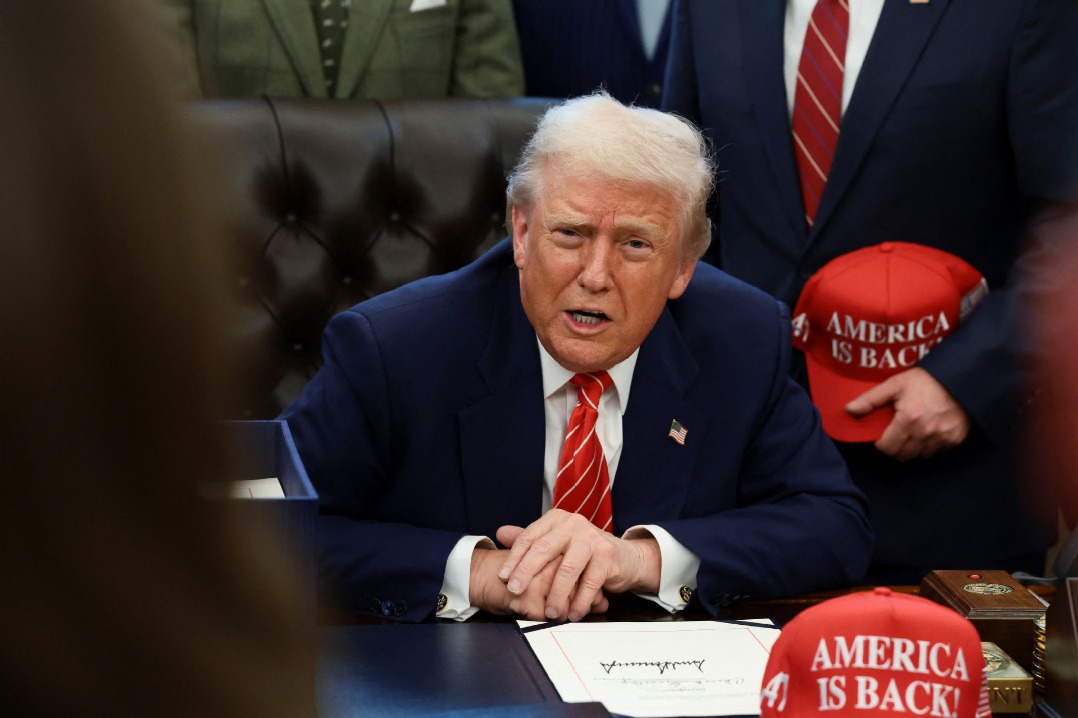
    President Donald Trump enacted a comprehensive funding legislation on Tuesday, effectively terminating a partial government shutdown that had commenced just days earlier. The presidential signing ceremony at the White House marked the resolution of a budgetary standoff that threatened federal operations.

    The funding package successfully cleared the House of Representatives by a narrow margin earlier Tuesday, following its Senate approval last Friday. This legislative measure allocates financial resources to numerous federal departments through the remainder of the current fiscal year, extending until September 30.

    Among the agencies receiving full-year funding are the Departments of Defense, Education, Health and Human Services, Labor, Transportation, and Housing and Urban Development. However, in a significant compromise, Homeland Security funding was excluded from the omnibus package. Instead, the department will operate under a two-week continuing resolution at existing funding levels, providing additional negotiation time for immigration enforcement discussions.

    The decision to separate Homeland Security funding stems from heightened Democratic concerns regarding immigration agency operations, particularly following two fatal shootings involving federal enforcement personnel in Minneapolis. Senate Minority Leader Chuck Schumer has emphasized that without legislative reforms to Immigration and Customs Enforcement procedures, Department of Homeland Security funding lacks sufficient support for Senate passage.

    This episode represents the latest manifestation of increasingly polarized partisan politics in Washington, where federal government operations have repeatedly faced shutdown threats or actual closures in recent years. The current brief shutdown occurred merely two months after the conclusion of a historic 43-day government closure, underscoring the ongoing budgetary tensions within the American political landscape.

  • China’s carbon fiber production line thrives

    China’s carbon fiber production line thrives

    China has achieved a monumental breakthrough in advanced materials manufacturing with the successful establishment of its first large-scale T1000-grade carbon fiber production facility in Shanxi province. This development marks a significant shift from technological dependence to global competitiveness in high-performance materials science.

    The pioneering production line, a collaborative effort between the Institute of Coal Chemistry of the Chinese Academy of Sciences and Shanxi Huayang Carbon Material Technology Co, boasts an annual capacity of 200 metric tons of T1000-grade carbon fiber. This achievement represents the initial phase of an ambitious plan targeting 1,000 tons annual production capacity.

    Carbon fiber, renowned for its exceptional strength-to-weight ratio and versatility, serves as a critical component across aerospace, defense, automotive, and sporting goods industries. The material’s unique properties enable substantial weight reduction while maintaining structural integrity in applications ranging from spacecraft and military vessels to athletic equipment.

    Industry analysis from Guoyuan Securities indicates China accounted for over half of global carbon fiber demand in 2024, with domestic production satisfying more than 80% of this demand. Projections suggest this figure will reach 90% by 2026, underscoring the strategic importance of this technological advancement.

    The manufacturing process employs innovative dry-jet wet spinning technology, a significant improvement over traditional methods. This technique involves extruding polyacrylonitrile solution through specialized spinnerets, creating ultrafine filaments that undergo precise oxidation and carbonization processes. The resulting T1000-grade fiber exhibits remarkable properties: with a diameter measuring less than one-tenth of a human hair, it demonstrates strength five times greater than steel while maintaining extreme lightweight characteristics.

    Professor Zhang Shouchun, deputy director of the Institute of Coal Chemistry, illustrates the material’s capabilities: “A bundle of 12,000 one-meter-long T1000 carbon fibers weighs merely 0.5 grams yet can support over 200 kilograms—equivalent to three adult males.”

    This breakthrough concludes a five-decade journey from technological dependency to self-sufficiency. Researchers overcame significant obstacles, including foreign technology embargoes and export controls that previously restricted China’s access to high-end carbon fiber. The development timeline saw Chinese scientists achieving T300 production in 2008—a feat that took Japanese researchers fifteen years—in just three years under intense pressure.

    The successful industrialization resulted from strategic collaboration between government entities, research institutions, and private enterprises. The partnership demonstrates how traditional industries like coal production can transition toward high-tech manufacturing, with Huayang Carbon Material Technology transforming from conventional coal operations to advanced materials production.

    Future applications extend beyond current aerospace and energy sectors into construction and apparel industries. Researchers emphasize that continued innovation and market expansion will be crucial for reducing production costs and maintaining global competitiveness in this rapidly evolving field.

  • Technician’s toil keeps travel rush on track

    Technician’s toil keeps travel rush on track

    As millions embark on their annual pilgrimage home for China’s Spring Festival, an intricate ballet of precision engineering unfolds beneath the carriages of the nation’s rail network. At the heart of this operation stands Gao Bincheng, a 36-year-old technician whose meticulous work ensures the safety of countless travelers during the world’s largest human migration.

    Within the wheel and axle workshop of China Railway Taiyuan Group’s maintenance depot, Gao performs measurements with extraordinary precision—controlling tolerances to within 0.001 millimeters, approximately one-eightieth the diameter of a human hair. Each day, he examines 12-16 wheel sets for conventional trains, taking 21 distinct measurements per unit using specialized micrometers. His steady hands and analytical judgment remain irreplaceable despite technological advancements, as automated systems lack the flexibility to handle unusual wear patterns or select alternative measurement points.

    The 2026 Spring Festival travel period, commencing February 2nd, initiates a 40-day marathon of transportation logistics. While passengers focus on their journeys home, Gao and his colleagues work with the understanding that “millimeters determine safety” in railway maintenance. This philosophy is embedded throughout a rigorous quality control system involving self-inspection, foreman review, departmental quality checks, and final verification by acceptance offices.

    Gao’s connection to railways runs deep—coming from a multigenerational railway family and having joined the depot in 2013 after military service. His dedication has earned him numerous accolades, including recognition as an “advanced worker” and “maintenance star.” Yet despite twelve years of experience, he continues refining his skills during off-hours, recognizing that his behind-the-scenes role carries profound responsibility.

    “There are no shortcuts in this work,” Gao reflects. “It demands continuous practice and refinement. After each shift, I meticulously review the day’s operations—without this ritual, I cannot rest peacefully.” Though distant from the bustling platforms, Gao and his team derive satisfaction from knowing their precision engineering provides passengers with safe passage during this cherished annual tradition.