作者: admin

  • Canada unveils auto industry plan in latest pivot away from US

    Canada unveils auto industry plan in latest pivot away from US

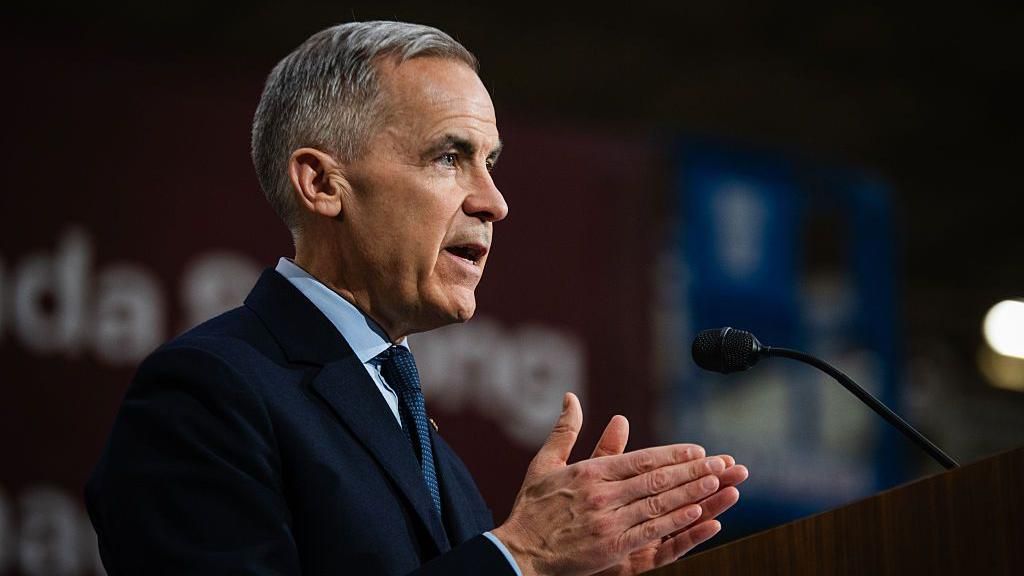
    In a significant move to fortify its automotive sector against mounting economic pressures, Canadian Prime Minister Mark Carney has introduced a comprehensive strategy aimed at bolstering domestic car manufacturing while accelerating the nation’s transition to electric vehicles. The announcement was made on Thursday at the Martinrea auto parts manufacturing facility in Woodbridge, Ontario, against the backdrop of challenging trade relations with the United States.

    The newly unveiled measures represent Canada’s proactive response to the 25% tariff imposed by the Trump administration last year on Canadian vehicles and auto parts—a decision that has severely disrupted an industry where approximately 90% of production is traditionally exported to the US market. This tariff implementation has already resulted in thousands of job losses across Canadian auto plants as major manufacturers including General Motors and Stellantis have scaled back their Canadian operations.

    Carney’s multifaceted approach includes financial incentives designed to encourage automakers to maintain and expand their Canadian manufacturing footprint. A key component is a novel tariff offset scheme that provides credits to companies like General Motors and Toyota to help mitigate the impact of US import duties. Additionally, the government will reintroduce consumer rebates for electric vehicle purchases—a direct contrast to the US where similar subsidies were eliminated under the Trump administration.

    The Prime Minister simultaneously announced stricter emissions standards for new vehicles, establishing an ambitious target for electric vehicles to comprise 90% of all car sales by 2040. In a notable policy shift, Carney eliminated the previous administration’s electric vehicle sales mandate, arguing that the new emissions-focused approach would achieve environmental goals without placing excessive burdens on automakers.

    This strategic realignment occurs as the United States-Canada-Mexico Agreement (USMCA) faces its scheduled review this year. Carney noted that the original purpose of eliminating tariffs across North America no longer aligns with current US trade objectives, necessitating Canadian preparedness for ‘all possibilities.’

    Concurrently, Canadian officials have been actively diversifying international partnerships to reduce dependence on US markets. Recent weeks have seen Canada establish agreements with both China and South Korea that could potentially undermine US automotive interests. The arrangement with China involves eased tariffs on Chinese electric vehicles, while the South Korea agreement aims to encourage Korean automotive manufacturing within Canada.

    While automotive industry representatives have generally welcomed the pragmatic approach, environmental groups have expressed concerns about the elimination of the mandatory EV sales targets, arguing that weakened regulations might slow Canada’s progress toward its climate objectives.


  • Morocco evacuates 143,000 people in northwest as flood precaution

    Morocco evacuates 143,000 people in northwest as flood precaution

    Moroccan authorities have executed one of the largest emergency evacuations in recent history, relocating over 143,000 residents from vulnerable areas in the country’s northwest region. The massive precautionary operation, announced by the Interior Ministry on Thursday, comes as multiple hydrological threats converge to create potentially catastrophic flooding conditions.

    The evacuation decision follows sustained heavy rainfall that has saturated watersheds throughout the northwestern plains, causing rivers to swell beyond their normal capacity. Compounding the natural water accumulation, reservoir managers have been compelled to release controlled overflow from dams that have reached maximum capacity after prolonged precipitation.

    This preventive measure reflects Morocco’s enhanced disaster preparedness protocols, which have been strengthened following previous flood tragedies. The region has historically experienced devastating inundations, including a recent flash flood incident that claimed numerous lives and represented the deadliest water-related disaster in a decade.

    The coordinated evacuation involved multiple government agencies working in tandem to ensure resident safety while minimizing disruption. Those displaced have been moved to designated emergency shelters equipped with essential supplies and personnel trained in crisis management.

    Meteorological indicators suggest the precipitation pattern will continue throughout the week, maintaining pressure on water management systems and keeping flood risks elevated. The government has maintained constant monitoring of hydrological data while keeping emergency response teams on high alert across affected provinces.

  • Affordable iftars in UAE: Where to eat this Ramadan for under Dh200

    Affordable iftars in UAE: Where to eat this Ramadan for under Dh200

    As Ramadan 2026 approaches in the UAE, residents seeking affordable yet meaningful iftar experiences have numerous options that combine tradition with value without exceeding Dh200. The holy month, characterized by spiritual reflection and communal gatherings, offers various dining experiences that maintain cultural authenticity while remaining budget-conscious.

    Across the Emirates, establishments are providing thoughtfully curated iftar menus that balance atmosphere with affordability. From traditional Lebanese fare at Allo Beirut (starting at Dh85) to innovative cross-cultural offerings, the diversity of options demonstrates that breaking the fast need not be accompanied by a substantial financial burden.

    Notable budget-friendly options include Pitfire Pizza’s signature Shawarma Pizza at Dh64, available for delivery across Dubai and Abu Dhabi, offering a casual alternative for friends and family. Rodeo Drive Ibn Battuta Gate presents an American comfort food approach with a four-course menu at Dh95 per person, featuring creative dishes like avocado hummus and Cajun kebabs.

    For those preferring traditional buffet settings, Novotel Dubai Al Barsha offers Ramadan classics with live cooking stations starting at Dh120, while Jewel of the Creek provides a distinctive cultural experience along Dubai Creek with iftar from Dh165, complete with live oud performances and a Ramadan Market.

    Several establishments have developed specialized offerings for different preferences. Ibn AlBahr brings its Emirati seafood expertise to iftar menus starting at Dh189 across multiple locations, while Rohini at Mövenpick JLT presents North Indian hospitality with menus between Dh149-169. For French-inspired dining, CQ French Brasserie offers a cross-cultural iftar experience at Dh189 per person.

    The variety of options demonstrates how UAE’s culinary scene accommodates diverse preferences while maintaining Ramadan’s spirit of community and togetherness, proving that memorable iftar experiences can be both accessible and affordable.

  • Ghaziabad sisters tragedy: Father denies financial woes caused daughters’ death

    Ghaziabad sisters tragedy: Father denies financial woes caused daughters’ death

    A devastating family tragedy in Ghaziabad, Uttar Pradesh, has taken a complex turn as conflicting narratives emerge surrounding the apparent suicide of three teenage sisters. The girls—identified as Nishika (16), Prachi (14), and Pakhi (12)—reportedly leaped from their ninth-floor apartment in the Bharat City housing society during the early hours of February 4th.

    Their father, Chetan Kumar, has vehemently denied financial pressures contributed to the incident, instead attributing the tragedy to his daughters’ intense fixation with Korean pop culture. In statements to Indian media, Kumar revealed the girls had demanded to be taken to Korea and had adopted Western names—Aliza, Cindy, and Maria—reflecting their cultural obsession. “They asked me to take them to Korea. But I said we are Indians. They got angry and even refused to eat,” Kumar told India Today, adding they had threatened suicide if their demands weren’t met.

    However, investigative reporting by local media reveals complicating factors in Kumar’s account. India Today reports Kumar, a stock trader, carries substantial debt exceeding Rs20 million (approximately Dh813,000). Additionally, he maintains two marriages (to sisters) and had withdrawn all three daughters from formal education approximately two years prior to the incident.

    Police discovered a poignant suicide note that partially corroborates the cultural obsession narrative. “I am really sorry, sorry papa,” the note began, while wall writings in their room stated: “My life is very, very alone.” A diary entry obtained by authorities read: “We love Korea, love, love, love… How will you make us leave Korea? Korea was our life, so how dare you make us leave our life?”

    An eyewitness account from neighbor Arun Singh, who was on his tenth-floor balcony opposite the girls’ apartment, provides chilling details of the final moments. Singh reported seeing the eldest sister sitting precariously on the window ledge around 2 AM, rocking back and forth. “Suddenly, the older sister toppled backwards and fell through the window, and the second sister came with her. The youngest sister, who too was at the window, appeared to lunge forward to catch them, but she too fell through the opening.”

    Senior police officer Nimish Patil confirmed the investigation continues, examining all aspects including financial pressures, cultural influences, and family dynamics that may have contributed to this profound tragedy.

  • Watch: The US and Russia’s nuclear treaty is dead. What comes next?

    Watch: The US and Russia’s nuclear treaty is dead. What comes next?

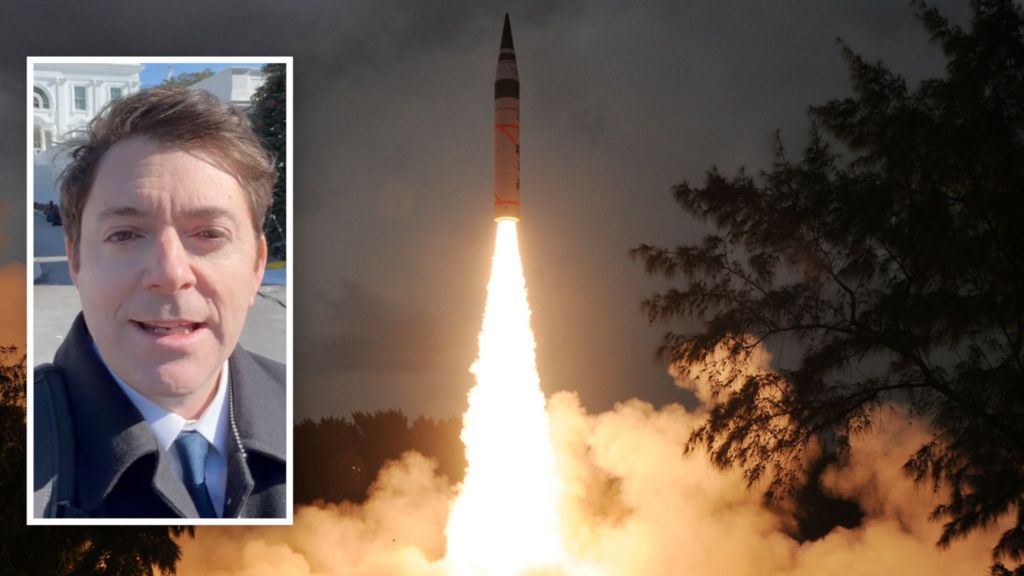
    A pivotal chapter in nuclear arms control concluded as the New START treaty between the United States and Russia officially expired, creating an unprecedented scenario where the world’s two largest nuclear powers operate without mutual weapons limitations for the first time in over three decades.

    The landmark agreement, which represented the final remaining nuclear arms control pact between the two nations, had established comprehensive verification protocols and capped deployed strategic nuclear warheads at 1,550 for each country. Its dissolution marks the most significant deterioration in US-Russia nuclear relations since the Cold War’s conclusion.

    Background analysis indicates this development culminates years of escalating tensions between Washington and Moscow, exacerbated by geopolitical conflicts in Ukraine, allegations of election interference, and broader strategic competition. Both nations had suspended mutual inspections and dialogue mechanisms throughout 2022, effectively rendering the treaty inoperative before its formal expiration.

    Arms control experts express profound concern that the absence of verification mechanisms and numerical restrictions could potentially trigger a new nuclear arms race. The strategic implications extend globally, potentially influencing nuclear posture among other nuclear-armed states and undermining the broader non-proliferation framework established since the 1960s.

    The international community now faces critical questions regarding future diplomatic pathways. Potential scenarios include bilateral negotiations for a successor agreement, multilateral arms control frameworks involving additional nuclear powers, or alternatively, a complete breakdown of the existing global nuclear order with unpredictable consequences for international security architecture.

  • Families of plane crash victims ask US appeals court to revive a criminal case against Boeing

    Families of plane crash victims ask US appeals court to revive a criminal case against Boeing

    In a pivotal legal confrontation, thirty-one families who lost relatives in the catastrophic Boeing 737 Max crashes petitioned the 5th U.S. Circuit Court of Appeals on Thursday to reinstate criminal charges against the aerospace giant. Represented by attorney Paul Cassell, the families contested a lower court’s dismissal of conspiracy allegations against Boeing for allegedly deceiving Federal Aviation Administration regulators about a critical flight-control system implicated in two crashes that claimed 346 lives.

    The dismissed charges followed a controversial settlement between Boeing and the U.S. Justice Department, wherein the company avoided prosecution by committing to $1.1 billion in penalties, victim compensation, and safety enhancements. Cassell argued prosecutors violated the Crime Victims’ Rights Act by excluding families from consultation during settlement negotiations—a claim federal prosecutors disputed, asserting years of engagement with victims’ families.

    Among attendees at the New Orleans hearing was Paul Njoroge, a Canadian who lost his entire family—wife, three young children, and mother-in-law—in the second crash. ‘Meaningful accountability requires a trial,’ Njoroge stated post-hearing. The tragedies occurred within five months in 2018-2019: Lion Air Flight 610 plunged into the Java Sea, while Ethiopian Airlines Flight 302 crashed shortly after takeoff from Addis Ababa.

    Judicial records reveal U.S. District Judge Reed O’Connor found the families’ arguments compelling but ultimately ruled prosecutors acted without bad faith and met legal obligations. The Justice Department maintained that trial risks included potential acquittal and no further Boeing accountability. Boeing attorney Paul Clement acknowledged the company’s ‘deep regret’ and cited compensation payments and safety overhauls, noting that over 60 families supported the settlement.

    The case’s complex history includes a 2021 fraud charge deferred through a compliance agreement, which Boeing violated by 2024, leading to a guilty plea that Judge O’Connor rejected before the current settlement. Central to the controversy is Boeing’s concealment of a new automated flight-control system (MCAS) in 737 Max aircraft, which repeatedly forced planes into nosedives based on faulty sensor data. Investigations confirmed Boeing withheld MCAS details from FAA officials during certification, leaving pilots unprepared for system failures. The appeals panel will issue its ruling at a later date.

  • Amazon joins Big Tech AI spending spree

    Amazon joins Big Tech AI spending spree

    Amazon has unveiled an unprecedented $200 billion investment strategy for the coming year, positioning itself at the forefront of the intensifying artificial intelligence infrastructure competition among technology titans. The announcement came during the company’s annual financial disclosure on Thursday, revealing a dramatic 60% spending increase compared to last year’s $125 billion expenditure.

    The substantial capital allocation, predominantly directed toward AI development and computational infrastructure, triggered immediate investor concerns. Amazon’s stock value declined approximately 10% in after-hours trading following the revelation, reflecting market apprehension about the massive capital outlay.

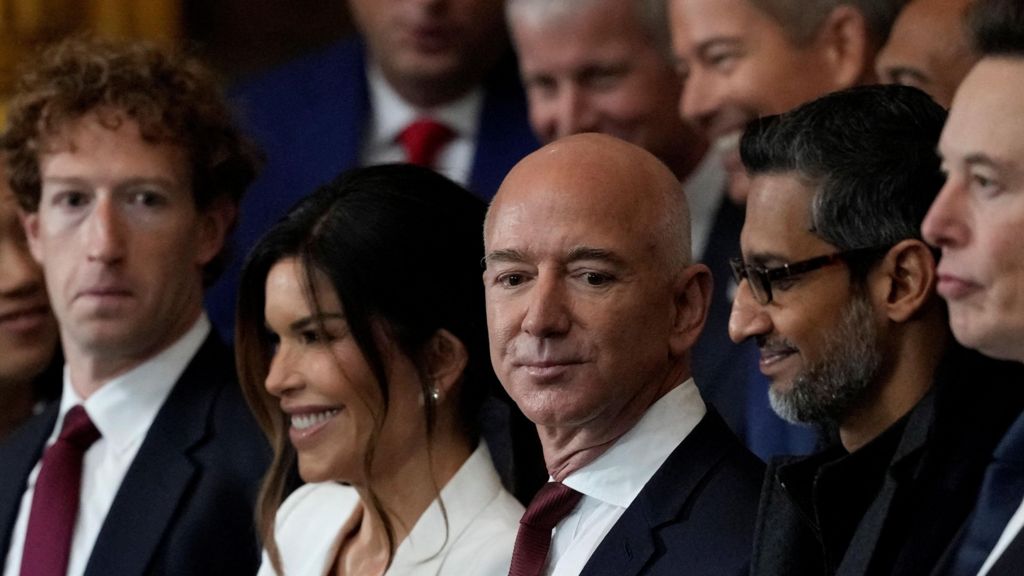
    This aggressive investment strategy places Amazon ahead of other major technology corporations in absolute spending figures. However, when viewed collectively, the combined AI investment from Amazon, Meta, Google, and Microsoft is projected to reach approximately $650 billion for the current year, signaling an industry-wide commitment to artificial intelligence dominance.

    The substantial financial commitment underscores the strategic importance of AI capabilities for maintaining competitive advantage in cloud computing, e-commerce, and digital assistant technologies. While the short-term market reaction demonstrated investor nervousness, this investment represents a long-term bet on artificial intelligence as the fundamental driver of future technological innovation and revenue generation.

  • Saudi’s Neom replaced by Almaty as 2029 Asian Winter Games hosts

    Saudi’s Neom replaced by Almaty as 2029 Asian Winter Games hosts

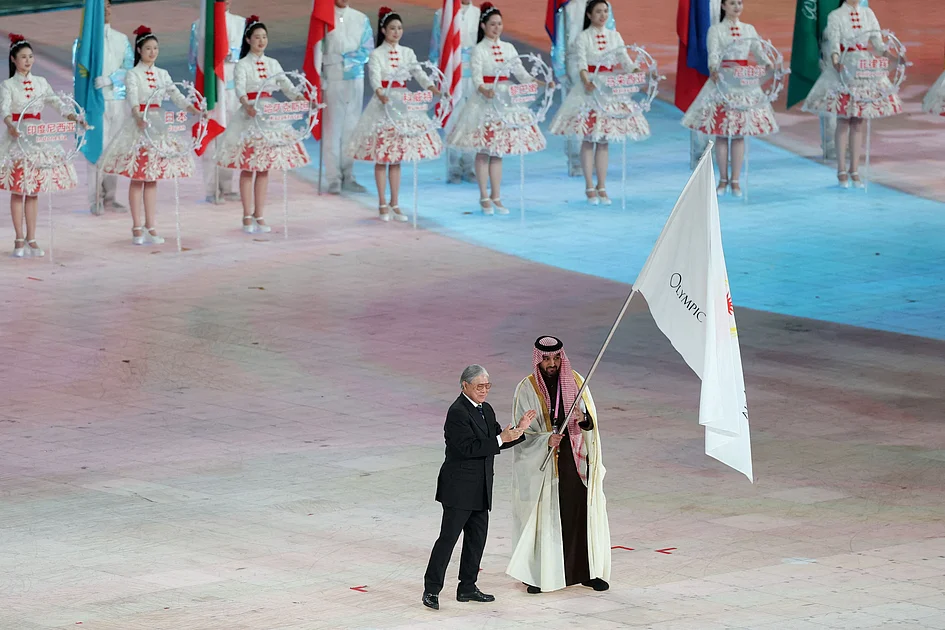
    In a significant development for winter sports in Asia, the Olympic Council of Asia (OCA) announced on Thursday that Almaty, Kazakhstan will host the 2029 Asian Winter Games, replacing the originally scheduled host Neom in Saudi Arabia. The decision was formally declared during a contract signing ceremony in Milan, coinciding with the eve of the 2026 Winter Olympics.

    The hosting change follows last month’s postponement of the event in Neom, where Saudi authorities appeared to delay the delivery of essential infrastructure, particularly the planned year-round ski resort in Trojena. This facility is a central component of Neom, the kingdom’s ambitious $500 billion megaproject aimed at constructing a futuristic city in the western desert region along the Red Sea.

    OCA President Sheikh Joaan bin Hamad Al Thani expressed gratitude to the Kazakh government and city of Almaty for their commitment to advancing winter sports across the continent. “Almaty is a city with deep connections to winter sports and we have very fond memories of when we last hosted the Asian Winter Games in 2011,” stated Sheikh Joaan during the official proceedings. “We are grateful for your ongoing partnership and we have no doubt we’ll build on this legacy and host an unforgettable games in 2029.”

    Almaty brings substantial experience to the event, having previously hosted the Asian Winter Games in 2011 across both Almaty and the capital Astana. The city has also demonstrated ambitions in the international winter sports arena through its previous bid for the 2022 Winter Olympics, though ultimately unsuccessful in securing the event against Beijing.

    The transition to Almaty represents a strategic shift for the Asian winter sports community, replacing Saudi Arabia’s untested winter sports infrastructure with Kazakhstan’s established winter sports facilities and organizational experience. This change ensures continuity for the quadrennial event while maintaining the scheduled 2029 timeline rather than implementing the proposed four-year postponement that had been discussed with Saudi organizers.

  • How did Harry Potter villain become Chinese Lunar New Year symbol?

    How did Harry Potter villain become Chinese Lunar New Year symbol?

    In an unexpected cultural phenomenon, Draco Malfoy—the aristocratic antagonist from J.K. Rowling’s Harry Potter series—has emerged as an unconventional mascot for China’s Lunar New Year celebrations. The character’s sudden popularity stems from the Chinese translation of his surname, “Ma-er-fu,” which combines the words for “horse” and “fortune,” making it particularly auspicious for the Year of the Horse.

    Social media platforms across China have been inundated with images showcasing vibrant red posters featuring Tom Felton’s portrayal of the Slytherin student adorning household doors and commercial spaces. E-commerce platform Taobao reports robust sales of Malfoy-themed merchandise, with packages of four decorative posters selling for approximately 11 yuan ($1.60). One Rednote user encapsulated the trend by stating: “Year of the Horse’s blessing, so stick on a Malfoy.

    The phenomenon has reached monumental proportions, with photographs circulating online depicting a massive multi-story banner of Malfoy in his Hogwarts uniform draped across a shopping mall in central Henan province. This unusual adoption occurs despite the character’s villainous role in the original narrative.

    This cultural adaptation highlights the enduring popularity of the Harry Potter franchise in China, where foreign film representation remains limited due to strict import quotas and growing domestic content production. The wizarding world’s commercial presence continues expanding, with Warner Bros recently announcing collaboration with Jinjiang International to develop a Harry Potter Studio Tour in Shanghai. Additionally, Beijing’s Universal Studios features extensive Harry Potter-themed attractions, and the film series enjoyed successful re-releases in Chinese theaters during 2024.

  • France begins Six Nations title defense with five-try pounding of Ireland in 36-14 win

    France begins Six Nations title defense with five-try pounding of Ireland in 36-14 win

    In a spectacular display of rugby prowess, France launched their Six Nations championship defense with an emphatic 36-14 victory against Ireland on Thursday evening. The match, played under rainy conditions at Stade de France, saw the French squad demonstrate why they remain tournament favorites with a performance that blended tactical brilliance with raw athletic power.

    The opening half unfolded as a masterclass in offensive execution as France built a commanding 29-0 advantage before halftime. Young sensation Louis Bielle-Biarrey, last year’s tournament MVP, ignited the scoring frenzy in the 12th minute with a spectacular individual effort that saw him break multiple tackles before powering across the try line. Flyhalf Matthieu Jalibert quickly followed with his fourth international try, redeeming himself after previous disappointing performances in the French jersey.

    France’s third try emerged from an unexpected source as forwards Jean-Baptiste Gros and Mickaël Guillard orchestrated a brilliant sequence that culminated with lock Charles Ollivon scoring his 18th international try. The first-half dominance was capped by Bielle-Biarrey’s second score early in the second period, created by a remarkable soccer-style flick pass from Ramos that sent the winger sprinting into the corner.

    Ireland mounted a late resurgence with replacement players Nick Timoney and Michael Milne crossing for consecutive tries, both converted by Sam Prendergast. However, the comeback attempt proved insufficient against France’s overwhelming advantage. The match concluded with controversy as James Ryan delivered a heavy off-the-ball challenge on Jalibert, though the French flyhalf recovered to set up Théo Attissogbe for a final converted try in the closing seconds.