作者: admin

  • Macron orders France’s nuclear-powered aircraft carrier to the Mediterranean

    Macron orders France’s nuclear-powered aircraft carrier to the Mediterranean

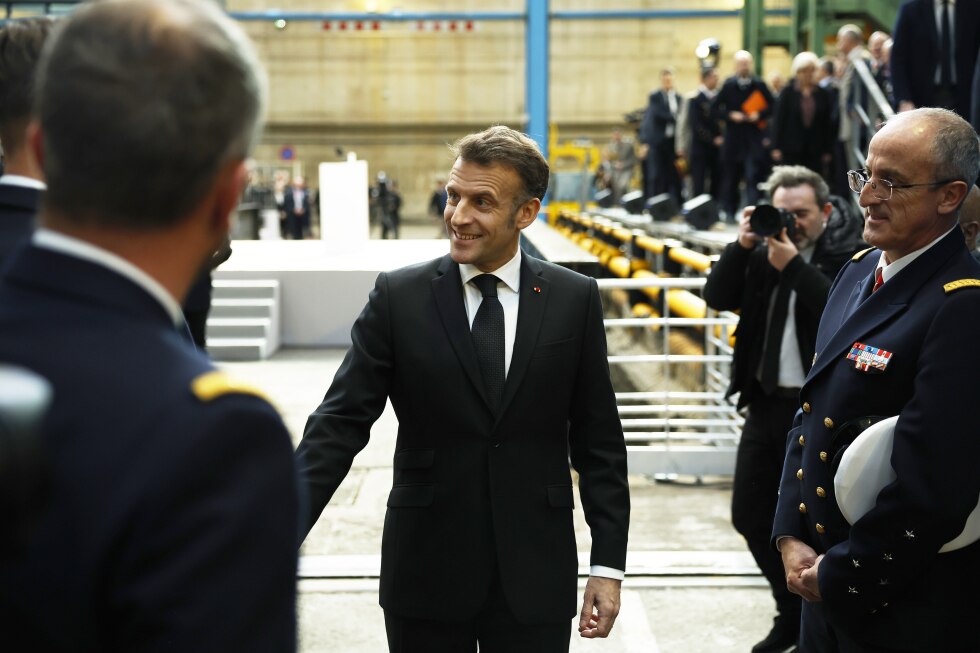
    PARIS — In a significant military mobilization, French President Emmanuel Macron has ordered the redeployment of France’s nuclear-powered aircraft carrier, the Charles de Gaulle, from the Baltic Sea to the Mediterranean theater. The strategic move aims to bolster allied defense capabilities during escalating tensions in the Middle East conflict.

    During a televised address, Macron confirmed the carrier strike group would be accompanied by its full air wing and escort frigates. This deployment coincides with the recent positioning of Rafale fighter jets, advanced air-defense systems, and airborne radar assets to the region over the past several hours.

    The French leader emphasized the nation’s commitment to sustained operational presence, stating, “We will continue this effort as much as necessary.” He specifically referenced Monday’s attack on a British airbase in Cyprus—an EU member state with which France recently established a strategic partnership—as justification for enhanced defensive measures.

    Additional reinforcements include supplementary air-defense resources and the guided-missile frigate Languedoc, which Macron confirmed would arrive off the Cypriot coast imminently.

    While France, the United Kingdom, and Germany have previously denied direct involvement in strikes against Iran, all three nations have expressed readiness to support proportional defensive operations targeting Iran’s missile and drone capabilities.

    Macron further highlighted France’s existing defense agreements with Qatar, Kuwait, and the United Arab Emirates, alongside security commitments to Jordan and Iraq. Expressing concern over conflict spillover into Lebanon, the president condemned Hezbollah’s strikes against Israel as “a grave mistake” endangering Lebanese civilians, while simultaneously cautioning against Israeli ground operations.
  • Polls show Britons oppose US use of UK bases against Iran

    Polls show Britons oppose US use of UK bases against Iran

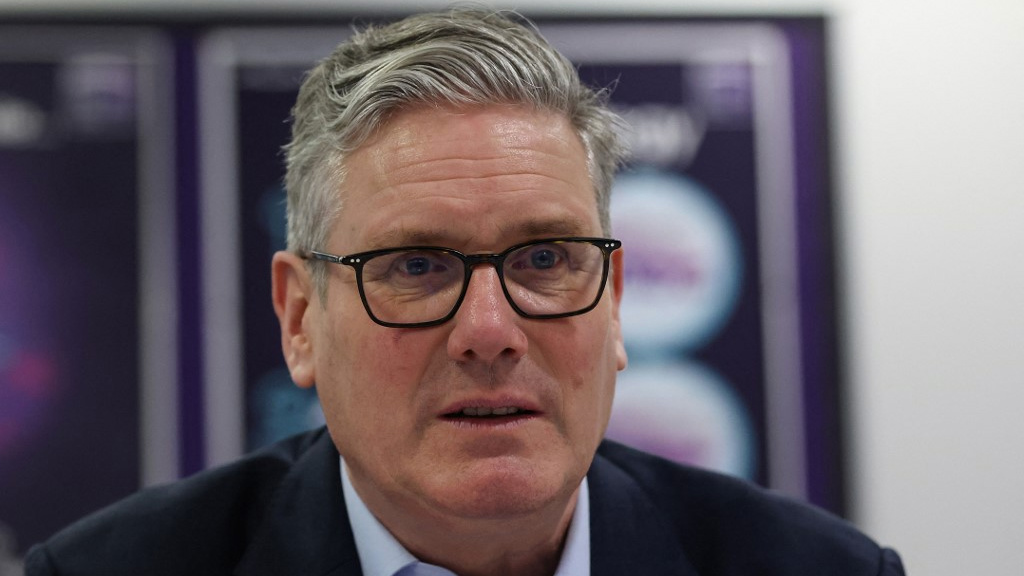
    A significant majority of the British public stands against permitting American forces to utilize UK airbases for conducting strikes on Iranian missile installations, according to newly released polling data. The YouGov survey, published on Monday, demonstrates that 49% of Britons oppose US military action against Iran, with only 28% expressing support.

    The research further indicates that precisely half of the UK population disapproves of their government authorizing US access to British military facilities for this purpose, while merely 30% endorse such cooperation. This public sentiment emerges despite Prime Minister Keir Starmer’s announcement on Sunday evening that the United States would be granted permission to use British bases specifically for targeting Iranian missile sites—a decision marking a reversal from Britain’s initial refusal to participate when US-Israeli strikes commenced on Saturday.

    Notably, Britain had originally blocked American access to the joint UK-US military installation on Diego Garcia in the Chagos Islands, a move reportedly taken following legal counsel from Attorney General Lord Richard Hermer.

    The polling reveals strikingly low strong support for the US-Israeli offensive against Iran, with just 11% of the general public expressing firm endorsement. Political affiliation significantly influences these views: while 36% of Reform voters strongly support the strikes, only 5% of Labour voters share this position. Among Green Party supporters, opposition reaches 70%.

    The issue has sparked considerable political controversy, with Reform leader Nigel Farage and Conservative leader Kemi Badenoch both criticizing Prime Minister Starmer for limiting US military options rather than granting blanket authorization for any actions against Iran. Badenoch has controversially suggested that Labour’s cautious approach reflects concerns about alienating Muslim voters following the party’s recent by-election defeat against the Greens in Gorton and Denton.

    Meanwhile, Liberal Democrat leader Ed Davey and Green Party leader Zack Polanski have demanded parliamentary scrutiny of the decision, urging Starmer to submit the matter to a legislative vote. Polanski went further by characterizing America as a ‘rogue state’ and calling for complete reversal of the basing permissions.

    Defending his position, Starmer explained in a Downing Street address that destroying Iranian missiles at their source represents the only effective method to prevent regional attacks targeting innocent civilians and endangering British lives.

  • Country by country, here’s how the unfolding war is affecting the Middle East and beyond

    Country by country, here’s how the unfolding war is affecting the Middle East and beyond

    The escalating military confrontation between Iran and Israel has erupted into a full-scale regional crisis, causing catastrophic damage across the Middle East and triggering global economic and humanitarian repercussions. According to verified reports, nearly every nation in the region has sustained direct impacts from missile strikes, drone attacks, or falling debris, resulting in significant civilian casualties and infrastructure destruction.

    The conflict has forced unprecedented international response measures, with numerous governments urgently evacuating their citizens via any available commercial flights. Critical airspaces throughout the Gulf region have been largely closed to civilian traffic, while major shipping lanes including the Strait of Hormuz have become impassable due to security concerns. The United States State Department has confirmed the evacuation of non-essential personnel and diplomatic families from six nations, with travel advisories issued for over a dozen countries.

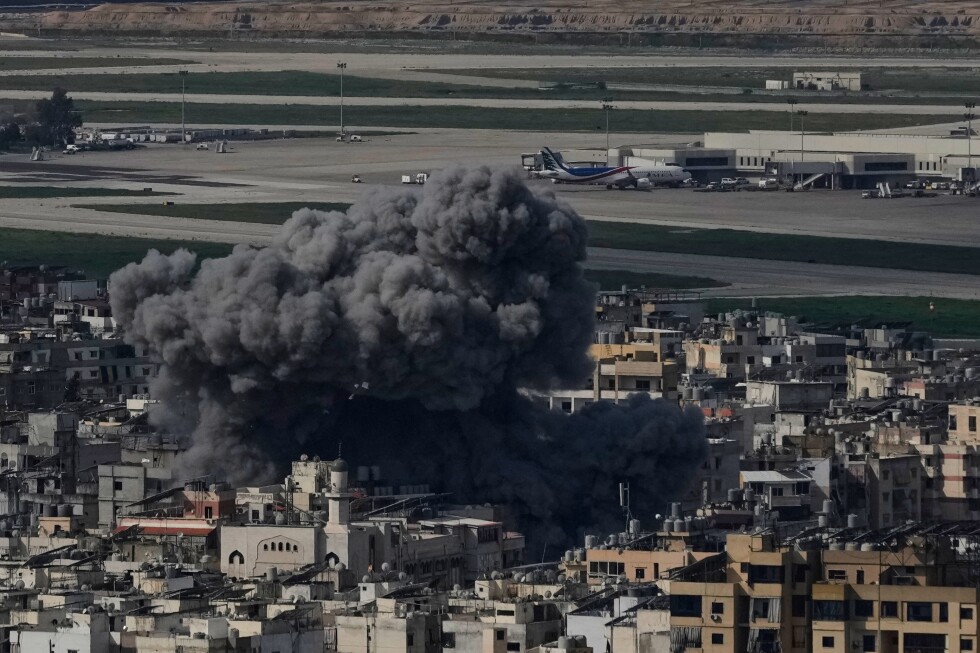
    Regional impact assessments reveal devastating human costs: Iran reports approximately 1,045 fatalities, including significant civilian casualties from a disputed elementary school strike in Minab. Israel has confirmed eleven civilian deaths from rocket attacks, while Lebanon’s Health Ministry reports 72 fatalities including seven children, with over 84,000 people displaced. Kuwait has suffered eight casualties, including six American soldiers killed at a operations center.

    Critical infrastructure has been systematically targeted, with nuclear facilities, government compounds, and economic assets suffering extensive damage. The United Arab Emirates, previously considered a regional safe haven, has seen its reputation shaken after Iranian drones struck its international airport, coastal hotels, and Amazon data centers. Dubai’s status as a global business hub has been particularly compromised by these attacks.

    Global economic ramifications are already emerging, with Iraq’s Ministry of Oil announcing production halts in key fields due to Strait of Hormuz disruptions, causing worldwide crude oil prices to surge. Egypt’s struggling economy faces further pressure as shipping companies reroute vessels away from the Suez Canal, a vital source of foreign currency.

    The conflict has expanded beyond the Middle East, with a U.S. submarine sinking an Iranian warship off the coast of Sri Lanka, resulting in 87 confirmed fatalities. NATO defense systems in Turkey have intercepted ballistic missiles, while a British air base in Cyprus has come under attack, demonstrating the conflict’s expanding geographical footprint.

    International diplomatic efforts continue amid the chaos, with governments from Russia to Germany and India organizing emergency repatriation flights for their citizens caught in the rapidly deteriorating security situation across the region.

  • Trump lashes out at Spain, says he is ‘going to cut off all trade’

    Trump lashes out at Spain, says he is ‘going to cut off all trade’

    President Donald Trump has issued a severe economic threat against Spain, declaring his intention to sever all trade relations with the European nation. The extraordinary declaration follows a diplomatic confrontation regarding U.S. military access to Spanish bases during recent operations targeting Iran.

    The escalation began when Spanish authorities reportedly denied American forces permission to utilize strategic military installations on Spanish territory. These bases, particularly Rota Naval Station which hosts U.S. Aegis missile defense systems, play significant roles in American military operations in the Mediterranean and Middle Eastern theaters.

    Trump’s retaliatory threat represents one of the most direct economic challenges to a NATO ally in recent history. Spain currently maintains substantial trade relationships with the United States, with bilateral trade exceeding $40 billion annually across automotive, agricultural, and technology sectors. A complete trade termination would disrupt global supply chains and impact both economies significantly.

    The Spanish government has maintained that its decision reflects sovereign foreign policy considerations and commitment to international law. This incident highlights growing tensions within traditional alliances as the Trump administration continues its assertive approach to international relations, prioritizing unilateral action over multilateral cooperation.

  • World’s largest acidic geyser wakes up in Yellowstone from six-year slumber

    World’s largest acidic geyser wakes up in Yellowstone from six-year slumber

    Yellowstone National Park’s renowned Echinus Geyser has spectacularly resumed activity after an unprecedented six-year hiatus, marking its first eruption since 2020. Located within the park’s Norris Geyser Basin, this geological marvel represents the world’s largest acidic geyser, though scientists remain uncertain whether the current activity will persist through the summer tourist season.

    According to the U.S. Geological Survey, geysers naturally cycle through active and dormant phases. “Geysers are always turning on and off. That’s Yellowstone being Yellowstone!” the agency noted in a social media update.

    The geological mechanism behind geyser formation involves a tube-like structure extending deep into the Earth’s crust, filled with water that becomes superheated near magma sources. This pressurized water eventually erupts violently through the surface opening, then gradually drains back to restart the cycle.

    Echinus Geyser historically displayed remarkable regularity, with 1970s eruptions occurring every 40-80 minutes and sometimes lasting 90 minutes while projecting water 75 feet (23 meters) skyward. The eruptions—which could spray vertically or at angles—often drenched spectators with warm mineral water.

    However, the geyser’s pattern became increasingly irregular in recent years, with only one eruption recorded in 2018, one in 2019, and two in 2020. The current activity period began on February 7th, with eruptions now matching 2017 frequency levels, though with shorter durations of up to three minutes and reduced height of approximately 30 feet.

    The geyser derives its name from surrounding rocks resembling sea urchins (echinoderms). Its unique acidic composition—compared by scientists to orange juice or vinegar—results from mixing acidic gases with neutral waters. This mild acidity prevents the corrosive damage typical of acid geysers, which usually degrade their own rock conduits over time.

    Researchers caution that the geyser may already be returning to dormancy following no recorded activity in late February, consistent with its pattern of brief active periods lasting one to two months.

  • Scoop up yuanxiao to uncover Hefei’s charm

    Scoop up yuanxiao to uncover Hefei’s charm

    China Daily Information Co (CDIC) has reinforced its intellectual property protections through a comprehensive copyright notice displayed on its digital platform. The statement explicitly asserts that all content published on the site—including textual materials, photographs, and multimedia information—remains the exclusive property of CDIC. The notice further clarifies that republication or utilization of any content in any form requires prior written authorization from the company.

    The copyright notification, which carries a 1994 timestamp, emphasizes the company’s longstanding commitment to protecting its intellectual assets. Additionally, the platform provides technical recommendations, suggesting that visitors use browsers with 1024*768 or higher resolution for optimal viewing experience.

    The footer section of the notice contains multiple reference numbers, including publishing license 0108263 and registration number 130349, indicating formal registration with relevant authorities. The platform also provides navigation links to various sections including corporate information, advertising opportunities, contact details, and career sections specifically mentioning expatriate employment opportunities.

    The complete copyright statement serves as both a protective measure and a user guidance document, balancing intellectual property assertions with practical browsing recommendations for its international audience.

  • Shanghai Cherry Blossom Festival 2026 to illuminate Gucun Park with nighttime blossoms

    Shanghai Cherry Blossom Festival 2026 to illuminate Gucun Park with nighttime blossoms

    Shanghai’s Gucun Park will transform into an illuminated floral wonderland during the 2026 Cherry Blossom Festival, scheduled from March 9 to April 9. For the first time, visitors will experience the magic of night blossom viewing through specially designed lighting installations that enhance the natural beauty of the cherry trees after dark.

    The festival, organized by Shanghai Wusongkou Culture Tourism Investment (Group) Co Ltd under the guidance of Shanghai Municipal Administration of Culture and Tourism and Baoshan district government, will feature dynamically adjusted lighting systems synchronized with bloom progression. This innovative approach extends viewing opportunities beyond daylight hours, allowing visitors to appreciate the cherry blossoms in entirely new visual dimensions.

    Strategic illumination planning will create mesmerizing nighttime landscapes while preserving the natural ecosystem. The festival represents a significant advancement in cultural tourism experiences, combining horticultural appreciation with cutting-edge lighting technology. Visitors can anticipate an immersive sensory journey through specially curated pathways that showcase the cherry blossoms under carefully calibrated lighting conditions.

    The month-long event continues Shanghai’s tradition of spring floral celebrations while introducing innovative elements that redefine urban park experiences. The nighttime viewing concept addresses growing demand for unique cultural tourism offerings and demonstrates Shanghai’s commitment to enhancing public recreational spaces through creative technological integration.

  • New charges for son of Norway’s crown princess on trial for rape

    New charges for son of Norway’s crown princess on trial for rape

    The ongoing trial of Marius Borg Høiby, son of Norway’s Crown Princess Mette-Marit, has taken a significant turn as prosecutors filed additional charges against him. The 29-year-old now confronts a total of 40 criminal charges, including reckless behavior and violation of a restraining order, adding to the serious rape allegations that initially prompted the legal proceedings.

    Høiby’s arrest occurred abruptly on the eve of his trial in early February, following allegations of threats and violence against a woman at his Oslo residence. Authorities maintained him in custody throughout the initial four-week phase of the judicial process. While some accusations involving physical harm and knife threats have been withdrawn, the defendant has acknowledged engaging in reckless conduct and breaching a court-issued restraining order.

    The most severe allegations involve four distinct rape charges, all concerning situations where the accuser was either unconscious or physically incapacitated following consensual intercourse. Høiby maintains his innocence regarding these particular accusations while admitting to certain lesser offenses among the comprehensive list of charges.

    Notably, the recent charges pertain to a woman from Oslo’s affluent Frogner district, whom Høiby was legally prohibited from contacting. He had previously confessed to violating the restraining order concerning this individual when the trial commenced and partially acknowledges additional allegations dating back to 2024.

    The judicial proceedings, now in their seventeenth day at Oslo District Court, operate under stringent media restrictions that forbid any photographic documentation of either the defendant or the four women allegedly involved in the rape cases. The sole identifiable complainant is Nora Haukland, a social media influencer with substantial online following, who testified about experiencing physical abuse including kicking, punching, and choking during their 2022-2023 relationship.

    The courtroom recently reviewed an audio recording featuring Høiby verbally assaulting Ms. Haukland during a heated argument. Defense representatives contest these characterizations, asserting that the former girlfriend never existed within an ‘atmosphere of fear.’ Counter-testimony from Haukland’s previous partners presented conflicting perspectives, with one describing an amicable separation and another acknowledging a tumultuous relationship dynamic.

    State prosecutor Sturla Henriksbø clarified that adding charges mid-trial, though uncommon, remains permissible when defendants admit to offenses. Conviction on the most serious charges could result in a minimum ten-year prison sentence, with reckless behavior alone carrying a potential two-year incarceration period.

  • US says Israel killed Iran’s leader

    US says Israel killed Iran’s leader

    In a significant clarification of US military objectives, Pentagon policy chief Elbridge Colby testified before the Senate Armed Services Committee on Tuesday that the United States was not responsible for the lethal strike that eliminated Iranian Supreme Leader Ayatollah Ali Khamenei. Colby explicitly identified the operation as an Israeli military action, separate from American strategic goals in the region.

    The testimony revealed a notable divergence between the administration’s diplomatic messaging and military objectives. While President Donald Trump has publicly celebrated the elimination of Iranian leadership and encouraged regime change, Colby maintained that official US military operations remain focused specifically on degrading Iran’s capacity to project military power rather than pursuing overt regime overthrow.

    Colby characterized US objectives as ‘scoped and reasonable,’ emphasizing that American operations specifically target Iran’s enhanced missile capabilities, weapons production infrastructure, and naval elements that threaten US forces and regional allies. When pressed by Democratic Senator Jack Reed about how the leadership strike aligned with these stated objectives, Colby reiterated that those operations were conducted by Israel, not the United States.

    The administration’s mixed messaging was further complicated by Secretary of State Marco Rubio’s Monday statement suggesting Washington acted only after learning of Israel’s impending strike, positioning US involvement as reactive rather than part of a comprehensive strategic plan. This contrast between Trump’s triumphant rhetoric and the Pentagon’s measured military objectives underscores ongoing questions about the administration’s cohesive strategy toward Iran.

  • Trump suggests UK’s Starmer pandering to Muslim voters over Iran reluctance

    Trump suggests UK’s Starmer pandering to Muslim voters over Iran reluctance

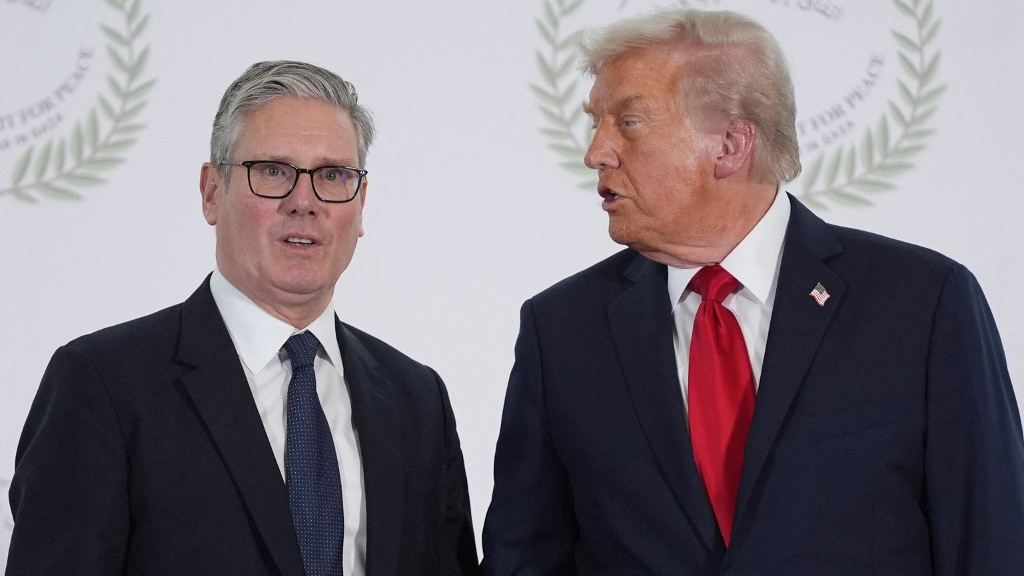
    Former U.S. President Donald Trump has launched a sharp critique against British Prime Minister Keir Starmer, questioning his refusal to fully endorse the recent U.S.-Israeli military action against Iran. In an interview with The Sun, Trump suggested this hesitation might constitute an effort to appease British Muslim voters, stating bluntly, “it could be” the case.

    The diplomatic friction emerged after Britain initially blocked U.S. access to the joint UK-US military base on Diego Garcia for offensive strikes against Iran. This decision, reportedly based on legal counsel from Attorney General Lord Richard Hermer, was later modified. On Sunday, Prime Minister Starmer announced a compromise: the U.S. would be permitted to use British bases, but strictly for the purpose of targeting Iranian missile sites, not for the broader offensive operations that began Saturday.

    Trump expressed profound disappointment, characterizing the UK’s stance as unhelpful and lamenting the deterioration of the historically “most solid relationship.” He remarked, “I never thought I’d see that from the UK,” and described the modern United Kingdom as “not such a recognisable country” anymore, specifically criticizing London’s leadership.

    This stance from the British government aligns with significant public opposition. A recent YouGov poll indicates 49% of the British public opposes U.S. military action against Iran, with only 28% in support. Furthermore, 50% oppose allowing the U.S. to utilize British airbases for such actions.

    The Prime Minister’s decision has also drawn fire from across the domestic political spectrum. Right-wing figures, including Reform leader Nigel Farage and Tory leader Kemi Badenoch, condemned Starmer for not granting unconditional base access. Conversely, Liberal Democrat leader Ed Davey and Green Party leader Zack Polanski urged for a parliamentary vote on the matter, with Polanski going so far as to label the U.S. a “rogue state” and demand a reversal of the decision.