作者: admin

  • Dubai announces phase 2 of property tokenisation project for secondary market resale

    Dubai announces phase 2 of property tokenisation project for secondary market resale

    Dubai has officially entered the next stage of its pioneering real estate tokenization initiative. The Dubai Land Department (DLD) confirmed the commencement of Phase Two, set to activate on February 20, 2026. This pivotal phase is designed to unlock the secondary market, facilitating the resale of an estimated 7.8 million digitized real estate tokens.

    The project, initially launched as a pilot program in collaboration with the Virtual Assets Regulatory Authority (VARA) and technical partners, has now matured beyond its testing grounds. The inaugural phase successfully validated the regulatory, legislative, and technical frameworks required for converting physical property title deeds into secure digital tokens.

    Phase Two will operate within a controlled pilot environment with strategic objectives: evaluating market efficiency, testing operational capabilities, enhancing transparency and governance protocols, and rigorously safeguarding investor rights to ensure absolute transaction integrity. This measured approach underscores Dubai’s commitment to de-risking technological adoption in its vital property sector.

    Early indicators from the pilot have been promising. As previously reported, investments were accessible to UAE residents starting from just AED 2,000. This low barrier to entry fueled significant initial traction, with one platform, Prypco Mint, processing deals exceeding AED 9 million within the first month alone.

    This tokenization effort is part of a broader suite of initiatives by Dubai to stimulate and democratize property ownership. It complements programs like the First-Time Home Buyer (FTHB) Programme—a multi-stakeholder collaboration between DLD, the Dubai Economic Development Corporation (DEDC), banks, and developers—which has already enabled over 2,000 residents to purchase their first homes.

    The DLD emphasized that its phased rollout strategy allows for careful assessment of practical outcomes and fosters close cooperation with other regulatory bodies. Ongoing work with VARA and technical partners continues to focus on developing robust standards for the project’s future expansion, cementing Dubai’s position as a global leader in tokenized real-world asset investment.

  • Beyond the commute: How ‘Metro Diaries’ maps the soul of the UAE migrant experience

    Beyond the commute: How ‘Metro Diaries’ maps the soul of the UAE migrant experience

    In Dubai’s ever-evolving urban landscape, the metro system serves as both transportation artery and cultural metaphor for the city’s migrant communities. The performing arts collective +63Kolektib, comprised primarily of Filipino artists, has transformed this daily commute into a powerful theatrical experience titled ‘Metro Diaries,’ set to premiere in Dubai this February.

    The production originated from extensive research and personal documentation, with approximately 90% of its dialogue drawn directly from performers’ journals and real-life observations. Cultural producer Jomel Duran Reyes describes the metro as ‘a liminal representation of the struggles and victories that have led us to where we are now’ – a symbolic journey mirroring the migrant experience of arrival, adaptation, and aspiration.

    Beyond its artistic merit, the performance challenges conventional narratives about migrant workers in the UAE. It specifically addresses the psychological toll of maintaining the ‘resilient migrant’ facade while grappling with work pressures, family expectations abroad, and cultural displacement. Malavika Suresh, a spoken-word artist and researcher involved in the production, notes the universal relatability of these stories across different nationalities.

    The production’s staging incorporates physical movement that communicates narrative even without dialogue, creating a visceral connection with audiences. Previous performances have elicited emotional responses from viewers who recognized their own experiences reflected on stage.

    Scheduled for February 14th and 15th at SIMA Performing Arts in Alserkal Avenue, Metro Diaries aims to foster greater compassion and understanding among Dubai’s diverse residents, encouraging viewers to see fellow commuters not as anonymous workers but as individuals on complex personal journeys.

  • Bangladesh poll rivals rally on final day of campaign

    Bangladesh poll rivals rally on final day of campaign

    With Bangladesh’s parliamentary elections scheduled for February 12, the nation’s political landscape has reached a fever pitch as rival parties concluded their final day of campaigning on Monday. The electoral contest marks a historic turning point for the South Asian nation, occurring just eighteen months after the mass uprising of August 2024 that ended Sheikh Hasina’s 15-year autocratic rule.

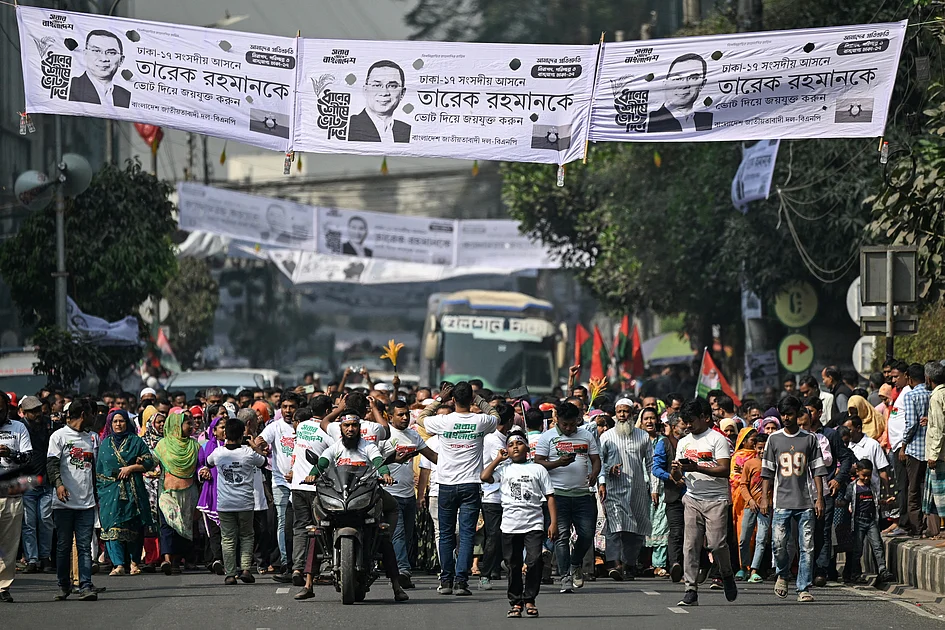
    Tens of thousands of enthusiastic supporters flooded the streets of Dhaka throughout the campaign period, waving party flags and chanting revolutionary slogans that echoed the sentiments of the 2024 pro-democracy movement. The electoral competition has centered around competing interpretations of the uprising’s legacy and divergent visions for the future of this nation of 170 million people.

    The Bangladesh Nationalist Party (BNP), led by Tarique Rahman who returned from 17 years of exile in December, has emerged as a frontrunner in the parliamentary race. The 60-year-old leader, widely known as Tarique Zia, assumed control of the party following the December passing of his mother, former Prime Minister Khaleda Zia. At a Sunday rally in Dhaka’s Mirpur neighborhood, Rahman urged supporters to back local BNP candidate Shafiqul Islam Milton, promising representation that would genuinely serve constituents’ interests.

    Meanwhile, Jamaat-e-Islami chief Shafiqur Rahman addressed packed crowds in the Dhaka-11 constituency, a significant flashpoint during the 2024 uprising. Leading a coalition of Islamist parties under the symbol of weighing scales, Rahman accused the former ruling party of systematic repression while warning that new forms of abuse had emerged following its ouster. “A section of the oppressed turned into oppressors just a day after August 5,” he asserted, alleging widespread extortion and corruption by returning political figures.

    Jamaat-e-Islami, ideologically aligned with the Muslim Brotherhood, has formed an alliance with the National Citizen Party (NCP) founded by student leaders who spearheaded the 2024 uprising. NCP leader Nahid Islam accused major political parties of covertly sharing what he described as “businesses of extortion and crime” for decades.

    The electoral atmosphere has been charged with revolutionary fervor, with supporters repeatedly chanting “Long live the revolution!” and engaging in call-and-response cries of “Slavery or freedom?” answered by thunderous shouts of “Freedom, freedom!”

    Voters expressed diverse motivations for their electoral choices. Mohammed Harun, 65, revealed he hadn’t voted in 17 years but would support the Jamaat-led alliance hoping for a “just, corruption and violence-free country.” First-time voter Abdullah-al-Rahat, a 21-year-old Dhaka University student who participated in the 2024 uprising, expressed preference for a unity government should no party secure a majority.

    The Awami League, former Prime Minister Sheikh Hasina’s party, has been banned from participating in the elections by the interim government—a move criticized by various human rights organizations. Hasina, now 78, was sentenced to death in absentia last November for crimes against humanity related to her government’s deadly crackdown on protesters during her final bid to maintain power. She remains in hiding in India.

    The election represents not merely a political transition but a profound test of Bangladesh’s democratic institutions and its ability to channel revolutionary energy into sustainable governance structures.

  • Indian priest arrested for cultivating marijuana worth Rs7 million within temple

    Indian priest arrested for cultivating marijuana worth Rs7 million within temple

    In a startling breach of religious sanctity, authorities in India’s Telangana state have uncovered a sophisticated marijuana cultivation operation operating within a temple’s sacred grounds. Avuti Nagaiah, a 48-year-old priest serving at Panchagam village temple, has been taken into custody following a coordinated raid by local police and excise officials.

    The investigation revealed that Nagaiah had transformed the temple garden into an elaborate camouflage for illicit activities. Among legitimate marigold plants—chosen specifically for their visual and olfactory similarity to cannabis—the priest cultivated nearly 700 marijuana plants with an estimated street value of Rs7 million (approximately Dh285,000).

    The discovery has sent shockwaves through the local community, with villagers expressing profound dismay at the exploitation of their place of worship. Law enforcement officials are now conducting an expanded investigation to identify potential accomplices and determine the distribution network that supported this operation.

    This incident coincides with heightened drug enforcement activities across Telangana, where police recently apprehended three additional suspects and confiscated over 16 kilograms of cannabis in operations throughout Hyderabad, the state capital. The case highlights growing concerns about innovative drug cultivation methods being employed in unexpected locations across India.

  • Tanzania opposition leader returns to court for treason trial after monthslong delay

    Tanzania opposition leader returns to court for treason trial after monthslong delay

    NAIROBI, Kenya (AP) — Tanzanian opposition figure Tundu Lissu made his first court appearance in months on Monday, facing treason charges that carry potential capital punishment. The highly anticipated hearing was abruptly adjourned after Lissu, who is representing himself legally, formally objected to prosecutors’ plans to utilize concealed witnesses testifying from a specially secured chamber.

    Lissu has remained incarcerated for ten months following his arrest at an opposition rally where he demanded constitutional and electoral reforms prior to Tanzania’s contentious 2025 election. The political veteran argued that anonymous testimony from isolated witnesses creates unacceptable judicial risks and would almost certainly prejudice his right to a fair trial.

    The judicial panel announced it would deliberate on this procedural challenge and deliver a ruling on Wednesday. This legal development occurs against the backdrop of ongoing political turbulence stemming from last October’s disputed elections, which triggered widespread civil unrest, internet blackouts, and significant casualties.

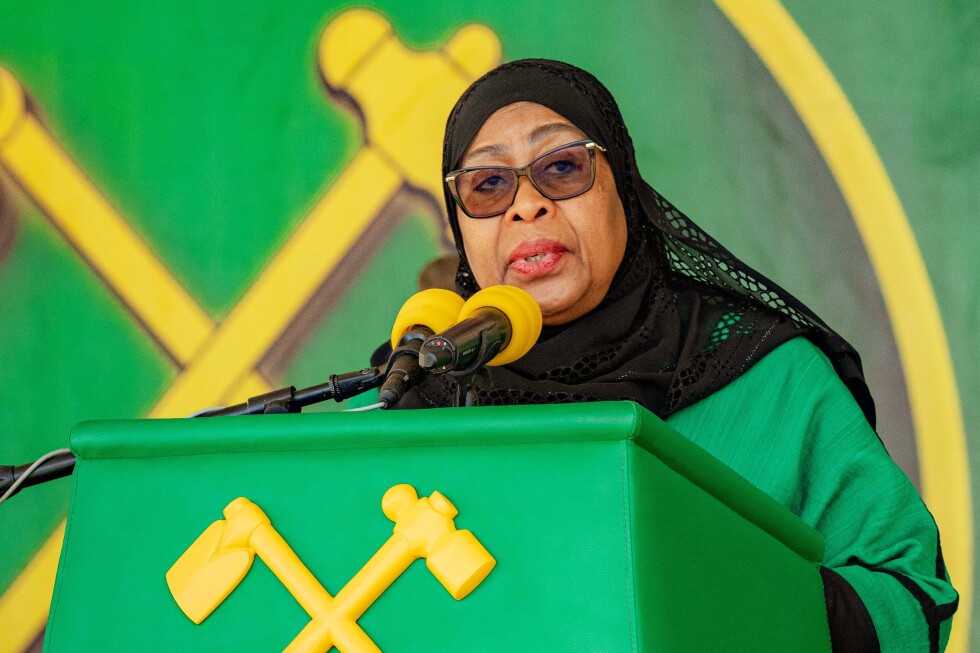
    President Samia Suluhu, who secured a second term with an overwhelming 97% majority amid an opposition boycott, previously attributed the violent outbreaks to foreign interference. While Suluhu has apologized for the communications shutdown and established a reconciliation commission, opposition party Chadema continues demanding accountability for protest-related fatalities.

    Chadema’s deputy leader John Heche simultaneously called for Lissu’s “unconditional release,” alleging governmental offers of freedom contingent on the critic’s permanent exile. Lissu, having survived a 2017 assassination attempt and multiple exiles, represents the most prominent challenge to the ruling CCM party’s decades-long dominance.

  • Yunnan researchers reveal Cambrian vertebrates may have had ‘four eyes’

    Yunnan researchers reveal Cambrian vertebrates may have had ‘four eyes’

    Paleontologists from Yunnan University have made a groundbreaking discovery that challenges conventional understanding of early vertebrate evolution. Their research indicates that the earliest known vertebrates from the Cambrian Period, approximately 518 million years ago, may have possessed not two but four camera-type eyes.

    The study, published in the prestigious journal Nature, examines jawless vertebrates known as myllokunmingids that inhabited Earth’s oceans during a critical evolutionary period. Led by Academician Xu Xing from the School of Life Sciences and Researcher Cong Peiyun from the Institute of Paleontology, the team analyzed exceptionally preserved fossil specimens from the Chengjiang biota in Yunnan province.

    These fossils reveal a remarkable anatomical feature: a smaller pair of round, dark structures positioned between the conventional lateral eyes. Through meticulous analysis, researchers determined these structures were preserved as organic carbon films containing melanin-bearing melanosomes—characteristics that closely match the retinal pigment epithelium found in modern vertebrates.

    The most significant finding emerged when researchers identified traces of lenses within these additional ocular structures. The precise positioning and proportional size of these lenses relative to the retinal tissues mirror the anatomical relationship observed in functional camera-type eyes, strongly suggesting these organs possessed image-forming capabilities.

    This extraordinary dorsal pineal complex, located atop the animals’ heads, represents a previously unknown visual system configuration in early vertebrates. The discovery provides unprecedented insights into how these ancient creatures perceived their environment and enhances our understanding of sensory evolution during the Cambrian explosion—a period of rapid biological diversification.

    The research not only expands scientific knowledge of vertebrate visual system origins but also offers fresh perspectives on the survival strategies employed by animals during one of Earth’s most biologically creative eras.

  • US boards tanker in Indian Ocean it ‘tracked and hunted’ from Caribbean

    US boards tanker in Indian Ocean it ‘tracked and hunted’ from Caribbean

    In a dramatic transcontinental operation, United States military forces successfully boarded and inspected the oil tanker Aquila II in the Indian Ocean after tracking the vessel across thousands of miles from the Caribbean Sea. The Department of Defense confirmed the interception, characterizing it as enforcement of a quarantine against sanctioned vessels operating in Caribbean waters.

    The defense department stated via social media that the vessel attempted to evade enforcement measures, prompting an extensive pursuit. ‘It ran, and we followed,’ officials declared, adding that ‘by land, air, or sea, our Armed Forces will find you and deliver justice.’

    This operation represents at least the seventh oil tanker seizure by U.S. authorities since last year as part of broader efforts to control Venezuelan oil exports, the South American nation’s primary economic resource. The enforcement action follows the December apprehension of Venezuelan President Nicolás Maduro and implementation of a comprehensive oil shipment blockade.

    Visual documentation released by the defense department shows U.S. service members in military fatigues conducting a helicopter boarding operation as the aircraft hovered above the tanker. Defense officials emphasized their determination to enforce sanctions regardless of distance, stating that ‘nothing will stop the U.S. military from enforcement, even in oceans halfway around the world.’

    The sustained blockade has significantly impacted Venezuela’s oil export capabilities, reducing shipments to approximately 400,000 barrels per day in January—roughly half of previous levels. According to industry analysis from Kpler, only vessels associated with Chevron and destined for U.S. ports continue to operate without interruption amid the ongoing enforcement measures.

  • Bhavana returns to Malayalam cinema with thriller ‘Anomie’

    Bhavana returns to Malayalam cinema with thriller ‘Anomie’

    South Indian cinema icon Bhavana Menon has made a powerful return to Malayalam films with the suspense thriller ‘Anomie: The Equation of Death,’ marking both her debut in the genre within the Malayalam industry and her first venture as a film producer. The acclaimed actress, whose career spans over two decades across multiple South Indian film industries, portrays Zaara Philip, a forensic analyst whose life descends into chaos when her brother mysteriously disappears.

    The film represents a significant career evolution for Menon, who has established herself through emotionally resonant performances and strong female characters throughout her 23-year career. Following a five-year hiatus from cinema after a highly publicized 2017 abduction case that prompted industry-wide safety reforms for women, Menon has gradually returned to acting, with her previous appearance in the Tamil horror film ‘The Door’ in March 2025.

    ‘Anomie’ features an ensemble cast including veteran actor Rahman alongside Shebin Benson, Vishnu Agasthya, Binu Pappu, and Arjun Lal. Director Riyas Marath, making his directorial debut after co-writing ‘Sapthamasree Thaskaraha,’ revealed the production journey spanned from 2023 to 2025 with extensive filming across Kochi, Kodaikanal, Mumbai, and Pollachi.

    In a recent Dubai promotional event, Menon shared insights about her dual role as both lead actress and co-producer through her newly established banner, Bhavana Film Productions. ‘I didn’t initially approach the project as a producer,’ she explained. ‘After witnessing the quality of work during the first schedule, I felt compelled to contribute financially to ensure the film’s completion.’

    Reflecting on her selective approach to roles, Menon emphasized her consistent standards throughout her career: ‘I have never accepted a character I didn’t genuinely connect with. While scheduling conflicts have caused me to miss certain opportunities, I believe in destiny—those roles ultimately found their intended performers.’

    The actress also addressed the transformation of the Malayalam film industry over her career, noting the shift from formulaic narratives to more realistic storytelling and audience acceptance of complex plots. Her personal definition of success has similarly evolved, with Menon stating that current fulfillment comes from ‘happiness and contentment’ rather than professional achievements alone.

  • India launches inspection of 400 ‘uncontrolled airstrips’ post-Ajit Pawar tragedy

    India launches inspection of 400 ‘uncontrolled airstrips’ post-Ajit Pawar tragedy

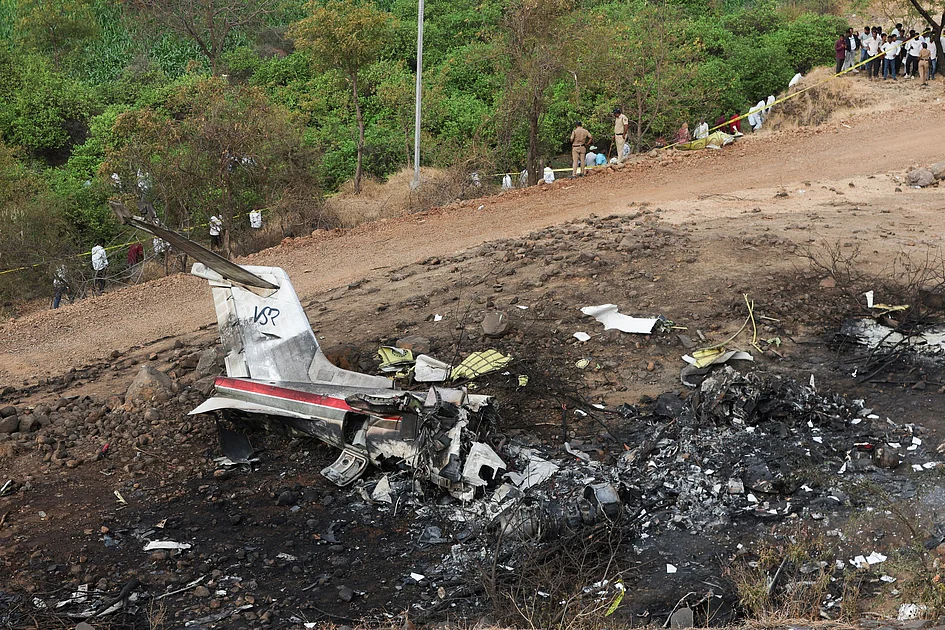
    In response to last month’s fatal aircraft crash that claimed the life of Maharashtra’s Deputy Chief Minister Ajit Pawar and four others, India’s civil aviation authorities have initiated comprehensive safety inspections of approximately 400 unregulated airstrips across the nation. The tragedy occurred at an uncontrolled airstrip in Baramati, prompting immediate regulatory action.

    The Directorate-General of Civil Aviation (DGCA) has commenced detailed examinations of Category A airports, which operate without air traffic control services. These facilities, managed by state governments, private operators, or flight training organizations, currently exist outside the DGCA’s regulatory framework despite their critical role in regional connectivity.

    Aviation experts emphasize that implementing basic safety measures at these landing strips would require minimal investment. According to Mark Martin of Martin Consultancy, essential infrastructure including windsocks, compact weather stations for monitoring atmospheric conditions, and CCTV surveillance systems could be established for approximately ₹200,000 (Dh8,125) per airstrip. Martin further recommended monthly safety inspections by state authorities to ensure operational integrity.

    The regulatory gap highlights India’s rapid aviation expansion, which has seen operational airports increase from 70 in 2014 to over 160 currently, with projections indicating 400 airports by 2047. The current initiative aims to establish standardized safety protocols while maintaining the operational flexibility of these vital regional aviation facilities.

  • Ramadan décor: Transform your home with family traditions and heirlooms

    Ramadan décor: Transform your home with family traditions and heirlooms

    As the sacred month of Ramadan approaches in 2026, interior design experts reveal sophisticated approaches to transforming living spaces into spiritually resonant environments that honor tradition while embracing contemporary aesthetics. Leading designers emphasize that meaningful Ramadan décor transcends mere visual appeal, serving instead as an expression of spiritual connection and generational continuity.

    According to Anita Lal, founder of Good Earth, the Iftar table represents a cornerstone of Ramadan hospitality. “A beautifully arranged table conveys generosity without requiring elaborate decoration,” she notes. Design professionals recommend beginning with intentional foundation elements—handcrafted table runners or cloths—then layering with carefully selected tableware. The strategic incorporation of neutral color palettes using ivory, beige, or soft white allows traditional foods like dates displayed in artisanal bowls to become natural focal points.

    Lighting design receives particular emphasis during the holy month. Sarita Handa, founder of her eponymous home décor brand, explains that “lanterns, candleholders, and strategically placed fairy lights create atmospheres that enhance both celebration and contemplative comfort.” Experts recommend mixing earthenware pieces with metallic finishes and paying meticulous attention to polishing lanterns and holders to maximize their luminous qualities.

    The integration of heirlooms and inherited objects emerges as a central theme in creating emotionally resonant spaces. Luxury interior designer Amita Trehan advocates for blending traditional elements—brass handis, copper water vessels, vintage serveware—within modern settings featuring clean-lined furniture and restrained styling. This harmonious dialogue between historical artifacts and contemporary design creates environments that feel both grounded and intentionally curated.

    Kadambari Uppal of KAD Designs emphasizes the importance of spatial editing during Ramadan: “I encourage reducing spaces to their essential elements. Clear visual clutter, allow negative space to breathe, and anchor rooms with singular strong elements—whether a beautifully crafted console or sculptural object.”

    Practical implementation strategies include creating dedicated heritage corners displaying family photographs and mementos, establishing cozy reading nooks with plush cushions and soft lighting, and incorporating scent elements through incense sticks or essential oils with traditional fragrances like oud, rose, or jasmine. These multidimensional approaches transform homes into sanctuaries that honor Ramadan’s spiritual significance while providing practical functionality for daily rituals and hospitality.