作者: admin

  • US to exempt some Bangladeshi clothes from tariffs

    US to exempt some Bangladeshi clothes from tariffs

    In a significant bilateral trade development, the United States and Bangladesh have formalized a comprehensive economic agreement that grants selective tariff exemptions for Bangladeshi garments manufactured with American materials. The pact, announced Monday, represents a strategic recalibration of trade relations between the two nations.

    The agreement stipulates that Washington will reduce its tariff imposition on Bangladeshi exports from 20% to 19%, while simultaneously identifying specific clothing and textile categories that will enjoy duty-free access to American markets. These preferential treatments specifically apply to garments produced using U.S.-sourced cotton and synthetic textiles, with import volumes contingent upon Bangladesh’s procurement of American textile exports.

    This arrangement follows prolonged negotiations initiated after the Trump administration’s sweeping tariff impositions on global trading partners in April 2025, which originally subjected Bangladesh to 37% duties. The revised terms now position Bangladesh competitively against regional neighbor India, which faces 18% U.S. tariffs.

    As reciprocal measures, Bangladesh has committed to substantial market liberalization for American products. The South Asian nation will provide enhanced access to U.S. agricultural commodities including soy products and meat, alongside industrial goods such as chemicals, medical devices, and automotive components. Additionally, Dhaka will recognize American regulatory standards for food, pharmaceuticals, and vehicle safety, streamlining import procedures for U.S. exporters.

    The agreement incorporates provisions reinforcing labor rights protections and environmental standards, with Bangladesh pledging to uphold international labor norms and intensify ecological conservation initiatives. Furthermore, Bangladesh reaffirmed its commitment to previously arranged purchases of American agricultural produce, aircraft, and energy products worth billions of dollars.

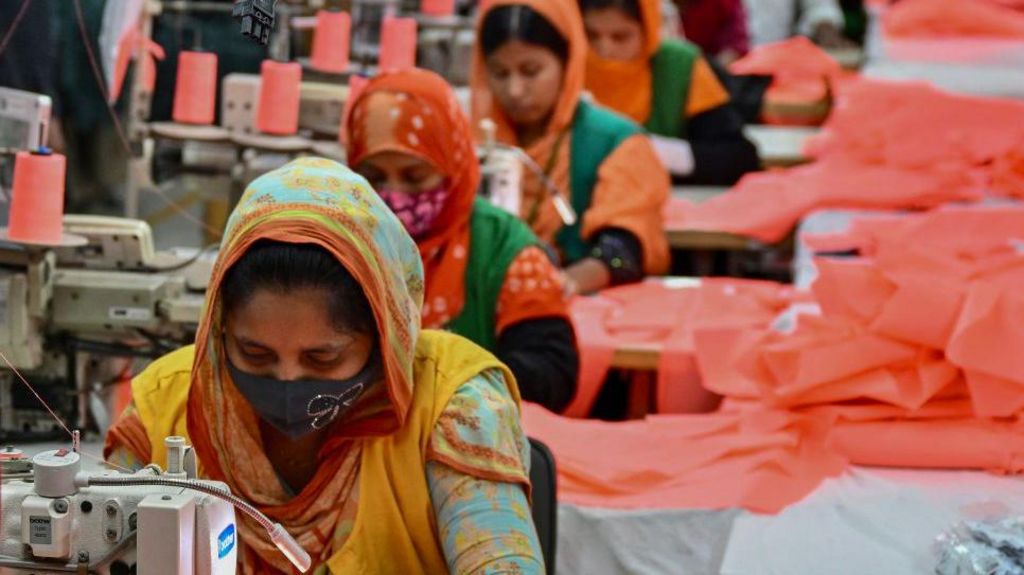
    This bilateral understanding holds particular significance for Bangladesh, whose apparel industry constitutes over 80% of export earnings and employs approximately four million workers. As the world’s second-largest clothing exporter after China, these revised trade terms potentially strengthen Bangladesh’s competitive position in global textile markets while deepening economic interdependence with the United States.


  • New Zealand mosque shooter always planned to admit his crimes, his former lawyers tell appeals court

    New Zealand mosque shooter always planned to admit his crimes, his former lawyers tell appeals court

    WELLINGTON, New Zealand – The perpetrator of New Zealand’s deadliest mass shooting, Brenton Tarrant, is attempting to withdraw his guilty pleas for the 2019 Christchurch mosque attacks that claimed 51 Muslim worshippers’ lives. The Australian national, currently serving life imprisonment without parole, claims his admissions were made under duress caused by extreme prison conditions.

    During a five-day hearing before New Zealand’s Court of Appeal, Tarrant asserted that prolonged solitary confinement, constant surveillance, restricted reading materials, and minimal external contact created ‘nervous exhaustion’ that compromised his mental capacity when he pleaded guilty in 2020. The 35-year-old white supremacist now contends these conditions rendered him irrational and mentally unfit to make valid legal decisions.

    Contradicting these claims, Tarrant’s former legal representatives testified that while they had initially raised concerns about his prison conditions, restrictions were subsequently eased. Both attorneys maintained they observed no impairment in Tarrant’s decision-making abilities during the plea process. Notably, they revealed their client had specifically demanded to be convicted on terrorism charges and wanted to be officially designated as a terrorist.

    Prosecutors highlighted that Tarrant had numerous opportunities to raise mental health concerns or request trial postponements earlier. No supporting testimony has emerged validating his claims of being unfit to plead guilty due to prison conditions.

    The appeal hearing marked Tarrant’s first court appearance in years, where he appeared via video link pale, thin, and with a shaved head. Survivors and victims’ families watching from Christchurch expressed frustration at the ongoing legal proceedings, with one bereaved father describing the process as ‘a game’ to the unremorseful attacker.

    The Court of Appeal’s decision, expected at a later date, will determine whether Tarrant’s guilty pleas stand or if the case returns to trial. If rejected, subsequent hearings will address his sentence appeal.

  • South Africa open T20 World Cup campaign with Canada thrashing

    South Africa open T20 World Cup campaign with Canada thrashing

    South Africa delivered a commanding performance in their opening match of the T20 World Cup, securing a comprehensive 57-run victory against Canada on Monday in Ahmedabad. The 2024 tournament runners-up demonstrated their championship credentials with an impressive display of power hitting and disciplined bowling that overwhelmed their opponents.

    After Canada won the toss and opted to field first, South Africa’s batting lineup unleashed a devastating assault, particularly during the final three overs where they accumulated 47 runs to post a formidable total of 213-4. This score represents the highest achieved thus far in the current tournament.

    The Proteas’ innings featured several standout performances. Openers Quinton de Kock and captain Aiden Markram established a solid foundation with a 70-run partnership in just 6.5 overs. Markram particularly excelled, reaching his half-century off merely 28 deliveries before eventually departing for 59 runs that included 10 boundaries and one maximum.

    The middle order then faced some resistance from Canadian left-arm wrist-spinner Ansh Patel, who engineered a mini-collapse by taking three crucial wickets while conceding 31 runs. However, David Miller (39 not out from 23 balls) and Tristan Stubbs (34 not out from 19 deliveries) orchestrated a spectacular recovery, adding an unbroken 75-run partnership in just 6.1 overs to propel South Africa to their massive total.

    Canada’s response never gained substantial momentum against South Africa’s varied bowling attack. Pace bowler Lungi Ngidi emerged as the chief destroyer, claiming four wickets for 31 runs during his four-over spell. His variations proved particularly effective in the dew-affected conditions, with Ngidi later explaining how the moisture helped his bowling strategy.

    Navneet Dhaliwal provided the sole resistance for Canada, battling to 64 runs before falling in the final over as his team managed only 156-8 from their allotted 20 overs. The Canadian batting lineup struggled throughout, finding themselves at a precarious 45-4 during the powerplay period and never recovering from the early setbacks.

    Ngidi received the Player of the Match award for his decisive bowling performance, highlighting the strategic advantage provided by the evening dew that facilitated his variations. The victory establishes South Africa as serious contenders in the tournament while demonstrating the growing competitive gap between established cricket nations and emerging teams.

  • Trump threatens to block opening of US-Canada bridge

    Trump threatens to block opening of US-Canada bridge

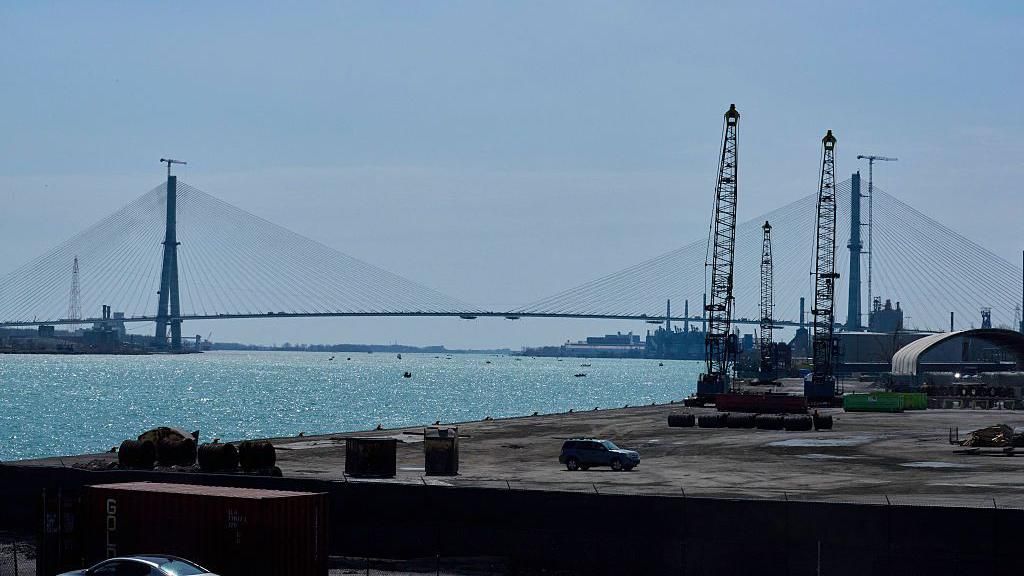
    Former President Donald Trump has issued a stark warning that he would prevent the inauguration of the Gordie Howe International Bridge linking the United States and Canada unless Washington receives “full compensation” for perceived historical inequities. The infrastructure project, which spans the Detroit River between Windsor, Ontario and Detroit, Michigan, has become the latest flashpoint in cross-border relations.

    In a social media post on his Truth Social platform, Trump declared the nearly completed bridge would remain closed until Canada demonstrates “Fairness and Respect” toward the United States. He specifically demanded that the U.S. possess “at least one half of this asset,” suggesting incorrect ownership of both sides by Canada.

    The $6.4 billion CAD project, primarily funded by the Canadian government through the Windsor-Detroit Bridge Authority, represents one of the most significant bilateral infrastructure initiatives in recent history. Despite construction commencing in 2018 with anticipated operational status by early 2026, Trump’s intervention introduces substantial uncertainty regarding its timely opening.

    The former president connected his bridge position to broader trade grievances, particularly highlighting Canadian dairy tariffs he deemed “unacceptable” and criticizing a recent trade agreement between Canada and China that he claimed would “eat Canada alive.” In characteristically hyperbolic language, Trump even suggested China would “terminate ALL Ice Hockey being played in Canada” as consequence.

    This stance marks a notable reversal from Trump’s previous administration, where he jointly affirmed with Prime Minister Justin Trudeau the bridge’s importance as a “vital economic link” between the nations. The current threat aligns with concerns raised during his first term by the Moroun family, owners of the competing Ambassador Bridge, who argued the new structure threatened their toll revenue exclusivity.

    Key governmental offices, including Canada’s bridge authority, the Ontario premier’s office, and Detroit mayor’s office, have not yet responded to requests for commentary regarding Trump’s statements. The mechanism through which Trump could actually impede the bridge’s operation remains unclear, though he indicated negotiations would commence immediately.

  • Bangladesh urges Pakistan to reverse decision to boycott India game in T20 World Cup

    Bangladesh urges Pakistan to reverse decision to boycott India game in T20 World Cup

    In a significant development for international cricket, the Bangladesh Cricket Board has formally requested Pakistan to reconsider its decision to boycott the upcoming Twenty20 World Cup match against India scheduled for February 15th in Colombo. The appeal came during a high-level meeting in Lahore involving representatives from the International Cricket Council (ICC) and the Pakistan Cricket Board.

    The diplomatic standoff originated last month when the ICC replaced Bangladesh with Scotland in the tournament following Bangladesh’s refusal to travel to India, one of the co-hosts of the event. Pakistan subsequently announced their boycott of the India match in solidarity with their cricketing neighbors.

    In a related development, the ICC announced on Monday that it would not impose any sporting, financial, or administrative penalties on Bangladesh for their decision not to play in India. The global governing body further revealed that Bangladesh would host an ICC event prior to the 2031 50-over World Cup, which is set to be co-hosted by India and Bangladesh.

    Bangladesh Cricket Board president Mohammad Aminul Islam expressed gratitude for Pakistan’s support while emphasizing the importance of the India-Pakistan match for the global cricket community. ‘We are deeply moved by Pakistan’s efforts to go above and beyond in supporting Bangladesh during this period… I request Pakistan to play the game on 15 February against India for the benefit of the entire cricket ecosystem,’ Islam stated.

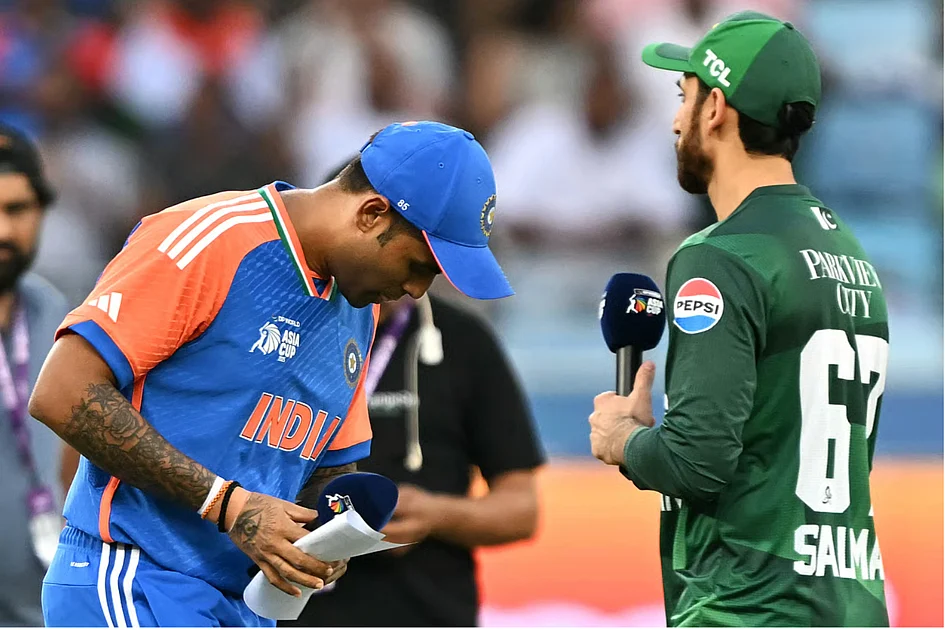
    Meanwhile, Indian captain Suryakumar Yadav confirmed that his team would travel to Colombo for Sunday’s match regardless of Pakistan’s participation decision, highlighting the ongoing complexities in one of cricket’s most storied rivalries.

  • US issues fresh guidance to vessels transiting Strait of Hormuz as Iran tensions simmer

    US issues fresh guidance to vessels transiting Strait of Hormuz as Iran tensions simmer

    The United States has escalated maritime security protocols for commercial vessels navigating the strategic Strait of Hormuz, responding to mounting geopolitical friction with Iran. On Monday, the U.S. Department of Transportation’s Maritime Administration released updated guidance instructing U.S.-flagged ships to maximize distance from Iranian territorial waters while maintaining navigational safety. The advisory explicitly directs crews to verbally deny boarding permissions if approached by Iranian forces, though it cautions against physical resistance should boarding occur.

    This precautionary measure emerges against a backdrop of strained bilateral relations, primarily driven by disagreements over Iran’s nuclear advancements and regional military activities. Historically, Iran has repeatedly threatened to seal the critical waterway—through which approximately 21% of global petroleum liquids flow—and has intermittently seized commercial vessels under allegations of smuggling.

    Despite recent diplomatic engagements mediated by Oman, which Iranian officials characterized as a ‘good start,’ underlying tensions persist. The U.S. continues to advocate for expanded negotiation terms encompassing Iran’s ballistic missile program, regional proxy activities, and human rights record. Concurrently, the Trump administration reinforced economic pressure through an executive order imposing 25% tariffs on nations trading with Iran, signaling a multifaceted approach to coercion.

    The updated maritime guidelines reflect Washington’s dual strategy of pursuing diplomacy while preparing for potential escalation in one of the world’s most volatile maritime corridors.

  • Epstein accomplice Maxwell seeks Trump clemency before testimony

    Epstein accomplice Maxwell seeks Trump clemency before testimony

    In a dramatic congressional deposition on Monday, convicted sex trafficker Ghislaine Maxwell invoked her Fifth Amendment rights while simultaneously proposing a controversial bargain: full testimony in exchange for presidential clemency. The 64-year-old British socialite, currently serving a 20-year sentence for supplying underage girls to Jeffrey Epstein, appeared virtually from her Texas prison facility before the House Oversight Committee.

    Committee Chairman James Comer expressed profound disappointment as Maxwell systematically declined to answer questions regarding her activities with Epstein and potential co-conspirators. ‘We had many questions to ask about the crimes she and Epstein committed,’ Comer told reporters following the closed-door session.

    The proceeding took an unexpected turn when Maxwell’s attorney, David Markus, issued a statement outlining conditions for her cooperation. ‘If this Committee and the American public truly want to hear the unfiltered truth about what happened, there is a straightforward path,’ Markus declared. ‘Ms. Maxwell is prepared to speak fully and honestly if granted clemency by President Trump.’

    Markus further asserted the innocence of both former President Trump and former President Bill Clinton regarding any Epstein-related wrongdoing, claiming Maxwell alone possesses exculpatory explanations for their associations with the convicted sex offender.

    The deposition occurs against the backdrop of recently released Justice Department documents comprising millions of evidentiary items from the Epstein investigation. While officials indicate no new prosecutions are anticipated, the revelations have already triggered resignations and reputational damage among various political and business figures identified in the files.

    Democratic Representative Suhas Subramanyam, who attended the deposition, characterized Maxwell as ‘unrepentant’ and ‘robotic,’ suggesting her silence constituted strategic positioning for a potential Trump pardon.

    The Oversight Committee has concurrently summoned both Clintons to testify publicly about their Epstein connections, a move the Clintons support to avoid partisan manipulation of their testimony. Notably, Trump himself has not been called to testify before the Republican-led committee, despite his documented friendship with Epstein and previous resistance to document disclosure that was ultimately overridden by congressional pressure.

  • Deputy Chief of Dubai Police travels on Etihad Rail to Fujairah

    Deputy Chief of Dubai Police travels on Etihad Rail to Fujairah

    In a significant demonstration of confidence in the UAE’s transformative infrastructure project, Lieutenant General Dhahi Khalfan Tamim, Deputy Chief of Dubai Police and Public Security, undertook a pioneering journey aboard Etihad Rail’s passenger service. The trial expedition connected Al Qudra in Dubai with the emerging Al Hilal City Station in Fujairah, marking a crucial milestone in the network’s development timeline.

    During the strategic transit, Emirati rail specialists provided comprehensive briefings on operational frameworks and forthcoming route expansions. The initial phase, scheduled for public launch later this year, will establish critical inter-emirate connectivity between Abu Dhabi’s Mohamed Bin Zayed City, Dubai’s Jumeirah Golf Estates, and Fujairah’s Al Hilal City through the national railway infrastructure.

    The delegation accompanying Lieutenant General Tamim included Shadi Malak, Chief Executive Officer of Etihad Rail, alongside Major General Ahmed Al Maqoodi and senior representatives from both law enforcement and transportation sectors. Technical presentations revealed ambitious expansion plans that will progressively extend the network to 11 strategically positioned stations nationwide, engineered to deliver secure, efficient, and sustainable mobility solutions for residents, citizens, and international visitors.

    In his official remarks, Lieutenant General Tamim characterized Etihad Rail as a cornerstone initiative within the UAE’s infrastructure landscape, emphasizing its dual role in stimulating economic advancement and reinforcing national sustainability objectives. He articulated how the project embodies leadership vision for an integrated transport ecosystem that enhances the nation’s position as a global logistics hub while strengthening community interconnectedness across the federation.

    The inspection concluded with an extensive tour of Al Hilal City Passenger Station, where architectural designs prioritize seamless passenger flow and contemporary travel comfort through strategic integration within key residential and economic zones. Lieutenant General Tamim extended formal appreciation to development teams operating under the guidance of Sheikh Theyab bin Mohamed bin Zayed Al Nahyan, Chairman of Etihad Rail, recognizing their efforts in actualizing this transformative national project.

  • Physician assistants are everywhere. Should you see one?

    Physician assistants are everywhere. Should you see one?

    The American healthcare landscape has witnessed a dramatic transformation over the past quarter-century, marked by the quadrupling of physician assistants within the medical workforce. These medical professionals, often indistinguishable from doctors in their white coats and clinical responsibilities, now represent a significant force in patient care delivery across the nation.

    Originally conceived in the 1960s as an extension of physicians in rural America, P.A.s performed routine tasks under strict medical supervision. Today’s reality reveals a vastly different scenario: these professionals now operate across all medical specialties with considerably greater autonomy. They routinely diagnose conditions, prescribe medications, and manage comprehensive treatment plans, raising important questions about their appropriate role in healthcare.

    The fundamental distinction between doctors and physician assistants lies in their training duration and depth. While physicians complete approximately four years of medical school followed by three to seven years of specialized residency training, P.A.s typically undergo a condensed two-to-three-year master’s program. This educational disparity forms the basis of ongoing professional debates regarding appropriate levels of clinical independence.

    Legal requirements for physician oversight vary significantly by state and specialty. In surgical settings, P.A.s work alongside surgeons but cannot perform major operations independently. In primary care contexts, autonomy expands considerably, with some states permitting remote supervision while others mandate physician presence within specific geographical parameters.

    The American Academy of Physician Associates has actively campaigned for enhanced professional independence, advocating for title modernization from ‘assistant’ to ‘associate’ and lobbying for legislative changes to reduce supervision requirements. The organization contends that increased P.A. autonomy would improve healthcare accessibility and reduce costs. Conversely, the American Medical Association maintains that physician assistants lack equivalent training and that reduced oversight could compromise patient safety.

    Research examining care quality reveals nuanced findings. Studies demonstrate that P.A. integration into medical teams improves healthcare access and reduces treatment delays. Geriatric care models incorporating physician assistants have shown remarkable success, with one study documenting a 38% reduction in hospital visits among nursing home residents. When collaborating directly with physicians—whether in surgical assistance or hospital teams—P.A.s consistently deliver high-quality care. They particularly excel in chronic disease management through regular patient consultations.

    However, research becomes less conclusive regarding diagnostic accuracy in scenarios with minimal physician oversight. Dr. Nicola Cooper of the University of Nottingham notes methodological challenges in quality assessment, as malpractice cases and fatalities remain rare in primary care contexts. Evaluation complexities are compounded by case assignment disparities, where P.A.s often handle less complex presentations than physicians.

    Ultimately, for many Americans in medically underserved areas, the theoretical debate about provider qualifications becomes secondary to practical accessibility. As researcher Roderick Hooker observes, patient satisfaction typically depends on needs being met rather than the specific credentials of the care provider. This reality underscores the evolving discussion about optimal healthcare delivery models in an era of increasing provider diversification.

  • Bangladesh, US sign reciprocal tariff agreement, Yunus says

    Bangladesh, US sign reciprocal tariff agreement, Yunus says

    In a significant development for bilateral trade relations, Bangladesh and the United States have formally inked a reciprocal tariff agreement. The accord, announced on Monday, February 9, 2026, marks a substantial reduction in U.S. import duties on a range of Bangladeshi goods, lowering the tariff rate to 19 percent.

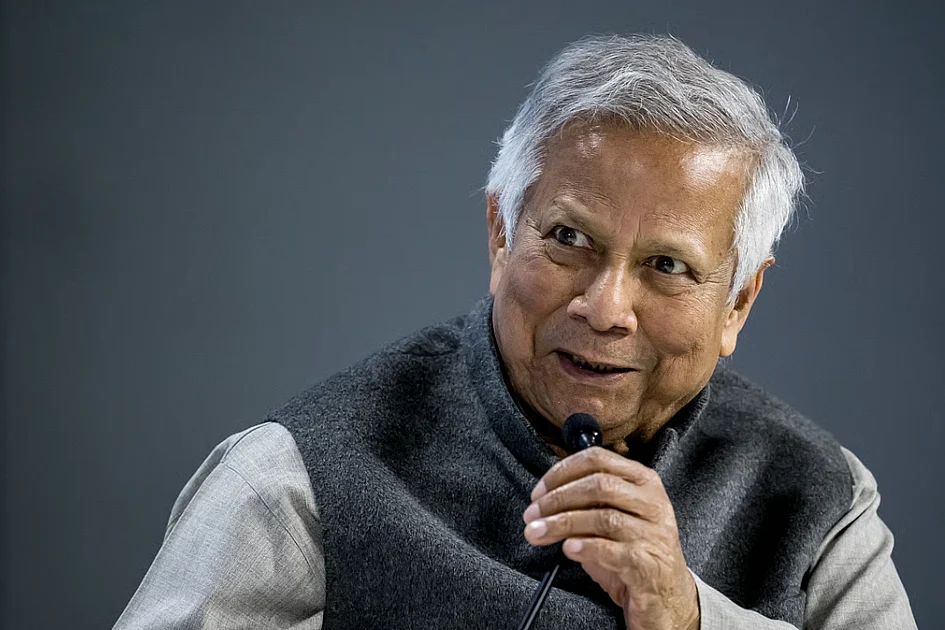
    The breakthrough was confirmed by Bangladesh Chief Adviser Muhammad Yunus via a social media post. Beyond the broad tariff reduction, the agreement includes a pivotal commitment from the U.S. to establish a specialized mechanism. This provision will grant certain textile and apparel articles from Bangladesh eligibility for a zero-tariff status when entering the U.S. market, contingent on their manufacture using U.S.-origin cotton and man-made fibers.

    This strategic partnership is poised to reshape the economic dynamics between the two nations. For Bangladesh, a global powerhouse in ready-made garments, the pact offers enhanced access to one of the world’s largest consumer markets. It incentivizes the use of American raw materials, creating a potential new supply chain synergy. For the United States, the agreement strengthens economic ties with a key South Asian partner and promotes the export of its primary goods, particularly cotton. The deal is widely perceived as a move to deepen trade cooperation and foster mutual economic growth, setting a new precedent for U.S. engagement with developing economies in the region.