作者: admin

  • Russia thinks it can outsmart the US during Ukraine peace talks, a European intelligence chief says

    Russia thinks it can outsmart the US during Ukraine peace talks, a European intelligence chief says

    LONDON — Estonia’s foreign intelligence chief has revealed that Russian officials show no genuine intention to terminate the nearly four-year conflict in Ukraine, instead engaging in tactical maneuvers to outmaneuver American diplomats during peace negotiations. Kaupo Rosin, director of Estonia’s Foreign Intelligence Service, disclosed these findings during a digital press briefing preceding the release of Estonia’s annual security assessment.

    According to intelligence gathered from internal Russian communications, Moscow is deliberately protracting discussions with Washington while avoiding substantive cooperation. Despite public declarations supporting diplomatic resolutions, Russian authorities demonstrate minimal flexibility and maintain uncompromising positions regarding their core demands.

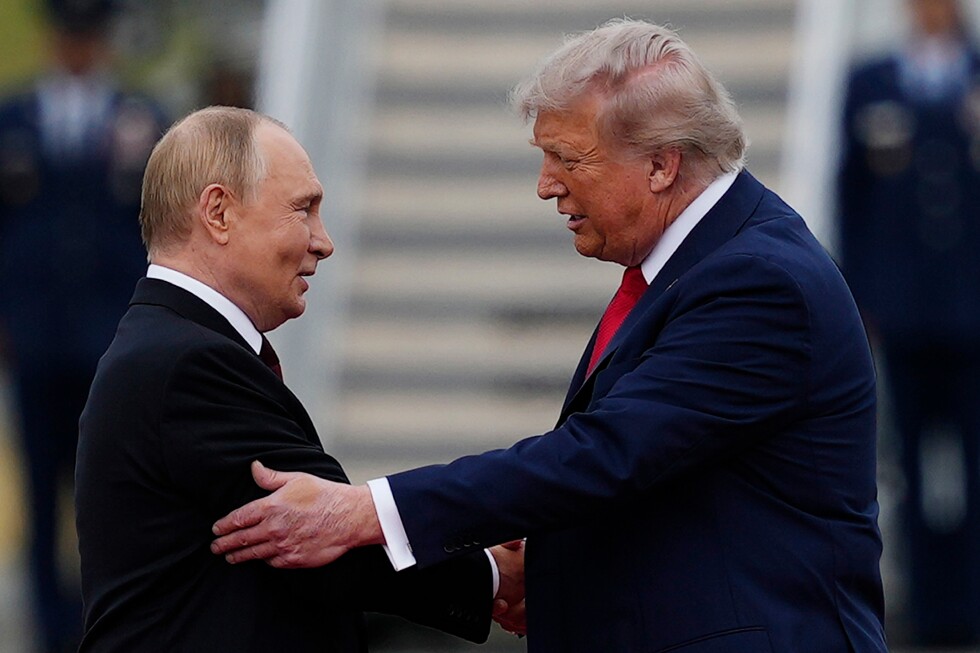
    While the Estonian security report indicates Russia is unlikely to initiate hostilities against NATO territories within the current or following calendar year, it emphasizes Moscow’s continued dangerous military expansion efforts. Russian President Vladimir Putin reportedly maintains unwavering confidence in achieving military victory in Ukraine, contrary to assessments from Western intelligence agencies.

    The White House responded by highlighting significant advancements in negotiation efforts, particularly referencing a trilateral agreement facilitated in Abu Dhabi that secured the release of over 300 detainees. However, anonymous administration officials acknowledged the challenging nature of sustained diplomatic progress.

    Notably, the United States has established a June deadline for conflict resolution, though previous timelines have expired without tangible outcomes. Fiona Hill, former Russia advisor to the Trump administration, suggests both American and Russian leaders remain invested in their respective narratives—Putin as victorious conqueror and Trump as master negotiator.

    Intelligence analysts express puzzlement regarding Washington’s apparent belief in Putin’s peaceful intentions, noting the Russian leader’s fundamental objective of controlling Ukrainian territory outweighs economic considerations. Rosin suggests only catastrophic developments affecting Putin’s power stability or battlefield conditions could alter Moscow’s strategic calculus.

    Concerns emerge regarding potential misinformation within both governments, with subordinates possibly providing overly optimistic reports to satisfy leadership preferences. This intelligence disparity may contribute to flawed assessments of actual ground conditions and strategic possibilities in the ongoing conflict.

  • New tech converts leftovers into green fuel for ships

    New tech converts leftovers into green fuel for ships

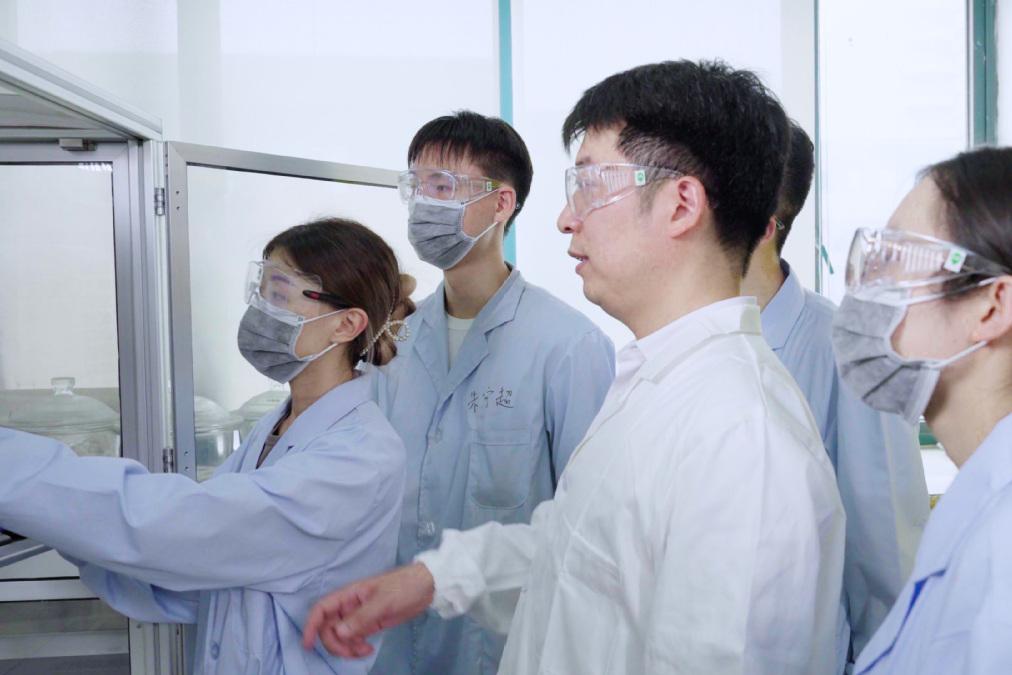
    Scientists at Shanghai’s East China University of Science and Technology have achieved a technological milestone by developing an innovative system that transforms food waste into sustainable marine fuel. The breakthrough technology, known as Biogas Energy Science and Technology to Methanol (BESTm), successfully converts organic waste into green methanol suitable for ocean-going vessels.

    Led by Professor Chen De, who serves both as chair professor at the university and chief scientist at Shanghai CEO Technology Co, the research team has completed the pilot phase of this revolutionary project. The system demonstrates unprecedented efficiency by achieving nearly 100% carbon conversion from biogas to green methanol, significantly outperforming traditional methods that typically waste carbon dioxide emissions.

    The technological advancement addresses two critical environmental challenges simultaneously: reducing food waste accumulation in urban areas while providing a sustainable alternative to conventional heavy fuel oil in the shipping industry. According to Professor Duan Xuezhi, lead researcher on the project, the system can convert approximately 8 metric tons of food waste into about 1 ton of green methanol.

    The collaborative effort involves multiple organizations including Shanghai Chengtou Group Corp, Sinopec Shanghai Engineering Co, and Shanggang Group Energy (Shanghai) Co. The system incorporates several proprietary technologies such as electricity-driven biogas mixed reforming, green methanol synthesis, coupled heat pump distillation, and thermal integration optimization.

    This innovation arrives at a crucial time as the global shipping industry faces mounting pressure to achieve net-zero emissions by 2050. Green methanol has emerged as a leading alternative fuel candidate due to its low-carbon lifecycle and compatibility with existing marine engine technology. The BESTm system not only provides a technological solution but also reduces production costs by more than 30% compared to traditional methods, potentially making green methanol economically competitive with coal-based alternatives.

    Researchers emphasize that cities like Shanghai, which generates approximately 3.5 million tons of wet waste annually, could produce over 400,000 tons of green methanol, substantially supporting port fuel requirements while transforming urban waste management challenges into valuable energy resources.

  • De Leede helps Netherlands to win over Namibia

    De Leede helps Netherlands to win over Namibia

    In a spectacular display of cricketing prowess, the Netherlands national cricket team secured a decisive seven-wicket triumph against Namibia during their Group A encounter at the Men’s T20 World Cup in Delhi. The match will be remembered for Bas de Leede’s extraordinary all-round performance that dominated both batting and bowling departments.

    The victory marks a significant rebound for the Dutch squad, who narrowly missed a stunning upset against Pakistan in their tournament opener just days earlier in Colombo. This convincing win against Namibia represents the largest margin of victory in Netherlands’ T20 World Cup history.

    Namibia, batting first in their inaugural tournament match, established a competitive position at 60-1 after nine overs. However, their momentum was disrupted by the bowling attack led by Logan van Beek (2-13) and De Leede, who claimed crucial wickets including Namibian captain Gerhard Erasmus and JJ Smit. Despite Nicol Loftie-Eaton’s solid 42 from 38 deliveries, Namibia concluded their innings at 156-8 after 20 overs.

    Chasing 157 for victory, the Netherlands faced an early setback with opener Max O’Dowd’s dismissal. The match turned decisively when De Leede partnered with Colin Ackermann for a stabilizing 70-run third-wicket stand. Ackermann contributed 32 before departing, but De Leede remained unstoppable, finishing with an unbeaten 72 from just 48 balls, including five boundaries and four sixes.

    De Leede’s performance etched his name in cricket history as the first Netherlands player to achieve both a half-century and take two wickets in a single T20 World Cup match. The Dutch team sealed their victory with two full overs to spare, demonstrating commanding form as they look ahead to their Friday encounter against the United States. Namibia will face defending champions India on Thursday in their next tournament fixture.

  • Global Indians of the UAE series: Women on the Rise

    Global Indians of the UAE series: Women on the Rise

    Khaleej Times, a leading English-language daily in the UAE, has significantly broadened its digital news platform to encompass an extensive array of specialized content verticals. This strategic expansion reflects the publication’s commitment to delivering tailored information that addresses the multifaceted interests of its readership.

    The enhanced coverage now systematically organizes content into dedicated sections including Real Estate, Transport, and Education, providing in-depth analysis and updates specific to these critical sectors. For residents navigating life in the UAE, comprehensive guides on Banking, Visa & Immigration, and Living in the UAE offer indispensable resources.

    Beyond hard news, the platform has developed robust lifestyle and feature segments. KT LUXE caters to luxury enthusiasts, while dedicated sections for Food, Travel, Beauty & Health, and Fashion deliver curated content for lifestyle audiences. The expansion also acknowledges the region’s significant expatriate communities with focused content like Global Indians and GCC coverage.

    A forward-looking approach is evident in sections dedicated to Technology, Investing, Energy, and Aviation, aligning with the UAE’s economic diversification goals. Furthermore, the platform serves as a hub for major events, promoting initiatives like the Future Workforce Summit, Tribe 2026, and NAFA 2026, which aim to foster dialogue and innovation.

    This restructuring demonstrates a modern news organization’s evolution from a general news outlet to a multi-faceted digital ecosystem, aiming to become a one-stop destination for information, lifestyle, and community engagement in the Gulf region.

  • Study shows TCM raised live birth rates in over 35s

    Study shows TCM raised live birth rates in over 35s

    A groundbreaking clinical study published in Nature Communications has demonstrated significant fertility benefits for women of advanced maternal age using Traditional Chinese Medicine (TCM). The January publication marks the first time the prestigious journal has featured clinical research on TCM applications in reproductive medicine.

    The randomized clinical trial, conducted across 12 tertiary hospitals in China, evaluated Zishen Yutai pills developed by Guangzhou Baiyunshanzhongyi Pharmaceutical Co. The research involved 1,467 women aged 35-42 undergoing fresh embryo transfers through in vitro fertilization (IVF) and intracytoplasmic sperm injection procedures.

    According to the findings, the TCM formulation produced remarkable results: a relative increase of nearly 23% in live birth rates—considered the gold standard for evaluating assisted reproductive outcomes. The study also documented substantial improvements in positive pregnancy test rates, embryo implantation rates, and clinical pregnancy rates among participants.

    The research was co-led by Professor Yang Dongzi from Sun Yat-sen Memorial Hospital and Professor Zhang Heping from Yale University, representing a collaborative effort between Chinese and international medical expertise.

    Professor Yang emphasized the broader implications: “This TCM medication provides a exemplary model for the modernization and internationalization of traditional Chinese medicine, offering new hope to older families attempting conception.”

    The timing of this breakthrough is particularly significant given demographic trends. National Health Commission data from 2023 reveals that mothers aged 35 and above now constitute over 18.7% of all births in China, with the proportion exceeding 25% in first-tier cities. This shift reflects broader social developments, including changing marriage patterns, evolving childbirth trends, and the implementation of China’s two-child and three-child policies.

    Luo Songping, a nationally distinguished TCM practitioner and professor at the First Affiliated Hospital of Guangzhou University of Chinese Medicine, noted: “The rigorous clinical research design provides reliable evidence-based medical evidence, further supporting TCM’s application value in assisted reproduction.”

    The medication is currently available in mainland China and the Macao market, with researchers planning continued investigation into integrative approaches combining Chinese and Western medical traditions in reproductive medicine.

  • Hebei academy integrates skiing with conventional study

    Hebei academy integrates skiing with conventional study

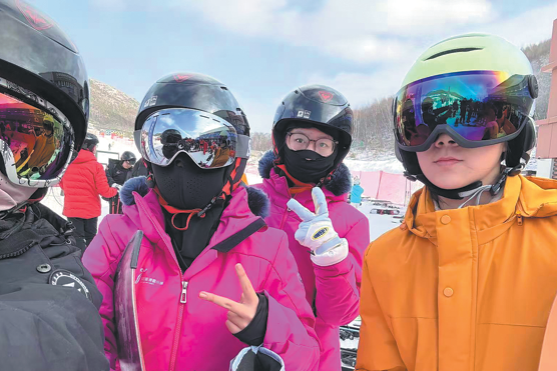
    While most university students embrace winter break as a period of relaxation, a pioneering cohort at Hebei’s Tianshu Academy embarked on an entirely different journey—mastering Olympic-grade ski slopes while advancing their academic pursuits. This innovative educational model represents a significant milestone in China’s educational development strategy.

    Located in Huailai county, Tianshu Academy operates as a specialized branch campus of Beijing Information Science and Technology University (BISTU), established under the Beijing-Tianjin-Hebei coordinated development initiative. The academy welcomed its inaugural class of 500 students in September 2025 following comprehensive cooperation agreements finalized in 2024.

    The institution’s creation embodies what faculty and local residents describe as the “Winter Olympic spirit,” with its state-of-the-art facilities constructed within an impressive two-year timeframe. Currently spanning 10.9 hectares, the campus is already scheduled for substantial expansion that will more than double its construction area to accommodate increasing demand.

    Beyond its headline-grabbing skiing curriculum that allows training during weekends and holidays, Tianshu Academy’s core mission addresses deeper academic and economic objectives. BISTU has established three specialized research institutes on-site—focused on advanced manufacturing, new energy, and the data economy—specifically tailored to Zhangjiakou’s regional development needs.

    According to Xie Jiangling, Party Chief of BISTU, the Zhangjiakou branch campus demonstrates the university’s commitment to supporting national strategies for regional coordinated development. “The university’s development needs are closely aligned with national and regional strategies,” Xie emphasized, noting that BISTU leverages its strengths in intelligent equipment, robotics, and big data to meet local industrial upgrading demands while enhancing its academic standards and influence.

    The initiative addresses a crucial national priority: strengthening higher education in Hebei province, where educational resources have historically trailed behind those of Beijing and Tianjin. This development aligns with China’s broader 2035 blueprint for establishing educational leadership.

    Students like Guo Jiahao, a financial management major, benefit from the academy’s flexible credit system that enables exploration beyond their primary disciplines, including science and engineering courses. Meanwhile, local officials recognize the university’s potential to accelerate technological conversion. Zhang Qi, Party Secretary of Huailai county, noted that the institution’s research capacity and talent pool align perfectly with regional industrial goals, providing the necessary “brainpower” to transform scientific innovations into practical applications, positioning Huailai as an innovation hub.

  • Expanding limits of quantum information

    Expanding limits of quantum information

    In the exacting realm of quantum information science, where meticulous precision is paramount, 29-year-old doctoral candidate Wang Haigang has redefined the meaning of perseverance. At Taiyuan University of Technology, Wang conducts groundbreaking research not with his hands, but through an extraordinary adaptation—operating complex simulations and drafting sophisticated English research papers using his feet to control both keyboard and mouse.

    Wang’s recent receipt of the university’s prestigious President’s Scholarship stands as testament to his exceptional academic achievements. His research trajectory includes first-author publication in the respected journal Communications Physics in December, along with four additional Science Citation Index papers demonstrating remarkable scholarly contribution to quantum information studies.

    The journey to academic excellence began with profound adversity. At age eight, Wang lost both arms in a high-voltage electrical accident. Rather than succumbing to limitation, he embarked on a path of radical self-reliance, mastering the art of writing with his toes by the end of that first challenging summer with family support.

    His academic path led him to Shandong University of Science and Technology in 2015 before pursuing combined master’s and doctoral studies at Taiyuan University of Technology’s School of Mathematics in 2020. That same year, national recognition came with his designation as a ‘star of self-reliant Chinese college students.’

    Under Professor He Kan’s mentorship, Wang developed specialized expertise in quantum information. The university provided tailored accommodations including a private dormitory with bathroom facilities to support his unique needs. When research obstacles emerged, collaboration with Professor Meng Xiangyi from Rensselaer Polytechnic Institute proved instrumental. Their transcontinental partnership, initiated through scholarly correspondence, evolved into meaningful academic dialogue that broke through research impasses.

    Beyond laboratory confines, Wang demonstrates multifaceted abilities—mastering soccer, skiing, skateboarding, and computer gaming while maintaining an active social media presence documenting his adaptive daily routines. While acknowledging the ‘armless doctor’ label creates mixed feelings, Wang recognizes its power to challenge perceptions about disability and intellectual capability.

    University President Sun Hongbin praised Wang’s resilience as ‘a precious quality in the face of adversity’ that inspires young students nationwide. With quantum technology identified among China’s six key industries in the national 15th Five-Year Plan (2026-30), Wang’s research carries significant national importance. ‘I want to contribute to this field,’ Wang stated, embodying a spirit that transforms physical limitation into scientific advancement.

  • China’s Lunar New Year travel rush begins with record 9.5 billion trips expected

    China’s Lunar New Year travel rush begins with record 9.5 billion trips expected

    China has embarked on its monumental annual migration period known as ‘chunyun,’ with government projections indicating an unprecedented 9.5 billion trips will occur during the 40-day travel window surrounding the Lunar New Year. This massive human movement, recognized as the world’s largest periodic migration, demonstrates both the enduring cultural significance of family reunions and the economic realities facing millions of Chinese workers.

    At Beijing’s railway stations, travelers laden with oversized luggage and suitcases crowded waiting areas, many sustaining themselves with instant noodles between journeys. The stations provide complimentary hot water, facilitating this traditional travel sustenance for the millions undertaking long-distance trips.

    Liu Zhiquan, a construction worker, exemplifies the economic pressures affecting travel decisions. Opting for a 30-hour conventional train journey to Chengdu instead of the 9-hour high-speed alternative, Liu explained: ‘The economic situation feels more challenging this year. Making money has become increasingly difficult.’ His choice to endure the extended travel time reflects the financial calculations many workers must make to afford the traditional homecoming.

    Despite these economic concerns, the cultural pull remains powerful. Tian Yunxia, a breakfast stall operator from Henan province, emphasized: ‘The new year represents the ultimate festival. Without returning home, we cannot experience the authentic holiday atmosphere. I need to reunite with my children, grandchildren, and husband.’

    Young professionals like Tian Duofu, who recently entered Beijing’s workforce, recognize the diminishing opportunities for family gatherings. ‘After beginning my career, I’ve realized such extended holidays are rare occurrences. The decreasing frequency of in-person meetings makes the Spring Festival increasingly meaningful,’ she noted.

    The travel distribution reveals fascinating patterns: approximately 540 million journeys will occur via rail, 95 million by air, with the remainder utilizing road transportation. This migration phenomenon highlights the unique Chinese workplace culture where extended hours and limited annual leave make the Lunar New Year break a precious opportunity for family reconnection across vast distances.

  • Japan urged to adhere to a peaceful path

    Japan urged to adhere to a peaceful path

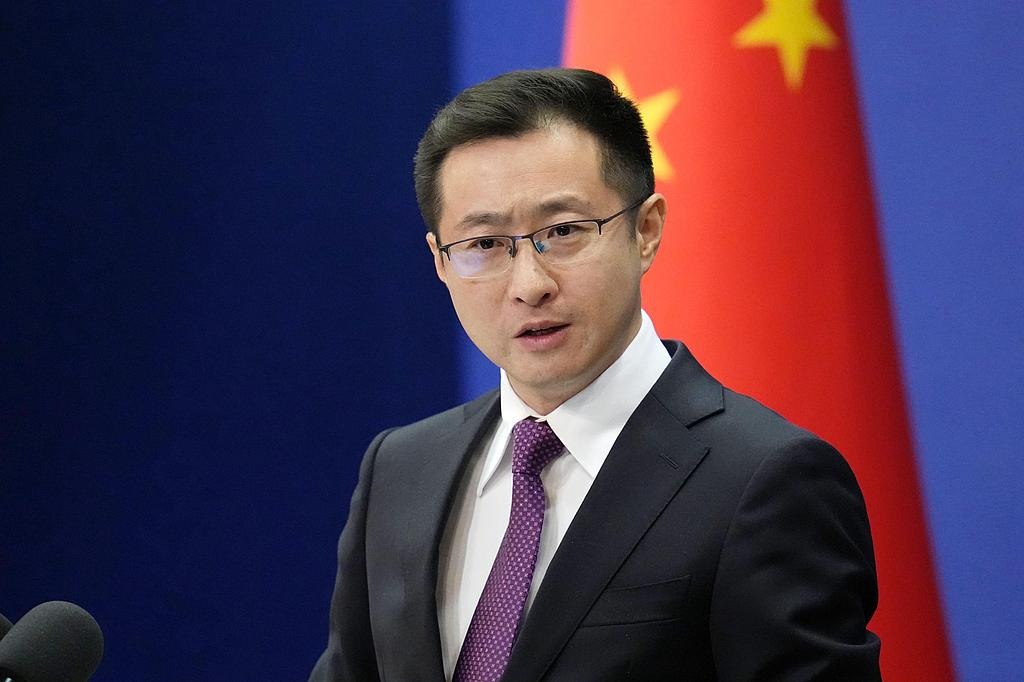
    China has called upon Japan to maintain its commitment to peaceful development following a decisive electoral victory by the nation’s ruling coalition. Foreign Ministry spokesman Lin Jian emphasized the necessity for Japan to honor the four foundational political documents that underpin Sino-Japanese relations during a press briefing on Monday.

    The statement came in response to Japan’s parliamentary elections, where the ruling Liberal Democratic Party and its coalition partner secured a supermajority of 352 seats in the lower house. This outcome grants the coalition the crucial two-thirds majority required to initiate constitutional amendments—a development that has raised international concerns about Japan’s political direction.

    Lin articulated that while the election represents Japan’s internal affair, it reveals ‘profound issues and trends warranting serious reflection.’ He explicitly urged Japanese authorities to ‘address, rather than disregard, international apprehensions’ and to ‘follow the path of peaceful development instead of reverting to militarism.’

    Academic experts warn that the electoral results could accelerate Japan’s rightward political shift. Professor Hiroshi Shiratori of Hosei University noted that the coalition’s strengthened position might facilitate revisions to Japan’s security framework, potentially enabling more assertive military posturing and overseas operations. Of particular concern is the possible amendment of Article 9—the constitutional provision that renounces war and prohibits maintaining offensive military capabilities.

    Professor Jin Yongming of Ocean University of China cautioned that Prime Minister Sanae Takaichi’s administration might pursue significant policy changes, including revising security documents, relaxing arms export restrictions, and expanding military capabilities. These moves would represent a substantial departure from Japan’s postwar pacifist trajectory.

    The Chinese government maintains that its Japan policy remains consistent and unaffected by individual elections. However, Lin reiterated calls for Japan to retract previous statements suggesting potential military involvement in the Taiwan Strait and to demonstrate genuine commitment to bilateral relations through concrete actions.

    Economic implications also loom large, as heightened Sino-Japanese tensions could adversely affect trade relations, potentially undermining Japan’s manufacturing sector and broader economic growth while impeding regional cooperation efforts.

  • The taekwondo teacher tasked with healing India’s troubled state

    The taekwondo teacher tasked with healing India’s troubled state

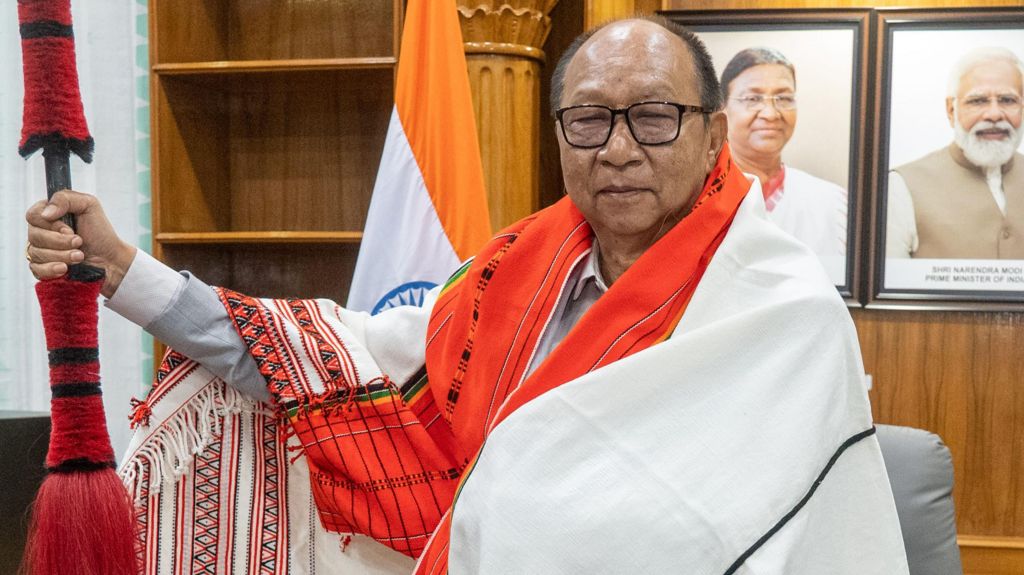
    Yumnam Khemchand Singh, a fifth-dan black belt practitioner of taekwondo, has assumed office as Chief Minister of Manipur, marking the end of a year of direct federal rule imposed following devastating ethnic violence. The 62-year-old BJP leader takes charge of a state still reeling from clashes between the majority Meitei and minority Kuki-Zo communities that claimed over 260 lives in 2023.

    Singh brings a unique profile to the role—a seasoned politician with deep ties to the RSS (the BJP’s ideological parent organization) who only entered electoral politics in 2017, previously serving as assembly speaker and state minister overseeing education and rural development. His cabinet composition reflects attempted ethnic balancing, with three ministers including one deputy chief minister from the Kuki-Zo community.

    The new administration faces immediate challenges: ongoing segregation between communities with thousands displaced from their homes, fresh tensions between Kuki-Zo and Naga tribal groups, and persistent demands for separate administrative arrangements. Hours after Singh’s oath-taking ceremony on February 4, protests erupted in Churachandpur district, with Kuki-Zo civil society groups condemning their legislators’ participation in the government as a ‘betrayal.’

    Opinion remains sharply divided on Singh’s prospects for success. Supporters point to his cross-community relationships and unusual December 2025 visit to a Kuki-Zo relief camp—seen as a significant outreach gesture. Critics argue that peace requires more than administrative management, demanding concrete roadmaps for conflict resolution, security assurances, and addressing core political demands.

    Analysts suggest the coming weeks will be crucial in determining whether Singh’s leadership can transition Manipur from mere absence of violence toward genuine peace built on trust, justice, and political sincerity. The state’s history of armed resistance, controversial military powers in ‘disturbed areas,’ and complex ethnic diversity present formidable obstacles to reconciliation.