作者: admin

  • Buddhist monks’ 108-day Walk for Peace set to end in Washington DC

    Buddhist monks’ 108-day Walk for Peace set to end in Washington DC

    After a remarkable 108-day pilgrimage spanning 2,000 miles, a group of 19 Theravada Buddhist monks is poised to complete their transcontinental ‘Walk of Peace’ from Texas to Washington D.C. on Tuesday. Their extraordinary journey, which commenced on October 26, 2025, from the Huong Dao Vipassana Bhavana Center in Fort Worth, has captivated national attention amid periods of intense political polarization.

    Braving extreme weather conditions—including barefoot marches through snow and freezing temperatures—the monks maintained single-file formation throughout their sacred expedition. The number 108 holds profound significance in Buddhism, symbolizing spiritual completion. Despite a serious November incident in Houston where an escort vehicle collision resulted in two monks being injured (one requiring leg amputation), the group persevered with their message of mindfulness.

    Venerable Bhikkhu Pannakara, the group’s leader, articulated their mission: “My hope is, when this walk ends, the people we met will continue practicing mindfulness and find peace.” Their arrival in the capital will include visits to the Washington National Cathedral and Lincoln Memorial, followed by an interfaith reception hosted by Washington Episcopal Bishop Mariann Budde, who noted their “gentle witness invite us all to deepen our commitment to compassion.

    While the monks plan to advocate for recognizing Vesak (Buddha’s birthday) as a national holiday, their impact has transcended policy objectives. Livestreams of their final steps through Arlington, Virginia, show supporters cheering as they complete their journey. The monks will return to Texas by bus, arriving in Fort Worth on Saturday.


  • UAE’s first road-rail ambulance promises faster access to remote areas

    UAE’s first road-rail ambulance promises faster access to remote areas

    The United Arab Emirates has unveiled a groundbreaking medical response vehicle capable of operating on both roadways and railway tracks, marking a significant advancement in emergency healthcare accessibility for remote desert areas. This innovative ambulance, domestically manufactured by safety solutions provider Naffco, integrates conventional American ambulance specifications with an adaptable rail gear mechanism inspired by locomotive engineering.

    The development coincides with the rapid expansion of the UAE-Saudi railway infrastructure, centrally supported by Etihad Rail’s 900-kilometer network connecting Ghuweifat at the Saudi border to Fujairah on the eastern coast. This strategic alignment enables the specialized ambulances to leverage emerging rail connections for reaching patients in geographically challenging territories where traditional emergency vehicles face operational limitations.

    According to Mohammed Abdul Jabbar, Sales Account Manager at Naffco FZCO, the vehicle represents a fusion of international standards and localized innovation. “We’ve engineered a dual-mode ambulance that transitions seamlessly between road and rail operations,” Jabbar explained during the World Health Expo demonstration. “When approaching railway tracks, the front-mounted rail gear system engages, elevating the tires and converting the vehicle into a track-compatible emergency transport.”

    The technical specifications reveal a comprehensive medical response unit equipped with advanced life support systems including oxygen and vacuum apparatus, DC/AC power outlets, automated external defibrillators, portable ventilators, and comprehensive trauma management kits. The interior configuration features strategically positioned medical cabinets with sliding Plexiglas, multi-access storage compartments, and specialized containment systems for medical waste.

    Notably, the manufacturing process emphasizes local production with selective international component integration. Naffco sources vehicle chassis from Ford and imports the specialized rail mechanism from European suppliers, subsequently engineering the complete emergency response system within UAE facilities.

    This innovation arrives as the Etihad Rail passenger service prepares to connect 11 stations across all seven emirates through phased inaugurations throughout the year. The broader Gulf Cooperation Council railway initiative, targeting full connectivity among six Gulf nations by 2030, further amplifies the potential for cross-border emergency medical cooperation through this pioneering transportation technology.

  • Fontana extends medal record as Italy wins Olympic short track mixed team relay

    Fontana extends medal record as Italy wins Olympic short track mixed team relay

    MILAN — Italian short track legend Arianna Fontana has further cemented her status as the sport’s most decorated Olympian by securing her third gold medal at the Milan Cortina Winter Games. The 33-year-old champion led Italy to a commanding victory in the mixed team relay final, delivering a spectacular performance before an ecstatic home crowd.

    Fontana’s latest triumph marks her 12th Olympic medal across six consecutive Winter Games, extending her unprecedented record in short track speedskating. The Italian team demonstrated exceptional coordination and strategy throughout the relay, ultimately finishing ahead of Canada and Belgium who claimed silver and bronze respectively.

    The victory celebration captured the emotional magnitude of the moment, with teammate Pietro Sighel creating an iconic image by spinning backward across the finish line before cupping his hand to his ear to absorb the crowd’s roaring approval. Fontana herself celebrated by holding up her gold medal alongside a cardboard cutout of her own face, playfully mimicking the expression.

    ‘This is our home. We’re here to protect it,’ Fontana stated, referencing the team’s motto for the competition. ‘We tried to show the home crowd that we’re here on a mission, and that’s exactly what we delivered.’

    Fontana’s remarkable Olympic journey began at just 15 years old when she won relay bronze during Italy’s last hosting of the Games in 2006. Reflecting on her longevity in the sport, she remarked that her teenage self ‘wouldn’t believe that I’m still here’ but would ultimately ‘be proud’ of her continued achievements.

    Meanwhile, the competition witnessed challenging conditions as several skaters reported concerns about soft ice at the Milano Ice Skating Arena. Dutch competitor Jens van ‘t Wout described the surface as ‘really tricky,’ noting unusual falls and athletes ‘slipping around’ throughout the events.

    The United States team experienced particular difficulties, with Corinne Stoddard suffering falls in both the mixed relay and women’s 500 meters events. Despite these setbacks, Stoddard remains optimistic about her recovery from a swollen ankle injury.

    Fontana now looks ahead to further medal opportunities in the women’s 500 meters, an event she has won in both the 2018 and 2022 Winter Olympics, having successfully qualified through earlier heats.

  • Coke demand rises in fourth quarter despite higher prices, but outlook sinks shares

    Coke demand rises in fourth quarter despite higher prices, but outlook sinks shares

    Coca-Cola demonstrated remarkable resilience in the fourth quarter as consumer demand remained robust despite strategic price increases across key markets. The beverage giant reported 1% global unit case volume growth during the October-December period, with particularly strong performance in the United States, Japan, and Brazilian markets.

    North American operations showed significant improvement with 1% volume growth, marking a positive reversal after several quarters of stagnant or declining sales. The company implemented price adjustments of 4% in North America and 1% globally during the quarter, reflecting its pricing power amid inflationary pressures.

    Product performance revealed shifting consumer preferences: Coca-Cola Zero Sugar emerged as a standout performer with impressive 13% sales growth. Water beverages, sports drinks, coffee, and tea categories also experienced strengthened demand, while traditional juices and dairy products faced market challenges.

    The company identified a growing divergence in consumer behavior across North America and European markets. Higher-income consumers increasingly gravitated toward premium brands including Smartwater, Topo Chico, and Fairlife, while middle- and lower-income shoppers demonstrated heightened price sensitivity. In response, Coca-Cola introduced innovative 7.5-ounce mini cans in North American convenience stores to enhance affordability and accessibility.

    Financial results showed revenue increasing 2% to $11.8 billion, though this fell short of Wall Street’s $12.05 billion expectation. Net income climbed 3% to $2.3 billion, with adjusted earnings per share of 58 cents exceeding analyst projections by 2 cents.

    The company provided forward guidance indicating expectations of 4-5% organic revenue growth in 2026, following 5% growth in the previous year. Despite the generally positive results, shares declined approximately 4% in pre-market trading following the earnings release.

    Leadership changes announced in December will see Henrique Braun, current COO and 30-year company veteran, assume the CEO role on March 31. Current Chairman and CEO James Quincey will transition to executive chairman, ensuring continuity in corporate strategy.

  • Japan’s surge on the Olympic halfpipe leaves the U.S. with some catching up to do

    Japan’s surge on the Olympic halfpipe leaves the U.S. with some catching up to do

    LIVIGNO, Italy (AP) — A dramatic power shift is unfolding in Olympic snowboarding as American dominance in the halfpipe gives way to Japanese supremacy. Where U.S. athletes once routinely claimed podium positions in the sport they pioneered, only defending champion Chloe Kim now remains as a legitimate medal contender for Team USA in current Winter Games competitions.

    This tectonic change stems from contrasting national approaches to sporting infrastructure and athlete development. While Japan has aggressively invested in training facilities—including dry-slope complexes, expensive safety airbags, and year-round training programs—the United States has witnessed an alarming disappearance of halfpipes across its resorts. Industry experts estimate fewer than six operational halfpipes remain nationwide.

    The consequences are starkly visible in Olympic results. Between 2002 and 2010, American riders captured 12 of 18 available halfpipe medals while Japan won none. In the subsequent three Olympics, the U.S. secured just six medals with only one (Shaun White’s 2018 gold) coming from the men’s competition, while Japan collected five medals, four by male athletes.

    Olympic champion Kelly Clark, who emerged from Vermont’s now-diminished halfpipe scene, expresses concern about the sport’s accessibility. ‘If I were looking 15 years down the road at halfpipe and how common that will be at a resort, that I would say could be a little concerning,’ Clark noted. ‘Will it be that relatable sport that everyone can kind of watch, and participate in?’

    The infrastructure challenge is compounded by economic realities. Resort operators increasingly favor slopestyle courses—added to the Olympics in 2014—which require less expensive construction and maintenance while appealing to broader audiences. Constructing a competition-grade 22-foot halfpipe demands specialized engineering skills and significant ongoing upkeep.

    Shannon Dunn-Downing, 1998 bronze medalist, posed the existential question in a recent Slush Magazine editorial: ‘Is Halfpipe Dead?’ She observed that poorly maintained pipes go unused, creating a vicious cycle where resorts see little value in investing in quality facilities.

    Meanwhile, Japan has built what Rick Bower, director of the U.S. Ski & Snowboard program, describes as an ‘army’ of developmental athletes. Decades of systematically sending large teams overseas for training have evolved into comprehensive training camps in Switzerland with dozens of riders and multiple coaches.

    This systematic approach extends beyond the halfpipe. In big air events at the current Games, Japan has claimed three of six medals while the United States produced just one finalist and no podium finishes.

    Zach Nigro, Burton’s senior sports marketing director, suggests cultural factors may contribute to Japan’s success: ‘Their thought might be, it’s a difficult discipline, but if you’re going to be the best, then master the most difficult discipline.’

    American officials acknowledge the challenge and are implementing corrective measures, including a potential $65 million endowment aimed at reclaiming dominance when the Olympics return to Salt Lake City in 2034. As Bower conceded: ‘Because of [past complacency], we’re now in a position where we’re behind and we need to do some catch-up.’

  • US lawmakers accuse justice department of ‘inappropriately’ redacting Epstein files

    US lawmakers accuse justice department of ‘inappropriately’ redacting Epstein files

    A significant dispute has erupted between U.S. lawmakers and the Department of Justice (DOJ) regarding the handling of documents related to convicted sex offender Jeffrey Epstein. Congressional representatives from both parties are alleging that the DOJ has improperly redacted critical information from approximately three million pages of evidence released under the Epstein Files Transparency Act (EFTA).

    Democratic Representative Ro Khanna and Republican Representative Thomas Massie, co-sponsors of the EFTA legislation, revealed they discovered approximately twenty individuals whose names were entirely concealed in the documents, with only Epstein and his convicted associate Ghislaine Maxwell remaining visible. Massie stated that six of these redacted names potentially belong to individuals “likely incriminated by their inclusion in these files.”

    The controversy intensified when lawmakers examined unredacted versions of the documents in a secure DOJ facility. They reported that the FBI under the Trump administration had initially processed these redactions in March, before the documents reached the current DOJ leadership. This sequence contradicts the EFTA’s requirement that the FBI—as a component of the DOJ—should have removed redactions before transmitting files to Deputy Attorney General Todd Blanche and Attorney General Pam Bondi’s office.

    In response to congressional pressure, the DOJ has begun reversing some redactions. Blanche announced via social media that his department had “unredacted all non-victim names from this document” and maintained that “DOJ is committed to transparency.” He disclosed that one document now shows only two concealed names, both belonging to Epstein victims whose identities the EFTA mandates protecting.

    The viewing process itself has drawn criticism from lawmakers. Representative Jamie Raskin characterized the arrangement—providing only four computers in a satellite office for reviewing three million documents—as effectively a “cover up,” estimating it would take Congress seven years to thoroughly examine all materials.

    The situation gained additional urgency last week when lawyers for Epstein’s victims reported that recently released files contained improperly redacted email addresses and nude photographs that could identify potential victims. Survivors issued statements condemning the disclosure as “outrageous” and expressed distress at being “named, scrutinized and retraumatized.” The DOJ acknowledged these errors resulted from “technical or human error” and removed the flagged files.

    Despite these adjustments, Khanna maintains that post-release corrections still violate the EFTA, which passed with nearly unanimous congressional support and was signed by President Trump in November. He demands complete transparency: “They need to unscrub the FBI files so we know who the rich and powerful men are who raped underage girls.”

  • Amazon plans to launch AI content marketplace: Media report

    Amazon plans to launch AI content marketplace: Media report

    Amazon is developing an innovative marketplace platform that will enable publishers to license their content specifically for artificial intelligence applications, according to a report from The Information. The tech giant has reportedly circulated presentation materials to publishing industry executives ahead of an Amazon Web Services conference, detailing plans for a dedicated content marketplace that would be integrated with AWS’s core AI tools including Bedrock and Quick Suite.

    The initiative emerges amid ongoing negotiations between content creators and AI companies regarding the appropriate use of online materials for training AI models and generating user responses. Publishers have been advocating for usage-based compensation structures that scale according to how extensively their content is utilized by AI systems.

    While Amazon declined to provide specific details about the reported project, a company spokesperson emphasized their established relationships with publishers and commitment to continuous innovation. This development follows Microsoft’s recent announcement of its own Publisher Content Marketplace (PCM), indicating a growing trend toward formalized licensing frameworks for AI content usage.

    The marketplace concept represents a significant shift in how AI companies access training data, potentially creating new revenue streams for publishers while addressing copyright concerns that have emerged alongside the rapid expansion of generative AI technologies.

  • China’s self-developed Antarctic vehicle travels over 10,000 km

    China’s self-developed Antarctic vehicle travels over 10,000 km

    China’s domestically engineered Snow Leopard 6×6 wheeled vehicle has demonstrated exceptional resilience in Earth’s most unforgiving environment, completing over 10,000 kilometers of rigorous testing in Antarctica without a single mechanical failure. The breakthrough announcement came from China’s 42nd Antarctic expedition team on February 9, 2026, marking a significant milestone in polar exploration technology.

    From December 5, 2025, through early February 2026, the vibrant red vehicle underwent comprehensive evaluation across five distinct Antarctic terrain types surrounding China’s Zhongshan Station research base. The testing protocol subjected the vehicle to extreme conditions including treacherous sea ice, sharp volcanic gravel, soft snow depths, compacted hard snow, and solid ice formations.

    This engineering triumph addresses critical capability gaps in China’s polar operations, enabling enhanced rapid personnel transport, scientific research support, and emergency response capacity across Antarctica’s hostile interior. The vehicle’s flawless performance under such demanding conditions represents a technological leap in polar mobility solutions, potentially setting new standards for reliability in extreme environment transportation.

    The successful deployment underscores China’s growing expertise in specialized polar equipment development, contributing valuable infrastructure to the international scientific community’s efforts in Earth’s southernmost continent.

  • As a fellow Puerto Rican, Bad Bunny’s Super Bowl show was personal

    As a fellow Puerto Rican, Bad Bunny’s Super Bowl show was personal

    In a groundbreaking moment for Latin music and cultural representation, Puerto Rican superstar Bad Bunny made history on Sunday by delivering the first entirely Spanish-language halftime show in Super Bowl history. Performing before an estimated global audience of 125 million at Santa Clara’s Levi’s Stadium, the artist born Benito Martínez Ocasio transformed the world’s most prestigious entertainment platform into a celebration of Puerto Rican identity.

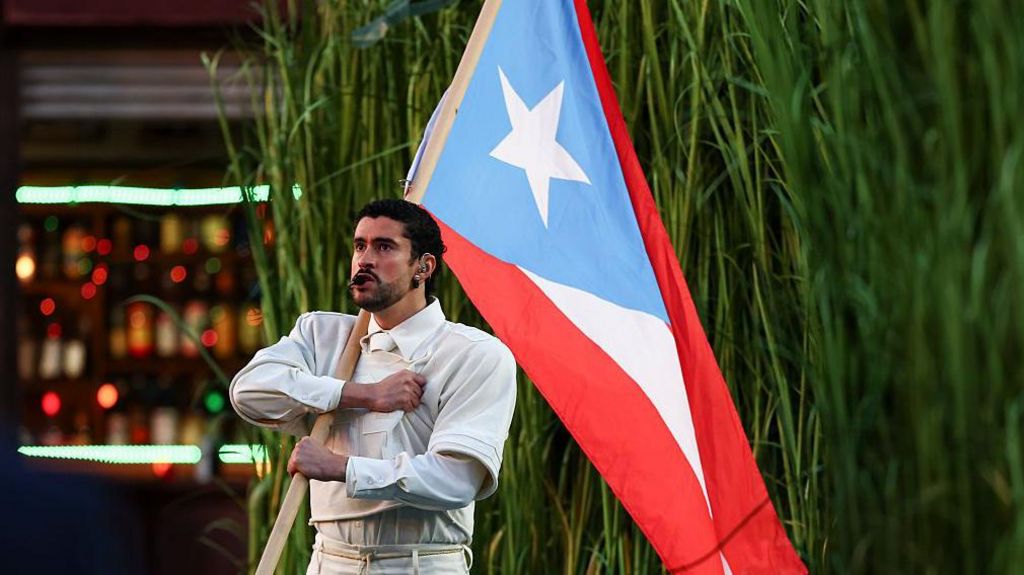
    The 14-minute spectacle featured a meticulously crafted set evoking iconic Puerto Rican imagery—from sugarcane fields that once powered the island’s economy to traditional rural homes and the colonial fort of El Morro in Old San Juan. Bad Bunny moved through this symbolic landscape while performing hits including ‘Tití Me Preguntó’ and ‘El Apagón,’ the latter serving as both performance and protest as he critiqued the island’s fragile electrical grid.

    The performance incorporated multiple Puerto Rican musical traditions—reggaeton, salsa, bomba, and plena—creating what scholars have described as an ‘intergenerational conversation’ through sound. Special guests included Lady Gaga and Ricky Martin, while cameos from Pedro Pascal, Cardi B, and Jessica Alba added Hollywood glamour to the celebration.

    Beyond the spectacle, the show represented a profound cultural statement. Bad Bunny, who maintains what academics describe as an ‘intimate connection with the island,’ used the global platform to showcase Puerto Rican symbols including the traditional ‘pava’ farmer’s hat and the endangered Puerto Rican crested toad. His lyrics, which frequently address the island’s political and social struggles, reached unprecedented audiences.

    This historic performance comes just weeks after Bad Bunny made Grammy history with his entirely Spanish album ‘Debí Tirar Más Fotos’ winning Album of the Year. His success marks the culmination of reggaeton’s journey from persecuted genre—once associated primarily with Afro-Caribbean communities and underground clubs—to global mainstream acceptance.

    Perhaps most significantly, Bad Bunny has achieved international stardom while steadfastly preserving Puerto Rican Spanish, challenging historical pressures for Latin artists to anglicize their music. His unapologetic use of local vocabulary and Puerto Rican dialect has created what collaborators describe as a ‘cultural movement’ that allows audiences worldwide to engage with authentic Puerto Rican expression.

    Despite criticism from some quarters—including former President Donald Trump who commented on his Truth Social platform that ‘nobody understands a word this guy is saying’—the performance demonstrated how cultural specificity can achieve universal resonance. For Puerto Ricans, who maintain limited political representation within the United States, Bad Bunny’s success represents a powerful form of cultural sovereignty and global recognition.

  • Indonesia preparing to deploy up to 8,000 soldiers to Gaza

    Indonesia preparing to deploy up to 8,000 soldiers to Gaza

    In a significant development for Middle East peace efforts, Indonesia has announced preparations to deploy up to 8,000 military personnel to Gaza as part of the second phase of the ceasefire agreement negotiated by the United States. This deployment marks the first national commitment to the international stabilization initiative.

    General Maruli Simanjuntak, Army Chief of Staff, confirmed that specialized training is already underway for Indonesian forces who will primarily serve in medical and engineering capacities within the conflict zone. The deployment timeline and specific operational parameters remain under finalization.

    This military commitment aligns with Indonesia’s recent participation in President Donald Trump’s Board of Peace, established last month with a United Nations Security Council mandate. The board’s mandate includes forming an International Stabilization Force (ISF) to secure Gaza’s border regions and oversee demilitarization efforts, including the disarmament of Hamas.

    The peace board, scheduled to convene its inaugural meeting in Washington on February 19th, will additionally supervise the establishment of a technocratic Palestinian administration in Gaza and coordinate post-conflict reconstruction initiatives.

    President Prabowo Subianto has championed Indonesia’s involvement despite domestic criticism from certain Islamic groups. These factions have expressed discontent with perceived American support for Israel’s military operations in Gaza. Defending his position, President Subianto emphasized that as the world’s most populous Muslim nation, Indonesia bears responsibility to contribute to regional stabilization and advance the two-state solution framework.

    Israeli media outlet Kan has reported that a specific area between Rafah and Khan Younis in southern Gaza has been designated for constructing barracks to accommodate several thousand Indonesian personnel.

    While other Muslim-majority nations including Turkey and Pakistan contemplate similar peacekeeping contributions, they have explicitly stated their troops would not participate in Hamas disarmament operations. The viability of the international force remains uncertain given ongoing tensions, with Hamas refusing to surrender weapons while Israeli forces maintain presence in portions of Gaza.