作者: admin

  • China’s grip slips as Trump squeezes Latin America

    China’s grip slips as Trump squeezes Latin America

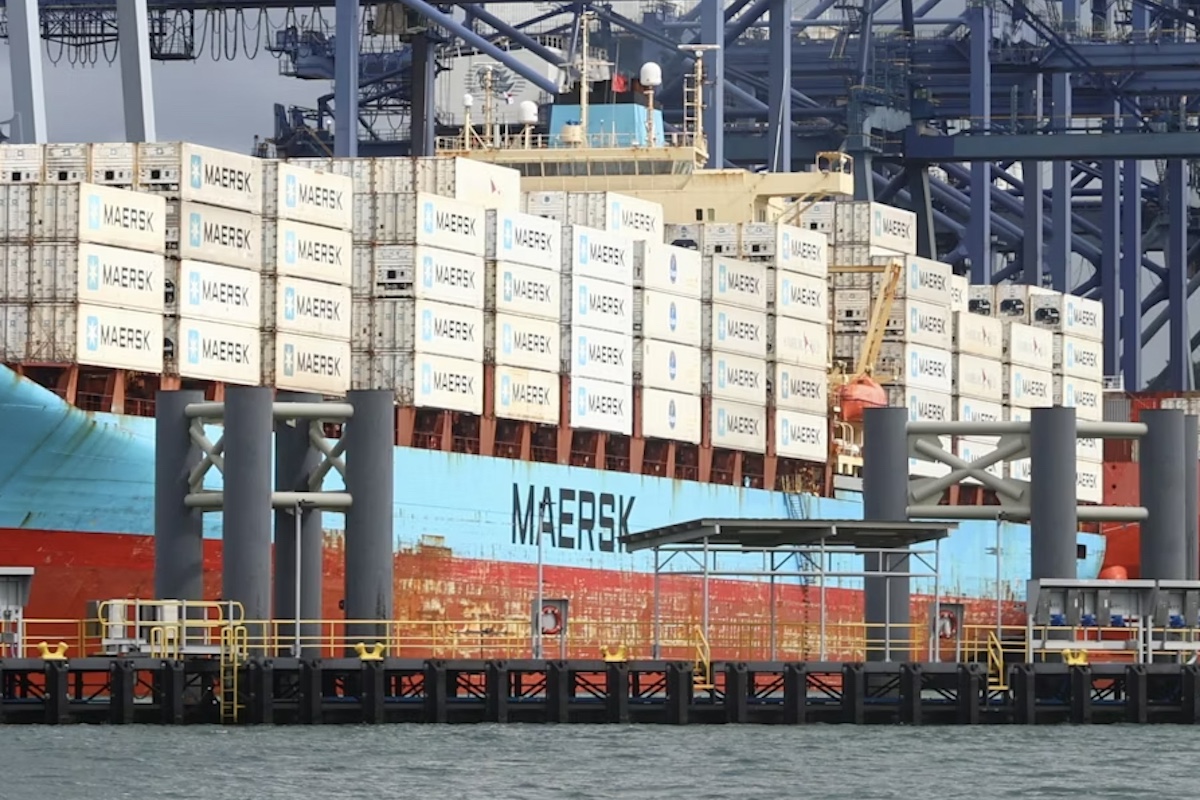
    In a landmark decision with significant geopolitical implications, Panama’s Supreme Court has nullified the operating contract of Hong Kong-based CK Hutchison subsidiary Panama Ports Company, effectively ending its 27-year management of two strategic ports along the Panama Canal. The late January ruling declared the original 1997 authorization laws unconstitutional, marking a pivotal moment in the ongoing power competition between the United States and China in Latin America.

    The court’s decision arrives precisely one year after former US President Donald Trump threatened direct intervention to limit Chinese influence over the critical waterway. Beijing responded with unusually strong language, denouncing the judgment as “absurd, shameful and pathetic” while warning Panama would face “heavy political and economic price” for the eviction.

    This development represents the latest indicator that China’s regional ambitions are facing headwinds in what has traditionally been considered America’s backyard. Since the 1823 Monroe Doctrine declared the Western Hemisphere closed to European colonization, the US maintained predominant influence until the post-Cold War era created opportunities for emerging superpowers.

    China has since become South America’s top trading partner and a major source of foreign direct investment, often providing loans with fewer conditions than international financial institutions but requiring commodity-backed repayment guarantees. However, Chinese investments have frequently been criticized for lower environmental and labor standards, with a 2023 UN analysis identifying patterns of serious rights abuses across 14 major projects.

    The port ruling follows Panama’s February 2025 withdrawal from China’s Belt and Road Initiative, a decision made after meetings with US Secretary of State Marco Rubio. Panamanian President Jose Raul Mulino publicly questioned what the initiative had actually brought to his country.

    Simultaneously, China appears to be deprioritizing Latin American investments due to mediocre growth and repayment delays, reducing sovereign lending since 2020. The US capture of Venezuelan leader Nicolas Maduro further demonstrates Washington’s willingness to reshape the regional political environment, potentially jeopardizing China’s ability to collect on approximately $10 billion in Venezuelan debt that could be challenged as “odious debt” by the new government.

    Panama Ports Company has announced international arbitration proceedings that may continue for years, leaving the future ownership of the critical infrastructure uncertain. This convergence of events suggests the zenith of Chinese economic domination in Latin America may have passed, signaling a new chapter in hemispheric power dynamics.

  • Watch: How the Tumbler Ridge school shooting unfolded

    Watch: How the Tumbler Ridge school shooting unfolded

    A devastating school shooting unfolded at Tumbler Ridge Educational Institution, resulting in one of Canada’s most tragic campus security incidents in recent years. The violent episode claimed nine lives and left at least 25 individuals with injuries, some in critical condition.

    Eyewitness accounts describe scenes of chaos and terror as students and faculty implemented emergency protocols. One student survivor recounted barricading themselves within a classroom for approximately two hours during the active shooter situation, fearing for their life while law enforcement worked to secure the premises.

    The incident has triggered comprehensive responses from multiple agencies including local law enforcement, emergency medical services, and crisis intervention teams. Investigators are currently working to establish the shooter’s motives and the sequence of events that led to this tragedy.

    Community leaders have initiated grief counseling services while educational authorities nationwide are reviewing security protocols. The shooting has reignited critical discussions about school safety measures and mental health support systems within educational environments across the country.

  • Italy approves new migration bill including powers to impose ‘naval blockades’ on migrant ships

    Italy approves new migration bill including powers to impose ‘naval blockades’ on migrant ships

    The Italian government under Prime Minister Giorgia Meloni has enacted sweeping immigration reforms authorizing naval blockades against migrant vessels attempting to reach Italian territorial waters. The comprehensive legislation, approved during Wednesday’s cabinet session, introduces stringent border control measures and enhanced collaboration with European agencies.

    The new provisions empower Italian authorities to implement maritime interdiction operations for periods up to 30 days when migrant ships present substantial threats to national security or public order, particularly regarding potential terrorist infiltration. This blockade authority may be extended to six months under extreme circumstances. The measures also apply during mass migration events that could compromise border security management.

    Violators face severe penalties including fines reaching €50,000 ($59,400) and vessel confiscation for repeat offenses—a provision particularly targeting humanitarian rescue operations. Intercepted migrants may be transported to third nations with which Italy maintains specific agreements, reviving the controversial offshore processing model previously established in Albania.

    This legislative development follows Tuesday’s European Parliament endorsement of new migration and asylum protocols, which Italian Foreign Minister Antonio Tajani hailed as validation of Rome’s immigration stance. The Albanian processing centers, a cornerstone of Meloni’s migration strategy, have remained largely inactive due to legal challenges while generating ongoing debates regarding their legality and humanitarian implications.

  • Casey Wasserman to stay as chair of LA 2028 Olympics after Epstein files fallout

    Casey Wasserman to stay as chair of LA 2028 Olympics after Epstein files fallout

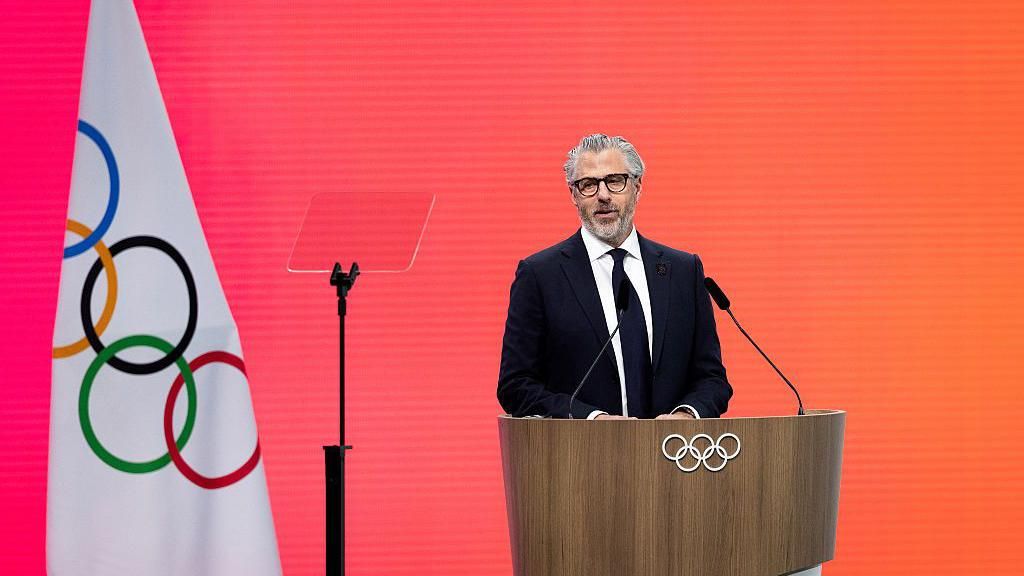
    The Los Angeles 2028 Olympic Games organizing committee has confirmed Casey Wasserman will remain as chairman following an extensive review of his connections to Jeffrey Epstein’s associates revealed in recently unsealed court documents.

    The LA28 executive committee issued a formal statement asserting Wasserman ‘should continue to lead LA28 and deliver a safe and successful Games’ after external counsel examined his limited interactions with Epstein’s network. The investigation concluded his involvement didn’t extend beyond previously documented instances.

    Court records show Wasserman traveled on Epstein’s private aircraft in 2003 during a humanitarian mission to Africa organized by the Clinton Foundation, marking his sole encounter with the convicted sex offender. He additionally exchanged emails with Ghislaine Maxwell, Epstein’s accomplice currently serving a 20-year prison sentence for sex trafficking minors.

    Wasserman expressed profound regret over his decades-old correspondence with Maxwell, emphasizing he ‘never had a personal or business relationship with Jeffrey Epstein’ and was unaware of their criminal activities at the time.

    Despite clearing him of misconduct allegations, the controversy has triggered significant professional consequences. High-profile clients including singer Chappell Roan and soccer legend Abby Wambach have severed ties with Wasserman’s talent agency, citing ethical concerns and organizational accountability.

    The decision has drawn criticism from Los Angeles city officials, with Councilmember Monica Rodriguez stating residents ‘deserve leadership that understands the gravity of these revelations.’ The LA28 board, comprising prominent entertainment, political, and business figures including Dreamworks CEO Jeffrey Katzenberg, maintains confidence in Wasserman’s leadership capabilities.

  • Exclusive: Bhumi Pednekar on ‘Daldal’, imposter syndrome and why she’s done being hard on herself

    Exclusive: Bhumi Pednekar on ‘Daldal’, imposter syndrome and why she’s done being hard on herself

    In a candid revelation, acclaimed Bollywood actress Bhumi Pednekar has opened up about her transformative journey in the industry, her most challenging role to date in the crime thriller ‘Daldal’, and her personal battle with imposter syndrome. The interview, conducted on February 11, 2026, provides unprecedented insight into the actress’s creative process and personal evolution.

    Pednekar identified her role as DCP Rita Ferreira in ‘Daldal’ as her most demanding performance yet, describing the character as ‘complex and broken’ with minimal dialogue. ‘This character was a product of a failed system,’ Pednekar explained. ‘She doesn’t know how to receive love and praise. There was so much going on internally with so little externally for me to express.’

    The actress detailed her meticulous preparation for the de-glamorized police role, consciously avoiding conventional portrayals of law enforcement officers. ‘She’s a petite, broken girl with red eyes and eye bags – unlike any cop representation we’ve seen,’ Pednekar noted, crediting directors Suresh Triveni and Amrit Raj Gupta for creating a nurturing environment that allowed for nuanced performances.

    When asked about the series’ critical success, Pednekar attributed it to the production team’s unwavering commitment to authenticity. ‘We made the show with incredible honesty and attention to detail,’ she revealed. ‘If natural light was needed, we waited three hours to shoot. The audience recognized this dedication to craft.’

    The conversation turned personal as Pednekar discussed her ongoing struggle with imposter syndrome, drawing parallels to her character in ‘Daldal’. ‘All of us feel that when good things happen, it’s too good to be true,’ she confessed. ‘It’s a healing journey, and I’m learning to celebrate myself in an industry that often tells women not to.’

    After a decade in Bollywood, Pednekar outlined her evolved perspective on success: ‘I’ve been excessively hard on myself, measuring achievement solely by film performance. Now I’m detaching from that mindset. True ambition isn’t just about success—it’s about creating impact through cinema, philanthropy, and entrepreneurship.’

    The actress also discussed her entrepreneurial venture Back Bay Life, explaining her voluntary break from acting to focus on building ‘a legacy brand with better, safer standards in the beverage industry.’

    Addressing the challenges of digital life, Pednekar spoke frankly about online toxicity: ‘Social media overwhelms everyone. I’ve spent nights crying over cruel comments and seen my family affected. People don’t realize the mental health repercussions of their digital actions.’

    Looking ahead, Pednekar expressed excitement about her upcoming romantic comedy with Imran Khan, describing it as ‘an evolved, mature examination of relationships’ drawn from Khan’s personal experiences. The project marks Khan’s highly anticipated return to cinema after a significant hiatus.

  • ASUS launches Zenbook DUO UX8407AA in the UAE with Intel Core Ultra X9

    ASUS launches Zenbook DUO UX8407AA in the UAE with Intel Core Ultra X9

    ASUS has unveiled its groundbreaking Zenbook DUO UX8407AA in the United Arab Emirates market, marking a significant advancement in dual-screen computing technology. The device represents a sophisticated fusion of cutting-edge performance and innovative design, specifically engineered for creative professionals and multitasking enthusiasts.

    Powered by Intel’s latest Core Ultra X9 Processor, the laptop delivers exceptional computational capabilities that streamline complex creative workflows and AI-enhanced productivity tasks. This processing power ensures seamless operation across demanding applications, whether users are working in stationary environments or navigating mobile scenarios.

    The centerpiece of this technological marvel is its dual 14-inch 3K ASUS Lumina Pro OLED displays, which boast remarkable 1,000 nits brightness and superior color accuracy. The significantly reduced bezel gap between screens creates an immersive, continuous digital workspace ideal for expanded timelines, comprehensive mood boards, and effortless multitasking.

    With a 144Hz refresh rate and ultra-responsive performance, the visual experience achieves unprecedented smoothness, particularly beneficial for designers and visual content creators. The device’s architecture incorporates a durable yet lightweight Ceraluminum™ chassis, balancing portability with structural integrity.

    The innovative hinge mechanism and integrated kickstand support multiple operational modes, transitioning seamlessly from traditional laptop configuration to extended workstation setup. This adaptability caters to the dynamic working styles of contemporary professionals.

    For the UAE market introduction, ASUS offers an exclusive bundle available through their official eShop, including the Marshmallow Mouse MD100 Lite and Marshmallow Keyboard KW100. These accessories complement the device’s minimalist aesthetic while enhancing its travel-ready functionality. Each purchase includes the ASUS Perfect Warranty, providing additional security for daily users.

    The Zenbook DUO features an impressive 99Wh dual-battery system that ensures extended operational duration, combined with advanced six-speaker audio technology for immersive sound quality. This launch establishes new benchmarks for what professionals can expect from mobile computing solutions in creative industries.

  • Zeiss top exec: Learn from China speed

    Zeiss top exec: Learn from China speed

    German optical systems giant Zeiss has officially inaugurated its Greater China Headquarters Campus in Shanghai’s Waigaoqiao Free Trade Zone, representing the company’s most substantial infrastructure investment in China to date. The February 7th launch ceremony marked a significant milestone in Zeiss’s strategic expansion within the Chinese market.

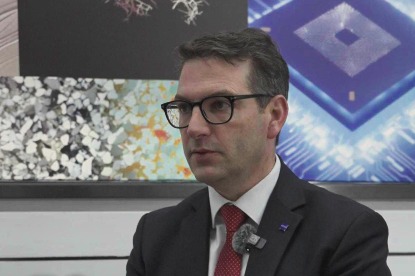
    In an exclusive interview with China Daily, Martin Fischer, President and CEO of Zeiss Greater China, expressed extraordinary confidence in China’s economic landscape and development pace. Fischer emphasized that Zeiss aims to embrace what he termed ‘China speed’ – the remarkable rapidity of development and implementation characteristic of China’s business environment.

    ‘We are not hesitating to invest in our future here,’ Fischer stated, highlighting the company’s long-term commitment to the Chinese market. The new campus signifies more than just physical infrastructure; it represents Zeiss’s dedication to integrating more deeply within China’s innovation ecosystem and manufacturing capabilities.

    The investment comes at a time when many multinational corporations are reevaluating their China strategies amid evolving global supply chains. Zeiss’s substantial commitment demonstrates a contrasting approach, betting on continued growth and technological advancement within the Chinese market. The headquarters will serve as a central hub for Zeiss’s operations across Greater China, coordinating research, development, and commercial activities throughout the region.

  • Red Sea crisis: What do Israel and the UAE want from Somaliland?

    Red Sea crisis: What do Israel and the UAE want from Somaliland?

    The strategically positioned but impoverished Somaliland has become the epicenter of an international geopolitical confrontation following Israel’s groundbreaking recognition of its sovereignty in December 2025. This unilateral move has triggered a complex regional power struggle involving Middle Eastern rivals and global powers, fundamentally altering the political dynamics in the Horn of Africa.

    Somaliland, which declared independence from Somalia in 1991 following a brutal genocide that claimed approximately 200,000 lives under Siad Barre’s dictatorship, maintains its own government, currency, and military despite lacking widespread international recognition. The territory’s strategic location adjacent to the Bab al-Mandab Strait—a critical maritime chokepoint handling 30% of global oil shipments—has made it a focal point for regional ambitions.

    Israel’s recognition, the first by any UN member state, came with Somaliland’s commitment to join the Abraham Accords, normalizing relations despite ongoing protests against Israel’s actions in Gaza. The agreement potentially grants Israel commercial and military advantages, including port access and possible military bases to counter Houthi threats in the Red Sea.

    The move has ignited fierce opposition from multiple quarters. Somalia’s President Hassan Sheikh Mohamud condemned it as an “existential threat” to Somali sovereignty, while the Arab League, African Union, and Gulf Cooperation Council unanimously rejected the recognition. Saudi Arabia emerged as a leading critic, reaffirming support for Somalia’s territorial integrity and signing new defense agreements with Mogadishu.

    Meanwhile, the UAE and Saudi Arabia have engaged in proxy conflict over Somaliland, reflecting their broader competition in Yemen and Sudan. The UAE’s established presence through DP World’s operation of Berbera port and previous military bases has faced challenges after Saudi accusations of Emirati involvement in transporting a Yemeni separatist leader through Somaliland territory.

    International responses remain divided. While the US maintains cautious neutrality with President Trump stating they would “study” recognition, European powers and China have reaffirmed support for Somalia’s territorial integrity. Turkey has deepened its military cooperation with Somalia, deploying F-16 jets and strengthening economic ties.

    The situation continues evolving as Somaliland seeks additional international partnerships and economic opportunities while navigating complex regional alliances and heightened tensions that threaten to reshape the geopolitical landscape of the Horn of Africa and beyond.

  • ‘The nation mourns’ – Canada leaders react to school shooting

    ‘The nation mourns’ – Canada leaders react to school shooting

    A profound sense of national grief has enveloped Canada following a devastating school shooting in the remote community of Tumbler Ridge, British Columbia. The tragic incident, which resulted in the deaths of nine individuals, has prompted an outpouring of condolences and solidarity from the highest levels of Canadian leadership. Prominent figures, including former Bank of England Governor Mark Carney and Conservative Party leader Pierre Poilievre, have publicly expressed their heartbreak and support for the victims’ families and the shattered community. The shooting represents one of the most severe acts of school violence in the country’s recent history, sending shockwaves far beyond the borders of the small town. Local authorities have launched a comprehensive investigation into the circumstances surrounding the attack, while crisis support teams and mental health resources are being mobilized to assist survivors and first responders grappling with the trauma. The event has reignited a national conversation on community safety, gun control measures, and the protection of educational institutions, underscoring a collective resolve to prevent future tragedies of this magnitude.

  • Ancient tomb cluster in Changsha offers a glimpse into millennia of history

    Ancient tomb cluster in Changsha offers a glimpse into millennia of history

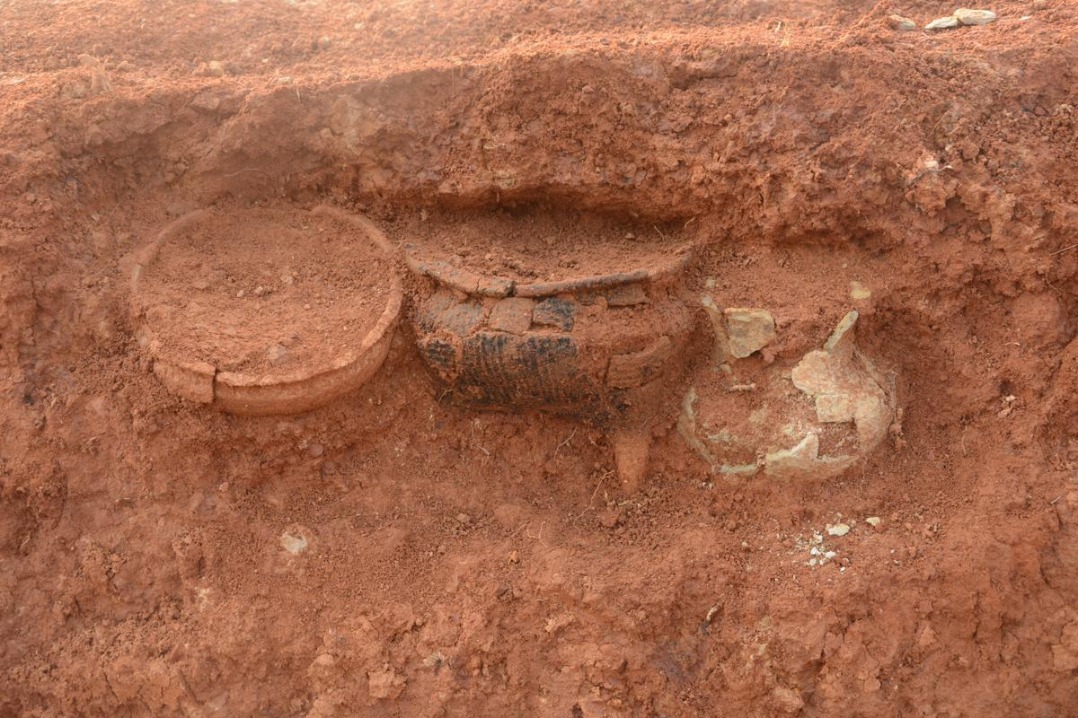
    Archaeologists in Changsha, Hunan province, have made a groundbreaking discovery that sheds new light on ancient Chinese civilization. A comprehensive four-month excavation project has revealed an extensive burial complex containing 214 ancient tombs with over 560 cultural artifacts, providing an unprecedented window into regional life spanning more than two thousand years.

    The Changsha Institute of Cultural Heritage and Archaeology conducted the meticulous survey across a 160,000-square-meter area in Wangcheng district prior to logistics park construction. What they uncovered represents one of the most significant archaeological finds in recent years, with burial sites dating consecutively from the Western Zhou Dynasty (approximately 11th century-771 BC) through the Qin (221-206 BC) and Han (206 BC-AD 220) periods.

    Among the extraordinary findings are bronze weaponry including ceremonial swords and dagger-axes, exquisitely patterned pottery vessels, jade rings of spiritual significance, and early ironware. These artifacts collectively illustrate the sophisticated craftsmanship, material culture, ritual practices, and military traditions that flourished in the region.

    This discovery gains additional importance from its connection to previous tomb groups identified along the same mountain range in 2017 and 2024. Together, they establish this area as a persistent burial ground that served a stable, growing community for over a millennium. The continuous chronological sequence offers researchers unparalleled opportunities to study demographic shifts, settlement evolution, and social organization patterns.

    Beyond local significance, the findings contribute substantially to understanding how regional cultures in the Yangtze River basin developed and interacted with other ancient Chinese civilizations across different historical periods. The preservation quality and historical range of these tombs make them particularly valuable for archaeological research and cultural heritage studies.