作者: admin

  • Mainland official extends greetings to Taiwan compatriots ahead of Chinese New Year

    Mainland official extends greetings to Taiwan compatriots ahead of Chinese New Year

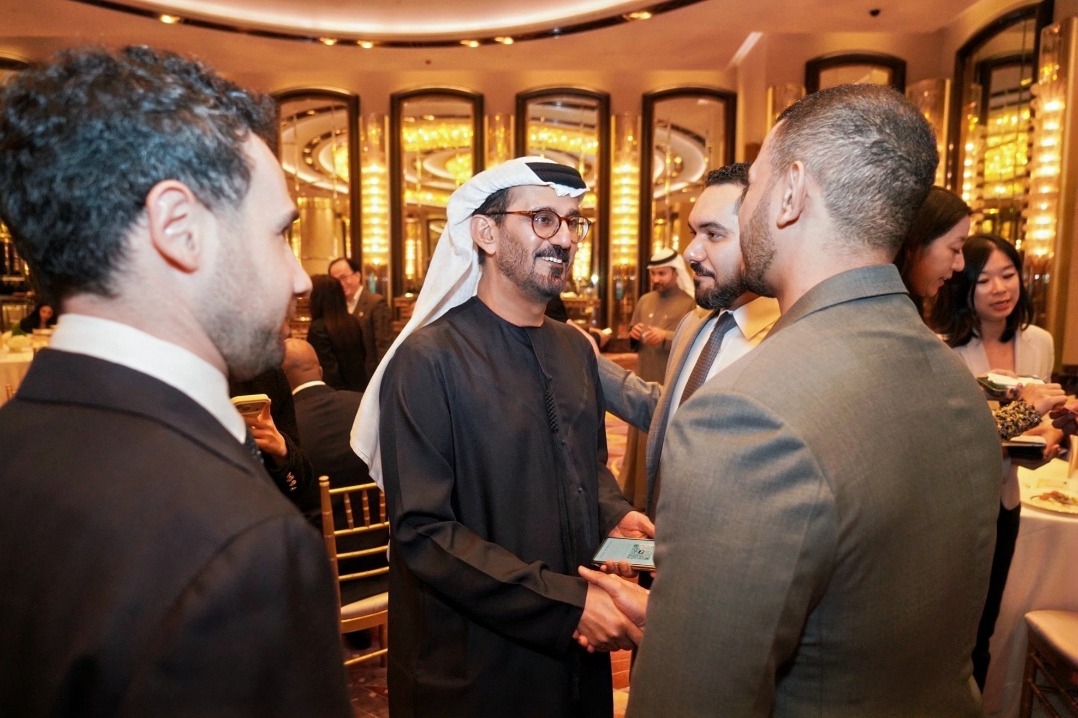
    In a significant pre-Lunar New Year diplomatic gesture, China’s senior Taiwan affairs official Song Tao extended warm festive greetings to Taiwanese compatriots during cross-Strait celebration events held Wednesday in Fuzhou, Fujian province. The director of both the Taiwan Work Office of the Communist Party of China Central Committee and the Taiwan Affairs Office of the State Council addressed more than 200 attendees, including prominent representatives from Taiwan’s business community.

    Speaking at the ceremonial gathering, Song Tao articulated Beijing’s continued dedication to fostering economic collaboration and integrated development between mainland China and Taiwan throughout the forthcoming 15th Five-Year Plan period (2026-2030). He emphasized the mainland’s commitment to creating expansive opportunities for Taiwanese enterprises to establish and expand their operations within mainland markets.

    The senior official articulated a clear expectation that Taiwanese compatriots would demonstrate firm opposition to separatist activities promoting ‘Taiwan independence’ while actively championing national reunification efforts. Song stressed the importance of maintaining proper direction in cross-Strait relations, highlighting the interconnected destiny shared across the Taiwan Strait.

    In response, Taiwanese business representatives expressed appreciation for the mainland’s sustained support and concern, characterizing the Chinese mainland as the premier investment and entrepreneurship destination for Taiwanese nationals. Attendees voiced confidence in their developmental prospects within mainland markets and pledged to uphold peaceful stability across the Strait while contributing to the progressive integration of cross-Strait relations.

  • Legislator highlights AI, tech and awareness to reduce weather risks

    Legislator highlights AI, tech and awareness to reduce weather risks

    Amid escalating climate volatility, National People’s Congress deputy Zheng Yongguang has outlined a comprehensive strategy integrating artificial intelligence, infrastructure modernization, and public education to bolster China’s disaster response capabilities. The veteran meteorologist’s proposal, designated for priority handling by the NPC Standing Committee, responds to what he characterizes as a “particularly prominent” disaster situation throughout 2025.

    Scientific data reveals a significant northward migration of China’s summer rain belt, a trend that intensified dramatically last year. Instead of lingering over the Yangtze River Basin as historically observed, the precipitation system advanced unexpectedly into northern provinces including Hebei, Shanxi, and Inner Mongolia by early July. This climatic shift triggered sustained torrential rains that caused widespread flooding and casualties across northern regions.

    Zheng emphasizes that traditional forecasting methods struggle to address the increasing frequency and intensity of extreme weather events. His proposal advocates for substantial investment in three critical areas: advanced research into meteorological mechanisms, modernization of observational infrastructure, and development of AI-enhanced prediction models. The National Development and Reform Commission and China Meteorological Administration are already advancing a national program to enhance short-term forecasting and imminent warnings for extreme weather.

    Beyond technological solutions, Zheng highlights the human dimension of disaster preparedness. Following field research in Beijing’s Mentougou district—where elderly residents disregarded flood warnings due to lack of historical precedent—he stresses the necessity of public education to combat overreliance on past experience. The legislator also calls for mandatory safety measures in high-risk tourism scenarios, referencing multiple weather-related accidents on hiking routes and in remote areas.

    The proposal extends to specialized meteorological support for emerging economic sectors, including tailored weather services for drone operations in the low-altitude economy and enhanced marine monitoring for ocean-based industries. Zheng’s recommendations follow extensive consultations with meteorological departments across Shandong, Henan, and Xinjiang, alongside engagements with academic and industry stakeholders.

    “As China’s economy continues to expand, the demand for sophisticated disaster prevention mechanisms grows correspondingly,” Zheng stated. “Strengthening our meteorological capabilities isn’t merely about weather prediction—it’s fundamental to safeguarding both human lives and the nation’s sustainable development trajectory.”

  • Hong Kong’s investment attraction scheme receives over 3,000 applications

    Hong Kong’s investment attraction scheme receives over 3,000 applications

    Hong Kong’s revitalized Capital Investment Entrant Scheme has generated substantial investor interest, receiving more than 3,000 applications since its relaunch, according to official data released by the Hong Kong Special Administrative Region government.

    Financial Services and the Treasury Secretary Christopher Hui disclosed that as of January 31, the investment migration program has already granted formal approval to over 1,600 applicants. The successful candidates have channeled capital into diverse investment vehicles including equities, debt securities, certificates of deposit, qualified collective investment schemes, limited partnership funds, and specific categories of commercial real estate.

    The substantial application pipeline suggests significant capital inflows for Hong Kong’s financial markets. Hui projected that if all pending applications secure approval, the program could attract more than HK$90 billion (approximately US$11.51 billion) in new investments to the special administrative region.

    The scheme represents a strategic initiative by Hong Kong authorities to reinforce the territory’s status as a global financial hub while stimulating economic growth through targeted foreign capital injection. The diversified investment options reflect Hong Kong’s sophisticated financial infrastructure and provide investors with multiple pathways to participate in the region’s economic ecosystem.

    The robust response indicates strong international confidence in Hong Kong’s long-term economic prospects despite global macroeconomic challenges. The program’s structure allows for balanced portfolio allocation across traditional securities and alternative assets, providing both market liquidity and support for emerging investment vehicles.

  • Gaza City initiates cleanup project to clear path for economic recovery

    Gaza City initiates cleanup project to clear path for economic recovery

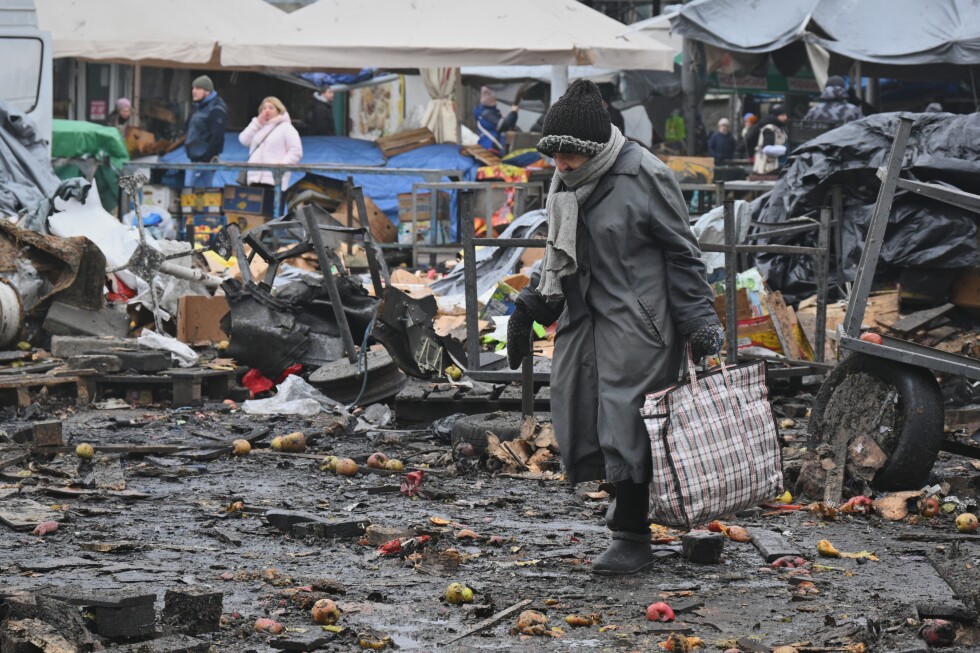
    GAZA CITY – Municipal authorities have launched a critical environmental initiative to remove approximately 350,000 cubic meters of accumulated waste from the Firas Market area in central Gaza City. The project, implemented in partnership with the United Nations Development Programme, represents a significant step toward addressing severe public health hazards while attempting to revitalize commercial activity in a region devastated by conflict.

    The operation involves transferring massive waste deposits from the temporary landfill at Firas Market to an alternative designated site in southern Gaza City. Municipal officials describe this as an interim solution until crews can access the primary landfill facility in Juhr al-Dik area, which remains inaccessible due to ongoing restrictions.

    Gaza Mayor Yahya al-Sarraj informed reporters that the transfer process alone would require at least six months to complete given the enormous volume of accumulated refuse. “The continued piling up of garbage has created serious environmental and health challenges for residents,” al-Sarraj stated, emphasizing that proper waste management infrastructure remains essential to preventing further deterioration.

    Health authorities have raised alarms about the proliferation of insects and rodents throughout the city, with municipal spokesperson Husni Muhanna warning that “the proliferation of flies, mosquitoes and rodents increases the risk of disease outbreaks.” Muhanna attributed part of the crisis to restrictions that have limited municipalities’ ability to import necessary equipment and machinery for waste management.

    According to Alaa al-Batta, deputy head of the Union of Municipalities in the Gaza Strip, approximately 700,000 tons of waste are currently accumulated across the territory. This buildup has led to the re-emergence of informal dumping sites and raised concerns about potential groundwater contamination.

    Local residents and business owners have welcomed the cleanup initiative. Ibrahim Nejim, a resident of the al-Samar neighborhood near the market, reported noticeable improvements: “The air has become noticeably cleaner compared with previous months, when foul odors and insects were widespread.”

    Former shop owner Hassan Khalil expressed hope that restoring cleanliness would help revive economic activity in what was once a major commercial hub and social gathering spot. Amjad al-Shawa, director of the NGO Network in Gaza, described the waste removal as “a positive development” that offers “an opportunity to improve the local environment after months of suffering from insects and diseases linked to garbage.”

  • New crystal advances vacuum UV laser

    New crystal advances vacuum UV laser

    Chinese scientists have achieved a groundbreaking advancement in laser technology with the development of a novel crystal capable of producing vacuum ultraviolet lasers at unprecedented wavelengths. The research team, led by Director Pan Shilie from the Xinjiang Technical Institute of Physics and Chemistry, has successfully created ammonium fluorooxoborate (ABF) crystals that generate lasers at a record-breaking 158.9 nanometers, pushing the boundaries of precision technology.

    This scientific milestone, detailed in a recent publication in Nature, represents the culmination of over a decade of dedicated research to overcome significant material science challenges. The team’s persistence has yielded centimeter-sized ABF crystals that demonstrate exceptional durability, stability, and performance characteristics essential for industrial applications.

    The technological implications extend across multiple high-precision industries. In semiconductor manufacturing, these advanced lasers will enable the creation of finer circuit patterns critical for next-generation computing chips. The aerospace sector stands to benefit from ultra-precise surface treatments for satellite components, while medical device manufacturers can achieve new levels of precision in surgical implant production.

    Beyond industrial applications, the breakthrough holds promise for fundamental scientific research. The vacuum ultraviolet lasers produced by ABF crystals may provide researchers with new tools to investigate quantum phenomena and superconductivity mechanisms that have previously remained elusive.

    China’s achievement in developing ABF crystals reinforces the nation’s strategic position in advanced materials science. The Xinjiang institute is now progressing toward large-scale production capabilities, with future efforts focused on integrating these superior crystals into compact, cost-effective laser systems for global industrial deployment.

  • Kim Jong Un chooses teen daughter as heir, says Seoul

    Kim Jong Un chooses teen daughter as heir, says Seoul

    In a significant development regarding North Korea’s political future, the country’s leader Kim Jong Un has reportedly designated his daughter, Kim Ju Ae, as his successor according to assessments from South Korea’s National Intelligence Agency (NIA). The agency informed lawmakers on Thursday that it reached this conclusion after analyzing multiple factors, particularly noting her increasingly prominent appearances at high-profile official events.

    Kim Ju Ae, believed to be approximately 13 years old and the only officially acknowledged child of Kim Jong Un and his wife Ri Sol-Ju, has gradually emerged from obscurity to become a regular fixture in North Korean state media. Her first documented public appearance occurred in 2022 when she was shown inspecting the nation’s latest intercontinental ballistic missile while holding her father’s hand—a powerful image broadcast across state television.

    Since that initial appearance, Kim Ju Ae has accompanied her father to numerous significant events, including a September visit to Beijing for China’s largest-ever military parade. Her presence has notably softened the image of her father, often portrayed internationally as a ruthless dictator. Observers have documented subtle shifts in her positioning during public appearances, with recent photographs showing her standing taller than her father and walking beside him rather than following—a significant symbolic departure in a country where media imagery carries profound political meaning.

    The timing of this development coincides with North Korea’s impending party congress, the nation’s most important political event held once every five years. This gathering is expected to outline Pyongyang’s priorities regarding foreign policy, military strategy, and nuclear ambitions for the coming five-year period.

    The potential succession raises several intriguing questions about North Korea’s future. The selection of a female heir appears contradictory within North Korea’s deeply patriarchal society, where many defectors and analysts had previously dismissed the possibility of a woman leading the country. Additionally, Kim Jong Un’s relatively young age and apparent good health make the early designation of a teenage successor particularly noteworthy.

    The international community now watches with interest to determine what changes, if any, Kim Ju Ae’s eventual leadership might bring to the isolated nation. Previous hopes that Kim Jong Un’s Western education might lead to openness were ultimately unfulfilled, leaving observers to wonder whether his daughter might chart a different course for North Korea’s future.

  • Spy agency says Kim Jong Un’s daughter is close to being designated North Korea’s future leader

    Spy agency says Kim Jong Un’s daughter is close to being designated North Korea’s future leader

    South Korea’s National Intelligence Service (NIS) has presented lawmakers with a significant assessment regarding the political future of Kim Jong Un’s teenage daughter, indicating she is approaching formal designation as North Korea’s successor. The intelligence briefing, conducted Thursday, revealed that Kim Ju Ae (approximately 13 years old) has advanced from what was previously termed ‘successor training’ to the ‘successor-designate stage’—a meaningful shift in terminology that signals her evolving status within the authoritarian regime.

    The assessment comes as North Korea prepares to convene its most substantial political conference later this month, where Kim Jong Un is anticipated to outline major policy objectives for the upcoming five-year period while further consolidating his authoritarian control. Intelligence officials are particularly monitoring whether Kim Ju Ae will appear alongside her father before thousands of delegates at the Workers’ Party Congress, which would represent a substantial symbolic gesture regarding her political positioning.

    Since her initial public appearance at a November 2022 long-range missile test, Kim Ju Ae has accompanied her father with increasing frequency to strategically significant events including weapons demonstrations, military parades, factory inspections, and even diplomatic engagements. Her September 2023 accompaniment to Beijing for Kim Jong Un’s first summit with Chinese leader Xi Jinping in six years demonstrated her growing integration into high-level affairs.

    The most compelling indication of her heir status emerged during a New Year’s Day visit to Pyongyang’s Kumsusan Palace of the Sun—the sacred mausoleum housing the embalmed remains of her grandfather and great-grandfather, North Korea’s first two leaders. This symbolic family presentation before previous generations of leadership represented what analysts consider the clearest signal yet regarding her succession trajectory.

    South Korean officials initially expressed skepticism about a female successor given North Korea’s deeply conservative, male-dominated political culture. However, her escalating visibility in state media and involvement in policy discussions has prompted a substantial reassessment within intelligence circles. The NIS noted that Kim Jong Un appears to be seeking her input on certain policy matters, further reinforcing her developing role.

    The upcoming party congress may provide the platform for Kim Jong Un to formalize succession plans, though analysts suggest any designation would likely involve subtle symbolic gestures rather than explicit appointment to high-ranking party positions due to age restrictions requiring members to be at least 18. Instead, the regime might emphasize narratives regarding successful revolutionary inheritance within party communications—a potential indicator that Kim Ju Ae’s position has been solidified as the prospective fourth-generation leader of the Kim dynasty.

  • Trump says talks with Iran will continue to see whether deal can be consummated

    Trump says talks with Iran will continue to see whether deal can be consummated

    In a significant development in Middle East diplomacy, U.S. President Donald Trump has announced that negotiations with Iran will proceed conditionally, following an extensive three-hour private meeting with Israeli Prime Minister Benjamin Netanyahu at the White House on Wednesday. The closed-door discussion, marking their seventh encounter since Trump’s second term began, concluded without a press conference or official statement.

    Trump revealed through his Truth Social platform that while no definitive agreements were reached during the Netanyahu meeting, he emphasized the continuation of U.S.-Iran negotiations. The President articulated a clear preference for achieving a diplomatic resolution, while simultaneously maintaining military options should talks falter. “I insisted that negotiations with Iran continue to see whether or not a Deal can be consummated,” Trump stated, adding that he informed Netanyahu that a successful agreement “will be a preference.”

    The meeting occurred against a backdrop of heightened regional tensions and substantial U.S. military deployments near Iran. Earlier discussions between Washington and Tehran took place indirectly in Muscat, Oman, on Friday, attempting to bridge substantial differences. Trump acknowledged in a Fox Business Network interview that any agreement must meet strict conditions: “No nuclear weapons, no missiles.”

    Netanyahu’s office outlined Israel’s non-negotiable principles for any Iran agreement, including stringent limits on Tehran’s ballistic missile program and the severance of Iranian ties with militant groups Hamas and Hezbollah. Before traveling to Washington, Netanyahu emphasized his intention to present “essential principles that are important not only to Israel but to anyone who wants peace and security in the Middle East.”

    Meanwhile, Iranian leadership presented a contrasting perspective during celebrations marking the 47th anniversary of the Islamic Revolution. President Masoud Pezeshkian denounced what he characterized as a “wall of distrust” created by Western powers, vowing that Iran “will never surrender to excessive demands and aggression.” Iranian Foreign Minister Seyed Abbas Araghchi expressed optimism about reaching a superior agreement compared to the 2015 Joint Comprehensive Plan of Action, while firmly rejecting negotiations on Iran’s missile program or regional alliances.

    The diplomatic maneuvering occurs alongside continued U.S. military preparations, with Trump confirming consideration of deploying a second aircraft carrier strike group to the region for potential military actions should negotiations ultimately fail.

  • China issues new rules to curb auto price war after January passenger car sales drop 20%

    China issues new rules to curb auto price war after January passenger car sales drop 20%

    Chinese regulators have intervened to halt the destructive price competition within the nation’s automotive sector, implementing stringent new guidelines on Thursday following a dramatic 19.5% year-on-year sales decline in January—the most severe contraction in nearly two years.

    The State Administration for Market Regulation unveiled comprehensive measures targeting manufacturers, dealerships, and component suppliers, explicitly prohibiting predatory pricing strategies designed to eliminate competition or establish market dominance. The regulations carry significant legal consequences for violators who attempt to sell vehicles below production costs.

    This regulatory intervention comes amid concerning market indicators. According to the China Association of Automobile Manufacturers, passenger vehicle sales plummeted to 1.4 million units in January, down substantially from December’s 2.2 million units. Industry analysts attribute this downturn to consumer financial constraints, reduced electric vehicle tax incentives, and uncertainty regarding regional trade-in subsidy programs.

    The price war has inflicted substantial damage, with China Automobile Dealers Association member Li Yanwei estimating approximately 471 billion yuan ($68 billion) in industry-wide losses over the past three years. S&P Global Ratings projects further challenges, forecasting up to a 3% decline in light vehicle sales for 2026.

    Despite domestic headwinds, Chinese automakers are achieving remarkable international success. January exports surged 49% year-on-year to 589,000 units, with companies like BYD—which recently surpassed Tesla as the world’s leading EV manufacturer—aggressively expanding into European and Latin American markets.

    Citi analysts project a 19% increase in China’s automotive exports this year, driven primarily by electric and plug-in hybrid vehicles. BYD has established an ambitious target of 1.3 million overseas sales by 2026, building upon last year’s 1.05 million export achievement.

    International trade dynamics are increasingly favorable for Chinese manufacturers. Canada recently agreed to reduce its 100% tariff on Chinese EV imports, while the European Union has established mechanisms for tariff exemptions, as demonstrated by Volkswagen’s successful application for its China-built CUPRA model. China’s Commerce Ministry has expressed support for these developments and anticipates further exemptions.

  • AI cancer detection boosts healthcare

    AI cancer detection boosts healthcare

    A groundbreaking artificial intelligence system is transforming cancer diagnostics in remote regions of China’s Xinjiang Uygur Autonomous Region, where vast distances have historically limited access to specialized medical care. Professor Liu Wen from the Xinjiang Institute of Engineering has pioneered an AI-assisted diagnostic platform that brings expert-level cancer screening to township-level medical facilities.

    The innovation addresses a critical healthcare gap in Xinjiang, where communities are separated by significant geographical barriers. Previously, patients often had to undertake arduous journeys to urban centers for authoritative checkups, frequently missing the crucial early intervention window that dramatically improves survival rates.

    Liu’s cross-disciplinary team, formed in 2019 through partnerships with leading regional hospitals, developed a sophisticated diagnostic system capable of identifying suspected cancerous cells with millimeter-level precision across 12 anatomical areas including breast, thyroid, and abdominal regions. The system demonstrates remarkable 96% accuracy in distinguishing between benign and malignant tumors.

    Since its deployment in May 2023, the technology has facilitated over 1.3 million screenings across more than 100 primary medical institutions in Xinjiang. The project’s development involved extensive data collection efforts spanning five years, during which Liu’s team traveled throughout the region gathering medical imaging data to train their algorithms while conducting cancer screenings and technology exchanges.

    The initiative has significantly enhanced local medical capabilities through comprehensive training programs, having educated more than 9,000 medical personnel across 27 training sessions. As a member of Xinjiang’s regional committee of the Chinese People’s Political Consultative Conference, Liu emphasizes translating technological innovation into tangible social benefits.

    “This AI-assisted diagnosis technology has brought transformative change to grassroots healthcare in Xinjiang,” Liu stated. “It makes quality medical services accessible to people in remote communities who can now receive expert-level medical advice without extensive travel, realizing the vision of AI technology benefiting thousands of households.”

    The professor envisions a future where local doctors confidently handle complex tumor diagnoses and herders no longer need to travel vast distances for basic checkups. “When timely and accurate diagnoses become a solid foundation for health,” Liu reflected, “more families can move beyond the shadow of disease and hold onto reunion and hope. This represents the optimal application of AI in serving people’s livelihoods.”