作者: admin

  • How racehorses are trained for the Dubai World Cup

    How racehorses are trained for the Dubai World Cup

    At the break of dawn, Meydan Racecourse transforms into a hub of meticulous equine preparation as trainers orchestrate the rigorous conditioning of elite racehorses destined for the Dubai World Cup. Long before spectators fill the stands, the facility buzzes with activity—thoroughbreds undergo leg inspections, dietary assessments, and structured workouts under the watchful eyes of seasoned professionals.

    Veteran trainer Ed Crisford, overseeing all 30 horses at Meydan Stables, compares his role to that of a school headmaster. Each horse represents a unique pupil with distinct strengths and behavioral traits. “Some are naughty, some are well-behaved,” Crisford notes, emphasizing the tailored approach required to maximize their potential. His decade-long tenure, including prior work with Sheikh Mohammed bin Rashid Al Maktoum’s Godolphin stable, informs a philosophy centered on individualized development.

    The training ecosystem operates as a competitive pyramid. While many horses participate in the weekly Carnival races, only the most exceptional advance to the World Cup’s $30.5 million spectacle. Selection hinges on performances during Emirates Super Saturday—a critical qualifying event held weeks before the championship.

    Daily routines begin at 5 AM with comprehensive health checks: temperature monitoring, leg examinations, and feed consumption analysis. Crisford maintains detailed digital spreadsheets for each athlete, optimizing training schedules based on surface adaptability, distance aptitude, and recovery metrics. High-tech amenities like equine treadmills and aquatic therapy pools supplement traditional training, reducing musculoskeletal stress in controlled environments.

    International contenders face additional logistical complexities. Seasonal residents acclimatize over months, while overseas arrivals jet in days before the event. Despite the operational scale, Crisford’s motivation remains rooted in passion. “There’s not many better feelings than getting a winner,” he reflects, underscoring the profound satisfaction derived from nurturing equine excellence.


  • Jailed Imran Khan loses most of his vision in right eye, says lawyer

    Jailed Imran Khan loses most of his vision in right eye, says lawyer

    Pakistan’s Supreme Court has received alarming medical reports concerning former Prime Minister Imran Khan’s deteriorating eyesight while in incarceration. According to legal counsel Salman Safdar, Khan’s right eye has suffered severe damage from an untreated blood clot, leaving him with merely 15% remaining vision.

    Safdar, who became Khan’s first external visitor in seven weeks this Tuesday, detailed how the former cricket star began experiencing blurred and hazy vision several months ago. Despite repeated complaints to prison authorities, medical response was limited to basic eye drops without addressing the underlying condition.

    The legal representative presented a comprehensive report to Chief Justice Yahya Afridi and Justice Shahid Bilal Hasan, describing Khan as “visibly perturbed and deeply distressed by the loss of vision and the absence of timely and specialized medical intervention.” The document urgently requested expert ophthalmological examination, improved prison conditions, and family access.

    In response, the court ruled that Khan should receive visits from his personal physicians at Adiala Jail and permitted telephone communication with his sons, Kasim and Sulaiman.

    The submitted report painted a contrasting picture to official statements about Khan’s detention conditions. While Interior Minister Ata Tarar previously described Khan as “the most privileged prisoner in Pakistan” with access to gym equipment and a cook, the legal document revealed a room with basic furniture, non-functional television, and problematic conditions including summer heat, humidity, and insect infestations that allegedly caused multiple episodes of food poisoning.

    Khan, who led Pakistan from 2018 to 2022 before his imprisonment in August 2023, faces over 100 charges that he maintains are politically motivated. His incarceration has sparked significant civil unrest, resulting in thousands of arrests and numerous injuries during clashes between supporters and security forces.

  • Loyal dog who lived by owner’s grave for 10 years inspires new law in Brazil

    Loyal dog who lived by owner’s grave for 10 years inspires new law in Brazil

    The Brazilian state of São Paulo has enacted groundbreaking legislation permitting the burial of pets alongside their human families, inspired by a devoted dog’s decade-long vigil at his owner’s gravesite. The emotionally charged ‘Bob Coveiro Law’—named posthumously for the canine who became a cemetery fixture—officially took effect this Tuesday, recognizing the profound emotional connection between pets and their guardians.

    Bob’s remarkable story began when he attended his owner’s funeral at Taboão da Serra cemetery and steadfastly refused to leave the premises. Despite attempts by family members to bring him home, the loyal dog consistently returned to the burial ground, where caretakers eventually provided him with a green shelter. For ten years, Bob became an integral part of the cemetery community, known for accompanying funeral processions and offering silent comfort to grieving mourners.

    His presence created unexpected moments of relief amid sorrow, with visitors often smiling when the ball-obsessed dog attempted to initiate play. Local animal protection charity Patre, which led fundraising efforts for a memorial statue, noted that Bob ‘won the hearts of everyone who met him.’

    The canine’s vigil ended tragically in 2021 when he was struck by a vehicle, ultimately leading to his burial beside his beloved owner. This poignant conclusion sparked legislative action, with representative Eduardo Nóbrega championing the cause. ‘What began as a story of love and loyalty has turned into public policy,’ Nóbrega stated on social media.

    The new legislation permits cats and dogs to be interred in family graves throughout São Paulo—Brazil’s most populous state—provided specific sanitary standards are met. Local funeral services will establish implementation guidelines for the historic measure. Brazil maintains the world’s third-largest pet population, with approximately 160 million animal companions according to the Pet Brasil Institute, underscoring the law’s significant societal relevance.

    Nóbrega emphasized the measure’s emotional significance: ‘Anyone who has lost a pet knows: it’s not just an animal. It’s family. This law recognizes this bond, bringing more respect at the moment of farewell.’ His poignant reflection—’Love does not end at goodbye’—captures the spirit of legislation that transforms personal devotion into enduring public policy.

  • IHC, FAB, Sirius get Central Bank nod to launch dirham-backed stablecoin

    IHC, FAB, Sirius get Central Bank nod to launch dirham-backed stablecoin

    In a landmark development for the Middle Eastern financial sector, the Central Bank of the United Arab Emirates has granted formal approval for the operational launch of DDSC, a UAE dirham-backed stablecoin. The regulatory endorsement enables consortium partners International Holding Company (IHC), First Abu Dhabi Bank (FAB), and Sirius International Holding to proceed with the implementation of this pioneering digital currency initiative.

    The stablecoin will function on ADI Chain, an institutional-grade Layer-2 blockchain infrastructure developed by the Abu Dhabi-based ADI Foundation. This strategic deployment represents a significant advancement in bridging conventional institutional finance with the rapidly evolving digital asset economy, while maintaining rigorous compliance standards and operational integrity.

    Initially announced in April 2025 through a collaboration between IHC and FAB, the project now enters its live operational phase with Sirius International Holding joining to facilitate deployment, integration, and institutional adoption strategies. The stablecoin is slated to become accessible to FAB customers through multiple approved digital platforms, specifically designed to serve institutional and enterprise applications.

    DDSC’s architecture supports sophisticated financial applications within a regulated framework, including high-value payment processing, treasury operations, trade finance, supply chain flows, and programmable financial services for regulated entities. The stablecoin’s programmable capabilities are engineered to modernize payment systems, settlement mechanisms, and treasury workflows while enabling secure, automated value transfers.

    Syed Basar Shueb, CEO of IHC, emphasized the transformative potential: “With the Central Bank’s approval and our transition into live operation, we are delivering trusted, institutional-grade infrastructure that strengthens resilience, accelerates innovation, and expands what is possible in regulated digital payments.”

    Futoon Hamdan AlMazrouei, Group Head at First Abu Dhabi Bank, highlighted the integration of regulatory oversight with blockchain technology: “FAB is enabling DDSC to seamlessly combine regulatory oversight with blockchain infrastructure, providing secure, scalable solutions that support institutional and government clients across the UAE’s evolving digital economy.”

    Ajay Hans Raj Bhatia, Group CEO of Sirius International Holding, characterized this development as entering “a new phase of regulated digital finance” that would leverage ADI’s sovereign blockchain infrastructure and the UAE’s regulatory leadership to unlock real-world institutional applications.

  • UAE FMCG growth accelerates in 2025 as premiumisation and e‑commerce reshape retail

    UAE FMCG growth accelerates in 2025 as premiumisation and e‑commerce reshape retail

    The United Arab Emirates’ retail sector demonstrated remarkable resilience in 2025, with the Fast-Moving Consumer Goods (FMCG) market achieving 6.8% value growth according to NielsenIQ’s comprehensive State of the Nation report. This robust expansion was primarily fueled by a substantial 4.9% surge in consumption volumes, augmented by a 2% increase in unit values, signaling a strong consumer-led recovery in the post-pandemic era.

    A transformative shift characterized the Emirates’ retail landscape as consumers simultaneously pursued both affordability and premium quality products while accelerating their migration toward digital shopping channels. While Modern Trade maintained its position as the dominant retail channel, e-commerce emerged as the fastest-growing platform during the fourth quarter, capturing increasing market share as shoppers embraced online grocery services for their convenience and competitive pricing.

    Notable category performance revealed Snacking as the UAE’s fastest-growing FMCG segment, reflecting heightened demand for convenience foods and impulse purchases. Concurrently, the market exhibited pronounced premiumization trends, with premium brands outperforming both value and mid-tier competitors. This aligns with evolving consumer sentiment, where 70% of UAE consumers expressed willingness to pay premium prices for superior quality products despite ongoing inflationary pressures.

    The Tech & Durables sector surpassed FMCG performance with 6.3% value growth in 2025, driven by sustained demand for telecommunications products, large home appliances, and consumer electronics. Major shopping events including Singles Day, Cyber Monday, and seasonal discount festivals generated substantial online traffic, solidifying e-commerce as the preferred purchasing route in this category.

    Promotional activity remained stable throughout the year, primarily supported by the Dubai Shopping Festival. Temporary Price Reductions continued to dominate promotional strategies, though their overall efficiency moderated compared to previous years, indicating intensifying competitiveness across retail channels.

    Product diversification reached new heights with the FMCG market recording 134,271 active SKUs, reflecting significant expansion as brands broadened their offerings and digital-first emerging brands tapped into the increasingly sophisticated consumer base. The T&D category similarly experienced over 20% year-on-year growth in available brands, driven by affordable innovators and expanding online marketplaces.

    Regional comparisons revealed contrasting dynamics, with Saudi Arabia’s FMCG market contracting by 1% in value due to flat volumes and declining unit values. However, the Kingdom demonstrated stronger momentum in Tech & Durables, posting 13.7% value growth—more than double the UAE’s rate—driven by seasonal promotions and digital marketplace activity.

    Andrey Dvoychenkov, NielsenIQ General Manager for the Arabian Peninsula and Pakistan, noted the data reflects ‘strong resilience amid evolving consumer and pricing dynamics,’ emphasizing that ‘while Modern Trade remains dominant, it is e-commerce that is reshaping growth across FMCG and Tech & Durables.’ The report concludes that the regional retail environment is now defined by digital acceleration, value-premium polarization, and heightened promotional intensity, presenting both challenges and significant opportunities for brands and retailers capable of balancing affordability, quality, and digital execution.

  • Prince Harry thanks bereaved families taking on social media firms

    Prince Harry thanks bereaved families taking on social media firms

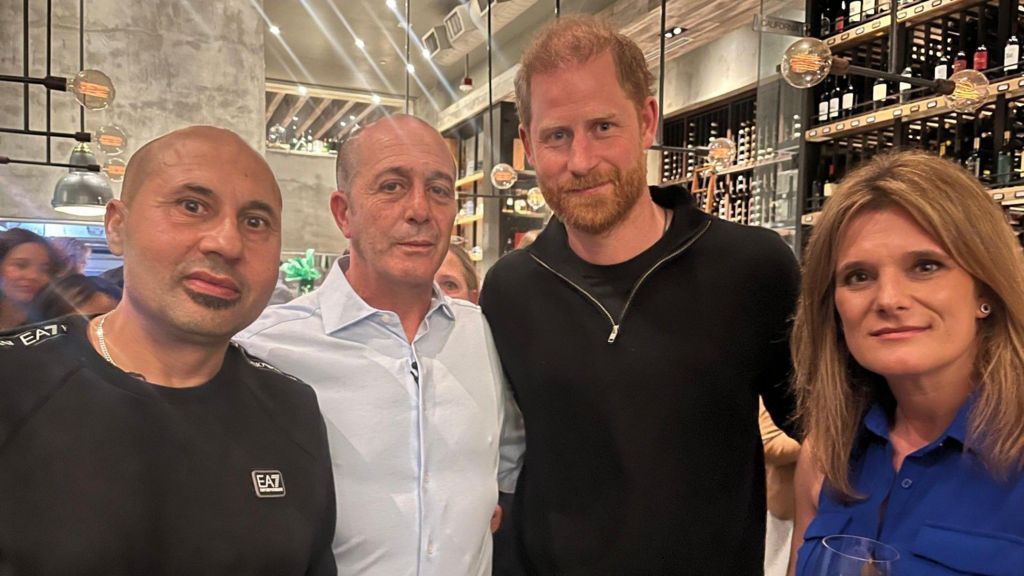
    In a deeply personal address to grieving families, Prince Harry has voiced strong support for parents pursuing legal action against technology behemoths Meta and YouTube. The Duke of Sussex delivered an emotionally charged speech following the opening of a groundbreaking trial in California that seeks to determine whether Instagram and YouTube’s algorithmic designs cause psychological harm to young users.

    The case represents a significant legal challenge against the fundamental business models of social media platforms, with families alleging these services are intentionally engineered to foster addiction. Approximately 50 bereaved parents, including Ellen Roome whose 14-year-old son Jools Sweeney died following an online challenge, gathered to hear Prince Harry’s words of solidarity.

    Drawing parallels to his own experiences with institutional opposition, Harry characterized the lawsuit as a ‘David versus Goliath’ confrontation. He expressed empathy for the emotional toll of hearing platform representatives defend practices that families believe ‘devalue children’s lives.’ The prince concluded with a powerful call for ‘truth, justice and accountability’ as the anticipated outcomes of the legal proceedings.

    This case emerges alongside Prince Harry’s ongoing advocacy for enhanced online child protection measures, which he launched last year. The California trial’s outcome could potentially influence separate litigation initiated by attorneys general from multiple U.S. states seeking stricter regulations for Meta’s platforms.

    While Meta has previously stated its commitment to youth safety through features like content filtering for teen accounts, and YouTube has implemented various age-restriction tools, the plaintiffs argue these measures remain insufficient against fundamentally addictive platform architectures.

  • UAE launches new platform Bayan as ‘single source of truth’ for health data

    UAE launches new platform Bayan as ‘single source of truth’ for health data

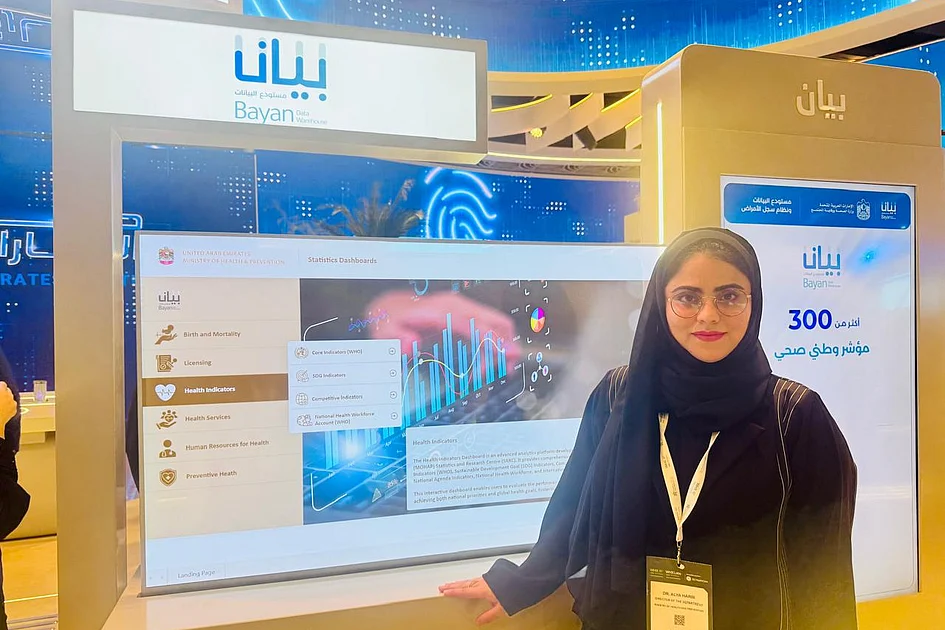
    The United Arab Emirates has unveiled a groundbreaking digital health platform named ‘Bayan,’ designed to serve as the nation’s definitive source for comprehensive healthcare data. This innovative system, introduced by the Ministry of Health and Prevention (MoHAP) during the World Health Expo, represents a significant leap forward in health information management.

    Bayan functions as an extensive enterprise data warehouse that consolidates over 300 health indicators through more than 45 interactive dashboards. The platform integrates critical information spanning disease prevalence rates, medical professional licensing, hospital bed availability, and medical education statistics. By connecting both historical records dating back to 2005 and real-time data streams, Bayan provides unprecedented visibility into the UAE’s healthcare landscape.

    Dr. Alya Zaid Harbi, Director of the Statistics and Research Center at MoHAP, emphasized the platform’s transformative potential. “Bayan represents a national unifier that connects fragmented data from electronic medical records, national health surveys, and even non-health sectors including education and traffic systems,” she explained during a live demonstration. “This integration enables evidence-based decision-making and strategic planning for the nation’s healthcare future.”

    The platform employs advanced Geographic Information System (GIS) mapping technology to identify disease clusters, monitor workforce distribution gaps, and project future healthcare demands. This capability allows officials to visualize trends and make data-driven predictions, such as forecasting specific medical needs through 2030.

    Beyond its analytical functions, Bayan hosts national disease registries for conditions including cancer, diabetes, multiple sclerosis, and disabilities. The system also tracks medical education pipelines, monitoring student enrollment and graduation rates across universities to inform workforce development strategies.

    Developed over three years, the platform incorporates rigorous data validation protocols and business rules to ensure information quality and reliability. This comprehensive approach positions Bayan as a model for digital health transformation, potentially setting new standards for healthcare data management globally.

  • At least 21 dead after boat sinks on Sudan’s River Nile

    At least 21 dead after boat sinks on Sudan’s River Nile

    A devastating maritime accident on the Nile River has resulted in significant loss of life, with at least 21 fatalities confirmed after a passenger vessel capsized in Sudan’s River Nile state. The tragedy occurred Wednesday evening in the Shendi area when the small boat, transporting approximately 30 passengers between the villages of Tayba al-Khawad and Deim al-Qarai, succumbed to powerful waves according to eyewitness accounts.

    The Sudan Doctors Network, which provided initial casualty figures to the BBC, reported that victims included vulnerable groups such as women, elderly individuals, and children. Dr. Mohamed Faisal Hassan, the network’s spokesperson, confirmed that six individuals survived the incident while rescue operations continue with the expectation of recovering additional victims.

    Medical authorities have urgently appealed for enhanced rescue capabilities, calling for specialized teams and equipment to accelerate search efforts. The organization emphasized the preventable nature of such disasters, highlighting systemic failures in river transport safety regulations and infrastructure.

    This incident exposes critical vulnerabilities in Sudan’s transportation network, where traditional boats serve as essential transit means across the Nile due to insufficient bridge infrastructure, particularly in rural regions. The tragedy occurs against the backdrop of nationwide instability stemming from the ongoing conflict between the Sudanese army and paramilitary Rapid Support Forces, which has strained resources and infrastructure despite River Nile State remaining outside direct combat zones.

    Dr. Hassan attributed the disaster to inadequate regulatory oversight, noting that many Nile vessels operate as private enterprises without proper safety protocols or government supervision. Authorities had not issued an immediate response to these allegations at the time of reporting.

  • Italy’s Federica Brignone completes comeback, claims gold in women’s super-G at Winter Olympics

    Italy’s Federica Brignone completes comeback, claims gold in women’s super-G at Winter Olympics

    CORTINA D’AMPEZZO, Italy — Italian alpine skier Federica Brignone achieved a monumental career milestone Thursday by capturing her first Olympic gold medal in the women’s super-G event at the 2026 Winter Games. The 35-year-old champion completed a remarkable recovery journey less than a year after sustaining multiple fractures in her left leg that required two surgical procedures and extensive rehabilitation.

    Brignone mastered the challenging Trofane course in foggy conditions with limited visibility, posting a winning time of 1:23.41. Her victory establishes her as the oldest female gold medalist in Olympic alpine skiing history and marks her fourth Olympic medal overall, matching Deborah Compagnoni’s record for most medals by an Italian women’s skier.

    The technical course proved demanding for several top competitors. France’s Romane Miradoli secured silver while Austria’s Cornelia Huetter took bronze. Notable contenders including downhill specialist Breezy Johnson of the United States, who collided with a gate and ended in the safety fencing, and Italy’s Sofia Goggia, current World Cup super-G leader, failed to complete their runs successfully.

    Brignone’s triumph held special significance as she served as one of Italy’s flag bearers during the opening ceremonies. Still experiencing discomfort from her previous injury, she had humorously requested curler Amos Mosaner to carry her on his shoulders during the procession. The victory sparked enthusiastic celebrations among Italian supporters and earned praise from skiing legend Lindsey Vonn, who tweeted congratulations acknowledging Brignone’s extraordinary comeback story.

  • Italy last hosted the Olympics in 2006. These women were there, and now are volunteers in Milan

    Italy last hosted the Olympics in 2006. These women were there, and now are volunteers in Milan

    MILAN — Behind the gleaming spectacle of the Milan-Cortina Winter Olympics operates a dedicated force of approximately 18,000 volunteers, whose blue uniforms have become synonymous with the Games’ operational backbone. Among these essential personnel are seasoned veterans whose commitment spans two decades, returning to serve Italy’s third Winter Olympics with undiminished passion.

    Three Italian women exemplify this enduring spirit through their remarkable journeys. Cristina Romagnoli, who previously volunteered at the 2006 Turin Games while supporting Team Ireland, now contributes at the short track speedskating venue. At 45, she actively involves her daughters in the Olympic atmosphere, hoping to pass the torch of volunteerism to the next generation.

    Angela Frisina’s story reveals the transformative power of Olympic service. Beginning at age 50 during the Turin Games, volunteering shattered her routine existence of “work, son, home” and launched her into two decades of continuous community service. Now 70, she serves as an usher at women’s ice hockey events, connecting with international visitors she credits with broadening her worldview.

    The most unconventional journey belongs to Olivia Azzalin, whose Turin Games experience yielded both professional fulfillment and personal transformation. While working with the organizing committee, she met her future husband, and their family expanded shortly after the Games. Now 53, she volunteers at the Olympic Village cafeteria, assisting athletes with recycling procedures after watching their competitions on television.

    These women represent the enduring legacy of Olympic volunteerism—a force that sustains the Games’ operations while creating profound personal connections. Their stories illustrate how temporary service can evolve into lifelong dedication, creating human networks that persist long after the closing ceremonies conclude.