作者: admin

  • Hong Kong’s CK Hutchison warns of legal action over Panama Canal ports

    Hong Kong’s CK Hutchison warns of legal action over Panama Canal ports

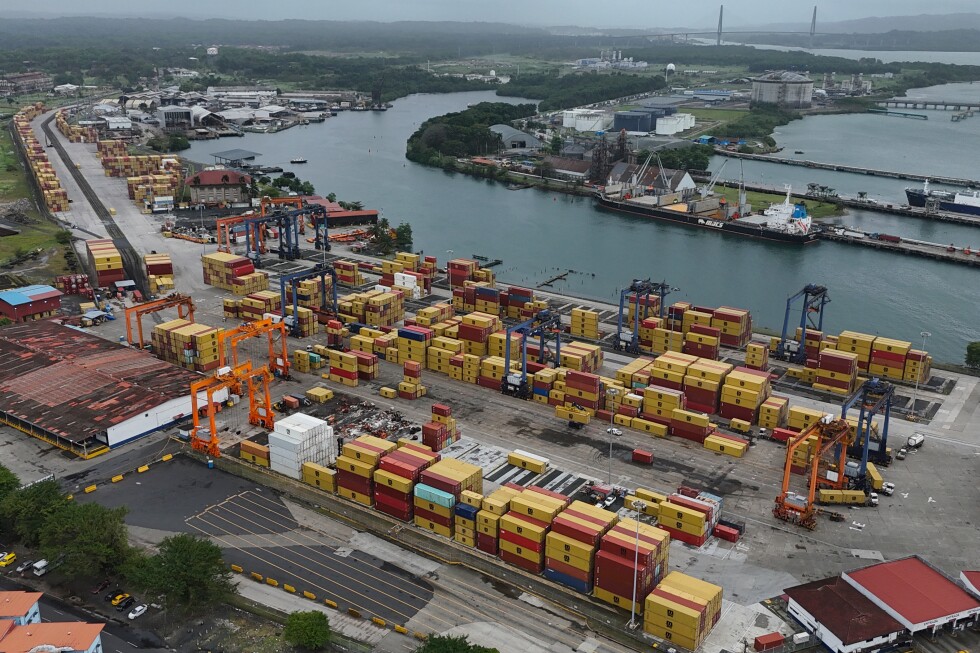
    Hong Kong-based conglomerate CK Hutchison Holdings has issued a formal legal threat against Danish logistics giant A.P. Moller-Maersk, escalating an international dispute over control of two strategic ports at the Panama Canal’s Atlantic and Pacific entrances.

    The confrontation stems from a January ruling by Panama’s Supreme Court that declared CK Hutchison’s concession to operate the ports unconstitutional. Panamanian authorities subsequently appointed Maersk’s subsidiary to manage the facilities during a transitional period until a new concession can be competitively bid.

    CK Hutchison, which has operated the ports through its subsidiary Panama Ports Co. since 1997 and secured a 25-year renewal in 2021, strongly contests the court’s decision. The company has initiated arbitration proceedings against Panama and now warns that any operational moves by Maersk without its consent will trigger immediate legal action.

    The port controversy occurs against a backdrop of intensifying Sino-American rivalry in Central America. The situation escalated when former U.S. President Donald Trump alleged Chinese influence over the Panama Canal, prompting CK Hutchison to consider selling the ports to a consortium including U.S. investment firm BlackRock. That potential transaction was reportedly stalled after intervention from Beijing.

    Despite assurances from Panamanian President José Raúl Mulino that port operations would continue uninterrupted, CK Hutchison maintains that continued operation now depends entirely on actions by Panamanian authorities beyond its control. The company has additionally notified Panama of a dispute under an investment protection treaty and is exploring all available legal avenues, including international proceedings.

    The Panama Canal, constructed by the United States in the early 20th century and transferred to Panamanian control in 1999, remains one of the world’s most critical maritime trade routes, giving strategic significance to whoever controls its terminal ports.


  • Chloe Kim falls short of Olympic three-peat, but passes the torch to a protege from South Korea

    Chloe Kim falls short of Olympic three-peat, but passes the torch to a protege from South Korea

    LIVIGNO, Italy — In a stunning reversal of Olympic fortunes, South Korean phenom Gaon Choi, 17, dethroned two-time gold medalist Chloe Kim during Thursday’s dramatic women’s halfpipe final at the Winter Games. The victory marked both a changing of the guard in snowboarding and the culmination of a mentor-protégé relationship years in the making.

    The competition unfolded under challenging conditions as steady snowfall slowed the Livigno halfpipe, creating unpredictable terrain for athletes attempting complex aerial maneuvers. The narrative took an early dramatic turn when Choi suffered a brutal crash during her first run that momentarily halted the event and required medical attention.

    Kim, competing with a recently dislocated shoulder from a training accident in Switzerland, initially appeared in control after posting a technically masterful first run featuring her signature Cab double-cork 1080—a trick few women can execute. This performance temporarily positioned the American star for what many anticipated would be her third consecutive Olympic gold.

    However, the competition dynamics shifted radically in the third and final round. Choi, demonstrating remarkable resilience after her earlier crash, delivered a near-flawless run that earned 90.25 points—the highest score of the night. This placed immediate pressure on Kim, who had one final attempt to reclaim the lead.

    In an anticlimactic conclusion, Kim faltered early in her final run, unable to complete her opening maneuver as the intensifying snowfall affected the pipe’s conditions. The result secured gold for Choi while Kim settled for silver, with Japan’s Mitsuki Ono claiming bronze.

    Despite the disappointing outcome, Kim displayed gracious sportsmanship, immediately embracing her young rival afterward. “I’m so damn proud of her,” Kim stated. “Although we are in an individual sport, it means so much to me to know I’ve inspired a whole new generation.”

    The victory establishes Choi as the same age Kim was when she won her first Olympic title eight years ago, completing a symbolic full circle in snowboarding’s evolution. Kim revealed she would require shoulder surgery upon returning home, casting uncertainty on her competitive future.

    The upset also extended snowboarding’s elusive three-peat curse, as no athlete has yet achieved three consecutive Olympic golds since the sport’s 1998 Games debut. Earlier in these Olympics, both Ester Ledecka (parallel giant slalom) and Anna Gasser (big air) similarly failed to secure their potential third consecutive titles.

  • After deadly explosion at US Steel mill outside Pittsburgh, maintaining safety now falls to Nippon

    After deadly explosion at US Steel mill outside Pittsburgh, maintaining safety now falls to Nippon

    A catastrophic explosion at U.S. Steel’s Clairton Coke Works on August 11, 2025, has revealed deep-seated safety failures and environmental concerns at America’s largest coking facility. The blast, which killed two workers and injured eleven others, occurred during a valve replacement procedure when workers used high-pressure water against established protocols, causing a critical valve failure and subsequent ignition of combustible coke oven gas.

    The incident represents the latest in a troubling pattern of accidents at the aging Pennsylvania facility, which has recorded multiple fatalities and injuries over the past decade. Current and former employees describe a culture of deferred maintenance and cost-cutting measures that have compromised both worker safety and environmental compliance.

    Federal investigators from the Chemical Safety Board have identified “potentially unmitigated hazards” at the plant and recommended immediate safety evaluations. The explosion occurred just months after Nippon Steel’s $15 billion acquisition of U.S. Steel, raising questions about the Japanese company’s commitment to addressing systemic issues at the facility.

    Environmental regulators have long struggled with the plant’s pollution record. Clairton Coke Works ranks among the nation’s worst Clean Air Act violators, having faced over $10 million in penalties during the past five years alone. The facility remains a significant source of particulate matter and carcinogenic benzene emissions despite ongoing regulatory battles.

    Workers like Don Furko, a 25-year veteran steelworker, describe lasting trauma from the explosion. “Nothing has affected me like this has,” Furko stated, echoing concerns about the plant’s safety culture despite corporate assurances.

    While U.S. Steel maintains its commitment to safety and environmental compliance, citing $100 million annual investment in environmental measures at Clairton, employees report continued concerns about maintenance priorities and operational safety. The future of the facility remains uncertain as Nippon Steel determines its investment strategy for the newly acquired American operations.

  • Trump’s defamation lawsuit against the BBC is set to go to trial in 2027, US judge says

    Trump’s defamation lawsuit against the BBC is set to go to trial in 2027, US judge says

    A Florida federal judge has authorized former President Donald Trump’s monumental $10 billion lawsuit against the British Broadcasting Corporation to proceed toward trial in February 2027. Judge Roy K. Altman of the Southern District of Florida denied the BBC’s petition to delay legal proceedings, establishing a definitive timeline for the high-stakes litigation.

    The legal confrontation originates from a December filing by Trump, who alleges the BBC manipulated his January 6, 2021 speech through deceptive editing in their documentary “Trump: A Second Chance?” aired shortly before the 2024 presidential election. The lawsuit contends the broadcaster spliced three distinct quotes from segments delivered nearly an hour apart, creating the false impression of a continuous statement where Trump explicitly encouraged supporters to “fight like hell” while omitting his concurrent advocacy for peaceful demonstration.

    Trump seeks $5 billion in defamation damages and an additional $5 billion for alleged unfair trade practices, arguing the editorial manipulation deliberately misrepresented his actions preceding the Capitol unrest. The BBC has subsequently apologized for the editing approach but maintains its position that the documentary did not constitute defamation. The controversy prompted significant organizational changes within the broadcaster, including the resignation of both its chief executive and head of news.

    The BBC intends to challenge the lawsuit’s validity through a motion to dismiss, citing jurisdictional concerns and insufficient legal grounds. However, Judge Altman characterized the broadcaster’s request to postpone discovery processes—which would compel the production of internal emails and editorial materials—as premature at this preliminary stage of litigation.

  • Dawson’s Creek: The 90s teen drama that ‘wore its heart on its sleeve’

    Dawson’s Creek: The 90s teen drama that ‘wore its heart on its sleeve’

    Two decades after its finale, Dawson’s Creek remains a cultural touchstone of late 90s teen television, with James Van Der Beek’s portrayal of the emotionally vulnerable protagonist continuing to resonate globally. The series, created by horror maestro Kevin Williamson (Scream, I Know What You Did Last Summer), followed adolescents in fictional Capeside, Massachusetts through their complex journey into adulthood.

    Van Der Beek, who passed away at 48, transformed Dawson Leery from a potentially unlikable character into an emotionally accessible icon. Variety’s features director Emily Longeretta notes the actor’s unique ability to make sensitivity masculine at a time when television rarely portrayed young men expressing vulnerability. “His emotional connection and authenticity really came through the screen,” she told BBC News.

    The ensemble cast—including Katie Holmes, Joshua Jackson, and Michelle Williams—collectively navigated groundbreaking narratives about grief, sexuality, and mental health that distinguished the series from glossier contemporaries. While averaging six million US viewers during its original run, the show achieved cult status across 50 countries through its revolutionary approach to teenage representation.

    Television critic Scott Bryan emphasizes the program’s breakthrough status: “It was one of the first that talked to teens like adults… featuring performances more fleshed out than its rivals.” The series pioneered LGBTQ+ representation with television’s first teenage gay kiss in primetime, a narrative directly inspired by Williamson’s personal coming-out experience.

    Beyond its narrative innovations, Dawson’s Creek created enduring cultural moments—from Dawson’s iconic “ugly cry” meme to its realistic portrayal of fractured family dynamics. Van Der Beek himself acknowledged the personal resonance of his role, noting during initial production that he was “reliving all my adolescent nightmares” while simultaneously fulfilling his professional aspirations.

  • New face for France as center Brau-Boirie set for test debut vs. Wales in Six Nations

    New face for France as center Brau-Boirie set for test debut vs. Wales in Six Nations

    In a bold strategic move, French national rugby head coach Fabien Galthié has selected 20-year-old Fabien Brau-Boirie for his international test debut at center against Wales in this Sunday’s Six Nations matchup. The rising star from Pau club will form a dynamic midfield partnership with his clubmate Émilien Gailleton, who earns his 12th cap for Les Bleus.

    This unexpected selection comes as a direct response to France’s injury crisis following their commanding 36-14 victory over Ireland last Thursday. The defending champions lost three key centers—Nicolas Depoortère (calf), Kalvin Gourgues (ankle), and Yoram Moefana (knee)—forcing Galthié to tap into France’s deep talent pool.

    Galthié expressed confidence in his young prospect, stating: “Brau-Boirie has been integrated within our system for over a year. His exceptional performances with the under-20 squad, combined with consistent weekend appearances for his club, have truly earned him this opportunity. He was originally slated to join our tour to New Zealand last July but unfortunately sustained an ankle injury.”

    The selection marks a significant moment for Pau club, which currently sits second in the French Top 14 league, thanks in part to the contributions of both Brau-Boirie and Gailleton. Adding to the youthful injection, 21-year-old Stade Francais center Noah Nene has been named among the reserves, awaiting his potential debut.

    France faces a Welsh squad reeling from a devastating 48-7 defeat against England at Twickenham last weekend. Despite Wales facing the prospect of a record-extending 13th consecutive Six Nations defeat, Galthié remains wary of the challenge awaiting in Cardiff.

    The French coach acknowledged the unique atmosphere of the Welsh stadium, noting: “In my opinion, it represents the most magnificent stadium globally, with those relentless Welsh chants that create an extraordinary environment. This distinctive atmosphere effectively levels the competitive field and provides the Welsh team with additional motivation.”

    Wales hasn’t secured a victory against France on home turf since 2018, adding historical context to this highly anticipated Six Nations confrontation.

  • Swiss to vote on proposal by anti-immigration party to cap population at 10 million

    Swiss to vote on proposal by anti-immigration party to cap population at 10 million

    Switzerland will conduct a national referendum on June 14th to determine whether to implement a permanent population ceiling of 10 million residents, a controversial proposal spearheaded by the right-wing Swiss People’s Party (SVP). The initiative has gathered sufficient petition signatures to advance to the ballot, potentially setting the stage for renewed tensions with European neighbors.

    According to federal statistics, Switzerland’s current population stands at approximately 9.1 million people, with foreign-born residents constituting nearly 30% of the total demographic composition. Most immigrants originate from European Union nations, with many subsequently obtaining Swiss citizenship.

    The proposed legislation would constitutionally mandate that Switzerland’s permanent resident population—encompassing both citizens and foreign nationals holding residency permits—must not surpass 10 million before 2050. Should the population approach 9.5 million prior to this deadline, the government would be compelled to implement restrictive measures including asylum limitations, family reunification constraints, residency permit restrictions, and renegotiation of international agreements.

    Proponents argue that population containment is essential for environmental preservation, resource conservation, infrastructure maintenance, and social welfare system protection. The initiative emerges within Switzerland’s unique direct democracy framework, which enables citizens to directly influence policy through quarterly ballots.

    The SVP party, which holds the largest parliamentary representation, has historically advocated for immigration restrictions with varying success. This proposal reflects broader anti-immigration sentiments observed across numerous Western nations.

    Opposition critics contend that the measure oversimplifies complex demographic realities, noting Switzerland’s considerable economic dependence on foreign labor across critical sectors including healthcare, hospitality, construction, and academia. Additionally, such restrictions would potentially violate Switzerland’s international commitments, particularly within the Schengen zone—a 29-nation agreement facilitating visa-free movement among 450 million Europeans. While not an EU member, Switzerland participates alongside Norway, Iceland, and Liechtenstein in this border-free arrangement.

  • Bangladesh votes in landmark election after Gen Z uprising

    Bangladesh votes in landmark election after Gen Z uprising

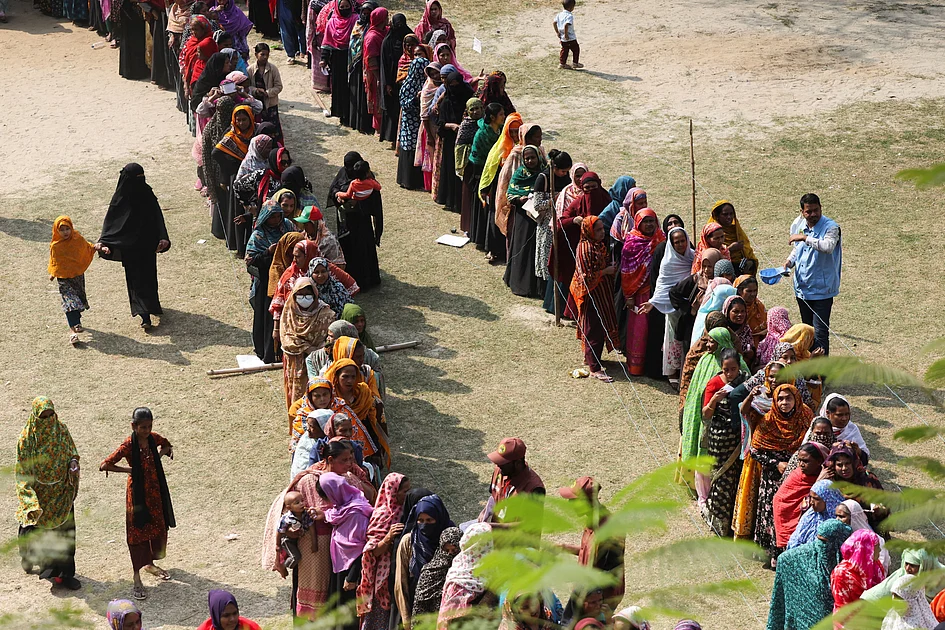
    Bangladesh commenced a historic national election on Thursday, marking its first electoral process since the 2024 Gen Z-led uprising that ousted long-serving Prime Minister Sheikh Hasina. This pivotal moment represents a critical test for democratic renewal in the South Asian nation of 175 million people.

    The electoral contest features two primary coalitions: the Bangladesh Nationalist Party (BNP) and the Islamist Jamaat-e-Islami, with opinion polls indicating a slight advantage for the BNP. Over 2,000 candidates from at least 50 political parties are competing for 300 parliamentary seats in the Jatiya Sangsad (House of the Nation), setting a national record for political participation.

    Voters expressed unprecedented enthusiasm, with Mohammed Jobair Hossain, 39, noting he hadn’t voted since 2008. “I am feeling excited because we are voting in a free manner after 17 years,” Hossain stated. “Our votes will matter and have meaning.”

    The election occurs alongside a constitutional referendum proposing significant reforms, including establishing a neutral interim government during election periods, creating a bicameral legislature, enhancing women’s representation, strengthening judicial independence, and implementing a two-term limit for prime ministers.

    Nobel laureate Muhammad Yunus, heading the interim government installed after Hasina’s ouster, emphasized the election’s significance: “The public awakening we witnessed against long-standing anger, inequality, deprivation and injustice finds its constitutional expression in this election.”

    Security measures were extensive with approximately 958,000 personnel from police, army, and paramilitary forces deployed nationwide. Despite the high stakes, the campaign period remained largely peaceful with minimal incidents.

    Thomas Kean of the International Crisis Group noted: “The crucial test for Bangladesh now will be to ensure the election is conducted fairly and impartially, and for all parties to then accept the result. If that happens, it will be the strongest evidence yet that Bangladesh has indeed embarked on a period of democratic renewal.”

    With nearly 128 million registered voters (49% women) and nearly half aged 18-35, this election represents a generational shift in Bangladeshi politics. Results are anticipated by Friday morning, potentially reshaping the nation’s political landscape and international alliances, particularly as China seeks expanded influence amid Dhaka’s deteriorating relations with New Delhi.

  • Vatican offers dialogue with breakaway Latin Mass traditionalist group, but with a catch

    Vatican offers dialogue with breakaway Latin Mass traditionalist group, but with a catch

    The Vatican has delivered a stern warning to the breakaway Society of St. Pius X (SSPX), cautioning that its planned unauthorized bishop consecrations in July would constitute a “decisive break in ecclesial communion” and potentially trigger formal schism. Cardinal Víctor Manuel Fernández, prefect of the Dicastery for the Doctrine of the Faith, met Thursday with SSPX Superior General Rev. Davide Pagliarani in Rome following the traditionalist group’s announcement to ordain new bishops without papal approval.

    During the high-stakes meeting, Cardinal Fernández extended an olive branch alongside the warning, proposing renewed theological discussions to regularize the SSPX’s status within the Catholic Church—but only if the society immediately cancels its July 1 consecration ceremony. The Vatican emphasized that papal consent for bishop consecrations represents a fundamental doctrine ensuring apostolic succession from Christ’s original apostles.

    The Swiss-based SSPX, founded in opposition to the modernizing reforms of the Second Vatican Council (1962-1965), has maintained a contentious relationship with Rome for decades. The group first broke with the Vatican in 1988 when its founder, Archbishop Marcel Lefebvre, consecrated four bishops without papal mandate, resulting in automatic excommunication for all involved.

    Despite its irregular status, the traditionalist society has experienced significant growth, currently boasting 733 priests, 264 seminarians, and religious members across 50 nationalities. This expansion has raised concerns within the Vatican about the development of a parallel church structure that challenges Rome’s authority.

    Rev. Pagliarani has defended the planned consecrations as “realistic and reasonable” given the aging of the SSPX’s two remaining bishops and the pastoral needs of their global community. The group continues to attract Catholics drawn to the traditional Latin Mass, particularly following Pope Francis’s restrictions on the pre-Vatican II liturgy.

    The Vatican statement described Thursday’s encounter as “cordial and sincere” and noted that Pope Leo XIV had personally approved the dialogue initiative. This development represents the latest chapter in decades of attempted reconciliation between Rome and the traditionalist society, including Pope Benedict XVI’s 2009 lifting of excommunications against the surviving SSPX bishops.

  • Two US Navy ships collide near South America

    Two US Navy ships collide near South America

    Two United States Navy ships collided during a routine refueling operation in waters near South America, according to confirmation from the US military’s Southern Command to the BBC. The incident occurred on Wednesday during a replenishment-at-sea procedure involving the guided missile destroyer USS Truxtun and the fast combat support ship USNS Supply.

    While two personnel sustained minor injuries during the collision, both individuals were reported to be in stable condition following the incident. Despite the impact, both vessels maintained operational capability and continued sailing safely from the location of the accident.

    The exact circumstances surrounding the collision remain unclear as military officials have launched a formal investigation into the matter. Southern Command representatives declined to specify what factors might have contributed to the accident, noting only that the investigation remains ongoing.

    The Wall Street Journal reported that the USNS Supply had been operating in the Caribbean region, which falls within Southern Command’s area of responsibility along with portions of the South Atlantic and South Pacific.

    This naval incident occurs amid heightened US military presence in the Caribbean region. President Donald Trump has ordered a substantial military buildup in recent months as part of the administration’s intensified campaign against drug trafficking networks. The strategy has produced controversial results, including a recent lethal strike on an alleged drug vessel in the eastern Pacific that resulted in two fatalities on Thursday. This brings the total to at least 38 deadly engagements with suspected drug trafficking vessels since the administration renewed its offensive operations.

    Additionally, the US military presence in the region has facilitated the enforcement of sanctions against Venezuelan oil exports, following the dramatic arrest of President Nicolas Maduro during a nighttime raid in January.