
China has issued a renewed call to Japan, urging the nation to expedite the removal of chemical weapons abandoned on Chinese soil during World War II. This appeal comes as the world commemorates the 80th anniversary of the victory in the Chinese People’s War of Resistance Against Japanese Aggression and the 28th anniversary of the enforcement of the Chemical Weapons Convention. Foreign Ministry spokesman Guo Jiakun emphasized that Japan bears an inescapable historical, political, and legal responsibility to address this issue, which is also an international obligation under the Chemical Weapons Convention. The disposal of these weapons is critical to ensuring the safety and environmental well-being of affected Chinese communities. Despite China’s significant support in excavating and destroying approximately 120,000 of the 150,000 recovered chemical weapons, progress remains slow. Guo highlighted that lingering remnants of these weapons continue to pose severe threats to local lives, property, and ecological security. China insists that Japan must fully implement its post-2022 plan to eliminate these hazardous remnants comprehensively and efficiently.
作者: admin
-
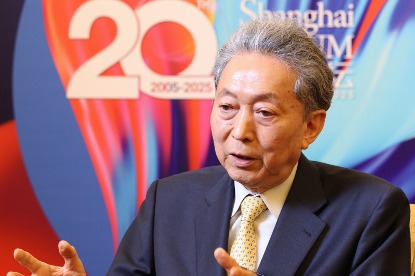
Ex Japanese PM: Japan should properly handle the Taiwan question as an internal affair of China
In a recent exclusive interview with China Daily, former Japanese Prime Minister Yukio Hatoyama underscored the necessity of maintaining the foundational principles of China-Japan relations, particularly referencing agreements established in the 1970s. Hatoyama highlighted that the Chinese government’s stance on Taiwan, viewing it as an inseparable part of China, was acknowledged and respected by Japan at that time. He emphasized that Japan should continue to honor this consensus and manage the Taiwan issue appropriately, treating it as an internal matter of China. This approach, according to Hatoyama, is crucial for sustaining the stability and progress of bilateral relations between the two nations.
-
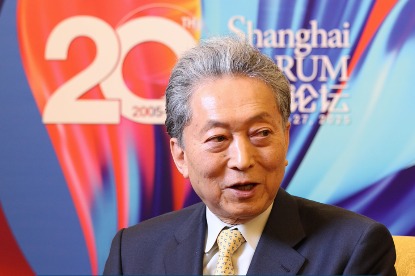
Former Japanese PM wowed by China’s tech development, calling for Sino-Japan collaboration
Former Japanese Prime Minister Yukio Hatoyama has expressed admiration for China’s rapid technological advancements, emphasizing the potential for a synergistic partnership between Japan and China, particularly in artificial intelligence (AI) and robotics. Speaking at the Shanghai Forum 2025 on Friday, Hatoyama highlighted the complementary strengths of the two nations, suggesting that Japan’s meticulous attention to detail and expertise in basic materials could be effectively paired with China’s robust organizational capabilities and recent industrial achievements to foster mutual benefits. In an exclusive interview with China Daily, Hatoyama underscored the importance of collaboration in these cutting-edge fields, envisioning a macro-micro partnership that could drive innovation and economic growth for both countries. The former prime minister’s remarks come at a time when global technological competition is intensifying, and strategic alliances are increasingly seen as vital for maintaining a competitive edge. The Shanghai Forum 2025, which attracted over 500 guests and representatives, served as a platform for discussing key issues in global development, with Hatoyama’s call for Sino-Japan collaboration resonating strongly among attendees. As both nations continue to invest heavily in AI and robotics, the potential for joint ventures and knowledge exchange could pave the way for groundbreaking advancements in these critical sectors.
-
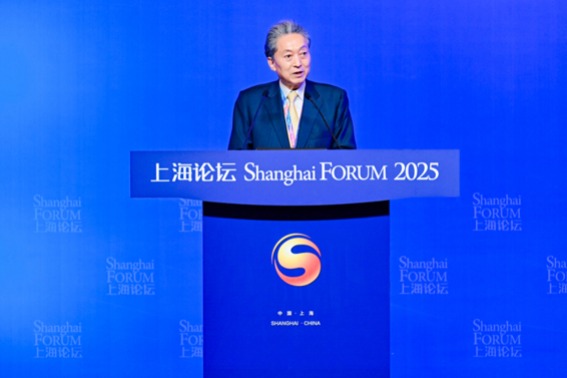
Ex-Japan PM urges tech collaboration with China
Former Japanese Prime Minister Yukio Hatoyama has called for enhanced technological collaboration between Japan and China, particularly in artificial intelligence (AI) and robotics. Speaking at the Shanghai Forum 2025, Hatoyama emphasized the complementary strengths of the two nations, with Japan excelling in precision and fundamental materials, and China demonstrating robust organizational capabilities and industrial achievements. He highlighted China’s rapid advancements in AI and robotics, noting that the country has achieved a world-leading position in these fields. Hatoyama also pointed out the potential for mutual benefits through a macro-micro partnership, leveraging each country’s unique advantages. He stressed the importance of adhering to historical agreements in Sino-Japanese relations and called for a reconsideration of Japan’s strategic alignment with the United States. Hatoyama proposed the establishment of a mechanism to regulate competition between China and the U.S. in technology fields, advocating for collaborative efforts involving Japan, South Korea, and European countries. The forum, themed ‘Age of innovation: Technology, development and governance,’ brought together over 500 participants from more than 50 countries and regions, fostering discussions on global technological advancements and governance.
-
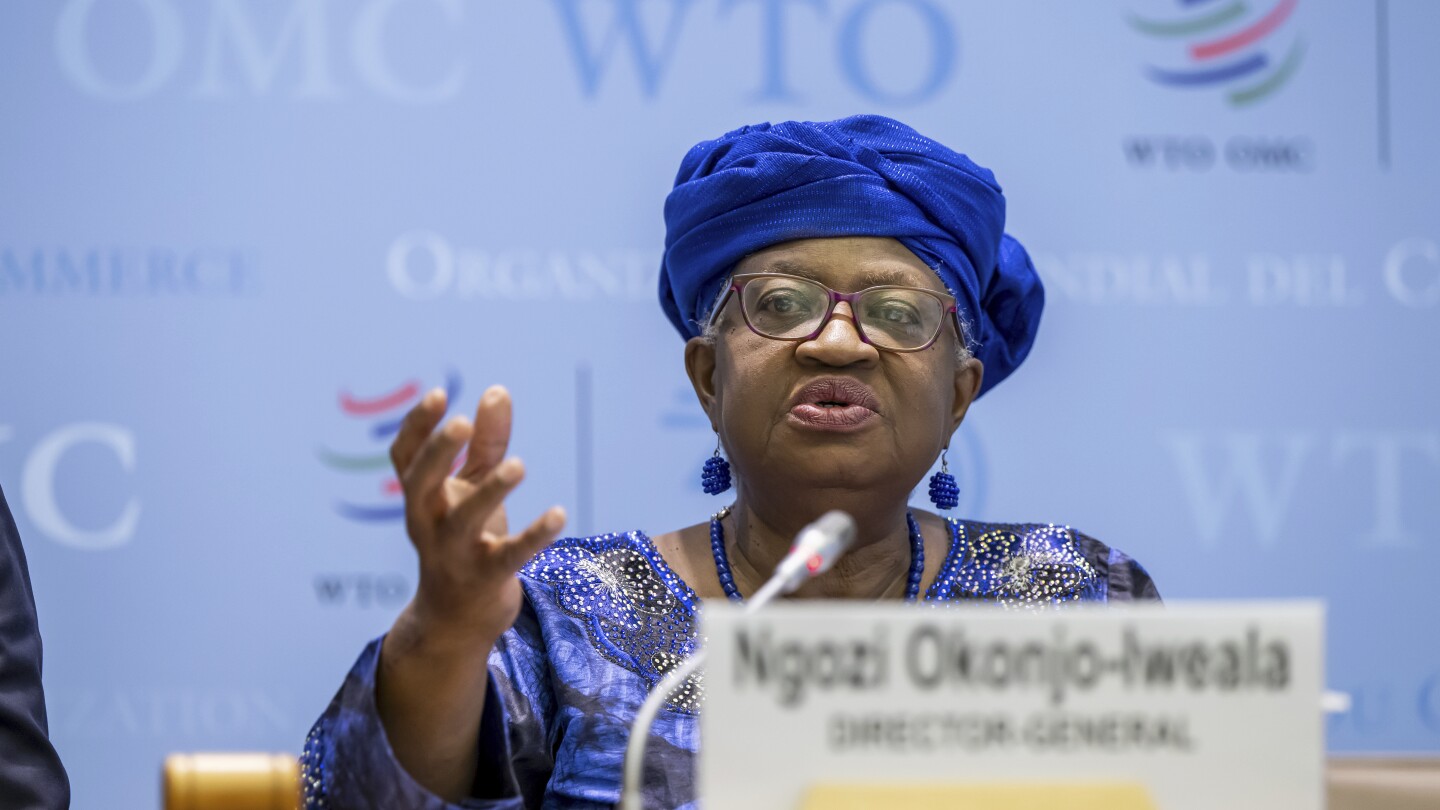
World Trade Organization says global trade could slide this year because of Trump’s tariff policies
The World Trade Organization (WTO) has projected a 0.2% decline in global goods trade for this year, attributing the downturn to U.S. President Donald Trump’s fluctuating tariff policies and the ongoing trade tensions with China. The WTO cautioned that the situation could worsen significantly if Trump implements his most stringent reciprocal tariffs. The global trade forum highlighted that North America would experience the sharpest decline, with exports expected to plummet by 12.6% and imports by 9.6% this year, even without the harshest tariffs. The WTO’s report, based on the tariff landscape as of Monday, initially anticipated continued trade expansion in 2025 and 2026. However, Trump’s trade war has compelled WTO economists to drastically revise their forecasts. If Trump enacts the toughest tariffs on most nations, global trade in goods could slump by 1.5%, primarily due to the uncertainty unsettling businesses. Earlier this month, Trump temporarily suspended the most severe tariffs for 90 days, allowing over 70 countries to address U.S. trade concerns. Concurrently, he has escalated taxes on Chinese imports to 145% and is embroiled in protracted tariff negotiations with Canada and Mexico. WTO Director-General Ngozi Okonjo-Iweala emphasized that the persistent uncertainty threatens to hinder global growth, with particularly adverse effects on the most vulnerable economies. WTO Chief Economist Ralph Ossa noted that trade policy uncertainty significantly dampens trade flows, reducing exports and weakening economic activity. He stressed the importance of understanding the wide-ranging and often unintended consequences of tariffs in an increasingly tense global trade environment.
-
PepsiCo agrees to meet with Al Sharpton over DEI cuts, potential boycott
PepsiCo, a leading North American food and beverage conglomerate, is under fire for its decision to scale back diversity, equity, and inclusion (DEI) initiatives. Reverend Al Sharpton, a prominent civil rights leader, announced on Monday that he will meet with PepsiCo CEO Ramon Laguarta this week to address the company’s controversial move. In a letter dated April 4, Sharpton warned of a potential boycott if PepsiCo fails to uphold its commitments to minority representation in managerial roles and supplier diversity. The company, which owns iconic brands like Gatorade, Lay’s, Doritos, and Mountain Dew, informed employees in February that it would no longer set specific goals for minority representation. Sharpton plans to press Laguarta on the rationale behind this decision and seek assurances regarding equal opportunities in employment and contracts. PepsiCo has yet to publicly comment on the matter. This development comes amid a broader trend of corporations, including Walmart and Target, rolling back DEI policies following President Donald Trump’s return to the White House earlier this year. Trump has also dismantled DEI programs within the federal government and threatened schools with funding cuts if they maintain such initiatives. In January, Sharpton led a “buy-cott” at Costco, encouraging consumers to support businesses committed to DEI policies. He emphasized the importance of economic pressure as a tool for social change, stating, ‘That is the only viable tool that I see at this time, which is why we’ve rewarded those that stood with us.’
-
Community, mentors and skill-building: Experts weigh the role of employee resource groups
Jenny Jang, who moved to the United States from South Korea at the age of six, faced significant challenges navigating her educational and professional environments as a minority. Unable to seek guidance from her parents, Jang turned to mentorship from external sources. Now based in Atlanta and employed at an international elevator company, Jang spearheaded the establishment of business resource groups in North America. These groups, designed to foster diversity and inclusion, provide employees with a platform to connect and share experiences around shared identities or themes. The first group, focused on women employees, attracted 500 members within three years, offering discussions on balancing family and career in a male-dominated industry. Subsequent groups catered to veterans and military families, creating safe spaces for employees to share their experiences. Employee resource groups (ERGs), which originated in corporate America in the 1970s to address racial, gender, and sexual orientation tensions, have since expanded to include other affiliations such as caregiving, mental health, neurodiversity, and generational divides. Critics argue that ERGs may create divisions and provide unfair advantages, prompting some companies to revise their purpose and scope. The future of ERGs faces additional uncertainty due to executive orders aimed at curtailing diversity, equity, and inclusion programs. Legal guidance from the Equal Employment Opportunities Commission emphasizes that ERGs must be open to all employees to avoid unlawful segregation. Proponents highlight the benefits of ERGs, including community building, leadership development, and enhanced employee engagement. Experts recommend starting ERGs by identifying a shared experience, securing senior leadership sponsorship, and demonstrating the group’s impact on employee retention and organizational goals. Despite challenges, ERGs remain vital for underrepresented communities, offering support, connectivity, and advocacy.
-

Trump’s reciprocal tariffs will overturn decades of trade policy
President Donald Trump is poised to upend decades of established global trade norms with his anticipated announcement of reciprocal tariffs on April 2, a date he has dubbed “Liberation Day.” This bold move, aimed at reducing America’s reliance on foreign goods, is expected to create significant disruptions for global businesses and strain relations with both allies and adversaries. Since the 1960s, tariffs have been the product of multilateral negotiations, but Trump’s unilateral approach seeks to redefine this process. Richard Mojica, a trade attorney, warns that this strategy will necessitate widespread adjustments across industries. Trump’s rationale centers on America’s persistent trade deficits, which he attributes to higher tariffs imposed by other countries on U.S. exports. His solution? Raise U.S. tariffs to match those of trading partners. Economists, however, caution that tariffs often burden consumers and may not achieve the desired outcomes. While some, like Christine McDaniel, suggest that reciprocal tariffs could incentivize other nations to lower their tariffs, the broader consensus is that Trump’s approach introduces significant uncertainty into global trade. The White House has yet to clarify key details, such as whether tariffs will be adjusted on a product-by-product basis or averaged across countries. Critics argue that Trump’s grievances overlook the fact that many high foreign tariffs were agreed upon during the Uruguay Round of trade negotiations and are not uniquely targeted at the U.S. Moreover, the U.S. economy has outperformed other advanced economies in recent years, raising questions about the urgency of Trump’s trade policies. Beyond tariffs, Trump is also targeting foreign practices like subsidies and value-added taxes (VATs), further complicating the trade landscape. While VATs are applied equally to domestic and imported goods, Trump views them as a trade barrier, a stance most economists dispute. Ultimately, Trump’s tariffs have not significantly narrowed the U.S. trade deficit, which economists attribute to broader macroeconomic factors like low savings rates and high consumer spending. As the global trade environment grows increasingly chaotic, businesses and governments alike are bracing for the ripple effects of Trump’s protectionist agenda.
-
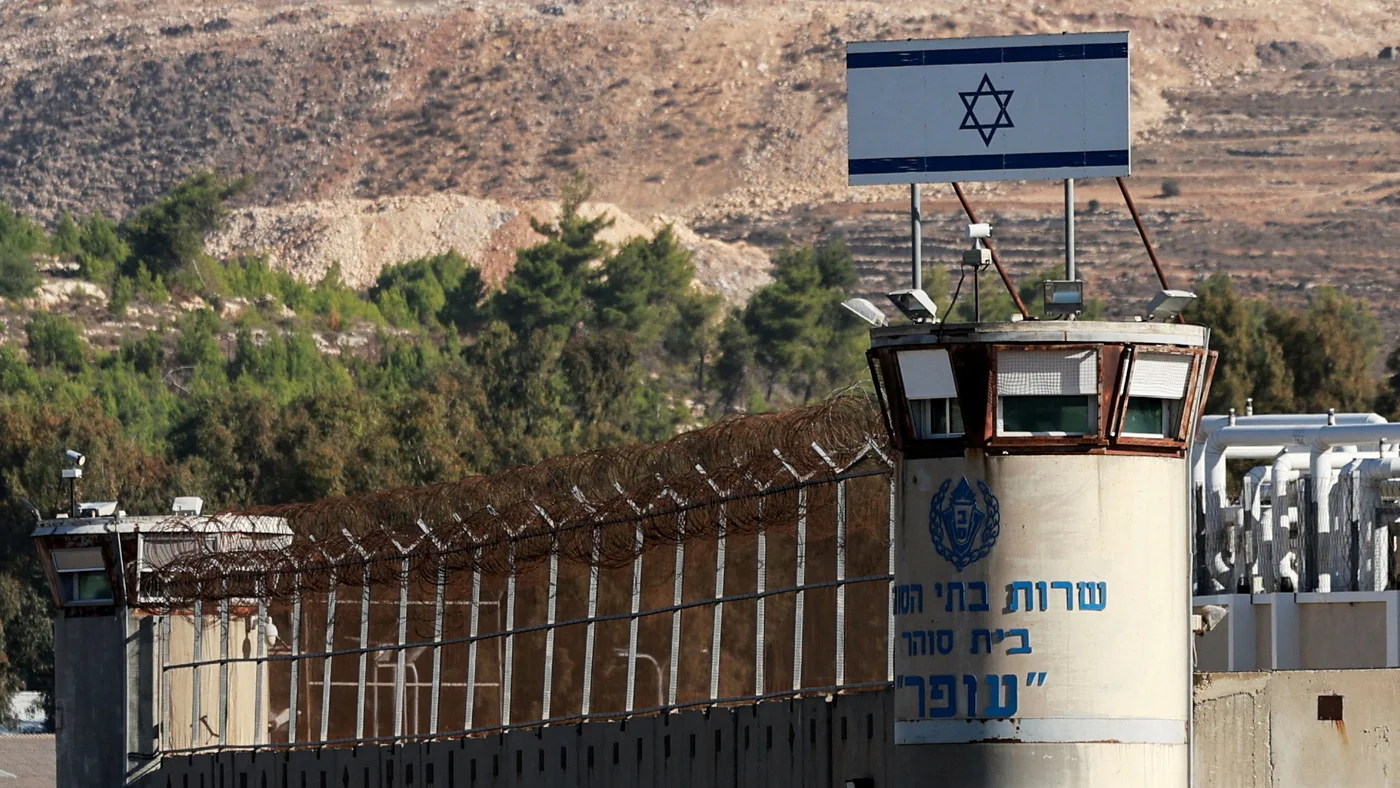
Palestinian captives in Israeli prison face ‘health disaster’, advocacy group warns
A severe health emergency is unfolding within Israel’s Megiddo Prison facility, according to alarming reports from the Palestinian Prisoners Society (PPS). The northern Israeli detention center, long criticized for its treatment of Palestinian detainees, is experiencing dangerous outbreaks of scabies and other communicable diseases that threaten to develop into a full-scale health catastrophe.
Medical assessments confirm that scabies infestations, caused by parasitic mites burrowing beneath the skin, have created widespread dermatological complications among the prison population. The PPS has documented numerous cases where inadequate medical intervention has exacerbated conditions, leading to severe rashes, persistent irritation, and additional health complications.
The advocacy organization attributes this deteriorating situation to systematic neglect by Israeli prison authorities. Detainees reportedly face critical shortages of nutritional food, appropriate clothing, basic hygiene products, and proper access to ventilation and natural lighting. These conditions create an environment where contagious diseases can spread rapidly through the confined population.
Particular concern has been raised regarding the vulnerability of younger detainees, with hundreds of children reportedly at risk. This warning follows the recent death of 17-year-old Walid Khaled Abdullah Ahmed within the facility, though circumstances surrounding his passing remain unconfirmed. His death marks the 63rd fatality among Palestinian detainees in Israeli custody since October 2023.
Israeli newspaper Haaretz previously reported in November that approximately 25% of Palestinian prisoners had contracted scabies infections in preceding months. Inmates have characterized their treatment as deliberately neglectful rather than accidentally inadequate, with one prisoner quoted as saying guards told sick detainees they ‘are terrorists and must die.’
Megiddo Prison has developed a notorious reputation for human rights violations beyond medical neglect. Documentation includes reports of electric shock torture, attacks by security dogs, severe physical beatings, and incidents where prisoners were stripped naked and restrained for extended periods without food or protection from cold temperatures.
A 2024 report by the Commission of Detainees’ and Ex-Detainees’ Affairs further detailed systematic torture practices, medical negligence, incidents of sexual violence, and routine physical abuse within the facility, painting a comprehensive picture of institutional maltreatment.
-

FIFA details Club World Cup prize money with $125M target for the winner in $1BN fund
The inaugural 32-team FIFA Club World Cup, set to take place in the United States from June 14 to July 13, has unveiled a staggering $1 billion prize pool, with the winning team potentially earning up to $125 million. FIFA announced that $525 million will be distributed as guaranteed fees to participating teams, ranging from $38.19 million for the top-ranked European team to $3.58 million for Oceania’s Auckland City. An additional $475 million will be awarded based on tournament performance, including $2 million for group-stage victories, $7.5 million for advancing to the round of 16, and $40 million for the champion crowned at New York’s MetLife Stadium. The top European team, likely Real Madrid, could amass the full $125 million by winning all group-stage matches and progressing through the knockout rounds. The tournament’s golden trophy, currently displayed in the White House’s Oval Office, was presented to former President Donald Trump by FIFA President Gianni Infantino, who invited Trump to award it to the winning captain. The prize fund’s announcement was delayed until December, when FIFA secured a global broadcast deal with streaming service DAZN, backed by a major investment from a Saudi Arabian state sports agency. Fans can stream matches for free on DAZN’s platform. The expanded tournament features 12 European teams, each guaranteed at least $12.81 million, with payments determined by sporting and commercial criteria. Notable qualifiers include Manchester City, Bayern Munich, Paris Saint-Germain, and Chelsea. South American teams will receive $15.21 million each, while African, Asian, and CONCACAF teams, including Lionel Messi’s Inter Miami, will earn $9.55 million. FIFA also plans to distribute $250 million to clubs worldwide that did not qualify. Despite the record-breaking prize pool, the $125 million maximum falls short of the English Premier League and UEFA Champions League payouts. The Club World Cup’s $1 billion fund more than doubles the $440 million shared among teams at the 2022 Qatar World Cup. Sponsors for the Club World Cup have also secured deals for the 2026 men’s World Cup, co-hosted by the U.S., Canada, and Mexico.