作者: admin

  • Pakistan bowler Tariq and his unusual delivery courts controversy at the T20 World Cup

    Pakistan bowler Tariq and his unusual delivery courts controversy at the T20 World Cup

    Pakistan’s spin bowler Usman Tariq has emerged as one of the most talked-about players at cricket’s Twenty20 World Cup, captivating audiences and baffling opponents with his highly unconventional bowling technique. The 28-year-old offspinner’s distinctive approach features a prolonged, statue-like pause at the crease followed by an unorthodox sling-style delivery that has proven remarkably effective against even the most accomplished batters.

    Tariq’s rise to prominence has been accompanied by significant controversy regarding the legality of his bowling action. Critics, including former India cricketer Shreevats Goswami, have compared his delivery stride to a soccer penalty run-up that would be ruled illegal if the shooter stops midway. The debate centers on two primary concerns: whether Tariq exceeds the ICC’s 15-degree elbow flex limit (a threshold nearly impossible for umpires to accurately judge in real time) and whether his distinctive pause constitutes an illegal delivery under cricket’s complex regulations.

    Despite being reported twice for suspect bowling action during Pakistan’s premier domestic T20 tournament over the past two seasons, Tariq has been formally cleared by Pakistani cricket authorities after biomechanical testing at the National Cricket Academy in Lahore. The bowler attributes his unusual action to biological factors, stating, ‘I have two elbows in my arm. My arm bends naturally. I have got this tested and cleared.’

    Tariq’s effectiveness is undeniable. He has mesmerized top-tier players including Australia’s Cameron Green and South African power-hitter Dewald Brevis, who fell to Tariq’s second ball in T20 international cricket last November. His impressive record includes a hat-trick against Zimbabwe during the tri-series in Rawalpindi and 11 wickets from just 88 balls across only four T20 internationals. His performance in the Caribbean Premier League, where he was the second-highest wicket taker for champions Trinbago Knight Riders, further demonstrates his consistent impact.

    Former Pakistan captain Sarfaraz Ahmed, who has played alongside Tariq, explained the psychological advantage of his technique: ‘The batters are struggling to read Tariq because of the long pause the moment he steps on the bowling crease. The long pause disturbs all the concentration of batters and when he bowls a fastish delivery, or even a slow ball, it leaves the batters clueless.’

    As Pakistan prepares for its marquee match against archrival India, Tariq represents both a strategic asset and a potential game-changer. The bowler himself has expressed ambition for this matchup, stating, ‘I wish there’s a match against India and I can win the game for Pakistan single-handedly. My coaches have injected this thing in me that you have to win matches single-handedly.’ With pitches in Sri Lanka favoring slow bowlers, Tariq’s unique talents may prove decisive in one of cricket’s most intense rivalries.
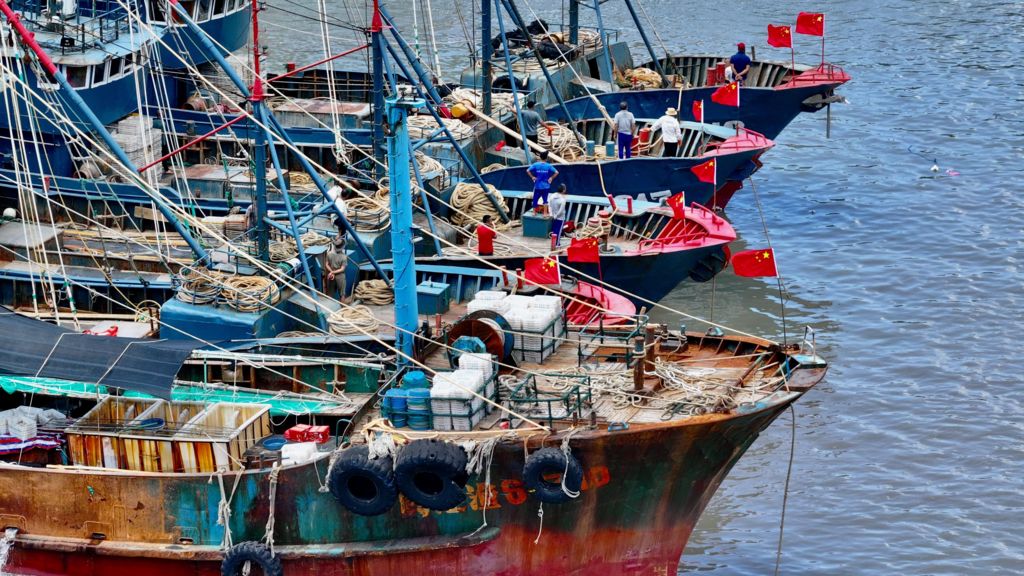

  • Japan says it seized Chinese vessel amid tensions with Beijing

    Japan says it seized Chinese vessel amid tensions with Beijing

    Japanese maritime authorities have intercepted and seized a Chinese fishing vessel within Japan’s exclusive economic zone southwest of Nagasaki Prefecture, marking the first such seizure since 2022. The incident occurred on Thursday when the vessel, identified as a high-capacity ‘tiger net’ fishing boat, allegedly attempted to evade inspection orders from Japanese fisheries inspectors.

    The fisheries agency confirmed the arrest of the 47-year-old Chinese captain and detention of all 11 crew members aboard. According to official statements, the vessel ‘failed to comply and fled’ when ordered to halt for routine inspection procedures.

    This maritime interception occurs against a backdrop of significantly deteriorated Sino-Japanese relations following controversial remarks by Japanese Prime Minister Sanae Takaichi in November 2025. Takaichi’s suggestion that Tokyo might intervene militarily if China attempted to forcibly reunify with Taiwan triggered diplomatic fury from Beijing, which subsequently summoned Japan’s ambassador and issued travel warnings for its citizens.

    The political fallout has extended beyond diplomacy, affecting economic and cultural exchanges. Chinese tourist arrivals to Japan have plummeted, impacting tourism-related stocks and retail sectors. Cultural exchanges have suffered with cancelled performances by Japanese artists in China and postponed releases of Japanese films. Even symbolic panda diplomacy reversed course with Japan’s last two pandas returned to China last month.

    China maintains its historical claim over Taiwan, which Japan occupied until 1945, and has consistently reserved the right to use force for what it terms ‘reunification.’ Beijing had previously demanded retraction of Takaichi’s comments and warned Japan to ‘stop playing with fire’ as diplomatic tensions intensified throughout late 2025.

  • Costs from Trump’s tariffs paid almost entirely by US consumers, NY Fed says

    Costs from Trump’s tariffs paid almost entirely by US consumers, NY Fed says

    A comprehensive analysis by the Federal Reserve Bank of New York demonstrates that American corporations and consumers are absorbing approximately 90% of the financial burden resulting from elevated tariffs imposed on imported goods. The research, published Thursday, indicates that the average tariff rate surged dramatically from 2.6% to 13% throughout 2025, marking one of the most significant increases in recent trade history.

    The study examined tariff implementations targeting multiple trading partners including China, Mexico, Canada, and the European Union. Contrary to conventional economic expectations, exporting nations maintained stable pricing structures rather than reducing costs to mitigate potential declines in U.S. demand. This pricing strategy resulted in importers transferring additional expenses directly to American consumers through elevated retail prices.

    This pattern mirrors outcomes observed during the 2018 tariff implementations during President Trump’s initial term, suggesting consistent economic behavior across different trade environments. The New York Fed’s findings receive substantial validation from parallel international studies.

    Independent analysis from Germany’s Kiel Institute for the World Economy, based on examination of 25 million transactions, confirmed nearly complete transfer of tariff costs to U.S. import prices. Their research revealed that major exporters including Brazil and India opted to reduce shipment volumes rather than decrease pricing, resulting in what researchers termed ‘trade volume collapse.’

    Supporting evidence from the National Bureau of Economic Research indicated approximately 100% pass-through of tariffs to consumer pricing. Meanwhile, the Tax Foundation, a Washington DC-based policy research organization, characterized the tariffs as effectively constituting a new consumer tax. Their calculations suggest the average American household incurred approximately $1,000 in additional costs during 2025, with projections indicating a rise to $1,300 for 2026.

    The Tax Foundation further noted that the effective tariff rate—accounting for reduced purchasing in response to higher prices—currently stands at 9.9%, representing the highest average rate recorded since 1946. According to their analysis, these increased costs will completely offset any potential economic benefits derived from tax reductions included in the administration’s legislative proposals.

  • Oil prices tumble more than $1 as IEA cuts demand forecast

    Oil prices tumble more than $1 as IEA cuts demand forecast

    Global oil markets experienced significant downward pressure on Thursday following a sobering demand forecast revision from the International Energy Agency. The Paris-based organization substantially lowered its 2026 global oil consumption projections, triggering a swift market reaction that erased earlier geopolitical risk premiums.

    Benchmark crude indices registered pronounced declines throughout the trading session. Brent crude futures plummeted by $1.26, representing a 1.82% decrease to settle at $68.14 per barrel. Simultaneously, US West Texas Intermediate crude witnessed a $1.24 drop, equating to a 1.92% decline, closing at $63.39 per barrel.

    The IEA’s monthly market report indicated that demand growth would underperform previous estimates despite January supply disruptions. The agency projected a substantial market surplus would persist throughout the year, fundamentally altering trader sentiment. This revision prompted investors to reassess the balance between geopolitical tensions and fundamental supply-demand dynamics.

    Market analysts observed that the earlier price support derived from US-Iran tensions had rapidly dissipated. Phil Flynn, senior analyst at Price Futures Group, noted that the market ‘just ran out of steam’ as participants prioritized the weakened demand outlook over Middle Eastern geopolitical concerns.

    Concurrently, substantial US inventory data exacerbated the bearish sentiment. The Energy Information Administration reported an 8.5 million barrel crude stockpile increase, dramatically exceeding analyst expectations of a 793,000-barrel build. Refinery utilization rates concurrently declined by 1.1 percentage points to 89.4%, indicating reduced processing demand.

    On the supply front, Russian seaborne oil product exports climbed 0.7% month-over-month to 9.12 million metric tons in January, driven by elevated fuel production and seasonal domestic consumption patterns. This additional supply further contributed to the global surplus scenario outlined by the IEA.

  • Australia’s Liberal Party ousts first woman leader

    Australia’s Liberal Party ousts first woman leader

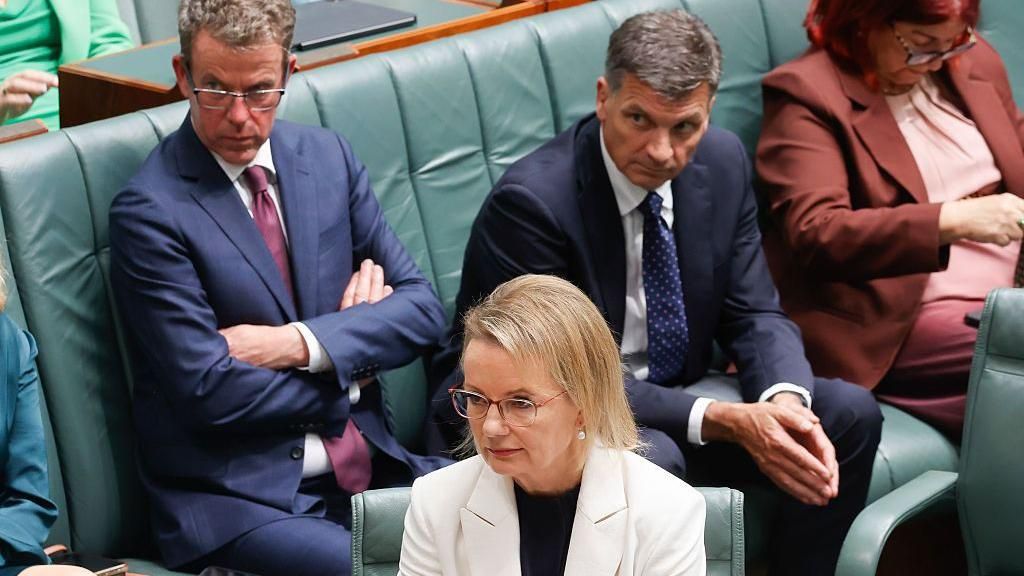
    In a significant political upheaval, Angus Taylor has successfully deposed Sussan Ley as leader of Australia’s Liberal Party, marking the end of her brief nine-month tenure. The leadership ballot concluded with a decisive 34-17 victory for Taylor, representing the party’s conservative faction and former shadow defense minister under Ley’s administration.

    This transition follows months of internal strife within the Liberal-National Coalition and consistently disappointing poll performances. Ley, who ascended to leadership after the coalition’s devastating electoral defeat in 2025, faced persistent challenges in maintaining party unity. The historic partnership between Liberals and Nationals fractured twice during her leadership—first immediately following the May election and again recently.

    Taylor, who narrowly lost to Ley in the previous leadership contest, brings a background as a former management consultant and parliamentary experience dating to 2013. He has served ministerial roles under former Prime Ministers Malcolm Turnbull and Scott Morrison. In a social media statement, Taylor characterized his election as “an immense honor” and expressed enthusiasm about collaborating with newly appointed deputy leader Jane Hume.

    Ley announced her immediate resignation from parliament and complete withdrawal from public life following the results. While expressing “no hard feelings” toward her successor, she delivered a pointed remark about the challenges of leadership, emphasizing the importance of “clear air, something that is not always afforded to leaders.”

    The Liberal-National Coalition has struggled to formulate a coherent response to their electoral collapse against Labor, particularly regarding energy and climate policy disagreements. Recent polling indicates concerning trends, with the populist One Nation Party—which secured merely 6% of the national vote last year—now surpassing the coalition to claim second place behind Labor.

    Reflecting on her tumultuous leadership experience, Ley described moments as “very tough” but drew parallels to her involvement in Canberra’s early punk rock movement, noting she would continue to find wisdom in “a fearless and honest belief in yourself.”

  • DHS shutdown looms as funding bill fails over immigration demands

    DHS shutdown looms as funding bill fails over immigration demands

    A critical funding bill for the U.S. Department of Homeland Security (DHS) has been blocked in the Senate following a contentious partisan dispute over proposed reforms to immigration enforcement protocols. Thursday’s procedural vote failed to secure the necessary majority, stalling legislation just before Saturday’s midnight funding deadline.

    The deadlock centers on Democratic demands for substantial operational changes at Immigration and Customs Enforcement (ICE). These reforms, prompted by recent fatal incidents involving ICE operations, include prohibiting agents from wearing masks during interactions, mandating body camera usage, and implementing stricter oversight mechanisms.

    Senate Minority Leader Chuck Schumer characterized these proposals as “common sense” measures already standard among local law enforcement nationwide. “Democrats will not support a blank cheque for chaos,” Schumer declared following the vote, emphasizing requirements for judicial warrants before entering private properties and bans on enforcement at sensitive locations including schools, medical facilities, and places of worship.

    Despite the funding lapse, ICE operations will continue largely unaffected due to previous legislation allocating billions to advance President Trump’s immigration agenda. However, other critical DHS agencies face immediate impacts. DHS Secretary Kristi Noem warned that agencies including FEMA (disaster response) and TSA (airport security) would experience operational disruptions, with personnel potentially facing unpaid furloughs.

    Republican opposition focuses on maintaining enforcement capabilities, with Senate Majority Leader John Thune dismissing certain Democratic proposals as “non-starters that unnecessarily tie the hands of law enforcement.” The GOP’s central demand remains mandatory cooperation between local police and federal immigration authorities.

    With the Senate currently in recess, legislators await a potential compromise that could trigger a recall vote. The already House-approved bill remains in legislative limbo as both parties navigate complex negotiations surrounding immigration policy and security funding.

  • A seat at the table or on the menu? Africa grapples with the new world order

    A seat at the table or on the menu? Africa grapples with the new world order

    African heads of state convened in Addis Ababa for their annual summit this weekend, facing a transformed global landscape where the continent’s strategic positioning requires urgent reassessment. The gathering occurs amidst a fundamental shift in international relations characterized by the decline of multilateralism and the ascendancy of great-power politics.

    This geopolitical transformation has been accelerated during President Donald Trump’s second term, marked by a distinct ‘America First’ approach that explicitly prioritizes Western hemisphere interests alongside Middle Eastern concerns, inevitably reducing Africa’s prominence in US foreign policy. The updated White House security strategy openly acknowledges that not every global region can receive equal attention, compelling African nations to reconsider their traditional reliance on international institutions like the UN, World Bank, and WTO.

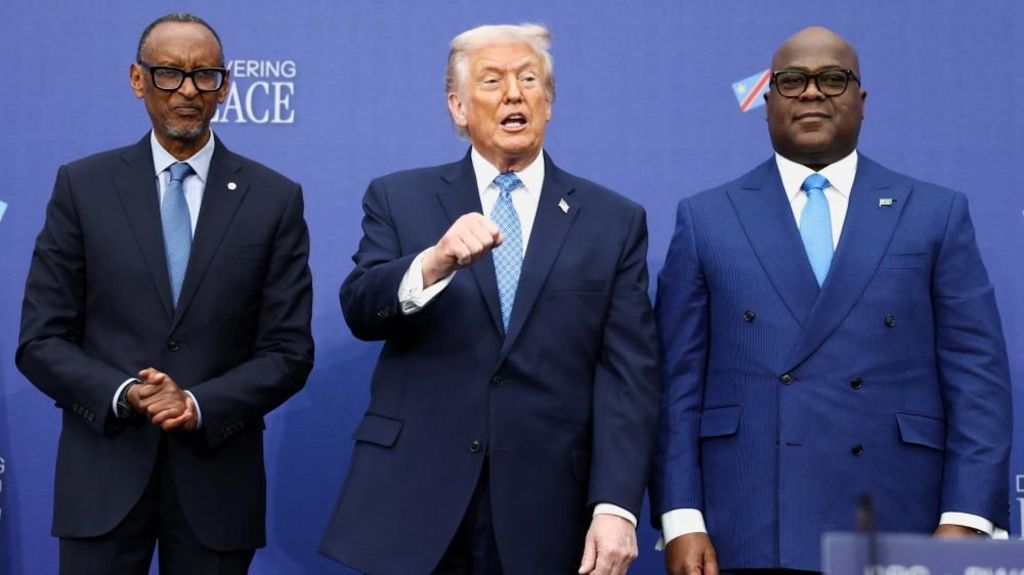
    The policy contrast with the previous administration is stark. While President Joe Biden declared in 2024 that the United States was ‘all-in on Africa’s future,’ his actual engagement proved limited with just one brief presidential visit to sub-Saharan Africa during his final month in office. The current administration has adopted a more transactional, bilateral approach focused primarily on securing mineral resources critical for electronic manufacturing, as demonstrated by December’s agreement with the Democratic Republic of Congo.

    Peter Pham, former US special envoy to Africa, defends this realistic approach: ‘There’s no way any country, even a superpower, can be all things to everyone. We must steward our resources to achieve optimal outcomes for American citizens and our partners.’ However, critics like Georgetown University’s Ken Opalo warn that bilateral deals weaken Africa’s bargaining position, potentially leading to unfavorable terms that prioritize American corporate interests over comprehensive economic cooperation.

    The strategic vacuum extends beyond economic matters. Africa’s inability to resolve conflicts like Sudan’s civil war—now labeled the world’s worst humanitarian crisis—demonstrates limited continental agency. Various global powers including Russia, Turkey, UAE, and Iran have been accused of supplying weapons to warring factions, further complicating resolution efforts.

    Ghana’s President John Mahama has emerged as a vocal advocate for continental self-reliance, declaring at Davos that Africa has ‘lost its sovereignty and was caught in a dependency trap.’ His Accra Reset project promotes coordinated industrialization, skills development, and unified negotiation with external partners. Yet analysts note that implementation challenges persist, including the tension between national and regional interests and the domestic pressures facing potential continental leaders like Nigeria, Egypt, Ethiopia, Kenya, and South Africa.

    Despite existing frameworks like the African Continental Free Trade Area and Agenda 2063, progress toward unified action remains slow. As global power dynamics continue evolving, African nations face the pressing challenge of developing coherent strategies to ensure they secure a place at the international table rather than becoming part of the menu.

  • The US economy is growing – so where are all the jobs?

    The US economy is growing – so where are all the jobs?

    The American labor market is presenting a paradoxical scenario that defies conventional economic wisdom. While macroeconomic indicators show robust growth with the economy expanding at a 4.4% annual pace, job seekers like Jacob Trigg face unprecedented challenges. The 42-year-old Texan project manager, previously accustomed to quick employment transitions, has submitted over 2,000 applications without securing permanent professional work, instead relying on package delivery and landscaping jobs to survive.

    This personal struggle reflects a broader national phenomenon where job openings and hiring rates have plummeted to multi-year lows. Recent data reveals the US added merely 15,000 jobs monthly last year—a strikingly low figure by historical standards. Yet simultaneously, the unemployment rate remains stable at 4.3%, layoffs stay limited outside notable exceptions like Amazon and UPS, and economic expansion continues.

    Economists describe this combination as highly unusual. Jed Kolko of the Peterson Institute for International Economics notes: ‘It’s actually very hard to point to another moment in the last 25 years where you have the combination we see today.’

    The situation has sparked intense debate about potential structural shifts in the economy. Goldman Sachs’ widely cited October report suggested the US might be entering a period of ‘jobless growth,’ driven particularly by artificial intelligence adoption enabling companies to achieve more with reduced human resources. This concern resonated through World Economic Forum discussions in Davos, contributing to widespread economic anxiety.

    Professor Constantin Burgi of University College Dublin observes that such decoupling of job gains from overall growth typically occurs during fundamental economic transformations. While he views the situation as potentially temporary, he acknowledges it could persist for years if jobs are permanently lost to AI or outsourcing.

    The human impact is profound. James Richardson, a 33-year-old information security analyst from Pittsburgh, has applied to over 1,200 positions since October, sometimes receiving rejections within 15 minutes. ‘It feels like there is no-one on the other side even bothering to look at your experiences,’ he lamented, noting he would be homeless without parental support.

    Multiple factors beyond technology may contribute to the hiring slowdown. Many companies, especially in tech, still carry surplus workers hired during pandemic-era booms. The Trump administration’s immigration crackdown simultaneously reduces both available workers and demand for them. Economic uncertainty from government spending cuts and tariff programs may also suppress hiring appetite.

    Despite stronger-than-expected January job gains offering some hope, economists like Indeed’s research director Laura Ullrich caution against declaring a ‘new normal.’ She maintains current conditions are unsustainable long-term, as low hiring, low firing, and low quit rates during economic growth cannot persist indefinitely.

    For job seekers like Amy Beson, laid off from the University of Arizona amid government funding cuts, the situation feels desperately permanent. Even expanding her search to healthcare—typically a resilient sector—has yielded nothing, leading her to worry this challenging environment represents a permanent shift rather than a temporary anomaly.

  • Troop who fell overboard becomes first American killed in drug boat targeting operation

    Troop who fell overboard becomes first American killed in drug boat targeting operation

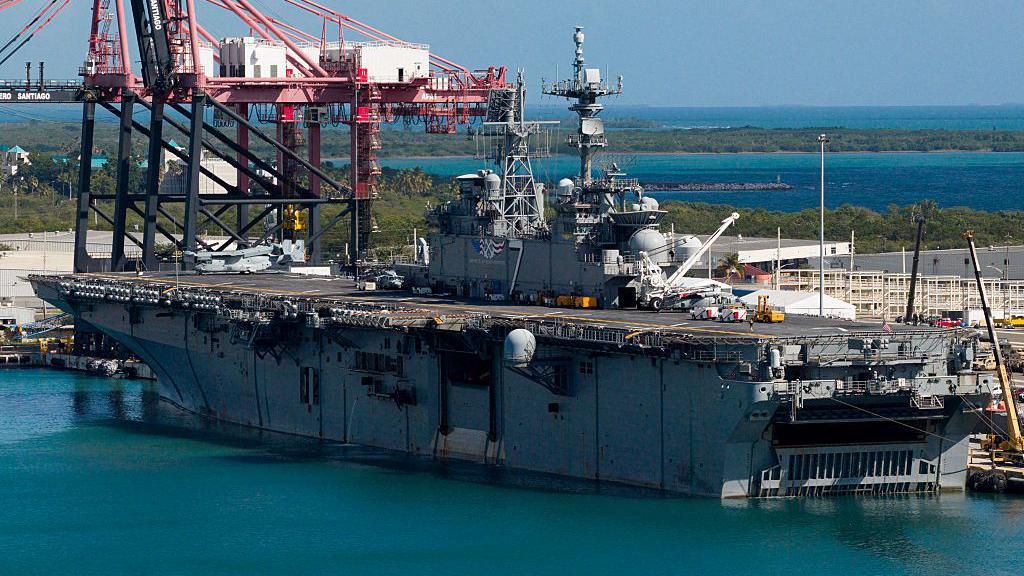
    The United States Marine Corps has confirmed the first fatality in President Trump’s intensified counter-narcotics operations in Caribbean waters. Lance Corporal Chukwuemeka E. Oforah, a 21-year-old Florida native, was lost at sea on February 7th after falling overboard from the USS Iwo Jima during Operation Southern Spear. Despite an extensive search effort involving five naval vessels and ten aircraft, the Marine was pronounced dead on February 10th after three days of intensive searching.

    The incident represents the first known American military death in the administration’s expanded campaign against drug trafficking networks. Operation Southern Spear has conducted 38 lethal strikes against suspected narcotics vessels since its inception in September, playing a pivotal role in the capture of Venezuelan President Nicholas Maduro, whom the Trump administration accuses of collaborating with drug trafficking organizations.

    Colonel Tom Trimble, commanding officer of the Marine Expeditionary Unit, expressed profound grief, stating, “We are all grieving alongside the Oforah family. The loss of Lance Cpl. Oforah is deeply felt across the entire Navy-Marine Corps team. He will be profoundly missed, and his dedicated service will not be forgotten.”

    The circumstances surrounding Oforah’s fall remain under military investigation, with officials providing no specific details about how the tragedy occurred. The USS Iwo Jima, which recently transported the captured Venezuelan leader, has been at the forefront of the administration’s hemispheric narcotics interdiction efforts.

    Defense Secretary Pete Hegseth has characterized Operation Southern Spear as essential to removing “narco-terrorists from our hemisphere” and protecting Americans from deadly drugs. However, the campaign faces mounting legal challenges, including a lawsuit filed by families of two Trinidadian men killed in an October strike, alleging “lawless killings in cold blood.” Legal experts have raised concerns about potential violations of international law, particularly regarding due process for suspects targeted in maritime operations.

  • Spotted seals seen giving birth on land for the first time in China

    Spotted seals seen giving birth on land for the first time in China

    In an unprecedented ecological development, Chinese marine researchers have documented spotted seals (Phoca largha) delivering their young on terrestrial terrain for the first time in recorded history. The landmark observation occurred in February within Liaodong Bay, where conservation authorities captured definitive evidence of this behavioral adaptation.

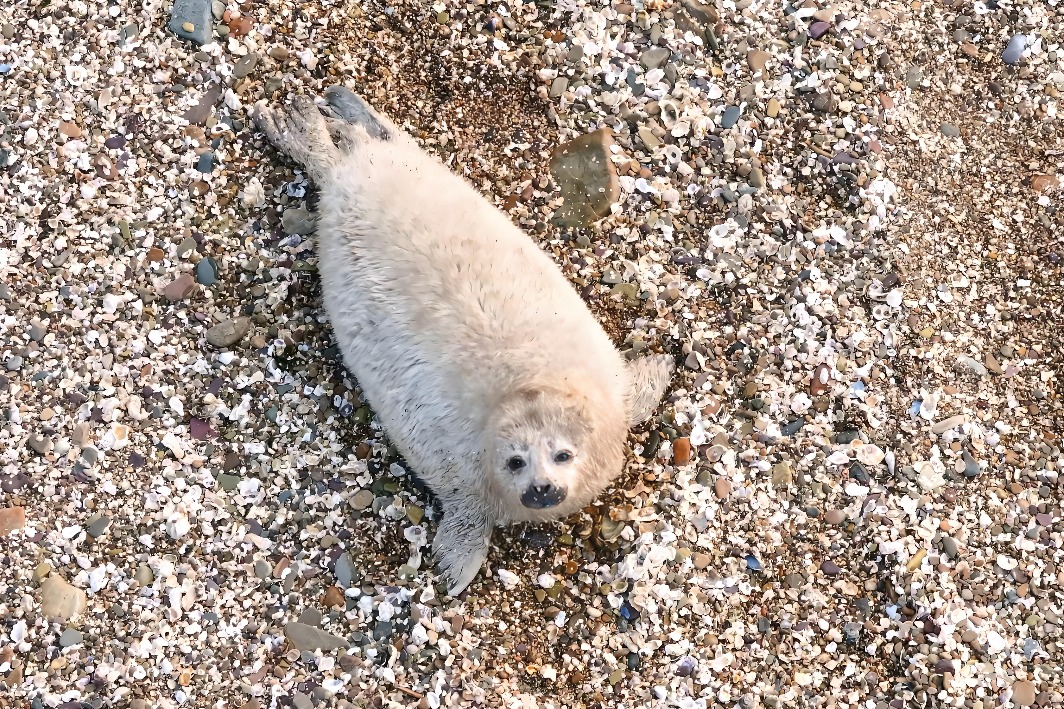
    During coordinated surveillance operations, the Dalian Coast Guard collaborated with the National Spotted Seal Reserve and the National Marine Environmental Monitoring Center to conduct specialized patrols. Utilizing advanced drone technology, the team recorded three newborn seal pups on a sandy bank in the southeastern sector of Liaodong Bay in early February.

    The aerial footage reveals vulnerable newborns nestled against their mothers and engaging in characteristic clumsy movements across the sandy surface. Critically, the complete absence of surrounding sea ice confirmed these births occurred on solid ground rather than the traditional floating ice platforms—a direct consequence of diminishing sea ice coverage in the region.

    Professor Zhang Yue, a leading marine ecologist at the National Marine Environmental Monitoring Center, explained the significance: ‘Spotted seals have evolutionarily depended on winter ice formations for reproductive purposes. The reduction of stable ice cover due to climatic shifts has forced this remarkable behavioral adaptation.’

    The spotted seal represents China’s sole native pinniped species that breeds within its territorial waters and holds Class I protected status under national wildlife conservation laws. The Liaodong Bay population possesses distinct genetic characteristics that contribute significantly to marine biodiversity studies.

    This terrestrial breeding event indicates both environmental challenges and ecological resilience. While highlighting concerning climate-induced habitat changes, it simultaneously demonstrates the species’ capacity to adapt when sufficient food resources and protected environments remain available.

    In response to these developments, conservation agencies have amplified protective measures during critical breeding periods. Enhanced monitoring protocols now include expanded aerial surveillance, water quality testing in core habitats, and community engagement initiatives to raise awareness about protecting this vulnerable species.