
作者: admin

  • Trump administration to end immigration enforcement surge in Minneapolis

    Trump administration to end immigration enforcement surge in Minneapolis

    The Trump administration announced on Thursday the termination of a heightened immigration enforcement operation in Minneapolis, Minnesota, following two months of widespread protests, school closures, and the tragic deaths of two American citizens. The operation, which had drawn significant national criticism, will see a substantial drawdown of federal agents.

    At a Minneapolis press conference, Border Czar Tom Homan stated that the de-escalation was already in progress. ‘I have proposed, and President Trump has concurred, that this surge operation conclude,’ Homan declared. ‘A significant drawdown has already been underway this week and will continue into the next.’ He attributed the decision to improved collaboration between local law enforcement and federal immigration authorities, establishing a new protocol where U.S. Immigration and Customs Enforcement (ICE) will take custody of immigrants arrested locally for criminal acts prior to deportation proceedings.

    The operation had been marred by controversy since its inception. Viral videos depicted ICE agents, alongside personnel from Homeland Security Investigations and Enforcement and Removal Operations, employing aggressive tactics. These included apprehending individuals suspected of immigration violations in front of their children at schools and from construction sites. Notably, some of those detained were later confirmed to be U.S. citizens, a direct violation of federal law which prohibits immigration agents from holding Americans.

    The fatalities of U.S. citizens Renee Nicole Good and Alex Pretti, who were legally observing and documenting ICE activities, became a focal point of national outrage. Acting ICE Director Todd Lyons acknowledged the deaths at a Senate hearing but declined further comment pending internal investigations. ‘In regards to every law enforcement operation, of course, we go back, we look at lessons learned… the ownership of that is mine,’ Lyons testified.

    Minnesota officials responded with a mixture of relief and defiance. Democratic Governor Tim Walz, who had previously run for vice president alongside Kamala Harris, stated on social media, ‘The long road to recovery starts now.’ He later revealed that a phone call with President Trump and the subsequent deployment of Homan to Minneapolis had initiated negotiations to end the operation, though he criticized the administration’s delay, suggesting it was ‘in very Trumpian fashion, they needed to save face.’

    Minneapolis Mayor Jacob Frey, known for his explicit demands for ICE to leave the city, celebrated the community’s resilience, writing that federal agents ‘thought they could break us, but a love for our neighbors and a resolve to endure can outlast an occupation.’

    The political fallout for the administration has been significant, with approval ratings suffering due to widespread circulation of videos showing violent arrests. Critics of the operation pointed to internal Department of Homeland Security (DHS) documents revealing that only 14% of arrested immigrants had a record of violent crime, arguing that the majority were detained for civil infractions like visa overstays. Furthermore, tactics such as frequently transferring detainees to remote facilities in Texas and Louisiana—regions with conservative judiciaries aligned with administration policies—were condemned for isolating individuals from legal support and families, effectively coercing them into accepting deportation rather than pursuing their legal rights.

    Since taking office 13 months ago, the DHS reports having detained or deported half a million people. The conclusion of the Minneapolis surge marks a significant retreat from one of the administration’s most aggressive domestic enforcement campaigns.
  • Sister of North Korea’s leader says South Korea’s drone regret was sensible but insufficient

    Sister of North Korea’s leader says South Korea’s drone regret was sensible but insufficient

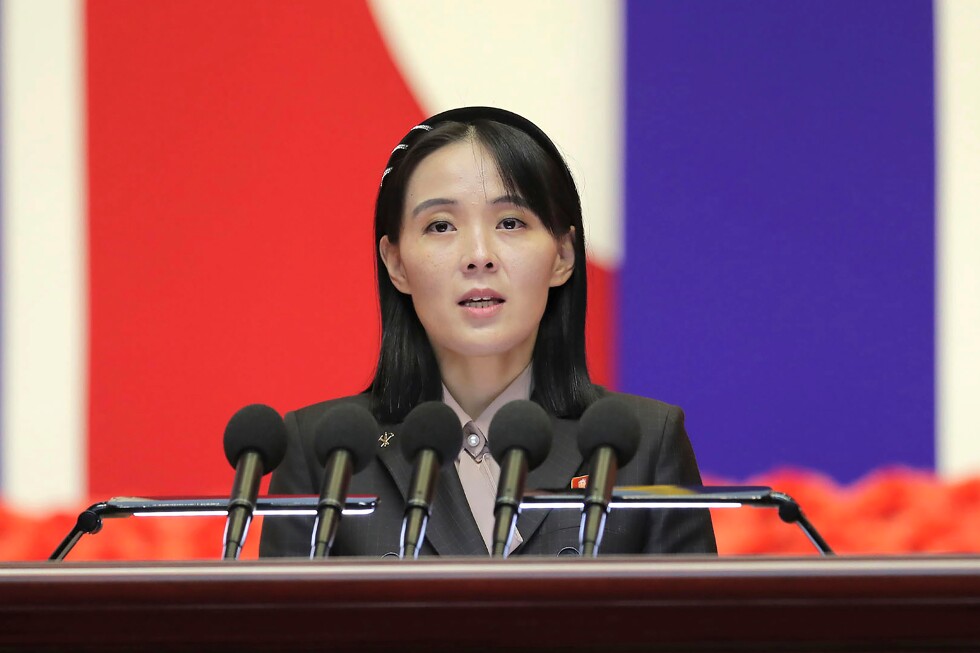
    In a significant development on the Korean Peninsula, Kim Yo Jong, the influential sister of North Korean leader Kim Jong Un, delivered a carefully calibrated response Friday to South Korea’s expression of regret over alleged civilian drone flights. While acknowledging South Korean Unification Minister Chung Dong-young’s “deep regret” as “sensible behavior,” she issued a stark warning that any recurrence would trigger “terrible response” measures.

    The diplomatic exchange marks the latest escalation in tensions between the two technically warring nations. North Korea had previously threatened retaliation last month after accusing South Korea of launching surveillance drone flights in September and January—claims that Seoul has consistently denied. South Korean authorities confirm they are investigating three civilians suspected of operating drones in border areas, though officials maintain no government-operated drones were deployed during the specified periods.

    Kim Yo Jong’s statement, while acknowledging the conciliatory gesture, demanded stronger preventive measures from Seoul. “Various counterattack plans are on the table,” she declared, emphasizing that any response would “go beyond proportionality” if violations of North Korea’s sovereignty recur. The warning was delivered using North Korea’s formal name, the Democratic People’s Republic of Korea (DPRK).

    Analysts suggest North Korea’s drone accusations may be strategically timed to heighten anti-South Korean sentiments ahead of the ruling Workers’ Party congress in late February—the first such gathering in five years. There is speculation that the congress could formalize leader Kim Jong Un’s declaration of a hostile “two-state” system on the Korean Peninsula in the party constitution.

    The development significantly dampens prospects for Seoul’s efforts to revive long-stalled diplomatic talks amid an increasingly tense nuclear standoff. The two Koreas have maintained no public dialogue since 2019, with drone allegations adding to existing sources of animosity between the divided nations.

  • UN approves 40-member scientific panel on the impact of artificial intelligence over US objections

    UN approves 40-member scientific panel on the impact of artificial intelligence over US objections

    The United Nations General Assembly has overwhelmingly approved the creation of a 40-member global scientific panel dedicated to assessing the impacts and risks of artificial intelligence. The Thursday vote saw 117 nations in favor, with only the United States and Paraguay voting against the initiative, while Tunisia and Ukraine abstained.

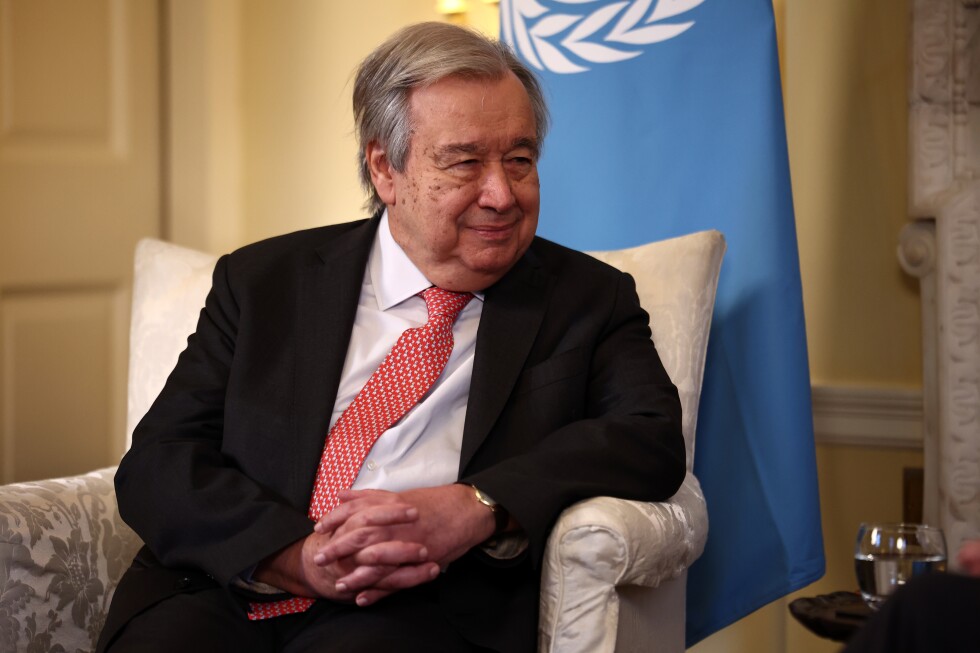
    UN Secretary-General Antonio Guterres, who established the panel, hailed the decision as “a foundational step toward global scientific understanding of AI.” He emphasized that the fully independent scientific body would provide rigorous, independent insight enabling all member states to engage on equal footing regardless of technological capacity.

    The United States Mission strongly objected to the panel, with counselor Lauren Lovelace characterizing it as “a significant overreach of the UN’s mandate and competence.” Lovelace stated that AI governance should not be dictated by the UN and expressed concerns about authoritarian regimes potentially influencing international bodies to impose “controlled surveillance societies.”

    Panel members were selected from over 2,600 candidates through an independent review process involving the International Telecommunications Union, the UN Office for Digital and Emerging Technologies, and UNESCO. The diverse panel includes predominantly AI experts alongside professionals from other disciplines, including Nobel Peace Prize laureate Maria Ressa, a Filipino journalist.

    Notable appointments include two American experts: University of Minnesota professor Vipin Kumar and retired University of Colorado professor Martha Palmer. The panel also features two Chinese specialists: Shanghai Jiao Tong University dean Song Haitao and Chinese Academy of Engineering cloud-computing expert Wang Jian.

    Ukraine cited its objection to Russian AI regulation expert Andrei Neznamov’s inclusion as the reason for its abstention. Panel members will serve three-year terms focused on bridging knowledge gaps and assessing AI’s real-world economic and social impacts.

  • Israeli soldier acccused of using classified intelligence to bet on attacks in Mena

    Israeli soldier acccused of using classified intelligence to bet on attacks in Mena

    Israeli authorities have brought criminal charges against a military servicemember and an additional individual for allegedly exploiting confidential intelligence to wager on future combat operations through cryptocurrency prediction markets. The country’s Shin Bet security agency disclosed on Thursday that both suspects leveraged their privileged access to classified information to place bets regarding Israeli military actions across the Middle Eastern theater.

    This unprecedented security breach emerged following a Kan public television investigation last month that revealed a Polymarket user had profited over $152,000 by accurately predicting an Israeli strike against Iran in June. The successful bettor had placed substantial sums across multiple specific propositions, including precise timelines for military engagements against Iran and the conclusion of active conflicts.

    Israel’s defense establishment issued a stern warning regarding the grave national security implications of such activities. An official government statement emphasized that ‘placing bets based on secret and classified information poses a real security risk to IDF operations and to the security of the state,’ adding that authorities would ‘act decisively to thwart and bring to justice anyone involved in the unlawful use of classified information.’

    Polymarket, a U.S.-based cryptocurrency prediction platform, enables users to speculate on virtually any global event. The site currently hosts active betting markets concerning the timing of Israeli strikes against Gaza and Lebanon, the number of nations Israel might attack in February, and progress in Middle Eastern peace negotiations. Additional markets allow wagering on potential military actions by Israel and the United States against Iran.

    The platform has previously drawn scrutiny following a similar incident where a gambler netted approximately $400,000 by correctly predicting a U.S. operation against Venezuela and the attempted abduction of President Nicolás Maduro mere hours before it occurred. Current Polymarket metrics indicate a 53% probability of a U.S. attack on Iran by June 2026, with a 16% chance of such military action occurring before February 28th—a market that has attracted over $12 million in wagers.

  • Want more babies? Abolish commutes, shows research

    Want more babies? Abolish commutes, shows research

    A groundbreaking economic study from Stanford University has revealed a surprising correlation between remote work arrangements and rising fertility rates in the United States. According to research findings, approximately 290,000 additional children have been born annually since the COVID-19 pandemic catalyzed widespread adoption of work-from-home policies.

    Professor Nicholas Bloom, the Stanford economist leading the study, demonstrated that when both parents transition from full-time office work to hybrid arrangements with at least one day working remotely, families average approximately 0.5 additional children. This movement toward the population replacement level of 2.1 children per woman represents a significant demographic shift.

    The fertility boost appears driven by both practical opportunity and increased availability. Reduced commuting times create more hours for parenting, while physical proximity facilitates family planning. Professor Bloom characterized remote work as “the most effective fertility-boosting policy out there,” noting its zero-cost implementation for governments.

    This phenomenon isn’t unique to the United States. International research corroborates these findings, with Norway documenting a “significant and persistent increase in births” nine months after their 2020 lockdown. Similar patterns emerged in Italy and Germany, where flexible work arrangements and high-speed internet access correlated with increased fertility intentions and outcomes among educated women.

    Despite these demonstrated benefits, current political approaches appear contradictory. While the administration expresses concern about record-low fertility rates (reaching 1.6 children per woman in 2024) and proposes various incentive programs, it simultaneously mandates federal employees return to office-based work. Major corporations including Paramount, Dell, and TikTok have followed this precedent by scaling back remote work options.

    Compounding this contradiction, support systems for working parents are being eroded through proposed reductions in employment protections for pregnant women, rolled-back anti-discrimination safeguards, and attempted freezes on childcare funding. Corporate support has similarly diminished, with companies reducing childcare assistance and healthcare benefits for dependents despite childcare costs rising at twice the general inflation rate.

    The research suggests these policies may be driving what economists term “the Great Exit” – college-educated mothers, who had powered record workforce participation in August 2024, are now leaving paid employment as return-to-office mandates eliminate the flexibility that enabled their dual roles.

    While remote work alone cannot reverse decades-long fertility declines stemming from industrialization, contraception access, and rising living costs, it represents a proven, cost-effective approach that simultaneously supports economic growth by maintaining female workforce participation.

  • Canadian and UK finance groups pause new ventures with DP World over CEO’s emails with Epstein

    Canadian and UK finance groups pause new ventures with DP World over CEO’s emails with Epstein

    Leading financial institutions from Canada and the United Kingdom have suspended future collaborations with global logistics firm DP World following the disclosure of extensive email correspondence between company CEO Sultan Ahmed bin Sulayem and convicted sex offender Jeffrey Epstein. The communications, unveiled in recently released U.S. Department of Justice documents, contain explicit references to sexual content and escort services spanning several years.

    British International Investment, the UK’s development finance agency, announced it will withhold new investments with DP World until the company implements necessary corrective measures. Similarly, La Caisse de dépôt et placement du Québec, one of Canada’s largest pension funds, has paused further capital deployment with the Dubai-based port operator.

    The email exchanges, dating from 2009 to 2018, reveal a longstanding personal relationship between Sulayem and Epstein, who died by suicide in 2019 while facing sex trafficking charges. Among the most concerning communications is a 2009 message where Epstein references a ‘torture video’ he apparently received from Sulayem. Subsequent emails include Sulayem’s description of a ‘100% female Russian’ on his yacht, menus from massage businesses offering sexual services, and direct links to pornographic websites.

    While the correspondence does not directly implicate Sulayem in Epstein’s criminal activities, the nature of the discussions has prompted serious concern among DP World’s investment partners. Both financial institutions emphasized they are not direct investors in DP World but have previously collaborated on global port infrastructure projects.

    DP World, which operates the massive Jebel Ali port in Dubai and numerous international terminals, has remained silent despite multiple requests for comment. Sulayem previously served as chairman of Dubai World, the conglomerate behind Dubai’s iconic palm-shaped artificial islands.

  • Pakistan bowler Tariq and his unusual delivery courts controversy at the T20 World Cup

    Pakistan bowler Tariq and his unusual delivery courts controversy at the T20 World Cup

    Pakistan’s spin bowler Usman Tariq has emerged as one of the most talked-about players at cricket’s Twenty20 World Cup, captivating audiences and baffling opponents with his highly unconventional bowling technique. The 28-year-old offspinner’s distinctive approach features a prolonged, statue-like pause at the crease followed by an unorthodox sling-style delivery that has proven remarkably effective against even the most accomplished batters.

    Tariq’s rise to prominence has been accompanied by significant controversy regarding the legality of his bowling action. Critics, including former India cricketer Shreevats Goswami, have compared his delivery stride to a soccer penalty run-up that would be ruled illegal if the shooter stops midway. The debate centers on two primary concerns: whether Tariq exceeds the ICC’s 15-degree elbow flex limit (a threshold nearly impossible for umpires to accurately judge in real time) and whether his distinctive pause constitutes an illegal delivery under cricket’s complex regulations.

    Despite being reported twice for suspect bowling action during Pakistan’s premier domestic T20 tournament over the past two seasons, Tariq has been formally cleared by Pakistani cricket authorities after biomechanical testing at the National Cricket Academy in Lahore. The bowler attributes his unusual action to biological factors, stating, ‘I have two elbows in my arm. My arm bends naturally. I have got this tested and cleared.’

    Tariq’s effectiveness is undeniable. He has mesmerized top-tier players including Australia’s Cameron Green and South African power-hitter Dewald Brevis, who fell to Tariq’s second ball in T20 international cricket last November. His impressive record includes a hat-trick against Zimbabwe during the tri-series in Rawalpindi and 11 wickets from just 88 balls across only four T20 internationals. His performance in the Caribbean Premier League, where he was the second-highest wicket taker for champions Trinbago Knight Riders, further demonstrates his consistent impact.

    Former Pakistan captain Sarfaraz Ahmed, who has played alongside Tariq, explained the psychological advantage of his technique: ‘The batters are struggling to read Tariq because of the long pause the moment he steps on the bowling crease. The long pause disturbs all the concentration of batters and when he bowls a fastish delivery, or even a slow ball, it leaves the batters clueless.’

    As Pakistan prepares for its marquee match against archrival India, Tariq represents both a strategic asset and a potential game-changer. The bowler himself has expressed ambition for this matchup, stating, ‘I wish there’s a match against India and I can win the game for Pakistan single-handedly. My coaches have injected this thing in me that you have to win matches single-handedly.’ With pitches in Sri Lanka favoring slow bowlers, Tariq’s unique talents may prove decisive in one of cricket’s most intense rivalries.

  • Japan says it seized Chinese vessel amid tensions with Beijing

    Japan says it seized Chinese vessel amid tensions with Beijing

    Japanese maritime authorities have intercepted and seized a Chinese fishing vessel within Japan’s exclusive economic zone southwest of Nagasaki Prefecture, marking the first such seizure since 2022. The incident occurred on Thursday when the vessel, identified as a high-capacity ‘tiger net’ fishing boat, allegedly attempted to evade inspection orders from Japanese fisheries inspectors.

    The fisheries agency confirmed the arrest of the 47-year-old Chinese captain and detention of all 11 crew members aboard. According to official statements, the vessel ‘failed to comply and fled’ when ordered to halt for routine inspection procedures.

    This maritime interception occurs against a backdrop of significantly deteriorated Sino-Japanese relations following controversial remarks by Japanese Prime Minister Sanae Takaichi in November 2025. Takaichi’s suggestion that Tokyo might intervene militarily if China attempted to forcibly reunify with Taiwan triggered diplomatic fury from Beijing, which subsequently summoned Japan’s ambassador and issued travel warnings for its citizens.

    The political fallout has extended beyond diplomacy, affecting economic and cultural exchanges. Chinese tourist arrivals to Japan have plummeted, impacting tourism-related stocks and retail sectors. Cultural exchanges have suffered with cancelled performances by Japanese artists in China and postponed releases of Japanese films. Even symbolic panda diplomacy reversed course with Japan’s last two pandas returned to China last month.

    China maintains its historical claim over Taiwan, which Japan occupied until 1945, and has consistently reserved the right to use force for what it terms ‘reunification.’ Beijing had previously demanded retraction of Takaichi’s comments and warned Japan to ‘stop playing with fire’ as diplomatic tensions intensified throughout late 2025.

  • Costs from Trump’s tariffs paid almost entirely by US consumers, NY Fed says

    Costs from Trump’s tariffs paid almost entirely by US consumers, NY Fed says

    A comprehensive analysis by the Federal Reserve Bank of New York demonstrates that American corporations and consumers are absorbing approximately 90% of the financial burden resulting from elevated tariffs imposed on imported goods. The research, published Thursday, indicates that the average tariff rate surged dramatically from 2.6% to 13% throughout 2025, marking one of the most significant increases in recent trade history.

    The study examined tariff implementations targeting multiple trading partners including China, Mexico, Canada, and the European Union. Contrary to conventional economic expectations, exporting nations maintained stable pricing structures rather than reducing costs to mitigate potential declines in U.S. demand. This pricing strategy resulted in importers transferring additional expenses directly to American consumers through elevated retail prices.

    This pattern mirrors outcomes observed during the 2018 tariff implementations during President Trump’s initial term, suggesting consistent economic behavior across different trade environments. The New York Fed’s findings receive substantial validation from parallel international studies.

    Independent analysis from Germany’s Kiel Institute for the World Economy, based on examination of 25 million transactions, confirmed nearly complete transfer of tariff costs to U.S. import prices. Their research revealed that major exporters including Brazil and India opted to reduce shipment volumes rather than decrease pricing, resulting in what researchers termed ‘trade volume collapse.’

    Supporting evidence from the National Bureau of Economic Research indicated approximately 100% pass-through of tariffs to consumer pricing. Meanwhile, the Tax Foundation, a Washington DC-based policy research organization, characterized the tariffs as effectively constituting a new consumer tax. Their calculations suggest the average American household incurred approximately $1,000 in additional costs during 2025, with projections indicating a rise to $1,300 for 2026.

    The Tax Foundation further noted that the effective tariff rate—accounting for reduced purchasing in response to higher prices—currently stands at 9.9%, representing the highest average rate recorded since 1946. According to their analysis, these increased costs will completely offset any potential economic benefits derived from tax reductions included in the administration’s legislative proposals.

  • Oil prices tumble more than $1 as IEA cuts demand forecast

    Oil prices tumble more than $1 as IEA cuts demand forecast

    Global oil markets experienced significant downward pressure on Thursday following a sobering demand forecast revision from the International Energy Agency. The Paris-based organization substantially lowered its 2026 global oil consumption projections, triggering a swift market reaction that erased earlier geopolitical risk premiums.

    Benchmark crude indices registered pronounced declines throughout the trading session. Brent crude futures plummeted by $1.26, representing a 1.82% decrease to settle at $68.14 per barrel. Simultaneously, US West Texas Intermediate crude witnessed a $1.24 drop, equating to a 1.92% decline, closing at $63.39 per barrel.

    The IEA’s monthly market report indicated that demand growth would underperform previous estimates despite January supply disruptions. The agency projected a substantial market surplus would persist throughout the year, fundamentally altering trader sentiment. This revision prompted investors to reassess the balance between geopolitical tensions and fundamental supply-demand dynamics.

    Market analysts observed that the earlier price support derived from US-Iran tensions had rapidly dissipated. Phil Flynn, senior analyst at Price Futures Group, noted that the market ‘just ran out of steam’ as participants prioritized the weakened demand outlook over Middle Eastern geopolitical concerns.

    Concurrently, substantial US inventory data exacerbated the bearish sentiment. The Energy Information Administration reported an 8.5 million barrel crude stockpile increase, dramatically exceeding analyst expectations of a 793,000-barrel build. Refinery utilization rates concurrently declined by 1.1 percentage points to 89.4%, indicating reduced processing demand.

    On the supply front, Russian seaborne oil product exports climbed 0.7% month-over-month to 9.12 million metric tons in January, driven by elevated fuel production and seasonal domestic consumption patterns. This additional supply further contributed to the global surplus scenario outlined by the IEA.