作者: admin

  • LIVE: Deputies to the 14th NPC take passage interview

    LIVE: Deputies to the 14th NPC take passage interview

    Beijing witnessed a significant political event on Thursday afternoon as deputies of the 14th National People’s Congress (NPC) participated in scheduled passage interviews at the iconic Great Hall of the People. The event, which commenced at 2:00 PM local time, provided a platform for elected representatives to engage with media and share insights on legislative matters and national development priorities.

    The live broadcast opportunity allowed both domestic and international audiences to witness the proceedings firsthand, highlighting China’s commitment to transparency in its political processes. These interviews occur during the annual legislative sessions where deputies discuss and shape policies that will guide China’s development trajectory.

    Concurrent with this event, several other national developments were reported, including the establishment of four state key laboratories in Macao, China Coast Guard patrols in the South China Sea, and various cultural and scientific activities across the country. These parallel developments demonstrate the multifaceted nature of China’s ongoing progress in political, scientific, and cultural domains.

    The passage interviews represent a crucial communication channel between China’s highest organ of state power and the public, offering insights into the legislative agenda and policy directions that will emerge from the current NPC session.

  • Jo Malone sued for using her own name in collaboration with Zara

    Jo Malone sued for using her own name in collaboration with Zara

    In a landmark legal confrontation shaking the fragrance industry, cosmetics conglomerate Estée Lauder Companies has initiated litigation against renowned British perfumer Jo Malone. The dispute centers on Malone’s recent collaboration with fast-fashion retailer Zara, which Estée Lauder claims violates longstanding trademark agreements.

    The controversy stems from the 1999 acquisition where Estée Lauder purchased Malone’s original brand, Jo Malone London, including comprehensive commercial rights to her name. Although Malone’s current venture, Jo Loves, technically operates separately, Estée Lauder contends that packaging materials for the Zara collaboration improperly featured the designation: ‘A creation by Jo Malone CBE, founder of Jo Loves’.

    Legal documents filed against Malone, her company Jo Loves, and Zara UK allege both trademark infringement and breach of contractual obligations. According to Financial Times reports, additional claims include ‘passing off’ – a legal concept addressing consumer confusion about product origins.

    The Zara partnership, launched in 2019, represents Malone’s continued entrepreneurial activity since departing from her namesake brand. Malone has publicly expressed regret about relinquishing control of her name for commercial purposes, though Estée Lauder emphasizes she received substantial compensation and previously honored agreement terms for years.

    A spokesperson for Estée Lauder stated: ‘While we respect Ms. Malone’s right to pursue new opportunities, legally binding contractual obligations cannot be disregarded. When terms are breached, we must protect the brand we’ve invested in and built over decades.’

    Malone’s fragrance journey began in early-1990s London, where she gained renown for innovative scents inspired by British botanicals. Her original brand expanded significantly under Estée Lauder’s ownership, becoming a global powerhouse in luxury fragrances, candles, and bath products.

    Neither Malone nor Zara UK has offered public commentary regarding the ongoing litigation, though the BBC confirms attempts to seek Malone’s perspective.

  • Hungary to declassify security report as Orbán claims Ukraine is illegally funding his opponent

    Hungary to declassify security report as Orbán claims Ukraine is illegally funding his opponent

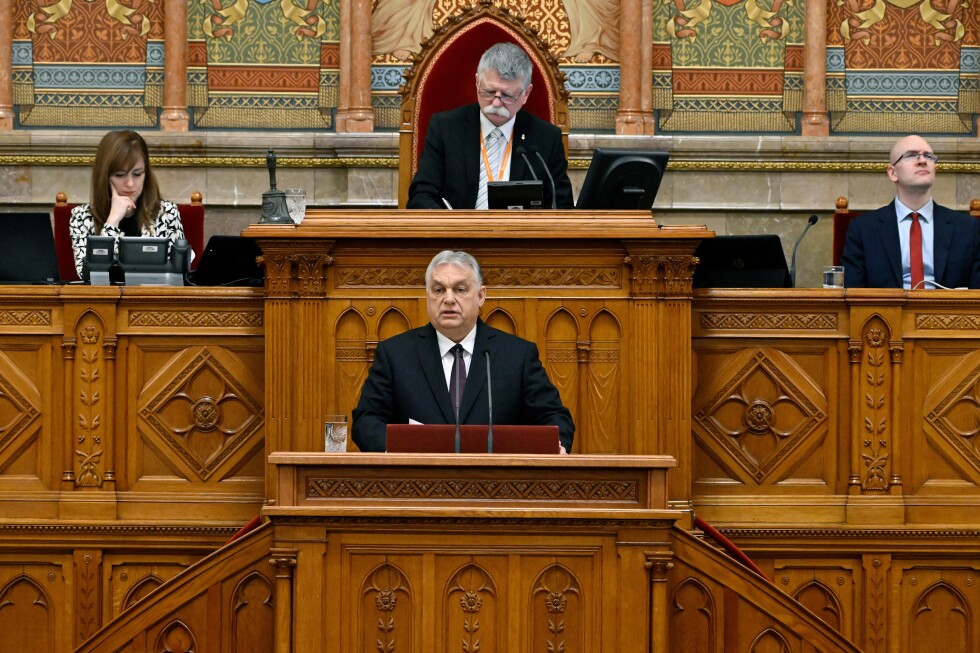
    BUDAPEST, Hungary — In a dramatic escalation of pre-election tensions, Hungary’s government announced Thursday it would declassify a national security report that Prime Minister Viktor Orbán claims will demonstrate illegal Ukrainian financing of his primary political rival. With crucial elections approaching on April 12, Orbán faces the most significant challenge to his leadership from Péter Magyar’s center-right Tisza party, which currently leads in most opinion polls.

    The nationalist leader, who maintains warm relations with the Kremlin, has intensified an aggressive campaign alleging that Ukraine, the European Union, and the opposition Tisza party are conspiring to overthrow his government. During a recent interview on commercial broadcaster ATV, Orbán asserted without providing evidence that “significant” sums had been transferred from Ukraine to support Tisza’s IT development and voter mobilization efforts.

    Gergely Gulyás, Orbán’s chief of staff, confirmed at a Thursday news conference that “the declassification process is underway” and the report would be released “in the foreseeable future.” This development occurs amid growing voter dissatisfaction with Hungary’s stagnant economy, deteriorating social services, and widespread corruption allegations.

    Orbán’s campaign strategy portrays the election as existential for Hungary’s future, warning that a new government would bankrupt the country through support for Ukraine against Russia’s invasion and potentially send Hungarian youth to fight on the front lines. The government has employed sophisticated disinformation tactics, including AI-generated imagery and publicly funded billboards featuring a manipulated image of Ukrainian President Volodymyr Zelenskyy with a sinister smile and the caption: “We won’t let Zelenskyy have the last laugh!”

    Meanwhile, Magyar, a 44-year-old lawyer and former Fidesz party insider, has countered with warnings about potential Russian intelligence interference aimed at securing Orbán’s victory. The Tisza party has denied all allegations of Ukrainian financing.

    Hungary’s government has consistently opposed EU financial and military assistance to Ukraine, vowing to veto any steps toward Ukrainian EU accession. Recent actions include blocking a €90 billion EU loan package for Kyiv and vetoing new sanctions against Russia, retaliation for interrupted Russian oil shipments through Ukraine.

    The tensions escalated further last week when masked Hungarian counter-terrorism commandos detained seven Ukrainian state bank employees and seized $82 million in cash and gold during a routine transfer from Austria to Ukraine. Although the employees were deported after more than a day in detention, Hungary retained the assets, prompting Ukraine’s foreign minister to accuse Hungary of “state terrorism” and “taking hostages.”

  • One house, two faiths, one fasting season

    One house, two faiths, one fasting season

    In a remarkable display of interfaith unity, Nigerian couple Olanrewaju and Kaosara are jointly observing the sacred fasting periods of Ramadan and Lent—a rare convergence not witnessed since 1993. This extraordinary alignment of Islamic and Christian calendars has created a unique opportunity for cross-cultural spiritual connection in religiously diverse Nigeria.

    The couple’s experience reflects a broader phenomenon occurring across multifaith households in Africa’s most populous nation. While Olanrewaju abstains from food and drink from dawn to dusk in observance of Ramadan, Kaosara maintains her Lenten sacrifices, creating mutual understanding and respect within their shared domestic space.

    Religious scholars note this calendrical coincidence occurs only periodically due to differences between the lunar Islamic calendar and solar-based Gregorian system. The current overlap provides a powerful counter-narrative to religious tensions, demonstrating how shared values of discipline, reflection, and spiritual purification transcend theological differences.

    Community leaders have highlighted such personal stories as models for peaceful coexistence in Nigeria’s complex religious landscape. The couple’s approach to maintaining各自的 religious traditions while supporting each other’s spiritual practices offers a template for interfaith harmony that extends beyond theological boundaries.

  • France debuting flanker Temo Matiu in Six Nations decider against England

    France debuting flanker Temo Matiu in Six Nations decider against England

    PARIS — In a decisive move for their Six Nations championship campaign, France has announced 24-year-old Bordeaux Bègles flanker Temo Matiu will make his international debut against England this Saturday. The selection comes as Head Coach Fabien Galthié reshuffles his lineup following last week’s dramatic 50-40 defeat to Scotland.

    Matiu replaces Anthony Jelonch, who remains sidelined after failing concussion protocols from the Edinburgh match. The debutant carries a rich rugby heritage—his New Zealand-born father, Legi Matiu, earned two caps for France in 2000.

    Substantial reinforcements arrive in the second row with the return of Thibaud Flament and Emmanuel Meafou, adding significant physical presence to the pack. This tactical adjustment moves Charles Ollivon to the number eight position, replacing Oscar Jegou who received a four-week suspension for making contact with the eye area of Scotland’s Ewan Ashman.

    Further changes see Pierre-Louis Barassi entering the midfield after Nicolas Depoortere sustained a shoulder injury. Barassi will partner with Yoram Moefana in the centers.

    The championship hangs in a delicate balance as France enters the final round tied with both Ireland and Scotland. Due to their superior points differential, France can retain the Six Nations title with a bonus-point victory over England at Stade de France, regardless of the outcome between Ireland and Scotland in Dublin.

  • Questions mount for Hegseth over possible US involvement in strike on Iranian school

    Questions mount for Hegseth over possible US involvement in strike on Iranian school

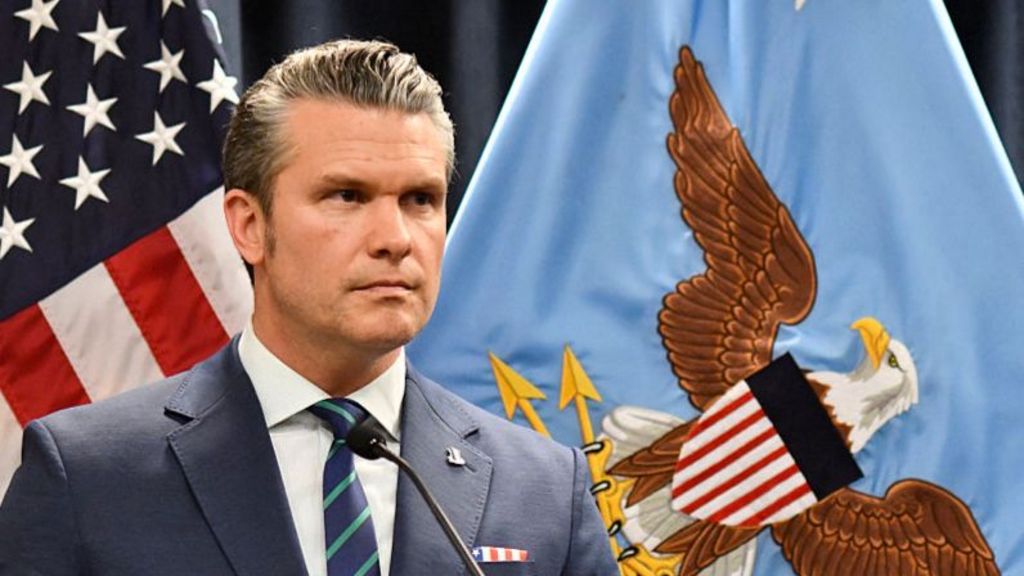
    A bipartisan crisis is unfolding in Washington as nearly all Senate Democrats have formally challenged Defense Secretary Pete Hegseth regarding a devastating missile strike in Minab, Iran, that reportedly killed 168 civilians—including approximately 110 children—according to Iranian officials. The incident occurred during a joint US-Israeli military operation initiated on February 28th.

    Multiple US media outlets, including CBS News, report that preliminary military investigations suggest American forces were ‘likely responsible’ for unintentionally striking a primary school adjacent to an Islamic Revolutionary Guard Corps (IRGC) military base. While no final conclusion has been reached, expert analysis of verified video evidence indicates the weapon used was a Tomahawk cruise missile—a system exclusively operated by US forces in the region.

    The congressional letter, signed by all but one Senate Democrat, poses detailed inquiries about target verification procedures and potential intelligence failures. Legislators specifically question whether outdated information—possibly misidentifying the school compound as an active military site—led to the tragic miscalculation. The correspondence also references Secretary Hegseth’s recent controversial remarks dismissing ‘stupid rules of engagement,’ demanding clarification on compliance with international laws governing armed conflict.

    Senator Gary Peters, an Armed Services Committee member who endorsed the letter, characterized the event as ‘a horrific tragedy’ requiring urgent factual resolution before determining subsequent actions. The political divide emerged clearly as no Republican senators signed the document, while Democratic Senator John Fetterman abstained despite supporting military action generally.

    Pentagon representatives confirmed they would respond directly to the senators’ concerns through standard congressional correspondence channels. When pressed by BBC journalists, Secretary Hegseth maintained that the US does not intentionally target civilians and that the investigation remains ongoing.

    The strike represents potentially one of the worst single-instance civilian casualty events in decades of US Middle Eastern engagements if American involvement is confirmed. Satellite imagery and verified videos reveal extensive damage to civilian infrastructure including hospitals and cultural landmarks since operations began.

    Former CIA Director and US Central Command Commander General David Petraeus acknowledged the likelihood of US responsibility based on weapon system evidence, though he cautioned about reviewing full investigative findings. He suggested outdated intelligence might have failed to reflect the school’s presence near a former naval compound.

    Iran has retaliated with attacks on Israeli and US-allied Gulf states, expanding targeting to include energy facilities and non-military sites. Israeli officials told the Washington Post they had no awareness of operations in the strike area.

    President Trump, initially suggesting without evidence that Iran might have conducted the strike, later stated he would ‘live with’ whatever conclusions the military investigation produces.

  • Russian court convicts 19 people over deadly Moscow concert attack

    Russian court convicts 19 people over deadly Moscow concert attack

    A Russian military court has delivered verdicts against 19 individuals connected to the devastating terrorist attack at Crocus City Concert Hall near Moscow, sentencing four gunmen to life imprisonment and 11 accomplices to similar terms. Four additional defendants received prison sentences ranging from 19 to 22 years for their roles in the massacre that claimed 149 lives and injured over 500 concertgoers.

    The horrific incident occurred on March 22, 2024, when armed assailants stormed the venue during a rock concert attended by approximately 6,000 people. The attackers opened indiscriminate fire on the crowd before igniting flammable materials that rapidly engulfed the building in flames, causing partial structural collapse. Forensic examinations determined that victims perished from both ballistic trauma and smoke inhalation.

    International terrorist organization Islamic State-Khorasan (IS-K), an ISIS affiliate operating primarily in Central Asia, claimed responsibility for the atrocity and released verified video evidence depicting the assault. Despite these claims, Russian authorities have persistently alleged Ukrainian involvement—accusations that Kyiv has vehemently denied while offering condolences to the victims’ families.

    All four primary perpetrators identified by state media are Tajikistani nationals, though the proceedings have drawn international scrutiny due to their closed-door nature and concerns regarding judicial transparency. Initial court appearances in 2024 revealed defendants displaying visible injuries consistent with physical abuse, including one individual requiring wheelchair assistance.

    The sentencing represents the judicial conclusion to Russia’s deadliest mass shooting in two decades, though geopolitical tensions persist as Moscow continues to assert unsubstantiated connections to Ukraine despite overwhelming evidence pointing to IS-K’s operational responsibility.

  • Natural fortress: How geography protects Iran’s regime

    Natural fortress: How geography protects Iran’s regime

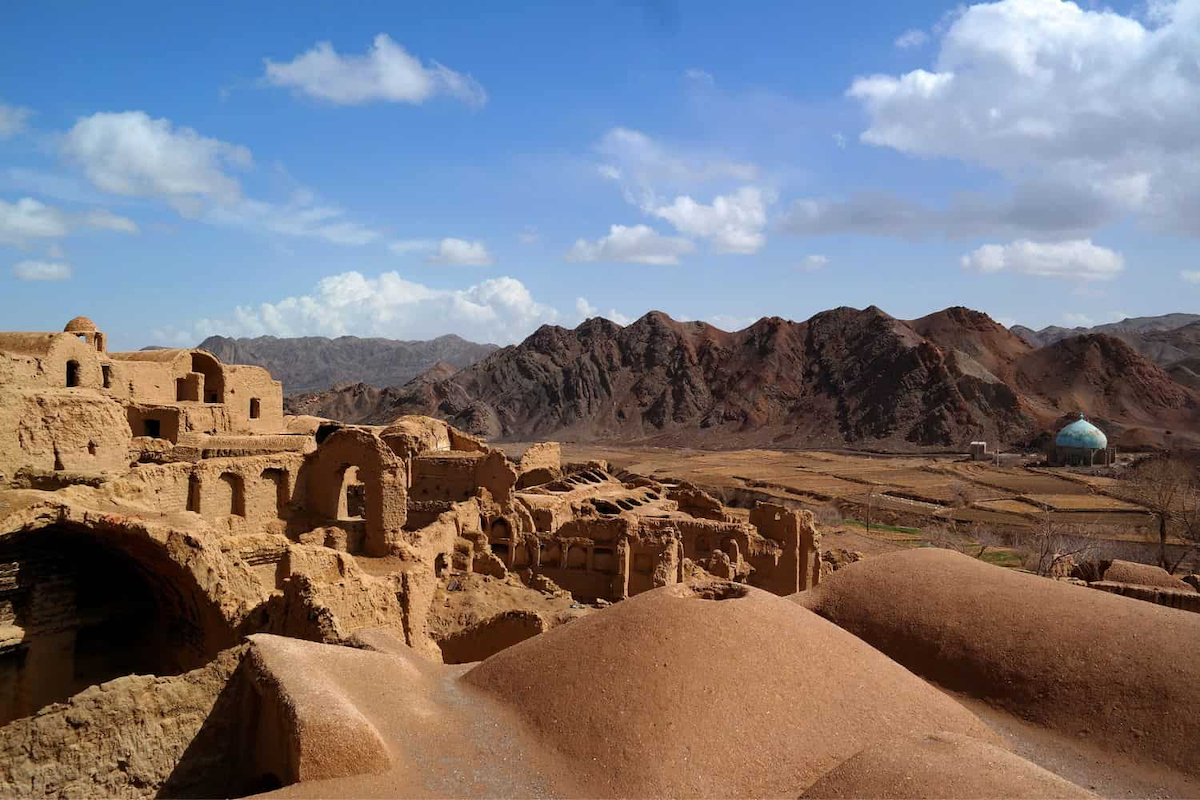
    Iran’s formidable geography has long shaped its defensive strategy, with the mountainous Iranian Plateau creating a natural fortress against conventional invasion. The Zagros and Elburz mountain ranges provide exceptional protection, enabling Tehran to disperse military and nuclear infrastructure across vast territories with strategic depth. This topography facilitated the development of Iran’s Anti-Access/Area-Denial (A2/AD) doctrine, mirroring strategies employed by China in the South China Sea.

    Recent military operations have tested Iran’s geographic advantages. Operation Epic Fury (US) and Operation Roaring Lion (Israel), launched on February 28, demonstrated that advanced precision technology could bypass traditional geographic protections. The utilization of B-2 bombers and Black Sparrow air-launched ballistic missiles damaged deeply buried facilities previously considered invulnerable, targeting over 1,000 sites including IRGC command centers and nuclear infrastructure within the first 24 hours.

    Iran has responded with sophisticated maritime control strategies. Through its ‘Smart Control’ doctrine, Tehran maintains influence over the Strait of Hormuz using integrated systems including the Sayyad-3G air defense system, dual-role discriminatory drones, and distributed missile platforms. Despite naval losses, Iran has effectively implemented electronic warfare tactics, with over 1,100 vessels affected by GPS spoofing since March 1, creating economic pressure through targeted shipping disruptions.

    The conflict’s geopolitical dimensions have expanded significantly. The death of Iran’s supreme leader on March 1 triggered succession uncertainties, temporarily fracturing decision-making processes. Meanwhile, the US strategic objective appears to have evolved from degrading nuclear capabilities toward regime change, potentially involving Kurdish opposition groups in coordinated ground operations. This escalation risks broader regional conflict and challenges the strategic interests of Iran’s partners in the Trilateral Strategic Pact with Russia and China, potentially threatening critical infrastructure projects including the International North-South Transport Corridor and Belt and Road Initiative.

  • Americans worry about war in Iran, Trump’s promises

    Americans worry about war in Iran, Trump’s promises

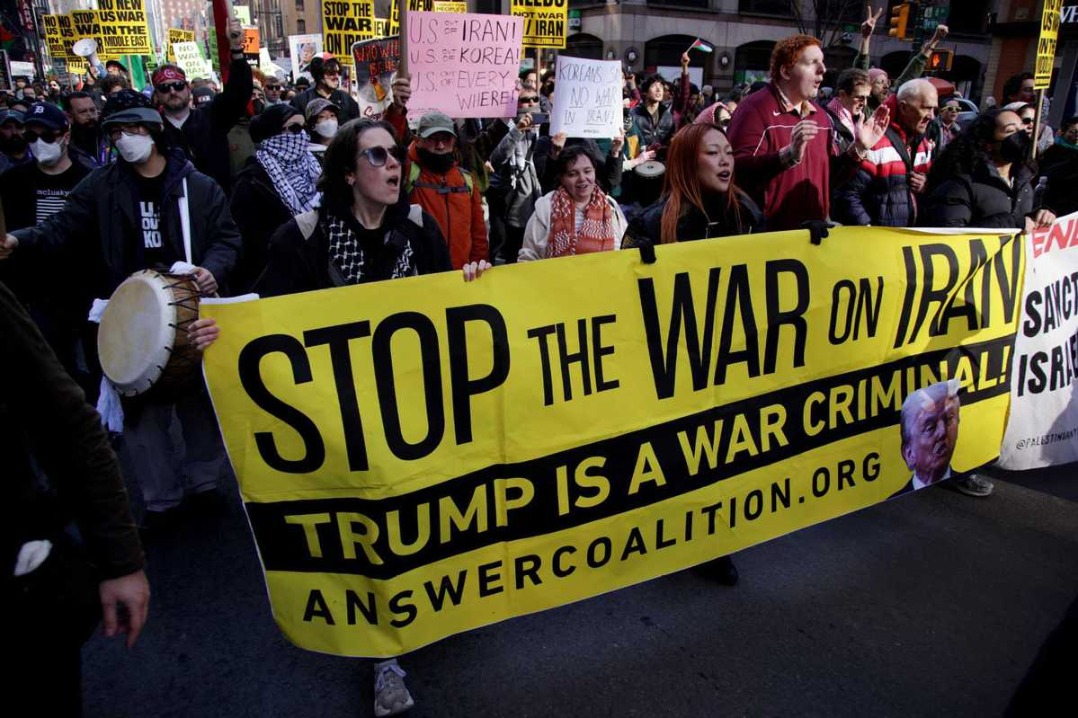
    A significant political storm is brewing within the United States as President Donald Trump faces mounting criticism over his decision to initiate military action against Iran, with many of his former supporters expressing feelings of betrayal over what they perceive as broken campaign promises.

    The discontent stems from Trump’s 2024 campaign rhetoric that heavily emphasized an ‘America First’ policy and criticized US involvement in prolonged foreign conflicts. Prominent conservative voices including influential podcaster Joe Rogan, who commands an audience of over 16 million followers, have publicly denounced the military action. ‘He ran on no more wars, end these stupid, senseless wars, and then we have one that we can’t even really clearly define why we did it,’ Rogan stated, capturing the sentiment of many disillusioned supporters.

    Recent polling data reveals substantial public opposition to the conflict. A CNN survey conducted between February 28 and March 1 indicates that 59% of Americans disapprove of military action against Iran, while only 41% express support. Furthermore, 54% believe that US military engagement will actually increase the Iranian threat to American interests.

    The financial implications are becoming increasingly concerning. According to New York Times reports, Pentagon officials briefed lawmakers that the initial week of military operations cost approximately $11.3 billion—a figure that excludes preliminary buildup expenses. This expenditure significantly exceeds earlier projections from the Center for Strategic and International Studies, which had estimated $3.7 billion for the first 100 hours of operations.

    Conservative activist Tucker Carlson, known for his regular White House visits, reportedly described the airstrikes as ‘absolutely disgusting and evil’ and had actively lobbied against military action. The growing dissent is reflected in digital media as well, with content creator Candace Owens’ video titled ‘Donald Trump has Betrayed America’ amassing 2.3 million views and over 27,000 comments within just two days.

    Many Americans express concern that the administration has created an untenable situation where either withdrawal or escalation carries severe consequences. As Houston resident Michael articulated, ‘If the US withdraws soon, we would look weak because Iran would be able to recoup with more vengeance against the US. We can’t eliminate the Iran threat without considerable military involvement or a new regime friendly to the US.’

  • Ships identify themselves as Chinese around Strait of Hormuz during Iran war to avoid attacks

    Ships identify themselves as Chinese around Strait of Hormuz during Iran war to avoid attacks

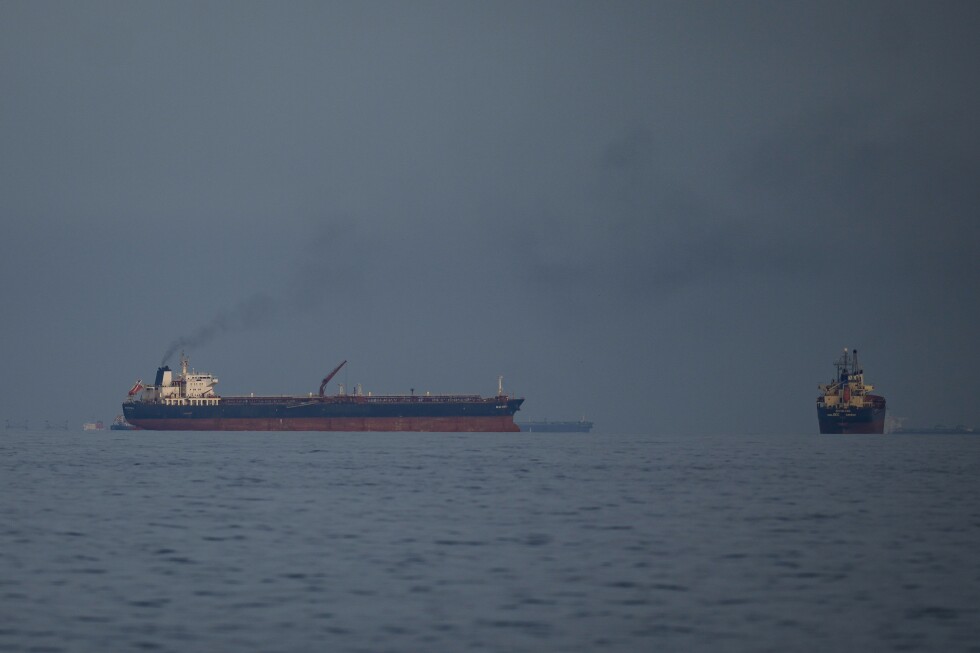
    Multiple commercial vessels navigating the strategic Strait of Hormuz and Persian Gulf waters have begun broadcasting ‘China-linked’ identification signals since the escalation of regional hostilities, according to marine traffic analysis. Shipping data reveals at least eight vessels have modified their destination transponders to display messages including ‘CHINA OWNER’ and ‘CHINA OWNER&CREW’ while traversing these conflict-prone waterways.

    Maritime security experts indicate this emerging practice represents a calculated risk-mitigation strategy rather than a navigational requirement. Ana Subasic, trade risk analyst at data analytics firm Kpler, emphasized that ‘the primary objective of vessels publicly identifying themselves as Chinese during Gulf transits is risk reduction rather than facilitating strait passage.’

    The tactical signaling appears rooted in Iran’s established pattern of avoiding confrontation with Chinese-affiliated entities, reflecting Beijing’s neutral diplomatic stance and substantial economic ties with Tehran. Kun Cao, client director at consulting firm Reddal, characterized the messages as essentially stating: ‘Do not mistake me for the kind of ship you said you would hit.’

    This development occurs against a backdrop of heightened maritime insecurity, with at least 19 commercial vessels damaged in regional hostilities according to recent counts. Notably, most vessels adopting Chinese identifiers were not China-flagged, instead sailing under registrations including Panama and the Marshall Islands—a common practice in global shipping where flags often don’t reflect ownership nationality.

    The effectiveness of this self-declaration strategy remains uncertain despite its growing adoption. Rico Luman, ING senior economist specializing in transport logistics, noted that while many bulk carriers maintain genuine Chinese ownership, operational, and cargo connections, the protective value of such declarations is unproven.

    Technically, destination signals represent manually entered transponder messages typically used for navigational safety and port planning. Subasic explained that as these signals lack real-time verification, vessels occasionally repurpose them to broadcast ownership or nationality information—a practice previously observed during Houthi attacks in the Red Sea when ships similarly emphasized Chinese affiliations to deter Iranian-backed forces.