作者: admin

  • Beautiful Tianjin episode 3 showcases city’s historic architecture

    Beautiful Tianjin episode 3 showcases city’s historic architecture

    The third installment of the acclaimed ‘Beautiful Tianjin’ series has premiered, offering viewers an immersive journey through the city’s remarkable architectural heritage. Produced by China Daily’s Tianjin Bureau, this visual documentary meticulously captures the essence of Tianjin’s structural evolution across centuries.

    The production showcases an extraordinary range of historical landmarks, from ancient constructions and revolutionary sites to iconic waterfront structures that have defined the city’s skyline. Through a combination of sweeping aerial perspectives and intricate close-up examinations, the film reveals how these architectural marvels have collectively shaped Tianjin’s urban identity and cultural narrative.

    What distinguishes this installment is its ability to demonstrate how historical preservation coexists with modern urban development. The documentary presents a city where the past remains vibrantly present in contemporary settings, creating a unique dialogue between different eras of architectural excellence. This careful documentation serves not only as cultural preservation but also as an educational resource for understanding urban development patterns.

    The cinematography emphasizes both the grand scale of Tianjin’s city planning and the minute details of craftsmanship that might otherwise go unnoticed by casual observers. This dual perspective provides a comprehensive understanding of how architectural choices reflect broader historical and cultural movements that have influenced the region.

    Through this visual exploration, the series continues its mission of promoting cultural appreciation and urban awareness, positioning Tianjin as a model of architectural preservation amidst rapid modernization.


  • Inflation eases in US as prices for used cars fall

    Inflation eases in US as prices for used cars fall

    The United States witnessed a notable cooling of inflationary pressures in January, with the consumer price index rising just 2.4% annually according to the latest Labor Department report. This figure represents a decline from December’s 2.7% reading and marks the most modest inflation pace observed since May.

    The moderation was primarily driven by declining energy costs and reduced prices in the used vehicle market. This development has intensified political pressure on the Federal Reserve to implement interest rate reductions, with the White House promptly celebrating the economic data as evidence of successful economic management.

    Despite the encouraging numbers, economic analysts express caution regarding the sustainability of this disinflationary trend. Concerns persist that ongoing labor market tightness and potential full passthrough of tariff costs to consumers could stall progress toward the Federal Reserve’s 2% target inflation rate. Notably, prices for personal services including dry cleaning and haircuts surged 1.6% month-over-month and have accumulated nearly 7% annual growth.

    Investment strategist Neil Birrell of Premier Miton Investors characterized the economic landscape as fundamentally strong, noting robust growth metrics, stable inflation trends, and a resilient employment market. He suggested these conditions create favorable circumstances for monetary policy adjustment.

    Financial markets currently anticipate the Federal Reserve will implement rate cuts by June, though officials at Berenberg caution that persistent service sector inflation driven by wage pressures may complicate the path to achieving the central bank’s inflation target.

  • Tickets from Dh2: UAE Lottery launches new online game with chance to win every 2 mins

    Tickets from Dh2: UAE Lottery launches new online game with chance to win every 2 mins

    The UAE Lottery has launched an innovative digital gaming option titled ‘Quick 5,’ offering participants opportunities to win substantial rewards at intervals of just two minutes. This rapid-draw format represents the latest expansion of the national lottery’s digital portfolio, featuring entry tickets starting at a minimal Dh2 with potential returns reaching 550 times the initial stake.

    Game mechanics involve the random selection of five numbers from a pool of 1 to 11 during each draw. Participants have two distinct play options: the ‘ANY’ format requiring number matching without regard to sequence, or the ‘EXACT’ format demanding precise order matching for up to three selected numbers. The platform additionally offers multi-round participation and an automated ‘Easy Pick’ number selection feature for enhanced convenience.

    Quick 5 joins the lottery’s existing suite of instant-win digital offerings, including the per-minute Color Prediction game that maintains an even lower Dh1 entry threshold. All gaming operations fall under the regulatory oversight of the General Commercial Gaming Regulatory Authority (GCGRA), ensuring transparent operations and game integrity through established regulatory frameworks.

    The introduction continues the UAE Lottery’s pattern of expanding its digital gaming portfolio, following recent announcements of multiple six-figure winners in other game categories. This expansion reflects the growing market for regulated digital gaming entertainment within the United Arab Emirates.

  • How ciabatta was created to rival the baguette

    How ciabatta was created to rival the baguette

    In a fascinating chapter of culinary history, the iconic Italian ciabatta bread emerged not from ancient tradition but from a deliberate 20th-century creation designed to compete with France’s bakery dominance. According to historical accounts explored by BBC’s Witness History, this now-classic bread was developed through calculated innovation rather than accidental discovery.

    The genesis of ciabatta dates back to the early 1980s when Italian bakers grew increasingly concerned about the growing market share of French baguettes in Italian restaurants and supermarkets. French bread’s popularity threatened to overshadow Italy’s own bakery traditions, prompting Venetian baker Arnaldo Cavallari to spearhead a response.

    Cavallari, determined to create a distinctly Italian alternative that could rival the baguette’s airy texture and versatility, experimented for months at his bakery in Adria, Veneto. His breakthrough came when he developed a high-hydration dough using wheat flour, olive oil, and a unique fermentation process that created the bread’s characteristic irregular holes and crisp crust. The resulting loaf’s slipper-like shape inspired its name ‘ciabatta’ – Italian for slipper.

    This culinary innovation quickly spread beyond Venice, with variations developing across Italy’s regions. The bread’s sturdy yet porous structure made it ideal for sandwiches, particularly panini, helping it gain international popularity throughout the 1990s. Today, ciabatta stands as a testament to how culinary competition can spark innovation that becomes embraced as traditional, despite its relatively recent origins.

  • Africa Cup of Nations 2027 set for June-July slot

    Africa Cup of Nations 2027 set for June-July slot

    The Confederation of African Football (CAF) President Patrice Motsepe has officially confirmed that the 2027 Africa Cup of Nations will proceed as scheduled in June and July next year, dismissing speculation about potential delays or relocation. The tournament will be jointly hosted by three East African nations: Kenya, Tanzania, and Uganda.

    Motsepe characterized reports suggesting possible postponement as “totally unfounded” during a press conference following CAF’s executive committee meeting in Dar es Salaam. “The AFCON next year in Kenya, Tanzania and Uganda is going to be enormously successful,” he stated, expressing strong confidence in the hosting capabilities of the three nations despite acknowledged infrastructure challenges.

    The announcement comes amid concerns regarding readiness of facilities in the host countries. Nicholas Musonye, chair of Kenya’s local organizing committee, previously suggested to AFP that a postponement until 2028 would benefit Kenya, which faces a general election in August 2027.

    CAF officials are currently conducting inspections of facilities and infrastructure across the three host nations, with assessments continuing through Tuesday. The tournament represents a return to mid-year scheduling after three consecutive editions were held during January-February or December-January windows to avoid conflicts with European club seasons.

    In additional developments, Motsepe confirmed that the AFCON tournament will transition to a four-year cycle beginning in 2028, replacing the previous biennial format. He also expressed aspirations to expand the competition from 24 to 28 teams in future editions.

    Regarding the 2026 Women’s Africa Cup of Nations, Motsepe indicated that Morocco remains the designated host despite offers from other nations to stage the tournament. He emphasized the importance of maintaining the scheduled March 17th start date as it serves as a qualifier for the 2027 Women’s World Cup.

  • Dubai Ruler launches Ramadan campaign to save 5 million kids from malnutrition

    Dubai Ruler launches Ramadan campaign to save 5 million kids from malnutrition

    In a significant humanitarian initiative timed with the holy month of Ramadan, His Highness Sheikh Mohammed bin Rashid Al Maktoum, Ruler of Dubai and Vice President of the UAE, has unveiled the “Edge of Life” campaign—an ambitious effort to save five million children under age five from malnutrition-related deaths worldwide.

    The campaign, operating under Mohammed bin Rashid Al Maktoum Global Initiatives (MBRGI), seeks to raise at least one billion dirhams through partnerships with leading international organizations including UNICEF, Save the Children, the Children’s Investment Fund Foundation, and Action Against Hunger.

    Sheikh Mohammed emphasized the campaign’s urgency in a social media statement, noting that “it is neither our trait nor our value to hear of such a human tragedy unfolding before the eyes of the world and do nothing about it.” Statistics indicate that approximately five children under five perish from hunger and malnutrition every minute globally, with an estimated 2.6 million children succumbing to hunger-related causes last year alone.

    The initiative specifically targets children in the world’s most vulnerable communities, particularly those affected by natural disasters and conflict zones. The campaign encourages participation from all segments of UAE society—individuals and institutions alike—as an expression of human solidarity and shared responsibility to protect children’s fundamental right to life.

    Mohammad Al Gergawi, Secretary General of MBRGI, highlighted the critical timing of the intervention, noting that international organizations currently face significant funding shortfalls, especially in regions grappling with compounded challenges of conflict, forced displacement, and climate change impacts.

    The “Edge of Life” campaign continues the UAE’s tradition of major Ramadan humanitarian initiatives. Previous campaigns have included the 10 Million Meals campaign (2020), which distributed 15.3 million meals; the 100 Million Meals campaign (2021), which reached 220 million meals across 30 countries; and endowment campaigns in 2022-2025 that collectively raised billions of dirhams for sustainable food security and education programs worldwide.

    This latest effort represents one of the most ambitious undertakings to date, aiming not only to rescue millions of children from immediate malnutrition threats but also to protect an additional 30 million children from the looming danger of hunger.

  • Leak damages 19th Century painting in latest Louvre setback

    Leak damages 19th Century painting in latest Louvre setback

    The Louvre Museum in Paris confronts yet another preservation emergency after a heating pipe failure triggered significant water damage to a historically significant ceiling masterpiece. The incident occurred late Thursday in Room 707, known as the Duchâtel chamber, housing invaluable 15th and 16th century artworks.

    Emergency responders contained the leakage within forty minutes of detection, though not before water infiltration caused substantial harm to Charles Meynier’s 1822 ceiling painting ‘The Apotheosis of Poussin, Le Sueur and Le Brun.’ Preliminary assessment by restoration specialists revealed two distinct tears in the canvas alongside lifted paint layers across the ceiling and architectural arches.

    This preservation crisis represents the latest in an escalating series of institutional challenges for the world’s most visited museum. Mere days prior, French authorities detained nine individuals—including two Louvre employees—in connection with an alleged ticket fraud operation.

    The museum’s operational management faces intensified scrutiny following multiple recent security and infrastructure failures. December witnessed water damage to 300-400 artifacts in the Egyptian department, while November necessitated partial gallery closures due to structural vulnerabilities. Most dramatically, an October heist resulted in the theft of €88 million in historic jewelry from the Gallery of Apollo, with most pieces remaining unrecovered.

    France’s public audit authority recently criticized the institution’s budgetary priorities, noting excessive acquisition spending occurring “to the detriment of the maintenance and renovation of buildings.” The Louvre has since relocated its most valuable jewels to the Bank of France while implementing temporary structural supports in affected areas.

    Though architectural inspectors confirmed no lasting structural damage from the latest incident, the cumulative effect of these crises has raised fundamental questions about the museum’s operational priorities and preservation capabilities.

  • Shanghai-led global study backs plant diversity in agriculture

    Shanghai-led global study backs plant diversity in agriculture

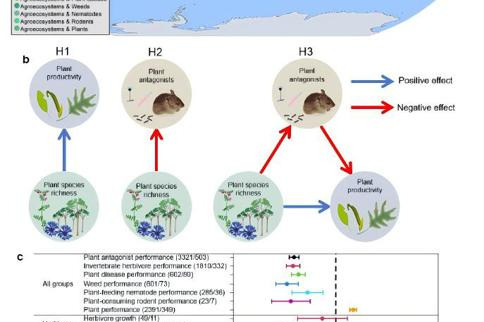
    A groundbreaking international study spearheaded by Shanghai’s East China University of Science and Technology has demonstrated that cultivating multiple plant species simultaneously significantly enhances agricultural yields through natural pest and disease suppression mechanisms. The research, conducted in partnership with 18 institutions across nine nations, analyzed over 5,700 datasets from more than 600 global experiments spanning farmland, grassland, and forest ecosystems in both tropical and temperate regions.

    The research team discovered that diverse plant communities employ sophisticated natural defense systems that are absent in monoculture plantations. These include the creation of a complex ‘scent maze’ from mixed plant odors that disorients specialized pests attempting to locate their host plants. Additionally, varied vegetation structures help regulate microclimates, effectively inhibiting the spread of disease spores and impeding pest migration patterns.

    Professor Wan Nianfeng, the project’s lead researcher, emphasized that these synergistic effects collectively transform diversified planting systems into biologically resilient and highly productive ecosystems. The findings, recently published in the prestigious journal Nature Ecology & Evolution, provide scientifically innovative and practically feasible pathways for developing efficient ecological agriculture, forestry, and grassland management practices.

    Building upon these discoveries, the research team has developed customized technical solutions adapted to different climate zones and crop varieties throughout China. Professor Wan highlighted that promoting these tailored planting techniques can substantially reduce dependency on chemical pesticides while simultaneously enhancing land productivity. This approach directly supports national food security objectives and facilitates the transition toward sustainable green agricultural practices.

  • 5.5 magnitude earthquake strikes Pakistan, GFZ says

    5.5 magnitude earthquake strikes Pakistan, GFZ says

    A moderate seismic event registering 5.5 magnitude occurred in Pakistan on Friday, February 13, 2026, according to data from the German Research Centre for Geosciences (GFZ). The earthquake’s epicenter was located at a shallow depth of approximately 10 kilometers (6.21 miles), potentially amplifying ground shaking intensity despite its moderate magnitude.

    The GFZ, recognized as a premier European geoscience research institution, provided the initial seismic parameters through its global monitoring network. Shallow-focus earthquakes typically generate more significant ground motion compared to deeper tremors of similar magnitude, raising concerns about potential structural damage in affected regions.

    This seismic activity follows recent earthquake events in the region, including a previous magnitude 6.0 quake in Pakistan that resulted in casualties and property damage. The South Asian nation, situated at the convergence of the Indian and Eurasian tectonic plates, experiences frequent seismic activity due to complex geological interactions.

    Earthquake preparedness remains a critical concern for Pakistani authorities, particularly in regions with vulnerable infrastructure. The timing of the tremor—during daylight hours—may have influenced evacuation effectiveness and emergency response coordination. Local meteorological and disaster management agencies are assessing potential aftershocks and evaluating the earthquake’s impact on populated areas.

  • Falling cocoa prices won’t necessarily mean cheaper Valentine’s Day chocolates

    Falling cocoa prices won’t necessarily mean cheaper Valentine’s Day chocolates

    Despite cocoa futures experiencing a dramatic 70% price collapse since February 2023, consumers face persistently elevated costs for chocolate products this Easter season. Market data reveals U.S. retail chocolate prices surged 14% year-over-year in early 2024, compounding the previous year’s 7.8% increase, while Germany witnessed even steeper hikes at 18.9%.

    The commodity’s volatility stems from a perfect storm of factors. West African growing regions—responsible for over 70% of global cocoa supply—endured disastrous harvests in 2024 due to crop diseases and inadequate rainfall, driving prices to historic highs. Although improved weather conditions in Ivory Coast and Ghana, coupled with expanded production in Ecuador, have since alleviated supply constraints, the market now confronts diminished global demand.

    Manufacturers have responded to consumer resistance by implementing strategic adaptations. Market analyst Chris Costagli of NIQ notes companies are reducing chocolate content in products and expanding alternative confectionery lines like gummy candies. This shift reflects in sales data: while dollar-value chocolate sales grew 6.7% in 2024, unit sales declined 1.3% as buyers purchased fewer chocolate items.

    Trade policies further complicated the pricing landscape. The Trump administration’s imposition of 15% average tariffs on cocoa-producing nations in February 2024 increased import costs, though these were partially reversed for raw cocoa in November. However, higher tariffs on finished European chocolates remain effective.

    Industry executives compare the situation to gasoline pricing dynamics: manufacturers maintain elevated prices to offset earlier high-cost inventory and hedge against future market volatility. Mondelez International implemented global price increases averaging 8% across its portfolio (including Cadbury and Toblerone), with even steeper hikes in European markets where consumer pushback forced subsequent price reductions in Germany and the UK.

    The market has bifurcated into premium and value segments. Luxury brands like Ferrero Rocher and Lindt experienced less pricing pressure due to their established premium positioning, while value brands gained market share as cost-conscious consumers traded down from mainstream products. This polarization reflects broader consumer behavior shifts in response to sustained inflationary pressures.