作者: admin

  • ‘Underrated’: Nathan Cleary lauds Jack Cogger’s return to Penrith as unsung grand final hero reveals role for 2026

    ‘Underrated’: Nathan Cleary lauds Jack Cogger’s return to Penrith as unsung grand final hero reveals role for 2026

    In a strategic move that reunites one of the NRL’s most effective partnerships, Penrith Panthers have secured the return of Jack Cogger on a three-year contract following his stint with Newcastle Knights. The reunion brings together the halves combination that famously orchestrated Penrith’s spectacular comeback victory in the 2023 grand final against Brisbane Broncos.

    While Nathan Cleary received widespread acclaim for his heroic performance in the final twenty minutes of that decisive match, the champion halfback consistently emphasizes Cogger’s underrated contribution off the bench. When regular halves partner Jarome Luai exited with a shoulder injury with 29 minutes remaining, Cogger’s insertion into the game proved transformative. His calm demeanor and strategic play at first receiver created crucial opportunities, setting up two critical tries that enabled Cleary’s legendary match-winning performance.

    Cleary describes Cogger as possessing a unique ability to generate space for his teammates while maintaining composure during high-pressure situations. “He brought a different calm energy onto the field when everything was a bit hectic,” Cleary noted. “He came on and was really positive and clicked me into gear to think the right things. We both see the game really similarly, so we can bounce ideas off each other.”

    Cogger’s return to Penrith follows a challenging period with Newcastle where he experienced inconsistent selection despite expectations that he would provide stability in the halves. His release from the Knights with a year remaining on his contract created the opportunity to return to western Sydney, facilitated by the positive relationships maintained during his previous departure.

    The reunion positions Cogger as a valuable utility player who can provide cover during State of Origin periods when Cleary is likely to be absent with the Blues squad. His familiarity with Penrith’s systems and playing style gives him an advantage in slotting back into the squad, where he is expected to compete for a bench role behind starting halves Cleary and newcomer Blaize Talagi.

    Cogger approaches his return with measured optimism, recognizing both the challenges and opportunities ahead: “I have to be ready around Origin time when Nathan will be away. You have to be ready to step in and make sure that the team keeps ticking away exactly the same as when he’s here. Hopefully, I can play a bit of a role as a utility and offer something that can benefit the team.”


  • White House border czar plans to cut immigration agents in Minneapolis, pending local cooperation

    White House border czar plans to cut immigration agents in Minneapolis, pending local cooperation

    In a significant shift in immigration enforcement strategy, White House Border Coordinator Tom Homan revealed plans Thursday to substantially reduce federal immigration personnel in Minneapolis. The decision follows successful negotiations with Minnesota state and local leaders that established a new framework for handling undocumented immigrants who pose public safety risks.

    During a Minneapolis press conference, Homan detailed the agreement reached with Minnesota Governor Tim Walz, Attorney General Keith Ellison, and Mayor Jacob Frey. The arrangement ensures that individuals arrested for public safety offenses will not be released back into the community but instead will be lawfully transferred to U.S. Immigration and Customs Enforcement (ICE) custody upon completion of their local sentences.

    “This common-sense cooperation eliminates the need to repeatedly arrest the same public safety threats,” Homan explained. “County jails will now notify ICE of release dates for identified criminal risks, enabling seamless federal custody transfer.”

    The border czar confirmed that personnel from both Customs and Border Protection and ICE are developing a detailed drawdown plan contingent on continued local cooperation and the diminishing number of enforcement targets. Homan emphasized that further reductions would be possible if what he described as “hateful rhetoric and interference” against immigration agents ceases.

    The announcement came during Homan’s three-day mission to Minnesota dispatched by President Donald Trump. While declining to comment on recent fatal shootings involving border patrol agents, Homan strongly condemned the “hostile rhetoric and dangerous threats” directed against immigration enforcement personnel.

    This policy shift represents a pragmatic approach to immigration enforcement that prioritizes dangerous offenders while potentially reducing the federal footprint in communities demonstrating cooperation with federal priorities.

  • Champions League first round ends with twists, turns and keeper scoring

    Champions League first round ends with twists, turns and keeper scoring

    European football witnessed an unprecedented climax to the Champions League’s revolutionary new format Wednesday night as Benfica goalkeeper Anatoliy Trubin’s 98th-minute header against Real Madrid created seismic shifts in the knockout stage qualifications. The astonishing goal not only secured Benfica’s 4-2 victory but propelled the Portuguese side into the playoff round while simultaneously eliminating Marseille and jeopardizing Manchester City’s direct advancement.

    The redesigned 36-team league phase, implemented this season to replace traditional groups, delivered its promised drama through simultaneous final matchday fixtures that kept multiple clubs in perpetual suspense. At Etihad Stadium, Manchester City supporters monitored their phones anxiously, aware that a late Madrid equalizer would have demoted them from the top eight into the playoff qualification scramble.

    Real Madrid experienced their own dramatic downfall, tumbling from third position out of direct qualification after Sporting CP secured a stoppage-time 3-2 victory at Athletic Bilbao. The Spanish giants now face the playoff route despite their storied European pedigree.

    The new structure’s emphasis on sustained competitiveness was validated through 61 goals scored across 18 simultaneously played matches, creating what UEFA Deputy Secretary General Giorgio Marchetti described as ‘a massive climax when stakes are at their highest.’ The format ensures meaningful matches throughout the phase, eliminating the dead rubbers that plagued the previous group stage system.

    Manchester City manager Pep Guardiola expressed admiration for the revamped competition, noting: ‘I like the new format. I don’t like that there’s more games but I like it, every game is like a final.’ Guardiola revealed he planned to thank Benfica manager José Mourinho for the strategic decision to send goalkeeper Trubin forward in the dying moments.

    UEFA officials highlighted the increased equity and inclusion afforded to clubs from smaller nations, creating a more dynamic and diverse competition. The sixteen qualified teams will discover their playoff opponents during Friday’s draw, setting the stage for the next chapter in this transformed European landscape.

  • The foreign POWs stuck in Ukrainian prison limbo

    The foreign POWs stuck in Ukrainian prison limbo

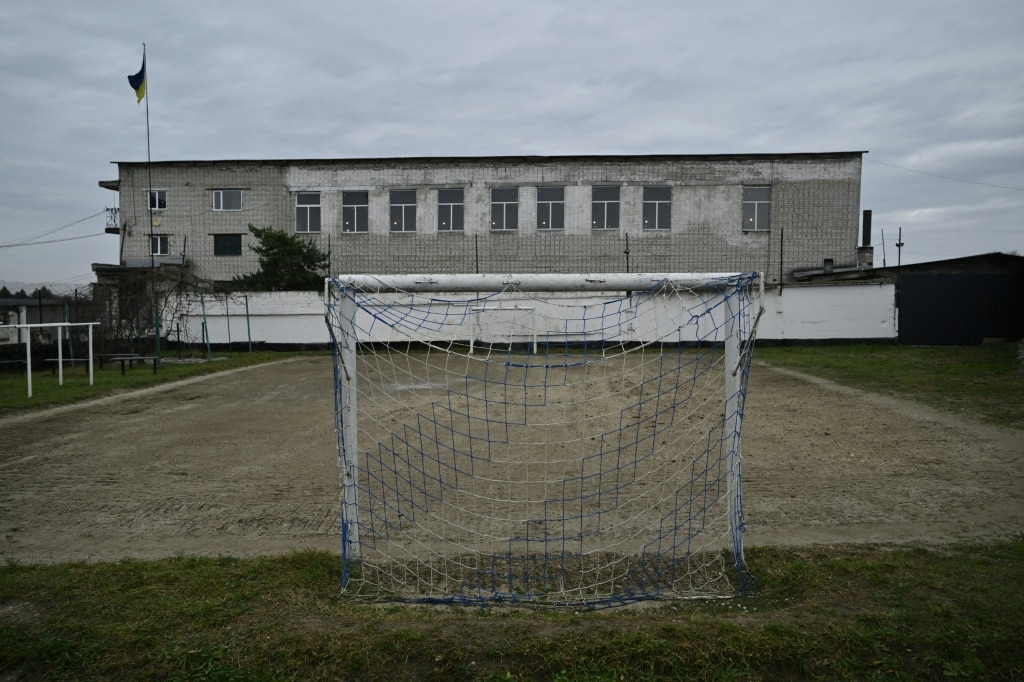
    In a secluded detention facility in western Ukraine, a unique international assembly of captured soldiers awaits an uncertain future. These men—from Egypt, China, Cameroon, Kenya, Togo, Nigeria, Italy, Sri Lanka, and Uzbekistan—share a common bond: they were all recruited to fight for Russia before being captured by Ukrainian forces.

    Their motivations for joining Moscow’s war effort vary dramatically. Some sought economic opportunity, lured by salaries ten times higher than what they could earn at home. Others were deceived by false promises of civilian employment, while a few claim they were coerced into military service under threat of imprisonment. Russia has systematically targeted French-speaking African communities with recruitment campaigns offering sign-up bonuses exceeding $2,700 and monthly salaries nearing $3,000, according to the French Institute of International Relations.

    The prison operates under strict protocols aligned with the Geneva Conventions, which prohibit exposing prisoners of war to ‘public curiosity.’ Inmates receive basic supplies through cell hatches—blue uniforms, toiletries, and towels. Their days follow a regimented routine: meals eaten in silence, work assignments in prison workshops, and limited exercise time in the yard.

    Among the captives is Eric from Togo, an aspiring neurosurgeon who moved to Russia five years ago seeking education and citizenship. ‘I knew from the start what I was getting into,’ he told AFP, expressing no remorse about fighting against Ukraine. His Nigerian cellmate shared similar convictions, influenced by Kremlin propaganda narratives.

    Giuseppe, a 52-year-old Italian pizza chef, claims he responded to a television advertisement for army cooks near the front lines. After losing four toes to an artillery strike, he surrendered to Ukrainian soldiers. Guards suspect his ‘cook’ story may be an attempt to avoid legal consequences for combat participation.

    The most disturbing accounts come from those who describe coercion. Aziz from Uzbekistan alleges Russian police threatened him with an 18-year drug trafficking sentence unless he signed a military contract. To escape combat, he deliberately stepped on what soldiers call a ‘petal’—an anti-personnel mine—hoping injury would repatriate him to Russia. When the mine failed to detonate, he surrendered to a Ukrainian drone.

    While a recent Council of Europe report indicates POWs in Ukrainian facilities are generally treated in accordance with international standards, one detainee reported experiencing dehumanizing racist abuse from several guards. Ukraine denies systematically mistreating prisoners.

    With approximately 7% of Ukraine’s captured soldiers being foreign nationals from 40 countries, their prospects for release appear dim. Petro Yatsenko, spokesperson for Ukraine’s POW coordination center, notes that ‘Russia has no interest in exchanging them, nor do their countries of origin,’ suggesting these men may remain captive for months or years. Despite this bleak outlook, most cling to hopes of an ‘all-for-all’ prisoner exchange should diplomatic efforts to end the conflict succeed.

  • ‘Pretty boring’: Trump cuts short cabinet meeting after dozing claims

    ‘Pretty boring’: Trump cuts short cabinet meeting after dozing claims

    President Donald Trump unexpectedly shortened a White House cabinet assembly on Thursday, January 29, 2026, addressing recent speculation about his apparent drowsiness during extended governmental meetings. The session concluded after merely one hour and twenty minutes—a notable contrast to previous gatherings that extended beyond three hours.

    Trump openly acknowledged the tedious nature of these meetings, describing them as ‘pretty boring’ while vehemently denying allegations of sleeping during proceedings. ‘I just closed them because I wanted to get the hell out of here,’ he stated during his 25-minute introductory address, clarifying that eye-closing was merely a response to boredom rather than actual sleep.

    The president’s approach to cabinet meetings has drawn comparisons to North Korean-style leadership displays, with officials traditionally competing to praise his administration. However, Thursday’s session notably excluded Homeland Security Secretary Kristi Noem, who faces mounting criticism over immigration agents’ fatal shooting of a protester in Minneapolis.

    This development occurs amid growing concerns about the 79-year-old president’s vitality—the oldest individual ever elected to the Oval Office. Trump has consistently dismissed questions about his energy levels, recently attributing his tired appearance to what he called ‘boring as hell’ cabinet meetings in a New York Magazine interview.

    In an unusual departure from standard protocol, the president declined to entertain press questions following the meeting, avoiding potential inquiries regarding Noem’s situation or escalating military threats toward Iran.

  • Watch: Batman tells city council to not assist ICE at Super Bowl

    Watch: Batman tells city council to not assist ICE at Super Bowl

    In an unusual display of civic engagement, a Santa Clara City Council meeting witnessed testimony from an unexpected advocate—a citizen clad in full Batman regalia. The unidentified individual utilized the public comment period to deliver a pointed condemnation of the city’s collaborative stance with U.S. Immigration and Customs Enforcement (ICE), particularly highlighting concerns surrounding upcoming Super Bowl events.

    The costumed speaker articulated strong opposition to any potential coordination between municipal authorities and federal immigration enforcement agencies. While specific policy details weren’t elaborated, the theatrical presentation underscored growing community tensions regarding immigration enforcement protocols during major public gatherings.

    This incident reflects broader national debates surrounding municipal cooperation with federal immigration authorities, demonstrating how these discussions permeate local government proceedings. The timing is particularly significant given the elevated security and federal presence typically associated with Super Bowl festivities, raising questions about the intersection of public safety and immigration enforcement.

    The visual spectacle of a comic book character delivering serious policy criticism highlights unconventional methods citizens employ to gain attention for their causes. The event demonstrates how symbolic activism continues to evolve in municipal governance forums, blending theatrical elements with substantive political discourse about the role of local government in federal immigration enforcement operations.

  • Nation gears up for Spring Festival rush

    Nation gears up for Spring Festival rush

    China is mobilizing its entire transportation network for what officials project will be the largest Spring Festival travel migration in history, with an anticipated 9.5 billion cross-regional trips during the 40-day chunyun period from January 30 to March 13. This massive annual movement, which reunites families across the nation, represents both a logistical triumph and an unprecedented challenge for infrastructure systems.

    According to Li Chunlin, Deputy Head of the National Development and Reform Commission, this year’s travel surge involves coordinated efforts across more than 20 government departments working to ensure smooth and safe transportation for millions. The travel landscape continues to evolve, with self-driving journeys maintaining dominance at approximately 80% of all trips. Railway and aviation sectors are preparing for record volumes of 540 million and 95 million passengers respectively, with both overall travel numbers and single-day peaks expected to surpass previous records.

    Railway authorities are implementing significant capacity expansions, with China State Railway Group’s Zhu Wenzhong announcing that 22 new lines spanning over 3,100 kilometers and more than 50 stations will participate in their first Spring Festival rush. Nearly 1,000 additional high-speed trains will operate overnight along major corridors to alleviate congestion, while peak days will see over 14,000 passenger trains in service—a 5.3% year-on-year increase in seating capacity.

    The travel period coincides with a nine-day national holiday from February 15-23, creating distinct travel patterns. While outbound journeys are expected to be relatively dispersed due to staggered university winter breaks, return trips are anticipated to be heavily concentrated as educational institutions reopen and factories resume operations.

    Tourism continues to shape travel flows, with northern ice-and-snow destinations and southern beach resorts attracting significant numbers alongside growing international travel. Civil Aviation Administration’s Xu Qing noted evolving patterns including ‘reverse travel’ where parents visit adult children, and hybrid trips combining family visits with leisure travel.

    Airlines are responding with over 19,000 daily flights focused on tourist hotspots and major hubs, while enhancing transfer options for travelers from smaller cities. Special services including dedicated check-in areas, in-flight amenities, and flexible baggage options will accommodate passengers traveling with children or elderly relatives.

    Road transportation will see toll-free passage for small passenger vehicles throughout the holiday period, while key ferry routes including the Qiongzhou Strait in Hainan will receive additional support. The surge in electric vehicles—now numbering nearly 44 million nationwide—has prompted infrastructure enhancements with over 71,000 charging connectors available in highway service areas, supplemented by mobile chargers and real-time updates to prevent congestion.

  • US Senate fails to advance funding package as partial govt shutdown looms, according to unofficial tally

    US Senate fails to advance funding package as partial govt shutdown looms, according to unofficial tally

    WASHINGTON — The United States Senate reached an impasse Thursday, failing to advance a critical government funding package and significantly escalating the threat of a partial federal shutdown. The legislative stalemate stems from deep-rooted disagreements over immigration enforcement policy, creating a political gridlock that lawmakers have thus far been unable to break.

    The procedural vote, which required 60 votes to move forward, fell short of the necessary threshold. The failure leaves a substantial portion of the federal government on the brink of a funding lapse, with key agencies set to begin shutting down operations if a resolution is not reached before the impending deadline.

    Senate Majority Leader John Thune (R-SD) addressed reporters on Capitol Hill earlier in the day, acknowledging the challenges in resolving the dispute. Lawmakers from both parties have been engaged in intense negotiations, yet fundamental differences regarding border security measures and immigration protocols have prevented a consensus. The deadlock reflects the broader, highly polarized national debate on immigration, which continues to dominate the legislative agenda and complicate budgetary processes.

    The impending shutdown would affect numerous non-essential government services and federal employees, potentially leading to furloughs and disruptions in public services. This latest standoff echoes previous government funding crises, underscoring the persistent challenges in achieving bipartisan cooperation on fiscally critical matters intertwined with contentious policy issues.

  • Polar bears bulk up despite melting Norwegian Arctic: study

    Polar bears bulk up despite melting Norwegian Arctic: study

    In a remarkable ecological paradox, polar bears inhabiting Norway’s Svalbard archipelago have demonstrated unexpected resilience to climate change by actually increasing their body mass despite significant habitat degradation. Published in Scientific Reports, the comprehensive study reveals these Arctic predators have adapted their feeding strategies to survive in rapidly changing conditions.

    The Barents Sea region has experienced among the most dramatic temperature increases globally, with some areas warming by up to 2°C per decade since 1979. This accelerated warming has caused sea ice habitats to vanish at twice the rate observed in other polar bear territories, losing approximately four days of ice coverage annually. Yet contrary to scientific predictions, the local bear population has not only maintained but enhanced its physical condition.

    Researchers from the Norwegian Polar Institute conducted detailed analysis of 770 adult bears over a 24-year period (1995-2019), measuring body condition indices to track fat reserves. The findings revealed a surprising trend: after initial declines until 2000, bear fitness metrics showed consistent improvement despite accelerating ice loss.

    The secret to their success lies in dietary adaptation. With reduced access to their traditional seal hunting grounds, Svalbard’s polar bears have increasingly turned to land-based prey including reindeer and walrus calves. These alternative food sources have become more abundant due to successful conservation efforts and reduced human exploitation. Additionally, warmer temperatures have concentrated ringed seals into smaller ice areas, making hunting more efficient where ice remains.

    Lead researcher Jon Aars acknowledged the counterintuitive nature of these findings: ‘The increase in body condition during significant sea ice loss was unexpected. Had I been asked to predict outcomes in 2003, I would have anticipated skinnier bears.’

    The study highlights critical regional variations in climate impact responses, cautioning against extrapolating findings from other Arctic areas where polar bears have indeed suffered nutritional stress. While currently thriving, scientists warn this adaptation may represent a temporary reprieve rather than long-term salvation, as continued habitat degradation will eventually overcome even these remarkable adaptive capabilities.

  • AI helps doctors spot breast cancer in scans: world-first trial

    AI helps doctors spot breast cancer in scans: world-first trial

    A groundbreaking randomized controlled trial published in The Lancet has demonstrated that artificial intelligence significantly enhances breast cancer detection rates in routine mammography screenings. The Swedish study, conducted throughout 2021-2022 with over 100,000 participants, represents the first gold-standard research validating AI’s role in cancer screening programs.

    The investigation compared two diagnostic approaches: one utilizing AI-supported single radiologist analysis and another employing the conventional European standard of dual-radiologist assessment. Results revealed a striking 9% increase in cancer detection within the AI-assisted group. Furthermore, this cohort exhibited a 12% reduction in interval cancer diagnoses—those occurring between regular screenings—over the subsequent two-year monitoring period.

    Senior author Kristina Lang of Lund University emphasized that implementing AI-supported mammography could substantially alleviate radiologist workload pressures while simultaneously improving early-stage cancer identification. The consistency of improvement across varying patient ages and breast density levels—known risk factors for cancer—underscores the technology’s broad applicability. Both groups maintained comparable false-positive rates, indicating AI integration doesn’t compromise diagnostic specificity.

    Despite these promising results, researchers caution against hasty implementation. French radiology federation head Jean-Philippe Masson noted that AI systems remain prone to overdiagnosis and require radiologist oversight to correct erroneous tissue interpretations. The Transpara AI model, trained on 200,000 historical examinations across 10 nations, nearly halved radiologist scan-reading time in interim 2023 findings.

    With breast cancer affecting 2.3 million women globally and causing 670,000 deaths in 2022 according to WHO data, this technological advancement offers potential relief to overburdened healthcare systems. However, experts stress the necessity for continuous monitoring and further long-term validation before widespread clinical adoption.