作者: admin

  • Botim Money launches digital silver investing from Dh10

    Botim Money launches digital silver investing from Dh10

    In a significant expansion of its digital wealth ecosystem, UAE-based fintech platform Botim Money has launched fractional silver investing, enabling users to trade the precious metal with investments as low as Dh10. The new feature, accessible through the Botim app, allows eligible users to purchase, sell, and manage digital silver holdings without the traditional barriers associated with physical precious metals.

    This strategic move follows the remarkable success of Botim Money’s gold investment service, introduced in partnership with OGold in 2025, which has processed over 128,000 trades totaling more than Dh100 million in transaction value. The platform’s latest offering eliminates conventional obstacles such as high minimum purchase requirements, storage costs, and handling concerns that have historically limited retail participation in precious metals markets.

    Sacha Haider, Chief Operating Officer of Astra Tech and Botim, emphasized that fractional investing has removed traditional investment thresholds, creating accessible pathways for portfolio diversification. The initiative strengthens Botim’s partnership with OGold, an Emirati precious metals platform dedicated to digitizing gold and silver ownership.

    Bandar Alothman, Chairman and Founder of OGold, highlighted that the collaboration enables digital silver holdings to generate returns through structured investment solutions rather than remaining idle assets. The launch comes at a pivotal time for silver markets, with industry forecasts projecting a sixth consecutive annual supply deficit in 2026 of approximately 67 million ounces, alongside growing retail investment demand despite softer industrial consumption in certain segments.

    This development reflects the broader transformation toward digital-first financial services in the UAE, where fintech platforms are increasingly integrating accessible investment tools within everyday payment and remittance applications, particularly appealing to younger and first-time investors seeking inflation hedges and portfolio diversification options.

  • Look: UAE’s faithful offer first Taraweeh prayers on eve of Ramadan

    Look: UAE’s faithful offer first Taraweeh prayers on eve of Ramadan

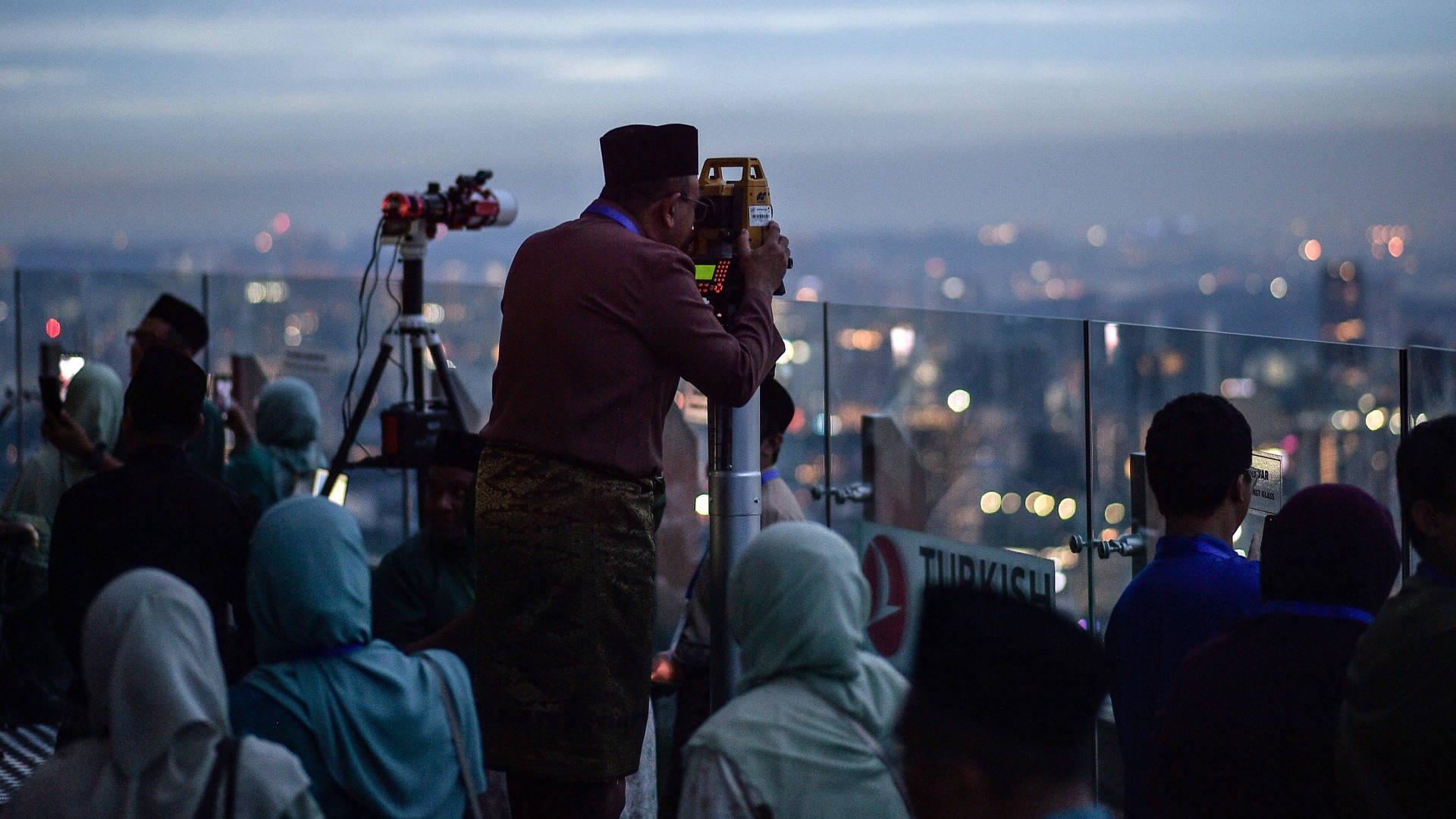
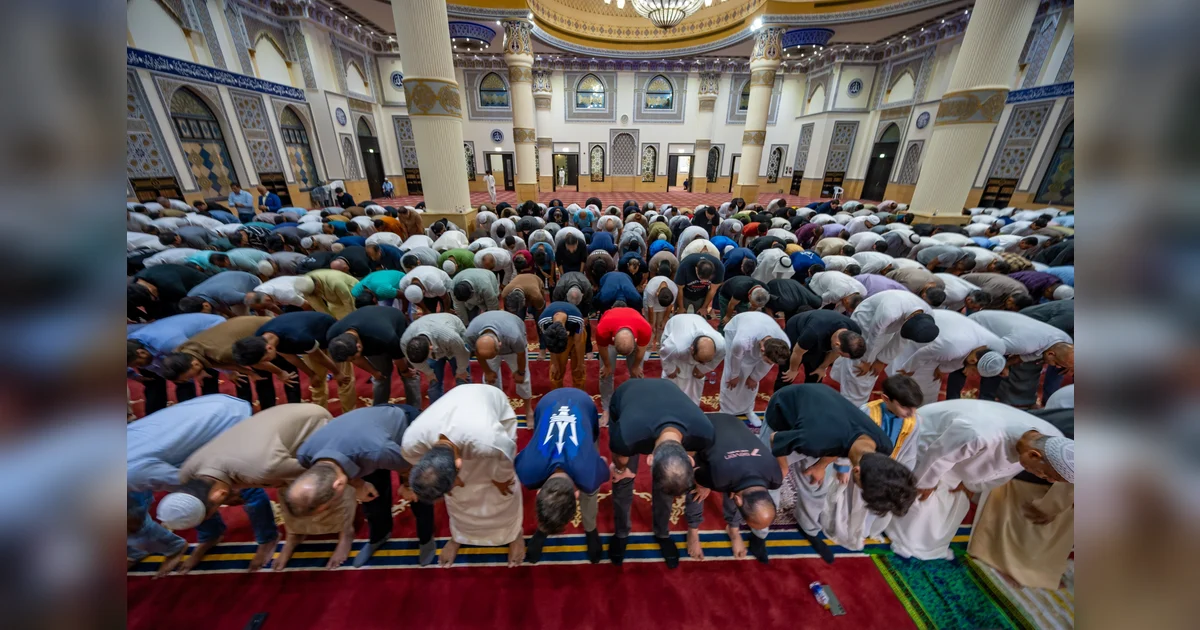
    Across the United Arab Emirates, Muslim communities gathered in mosques and prayer halls on Tuesday evening to observe the inaugural Taraweeh prayers, marking the spiritual commencement of the holy month of Ramadan. The special night prayers, conducted following the confirmation of the Ramadan crescent moon, demonstrated the nation’s deep religious observance and cultural traditions.

    Worshippers participated in extended congregational prayers that characterize Taraweeh, a distinctive feature of Ramadan nights where lengthy portions of the Quran are recited throughout the month. Mosques across the seven emirates saw faithful attendees following COVID-19 precautionary measures while maintaining the spiritual atmosphere of the occasion.

    The first Taraweeh prayers hold particular significance as they set the tone for the month of fasting, reflection, and increased devotion. Religious authorities across the UAE had coordinated preparations to ensure smooth arrangements for the night prayers, including crowd management, sanitation protocols, and organized recitation schedules.

    This religious observance occurs as the UAE continues to balance traditional Islamic practices with modern urban requirements, implementing appropriate measures to facilitate worship while maintaining public health standards. The successful commencement of Taraweeh prayers reflects the country’s commitment to preserving religious customs while adapting to contemporary circumstances.

  • Prestianni denies he racially abused Vinicius

    Prestianni denies he racially abused Vinicius

    A contentious racism allegation overshadowed Real Madrid’s narrow 1-0 victory against Benfica in Tuesday’s Champions League knockout phase play-off, triggering a stadium evacuation and sparking intense debate across the football world.

    Brazilian winger Vinícius Júnior reported alleged racial abuse from Benfica midfielder Gianluca Prestianni to referee Francois Letexier during the second half of the match in Lisbon. The accusation prompted an immediate 10-minute suspension as players from both teams left the pitch shortly after Vinícius had scored what would become the match-winning goal.

    The 25-year-old forward, who has endured multiple racist incidents throughout his career, took to Instagram post-match, stating: ‘Racists are, above all, cowards. They require the concealment of their identities to demonstrate their profound weakness. Unfortunately, they frequently operate under the protection of those who should be holding them accountable. Tonight’s events represent nothing novel in my experience or that of my team.’

    Prestianni, 20, vehemently denied the allegations through his social media channels: ‘I must clarify that I never directed racist insults toward Vinícius Jr., who unfortunately misinterpreted what he believed he heard. I have never engaged in racist behavior toward anyone, and I deeply regret the threats I have received from Real Madrid players.’

    Benfica’s official X account supported their player, posting video evidence alongside a statement suggesting the distance between players made auditory perception impossible. The Portuguese club emphasized their historical commitment to anti-racism, referencing legendary black striker Eusébio as testament to their inclusive values.

    The controversy intensified when Benfica manager José Mourinho suggested Vinícius had provoked spectators with his goal celebration and questioned the validity of the racism claims. His post-match comments drew sharp criticism from pundits including former Real Madrid midfielder Clarence Seedorf, who called Mourinho’s justification of potential racial abuse ‘a significant error.’

    Real Madrid defender Trent Alexander-Arnold condemned the incident as ‘a disgrace to football that tarnished an exceptional performance and magnificent goal.’ Teammate Kylian Mbappé went further, explicitly calling for UEFA to ban Prestianni from Champions League participation indefinitely.

    Football legends Thierry Henry and Theo Walcott added their voices to the growing condemnation, with Henry recalling his own experiences with racial abuse and noting Prestianni’s suspicious gesture of covering his mouth during the exchange.

    The incident now places significant pressure on UEFA to conduct a thorough investigation ahead of the second leg scheduled for February 25th at Santiago Bernabéu Stadium.

  • Under pressure from Trump, Venezuela’s new president has aces up her sleeve

    Under pressure from Trump, Venezuela’s new president has aces up her sleeve

    Venezuela remains in a state of political limbo following the dramatic extraction of former President Nicolás Maduro and his wife Cilia Flores by US operatives on January 3rd. The couple now awaits trial in Brooklyn’s Metropolitan Detention Center on drug trafficking charges, which they vehemently deny.

    In their absence, acting leader Delcy Rodríguez faces an extraordinary balancing act. The lifelong Chavista must maintain support from her socialist base while implementing policy changes demanded by the Trump administration. Her predicament was visually symbolized by government-sponsored drone displays over Caracas that projected images of Maduro and Flores alongside the message ‘El pueblo los reclama’ (the people want them back).

    Rodríguez’s leadership represents a study in political pragmatism. While publicly condemning ‘US imperialist expansion’ and referring to America as a ‘lethal nuclear power,’ she has simultaneously pursued policies favorable to Washington. These include passing legislation enabling US oil companies to operate in Venezuela and releasing numerous political prisoners—actions the opposition attributes to American pressure rather than genuine reform.

    According to Christopher Sabatini of Chatham House, ‘Trump has implied that Venezuela is now a US protectorate, so she serves at the will of the US president.’ This power dynamic is complicated by Rodríguez’s own vulnerability to US legal action, with DEA investigations hanging over her despite no formal indictment.

    The acting leader must also navigate domestic power structures, particularly the military hierarchy loyal to Maduro. Interior Minister Diosdado Cabello commands significant influence through both formal security forces and paramilitary groups, creating an uneasy alliance that Rodríguez manages cautiously.

    Despite apparent US leverage, some analysts suggest Rodríguez retains more agency than initially apparent. Sabatini notes that President Trump is ‘desperate for the world to see the extraction of Maduro as an unqualified success,’ creating potential bargaining power for the Venezuelan leader. Divisions within the US administration—particularly Secretary of State Marco Rubio’s anti-communist stance—further complicate Washington’s position.

    Venezuela’s profound economic crisis adds another layer to this political calculus. With inflation at the world’s highest levels and 86% of citizens in poverty, Rodríguez potentially benefits from any economic improvement resulting from US engagement. However, with American focus primarily on oil interests, tangible benefits for ordinary Venezuelans remain uncertain.

    The ultimate test may come in determining the timing of new elections. As Sabatini observes, ‘She wants to wait to see the economy lifted so she could potentially run and win.’ This pragmatic approach reflects the core Chavista philosophy described by analyst Phil Gunson: ‘They bend so as not to break.’

  • Climber on trial for leaving girlfriend to die on Austria’s highest mountain

    Climber on trial for leaving girlfriend to die on Austria’s highest mountain

    A landmark trial opening Thursday in Austria examines whether a mountain climber bears criminal responsibility for his girlfriend’s hypothermia death during a disastrous winter ascent of the Grossglockner peak in January 2025. The case has ignited international debate about liability in extreme sports.

    Prosecutors allege Thomas P, 33, committed nine critical errors during the ill-fated climb that resulted in Kerstin G’s death at 3,798 meters (12,460 feet). As the more experienced climber who planned the expedition, he is charged with gross negligent manslaughter for allegedly failing to protect his partner from lethal alpine conditions.

    The prosecution’s case centers on Thomas’s role as ‘responsible guide’ during the January 18-19 climb. Evidence indicates he initiated the ascent two hours behind schedule despite his girlfriend’s lack of experience with high-altitude winter tours. Prosecutors further contend he permitted inadequate footwear and carried insufficient emergency bivouac equipment.

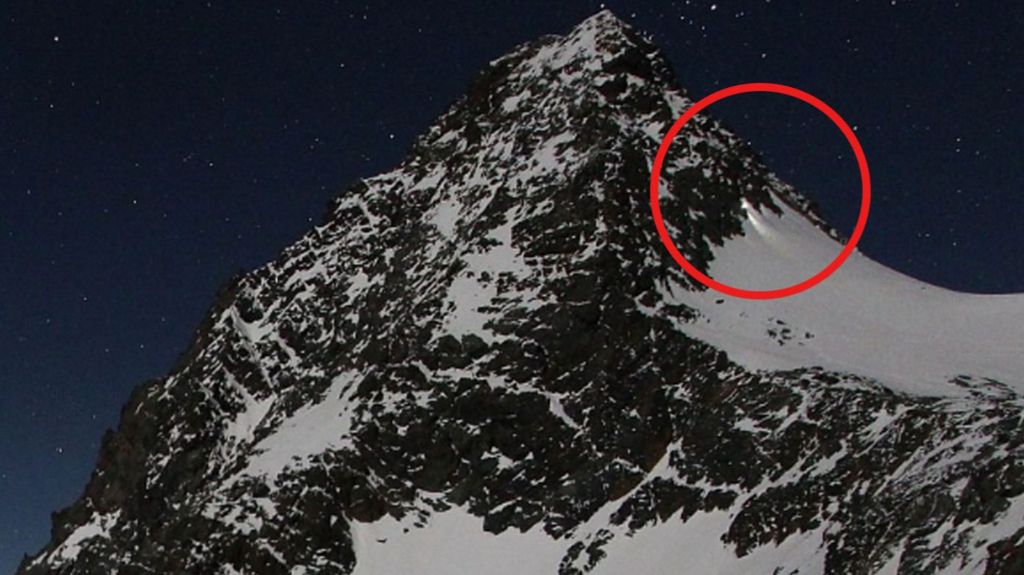
    Webcam footage timestamped 21:00 on January 18 captures the couple’s torchlights ascending through gathering storms. Despite deteriorating conditions featuring -20°C wind chill and 74km/h winds, they continued toward the summit rather than turning back.

    The defense maintains both climbers were experienced, well-prepared, and in excellent physical condition. Attorney Karl Jelinek characterizes the death as ‘a tragic accident’ rather than criminal negligence, noting the couple felt capable until Kerstin suddenly exhibited extreme exhaustion near the summit.

    Critical disagreement surrounds events after midnight. Prosecutors allege Thomas failed to signal a police helicopter overhead at 22:50 and delayed emergency notification until 03:30. The defense claims he left his immobilized partner at 02:00 to seek help, descending the opposite slope as captured by webcam imagery.

    Mountain rescue teams couldn’t launch helicopter operations until morning due to violent winds. Kerstin succumbed to hypothermia alone on the mountainside before help arrived.

    The verdict could establish precedent for criminal liability in mountain sports, potentially creating what Austria’s Der Standard newspaper calls ‘a paradigm shift’ for adventure tourism accountability.

  • Takaichi will be reappointed as Japan’s prime minister with a goal of pushing to the right

    Takaichi will be reappointed as Japan’s prime minister with a goal of pushing to the right

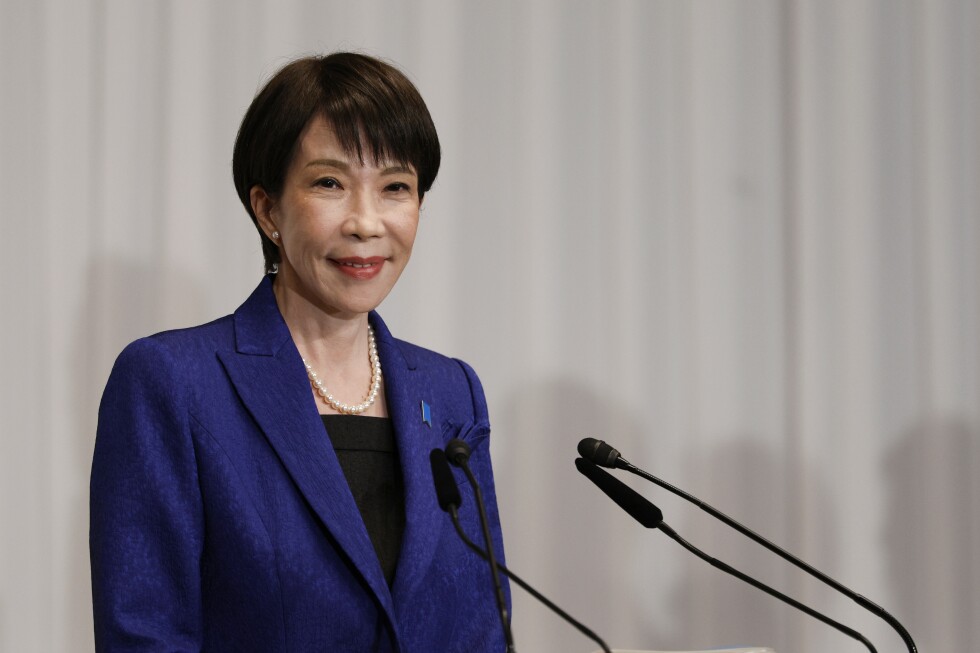
    TOKYO — Prime Minister Sanae Takaichi’s decisive electoral victory has positioned her administration to pursue an ambitious conservative transformation of Japanese policy. With her formal reappointment by parliament this Wednesday, Takaichi will helm her second Cabinet empowered by a commanding two-thirds supermajority in the lower house—Japan’s more influential parliamentary chamber.

    This legislative dominance enables the Liberal Democratic Party to control key committee positions and override opposition from the upper house, where the ruling coalition lacks majority control. The government’s agenda encompasses significant military expansion, heightened defense spending, stricter immigration controls, and the preservation of traditional social structures.

    Takaichi’s immediate priorities include addressing economic pressures through a proposed two-year sales tax reduction on food items, though economists warn this fiscal approach may exacerbate inflation and impede efforts to reduce Japan’s substantial national debt.

    International relations present both challenges and opportunities. Takaichi is preparing for a critical summit with U.S. President Donald Trump, who previously endorsed her leadership. Japan faces expectations to fulfill a $550 billion investment commitment made in October while navigating complex security dynamics in the Asia-Pacific region.

    The Prime Minister’s hawkish stance toward China has already triggered diplomatic tensions, particularly following her remarks regarding potential Japanese responses to Chinese military actions toward Taiwan. Her expressed intention to visit the controversial Yasukuni Shrine—viewed by neighboring nations as symbolic of Japan’s unrepentant wartime past—further underscores her government’s nationalist orientation.

    Defense policy revisions scheduled for December would mark a significant departure from postwar pacifist principles, potentially including lethal weapons exports and nuclear-powered submarine development. Concurrently, the administration is advancing stricter espionage laws and immigration controls that critics argue may compromise civil liberties.

    Social policy initiatives aim to reinforce traditional values, including male-only imperial succession and opposition to same-sex marriage. The government’s approach to surname regulations has drawn criticism from rights advocates who view proposed alternatives as insufficient for addressing gender equality concerns.

  • Ramadan 2026: These countries will begin holy month on February 18

    Ramadan 2026: These countries will begin holy month on February 18

    In a significant religious synchronization, numerous nations across the Middle East have collectively confirmed the commencement of Ramadan 2026 on February 18 following successful moon sightings on Tuesday evening. The holy month’s initiation was formally declared by religious authorities and governmental bodies across the region.

    The United Arab Emirates’ Moon Sighting Committee officially verified crescent visibility, setting February 18 as the inaugural day of Ramadan. Similar announcements echoed throughout the Gulf region with Saudi Arabia’s Supreme Court, Qatar’s religious authorities, and Kuwait’s official channels all confirming identical start dates.

    Bahrain’s news agency, Iraq’s governmental offices, and Yemen’s official sources simultaneously proclaimed Wednesday as the first day of fasting. Lebanon and Palestine joined the regional consensus, with Palestinian authorities confirming February 18th as their Ramadan commencement date.

    This synchronization demonstrates the remarkable astronomical alignment across these nations. Ramadan, the ninth month of the Islamic lunar calendar, represents one of the Five Pillars of Islam where observant Muslims abstain from food, drink, and other physical needs from dawn until sunset. The month holds profound spiritual significance for the global Muslim community, emphasizing prayer, reflection, and communal unity.

    The collective announcement facilitates regional harmony in religious observance, allowing millions of Muslims to begin their spiritual journey simultaneously. This coordination is particularly important for international families, businesses operating across multiple Muslim countries, and religious travelers seeking consistent observance schedules.

  • Saudi Arabia starts Ramadan on Wednesday, but many others to begin a day later

    Saudi Arabia starts Ramadan on Wednesday, but many others to begin a day later

    A significant divergence in Ramadan commencement dates has emerged across the Muslim world, highlighting ongoing tensions between traditional moon-sighting practices and astronomical science. Saudi Arabia and several Gulf nations initiated the holy month on Wednesday, while numerous other Muslim-majority countries deferred commencement until Thursday following conflicting lunar observations.

    The division stems from the traditional Islamic practice of commencing Ramadan upon visual confirmation of the crescent moon. Saudi authorities announced Tuesday evening that their observation teams had sighted the crescent, prompting immediate Ramadan declarations from the UAE, Qatar, Bahrain, Kuwait, Yemen, and Palestine. Sunni religious authorities in Iraq and Lebanon similarly confirmed Wednesday starts.

    However, this declaration contradicts scientific evidence from multiple astronomical organizations. The Sharjah Academy for Astronomy, Space Sciences and Technology previously determined that crescent visibility would be “scientifically impossible” on Tuesday across the region. Independent astronomers including Mohammad Odeh of Abu Dhabi’s International Astronomical Centre corroborated these findings, suggesting any reported sightings likely resulted from observational errors.

    Notably, Egypt, Brunei, Malaysia, Turkey, Indonesia, and several Central Asian nations opted for Thursday starts after reporting no moon sightings. Iraq’s senior Shia authority, Ayatollah Ali Sistani, similarly declared Thursday commencement. Iran, India, Bangladesh and Pakistan remained undecided as of reporting time.

    The controversy highlights Saudi Arabia’s influential yet contentious role in global Islamic calendaring. The kingdom utilizes the calculated Umm al-Qura calendar for advanced planning while maintaining traditional moon-sighting announcements. Astronomical organizations including the UK’s Nautical Almanac Office confirmed the impossibility of Tuesday sightings, echoing concerns about previous Saudi declarations that contradicted scientific evidence.

    This scientific-traditional divide extends beyond the Middle East. While many Muslims in countries without official moon-sighting bodies follow Saudi announcements, movements like Britain’s New Crescent Society advocate for localized observations and a unified national Islamic calendar, reflecting growing preference for astronomically verified dates within Muslim communities worldwide.

  • Gold fever hits South Africa after lucky find in cattle pen

    Gold fever hits South Africa after lucky find in cattle pen

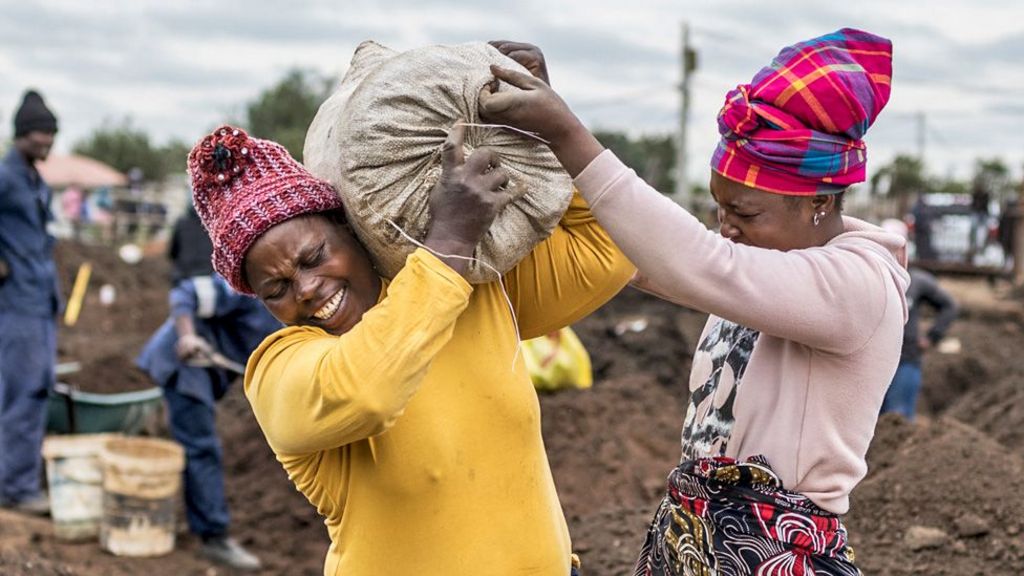
    A spontaneous gold rush has erupted in the informal settlement of Gugulethu, east of Johannesburg, transforming a former cattle pen into a scene of frenzied excavation. The discovery of gold particles by a local resident several days ago triggered an influx of fortune seekers armed with pickaxes and shovels, all hoping to uncover valuable nuggets in the soil of this economically depressed region.

    Springs, once a prosperous mining town, faced economic collapse when formal mining operations ceased years ago due to the prohibitive depth and cost of extraction. Now, the area surrounding this ghost of South Africa’s golden era has become home to informal settlements populated largely by migrants from neighboring countries.

    Despite government warnings declaring the activities illegal and environmentally destructive, dozens of residents continue to sift through soil using dangerous chemicals like mercury and sodium cyanide to separate gold from ore. Several participants confirmed to BBC reporters that they had successfully sold findings on the black market, where a single gram of gold fetches approximately $100 – a substantial sum compared to South Africa’s monthly minimum wage of $368.

    The mining ministry has expressed grave concerns about ground instability caused by unregulated excavation, warning that nearby communities face “significant risk of injury or loss of life.” This development occurs against the backdrop of President Cyril Ramaphosa’s recent announcement to deploy military forces to combat illegal mining operations and criminal gangs nationwide.

    Many miners acknowledge the illegality of their actions but plead for official mining permits that would allow them to work legally and pay taxes. As one anonymous father of two explained, the desperate economic circumstances leave few alternatives for providing education and sustenance for his family.

  • ‘He did it for us’: US soldier recalls Jesse Jackson’s efforts to free him and two other POWs

    ‘He did it for us’: US soldier recalls Jesse Jackson’s efforts to free him and two other POWs

    In a remarkable act of private diplomacy that defied official US policy, the late Reverend Jesse Jackson orchestrated the daring liberation of three American soldiers held captive by Yugoslav forces during the Kosovo conflict. The previously undisclosed details of this high-stakes humanitarian mission emerge following Jackson’s passing at age 84.

    The incident unfolded in March 1999 when Army Sergeant Andrew Ramirez and his comrades Christopher Stone and Steven Gonzales were captured near the Macedonian-Yugoslav border during a routine patrol. Their capture occurred just as NATO launched air strikes against Slobodan Milosevic’s regime to halt ethnic cleansing in Kosovo.

    While the Clinton administration explicitly warned against unauthorized intervention, Jackson partnered with then-Congressman Rod Blagojevich, the sole Serbian-American in Congress, to initiate backchannel negotiations. Despite official State Department objections, the unlikely diplomatic team assembled a multi-faith delegation and flew to Belgrade in late April.

    Jackson confronted Milosevic directly, employing what he later described as essential diplomacy where traditional channels had failed. The negotiations reached a critical juncture when the Yugoslav leader offered to release only one or two soldiers. Jackson remained uncompromising, declaring the mission would accept nothing less than all three captives.

    The soldiers, completely unaware of these developments, were suddenly escorted from their confinement to encounter an unexpected sight: Jackson standing alongside international news crews. Their emotional release on May 1 culminated in a transfer to Croatia and subsequent evacuation to a US military base in Germany.

    Ramirez, who maintained contact with Jackson after leaving military service, expressed profound gratitude for the clergyman’s unauthorized intervention. ‘He did something for us he didn’t have to do,’ Ramirez reflected. ‘I truly believe he did it because he saw somebody in need and thought he could intervene.’