作者: admin

  • Why investors in UAE are selling cryptocurrencies to buy gold, silver

    Why investors in UAE are selling cryptocurrencies to buy gold, silver

    A significant portfolio reallocation is underway among investors in the United Arab Emirates as capital rapidly exits cryptocurrencies in favor of traditional safe-haven assets. Financial analysts confirm a pronounced trend of investors liquidating digital currency positions to acquire gold and silver, driven by extreme market volatility and substantial crypto losses.

    According to Wael Makarem, Lead Financial Markets Strategist at Exness, retail investors who previously chased cryptocurrency hype are now abandoning positions. “Many who believed Bitcoin would continue its upward trajectory have now exited and turned to commodities, hoping to offset their crypto losses,” Makarem stated in an interview with Khaleej Times. However, he cautioned that the duration of this shift remains uncertain.

    The movement contrasts sharply with asset performance trends. Bitcoin has experienced a dramatic correction from its October 2025 peak of nearly $125,000, plunging to approximately $63,000 before modestly recovering to $67,000. Meanwhile, precious metals have surged to unprecedented levels, with gold surpassing $5,500 per ounce and silver exceeding $120 per ounce in January.

    Multiple factors are driving this divergence. Konstantinos Chrysikos, Director of Customer Relations at Kudotrade, cited China’s intensified regulatory crackdown and the Jeffrey Epstein scandal’s alleged crypto connections as significant pressure points. “China introduced a stricter regulatory regime which negatively impacted cryptocurrencies. Then the Epstein scandal further dented investor sentiment,” Chrysikos explained, noting that large-scale position liquidations have compounded the downturn.

    Institutional sentiment strongly favors precious metals, with major financial institutions maintaining bullish outlooks. JPMorgan Chase projects gold could reach $6,000 by 2027, while UBS has set a $6,200 target for 2025. This optimism is underpinned by sustained central bank purchasing, anticipated Federal Reserve rate cuts, and ongoing geopolitical tensions.

    The trend extends beyond retail investors, with institutions like Harvard University reportedly reducing Bitcoin exposure in favor of Ethereum and other assets. While short-term predictions remain challenging, analysts currently express greater confidence in commodities and precious metals over cryptocurrencies for near-term portfolio performance.

  • Police arrest 11 in the beating death of a far-right student in France

    Police arrest 11 in the beating death of a far-right student in France

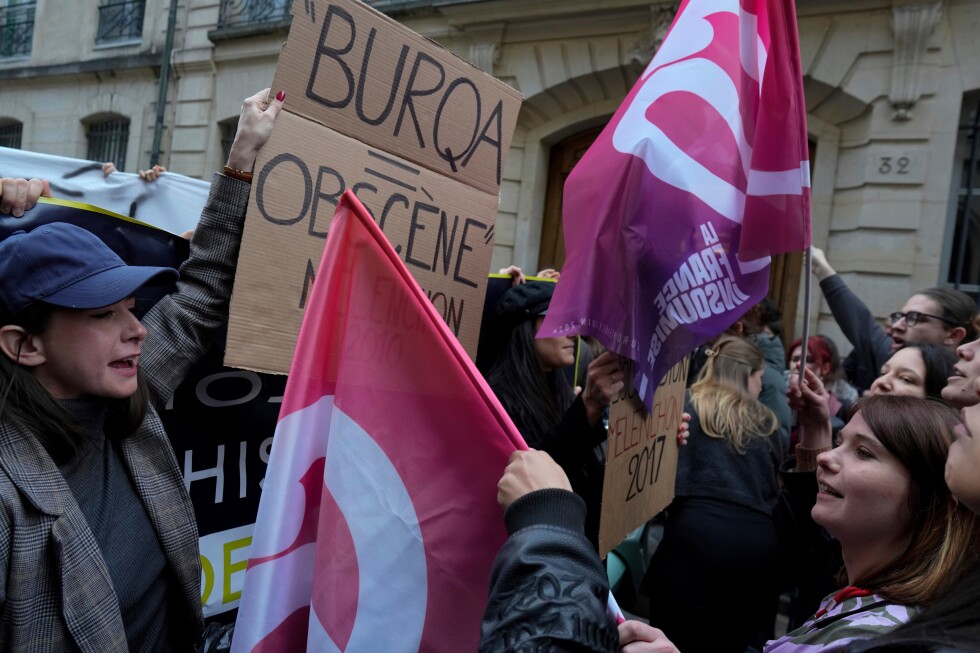
    French authorities have taken 11 individuals into custody following the fatal assault of Quentin Deranque, a 23-year-old far-right nationalist who succumbed to severe brain injuries in Lyon. The incident occurred during violent clashes between far-left and far-right factions outside a student gathering featuring Rima Hassan, a French-Palestinian European Parliament member from the far-left France Unbowed party.

    Lyon prosecutor Thierry Dran confirmed the autopsy revealed a fractured skull and fatal cerebral trauma, prompting a homicide investigation with potential additional criminal charges. The detainees include a parliamentary aide to France Unbowed lawmaker Raphaël Arnault, who subsequently terminated the aide’s employment contract amid the ongoing probe.

    The tragedy has ignited fierce political recriminations across France’s ideological spectrum, with opponents accusing Jean-Luc Mélenchon’s France Unbowed party of cultivating violence through its confrontational far-left rhetoric. Mélenchon vehemently denied any responsibility, stating his party had “absolutely nothing to do, either directly or indirectly” with Deranque’s death.

    With municipal elections approaching next month and presidential elections looming in 2027, the incident has intensified existing political fractures. Former President François Hollande declared an end to cooperation between mainstream left parties and France Unbowed, emphasizing that the traditional left must distance itself from Mélenchon’s movement. The case highlights the persistent undercurrent of political violence in French society, where ideological conflicts between extremist groups occasionally escalate into physical confrontations, though fatalities remain rare.

  • The rising risk of China turning Japanese

    The rising risk of China turning Japanese

    Global economists are observing concerning parallels between China’s current economic predicament and Japan’s catastrophic collapse three decades ago. While China’s skyline gleams with modern architecture and its electric vehicle industry dominates global markets, the nation stands at an economic precipitude mirroring Japan’s disastrous bubble burst in the early 1990s.

    The comparison reveals striking similarities in underlying mechanisms. Japan’s crisis, as analyzed by leading economic thinkers, emerged from a perfect storm of speculative excess, hidden debt burdens, and inadequate policy responses. Nobel laureate Paul Krugman’s liquidity trap theory described Japan as an economy whose nervous system had gone numb—zero interest rates failed to stimulate spending as traumatized households hoarded cash amidst deflationary expectations.

    Richard Koo’s balance sheet recession theory provides deeper structural insight, explaining how corporations became technically insolvent despite operational profitability, diverting profits toward debt repayment rather than expansion. Meanwhile, Richard Werner’s analysis in “Princes of the Yen” blamed the Bank of Japan’s credit control mechanisms for directing capital toward speculative sectors and deliberately allowing the bubble to burst.

    China now demonstrates alarming resemblances to pre-collapse Japan. The property sector, once China’s growth engine, has become a massive drag with developers like Evergrande symbolizing a bursting bubble far exceeding Japan’s experience. Middle-class families with approximately 70% of wealth tied to real estate feel increasingly poorer as housing prices decline, creating consumption slowdowns and deflationary pressures.

    China’s advantages include its centrally managed economic system, which maintains firm control over banking sectors and can instruct state-owned banks to support strategic industries. The country also retains urbanization potential absent in 1990s Japan. However, China faces unique challenges including demographic pressures of “getting old before getting rich,” fragile social safety nets, and rising geopolitical tensions with Western technology restrictions and trade barriers.

    President Xi Jinping’s promised “proactive” macroeconomic stance for 2026 includes large-scale stimulus through government bonds, consumption trade-in schemes, and massive infrastructure investments. While theoretically addressing both Krugman’s liquidity trap through demand boosting and Koo’s balance sheet recession through government acting as borrower of last resort, execution risks remain critical. If stimulus funds flow into unproductive projects, China may simply accumulate new bad debt atop existing obligations.

    Without comprehensive structural reforms, strengthened social safety nets, and transparent resolution of local government debt, China’s current measures may function merely as painkillers rather than cures. The global economy has significant stake in China learning from Japan’s experience—not in preventing bubble bursts (which has already occurred), but in acknowledging losses quickly and distributing them strategically for economic reset. How China navigates this crisis will determine whether it avoids Japan’s lost decades or enters its own prolonged economic stagnation.

  • Turkish lawmakers back PKK peace reforms but tie steps to disarmament

    Turkish lawmakers back PKK peace reforms but tie steps to disarmament

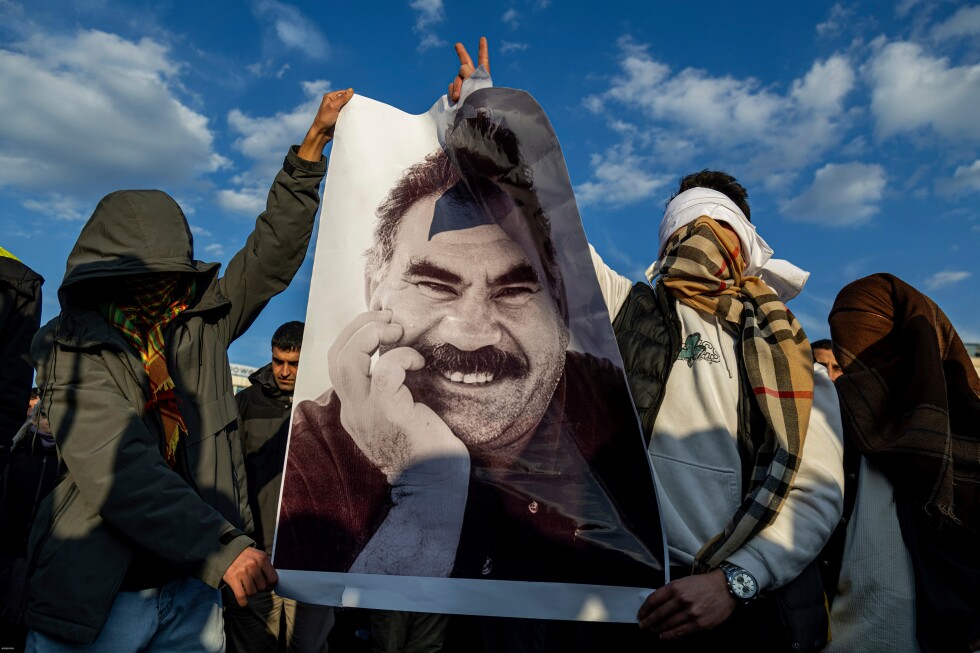
    ANKARA, Turkey — A Turkish parliamentary commission has overwhelmingly endorsed a groundbreaking set of recommendations aimed at revitalizing peace negotiations with the Kurdistan Workers’ Party (PKK), marking a significant development in the four-decade conflict. The National Solidarity, Brotherhood and Democracy Commission approved the comprehensive roadmap on Wednesday, outlining conditional measures for reconciliation while maintaining stringent security prerequisites.

    The commission’s final draft, obtained by journalists, emphasizes that legal reforms for reintegrating former militants must be contingent upon verified disarmament by state security institutions. The framework proposes temporary legal provisions to facilitate the return of PKK members who formally renounce violence, while explicitly avoiding blanket amnesty provisions.

    Among the key recommendations are measures to expand freedom of expression protections, release elderly and ill prisoners, and ensure nonviolent activities are no longer prosecuted under anti-terrorism legislation. The report also advocates for ending the controversial practice of appointing government trustees to replace elected mayors from pro-Kurdish political parties.

    The PKK, designated as a terrorist organization by Turkey, the United States, and European Union, has engaged in armed conflict since 1984 resulting in tens of thousands of casualties across Turkey and neighboring regions. The group initially pursued Kurdish independence before shifting demands toward autonomy and expanded rights within Turkey.

    Parliamentary Speaker Numan Kurtulmuş emphasized that the report does not constitute an amnesty arrangement, characterizing it instead as “a clear expression of the determination to build the future together without denying our suffering.” The recommendations received 47 votes in favor with only two opposed and one abstention.

    The commission, established in August following the PKK’s May announcement of intentions to disarm and disband after an appeal from imprisoned leader Abdullah Öcalan, stopped short of recommending parole for the controversial figure. Instead, it urged compliance with European Court of Human Rights and Turkish Constitutional Court rulings regarding detention conditions.

    President Recep Tayyip Erdoğan welcomed the commission’s work in a televised address, stating it has “put forward a perspective that will give momentum” to reconciliation efforts. The report additionally proposes broader democratization measures including media law reforms to protect legitimate criticism and municipal governance changes that would allow local councils to elect replacement mayors rather than accepting government appointments.

    No immediate response was available from the PKK, which has previously demanded formal legal guarantees from the Turkish government to advance the peace process.

  • Allegations in Epstein files may amount to ‘crimes against humanity’, UN experts say

    Allegations in Epstein files may amount to ‘crimes against humanity’, UN experts say

    A United Nations-appointed expert panel has declared that millions of documents pertaining to deceased sex offender Jeffrey Epstein indicate the operation of a “global criminal enterprise” whose actions may constitute crimes against humanity. The independent experts, commissioned by the UN Human Rights Council, stated that the scale and systematic nature of these atrocities against women and girls potentially meet the legal threshold for humanity crimes.

    The expert analysis reveals these crimes occurred within a context characterized by supremacist ideologies, systemic racism, corruption, and extreme misogyny. According to their assessment, the documented evidence demonstrates a disturbing pattern of commodification and dehumanization of female victims across multiple jurisdictions.

    The panel emphasized the transnational reach and systematic character of these violations, noting that the sheer volume of evidence warrants immediate independent investigation. They called for thorough and impartial inquiries into both the crimes themselves and the institutional failures that enabled their prolonged perpetration.

    Concerns were specifically raised regarding the recent document release process, with experts citing “serious compliance failures and botched redactions” that inadvertently exposed sensitive victim information. The disclosure has reportedly identified over 1,200 victims in documents released to date.

    The UN statement further noted that many survivors have experienced retraumatization through what they describe as ‘institutional gaslighting,’ citing perceived reluctance to pursue comprehensive investigations or full transparency. This follows the mandated release of Epstein-related documents under legislation approved by Congress with bipartisan support in November.

    The released documentation has revealed extensive connections between Epstein and prominent figures across political, financial, academic, and business spheres, both before and after his 2008 guilty plea for prostitution charges involving minors. Epstein died in 2019 while awaiting trial on federal sex trafficking charges, with official authorities ruling his death a suicide.

  • Mark Zuckerberg to testify in landmark social media addiction trial

    Mark Zuckerberg to testify in landmark social media addiction trial

    Meta CEO Mark Zuckerberg is poised to deliver unprecedented courtroom testimony this Wednesday in a groundbreaking California trial examining whether social media platforms deliberately engineer addictive features harming youth mental health. This high-profile case represents the first of numerous lawsuits seeking to establish legal precedent for holding tech giants accountable for platform design choices.

    The trial centers on allegations that Meta’s Instagram and Google’s YouTube intentionally developed compulsive usage patterns through algorithmic personalization and interface design. At issue is the case of Kaley G.M., a 20-year-old California resident who began using YouTube at age six and Instagram at eleven before developing serious mental health challenges allegedly linked to her social media consumption.

    This proceeding marks the first instance where Zuckerberg will directly address platform safety concerns before a jury. The billionaire executive’s controversial reputation has already influenced proceedings, with Meta’s legal team working to exclude potential jurors displaying overt hostility toward the Facebook founder during selection.

    The courtroom drama has featured emotional moments, particularly when Instagram chief Adam Mosseri testified on February 11th. Mosseri rejected the concept of social media addiction in favor of describing ‘problematic use,’ drawing visible distress from mothers in the gallery whose teenage children had died by suicide allegedly due to social media impacts.

    Earlier testimony from psychiatrist Anna Lembke suggested social media acts as a ‘gateway drug’ for young people, potentially rewiring developing brains toward addictive behaviors. Internal company communications revealed executives’ concerns about cosmetic surgery filters on Instagram, with some advocating for their reinstatement despite known harms to avoid losing market share to TikTok.

    While TikTok and Snapchat reached confidential settlements before trial, the outcomes of this and two similar Los Angeles cases scheduled for summer could establish standards for resolving thousands of pending lawsuits alleging social media fuels depression, anxiety, eating disorders, and suicide among youth. The proceedings focus exclusively on app design elements rather than user-generated content, as US law grants platforms near-complete immunity for third-party content.

    Parallel legal actions continue nationwide, including a federal case in Oakland, California potentially heading to trial in 2026, and a separate New Mexico prosecution accusing Meta of prioritizing profits over protecting minors from sexual predators.

  • Russia hosts Cuban foreign minister and urges US not to blockade Cuba

    Russia hosts Cuban foreign minister and urges US not to blockade Cuba

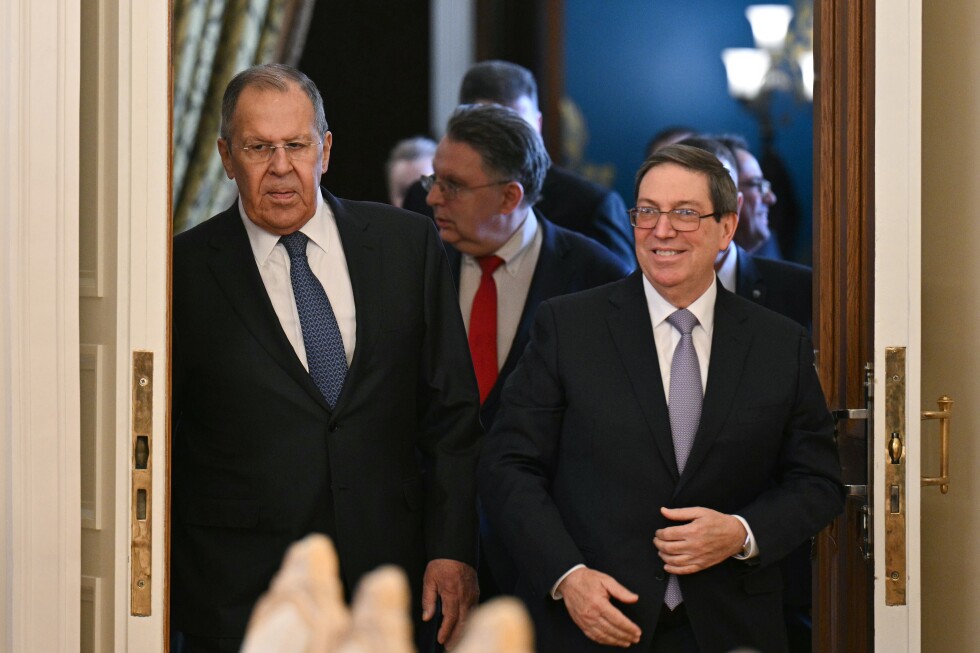
    In a significant diplomatic move, Cuban Foreign Minister Bruno Rodríguez conducted high-level meetings in Moscow on Wednesday as his nation grapples with crippling power blackouts and severe fuel shortages exacerbated by longstanding American sanctions. The visit underscores deepening ties between Moscow and Havana amid growing international tensions.

    During extensive talks with Russian Foreign Minister Sergey Lavrov, both diplomats addressed the critical energy situation facing the Caribbean nation. Lavrov issued a forceful condemnation of United States policies, urging Washington to ‘demonstrate common sense and adopt a responsible approach’ by abandoning what he characterized as blockade measures against Cuba.

    ‘The Russian Federation, alongside the majority of the international community, continues to advocate for the cessation of these restrictive measures,’ Lavrov stated during a joint press briefing. He emphatically declared Moscow’s commitment to ‘persist in supporting Cuba and its citizens in safeguarding national sovereignty and security.’

    The discussions culminated in a scheduled meeting with President Vladimir Putin, signaling the strategic importance both nations place on their bilateral relationship. Kremlin spokesperson Dmitry Peskov subsequently emphasized that Russia ‘highly values its relations with Cuba’ and intends to ‘develop them further, including through appropriate assistance during challenging periods.’

    When questioned about potential repercussions for recently improved Russo-American relations, Peskov dismissed concerns, asserting that energy assistance to Cuba and diplomatic engagement with Washington constitute separate matters. This stance emerges despite President Putin’s previous acknowledgment of Trump’s mediation efforts in Ukraine and ongoing discussions about revitalizing economic cooperation between Moscow and Washington.

    The current fuel crisis intensified dramatically in January when Venezuela—traditionally Cuba’s primary oil supplier—ceased crude exports following the U.S. apprehension of then-President Nicolás Maduro on narcotics trafficking allegations. Simultaneously, Mexico terminated its oil shipments to the island nation after the Trump administration threatened imposing tariffs on countries trading with Cuba.

    Russian news outlet Izvestia reported last week that Moscow is preparing imminent humanitarian fuel deliveries to Havana, though Russian Ambassador to Cuba Viktor Koronelli provided no specific timeline or logistical details. The energy shortfall has already impacted tourism, with Russian travel companies suspending package tours after Cuban authorities announced they could no longer guarantee aircraft refueling capabilities.

  • Philippine VP Sara Duterte to run for president in 2028 elections

    Philippine VP Sara Duterte to run for president in 2028 elections

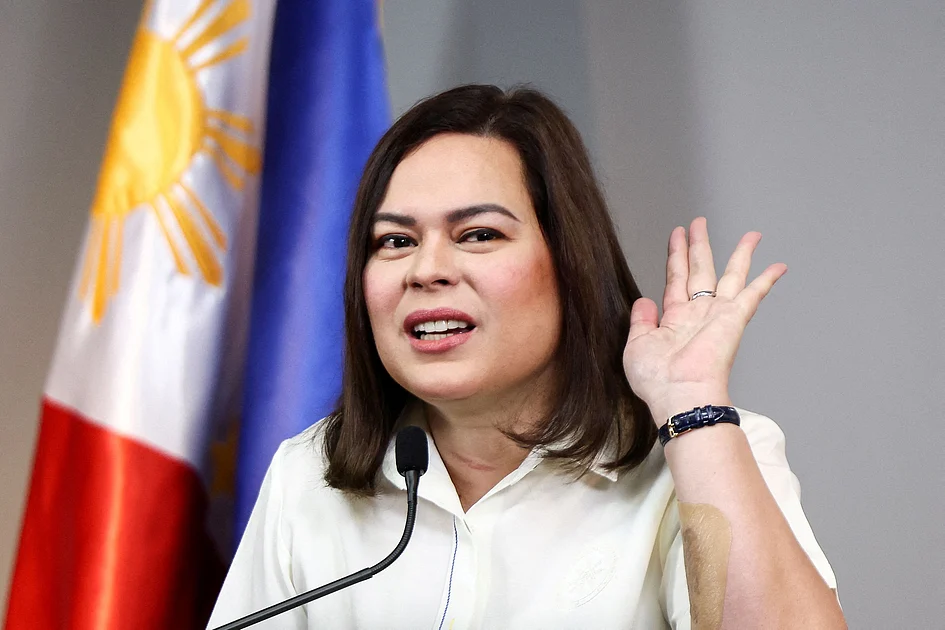
    In a decisive political maneuver, Philippine Vice President Sara Duterte has formally declared her intention to seek the presidency in the 2028 national elections. The announcement, delivered during a Wednesday morning press briefing in Manila, signals a dramatic escalation in the ongoing power struggle between the nation’s two most prominent political dynasties.

    “I offer my life, strength, and future in the service of our nation,” Duterte proclaimed, calling for a restoration of “courage, compassion for God, people and every Filipino family.”

    In a striking reversal, the Vice President opened her brief statement with a series of apologies—first for her instrumental role in helping President Ferdinand Marcos Jr. attain office, and subsequently for what she characterized as systemic failures under his administration. She expressed particular concern over government corruption, soaring commodity prices, inadequate wages, food insecurity, and deficiencies in the healthcare system.

    “I fear for the children and succeeding generations, the homeless, and for poor Filipinos who have no choice but drown in our country,” Duterte added.

    The declaration marks the complete collapse of the once-formidable ‘UniTeam’ alliance that brought Duterte and Marcos to power as running mates. Their political partnership endured for approximately one year before deteriorating over policy disagreements, culminating in Duterte’s resignation from her concurrent position as education secretary.

    The rivalry has since intensified through financial and legal channels. Marcos allies in Congress have systematically stripped Duterte’s offices of confidential and intelligence funds, citing allegations of questionable expenditures. This financial conflict has spawned multiple impeachment complaints against the Vice President, who faces three active complaints in the current legislative session.

    The political drama reached unprecedented levels when Duterte allegedly threatened retaliatory assassination against President Marcos, First Lady Lisa Araneta-Marcos, and former House Speaker Ferdinand Martin Romualdez should she come to harm. Although the Marcos-dominated House successfully impeached Duterte in early 2025, the Senate declined to conduct a trial, allowing her to remain in office.

    This presidential announcement sets the stage for a historic confrontation between the Duterte and Marcos political machines, with profound implications for Philippine governance and democratic institutions.

  • Indian university faces backlash for claiming Chinese robodog as own at AI summit

    Indian university faces backlash for claiming Chinese robodog as own at AI summit

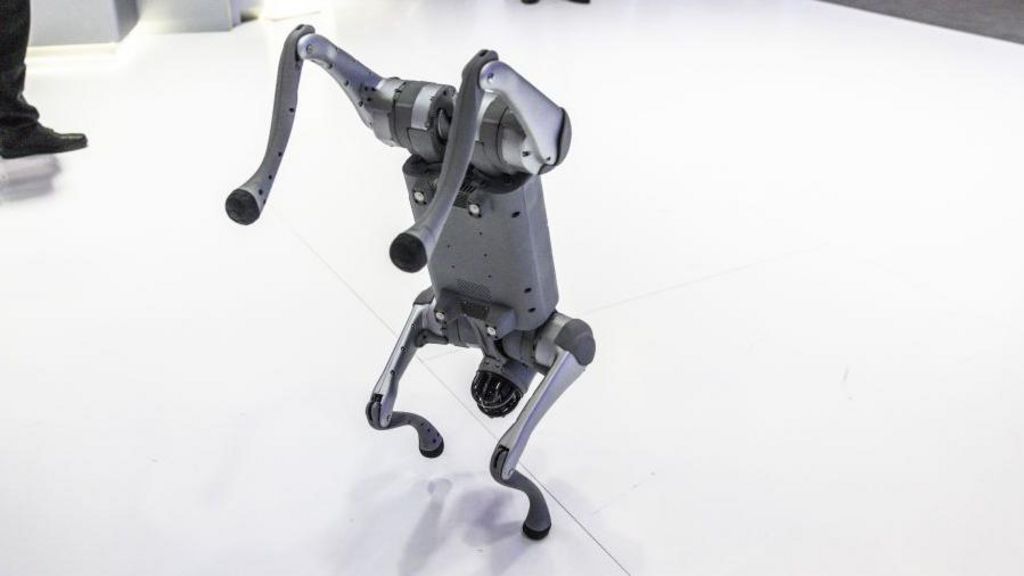
    An Indian academic institution has sparked significant controversy at the prestigious India AI Impact Summit in New Delhi after allegations emerged that it presented a commercially available Chinese robotic dog as its own technological innovation. The incident unfolded when Professor Neha Singh of Galgotias University appeared in a viral video segment with state broadcaster DD News, claiming the quadrupedal robot named ‘Orion’ had been ‘developed’ at the university’s Centre of Excellence.

    Digital investigators quickly identified the machine as Unitree Robotics’ Go2 model, a commercially available robotic dog that retails for approximately 200,000 rupees ($2,200). The Chinese-made robotics platform has gained global recognition in tech circles for its advanced mobility and programming capabilities.

    In response to mounting criticism, Galgotias University issued an official statement denying any claims of having manufactured the robot directly, characterizing the social media reaction as a ‘propaganda campaign.’ The institution maintained that its demonstration aimed to showcase student programming efforts using ‘globally available tools and resources’ to develop practical AI skills.

    Professor Singh subsequently clarified her remarks, suggesting possible miscommunication: ‘It might be that I could not convey well what I wanted to say, or you could not understand well what I wanted to say.’

    The controversy escalated when summit organizers reportedly asked the university to vacate its exhibition stall, though faculty members stated they received no formal notification. News agency Press Trust of India documented that electrical power to the booth was disconnected hours later, with BBC correspondents confirming the darkened stall stood empty without university representatives.

    Adding to the organizational embarrassment, the viral video had initially been shared on IT Minister Ashwini Vaishnaw’s official X account before being deleted. IT Secretary S Krishnan addressed the incident, emphasizing that the controversy should not ‘overshadow’ the work of other participants. He stressed the importance of maintaining proper conduct codes given the international nature of the event with delegates from over 100 countries.

    The summit, inaugurated by Prime Minister Narendra Modi, represents India’s ambitious push to establish itself as a global AI hub. Despite early logistical challenges including overcrowding and entry management issues, organizers reported improved arrangements as the event progressed into its third day, with thousands of attendees engaging with exhibits and discussions on AI governance and innovation.

  • Paris prosecutors open 2 Epstein-linked probes and call on victims to come forward

    Paris prosecutors open 2 Epstein-linked probes and call on victims to come forward

    PARIS — French judicial authorities have initiated two parallel criminal investigations stemming from the Jeffrey Epstein case, marking a significant development in the international pursuit of justice. The Paris prosecutor’s office announced Wednesday it would examine both sexual abuse allegations and financial crimes connected to the deceased financier, leveraging the recently unsealed U.S. government documents.

    Prosecutor Laurence Beccuau confirmed the twin probes would utilize the millions of pages of evidence released by American authorities, supplemented by media reports and new victim testimonies. Each investigation will be handled by specialized magistrates with expertise in their respective domains.

    “The comprehensive data release will provide crucial contextual understanding,” Beccuau stated during an interview with France Info. “This panoramic view will enable us to reconstruct events with greater precision and identify previously unknown connections.”

    The judicial action follows the U.S. Justice Department’s disclosure of over 3 million documents, including thousands of visual materials related to Epstein, who died in custody in 2019 while awaiting trial on sex trafficking charges.

    Beccuau acknowledged the psychological impact on victims, noting: “These publications will inevitably reactivate trauma for certain victims. We believe some remain unknown to authorities, and these revelations may empower them to come forward.”

    The prosecutor specifically urged potential victims with information about French connections to provide formal complaints or witness statements. Additionally, existing investigation materials will be re-examined in light of new evidence.

    This includes revisiting the closed investigation into Jean-Luc Brunel, a French modeling agent and Epstein associate accused of rape and sex trafficking of minors. Brunel was found dead in his Paris jail cell in 2022 while awaiting trial.

    The Epstein case continues to reverberate through French society, with former Culture Minister Jack Lang recently resigning from his leadership position at the Arab World Institute amid tax fraud suspicions. Financial prosecutors are investigating Lang and his daughter’s alleged connections to Epstein through an offshore entity based in the U.S. Virgin Islands.