
A 61-year-old man, Glenn Gary Cameron, has pleaded guilty to a series of sexual assaults committed in Sydney during the early 1990s, marking a significant breakthrough in a cold case that had remained unsolved for three decades. Cameron, infamously known as Sydney’s ‘Night Stalker’ and the ‘Moore Park Rapist,’ was arrested at Sydney International Airport in February 2023 after detectives utilized advanced DNA and fingerprint technologies to revisit the unsolved cases. He has admitted to more than a dozen charges, including 11 counts of aggravated sexual assault involving the use of a weapon as a threat, targeting eight women between 1991 and 1993. Cameron’s identity was initially suppressed due to a reporting ban, which was lifted three months after his arrest. On Tuesday, he appeared via video link in Downing Centre Local Court, where he pleaded guilty to 13 of the 36 charges he faced. Nine charges were withdrawn, while the remaining 14 will be considered during his sentencing next month. These include multiple counts of indecent assault, aggravated sexual assault, and detaining a person for advantage. One of the victims, who was attacked decades ago, participated in the court proceedings remotely. A 1993 Sydney Morning Herald article revealed that the victims were primarily Asian women aged 17 to 45, with the attacker using simple Cantonese phrases to lure them near train stations under the guise of offering fake jobs before assaulting them at knifepoint, usually at night. The first attack occurred in April 1991 in Strathfield, followed by others in Moore Park.
作者: admin
-
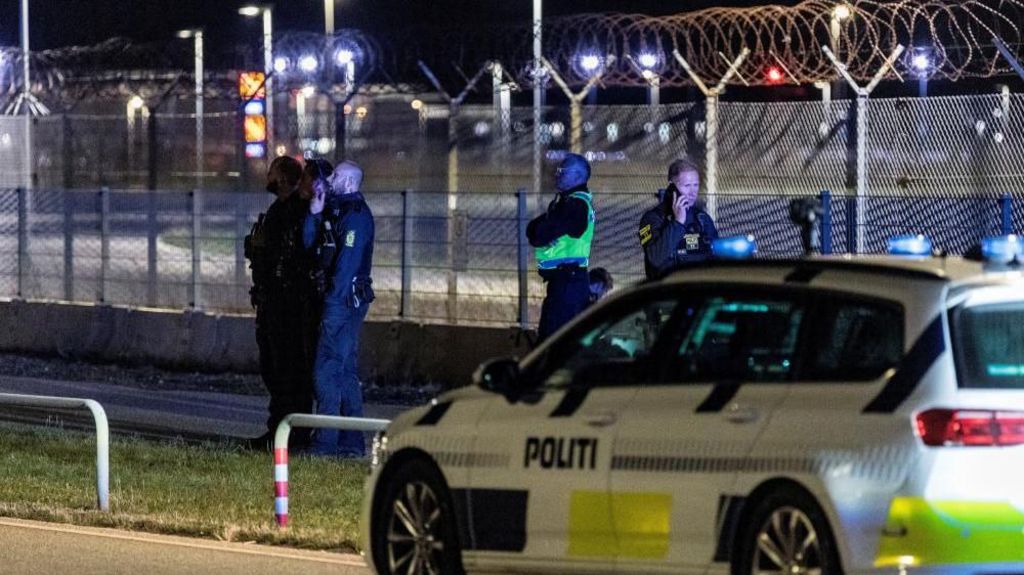
Copenhagen and Oslo airports forced to close temporarily due to drone sightings
Major airports in Denmark and Norway were temporarily shut down on Monday night following unidentified drone sightings, causing significant disruptions to air travel. Copenhagen Airport in Denmark and Oslo Airport in Norway were both forced to suspend operations for nearly four hours, impacting approximately 20,000 passengers. Danish authorities reported that two to three large drones were observed flying near Copenhagen Airport, prompting the activation of armed forces. However, police emphasized there was no evidence suggesting the drones intended to cause harm, speculating instead that the operator aimed to ‘show off.’ Both airports resumed operations by early Tuesday morning. Investigations are ongoing, with Danish police implementing unspecified measures to address the incident. Meanwhile, Norwegian authorities confirmed a drone sighting near Oslo Airport, leading to similar airspace closures. Ukrainian President Volodymyr Zelensky referenced a ‘Russia’s violation’ of NATO airspace in Copenhagen on September 22, though no official attribution has been made by EU or NATO leaders. Flight-tracking website Flightradar24 reported at least 35 flights bound for Copenhagen were diverted due to the closure. Both countries are now assessing the security implications of these incidents.
-
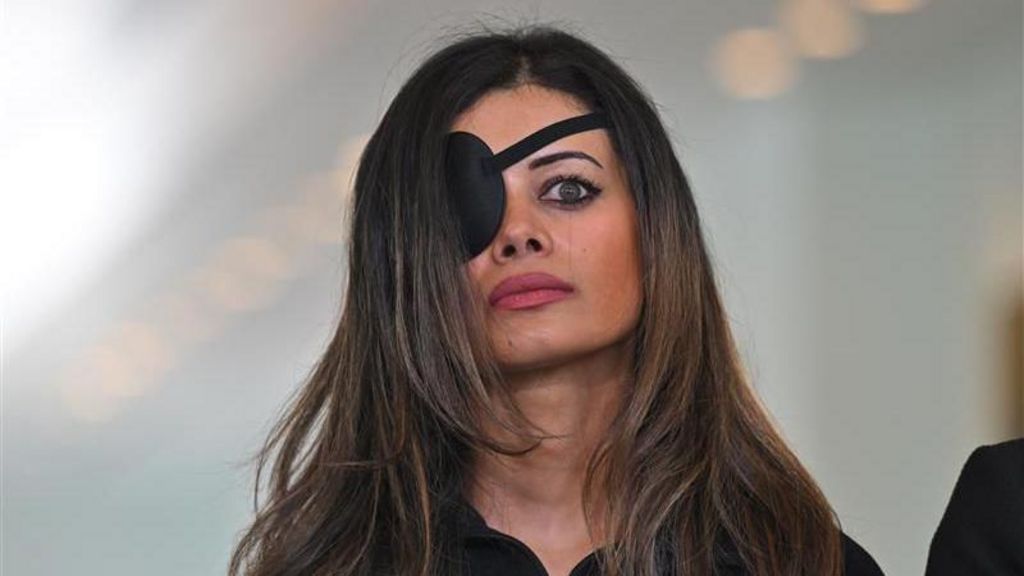
Police officer charged with assault at pro-Palestinian protest in Sydney
A senior constable from New South Wales (NSW) Police has been formally charged with assault following an incident at a pro-Palestinian protest in Sydney earlier this year. Hannah Thomas, a former Greens party candidate, claims she was struck in the face by the officer during a demonstration in Belmore on June 27. The altercation left her with severe facial injuries that necessitated surgical intervention. The protest was staged outside SEC Plating, a company accused by demonstrators of supplying components to the Israel Defense Forces (IDF), allegations the company denies. NSW Police confirmed that the officer’s employment is under review, and a critical incident investigation—activated when an officer is involved in an event causing death or serious injury—is ongoing. The officer, who faces charges of assault occasioning actual bodily harm, is scheduled to appear in court in November. The protest, deemed unauthorized by police, escalated into a scuffle after officers ordered the crowd to disperse. Five individuals, including Thomas, were arrested. Thomas, 35, was hospitalized following the alleged assault and later revealed on Instagram that she might suffer permanent vision loss in her right eye. Initially charged with failing to comply with police orders and resisting arrest, all charges against Thomas were dropped earlier this month, and she was awarded approximately A$22,000 in legal costs. Her lawyer, Peter O’Brien, announced plans to file civil proceedings against NSW Police, citing malicious prosecution, assault, and malfeasance in public office, among other claims. The incident has drawn attention amid the broader context of the Israel-Gaza conflict and its global repercussions.
-

‘Why does China prefer war?’ The K-drama line that infuriated the Chinese internet
South Korean actress Jun Ji-hyun, renowned for her breakout role in the 2001 romantic comedy *My Sassy Girl*, has found herself at the center of a heated controversy following her portrayal in the Disney+ spy romance series *Tempest*. In the show, Jun plays a diplomat investigating a deadly assassination, and a fictional line from her character—questioning China’s preference for war—has ignited outrage among Chinese social media users. Many have accused the series of misrepresenting China as belligerent, leading to calls for brands to sever ties with the actress. The backlash has reignited debates over China’s unofficial ban on South Korean entertainment, which has been in place since 2016 following South Korea’s deployment of a US anti-missile system. While recent months saw signs of easing tensions, with some South Korean performers returning to China, the *Tempest* controversy has fueled renewed support for the ban. Social media users have also criticized other aspects of the series, such as scenes depicting China’s Dalian city with dilapidated buildings and a table setting resembling the Chinese flag. Jun’s agency has clarified that her brand campaigns concluded before the show’s release, but Chinese consumers have continued to pressure brands like La Mer, Louis Vuitton, and Piaget to distance themselves from her. Despite some defending Jun, arguing she did not write the controversial line, the backlash has overshadowed such sentiments. The incident highlights the fragile state of cultural exchanges between China and South Korea, with the future of K-pop and K-dramas in China remaining uncertain.
-
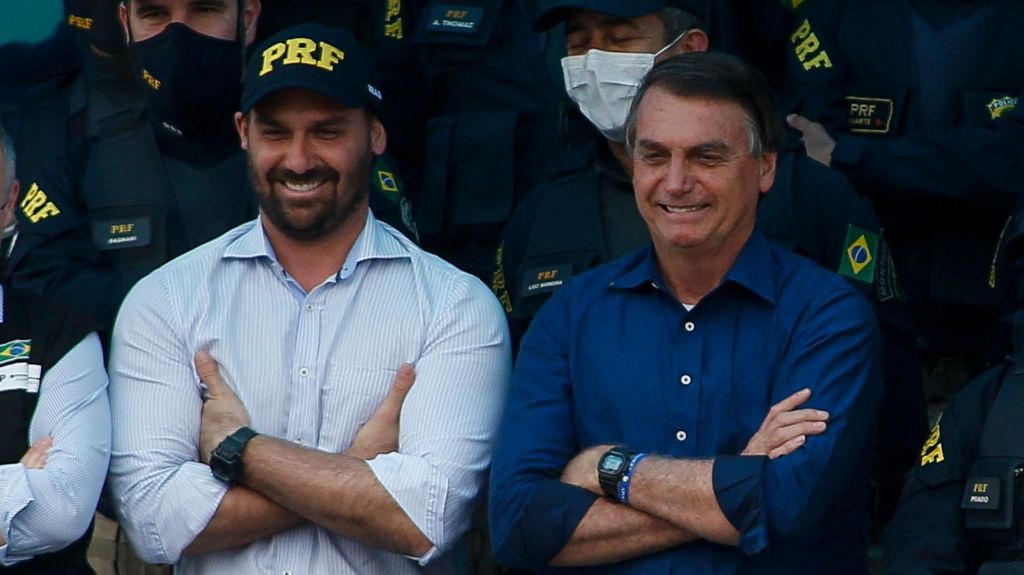
Brazil ex-president Jair Bolsonaro’s son charged with coercion
Brazil’s Attorney General’s Office has formally charged Eduardo Bolsonaro, son of former President Jair Bolsonaro, with coercion, according to an official statement released on Monday. The charges allege that the congressman repeatedly prioritized personal and family interests over those of the nation, exposing Brazil to potential sanctions from foreign governments. Eduardo, who currently resides in the United States, dismissed the accusations as “bogus” in a social media post, labeling them as “absurd” and part of an ongoing political persecution against his family. The charges come just weeks after his father, Jair Bolsonaro, was sentenced to 27 years in prison for orchestrating a coup attempt during his presidency from 2019 to 2022. Prosecutors are also seeking financial compensation for damages resulting from the alleged criminal actions. Notably, businessman Paulo Figueiredo, grandson of former dictator João Batista Figueiredo, has also been implicated in the case. Eduardo Bolsonaro relocated to the U.S. earlier this year, claiming he was living in “exile” due to fears of arrest if he returned to Brazil. He has actively sought support from the Trump administration, which has likened the legal actions against the Bolsonaro family to a “witch hunt.” Meanwhile, U.S. President Donald Trump imposed a 50% tariff on Brazil in July, a move criticized by current Brazilian President Luiz Inácio Lula da Silva as “misguided and illogical.” U.S. Secretary of State Marco Rubio has announced further sanctions, including targeting the wife of Brazil’s Supreme Court Justice Alexandre de Moraes, who presided over Jair Bolsonaro’s trial. The justice condemned the sanctions as “illegal and regrettable.” In Brazil, tens of thousands of citizens protested against a proposed amnesty bill that could potentially shield Jair Bolsonaro from prosecution. Critics have labeled the bill as the “Banditry Bill,” while supporters argue it is necessary to protect lawmakers from judicial overreach. President Lula has vowed to veto the bill if it passes the Senate, stating, “I stand with the Brazilian people. Today’s demonstrations show that the population does not want impunity or amnesty.”
-
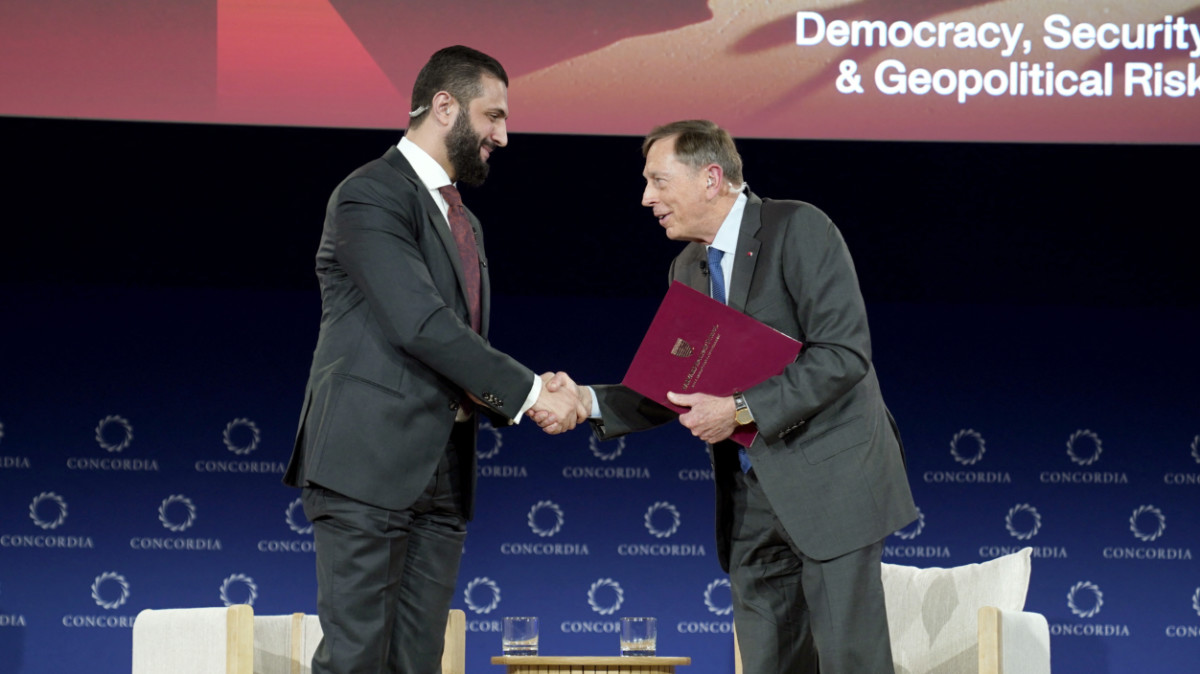
Syria’s Sharaa distances himself from Abraham Accords in surreal interview with former CIA foe
Syrian President Ahmed al-Sharaa has revealed that Syria and Israel are engaged in advanced security discussions, though any potential agreement will not mirror the normalization seen in the Abraham Accords. Speaking at an event alongside former CIA director David Petraeus during the United Nations General Assembly in New York, Sharaa emphasized the complexities of Syria’s relationship with Israel, citing historical grievances and regional anger over the Gaza conflict. Sharaa’s visit marks the first time a Syrian leader has attended the UN General Assembly since 1967, underscoring the significance of his presence. Despite the ongoing talks, Sharaa dismissed the possibility of Syria joining the Abraham Accords, highlighting Syria’s unique position as a neighboring country subjected to over 1,000 Israeli military actions. He also expressed skepticism about Israel’s intentions, referencing its past violations of peace agreements with Egypt and Jordan. The discussions, mediated by US envoy Tom Barrack, aim to address Israel’s security concerns while preserving Syria’s sovereignty. However, Sharaa’s government faces internal challenges, including tensions with Druze militias and efforts to integrate the Kurdish-led Syrian Democratic Forces (SDF) into the national military. Sharaa’s broader objectives include lobbying for the complete lifting of US sanctions on Syria, a move initiated by former President Donald Trump but still partially in place due to congressional mandates. As Sharaa prepares to address the UN Assembly, his administration’s ability to protect minority groups and navigate regional alliances remains under scrutiny.
-
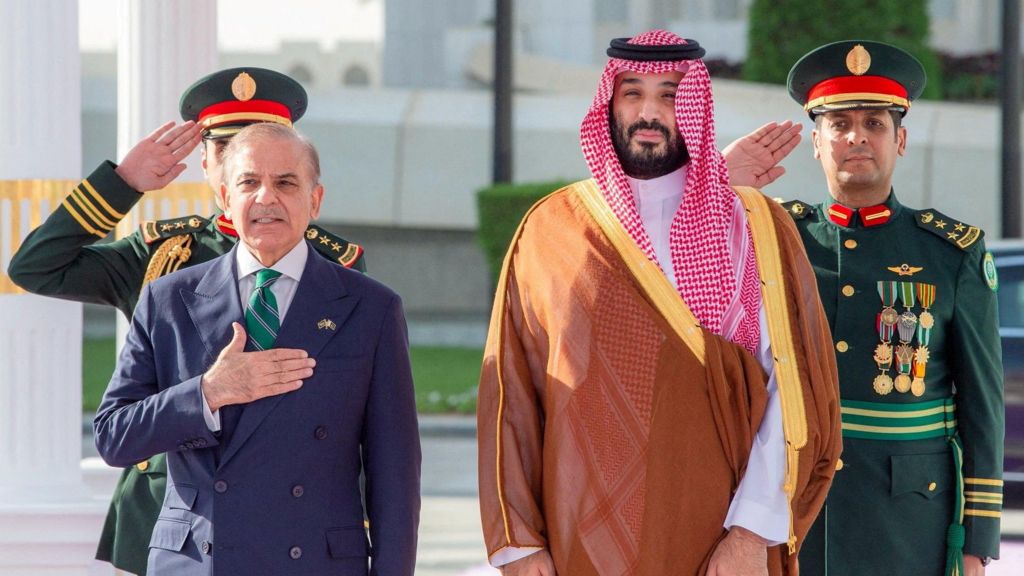
Why the Pakistan-Saudi Arabia defence pact is unsettling India
In a significant geopolitical development, Saudi Crown Prince Mohammed bin Salman and Pakistani Prime Minister Shehbaz Sharif inked a landmark strategic mutual defense agreement last week in Riyadh. The pact, described as an “institutionalization of long-standing and deep cooperation” by a senior Saudi official, has stirred considerable debate, particularly in India, which views the agreement as a potential threat to its national security. The agreement stipulates that “any aggression against either country shall be considered an aggression against both,” a clause that has unsettled Indian analysts. Brahma Chellaney, an Indian strategist, argued that the pact reflects Saudi Arabia’s ambitions rather than Pakistan’s strength, binding a “chronically dependent” partner to gain manpower and nuclear “insurance.” Former Indian foreign secretary Kanwal Sibal labeled the agreement a “grave misstep,” warning of its implications for India’s security. While India’s government has adopted a cautious stance, stating it will study the pact’s implications, the move has reignited tensions between India and Pakistan, who have a history of conflicts, particularly over Kashmir. Some analysts, however, downplay the immediate risks, noting Saudi Arabia’s extensive economic ties with India, its second-largest trading partner. Michael Kugelman, a foreign policy analyst, suggested that the pact does not directly hinder India but embeds Pakistan in the Middle East’s security architecture, leaving India facing a coalition of Pakistan, China, Turkey, and now Saudi Arabia. Husain Haqqani, a former Pakistani ambassador, warned that the pact could position Saudi Arabia as a Cold War-style patron for Pakistan, bolstering its military capabilities against India. The agreement also signals Saudi Arabia’s broader strategic shift, diversifying its security partnerships amid declining faith in the US security umbrella. Ahmed Aboudouh of Chatham House noted that the pact is more about signaling intent than battlefield commitments, reflecting Saudi Arabia’s perception of threats from both Iran and Israel. For India, the pact’s broader geopolitical implications could complicate its ‘Look West’ strategy, potentially hardening into an “Islamic Nato” that challenges its trade and investment interests in the Gulf. While the immediate security threat to India remains unclear, the pact has undoubtedly reshaped regional alignments, leaving Delhi to recalibrate its diplomatic and strategic approach.
-
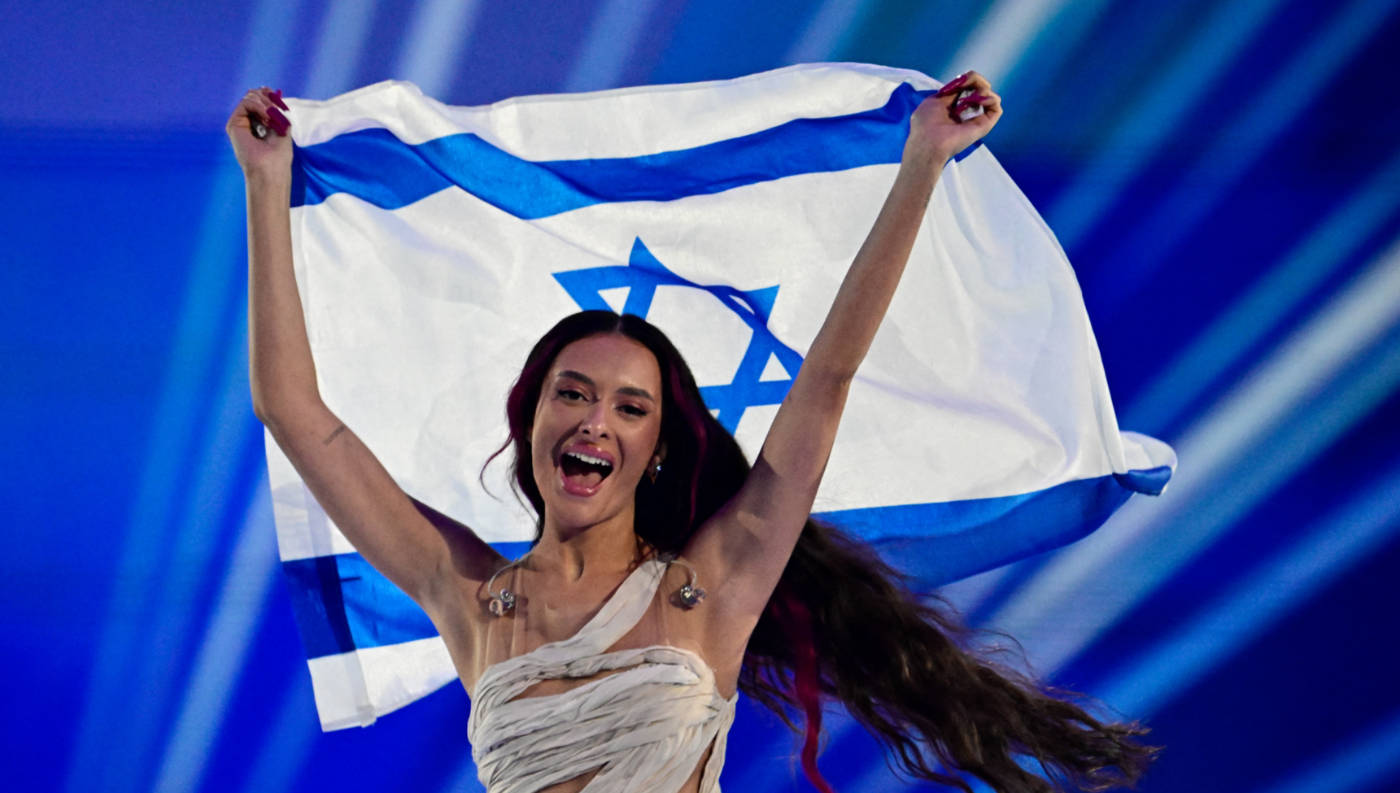
Israel and Eurovision: Why do countries want to boycott a song contest?
The Eurovision Song Contest, a globally celebrated cultural phenomenon attracting hundreds of millions of viewers annually, is now at the center of a brewing political storm. As tensions escalate over Israel’s participation, at least five nations—Iceland, Ireland, the Netherlands, Slovenia, and Spain—are threatening to withdraw from the 2026 event in Vienna if Israel is allowed to compete. This unprecedented move could significantly disrupt the contest, which has been a platform for unity and musical excellence since its inception in 1956. The controversy stems from the ongoing war in Gaza, where over 65,000 Palestinians have been killed since October 2023. Israel faces accusations of genocide from a United Nations commission of inquiry and major human rights organizations, further fueling calls for its exclusion from Eurovision. The European Broadcasting Union (EBU), which organizes the event, has long maintained that Eurovision is apolitical. However, the 2022 ban on Russia following its invasion of Ukraine has set a precedent for excluding nations embroiled in geopolitical conflicts. Spain’s Prime Minister Pedro Sanchez has cited this example, arguing that Israel’s participation would constitute a double standard. Meanwhile, Israel’s national broadcaster, Kan, has confirmed its intent to participate, and the EBU has denied reports of pressuring Israel to withdraw. The situation has divided the Eurovision community, with some countries, including France and Germany, opposing the boycott. As the deadline for attendance confirmation approaches, the EBU faces a critical decision that could redefine the future of the iconic competition.
-
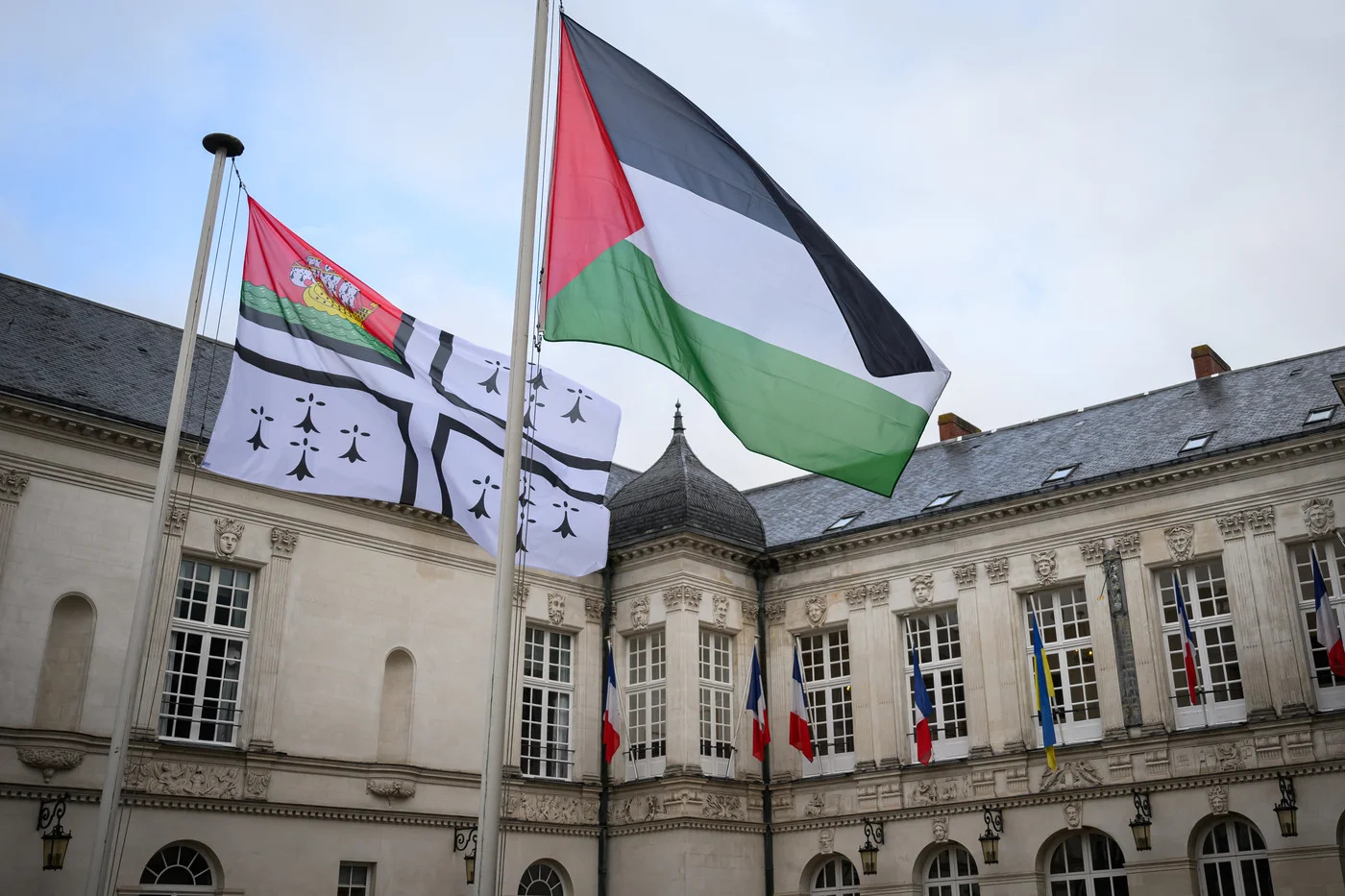
Global reactions pour in as UK, Australia and Canada recognise Palestinian state
Over a century after the Balfour Declaration endorsed the establishment of a Jewish national home in Palestine, the United Kingdom, alongside Canada, Australia, and Portugal, officially recognized a Palestinian state on Sunday. France is anticipated to follow suit shortly. This historic decision has ignited fierce backlash from the Israeli government, with Prime Minister Benjamin Netanyahu vowing to prevent the establishment of a Palestinian state and promising a response upon his return from the United States. Israeli government spokesperson David Mencer labeled the move as a “betrayal” by the UK Labour Party, stating that the Jewish community would not forgive them. The announcement has sparked a polarized response on social media, with some dismissing it as “performative recognition” that fails to address the ongoing genocide in Gaza and the annexation of the West Bank. Palestinian writer Yara Hawari criticized the gesture as a symbolic shield for Israel’s war crimes, while others highlighted the continued arms exports to Israel by the UK, Canada, and Australia. Palestinian journalist Abubaker Abed emphasized that recognition would be meaningless without concrete actions to end the genocide, secure the right of return, and release Palestinian hostages. Despite some hailing the move as a victory for the Palestinian cause, many in the occupied West Bank expressed skepticism, noting that daily settler attacks and Israeli raids persist. Decolonial scholar Sabreena Ghaffar-Siddiqui viewed the recognition as a symbolic acknowledgment of Israel’s inevitable decline, while former PLO politician Hanan Ashrawi urged that the gesture not be underestimated, calling for punitive measures against Israel to stop the genocide.
-
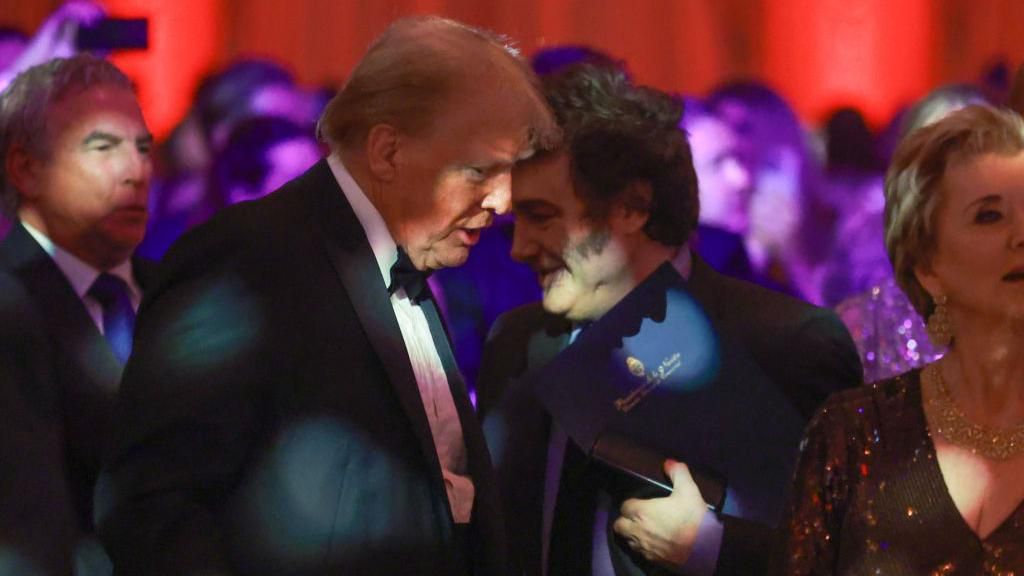
US ready to help with Argentina’s fiscal turmoil
US Treasury Secretary Scott Bessent has affirmed the United States’ readiness to intervene and stabilize Argentina’s worsening financial crisis. In a statement on social media, Bessent emphasized that ‘all options for stabilization are on the table,’ highlighting Argentina’s strategic importance as a key ally in Latin America. This declaration has provided some relief to financial markets, which have been volatile due to concerns over the future of President Javier Milei’s austerity-driven, free-market policies. The Argentine peso has experienced a sharp decline, prompting investors to offload Argentine stocks and bonds. Milei, a libertarian economist and ally of former US President Donald Trump, was elected in 2023 on a platform of radical spending cuts and reforms to combat rampant inflation. However, the peso’s instability has raised doubts about the government’s ability to uphold its economic promises. In recent weeks, the Argentine central bank has intervened, spending $1.1 billion of its reserves to support the peso, but this has further strained the country’s financial position. Bessent revealed that the US is considering measures such as purchasing Argentine pesos and dollar-denominated government debt to assist. Further details are expected after Milei meets with Trump in New York on Tuesday. Bessent expressed confidence in Milei’s commitment to fiscal discipline and pro-growth reforms, which he believes are essential to reversing Argentina’s economic decline. Milei has expressed gratitude for the US’s support, which has already bolstered Argentine stocks and dollar-denominated debt prices. Despite international backing, Milei faces domestic challenges, including recent local election losses and a bribery scandal involving his sister. Argentina’s upcoming mid-term elections in October will serve as a critical referendum on his controversial policies, which include cuts to social programs. Earlier this year, Bessent played a pivotal role in helping Argentina secure a $20 billion loan from the International Monetary Fund.