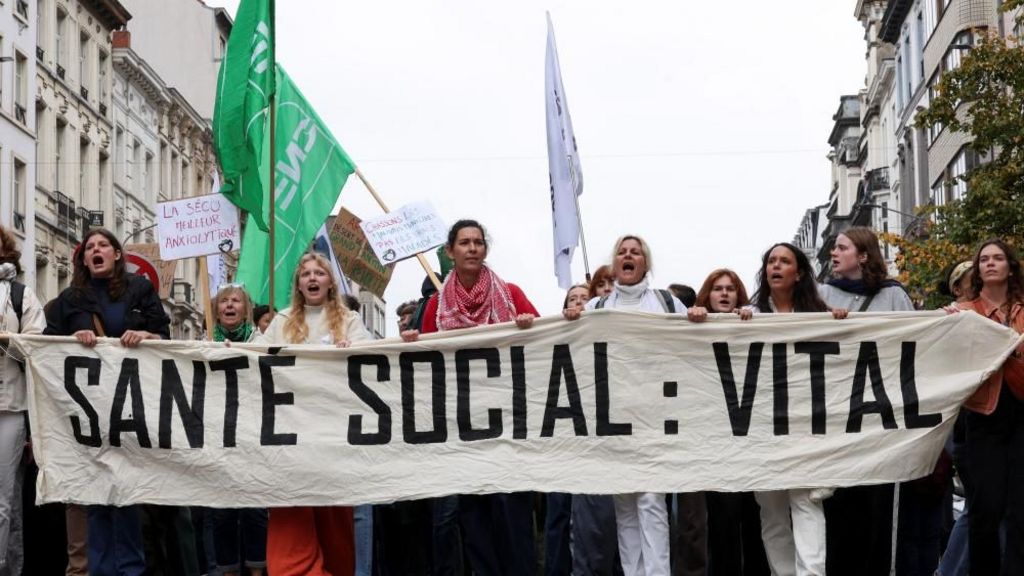
Tens of thousands of Belgians flooded the streets of Brussels in a nationwide strike, protesting against sweeping government reforms and austerity measures. The demonstrations, organized by Belgium’s three major unions, brought significant disruptions to public transport, halted flights, and suspended operations at Europe’s second-largest port in Antwerp. The protests targeted Prime Minister Bart de Wever’s center-right government, which has introduced controversial measures to reduce the budget deficit, including pension reforms and cuts to unemployment benefits. At Brussels Airport, all departures and many arrivals were canceled, while Charleroi Airport saw a complete shutdown of services. Public transport in the capital was severely affected, with most buses, trams, and underground trains coming to a standstill. The unions are particularly opposed to the government’s plan to increase the number of working days required to qualify for pensions and the elimination of special schemes for sectors like the military and railway workers. Demonstrators, many clad in the red and green colors of the unions, voiced their frustrations over what they perceive as unfair burdens on the working class. ‘It’s always the same part of the population that has to tighten their belts,’ said 29-year-old Anaïs, who criticized the reforms for disproportionately affecting lower-income Belgians. The protests also highlighted broader concerns about the future, with many participants expressing fears for their children’s prospects. Despite the largely peaceful nature of the demonstrations, isolated incidents of vandalism and clashes with police were reported. The strike underscores the growing discontent with the government’s austerity agenda, which includes proposed cuts to child benefits and potential VAT increases. As Belgium grapples with its fiscal challenges, the protests signal a deepening divide between the government and its citizens.
作者: admin
-

China announces countermeasures against five US-linked subsidiaries of Hanwha Ocean
In a significant diplomatic move, China has announced countermeasures targeting five US-linked subsidiaries of Hanwha Ocean, a major South Korean shipbuilding company. The decision, revealed on October 14, 2025, underscores escalating tensions between Beijing and Washington amid ongoing geopolitical disputes. The Chinese government cited national security concerns and the need to protect its economic interests as the primary reasons for the sanctions. These measures are expected to impact trade relations and business operations between the involved parties. The announcement follows a series of recent diplomatic maneuvers by China in response to perceived threats from foreign entities. Analysts suggest that this action could further strain US-China relations, potentially influencing global trade dynamics and regional stability.
-
Trump tariffs on kitchen cabinets and lumber come into force
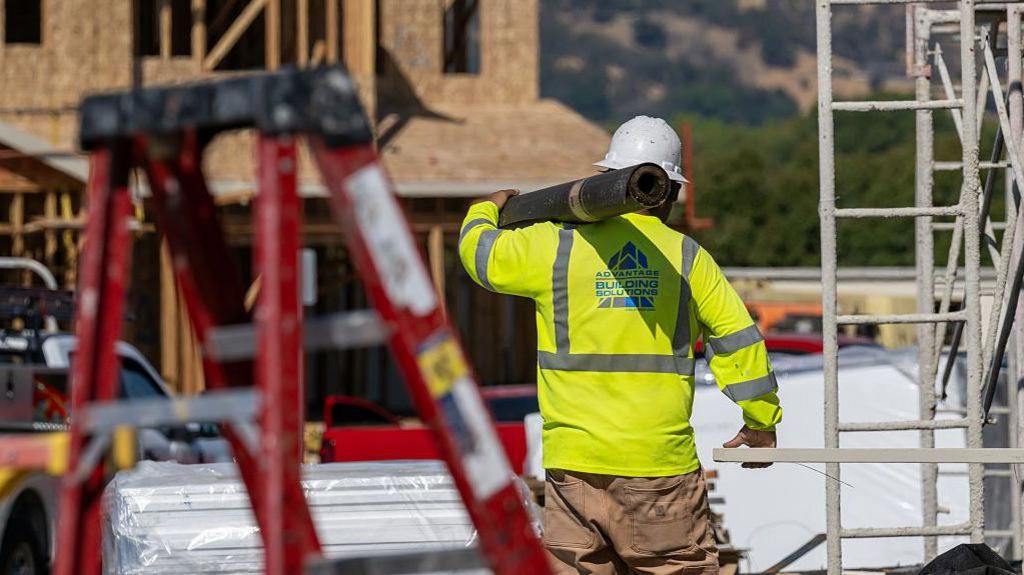
The United States has implemented a new wave of tariffs targeting imported kitchen cabinets, vanities, softwood lumber, timber, and certain upholstered furniture. These measures, enacted through a proclamation signed by President Donald Trump last month, took effect this week. The tariffs include a 10% levy on softwood lumber and timber, a 25% duty on kitchen cabinets and vanities—set to rise to 50% by January 1—and a 25% charge on upholstered wooden furniture, which will increase to 30% unless new trade agreements are negotiated. President Trump has justified these tariffs as necessary to protect U.S. manufacturers and address national security concerns. However, industry experts warn that the additional costs could drive up housing expenses and deter consumers from undertaking home renovations. Tariffs, which are taxes on imported goods paid by companies, often result in higher prices for end consumers, including American households and businesses. This latest move is part of Trump’s broader tariff strategy, which has included sector-specific duties on steel, aluminum, vehicles, and other products during his second term. Notably, the 10% global tariff on softwood lumber compounds existing duties on Canadian imports, bringing the total levy to over 45%. Canada, the second-largest global producer and a major U.S. supplier, has long been embroiled in trade disputes with the U.S. over this product. Meanwhile, wood products from the UK, EU, and Japan face lower tariffs under existing trade agreements. The White House asserts that these measures are essential to safeguard national security and bolster domestic manufacturing. However, critics, including the National Association of Homebuilders, argue that the tariffs will exacerbate challenges in the housing market by increasing construction and renovation costs. Retailers, too, are feeling the pressure. Analysts predict that companies will have no choice but to pass on the additional costs to consumers, potentially leading to double-digit price hikes. Swedish furniture giant Ikea has already acknowledged the difficulties posed by the tariffs, stating that they are impacting its business operations. As the holiday season approaches, retailers face the daunting task of balancing price increases with consumer demand.
-
How President Milei’s ‘Thatcherite’ economics divided his nation – but won over Trump
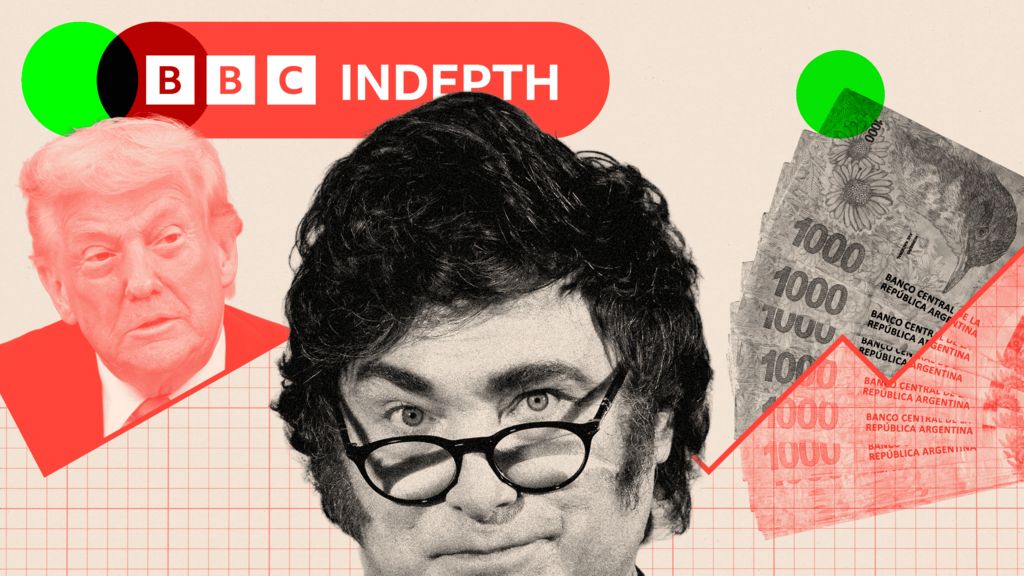
In September 2023, Buenos Aires witnessed a dramatic election rally as hundreds gathered to support Javier Milei, a presidential candidate known for his unconventional tactics. Brandishing a chainsaw, Milei symbolized his intent to slash Argentina’s bloated state apparatus, which he criticized for its excessive public spending and reliance on debt. His campaign slogan, ‘afuera!’ (out!), resonated with voters frustrated by years of economic mismanagement, including inflation that soared to 211% annually and a poverty rate affecting 40% of the population. Milei’s promise of radical austerity measures, including cutting ministries, subsidies, and public jobs, struck a chord with those desperate for change. By December 2023, Milei assumed office and implemented his ‘chainsaw’ reforms, achieving Argentina’s first fiscal surplus in 14 years and reducing inflation to 36%. However, these gains came at a cost. Public protests erupted as pensioners, hospitals, and the working class bore the brunt of the cuts. Critics argue that Milei’s reforms have led to recession, job losses, and weakened public services, with some economists warning of an impending economic downturn. Despite international praise from figures like Donald Trump and Kemi Badenoch, Milei’s domestic support has waned, raising questions about the sustainability of his economic project. As midterm elections approach, Argentina faces a critical juncture: will Milei’s reforms be seen as a necessary sacrifice or a misguided experiment?
-
China unveils detailed measures for charging special port fees on US ships
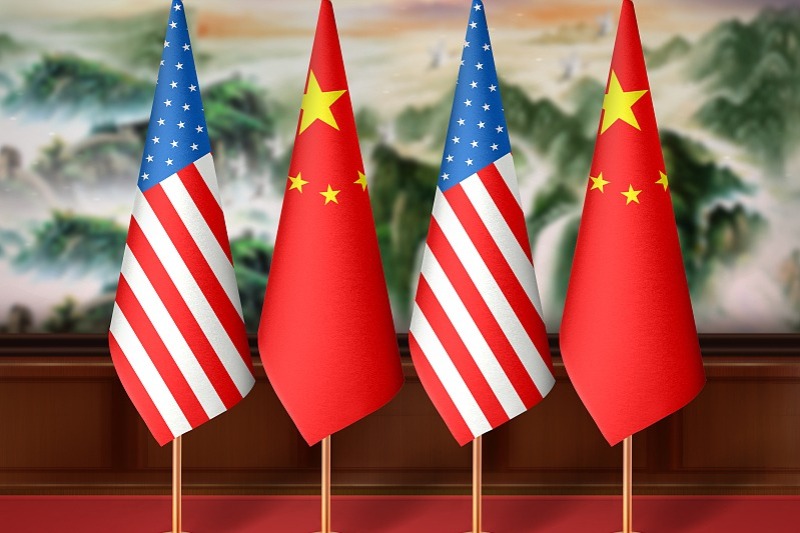
In a significant move amid ongoing trade tensions, China’s Ministry of Transport has released a comprehensive document outlining the implementation of special port fees on ships owned or operated by US entities. The 10-article document, unveiled on October 14, 2025, specifies the scope, standards, and collection procedures for these fees, as well as exemptions for certain vessels, such as those built in China or entering for repair purposes. The measures, which took immediate effect, are a direct response to the US imposition of additional port fees on Chinese ships following a Section 301 investigation. The ministry emphasized that the US actions violate WTO rules and the China-US maritime transport agreement, undermining bilateral maritime trade. China’s decision is framed as a justified step to protect its industries and ensure fair competition in international shipping. The document also indicates that the fee structure will be dynamically adjusted based on future developments.
-
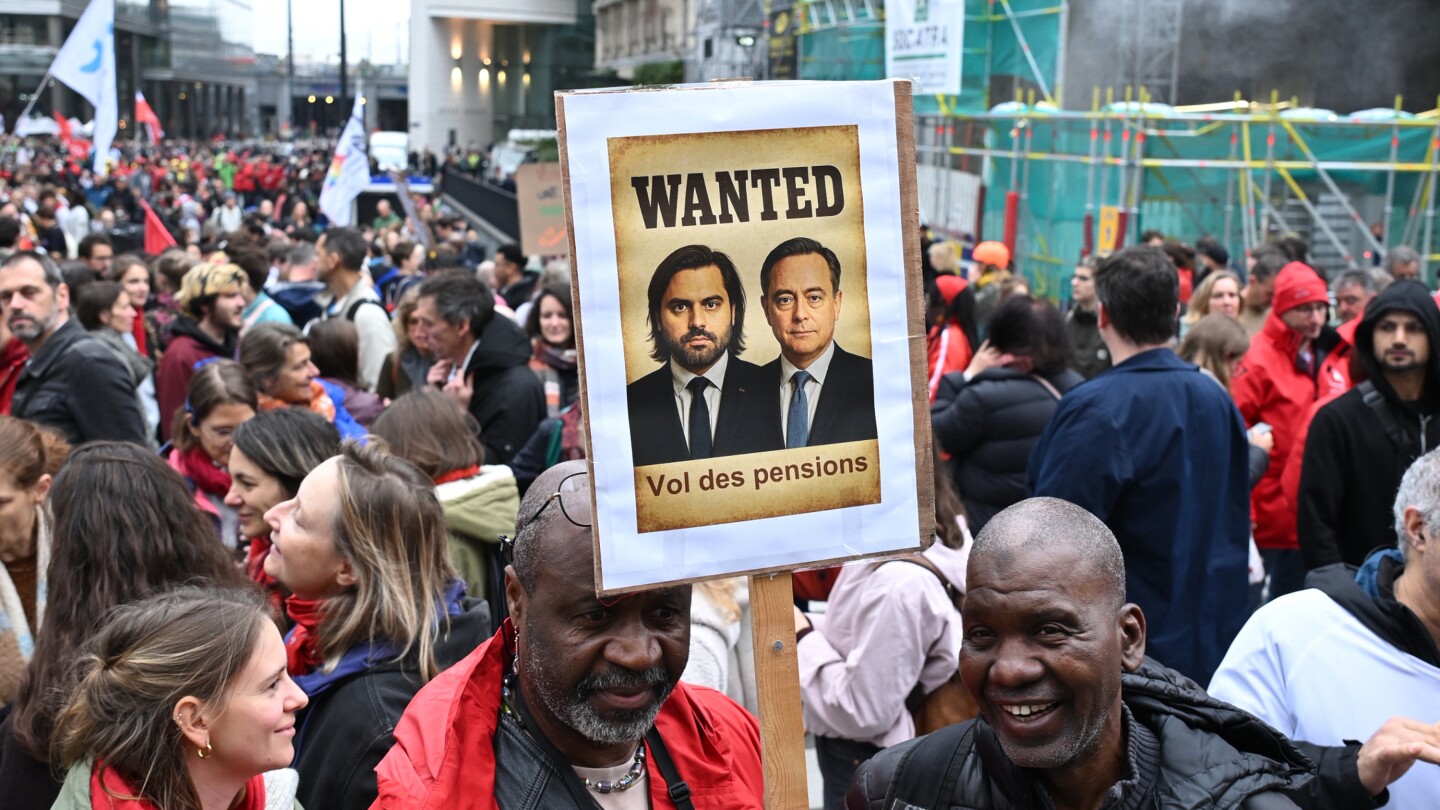
Police fire tear gas at Brussels protest against austerity measures
BRUSSELS — Tens of thousands of demonstrators descended upon Brussels on Tuesday to voice their opposition to Prime Minister Bart de Wever’s proposed austerity measures, leading to clashes with police and widespread disruptions. Belgian authorities resorted to tear gas to disperse the crowds, as minor skirmishes erupted between law enforcement and protesters. The demonstrators, armed with drums, horns, flares, and smoke bombs, chanted slogans against cuts to social welfare programs, crippling traffic in the capital and major transportation hubs. The protest, organized by Belgium’s three major trade unions, was accompanied by nationwide strikes targeting De Wever’s plans to reduce spending on pensions and healthcare. While organizers claimed over 150,000 participants, police estimated the crowd at 80,000. The Federal Planning Office of Belgium predicts the country’s budget deficit will surge to 6.5% of GDP by 2030, exacerbating economic challenges. De Wever, a Flemish nationalist who assumed office in February, has vowed to implement stringent fiscal measures to address these issues. The unrest underscores the growing public discontent with his administration’s policies.
-
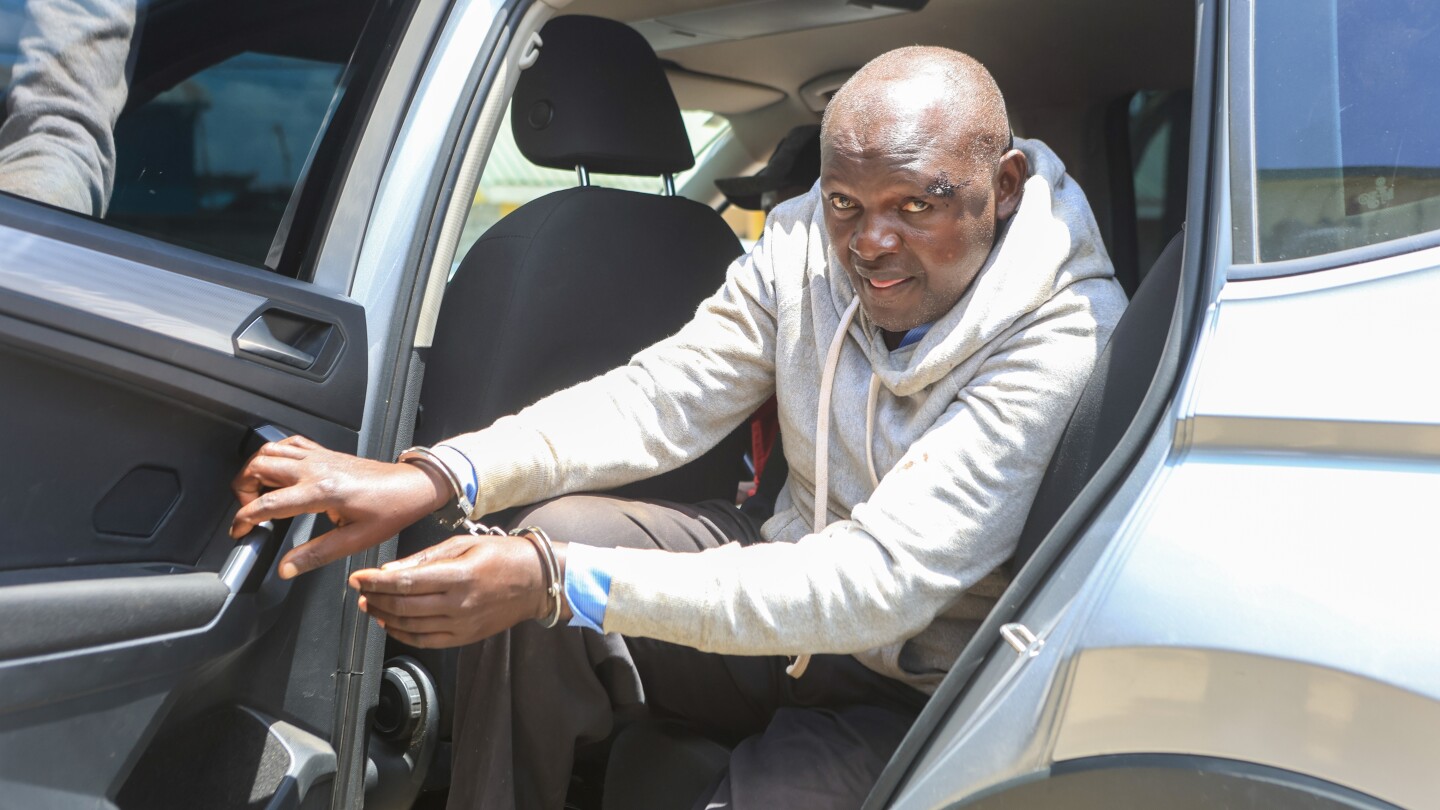
Suspect in the fatal stabbing of a Kenyan presidential guard will be assessed
NAIROBI, Kenya — A chilling security breach near Kenya’s presidential office has raised alarms after a man allegedly stabbed a guard to death on Monday. The suspect, Kithuka Kimunyi, reportedly approached the State House main gate disguised as a homeless person, armed with a bow and arrow. After fatally shooting the guard, Ramadhan Hamisi Matanka, Kimunyi was apprehended at the scene. The guard succumbed to his injuries at a nearby hospital.
-

Cape Verde’s fans jubilant following historic success
In a momentous achievement for Cape Verde, the nation’s football team has etched its name in history by securing a place in the 2026 FIFA World Cup. The Blue Sharks triumphed over Eswatini with a commanding 3-0 victory on home soil, ensuring they topped their qualifying group. This remarkable feat makes Cape Verde the second-smallest nation ever to qualify for the prestigious tournament. The win also edged out Cameroon, a formidable opponent, in the race for the coveted spot. Fans across the archipelago erupted in jubilation, celebrating this historic milestone that underscores the growing prowess of African football on the global stage. The team’s success not only brings pride to the nation but also highlights the potential of smaller nations to compete at the highest levels of international sport.
-
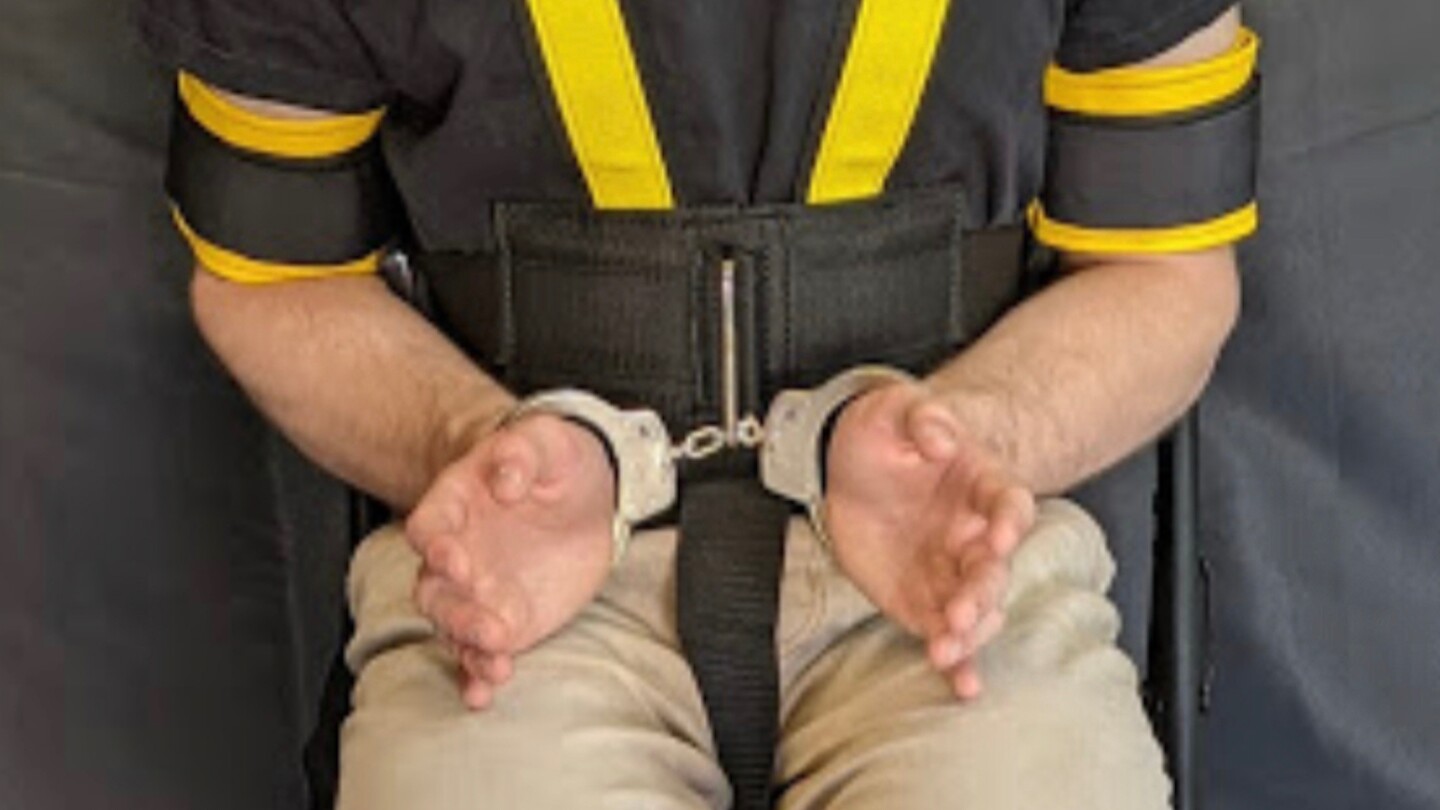
ICE’s use of full-body restraints during deportations raises concerns over inhumane treatment
A Nigerian man, part of a federal lawsuit, recounted a harrowing experience of being forcibly deported by U.S. Immigration and Customs Enforcement (ICE) officers in September. He described being awoken in the middle of the night, shackled, and strapped into a full-body restraint device known as the WRAP. Despite not being from Ghana, he and others were flown there on a 16-hour flight, denied access to their attorneys, and subjected to what he likened to a kidnapping. The WRAP, often referred to as “the burrito” or “the bag,” has become a controversial tool in ICE’s deportation process, with detainees alleging its use as a form of intimidation and punishment. The Associated Press (AP) investigation revealed multiple instances of ICE deploying the WRAP, despite internal concerns raised by the Department of Homeland Security’s (DHS) civil rights division. The device, originally designed as a safety measure for law enforcement, has been linked to fatalities and is now the subject of numerous lawsuits. Detainees claim they were restrained in the WRAP for hours, even when they posed no threat, leading to physical and psychological trauma. ICE and DHS have defended the use of restraints as standard protocol to ensure safety during deportations, but advocates argue the practice is inhumane and violates human rights. The AP’s findings highlight a growing debate over the ethical and legal implications of ICE’s deportation methods, particularly under the Trump administration’s aggressive immigration policies.
-
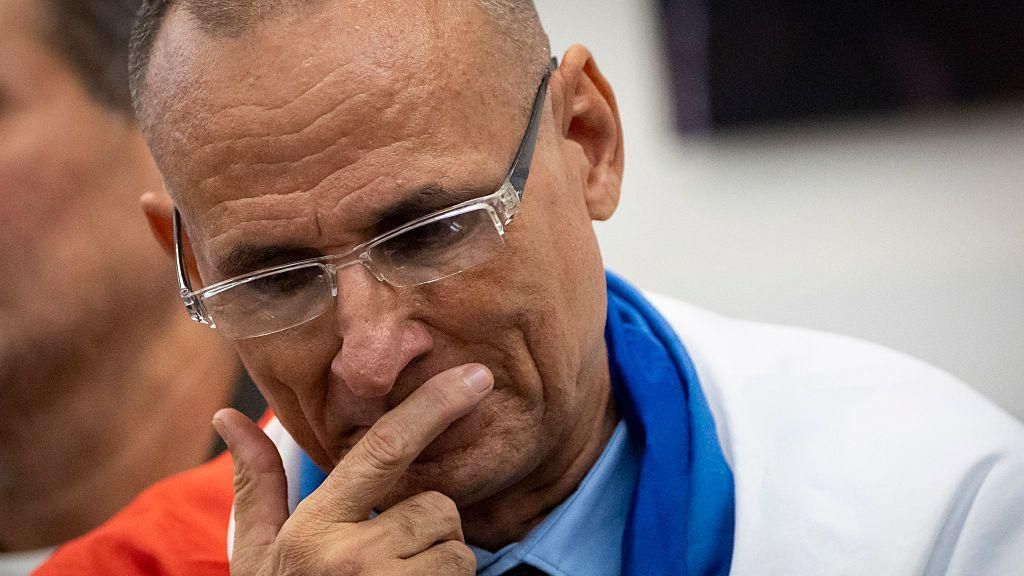
Cuban dissident begins US exile after release from jail
José Daniel Ferrer, a prominent Cuban dissident and vocal critic of the Communist government, has arrived in Miami following his release from a Cuban prison. Upon landing in the United States, Ferrer immediately called for the freedom of hundreds of political prisoners still detained in Cuba. The 55-year-old activist revealed earlier this month that he made the ‘difficult decision’ to go into exile after learning that his wife could face imprisonment and their son might be sent to a juvenile detention facility. The Cuban foreign ministry stated that Ferrer and his family left the country following a ‘formal request’ from the U.S. government, emphasizing that Ferrer had given his ‘explicit acceptance.’ Ferrer, the coordinator of the Patriotic Union of Cuba, a coalition of dissident organizations, has been a relentless advocate for democracy in a country where political opposition is banned. His activism has led to multiple imprisonments, including a brief release in January 2023 as part of a Vatican-negotiated deal that saw Cuba removed from the U.S. list of state sponsors of terrorism. However, Ferrer was re-arrested three months later for allegedly violating his parole terms. He has accused Cuban authorities of subjecting him to humiliation and torture, describing his treatment as ‘cruelty without bounds.’ Fellow dissidents have labeled his departure as a ‘forced exile.’ U.S. Secretary of State Marco Rubio praised Ferrer’s leadership and advocacy, stating that his efforts posed a significant threat to the Cuban regime. Rubio also urged the international community to hold Cuba accountable for its human rights abuses and demand the release of over 700 political prisoners.