作者: admin

  • Sudanese paramilitary forces kill at least 28 people in an attack in Darfur, group says

    Sudanese paramilitary forces kill at least 28 people in an attack in Darfur, group says

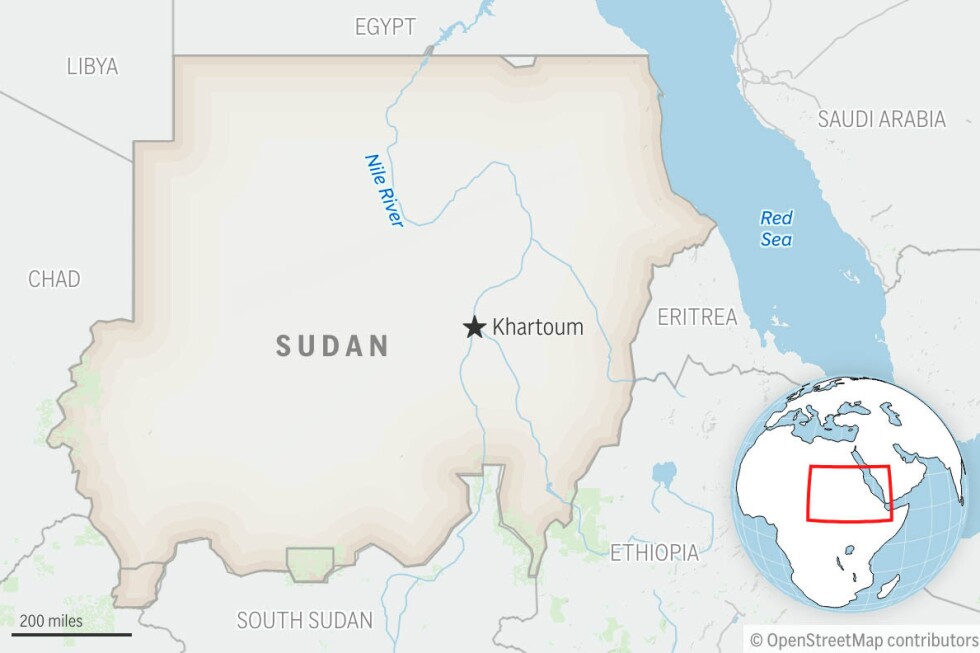
    CAIRO — A devastating assault by Sudan’s paramilitary Rapid Support Forces (RSF) on the North Darfur town of Misteriha has resulted in significant casualties, according to a Tuesday report from the Sudan Doctors Network. The medical organization, which monitors the nation’s ongoing conflict, confirmed at least 28 fatalities and 39 individuals wounded, including 10 women, during the Monday offensive.

    The town serves as a key stronghold for Arab tribal leader Musa Hilal, who shares ethnic ties with the majority Rizeigat Arab tribe of the RSF. The attack commenced over the weekend with drone strikes targeting Hilal’s guesthouse, escalating into a full-scale ground offensive on Monday that culminated in the RSF seizing control of Misteriha.

    In a particularly concerning development, the medical group reported that RSF shelling damaged the town’s healthcare facility. Following this, paramilitary fighters allegedly assaulted medical personnel and detained at least one staff member. This incident highlights the perilous conditions facing aid workers in the conflict zone.

    This violence emerges within the broader context of Sudan’s devastating war, which erupted in 2023 when tensions between the national army and the rival RSF escalated into open combat. Beginning in the capital Khartoum, the conflict has since spread nationwide, creating a humanitarian catastrophe characterized by thousands of deaths, mass displacement, disease outbreaks, and severe food insecurity.

    The capture of Misteriha solidifies RSF dominance across the Darfur region but risks inflaming longstanding tribal tensions in an area with a tragic history of violence and warfare.
  • Spiro secures $50 million from Afreximbank, others to expand Africa battery-swapping network

    Spiro secures $50 million from Afreximbank, others to expand Africa battery-swapping network

    NAIROBI, Kenya — Africa’s electric vehicle sector is experiencing significant financial acceleration as institutional investors demonstrate growing confidence in battery-swapping technologies and charging infrastructure. Three major funding announcements within days signal a transformative period for sustainable transportation across the continent.

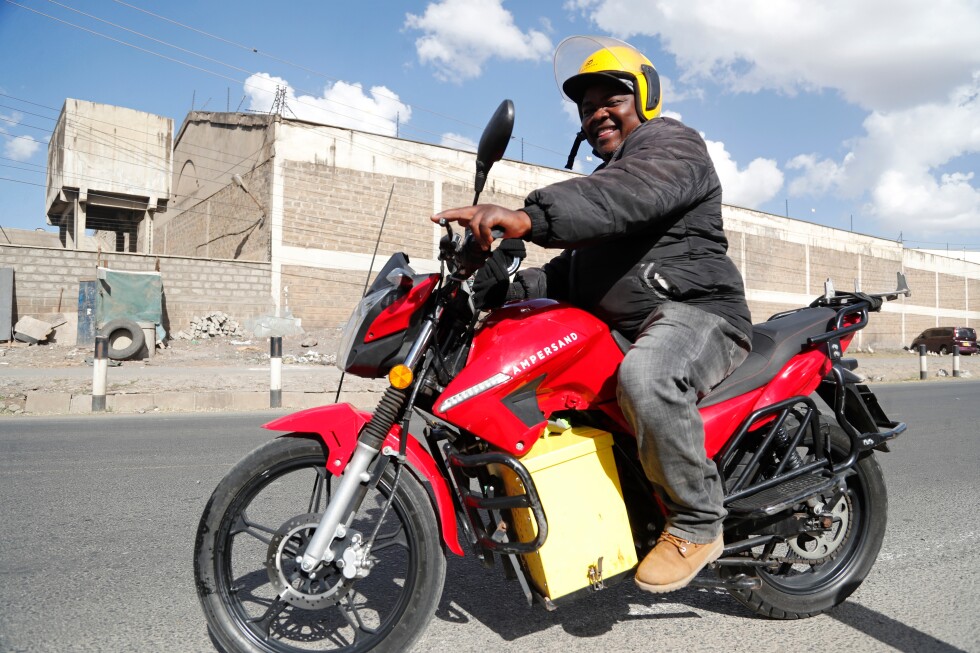
    Spiro, Africa’s predominant electric mobility operator, has secured a substantial $50 million debt financing package from a consortium comprising African Export-Import Bank (Afreximbank), U.S. climate fintech firm Nithio, and the Africa Go Green Fund. This capital injection will facilitate the expansion of Spiro’s battery-swapping network and advance technological innovations including automated battery exchange systems, rapid charging capabilities, and renewable energy integration.

    The funding momentum continued with Arc Ride, another e-mobility enterprise, receiving a $5 million equity commitment from the International Finance Corporation (IFC). Simultaneously, Ugandan electric bike startup Gogo Electric obtained $1 million from ElectriFi, an EU-funded electrification financing initiative managed by EDFI.

    Kaushik Burman, CEO of Spiro, emphasized the strategic importance of this investment: “This new funding reinforces our vision of building a robust, scalable energy network tailored for Africa by Africans.” The company currently operates across six African nations—Kenya, Uganda, Rwanda, Nigeria, Benin, and Togo—with pilot programs underway in Cameroon and Tanzania.

    Spiro’s operational metrics demonstrate substantial scale: deployment of over 80,000 electric motorcycles, circulation of more than 300,000 batteries, completion of 30 million battery swaps, and establishment of over 2,500 swap stations. These operations have enabled riders to accumulate over one billion carbon-free kilometers.

    Gagan Gupta, Spiro’s founder, outlined the environmental objectives: “We will use it to deploy energy infrastructure that will contribute meaningfully to a greener future in Africa.”

    Development financiers perceive electric mobility as both an environmental solution and an industrialization opportunity. Raghav Sachdeva, Chief Investment Officer at Nithio, noted: “Spiro is one of the largest and fastest-growing players in the Pan-African e-mobility market. We see e-mobility as a critical pillar of Africa’s clean energy transition.”

    Laurène Aigrain, Managing Director of Africa Go Green Fund, highlighted the commercial and environmental dual mandate: “The transaction reflects the fund’s commitment to backing commercially robust businesses that combine innovation with measurable environmental and social impact.”

    Afreximbank officials positioned their support within broader economic development goals. Oluranti Doherty, Managing Director for Export Development, stated: “Driving Africa’s transition to electric mobility is central to how we view sustainable economic development across the continent.”

    Since 2022, Spiro has raised more than $230 million, financing production and assembly facilities across Nigeria, Kenya, Uganda, and Rwanda. This investment pattern reflects the increasing flow of climate-focused capital into Africa’s emerging e-mobility sector, signaling both environmental commitment and economic opportunity.

  • From Expo to the Olympics, Milan bets on big events to fuel its transformation to a global city

    From Expo to the Olympics, Milan bets on big events to fuel its transformation to a global city

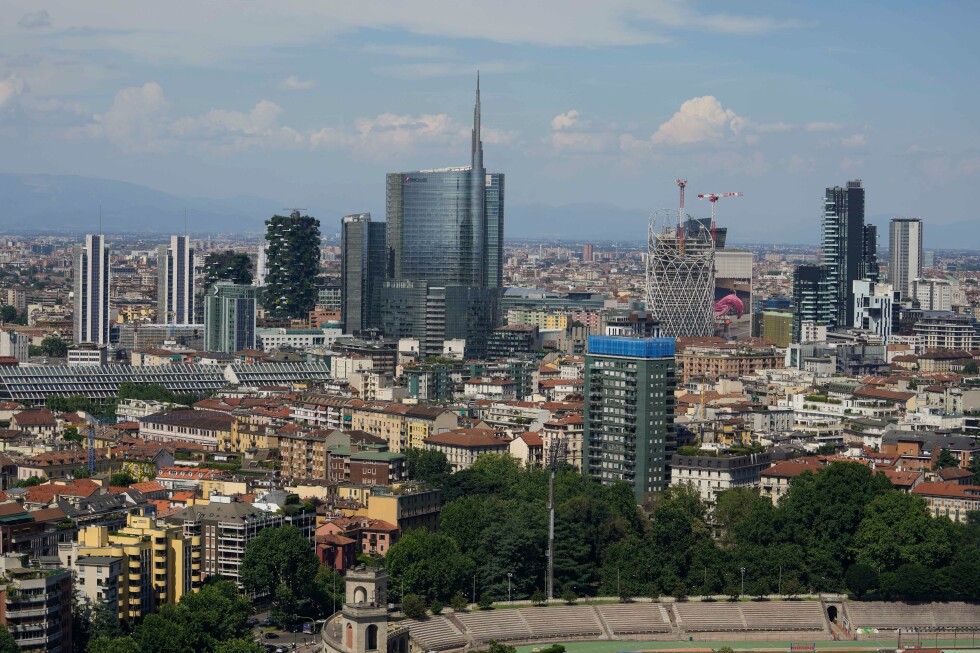
    Milan has strategically leveraged its hosting of the Milan Cortina Winter Games to cement its status as a global metropolis, adding ‘Olympic city’ to its established identities as Italy’s fashion and financial capital. This achievement represents the culmination of two decades of transformative urban development that has reshaped the city’s skyline while stimulating unprecedented investment, tourism, and cultural vitality.

    The Olympic legacy manifests in both tangible infrastructure and intangible prestige. Unlike traditional Games that emphasize massive construction, Milan adopted a distributed model across seven existing venues spanning hundreds of kilometers. The city inherits the state-of-the-art Santgiulia arena—destined for concerts, exhibitions, and sporting events—while the Olympic Village will address critical housing needs by transforming into accommodation for 1,700 students in a city grappling with affordability challenges amid its 10 universities.

    Preliminary data from Bocconi University’s ongoing IOC-commissioned study reveals approximately €4 billion in Games-related investments, encompassing sports facilities, transportation upgrades (roads, metro access, railways, ski lifts), energy infrastructure, and administrative costs. According to Assolombarda business association, Milan specifically invested €735 million to host 90 indoor ice events and the opening ceremony at San Siro, with visitors projected to spend around €1 billion. The Olympics are forecast to boost Milan’s 2026 economic growth by 0.6 percentage points to 1.7%, accelerating industrial output throughout the region.

    This Olympic chapter continues Milan’s remarkable transformation that began in the early 2000s, shifting from a provincial industrial center to an international destination. The CityLife district emerged with iconic skyscrapers by starchitects Zaha Hadid, Daniel Libeskind, and Arata Isozaki, while Porta Nuova development introduced the 218-meter UniCredit Tower. Expo 2015 served as a pivotal catalyst, drawing 22 million visitors over six months and triggering sustained tourism growth—rising 6.5% to 9.6 million visitors in 2025.

    Beyond tourism, Expo sparked a €3 billion investment converting the former site into MIND, a science and technology hub. The city has since tripled its five-star hotel capacity, added two subway lines, and opened numerous cultural institutions including Fondazione Prada, MUDEC, and Pirelli HangarBicocca.

    However, rapid development has fueled criticism from housing activists who argue that mega-events and luxury developments prioritize wealthy interests, driving real estate prices beyond reach for many workers. They demand policies addressing 80,000 vacant residences while increasing subsidized housing options.

    The Olympic Village has accelerated regeneration of the southern Porta Romana railyard, adjacent to major former industrial sites. This 20-hectare project will deliver 100,000 square meters of housing—approximately half designated as social housing under 2019 regulations—along with extensive parks and public spaces. The area neighbors Fondazione Prada and emerging fashion hubs hosting Bottega Veneta, Moncler, and upcoming OTB headquarters.

    Sporting legacy extends beyond infrastructure, with Italy’s record 30 medals expected to reignite winter sports participation. Olympic organizers are collaborating with companies to promote daily physical activity—an initiative carried over from Paris 2024. Milan’s convention operator has committed to maintaining temporary ice facilities while studying permanent rink options, capitalizing on renewed enthusiasm for ice sports.

    As Professor Dino Ruta of Bocconi University notes, ‘Milan is increasingly creating a distinctive brand able to attract an international audience.’ The Games have provided both global visibility and concrete mechanisms for urban improvement, though balancing growth with social equity remains an ongoing challenge for Italy’s rising metropolis.

  • Ex-Olympic boxing champ Yoka takes DR Congo license but rejects Olympic switch from France

    Ex-Olympic boxing champ Yoka takes DR Congo license but rejects Olympic switch from France

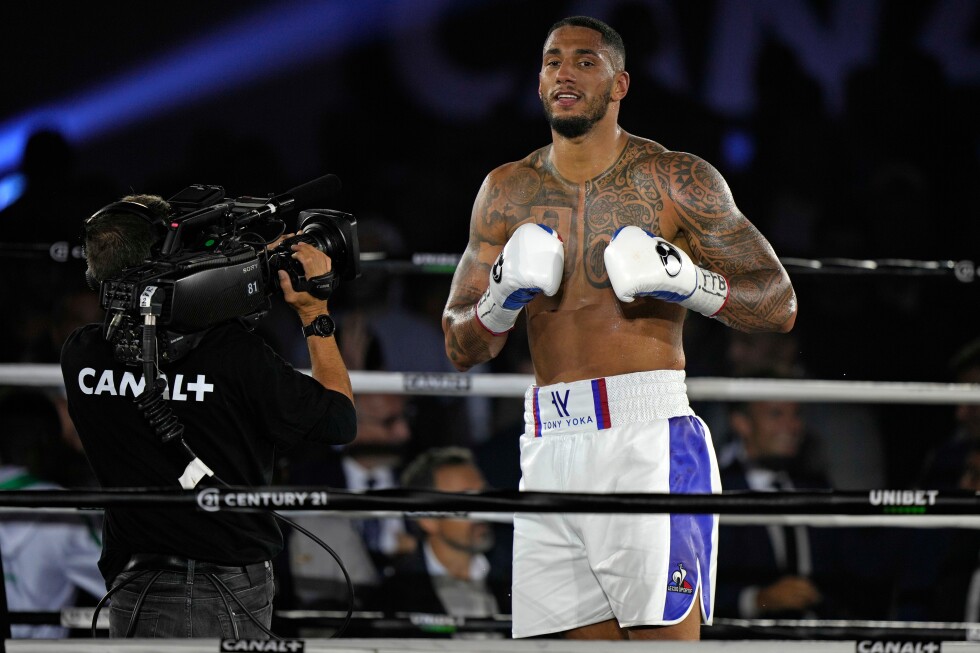
    PARIS — French Olympic gold medalist Tony Yoka has formally obtained a boxing license from the Democratic Republic of Congo, his father’s homeland, while simultaneously clarifying that this administrative move does not signal a change in his competitive nationality or Olympic aspirations.

    The 33-year-old super heavyweight champion, who triumphed at the 2016 Rio de Janeiro Olympics, addressed speculation through a video message on his Instagram platform this Tuesday. Yoka explicitly stated: “Under no circumstances is there any question of me going to the Olympic Games representing the Democratic Republic of Congo. I am and will remain a French Olympic champion.”

    This clarification comes after Congolese Sports Minister Didier Budimbu Ntubuanga previously announced that Yoka had committed to representing Congo with ambitions for Olympic gold, alongside establishing a dedicated boxing academy within the country. The minister had characterized the arrangement as “a major boost for national boxing.”

    Yoka explained that the Congolese license serves purely practical purposes for an upcoming bout scheduled in the country later this year. The boxer emphasized his pride in contributing to Congo’s international recognition while honoring his familial heritage.

    “I’m proud to be able to help the Democratic Republic of Congo shine in the eyes of the world, as well as to honor my word and pay tribute to minister Didier Budimbu, who trusts me in this adventure,” Yoka stated in his social media announcement.

    Following an extensive amateur career spanning 84 fights, Yoka transitioned to professional boxing in 2017. His current professional record stands at 15 wins (12 by knockout) against 3 losses. The former champion is currently working to revitalize his career under the guidance of British promoter Frank Warren.

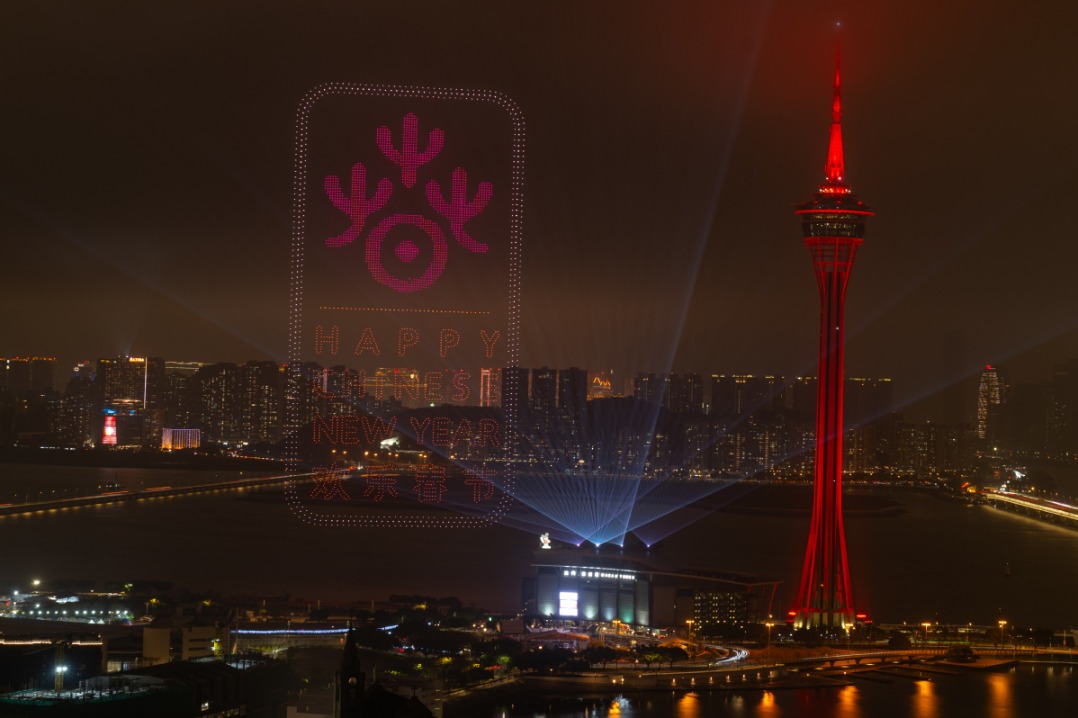
  • Drone and fireworks show staged in Macao to celebrate Spring Festival

    Drone and fireworks show staged in Macao to celebrate Spring Festival

    China Daily Information Co (CDIC) has established comprehensive copyright protection protocols for all content published across its digital platforms. The company’s stringent policies explicitly prohibit the republication or utilization of any materials—including textual content, photographs, and multimedia information—without obtaining prior written authorization from CDIC.

    The copyright notice, which dates back to 1994, underscores the organization’s long-standing commitment to intellectual property protection. The publication recommends optimal viewing experience through browsers with 1024*768 resolution or higher, ensuring consumers access content in its intended format.

    CDIC maintains multiple regulatory certifications, including Online Multimedia Publishing License 0108263 and Registration Number 130349, demonstrating compliance with China’s digital publishing regulations. The media organization additionally provides information regarding corporate operations, advertising opportunities, contact channels, and employment prospects for both domestic and international professionals through its dedicated portal sections.

  • Year of the Horse, full speed ahead

    Year of the Horse, full speed ahead

    As China welcomed the Year of the Horse in February 2026, the nation erupted in vibrant celebrations marking the Lunar New Year. The festivities showcased a rich tapestry of cultural traditions and modern innovations across the country.

    In Macao, a spectacular drone and fireworks display illuminated the night sky, creating a mesmerizing technological spectacle that drew thousands of spectators. Meanwhile, in Shanxi province, tourists flocked to the historic Zhaoyu Ancient City to experience traditional Spring Festival celebrations amidst well-preserved architectural heritage.

    The unique horse culture of Inner Mongolia took center stage at a winter photography festival, where the region’s equestrian traditions were displayed against breathtaking snowy landscapes. This celebration held particular significance during the Year of the Horse in the Chinese zodiac, symbolizing strength, speed, and perseverance.

    Cultural institutions reported record engagement, with China’s science and technology museums attracting over 3.5 million visits during the holiday period. The surge in domestic tourism also set new records, particularly in cross-border travel between mainland China and special administrative regions, leading to unprecedented traffic on major transportation corridors.

    The celebrations extended beyond China’s borders, with Chinese tourists spreading festive vibes internationally while maintaining deep connections to their cultural roots. The panda, China’s national treasure, continued to capture public imagination as these beloved animals became integrated into daily life narratives during the holiday season.

    Despite the celebrations, authorities remained vigilant about public safety, issuing warnings about forest fire risks in Guangdong province following several incidents. The mixed pattern of traditional observance and modern adaptation characterized China’s approach to one of its most important cultural festivals, demonstrating both the preservation of heritage and embrace of innovation.

  • Trump to address a changed America at vital moment for his presidency

    Trump to address a changed America at vital moment for his presidency

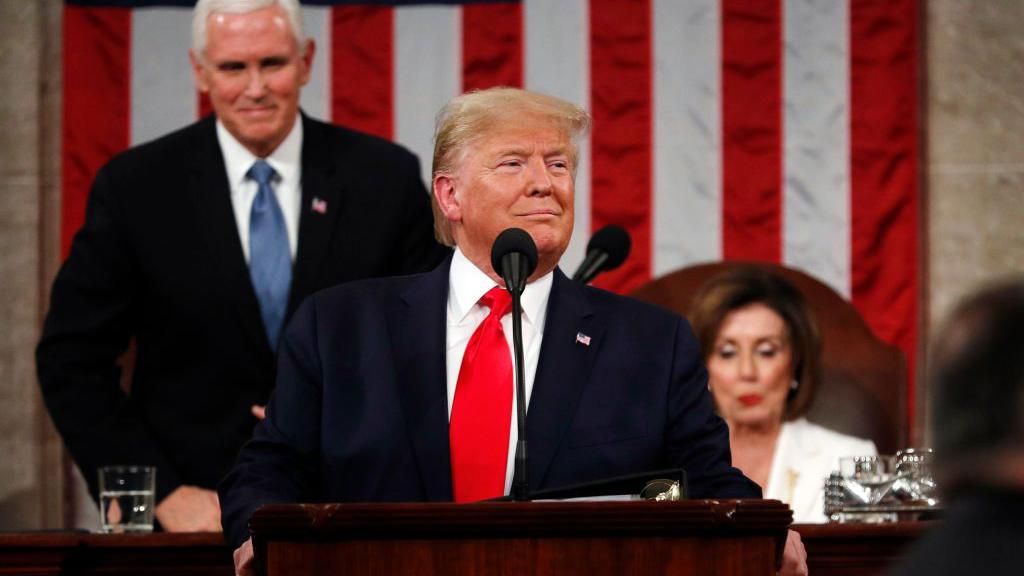
    President Donald Trump approaches Tuesday’s State of the Union address at a critical juncture in his second term, facing mounting political challenges and declining public approval ratings. This nationally televised speech represents his final major opportunity to sway voter sentiment before November’s midterm elections, which could determine whether Republicans maintain congressional control or face Democratic opposition that might lead to legislative gridlock and renewed impeachment threats.

    Throughout the past year, Trump has pursued an aggressive transformation of presidential power, implementing sweeping immigration restrictions, realigning foreign alliances, and challenging fundamental checks and balances within the American political system. While achieving substantive policy victories both domestically and internationally, many initiatives have proven deeply divisive among the American public.

    Recent polling indicates significant erosion in Trump’s popular support, with CNN and Washington Post surveys showing approval ratings of just 36% and 39% respectively. His traditional strongholds—immigration and economic policy—have become particular vulnerabilities. The administration’s hardline immigration tactics, including deploying federal agents to cities like Minneapolis, have faced widespread protests and operational setbacks. Similarly, trade policies featuring aggressive tariffs have been ruled illegal by the Supreme Court, creating economic uncertainty despite stock market highs and low unemployment.

    According to rhetorical scholar Professor Robert Rowland, Trump faces an unusual challenge for this address: broadening his appeal beyond his core supporters rather than employing his characteristic combative style. Historically, State of the Union speeches serve to unite rather than divide, requiring a diplomatic approach that doesn’t come naturally to this president.

    The address may also address national security concerns, including potential military preparations regarding Iran—a foreign policy development that could dramatically reshape the political landscape. Ultimately, Trump’s performance will reveal whether he can demonstrate the humility and conciliatory tone needed to reverse his declining popularity, or whether he will instead double down on controversial positions that have defined his presidency.

  • What to know about Trump’s State of the Union address

    What to know about Trump’s State of the Union address

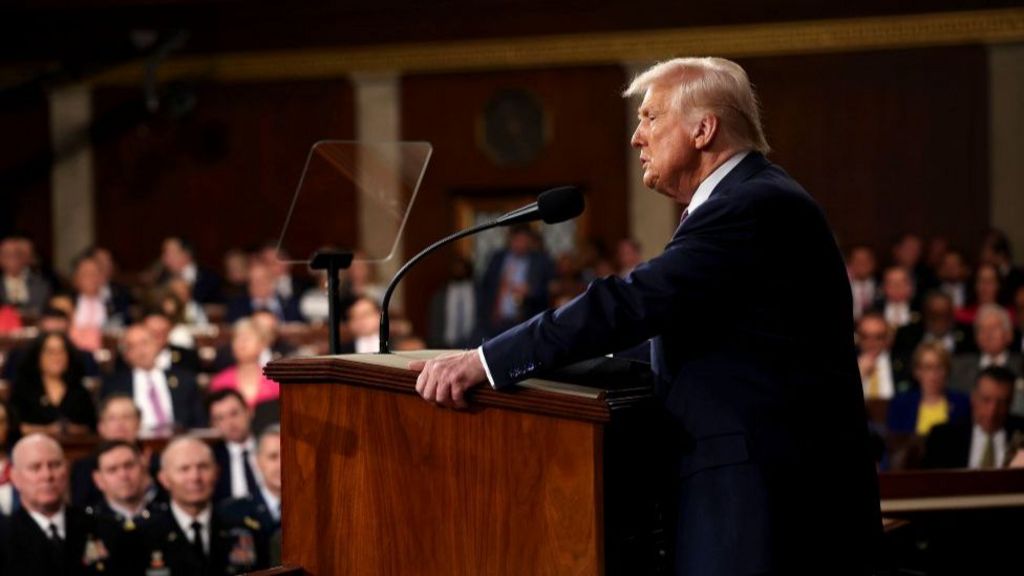
    Washington D.C. braces for President Donald Trump’s pivotal State of the Union address scheduled for Tuesday evening at 9:00 PM EST. The historic event will unfold in the Capitol’s House chamber before a distinguished assembly comprising Supreme Court justices, military leadership, and lawmakers from both chambers of Congress—though numerous Democratic representatives have announced their intentional absence.

    This constitutionally mandated address represents a critical opportunity for the president to outline his administration’s achievements and future policy objectives. The speech occurs against the backdrop of impending midterm elections, adding significant political weight to its delivery and reception.

    Historical context reveals the evolution of this presidential tradition since George Washington’s first address in 1790. In contemporary times, the event has transformed into a major media spectacle, consistently featuring an opposition rebuttal—a practice institutionalized since 1966.

    Anticipated discussion points include immigration enforcement, where the administration has recorded substantial decreases in illegal border crossings despite controversy surrounding deportation tactics. Trade policy remains another focal area following recent Supreme Court rulings challenging the president’s tariff authority. Additional expected topics encompass overseas ceasefire negotiations, Iranian relations, and the recent apprehension of Venezuelan leader Nicolás Maduro.

    The event’s guest list reveals strategic political messaging, with lawmakers inviting symbolic attendees including immigration reform advocates, law enforcement family members, and victims of high-profile crimes. Notably absent will be the designated survivor—a cabinet member secured at an undisclosed location—and approximately two dozen Democratic lawmakers who plan to counter-program with a “People’s State of the Union” event organized by progressive groups.

    President Trump enters this address having set the record for longest congressional speech during his previous appearance—a remarkable one hour and forty-minute delivery that surpassed President Clinton’s prior record. The address will be broadcast across major networks with BBC providing comprehensive coverage beginning at 8:00 PM EST.

  • France demands explanation from US envoy over ‘surprise’ no-show

    France demands explanation from US envoy over ‘surprise’ no-show

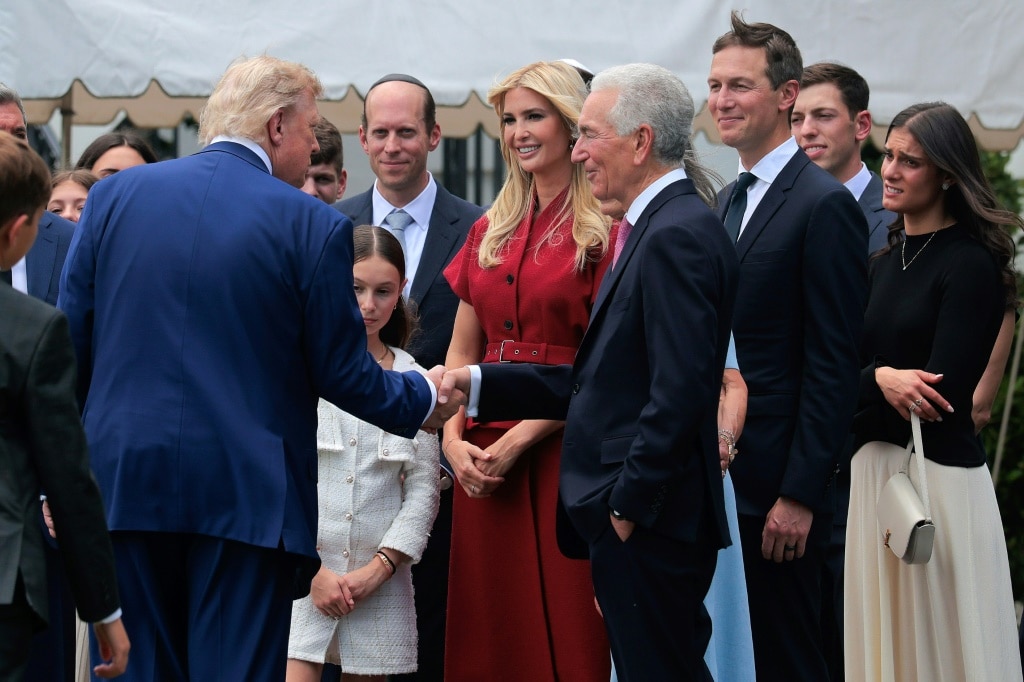
    France’s Foreign Ministry has formally demanded clarification from U.S. Ambassador to France Charles Kushner following his unexpected absence from a scheduled diplomatic meeting. The incident marks the second time Ambassador Kushner has failed to attend a summons from French authorities.

    Foreign Minister Jean-Noel Barrot characterized the ambassador’s absence as a breach of fundamental diplomatic protocols, expressing his ‘surprise’ at the development during a broadcast interview with France Info. The meeting was intended to address U.S. commentary on France’s internal political matters following the death of far-right activist Quentin Deranque in Lyon.

    According to diplomatic sources familiar with the matter, Ambassador Kushner cited ‘personal commitments’ as justification for his non-attendance, instead dispatching a senior embassy official to represent him. This pattern of behavior has drawn criticism from diplomatic professionals, including former U.S. Ambassador to Venezuela Charles Shapiro, who emphasized that responding to foreign ministry summons constitutes a fundamental obligation of diplomatic service.

    The current diplomatic tension originated when the U.S. Embassy in Paris reposted statements from the Trump administration commenting on political violence in France following Deranque’s death during clashes between radical-left and far-right groups. Minister Barrot explicitly stated that France ‘does not accept that foreign countries can come and interfere in, then insert themselves into, our national political debate, whatever the circumstances.’

    Despite the diplomatic friction, French officials have indicated that bilateral relations between the nations remain unaffected. However, Barrot noted that the incident would impact Ambassador Kushner’s operational effectiveness within France. The French government has already implemented measures restricting Kushner’s access to ministerial-level officials.

    Ambassador Kushner, a 71-year-old multimillionaire real estate developer and former attorney, received a presidential pardon from Donald Trump in 2020 after previously pleading guilty to multiple federal charges including tax evasion and witness tampering. His appointment represented Trump’s preference for placing loyalists and family associates in key diplomatic positions, as evidenced by his comment to Paris Match magazine that ‘It’s a great thing because he’s in our family.’

  • China’s sci-tech museums draw over 3.5m visits during Spring Festival holiday

    China’s sci-tech museums draw over 3.5m visits during Spring Festival holiday

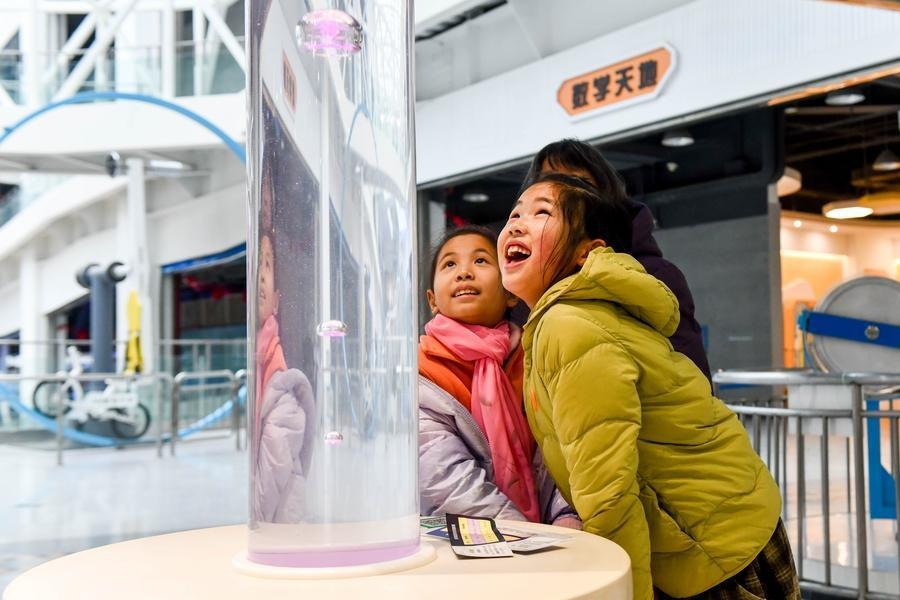
    China’s network of science and technology museums experienced unprecedented popularity during the recent Spring Festival holiday, recording a remarkable 3.5 million visits across the nine-day celebration period. The China Science and Technology Museum (CSTM) in Beijing reported these figures on Monday, highlighting how these institutions successfully merged educational content with cultural festivities to create engaging experiences for visitors of all ages.

    The flagship Beijing facility alone attracted over 200,000 visitors with its special Year of the Horse themed exhibitions. Nationwide, regional science museums developed customized programming that blended traditional Chinese zodiac symbolism, intangible cultural heritage elements, and interactive technology demonstrations. These carefully crafted experiences allowed families to explore scientific concepts while simultaneously participating in Lunar New Year traditions.

    According to CSTM officials, the institution will continue to pioneer innovative approaches to science communication throughout 2026. This strategic direction aims to enhance public engagement with scientific concepts and support China’s broader objectives of achieving greater self-reliance in science and technology through improved science literacy among the population. The successful holiday programming demonstrates how cultural institutions can effectively combine entertainment with education to stimulate public interest in scientific fields.