作者: admin

  • Oversight assisted 14th Five-Year Plan

    Oversight assisted 14th Five-Year Plan

    As China prepares for its annual ‘Two Sessions’ political gatherings in March, national political advisers are finalizing policy recommendations informed by extensive grassroots research. Jin Hua, a member of the Chinese People’s Political Consultative Conference (CPPCC) National Committee from Qinghai’s Haixi Mongol and Tibetan Autonomous Prefecture, has conducted thorough field investigations into elderly care challenges in high-altitude regions.

    Her research at rural mutual-aid elderly care centers in Dulan county revealed that despite the construction of over 140,000 rural elderly care facilities during the 14th Five-Year Plan period (2021-2025), seniors in remote plateau areas require more specialized support. While increased state investment has provided adequate nursing beds for disabled elderly, institutions face low occupancy rates and staffing shortages due to harsh climatic conditions and traditional attitudes toward institutional care.

    Jin emphasized the urgency of establishing village-level elderly care teams to ensure remote seniors receive assistance when needed. For the upcoming CPPCC session, she will propose guidelines for plateau medical-nursing institutions including critical emergency oxygen supply services.

    The CPPCC National Committee’s preparatory work builds upon five years of systematic oversight conducted from 2021-2025. During this period, the committee executed continuous supervisory activities across ten key areas including business environment optimization, black soil conservation, development of the Guangdong-Hong Kong-Macao Greater Bay Area, elderly-friendly social transformation, veterans’ benefits, rural habitat improvement, and sports-education integration.

    This oversight mechanism involved 47 grassroots inspection tours led by CPPCC vice-chairpersons with participation from 779 committee members, resulting in 48 specialized reports and 323 governmental recommendations that facilitated implementation of 25 laws and regulations.

    Meanwhile, Clarence Ling Chun-kit, a CPPCC National Committee member from Hong Kong, has focused his research on youth development and enterprise expansion. Having conducted investigations at the Dagang Oilfield in Tianjin, Hainan Free Trade Port, and interregional economic exchanges, Ling plans to submit proposals addressing the integration challenges Hong Kong youth face in the Greater Bay Area, particularly regarding cultural adaptation and career development.

    Ling emphasized that young people represent a vital force for national development and praised China’s consultative democracy system for ensuring the ‘scientific soundness and rigor’ of national policies. Approximately 2,100 CPPCC National Committee members will convene in Beijing in March, where the formulation of the 15th Five-Year Plan (2026-2030) will serve as a central focus of deliberations.

  • Starmer visit sparks interest in Shanghai’s premier snack

    Starmer visit sparks interest in Shanghai’s premier snack

    A simple culinary purchase by British Prime Minister Keir Starmer during his Shanghai visit has unexpectedly catapulted a local pastry into global recognition. While touring the historic Yuyuan Garden, Starmer acquired a box of hudiesu—a butterfly-shaped confection—from renowned restaurant Lu Bo Lang, sparking immediate international interest in the traditional Shanghai treat.

    The Prime Minister’s 48-yuan ($6.90) purchase of eight palm-sized pastries generated substantial social media buzz across multiple countries. This incidental endorsement produced dramatic commercial results: daily sales at Lu Bo Lang surged from approximately 100 boxes to 300 boxes almost overnight, according to restaurant staff.

    Shanghai residents expressed bemusement at the sudden international attention, as hudiesu has long been regarded as one of the city’s premier culinary gifts. The pastry represents a unique fusion of Chinese and Western culinary traditions—a crispy, flaky delicacy that perfectly complements coffee or tea. Unlike its northern Chinese counterparts which tend to be smaller and harder, the Shanghai variation is notably buttery, light, and exceptionally flaky.

    Veteran pastry chef Lin Jianming attributes the distinctive quality to precise flour-butter ratios. Though the palmier originated in 1930s Europe (where it’s sometimes called “the heart of France”), Shanghai’s interpretation has evolved into a distinctly local specialty.

    Wu Jianglei, manager of the prestigious Park Hotel Bakery—whose recipe gained intangible cultural heritage status in Huangpu District in 2021—explained the adaptation process: “We reduced sugar content by 50 percent from traditional French recipes to emphasize butter’s aroma, transforming the texture from hard and crispy to soft and fluffy.”

    The Park Hotel Bakery’s version has achieved legendary status among connoisseurs. First introduced when the hotel opened in 1934 as “Ear Cake” and originally served exclusively during afternoon tea, the pastry became publicly available in the 1980s and rapidly gained popularity.

    Wu characterizes the treat as “a miniature embodiment of Chinese-Western cultural fusion that symbolizes Shanghai’s openness and inclusiveness.” Obtaining these freshly made delicacies requires significant dedication—lines typically form by 7:30 AM for the 8 AM opening, with waits extending to 2.5 hours during peak afternoon periods. The bakery enforces a six-pack daily purchase limit to manage demand.

    Despite the challenges, the bakery sells approximately 7,500 packs daily to both local enthusiasts and international visitors. American tourist Mike Brown attested: “I waited three hours from 2 PM—definitely worth it!” Wu notes the growing international clientele recognizes these pastries as representing significant contemporary cultural and economic phenomena.

  • Inside the Mexican resort that was the final hideout of ‘El Mencho’

    Inside the Mexican resort that was the final hideout of ‘El Mencho’

    The picturesque mountain resort of Tapalpa, Jalisco—typically known for its serene ecotourism and weekend retreats—became the unlikely epicenter of Mexico’s relentless drug war this week. Nemesio Oseguera Cervantes, the notorious leader of the Jalisco New Generation Cartel (CJNG) known as ‘El Mencho’, met his end following an audacious military operation at the exclusive Tapalpa Country Club.

    The dawn raid on Sunday transformed the tranquil resort into a combat zone, with machine gun fire and military helicopters shattering the calm. Tourists, initially seeking refuge in the area’s luxurious cabins, described hours of intense firefights between government special forces and the cartel’s security detail. ‘It was terrifying… you could hear machine guns firing from the ground into the air and from the air to the ground,’ one anonymous tourist recounted to AFP.

    Authorities revealed that Oseguera had been maintaining a low profile at the property with his girlfriend, whose presence ultimately proved instrumental in tracking the elusive drug lord. During the attempted escape through the mountainous terrain, Oseguera sustained fatal wounds and died while being transported to a medical facility.

    The aftermath revealed a scene of abrupt departure: Oseguera’s two-story stone residence, adorned with religious imagery, was surrounded by hundreds of shell casings and an abandoned Jeep with doors left open. Inside, media photographs showed luxurious furnishings in disarray—open drawers, unmade beds, and personal items including kidney medication (reflecting Oseguera’s long-reported health issues) alongside religious candles and handwritten prayers.

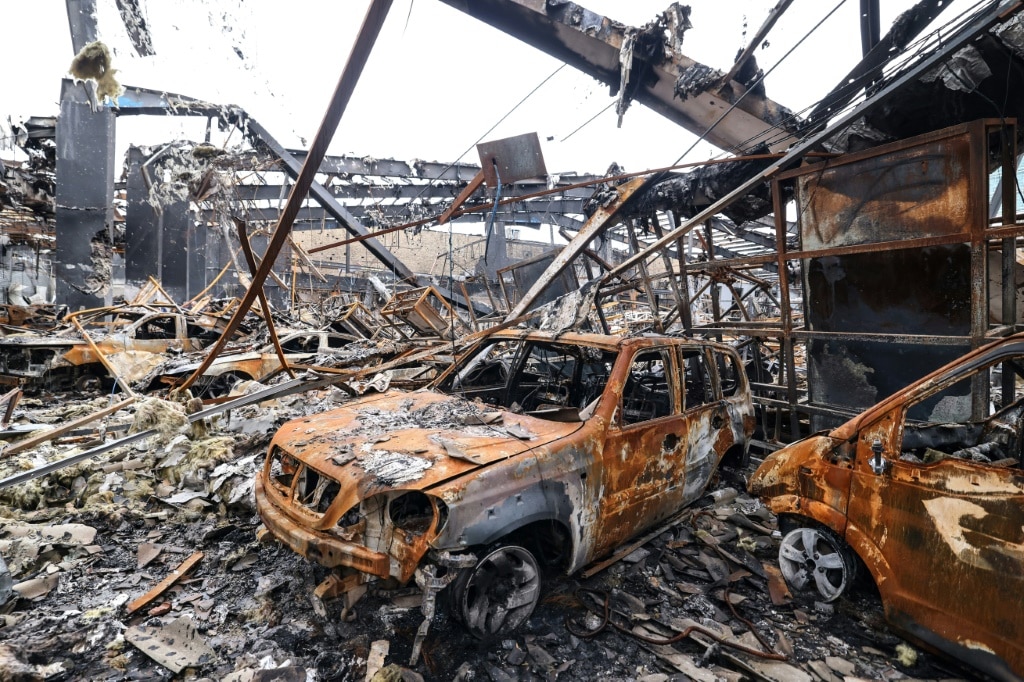
    The operation’s success triggered immediate retaliation across Mexico, with CJNG militants launching coordinated attacks in 20 states. Vehicles were burned on Tapalpa’s outskirts, and the normally vibrant town fell into an eerie desolation as tourists evacuated en masse. By Tuesday, authorities had secured the area, but the resort community remained shaken by its unexpected role in the demise of Mexico’s most-wanted criminal.

  • Targeted aid averts relapse into poverty

    Targeted aid averts relapse into poverty

    China has successfully implemented a sophisticated poverty prevention mechanism during its five-year transition period following the historic eradication of extreme poverty in 2020. President Xi Jinping has consistently emphasized the critical importance of maintaining robust safety nets across rural communities to prevent any large-scale regression into poverty conditions.

    During his inspection tour of Yunnan and Guizhou provinces in March 2025, President Xi articulated that while China’s development focus has shifted toward quality growth, rural development priorities must remain undiminished. “The safety net for those lifted out of poverty must be as solid as a fortress,” Xi declared, underscoring the government’s commitment to preventing any significant backsliding.

    The precision approach builds upon the “targeted poverty alleviation” concept first introduced by President Xi during his 2013 visit to Shibadong village in Hunan province. This methodology emphasizes granular identification of at-risk households, customized assistance programs, and meticulous progress tracking.

    According to Ministry of Agriculture and Rural Affairs data, monitoring systems have identified over 7 million vulnerable individuals during the transition period, each receiving tailored support interventions. The strategy employs multi-dimensional assessment criteria including industrial development stability, employment consistency, and education/medical expense burdens.

    In practical implementation, Hunan province has pioneered “door-knocking actions” where officials conduct household-by-household need assessments simultaneously with a sophisticated data cross-referencing platform that integrates information from 14 governmental departments. This system automatically generates early warnings when households encounter significant medical expenses or other risk factors.

    The case of Jiuguanping village exemplifies the successful application of these measures. Village Party secretary Zhang Nanbei reported that nine households required monitoring, with five still classified as at-risk. Support mechanisms include public welfare employment opportunities generating approximately 7,800 yuan annually, state subsidies of 630 yuan monthly for elderly residents, and comprehensive medical coverage.

    Beyond safety nets, sustainability derives from industrial development. Hunan allocated 600 million yuan to establish six specialized industrial clusters encompassing citrus, vegetables, tea, and traditional Chinese medicine herbs. Nationwide, all 832 previously designated impoverished counties have cultivated distinctive leading industries with combined output exceeding 1.7 trillion yuan.

    Professor Wang Sangui of Renmin University’s China Poverty Alleviation Research Institute emphasizes that as China enters the 15th Five-Year Plan period (2026-30), the focus should shift from campaign-style interventions toward institutionalized support mechanisms. “Common prosperity is a long-term process that cannot rely on extraordinary measures but must be built on sustainable systems,” Wang noted, advocating for unified monitoring systems and enhanced benefit-sharing arrangements that integrate farmers more comprehensively into industrial value chains.

  • Modi’s Israel visit to test India’s priorities in the Middle East

    Modi’s Israel visit to test India’s priorities in the Middle East

    Indian Prime Minister Narendra Modi has embarked on a pivotal two-day diplomatic mission to Israel, marking his first visit since the outbreak of the Gaza conflict. The carefully orchestrated itinerary features high-level engagements with Israeli Prime Minister Benjamin Netanyahu and President Isaac Herzog, including a scheduled address before the Knesset—Israel’s parliamentary body. Notably absent from the agenda are meetings with Palestinian leadership, underscoring the complex geopolitical calculations underlying this visit.

    The diplomatic engagement occurs against a backdrop of escalating regional tensions, including heightened US military presence and nuclear tensions with Iran. Despite these challenges, both nations are prioritizing the strengthening of defense, technology, and trade partnerships that have flourished under Modi’s decade-long leadership. The relationship reached a historic turning point during Modi’s groundbreaking 2017 visit, the first by an Indian prime minister, which established new paradigms for counter-terrorism cooperation and defense procurement—making India one of Israel’s largest arms customers.

    Netanyahu characterized the visit as ‘historic,’ emphasizing on social media platform X that ‘the bond between Israel and India is a powerful alliance between two global leaders. We are partners in innovation, security and a shared strategic vision.’ Modi reciprocated by affirming India’s commitment to ‘the enduring friendship with Israel, built on trust, innovation and a shared commitment to peace and progress.’

    However, the visit faces domestic political challenges in both nations. Israeli opposition parties have threatened to boycott Modi’s Knesset address amid an ongoing judicial reform controversy, while Indian opposition leaders have criticized the government’s perceived abandonment of Palestinian solidarity. India maintains its official support for a two-state solution while navigating relationships with Iran and other Middle Eastern nations critical of Israel.

    According to Kabir Taneja of the Observer Research Foundation, ‘India’s indigenous defense technology is still lagging on many fronts, especially as warfare becomes more automated and technology driven. Given tensions with Pakistan and China, India does not have the luxury of not seeking the best technological equipment.’ Regional stability remains critically important for India’s connectivity and energy security interests, ensuring Modi will carefully balance his praise for Israeli relations with preservation of India’s broader Middle Eastern partnerships.

  • Hungary’s Orbán stakes his reelection on anti-Ukraine message

    Hungary’s Orbán stakes his reelection on anti-Ukraine message

    BUDAPEST, Hungary — As Hungary approaches a pivotal April 12 election, Prime Minister Viktor Orbán is leveraging an aggressive disinformation campaign to redirect voter attention from domestic economic concerns toward neighboring Ukraine. With his right-wing Fidesz party trailing behind center-right challenger Péter Magyar in independent polls, Orbán’s government has launched a taxpayer-funded media blitz featuring AI-generated imagery of Ukrainian President Volodymyr Zelenskyy depicted alongside European officials in what appears to be a demand for financial support.

    The campaign’s central message—”We won’t pay!”—directly challenges European Union efforts to sustain Ukraine amid Russia’s ongoing invasion. Orbán positions himself as protecting Hungarian interests against what he characterizes as EU warmongering, suggesting alignment with Ukraine could economically cripple the nation and force Hungarian youth into military conscription.

    This rhetoric escalated Monday when Hungary blocked the EU’s 20th sanctions package against Russia and vowed to veto further pro-Ukraine policies until resumed oil shipments via Ukraine are guaranteed. Orbán’s administration claims Russian oil disruptions resulted from Ukrainian actions, though Kyiv attributes the January pipeline damage to Russian drone strikes.

    Analysts note Orbán’s strategy mirrors previous successful election tactics where external threats were emphasized over domestic shortcomings. András Rácz, Russia expert at the German Council on Foreign Relations, observed: “Populists often define an imaginary enemy and offer protection. Ukraine has been ideal from this perspective.”

    The campaign emerges amid Fidesz’s weakening position following political scandals, including a presidential pardon for a child sexual abuse case accomplice that triggered resignations. Challenger Magyar, a 44-year-old former Fidesz insider, has capitalized on these controversies while campaigning on economic issues, anti-corruption measures, and restoring Hungary’s Western alliances.

    Despite government-controlled media amplifying anti-Ukraine narratives, dissenting voices emerged during recent Budapest demonstrations where hundreds commemorated the invasion’s anniversary. Liberal Mayor Gergely Karácsony condemned Orbán’s approach as “a betrayal not only of Ukraine, but of Hungary’s national interest,” while Ukrainian students in Hungary criticized the billboards as politically motivated misinformation funded by Hungarian taxpayers.

  • India’s Modi is making his second official visit to Israel to meet with Netanyahu

    India’s Modi is making his second official visit to Israel to meet with Netanyahu

    Indian Prime Minister Narendra Modi arrived in Jerusalem on Wednesday for a pivotal two-day diplomatic mission aimed at deepening security, economic, and technological cooperation with Israel. The visit marks a significant moment in bilateral relations as both nations seek to reinforce their strategic partnership amid ongoing regional instability.

    Modi’s itinerary includes high-level discussions with Israeli Prime Minister Benjamin Netanyahu and President Isaac Herzog, followed by an address to the Israeli parliament. The Indian leader characterized the relationship as ‘a robust and multifaceted Strategic Partnership’ that has ‘significantly strengthened in recent years’ in a pre-visit statement on social media platform X.

    Netanyahu, who previously described himself and Modi as ‘personal friends,’ emphasized the importance of economic and security collaboration, particularly in emerging technologies including artificial intelligence and quantum computing. The Israeli leader noted both countries are building ‘an axis of nations committed to stability and progress.’

    The timing of Modi’s visit provides Israel with valuable international backing as it faces deteriorating relations with traditional allies following the Gaza conflict that erupted in October 2023. India represents Israel’s second-largest trading partner in Asia, with bilateral trade reaching $3.62 billion during the 2025 fiscal year according to India’s Commerce Ministry.

    This diplomatic engagement continues the momentum established during Modi’s groundbreaking 2017 visit—the first by an Indian prime minister to Israel—and Netanyahu’s reciprocal trip to India the following year. The growing partnership signals a notable evolution in India’s foreign policy, which historically supported Palestinian causes and only established full diplomatic relations with Israel in 1992.

    While Modi quickly expressed solidarity with Israel following Hamas’ October 2023 attack, India recently joined over 100 nations in criticizing Israel’s expanded measures in the occupied West Bank that further weaken the Palestinian Authority’s limited governance capabilities.

  • US and South Korean militaries will have joint drills in March as tensions with North Korea escalate

    US and South Korean militaries will have joint drills in March as tensions with North Korea escalate

    SEOUL, South Korea — The United States and South Korean militaries have officially confirmed their upcoming annual Freedom Shield joint military exercises, scheduled for March 9-19. This announcement comes during a period of heightened diplomatic tensions with nuclear-armed North Korea, which has consistently condemned such drills as rehearsals for invasion.

    The Freedom Shield exercises represent one of two major annual command post simulations conducted by the allies, alongside the Ulchi Freedom Shield drills in August. These computer-simulated exercises are designed to enhance combined operational capabilities through evolving war scenarios and contemporary security challenges. The March drills will be complemented by the Warrior Shield field training program, aimed at increasing tactical realism and combat preparedness, according to Colonel Ryan Donald, public affairs director for U.S. Forces Korea.

    This military preparation unfolds as North Korea conducts a significant political conference where leader Kim Jong Un is anticipated to outline his strategic domestic, foreign policy, and military objectives for the coming five years. Experts suggest Kim may use this platform to reinforce his hard-line stance toward South Korea, demand the removal of denuclearization preconditions for talks, and announce further integration of nuclear and conventional forces.

    The timing is particularly sensitive given North Korea’s rapidly advancing nuclear weapons program, which now includes systems capable of targeting U.S. allies in Asia and potential long-range missiles reaching American territory. Despite South Korean President Lee Jae Myung’s expressed desire for inter-Korean engagement and hopes that former President Trump’s anticipated visit to China might facilitate renewed diplomacy, North Korea has repeatedly rejected calls to resume denuclearization talks.

    Colonel Jang Do-young of South Korea’s Joint Chiefs of Staff clarified that while the exercises won’t simulate responses to nuclear attacks, they will include training specifically aimed at deterring nuclear threats. The allies continue to discuss specifics of the field training component, with participation numbers typically reaching thousands of personnel.

    The regional security landscape is further complicated by intensifying U.S.-China competition, prompting Washington to encourage Seoul to assume a greater defense burden against North Korea as America shifts focus toward China. Meanwhile, Kim Jong Un has prioritized relations with Russia, providing military support for Moscow’s war in Ukraine, potentially in exchange for aid and technological assistance.

  • Trump insists Joint Chiefs chair on board for Iran military move

    Trump insists Joint Chiefs chair on board for Iran military move

    President Donald Trump conceded Monday that a U.S. military offensive against Iran would prove catastrophic for the Middle Eastern nation’s civilian population, even as his administration actively contemplates assault options. This admission emerged alongside reports indicating private cautions from General Dan Caine, Chairman of the Joint Chiefs of Staff, regarding the substantial risks associated with attacking Iran—a country of over 90 million inhabitants.

    In a Truth Social post, Trump contested media narratives suggesting General Caine expressed reservations about potential military engagement. Contrary to these reports, Trump asserted that the general maintains a steadfast focus on victory, stating Caine would “lead the pack” if commanded to execute military operations. The president—who terminated a landmark diplomatic agreement with Iran during his initial term—added that failure to secure a new accord would result in “a very bad day for that Country and, very sadly, its people.”

    This recognition of potential civilian devastation contrasts sharply with the rhetoric of war advocates who promote regime change as beneficial for Iran’s population. The National Iranian American Council emphasized the urgency of the situation, noting Trump’s own acknowledgment of dire consequences for Iranian civilians.

    Legislative efforts are underway to prevent unauthorized military action, with the House of Representatives preparing to vote on a resolution requiring congressional approval for Iran engagement. However, the measure faces slim prospects of reaching the president’s desk. Recent polling indicates minimal public support for initiating conflict, with only 21% of Americans endorsing military action against Iran.

    According to New York Times reporting, the administration is considering a phased approach involving initial targeted strikes followed by expanded operations if Iran refuses to abandon its nuclear program. Behind-the-scenes negotiations explore a potential compromise allowing limited nuclear enrichment exclusively for medical research purposes. This diplomatic initiative unfolds as U.S. military assets, including aircraft carrier groups and strike aircraft, mass within operational range of Iranian territory.

    General Caine’s reported concerns extend beyond humanitarian considerations to practical military limitations. The Washington Post revealed the general warned that munitions stockpiles have been significantly depleted by ongoing support for Israel and Ukraine, potentially complicating any major operation against Iran.

    The administration’s trajectory toward potential conflict has drawn substantial criticism from policy experts. Matt Duss of the Center for International Policy condemned prospective military action as “an illegal act of war,” noting the abandonment of previous justifications related to protecting Iranian protesters. Duss urged congressional intervention to clarify that the president lacks authorization for employing armed forces against Iran.

  • Troy Maskell found guilty of manslaughter for second time over death of postmaster John Burke

    Troy Maskell found guilty of manslaughter for second time over death of postmaster John Burke

    A Victorian Supreme Court jury has delivered a guilty verdict in the manslaughter case against Troy Matthew Maskell, 47, for the fatal assault on 73-year-old postmaster John Burke. The incident, which occurred in August 2021, resulted in Burke’s death two months after the attack.

    Maskell confronted Burke at a Shell service station near Strathmerton in northern Victoria during the early hours of August 7, 2021. The court heard that Maskell’s partner initiated verbal abuse against Burke, falsely accusing the longtime postmaster of being a pedophile before Maskell escalated the confrontation.

    CCTV evidence presented during the trial showed Maskell picking up a one-liter bottle of Maximus Isotonic sports drink and throwing it with force at Burke’s head. The impact caused the elderly man to fall to the ground. Maskell continued the assault by kicking Burke in the hip and deliberately stomping on his glasses before leaving the premises.

    Burke was transported to hospital where physicians diagnosed a subdural hematoma – a serious brain bleed. Despite medical intervention, he succumbed to his injuries on October 16, 2021, after two months of hospitalization.

    This verdict represents Maskell’s second conviction for the crime, after the Court of Appeal overturned an earlier guilty verdict from 2023. The appellate court ruled that certain CCTV footage showing Maskell demanding the deletion of assault recordings should have been excluded as prejudicial evidence.

    Burke had served as Strathmerton’s postmaster for 45 years and was widely respected within the community. Maskell is scheduled to return to court for a presentence hearing on Thursday.