作者: admin

  • Trump threatens Canada with aircraft tariffs, decertification over Gulfstream approvals

    Trump threatens Canada with aircraft tariffs, decertification over Gulfstream approvals

    In a significant escalation of trade tensions, former President Donald Trump has threatened to impose 50% tariffs on all Canadian-manufactured aircraft and decertify Bombardier Global Express business jets from U.S. airspace. The ultimatum, issued via Truth Social on Thursday, demands that Canadian regulators immediately certify several Gulfstream aircraft models produced by U.S.-based General Dynamics.

    Trump’s declaration specifically targets Canada’s certification process for Gulfstream 500, 600, 700, and 800 jets, despite these models having already received certification from both the Federal Aviation Administration (FAA) and European Union Aviation Safety Agency. The threat emerges amidst broader diplomatic strains following Canadian Prime Minister Mark Carney’s recent comments questioning the U.S.-led international order.

    Aviation experts warn that implementing these measures would severely disrupt U.S. air travel networks. American Airlines and Delta Air Lines, which operate extensive fleets of Canadian-built regional aircraft, would face immediate operational challenges. Industry analysts project that over 5,400 Canadian-manufactured aircraft currently registered in the United States—including narrow-body jets, regional aircraft, and helicopters—could be affected.

    Richard Aboulafia, Managing Director of AeroDynamic Advisory, emphasized the dangerous precedent of mixing aviation safety with political disputes: ‘Mixing safety issues with politics and grievances is an incredibly bad idea. This approach could provide other nations with a powerful weapon to use against U.S. aviation interests worldwide.’

    The potential grounding of Canadian regional jets would disproportionately impact rural communities and conservative-leaning states that depend on regional air connectivity. Many smaller airports would lose essential air service, while major hubs would suffer from reduced connecting traffic.

    Bombardier, which maintains significant U.S. operations including multiple service centers and a growing defense facility in Wichita, Kansas, expressed concern through an official statement: ‘We have taken note of the post from the President and are in contact with the Canadian government. We hope this is quickly resolved to avoid significant impact to air traffic and the flying public.’

    Legal experts question the feasibility of Trump’s threat, noting that the FAA typically requires safety-related justifications for decertification decisions rather than economic or political considerations. The certification process conventionally follows international standards where the designing country’s aviation authority (in this case, the FAA for Gulfstream aircraft) provides primary validation, with other nations typically accepting these determinations despite retaining rights to request additional data.

    This development occurs against the backdrop of Canada’s efforts to diversify its trade relationships beyond the United States, which currently receives approximately 70% of Canadian exports under the US-Mexico-Canada Agreement framework.


  • South Africa expels Israeli envoy over ‘violations of diplomatic norms’

    South Africa expels Israeli envoy over ‘violations of diplomatic norms’

    South Africa has declared Israeli chargé d’affaires Ariel Seidman persona non grata, ordering his expulsion within 72 hours for multiple violations of diplomatic protocols. The diplomatic rupture comes amid deteriorating relations between the two nations following South Africa’s genocide case against Israel at the International Court of Justice.

    According to South Africa’s foreign ministry, Seidman committed serious breaches of diplomatic norms, including using official social media channels to launch personal attacks against President Cyril Ramaphosa and arranging unauthorized visits by Israeli officials. The ministry characterized these actions as “a gross abuse of diplomatic privilege” that warranted immediate diplomatic consequences.

    The current diplomatic crisis stems from South Africa’s unprecedented move to bring genocide charges against Israel at the UN’s highest court regarding its military operations in Gaza. Israel has vehemently denied these allegations, calling them baseless and politically motivated.

    Seidman, who assumed his position last year, held diplomatic responsibilities extending beyond South Africa to several neighboring nations including Eswatini, Lesotho, Madagascar, Mauritius, and Namibia. Israel currently maintains no ambassadorial representation in South Africa, further complicating bilateral communications.

    The BBC’s attempts to obtain commentary from the Israeli embassy in Pretoria have thus far gone unanswered. This development represents one of the most significant diplomatic confrontations between the two nations in recent history, reflecting the deepening divide over Israel’s military actions in Palestinian territories.

  • South Africa declares Israel’s deputy ambassador persona non grata, orders him to leave country

    South Africa declares Israel’s deputy ambassador persona non grata, orders him to leave country

    CAPE TOWN, South Africa — In a significant deterioration of bilateral relations, South Africa has declared Israeli charge d’affaires Ariel Seidman persona non grata, demanding his departure within 72 hours. The expulsion order, announced Friday by the South African Foreign Ministry, follows what officials describe as systematic violations of diplomatic protocols by Israeli representatives.

    The diplomatic rupture stems from multiple grievances, including repeated inflammatory social media posts from official Israeli accounts that targeted South African President Cyril Ramaphosa with perceived insults. Additionally, South African authorities cited Israel’s deliberate failure to notify them of official visits by Israeli delegations, characterizing these actions as unacceptable breaches of established diplomatic norms.

    Seidman represents the most senior Israeli diplomatic presence in South Africa since Israel recalled its ambassador in 2023. The current escalation occurs against the backdrop of South Africa’s genocide case against Israel at the International Court of Justice, where Pretoria has accused Israel of committing genocide against Palestinians in Gaza—allegations Israel vehemently denies.

    The expulsion decision is anticipated to provoke strong reactions from the United States, Israel’s primary ally. Previous administrations have criticized South Africa’s foreign policy orientation, particularly regarding its support for the Palestinian cause, which has previously created diplomatic tensions with Washington.

  • Trump endorses deal to avert government shutdown; immigration talks to continue

    Trump endorses deal to avert government shutdown; immigration talks to continue

    In a significant political development, former President Donald Trump has publicly endorsed a bipartisan spending agreement crafted by Senate Republicans and Democrats, designed to prevent an imminent federal government shutdown. The arrangement, however, leaves critical negotiations on immigration enforcement tactics unresolved for the time being.

    Speaking to reporters on Thursday, Trump acknowledged the possibility of a shutdown despite the deal, stating, ‘It could happen. I don’t know.’ The agreement’s fate in the House of Representatives remains uncertain, with no clear timeline for when the chamber might consider the measure. House Speaker Mike Johnson indicated logistical challenges in recalling representatives from their scheduled break before the regular Monday session, creating risk of a brief weekend government closure.

    The breakthrough arrangement strategically decouples the debate over aggressive immigration enforcement from essential government funding legislation that must pass before Friday’s midnight deadline. This separation ensures continuous operation for crucial agencies including the Pentagon and the Department of Health and Human Services.

    Trump expressed hope for bipartisan support in a social media post, writing: ‘Hopefully, both Republicans and Democrats will give a very much needed Bipartisan ‘YES’ Vote.’

    The compromise emerged following heightened tension after Senate Democrats threatened to block funding packages in response to the shooting of a second U.S. citizen by immigration agents in Minneapolis last weekend. The incident prompted demands for substantial reforms within the Department of Homeland Security (DHS), which oversees federal immigration enforcement.

    Under the proposed solution, DHS funding would receive a two-week extension through separate legislation, creating a negotiation window for addressing Democratic demands. These include restrictions on roving patrols, prohibitions on face masks for agents, and mandatory body camera requirements—measures gaining traction following public outrage over the shooting death of nurse Alex Pretti by federal agents.

  • Exxon Mobil reports strong quarterly profit on solid production at home and abroad

    Exxon Mobil reports strong quarterly profit on solid production at home and abroad

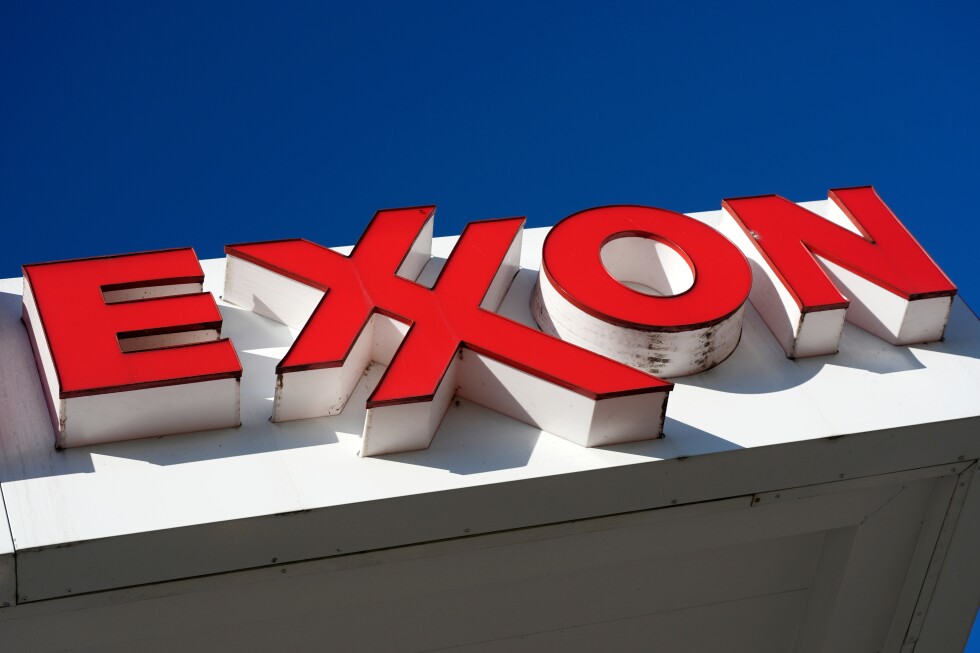
    ExxonMobil Corporation delivered a robust financial performance for the fourth quarter, surpassing analyst earnings projections despite falling short on revenue expectations. The energy behemoth reported quarterly earnings of $6.5 billion, equating to $1.53 per share. This performance, while strong, represents a decline from the $7.61 billion, or $1.72 per share, recorded in the same period the previous year.

    A critical metric for investors, adjusted earnings excluding one-time events, reached $1.71 per share. This figure exceeded the Wall Street consensus estimate of $1.68 per share, as compiled by Zacks Investment Research. The company maintains a policy of not adjusting its officially reported results for such non-recurring items.

    The quarter was notably driven by a significant uptick in production output. Net production rose to 5 million oil-equivalent barrels per day, a marked increase from 4.7 million in the third quarter. This surge was largely fueled by exceptional results from two key operational regions: the Permian Basin, which yielded 1.8 million oil-equivalent barrels per day, and projects in Guyana, which are rapidly approaching a gross production level of 875,000 barrels per day.

    However, total revenue for the quarter was reported at $82.31 billion, slightly below the analyst forecast of $83.18 billion. This revenue shortfall, combined with external geopolitical factors, seemingly influenced investor sentiment. Consequently, ExxonMobil’s stock experienced a pre-market dip of over 2% on the announcement day.

    The reporting period was also shadowed by geopolitical commentary from the White House. President Donald Trump indicated a predisposition to exclude ExxonMobil from future operations in Venezuela. This statement followed public skepticism from the company’s leadership regarding the viability of oil investments in the country following the political upheaval and ousting of former President Nicolás Maduro. Encouraging U.S. energy firms to invest and aid in rebuilding Venezuela’s crippled oil infrastructure remains a stated priority for the Trump administration.

  • Trump threatens tariffs on any nation supplying Cuba with oil

    Trump threatens tariffs on any nation supplying Cuba with oil

    In a significant escalation of foreign policy measures, U.S. President Donald Trump has issued a new threat against nations supplying petroleum products to Cuba. The announcement came Thursday through an executive order authorized under a national emergency declaration, marking the latest development in Washington’s intensified campaign against the Communist-governed island.

    The presidential directive did not specify particular tariff rates or identify specific countries that might face import duties. This development follows the U.S. military’s recent operation in Venezuela that resulted in the capture of ousted President Nicolas Maduro. Emboldened by this successful intervention, the Trump administration has increasingly vocalized its intentions to confront Cuban leadership.

    President Trump asserted this week that ‘Cuba will be failing pretty soon,’ noting that Venezuela, historically Cuba’s primary oil supplier, has ceased both petroleum shipments and financial support to the island nation. The tariff threat represents a continuation of the administration’s use of economic measures as instruments of foreign policy during Trump’s second term.

    Cuban leadership has previously dismissed Washington’s pressure campaign, with President Miguel Díaz-Canel stating earlier this month that the United States lacks moral authority to compel agreements with Cuba. The ongoing tension reflects deepening geopolitical divisions in the Western Hemisphere as the Trump administration expands its efforts to counter left-wing governments throughout the region.

  • How financial centres can reimagine the global dynamics of finance?

    How financial centres can reimagine the global dynamics of finance?

    Global financial centers are undergoing a fundamental transformation as they confront the limitations of aging infrastructure in an era of digital assets, AI innovation, and continuous operational demands. Historically, these hubs have driven remarkable economic growth—economies with international financial centers have achieved 3.3% annual per capita growth since the 1980s, significantly outpacing the global average of 1.4%. Yet their physical environments have largely remained static while the ecosystem of occupants has dramatically evolved.

    Today’s financial districts host not only traditional institutions but technology firms, data-intensive businesses, regulatory specialists, and AI-driven startups operating beyond cyclical patterns. This new reality demands infrastructure that supports closer coordination between regulators and firms across disciplines including FinTech, RegTech, data analytics, and artificial intelligence.

    The challenge extends beyond physical space to talent retention. Senior professionals and technologists now evaluate locations through a practical lens that considers commute times, housing options, and lifestyle amenities alongside professional networking opportunities. Single-use office zones are increasingly giving way to mixed-use environments that integrate residential space, education, hospitality, and public amenities to support round-the-clock activity.

    Dubai International Financial Centre (DIFC) exemplifies this evolution with its expansion into Zabeel District. Rather than creating a disconnected satellite, DIFC is developing a physically contiguous extension designed as a polycentric hub that maintains governance consistency while absorbing future demand. This strategic approach addresses the critical need for infrastructure, governance, and connectivity to scale together—preserving the proximity between institutions that fosters innovation and institutional trust.

    The Zabeel District represents a structural response to growth challenges, positioning DIFC as a regional driver of global finance’s next era. By implementing an integrated masterplan, the expansion supports emerging areas like advanced technology and AI within the same operational environment that made DIFC successful. This model demonstrates how mature financial centers must adapt to remain functional at scale while preserving their competitive advantages.

    As urban populations are projected to exceed two-thirds of humanity by 2050, the success of financial districts will increasingly depend on their ability to sustain density through thoughtful design of streets, public spaces, and pedestrian connections. For investors, mixed-use developments offer diversified income and long-term growth potential despite the challenges of capital investment, land acquisition, and regulatory navigation.

    The transformation underway at DIFC underscores a broader shift in global finance: competitiveness will be determined by whether districts can maintain operational effectiveness, governance coherence, and talent retention as they grow. Zabeel District represents not merely a real estate project but a strategic blueprint for reimagining finance’s global dynamics through integrated, future-ready design.

  • Trump says he plans to talk to Iran while Pentagon prepares for possible action

    Trump says he plans to talk to Iran while Pentagon prepares for possible action

    In a development highlighting the complex dynamics of U.S.-Iran relations, President Donald Trump announced on Thursday his intention to engage in discussions with Tehran. This statement comes alongside a significant military reinforcement in the region, including the deployment of additional naval assets. Speaking to journalists, Trump confirmed his planning for potential talks but provided no specific details regarding the timeline, format, or Washington’s negotiating team. He juxtaposed this diplomatic overture with a stark reminder of U.S. military readiness, noting, ‘We have a lot of very big, very powerful ships sailing to Iran right now, and it would be great if we didn’t have to use them.’

    This ambivalent approach reflects the administration’s current review of its options. U.S. officials confirm that while military action remains a possibility, no definitive decision to strike Iran has been made. The recent surge in tensions can be traced to a violent government crackdown on widespread protests within Iran, which prompted Trump to repeatedly threaten intervention. Although these demonstrations have since subsided, the underlying issues of economic hardship and political repression persist.

    Further complicating the situation is the nuclear dimension. The President has explicitly stated that the United States would respond decisively if Iran were to resume its nuclear weapons program, referencing previous joint U.S.-Israeli airstrikes on nuclear facilities. The administration’s posture was underscored by Pentagon chief Pete Hegseth, who, using the administration’s preferred term ‘War Department,’ affirmed the military’s preparedness to execute the President’s directives. Hegseth emphasized the U.S. stance that Iran ‘should not pursue nuclear capabilities,’ signaling a firm line in any future negotiations or confrontations.

  • In this US county, measles starts to feel like next pandemic

    In this US county, measles starts to feel like next pandemic

    A resurgent measles outbreak in South Carolina is challenging the United States’ elimination status for a disease once considered conquered. Pediatrician Stuart Simko, who had previously only encountered measles in historical case studies, has treated six gravely ill children within two months—all presenting with characteristic high fevers and the disease’s signature blotchy red rash.

    The current outbreak has infected 789 people in South Carolina, predominantly unvaccinated children, marking the largest measles surge since the disease was declared eliminated in 2000. This development places the US on the verge of following the United Kingdom and Canada in losing its elimination designation, with two school-aged children having already died in a separate Texas outbreak last year.

    Northwestern South Carolina’s Spartanburg County, home to approximately 370,000 residents, has become the epicenter of the crisis. Despite a county-wide vaccination rate of about 90% for school-aged children, specific schools report rates as low as 20% due to religious exemptions. The situation has drawn comparisons to the COVID-19 pandemic, with infected individuals appearing at multiple schools and requiring 21-day quarantines for exposed, unvaccinated students.

    The medical community emphasizes that two doses of the measles, mumps, and rubella (MMR) vaccine provide 97% protection against the illness. Achieving herd immunity—which protects vulnerable populations and limits spread—requires approximately 95% vaccination coverage.

    State Senator Josh Kimbrell, initially hesitant to engage with the outbreak, changed his stance after learning of a vaccinated elementary school teacher who contracted measles from a student and required intensive care for two weeks. His subsequent public health advocacy balancing personal choice with community protection drew both praise and vitriol from constituents.

    The outbreak has disproportionately affected Russian and Ukrainian immigrant communities, with Slavic churches reporting multiple exposures. Misinformation regarding vaccine contents—including debunked claims about fetal cells and autism—has circulated within these communities, complicating public health efforts.

    Despite mobile vaccination clinics administering 62 vaccines since October, health authorities face an uphill battle against vaccine skepticism amplified by federal policy changes. Health Secretary Robert F Kennedy Jr.’s mixed messaging on vaccine safety and his reduction of recommended childhood vaccinations have created additional challenges, though not specifically regarding the MMR vaccine.

    Medical experts warn that the potential loss of measles elimination status represents a catastrophic public health failure, with preventable diseases like polio, mumps, and rubella potentially following measles’ resurgence pattern through communities with low vaccination rates.

  • UAE weather: Dubai, Abu Dhabi temperatures to dip to 16ºC; cloudy conditions ahead

    UAE weather: Dubai, Abu Dhabi temperatures to dip to 16ºC; cloudy conditions ahead

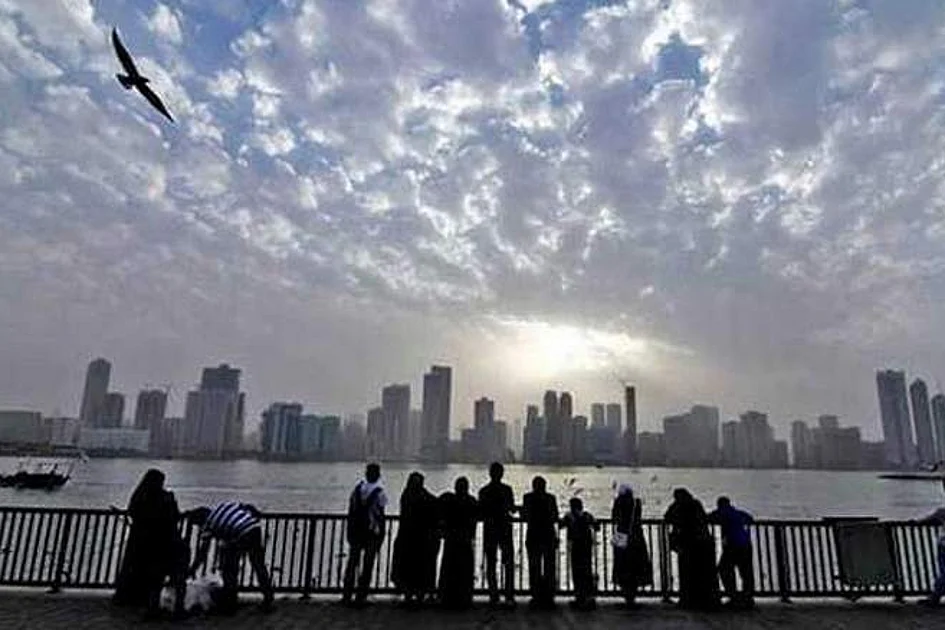
    Meteorological authorities in the United Arab Emirates have forecast a noticeable drop in temperatures across the country, bringing relief from the typical regional heat. According to the National Centre of Meteorology (NCM), residents should prepare for fair to partly cloudy conditions on Friday, with increased cloud coverage expected in eastern and northern regions.

    The weather pattern will bring moderate northwesterly to southwesterly winds ranging between 10-25 km/h, occasionally intensifying to 40 km/h over maritime areas. Maritime conditions will vary significantly, with the Arabian Gulf experiencing moderate to rough seas while the Oman Sea will transition from slight to moderate conditions before becoming rough overnight.

    Temperature fluctuations will see daytime highs reaching 25°C in Dubai and Sharjah, with Abu Dhabi peaking at 24°C. However, nighttime will bring considerably cooler conditions, with mercury levels dropping to 16°C in both Dubai and Abu Dhabi, and 17°C in Sharjah.

    Meteorologists have also indicated increasing humidity levels overnight into Saturday morning, particularly across coastal and internal areas. This elevated moisture content creates favorable conditions for fog or mist formation, potentially affecting visibility in these regions. The combination of cooler temperatures and humidity changes marks a significant shift in weather patterns that residents should account for in their weekend planning.