作者: admin

  • Leeds and Rangers co-owner jailed after prostitution arrest

    Leeds and Rangers co-owner jailed after prostitution arrest

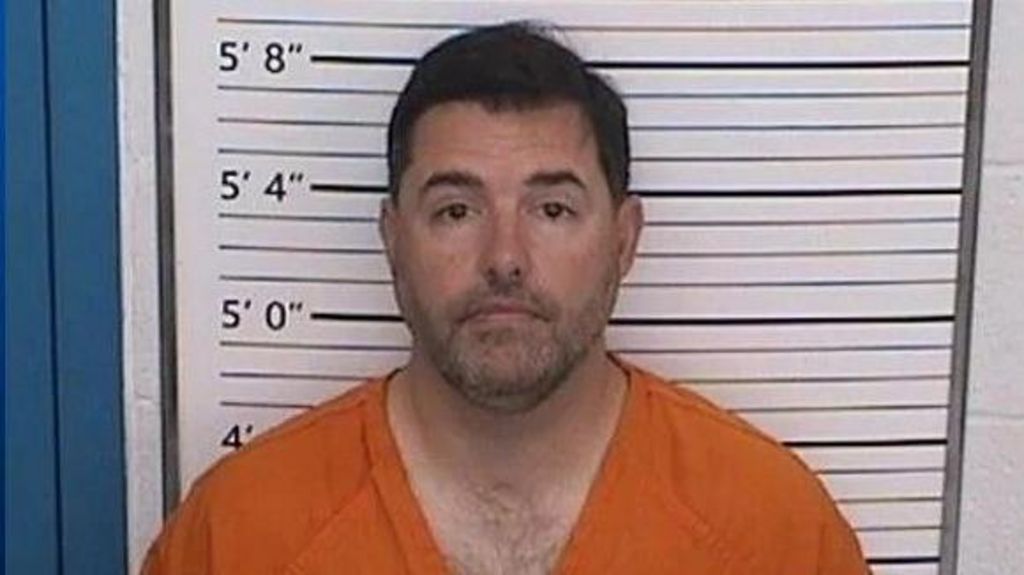
    One of the most high-profile figures in global professional sports ownership is facing legal consequences following an arrest in eastern Ohio that has sent ripples across the NFL, British soccer, and the wider sports industry. Jed York, 46, the CEO and principal owner of the NFL’s San Francisco 49ers and a co-owner of top-tier soccer clubs Leeds United and Rangers FC, entered a no contest plea to two reduced charges during a Monday arraignment at Columbiana County Municipal Court. Under Ohio law, a no contest plea does not constitute a formal admission of guilt but allows the court to record a conviction against the defendant.

    Court documents filed by the East Palestine Police Department outline the sequence of events that led to York’s arrest. According to records from the Ohio Human Trafficking Task Force, York responded to an online prostitution advertisement placed by undercover law enforcement. He then allegedly arranged to pay $140 in exchange for sexual activity with an individual he believed was a sex worker. As part of a negotiated plea deal, the initial solicitation charge was downgraded to two offenses: disorderly conduct and possession of criminal tools, which law enforcement has confirmed refers to the mobile phone York used to contact the undercover advertisement.

    Following the guilty finding from the court, York was sentenced to one day of jail time for each charge, to be served concurrently. He received full credit for time already served in custody following his arrest, meaning he did not spend additional time behind bars. The executive was also ordered to pay $150 in fines for the disorderly conduct conviction and an additional $1,000 fine for the possession of criminal tools charge. On the same day as his plea and sentencing, York’s legal team filed a request to expunge the conviction from public court records—a motion that was immediately denied by the court.

    York’s cross-ownership portfolio spans three major North American and European sports properties. He has led the San Francisco 49ers as principal owner and CEO for nearly two decades, with the franchise remaining one of the most valuable and competitive in the NFL. Through 49ers Enterprises, the NFL franchise’s dedicated investment arm, York has built major stakes in British soccer: the group took full ownership of Leeds United in 2023, after years of incremental investment that began back in 2018 when the club competed in England’s second-tier Championship. More recently, in May 2025, 49ers Enterprises joined a consortium led by American businessman Andrew Cavenagh to acquire a controlling 51% stake in Scottish Premiership side Rangers, placing the historic club under majority American ownership for the first time. A spokesperson for 49ers Enterprises confirmed that York has no involvement in the day-to-day operational management of either Rangers or Leeds United.

    In the immediate aftermath of the court proceedings, all three affected organizations have released limited statements. Both Rangers and Leeds United declined to comment on the legal matter, while the San Francisco 49ers noted that the case has now been resolved and would not issue any further public comment. The National Football League, which oversees the 49ers as a member franchise, confirmed that it is reviewing the conviction under the league’s official personal conduct policy, which outlines standards of behavior expected of all team owners, executives, and players.

  • Hungary files a criminal complaint over $965M COVID-19 ventilator deal, citing possible fraud

    Hungary files a criminal complaint over $965M COVID-19 ventilator deal, citing possible fraud

    BUDAPEST, Hungary — In a major development that reignites scrutiny of pandemic-era public procurement decisions, Hungary’s current foreign ministry has launched a criminal complaint over allegations of potential fraud connected to a 2020 $965 million ventilator purchase orchestrated by the country’s former administration, Foreign Minister Anita Orbán confirmed Tuesday.

    The controversial procurement saw the government of former Prime Minister Viktor Orbán buy roughly 17,000 ventilators from Chinese suppliers in the early months of the COVID-19 pandemic, between March and April 2020. Even at the time of the purchase, the deal drew sharp public criticism: observers argued the country had acquired far more units than it could ever reasonably put into clinical use, and that the per-unit price Hungary paid far outpaced what other European nations paid for identical equipment.

    In a public video posted to her official Facebook page this week, Foreign Minister Anita Orbán — who has no family relation to former Prime Minister Viktor Orbán — outlined findings from the foreign ministry’s internal probe into the procurement. The investigation, she explained, has uncovered reasonable suspicion of criminal activity, including breach of fiduciary duty that caused exceptionally large financial harm to Hungarian public funds, alongside other potential criminal offenses.

    While the foreign minister did not share specific, granular details of individual allegations, she noted that investigators reviewed tens of thousands of documents related to the deal. Critically, a portion of those records had to be recovered using specialized digital forensic tools after attempts to permanently delete them were made, she added. The findings have also opened new lines of inquiry into potential accountability for the foreign ministry’s former senior leadership, she said.

    A public statement published on the Hungarian government’s official website expanded on the suspected irregularities uncovered by the probe. The majority of the ventilators were acquired through intermediary third-party companies, the statement confirmed, and the single transaction pushed these firms’ revenues to extraordinary, exponential levels that would not have been possible otherwise.

    Beyond the suspicious procurement structure, the statement added that many of the delivered ventilators were found to be defective upon arrival. A large share of the total order was never deployed for patient care at all, and ongoing storage costs for these unused medical devices have already amounted to millions of dollars in additional public spending.

    The 2020 ventilator purchase was overseen by Péter Szijjártó, who served as Hungary’s foreign minister for nearly 12 years under the previous administration and built close diplomatic and economic ties with China during his tenure. Szijjártó also oversaw a separate pandemic-era procurement of 5 million doses of China’s Sinopharm COVID-19 vaccine, alongside advancing major Chinese investments in Hungary.

    Just last month, Szijjártó resigned his elected seat in the Hungarian Parliament to accept a senior executive role at Chinese automotive giant BYD, a move that sparked widespread backlash over allegations of conflict of interest. While in office, Szijjártó facilitated hundreds of millions of dollars in government subsidies for BYD’s major manufacturing investment in Hungary. In the wake of his move to the company, the current Hungarian government has already launched a separate probe into BYD’s investments in the country that were secured during Szijjártó’s time in office.

  • Join new Iran sanctions or leave the dollar system: Bessent

    Join new Iran sanctions or leave the dollar system: Bessent

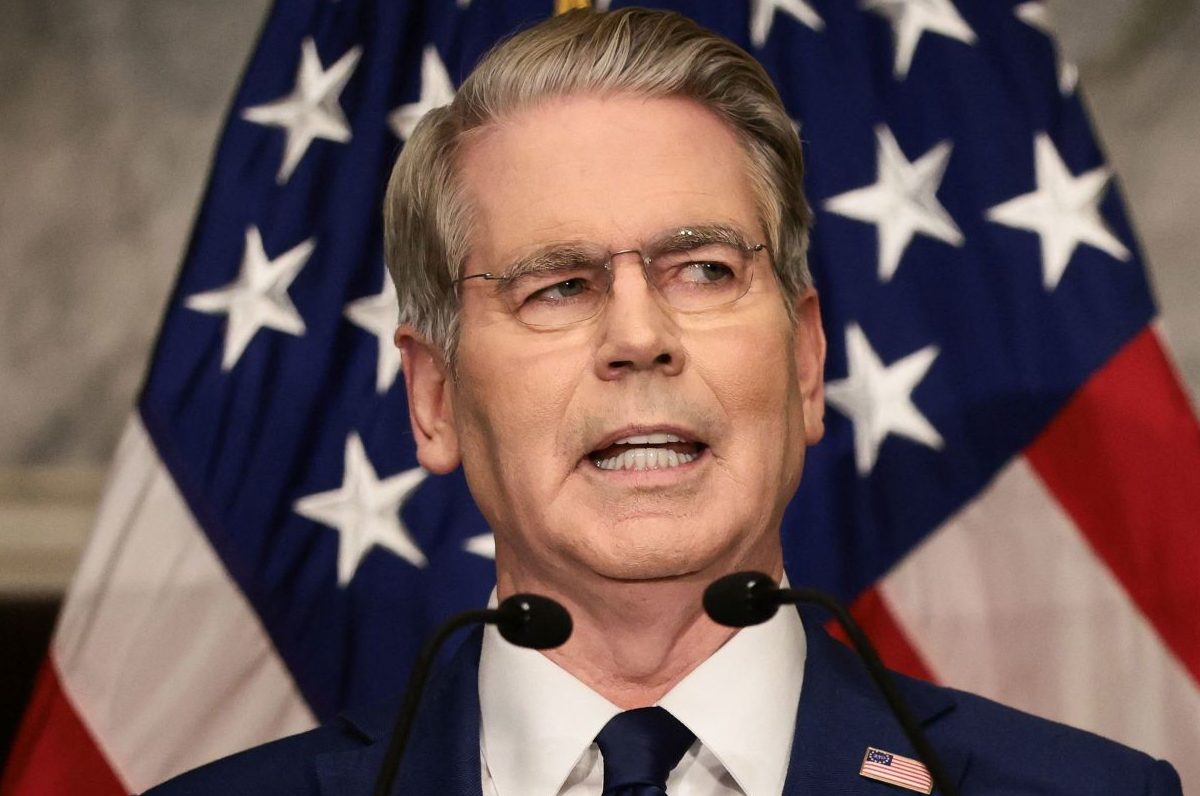
    Six months into what critics describe as an illegal U.S.-Israeli war of choice against Iran, the Trump administration has shifted gears from failed military pressure to a sweeping new economic offensive, announcing harsh new secondary sanctions that threaten any global entity continuing commercial ties with Tehran. Treasury Secretary Scott Bessent laid out the details of the new campaign, branded Operation Economic Outcast, during a formal press conference on Monday, framing the initiative as an all-out effort to cut off Iran’s remaining access to hard currency.

    During the briefing, Bessent left no room for interpretation about the administration’s stance, stating: “An economic engagement of any kind with this murderous regime will expose those responsible to the full reach of American power.” The campaign, which officials have dubbed an “economic D-Day,” targets five core pillars of Iran’s remaining international economic activity: technology, gold, aviation, shipping, and digital assets. The goal of the wide-ranging action is to choke off virtually every remaining stream of foreign currency flowing into the country.
    Bessent emphasized that the era of ambiguous compliance with U.S. policy is over, noting that Washington will no longer tolerate business activity in “gray spaces.” He also confirmed that the Treasury Department plans to announce sanctions against a major global financial institution as early as next week. When pressed on whether Chinese banks that maintain commercial ties with Iran would face penalties, the secretary made clear that “no one is above the reach of U.S. sanctions.” While he declined to name specific countries set for targeting, public trade data identifies China, Turkey, and the United Arab Emirates as Iran’s largest remaining trading partners.

    In response to questions about why sanctions are not being imposed immediately, Bessent explained that the administration is granting a “cure period” to allow global actors to wind down existing activity with Iran. “Why would I want to blow up the global financial system?” he said, adding that the grace period will move quickly, and any entity that fails to comply with U.S. demands risks being cut off from the U.S. dollar financial system.

    Iranian officials have pushed back hard against the new sanctions threat, dismissing the campaign as an admission of U.S. military failure. Deputy Iranian Foreign Minister Kazem Gharibabadi took to social media to mock the announcement, writing: “Is this a victory or an admission of America’s failure!? You say Iran’s military capability has been ‘dismantled,’ 100% of its military factories ‘destroyed’ and its nuclear program ‘buried’; but for this very Iran, the ‘largest financial assault in history’ and the mobilization of ‘all US institutions and authorities’ have been necessary!”

    Despite repeated claims from President Trump that the war is “over” or nearly over, on-the-ground developments confirm Iran holds the upper hand in regional shipping dynamics. Most commercial vessels have avoided the U.S.-supported shipping route through the Strait of Hormuz, instead opting for a corridor controlled by Tehran or steering clear of the waterway entirely.

    The escalating conflict is already carrying tangible economic costs for American households, in addition to the devastating toll on Iranian civilians. Disruptions to oil shipments through the key chokepoint have pushed U.S. national average gasoline prices above $4 per gallon, roughly $1 higher than the same period one year prior. Trump has brushed off public concerns about rising fuel costs, claiming $4 per gallon is “not very high” and vowing he will “never apologize” for the economic pain triggered by his administration’s policies.

    The impact of higher fuel prices extends far beyond the gas pump, as increased transportation costs push up prices for food and consumer goods, keeping overall U.S. inflation elevated. For Iranians, the economic strain is far more severe: Iran’s national currency, the rial, has already plunged to all-time lows amid a prolonged crisis driven by years of U.S. sanctions and the ongoing war.

    Beyond the borders of Iran and the U.S., the new sanctions framework carries major risks for the global economy, as it forces all nations to choose between trading with Iran and retaining access to the U.S.-dominated global financial system. At a press briefing in Beijing on Monday, Chinese Foreign Ministry spokesperson Lin Jian warned that unilateral sanctions only fuel further escalation and benefit no country. “China calls on parties to act rationally and with restraint and avoid taking any measures that may further escalate tensions or deal a blow to global economic growth and financial stability,” Lin said, adding that China will take all necessary steps to protect the legitimate rights and interests of its entities.

    International policy experts have widely criticized Operation Economic Outcast, warning that the gambit carries major risks for global stability and will fail to achieve Washington’s stated goals. Ryan Costello, policy director for the National Iranian American Council, described Trump as a “geopolitical gambler doubling down on a bad hand” in Iran. “What we’ve learned is that President Trump can impose extensive economic pain on Iran, but ordinary Iranians overwhelmingly bear the cost. The ruling elite in Iran remains largely insulated, while Tehran has repeatedly refused to capitulate to Washington’s demands,” Costello noted. He added that Trump’s reckless gamble risks further undermining U.S. national security, regional stability, and the global economy.

    Sina Toossi, a senior nonresident fellow at the Center for International Policy, observed that the new campaign is as much psychological warfare as it is economic, designed to project an image of inevitable Iranian isolation and amplify economic anxiety within the country. He noted that the administration’s tough rhetoric masks a core weakness: the military campaign failed to force Iran into concessions, and cutting off all of Iran’s economic lifelines requires compliance from major powers like China that openly reject Washington’s strategy. “Washington is effectively betting it can achieve through intensified economic strangulation what six months of war could not,” Toossi said. “The capacity to hurt Iran is clear. The path from pain to capitulation or collapse is not.”

    Alan Eyre, a former State Department Iran specialist and current distinguished fellow at the Middle East Institute, argued that the new campaign actually pushes the U.S. toward becoming an economic outcast in global markets. Prominent financial commentator Peter Schiff echoed that criticism on social platform X, noting that the new sanctions are a direct response to the failure of the U.S. military campaign. “However, Operation Economic Outcast will not only fail, but the economic noose that actually tightens may end up being the one wrapped around our neck,” Schiff wrote.

  • Putin issues decree opening door to state control of key sites after deep Ukrainian drone strikes

    Putin issues decree opening door to state control of key sites after deep Ukrainian drone strikes

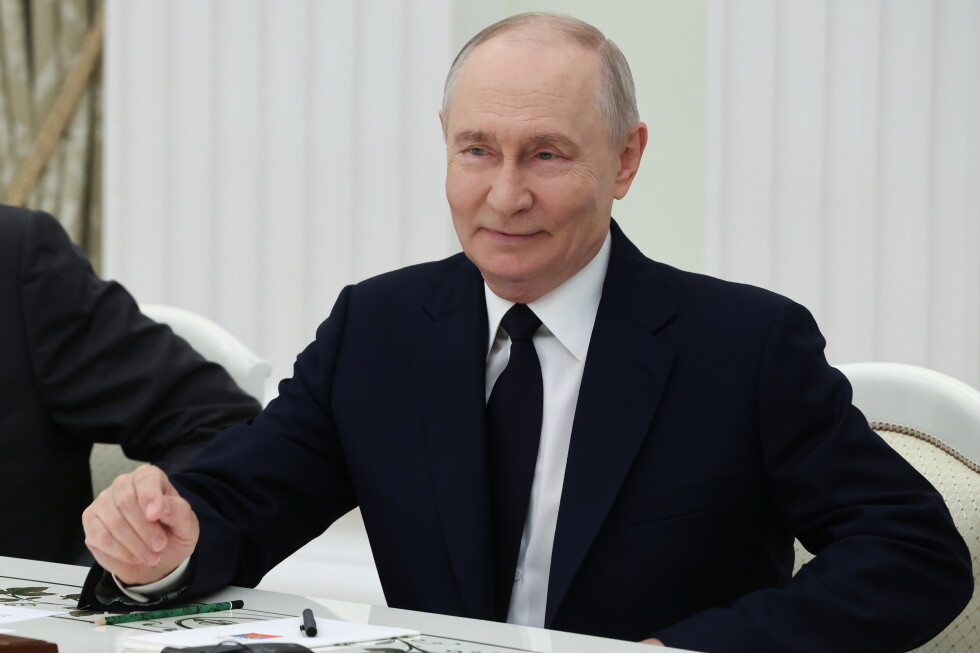
    As the Russia-Ukraine war extends into its third year, a series of increasingly accurate deep strikes by Ukrainian long-range drones have forced Moscow to adopt extraordinary emergency measures. On Monday evening, Russian President Vladimir Putin signed a new decree granting the federal government temporary authority to take over management of critical infrastructure assets if private owners fail to meet two core requirements: implementing sufficient defensive measures against Ukrainian drone attacks and completing reconstruction work following strikes. The new order applies to key sectors across the Russian economy, including energy and fuel facilities, industrial hubs, communications networks, and transport and logistics sites. A wide range of commercial and energy assets have become prime targets for Ukrainian attacks in recent months, with strikes triggering widespread fuel shortages and disrupting core economic activity that has damaged the credibility of Russia’s ruling establishment amid mounting wartime pressure.

    Contrary to early speculation about mass nationalization, Deputy Prime Minister Denis Manturov emphasized in an official statement that the new policy does not alter private ownership rights of affected enterprises. Instead, he framed it as a targeted intervention to resolve urgent national security challenges, noting that “this mechanism doesn’t imply widespread use — targeted, carefully considered decisions will be made at the highest level.”

    Former Putin speechwriter and independent Russian political analyst Abbas Gallyamov offered a pragmatic interpretation of the decree’s core purpose, arguing it is a tactical ultimatum to push reluctant private infrastructure owners to invest in repairs and defense that they would otherwise avoid. Gallyamov noted on his Telegram channel that many key energy facilities, particularly oil refineries, have been struck three to five times by Ukrainian drones, leaving owners unwilling to sink billions of rubles into rebuilding infrastructure that could be destroyed again in short order. “If you don’t finance the restoration of the refineries, we’ll take them away from you,” Gallyamov summarized, framing the order as a pressure tactic rather than a broad seizure of private assets.

    The announcement of the decree came just one day before Ukraine’s General Staff confirmed another successful strike on a key Russian energy asset: the Afipsky oil refinery in Russia’s southern Krasnodar region. Regional governor Veniamin Kondratyev confirmed a large fire broke out at the facility following the overnight attack, marking the latest in a string of high-profile strikes on Russian energy infrastructure that have exacerbated existing economic strains.

    After more than two years of full-scale invasion, Russia faces growing budget pressures from the enormous cost of its war effort, forcing the Kremlin to raise taxes and expand domestic borrowing to keep its widening budget deficit under control. Some analysts note that seizure of damaged private assets could generate short-term windfall revenue for the state, though it would also impose new long-term financial burdens on federal authorities. A more immediate driver for the policy is the Kremlin’s need to share the growing cost of air defense across the private sector: Russia’s vast territory makes comprehensive defense of all critical infrastructure logistically impossible, so the state is pushing private owners to take responsibility for protecting their own assets.

    The new decree is not an isolated policy, but part of a growing suite of emergency measures Moscow has rolled out to counter escalating deep strikes by Ukraine. Back in May, Russian lawmakers passed legislation requiring state financial institutions including the Central Bank and state-owned Sberbank to install air defense systems at their premises to fend off drone attacks. Russian business outlet RBC also reported that month that the government had established a formal mechanism allowing private companies to procure military-grade weapons and defensive equipment to protect their own facilities, a policy that top Russian officials have repeatedly urged businesses to adopt.

    In additional moves to support businesses affected by recent strikes, the Russian Finance Ministry proposed new relief measures Monday for Wildberries, Russia’s largest e-commerce retailer, and thousands of independent sellers that operate through its platform. The company suffered massive losses after a Ukrainian drone strike hit one of its major warehouses, prompting the government to offer extended deadlines for tax and insurance payments to give the struggling firm and its sellers much-needed financial breathing room.

    Speaking to Russian state television over the weekend, Putin acknowledged the growing threat of Ukrainian deep strikes and pledged that Moscow would strengthen and expand its national air defense capabilities. “We must and will improve the air defense system and enhance its capabilities,” Putin said, adding that improving interagency coordination between defense, law enforcement, and civilian authorities at all levels, and leveraging the resources of both state-run and private enterprises, would be critical to countering the drone threat. As strikes continue to disrupt economic activity across Russia, the new decree marks the Kremlin’s latest effort to enforce greater private sector accountability for wartime security amid escalating pressure on its home front.

  • Jackie ‘O’ Henderson claims Kyle Sandilands caused her PTSD, court documents allege

    Jackie ‘O’ Henderson claims Kyle Sandilands caused her PTSD, court documents allege

    One of Australia’s most high-profile radio personalities has made explosive new claims in an ongoing workplace lawsuit, alleging that years of toxic and unpredictable treatment at the hands of her long-time on-air co-host left her with a diagnosable case of post-traumatic stress disorder.

    In a sworn affidavit filed this week with Australia’s Federal Court and made public Tuesday, Jackie “O” Henderson has detailed allegations of persistent workplace bullying against her former KIIS FM co-host Kyle Sandilands, leveling claims against the major radio network ARN, the parent company of KIIS FM, for failing to intervene and protect her from ongoing harm.

    The legal filing, which marks Henderson’s first formal public account of the breakdown of her professional partnership with Sandilands, includes expert medical testimony from two psychologists that corroborate her claim that repeated belittling and erratic behavior from Sandilands, compounded by ARN’s inaction, led to her PTSD diagnosis.

    Henderson’s account traces the shift in her working relationship back to around 2023, when what she described as once light-hearted on-air banter gradually shifted into what she calls targeted, regular humiliation. “I did not know from day to day whether Mr Sandilands and [his manager] Mr Bouchet would be supportive of me or against me,” Henderson wrote in her sworn statement. “Their behaviour was unpredictable and erratic. I often drove to work with a low level sense of anxiety and dread, which caused me to feel worn down over time. The cumulative effect was that I felt emotionally unsafe in the workplace, even during periods where the relationship appeared outwardly positive.”

    The situation boiled over into a public on-air incident in February 2024, when Sandilands launched a harsh criticism of Henderson’s work ethic and commitment on live radio that left her in tears. In the aftermath of the incident, Henderson notified ARN management that she could no longer continue working alongside Sandilands, while ARN ruled Sandilands’ conduct constituted serious misconduct.

    The network subsequently terminated both hosts’ contracts. Sandilands filed an immediate breach of contract suit against ARN and ultimately reached a $12 million out-of-court settlement with the company. Henderson, by contrast, launched her own suit against the network alleging breach of workplace rights and a misleading statement issued to the Australian Stock Exchange regarding her departure. She is seeking a minimum of $82.25 million in damages in her ongoing case.

    Crucially, Sandilands and his long-time manager Bruno Bouchet are not named as formal parties to Henderson’s current Federal Court suit, even as her claims center on the harm she alleges their behavior caused. Dr Jonathan Phillips, an expert consulted for Henderson’s case, outlined the three contributing factors to her PTSD diagnosis: ongoing bullying by Sandilands, ARN’s failure to provide adequate care and protection, and the publication of the network’s controversial ASX statement about her exit. A second medical assessment from Dr Emma Agnew echoed that conclusion, noting that repeated public belittling, paired with a lack of organizational support, contributed to a measurable decline in Henderson’s emotional wellbeing.

    Henderson’s lawsuit remains ongoing, and this week’s newly filed affidavit forms a core part of her legal case against ARN. No trial date has been announced as of yet, and the case continues to unfold in Australia’s federal court system.

  • Whistleblower claims KPMG partners took millions of dollars in secret commissions

    Whistleblower claims KPMG partners took millions of dollars in secret commissions

    A series of explosive confidential documents, submitted by anonymous whistleblowers, detailing grave allegations of secret commission payments, widespread tax avoidance, and misuse of client funds at major global accounting firm KPMG have been formally presented to an Australian parliamentary committee. The submissions, which form part of an ongoing parliamentary inquiry into KPMG audit leaks, bring a wave of new scrutiny to the firm’s internal conduct over decades of operation in Australia. At the heart of the submissions is a heavily redacted whistleblower letter dated August 8, 2023, which claims that former senior partners at KPMG’s Australian division collectively received $2.4 million in off-the-books secret commissions that rightfully belonged to the firm as corporate income. A separate earlier whistleblower submission, dated July 19, 2021, similarly alleges that former partners accepted hidden kickbacks in exchange for arranging aggressive, potentially illegal tax schemes for the firm’s high-net-worth clients. Unredacted versions of the correspondence, first reported by Australian media, name Chris Jordan, the former head of the Australian Taxation Office (ATO), as one of the former partners implicated in the claims. The whistleblower alleges Jordan received secret commissions during his tenure as a KPMG partner prior to leading the national tax agency, and additionally claims he failed to file a personal tax return for more than 25 years. A second former partner, Phillip Henry, is also named in the submissions. The documents allege Henry misappropriated client funds to cover personal expenses, including home renovations and the purchase of a private jet ski, and also engaged in repeated inappropriate conduct toward female colleagues and clients. Beyond the personal and financial misconduct allegations, the submitted documents also detail additional institutional failures at KPMG Australia. The whistleblower claims the 1997 internal partner election outcome for the firm’s New South Wales division was deliberately falsified, and that one partner illegally smuggled cash from Singapore into Australia to help a client evade tax obligations. Further allegations center on misuse of confidential client data, claiming sensitive client information was improperly shared among KPMG teams working for competing client companies, and that the firm mishandled prior internal whistleblower complaints about misconduct. It is important to note that the submissions only represent allegations made by anonymous whistleblowers, and no findings of wrongdoing have been proven against any of the named partners or KPMG as an institution at this stage of the parliamentary inquiry.

  • Special rule change to help Jai Arrow reach 100 games for Rabbitohs in National Rugby League

    Special rule change to help Jai Arrow reach 100 games for Rabbitohs in National Rugby League

    For 31-year-old rugby league forward Jai Arrow, an unexpected motor neurone disease (MND) diagnosis in May cut his professional playing career short, forcing him to step away from the pitch to focus on treatment and his family. Now, Australia’s National Rugby League (NRL) is bending its rules to give the beloved veteran the chance to check off a defining career milestone he thought he would never reach: 100 top-flight games for the South Sydney Rabbitohs.

    MND, a progressive neurological condition characterized by the degeneration of nerve cells that control voluntary muscle movement, encompasses several forms, the most common being amyotrophic lateral sclerosis (ALS), also widely known as Lou Gehrig’s disease. After his diagnosis, Arrow never anticipated stepping onto a professional rugby league pitch again. But in a unanimous, heartfelt decision announced Tuesday, the NRL approved South Sydney Rabbitohs’ request for special exception to rulebook requirements, allowing Arrow to be named as an extra player on the team’s match squad for two upcoming fixtures: this Saturday’s clash against the Gold Coast Titans, and the club’s final regular season match against the Sydney Roosters.

    Under the terms of the dispensation, Arrow will take part in pre-match traditions that few players get to experience when they hang up their boots. He will suit up in the Rabbitohs’ official playing kit in the team dressing room, lead the entire squad out onto the pitch ahead of kickoff, and come on as the game’s first substitution within the opening seconds of play. While he will not be required to take part in active gameplay, he will remain on the interchange bench in his kit for the full duration of both matches. The two brief appearances will push his career total to 180 NRL games, and push his club tally for the Rabbitohs exactly to 100, adding to his existing resume that includes representative appearances for Queensland in the annual State of Origin series.

    Australian Rugby League Commission Chairman Peter V’landys emphasized that the gesture is far more than a rule exception—it is a celebration of character and community within the sport. “This thoughtful gesture by the South Sydney Rabbitohs shows the true heart of our game,” V’landys said. “Jai has inspired millions of people around the world with the courage and strength he has shown in his fight with MND. He is not only a great player, but an extraordinary person.”

    V’landys added that reaching the 100-game milestone for a single club is a rare and prestigious achievement, one that Arrow, his family, and his legions of supporters deserve to honor publicly. “Reaching 100 games for the Rabbitohs is a special achievement, one that Jai, his family and everyone who has supported him should be incredibly proud of. The entire rugby league community stands with Jai and is honored to celebrate this remarkable milestone with him,” he said.

    Arrow’s fight with MND comes as the rugby world has already mourned the loss of two high-profile sports figures to the disease in recent years: legendary rugby league player Rob Burrow and celebrated Scottish rugby union star Doddie Weir both died after public battles with the condition.

  • British man charged in Singapore two years after alleged theft at airport

    British man charged in Singapore two years after alleged theft at airport

    Singaporean law enforcement has secured charges against two foreign travelers accused of separate retail theft incidents at Singapore’s iconic Changi Airport, sending a clear message that cross-border getaways do not grant immunity from prosecution.

    The first case traces back more than two years to August 14, 2024, when a retail staff member at an airport shopping mall store noticed a high-value blue denim jacket had vanished from a display mannequin. After the missing item — valued at approximately S$350, equal to $275 USD or £202 GBP — was reported, investigators reviewed closed-circuit surveillance footage that clearly captured a 26-year-old British man removing the garment from the display and exiting the store without completing payment. By the time law enforcement had confirmed the suspect’s identity, he had already left the country, leaving the case open for more than two years.

    That open case finally moved to prosecution this month, when the British suspect transited through Changi Airport on August 15. Authorities took him into custody during his layover, and formally filed theft charges against him this past Tuesday.

    In a public statement released Monday, the Singapore Police Force emphasized its zero-tolerance approach to retail crime, noting that offenders cannot escape justice merely by leaving the country after committing an offense. “The police take a serious stance of shop theft and will deal firmly with offenders in accordance with the law. Offenders should not assume that they can evade detection simply by leaving Singapore after committing an offence,” the statement read.

    Alongside the British man’s case, police also disclosed details of a second recent theft arrest involving a 50-year-old Polish woman. The woman is accused of stealing two bottles of perfume from separate retail outlets in one of Changi Airport’s terminals on June 11 this year. She was apprehended in the airport’s transit area just minutes before her scheduled departure flight out of Singapore, and also faced two counts of theft during Tuesday’s court processing.

    Under Singaporean criminal law, individuals convicted of theft face a maximum penalty of seven years of imprisonment, underscoring the country’s strict stance on maintaining public order and retail security in its major transit hubs.

  • A tornado tears through a village in southern France, injuring 39 and wrecking 300 homes

    A tornado tears through a village in southern France, injuring 39 and wrecking 300 homes

    On a Tuesday statement released by local French authorities, a violent tornado swept through a small rural community in southern France, inflicting widespread damage and leaving dozens of people hurt.

    In the wake of the extreme weather event that turned the village of Pomas into a landscape of rubble, emergency rescue teams have remained on site, conducting thorough search operations to account for all residents. Marie-Hélène Bouissac, deputy leader of the local administrative authority, has verified the full injury count: 39 people were hurt during the storm, with two people currently in critical medical condition receiving urgent care. As of the latest update, no reports of unaccounted-for residents have been recorded.

    Initial damage assessments show that roughly 300 residential properties suffered partial or total destruction, forcing local officials to activate emergency accommodation facilities to house displaced residents. According to the Aude prefecture, around 1,400 local households were still without electrical power as of Tuesday morning, leaving many without basic utilities in the aftermath of the storm.

    Pomas, a quiet village home to roughly 1,000 residents, bore the full brunt of the tornado’s force. Numerous residential structures were flattened, while dozens of vehicles parked across the village were destroyed or mangled by flying debris. The region had already been placed under severe thunderstorm warnings ahead of the tornado, and local meteorological monitoring stations recorded wind gusts topping 100 kilometers (62 miles) per hour in the immediate vicinity of the village.

    The extreme weather also disrupted major sporting activity in the region: the third stage of the Vuelta a Espana, the international cycling race held on Monday across southern France, was forced to pause operations due to heavy, dangerous hail falling across the race route.

    National weather service Meteo France notes that while tornadoes are not extremely rare in mainland France, with dozens recorded annually across the country, the vast majority of these events are low-intensity systems that cause far less damage than the storm that struck Pomas.

  • Rescuers find no trace of 22 missing crew days after cargo ship sinks in Bay of Bengal

    Rescuers find no trace of 22 missing crew days after cargo ship sinks in Bay of Bengal

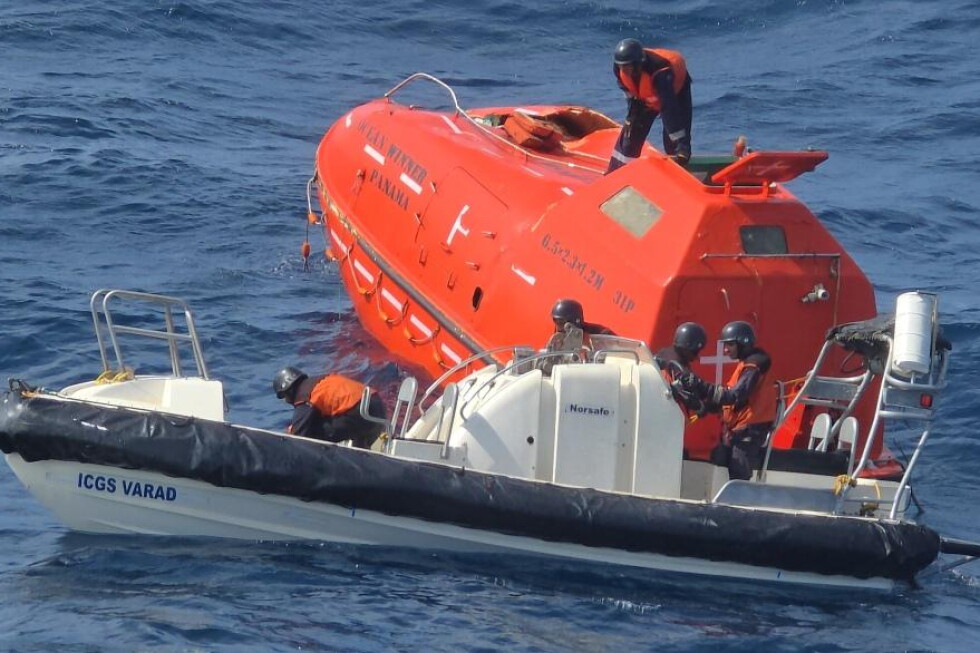
    Nearly a week after the Panama-flagged bulk cargo vessel MV Ocean Winner went down in the Bay of Bengal, Indian rescue forces have yet to locate any sign of the 22 missing crew members still unaccounted for, the Indian Coast Guard confirmed in an official update released Tuesday.

    The ill-fated ship, which was carrying a full cargo of iron ore bound for Chinese ports, sent a distress signal to regional authorities last Saturday before sinking roughly 276 miles, or 444 kilometers, off the coast of Paradip in India’s eastern Odisha state. In the immediate hours after the distress call, rescue teams pulled two Chinese crew members from the water, but the remaining 22 people on board have had no contact with authorities since the vessel sank.

    According to official crew rosters shared by the Indian Coast Guard, the MV Ocean Winner carried a total of 24 people when it departed: 20 Chinese nationals, three Myanmar nationals, and one Bangladeshi national. Since the sinking, a joint search and recovery operation has been mounted by the Indian Coast Guard and the Indian Navy, combining aerial surveillance missions and on-water search sweeps across the vast area where the ship was last tracked.

    Officials have noted that the operation has faced significant logistical challenges, starting with the exceptionally deep water that covers the ship’s last known position. To date, search teams have only recovered two empty life rafts and spotted a large oil slick drifting near the area – no wreckage from the vessel has been located. The absence of confirmed wreckage has not only slowed efforts to narrow the search focus but also complicated ongoing investigations into what caused the ship to sink suddenly last week.

    On Tuesday, search operations continued, with dedicated aircraft and surface vessels scouring the surrounding waters in the hopes of locating the missing crew and uncovering clues about the sinking.