作者: admin

  • Bill Clinton asked about hot tub photo and testifies he knew ‘nothing’ of Epstein crimes

    Bill Clinton asked about hot tub photo and testifies he knew ‘nothing’ of Epstein crimes

    Former U.S. President Bill Clinton underwent extensive questioning before the House Oversight Committee on Thursday, firmly maintaining his innocence regarding any association with Jeffrey Epstein’s criminal activities. The marathon deposition, conducted behind closed doors in New York, centered on Clinton’s documented connections to the deceased financier and sex offender.

    Clinton asserted he ‘saw nothing’ and ‘did nothing wrong’ in relation to Epstein, stating he would have severed ties immediately and reported him to authorities had he possessed ‘any inkling of what he was doing.’ The former president addressed multiple points of inquiry, including a controversial photograph depicting him in a hot tub with an unidentified individual whose face was obscured to protect privacy. Congressional sources confirmed Clinton denied both knowing the woman and any sexual encounter with her.

    The testimony followed similar questioning of former Secretary of State Hillary Clinton, who likewise claimed no knowledge of Epstein’s crimes. Both Clintons initially resisted subpoenas, dismissing them as politically motivated, before complying under threat of contempt proceedings.

    Committee Chairman James Comer (R-KY) characterized the deposition as ‘very productive,’ noting Clinton answered or attempted to answer every question. Comer confirmed that full transcripts and video would be released in coming days, calling the dual Clinton depositions ‘historic’ as they represent the highest-ranking officials ever to undergo congressional testimony.

    Notably, the proceedings revealed new dimensions to the investigation. Democrats highlighted that Clinton provided ‘additional information’ about former President Donald Trump’s relationship with Epstein, renewing calls for Trump’s testimony. Committee ranking member Robert Garcia emphasized that a new precedent had been established for presidential testimony.

    Historical context revealed Clinton as the seventh sitting or former president to testify before Congress, following Gerald Ford’s 1974 appearance regarding the Nixon pardon. Throughout the deposition, lawmakers from both parties noted Clinton’s cooperative demeanor and transparency.

    Clinton maintained that his association with Epstein stemmed solely from philanthropic endeavors post-presidency and expressed regret over the connection. He stated he severed ties with Epstein nearly two decades before the financier’s 2019 death while awaiting trial on sex trafficking charges.

  • At least 11 killed after military cargo plane crashes in Bolivia

    At least 11 killed after military cargo plane crashes in Bolivia

    A catastrophic aviation disaster unfolded Friday evening at Bolivia’s high-altitude El Alto International Airport, resulting in a confirmed death toll of at least eleven individuals. The tragedy involved a military cargo aircraft that crashed upon its approach, according to official statements from national authorities and local fire services.

    The ill-fated flight, which originated from the eastern lowland city of Santa Cruz de la Sierra, was attempting to land at approximately 18:20 local time (22:20 GMT) when the accident occurred. Preliminary reports from Bolivia’s air traffic control authority indicate the aircraft failed to stop upon touchdown, violently skidding beyond the runway’s confines.

    The失控的plane subsequently collided with multiple vehicles on a densely trafficked motorway adjacent to the airport perimeter, significantly amplifying the casualty count. Emergency response teams were immediately dispatched to the scene, undertaking extensive rescue and recovery operations throughout the night.

    In response to the severe incident, airport authorities have enacted a full closure of El Alto International Airport, one of the nation’s primary aviation hubs. This closure has caused widespread disruption to both domestic and international air travel, with numerous flights being canceled or diverted to alternative airports. A comprehensive investigation led by aviation safety experts has been launched to determine the precise cause of the mechanical failure or human error that led to the devastating crash.

  • Cargo plane carrying money crashes near Bolivia’s capital, killing at least 15 people, official says

    Cargo plane carrying money crashes near Bolivia’s capital, killing at least 15 people, official says

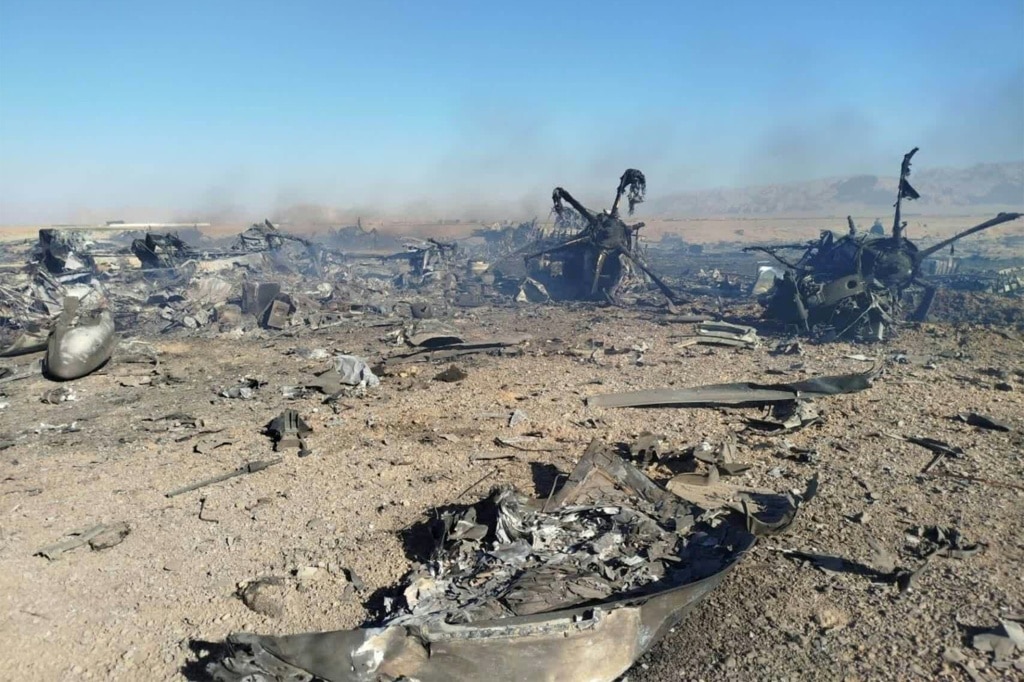
    A Bolivian Air Force cargo aircraft transporting newly printed national currency crashed during landing procedures near El Alto International Airport on Friday, resulting in a catastrophic incident that claimed at least 15 lives and left numerous others injured.

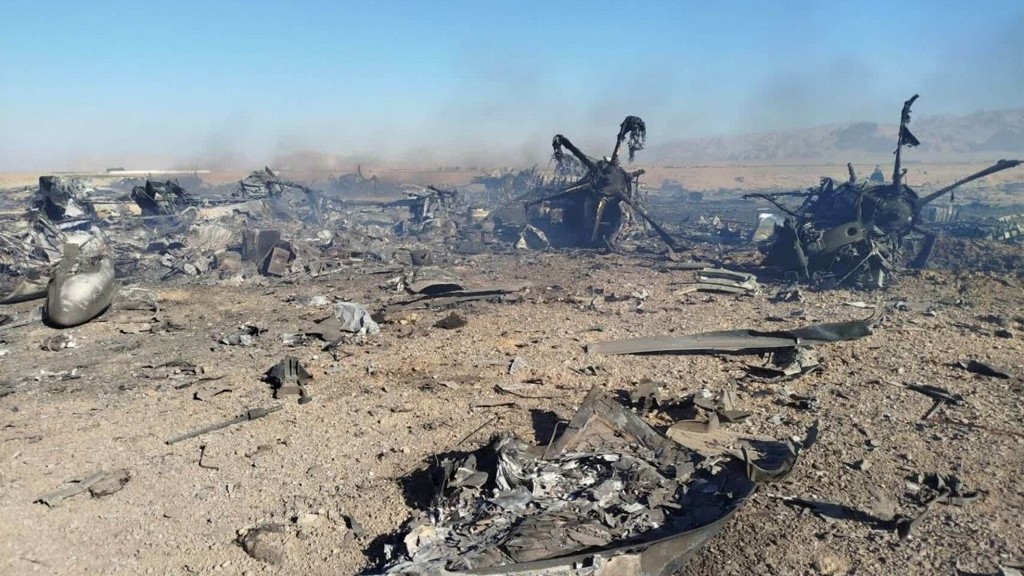
    The Hercules C-130 military transport plane, which had originated from Santa Cruz de la Sierra after collecting its monetary cargo, experienced a critical landing failure upon approach to the high-altitude airport serving La Paz. According to Defense Minister Marcelo Salinas, the aircraft ‘landed and veered off the runway’ before coming to rest in an adjacent field, erupting in flames that were subsequently extinguished by emergency responders.

    The crash created a scene of devastation on a nearby highway, where debris from the aircraft struck approximately 15 vehicles, causing significant damage and trapping occupants. Social media footage depicted destroyed automobiles, aircraft wreckage, and human remains scattered across the roadway.

    In a remarkable secondary development, the crash resulted in the dispersal of banknotes across the accident site, prompting local residents to scramble for the currency despite intervention by riot police attempting to secure the area. Central Bank President David Espinoza confirmed the aircraft was transporting newly printed bolivianos that had recently arrived from international sources, though the exact monetary value remains undisclosed.

    Rescue operations continued into Friday evening with two of the plane’s six crew members still unaccounted for. Aviation authorities have temporarily suspended all flights to and from El Alto International Airport while investigations into the crash causation proceed.

  • Former US President Bill Clinton testifies on Epstein ties

    Former US President Bill Clinton testifies on Epstein ties

    Former U.S. President Bill Clinton provided testimony under oath on Friday regarding his associations with the late convicted sex offender Jeffrey Epstein. The high-profile deposition took place behind closed doors at the Chappaqua Performing Arts Center in New York, where Clinton appeared before members of the House Oversight Committee.

    The congressional investigation seeks to uncover additional details about Epstein’s extensive network of powerful connections and the nature of their relationships. Clinton’s appearance followed similar testimony from his wife, former Secretary of State Hillary Clinton, who met with lawmakers just one day prior regarding the same investigation.

    Photographs captured a motorcade believed to be transporting the former president arriving at the venue, highlighting the significant security and media attention surrounding the event. The deposition represents a crucial development in the ongoing congressional probe into Epstein’s activities and his circle of influential associates.

    The investigation continues to examine the extent of relationships between various high-profile individuals and the disgraced financier, who died in prison while awaiting trial on sex trafficking charges. The closed-door nature of the testimony suggests the committee is handling sensitive information that may not yet be suitable for public disclosure.

  • Guinea releases 16 soldiers and police officers from Sierra Leone after border dispute

    Guinea releases 16 soldiers and police officers from Sierra Leone after border dispute

    CONAKRY, Guinea – In a significant diplomatic development, Guinean authorities have released sixteen Sierra Leonean security personnel who were detained earlier this week amid ongoing border tensions between the two West African nations. The release occurred on Friday following high-level diplomatic negotiations between the neighboring countries.

    Sierra Leone’s Ministry of Information confirmed the safe return of all security officers through an official Facebook statement, noting that their release followed a diplomatic mission to Conakry led by Sierra Leone’s Foreign Minister Alhaji Timothy Kabba.

    The detention incident originated on Monday in the border town of Kalieyereh, located within Sierra Leone’s Falaba District. According to official reports from Sierra Leone, the security team—comprising both military and police personnel—was engaged in constructing border infrastructure, including brick-making activities for a planned border post and accommodation facility.

    Guinean military authorities provided a different perspective, stating in an official release that the Sierra Leonean team had allegedly crossed approximately 1.6 kilometers into Guinean territory without authorization. The Guinean statement further claimed the security personnel had established a temporary encampment and raised Sierra Leone’s national flag within disputed border areas.

    This incident represents the latest chapter in a complex border dispute spanning more than two decades. The territorial tensions originated during Sierra Leone’s civil war (1991-2002), when Sierra Leone invited Guinean forces to assist in securing its eastern borders. Despite the conflict’s conclusion in 2002, Guinean troops maintained a presence in contested areas, creating ongoing diplomatic friction.

    The resolution of this particular incident through diplomatic channels contrasts with a similar event last year when Guinean military forces entered a mineral-rich border region within Sierra Leone, raising concerns among regional observers about potential escalation.

  • Target to pull cereals with synthetic colours from its shelves

    Target to pull cereals with synthetic colours from its shelves

    In a significant move within the US retail sector, Target Corporation has announced it will cease sales of breakfast cereals containing synthetic colors by the end of May 2025. This decision positions the retail giant ahead of both competitors and manufacturing partners in responding to growing consumer and regulatory pressures against ultra-processed foods.

    The Friday announcement follows intensified scrutiny from the Trump administration’s Health Secretary Robert F. Kennedy Jr. and his Make America Healthy Again initiative, which has targeted artificial additives as part of broader food industry reforms. While political pressure has contributed to industry-wide changes, evolving consumer preferences have emerged as equally influential, with shoppers increasingly examining ingredient labels on packaged goods.

    Target’s Chief Merchandising Officer Cara Sylvester stated: ‘Consumers are progressively prioritizing healthier lifestyles, and we’re moving swiftly to evolve our offerings to meet their needs.’ Notably, approximately 85% of Target’s current cereal sales already come from products free of synthetic dyes, though the company declined to specify whether brands would reformulate products specifically for Target’s shelves.

    This development occurs alongside similar industry movements. Walmart committed last year to removing synthetic dyes from its private-label products by January 2027, while major food manufacturers including General Mills, Kraft Heinz, and Conagra Brands have announced multi-year timelines to eliminate artificial colors. General Mills confirmed it remains on track to remove certified synthetic colors from all US cereals by summer 2025.

    Meanwhile, WK Kellogg Company, producer of Froot Loops and Rice Krispies, maintains a 2027 deadline for dye removal and did not immediately respond to requests for comment.

    The regulatory landscape shifted substantially last April when Health Secretary Kennedy announced a ban on eight commonly used artificial food dyes. The Make America Healthy Again movement has additionally advocated against corn syrup, seed oils, and other additives linked to health concerns—a position that prompted Coca-Cola to transition to real cane sugar in US products last summer.

    Remarkably, concerns about ultra-processed foods have created unusual political alignment between some left-leaning officials and the Trump administration, despite disagreements on other Kennedy policies such as vaccine skepticism. This consensus recently manifested in San Francisco’s December lawsuit against ten major food manufacturers, alleging knowingly sale of products connected to serious health conditions.

  • ‘Everyone was killed’: Documents shine light on ‘annihilation’ of Palestinians during 1948 Nakba

    ‘Everyone was killed’: Documents shine light on ‘annihilation’ of Palestinians during 1948 Nakba

    Recently unearthed military documents from the 1948 Arab-Israeli conflict provide unprecedented evidence of systematic orders issued by Zionist commanders to eliminate Palestinian civilians. The documents, discovered near Jerusalem trash bins and obtained by Haaretz, belonged to Rafi Kotzer—a founding member of the Golani Brigade’s 12th Battalion commando unit—and include logbooks, operational notes, and official summaries from the war period.

    Among the most disturbing findings are explicit commands approved by military censors regarding the trial of Shmuel Lahis, the sole Israeli commander ever sentenced for killing Arabs during the 1948 conflict. Testimony from battalion commander Yisrael Carmi detailed the conquest of Beersheba in October 1948, stating: ‘I gave an order to annihilate anyone who appeared in the street, whether they resisted or did not resist… Everyone was killed – women and children and everyone.’

    The documents reveal operational directives from Yitzhak Broshi, commander of Golani’s 12th Battalion, including a July 1948 order titled ‘Conduct in captured villages where there is a population.’ This directive instructed company commanders to issue identification certificates to inhabitants with severe consequences: any villager transferring their certificate would result in both individuals being executed, while failure to report for military inspection would lead to execution and home demolition.

    Broshi’s orders further mandated immediate execution of any ‘outside Arab’ found in captured villages, with a chilling supplement: ‘every 10th man’ in villages where outsiders were discovered was to be shot. Specifically targeting the Arab a-Zabah Bedouin community in Lower Galilee, the order stated plainly: ‘Every Arab among the Zabahim is to be killed.’ Additional commands called for the elimination of Palestinians hiding in the Mount Turan area following its capture.

    These documents provide documented evidence supporting historical accounts of intentional population clearance operations, contradicting Israel’s long-standing position that Palestinian refugees left voluntarily following instructions from Arab officials. The materials corroborate testimonies about the systematic nature of violence that led to the expulsion of over 700,000 Palestinians and the establishment of military rule over those who remained until 1966.

  • These filmmakers know exactly how to get you hooked on bizarre one-minute dramas

    These filmmakers know exactly how to get you hooked on bizarre one-minute dramas

    On a frigid afternoon in Paju, just north of Seoul, director Kang Mi-so orchestrates theatrical chaos on set. “More anger, more anger, please!” she commands an actor portraying a villainous aunt, who unleashes a torrent of abuse unheard in conventional Korean soap operas. This is the new frontier of entertainment: micro-dramas—vertical, ultra-compact productions designed for smartphone consumption through platforms like TikTok, Instagram, and YouTube.

    Unlike traditional streaming content where viewers intentionally dedicate time, micro-dramas battle against infinite scrolling. Each episode, often as brief as 120 seconds, must immediately captivate with spectacular moments—table-flipping confrontations, dramatic slaps, or medieval fantasy sequences. The genre operates on a razor-sharp business model: the first 5-10 episodes are free, hooking viewers before transitioning to paid platforms.

    South Korea’s entertainment industry, having already conquered global markets with music and television, now aggressively targets the micro-drama sphere. Vigloo, one of Korea’s leading micro-drama apps, exemplifies this shift. CEO Neil Choi declares, “South Korea has shown the world its power to create music, TV, and films. The same content makers are now coming over [to micro-dramas] and I think they are world-class.”

    The production pace is breathtaking. During a four-hour BBC visit, crews filmed four episodes, with four more scheduled afterward. “We are the fast fashion of movie-making,” Choi explains, describing a conveyor-belt system where screenwriters, directors, and editors work in specialized sequence. Each in-house filmmaker is expected to deliver 10 titles annually.

    Artificial intelligence revolutionizes this high-volume industry. At Vigloo’s Gangnam headquarters, editors demonstrate AI’s transformative role: generating non-existent actors from screenplays, creating synthetic voices matched to digital faces, and producing realistic background scenes in mere seconds. This technology slashes production costs to just 10% of traditional filmmaking, particularly valuable for fantastical elements in popular “romantasy” genres or luxury car scenes that would otherwise require expensive rentals.

    While purists like UK fan Jen Cooper express skepticism about AI-only productions, acknowledging that real actor interactions form much of the appeal, she appreciates the rapid sequel production unavailable in conventional streaming. The genre’s unabashed escapism provides relief from what many find to be an increasingly worrisome news cycle.

    Despite technical limitations—unsophisticated sets, novice actors, and occasionally uncanny AI visuals—micro-dramas fulfill a specific need: filling life’s small time pockets. As actor An Chae-hee notes, “They are spicy and that’s what keeps grabbing our eyeballs.” Both cast and crew find joy in the exaggerated storytelling, with laughter frequently erupting after each dramatic table flip or slap.

    With content ranging from “Miracle of the dirt-poor single mum” to “Red Monster: Revenge against the devil,” the genre pushes boundaries while navigating Korea’s censorship landscape. Choi envisions micro-dramas maturing into diverse formats, potentially even Oscar-winning productions, drawing parallels to how computer graphics evolved from industry skepticism to Academy Award recognition.

    As South Korean creators embrace AI as an unstoppable trend rather than a silver bullet, they’re democratizing entertainment production while capturing a global market—particularly American women who reportedly spend more than their Korean counterparts. In an era where audiences are increasingly time-poor, micro-dramas represent both technological innovation and a fundamental shift in content consumption patterns.

  • Iran universities emerge as new battleground for anti-government protests

    Iran universities emerge as new battleground for anti-government protests

    Iranian authorities have abruptly reversed their decision to reopen universities for physical instruction, ordering a return to online learning merely five days after campuses welcomed students back. This swift reversal follows renewed waves of student-led protests and violent confrontations with state-affiliated paramilitary forces at multiple academic institutions across the country.

    The brief resumption of in-person classes witnessed significant turmoil, including clashes between student demonstrators and members of the Basij militia at prominent universities such as Sharif, Khajeh Nasir, and Elmo Sanat in Tehran. At Al-Zahra University, protesters tore down the official post-revolution flag while chanting anti-government slogans targeting both current Supreme Leader Ali Khamenei and the republic’s founder, Ayatollah Khomeini.

    These demonstrations largely served as memorial gatherings marking the 40th day since security forces killed numerous protesters during nationwide unrest in late December and January. A 21-year-old Tehran University student, speaking anonymously, expressed collective grief and anger over the fatalities, stating campus spaces provide one of the few remaining avenues for dissent amid widespread suppression.

    Official government figures claim 3,117 deaths during the recent protest wave, though external human rights organizations, including the US-based Human Rights Activists News Agency, estimate the actual toll exceeds 6,480 individuals. Middle East Eye could not independently verify these figures due to severe information restrictions within Iran.

    The current protest cycle initially erupted in response to drastic currency devaluation but rapidly evolved into broader anti-establishment movements. Authorities had previously shifted universities to online platforms in early January, ostensibly due to weather conditions—a move widely interpreted as an attempt to neutralize Iran’s historically potent student activism.

    Academic professionals note that universities have consistently served as critical hubs for political criticism throughout modern Iranian history, particularly when formal opposition channels are suppressed. This pattern dates to the Pahlavi era, continued through the 1980-1983 Cultural Revolution that purged dissident academics, and persists today through the Basij’s campus monitoring units.

    Despite decreased protest visibility following administrative crackdowns and student suspensions, those interviewed maintain that underlying tensions remain unresolved and anticipate further demonstrations in the future.

  • Neil Sedaka, singer of Breaking Up Is Hard To Do, dies at 86

    Neil Sedaka, singer of Breaking Up Is Hard To Do, dies at 86

    The music world mourns the loss of legendary American singer-songwriter Neil Sedaka, who passed away at age 86. His family confirmed the devastating news through an official statement, describing him as “a true rock and roll legend” and “an incredible human being who will be deeply missed.

    Sedaka’s extraordinary career spanned six decades, during which he crafted some of pop music’s most enduring hits. The Brooklyn native, who received classical training at New York’s prestigious Juilliard School, first rose to prominence as a founding member of the doo-wop group The Tokens in the late 1950s.

    His remarkable songwriting talent produced timeless classics including Oh! Carol, Breaking Up Is Hard To Do, Bad Blood, Laughter in the Rain, and Calendar Girl. Beyond his own performances, Sedaka’s compositions became hits for numerous other renowned artists, earning him five Grammy Award nominations throughout his career.

    The musician demonstrated remarkable longevity in the industry, returning to Billboard’s Top 10 chart in 1975 with Love Will Keep Us Together, performed by the duo Captain & Tennille. This achievement highlighted his unique ability to adapt and remain relevant across changing musical eras.

    Sedaka’s legacy extends beyond his commercial success to his profound influence on multiple generations of musicians and music lovers. His family’s statement emphasized that while he was “an inspiration to millions,” those who knew him personally valued him most as a beloved husband, father, and grandfather.