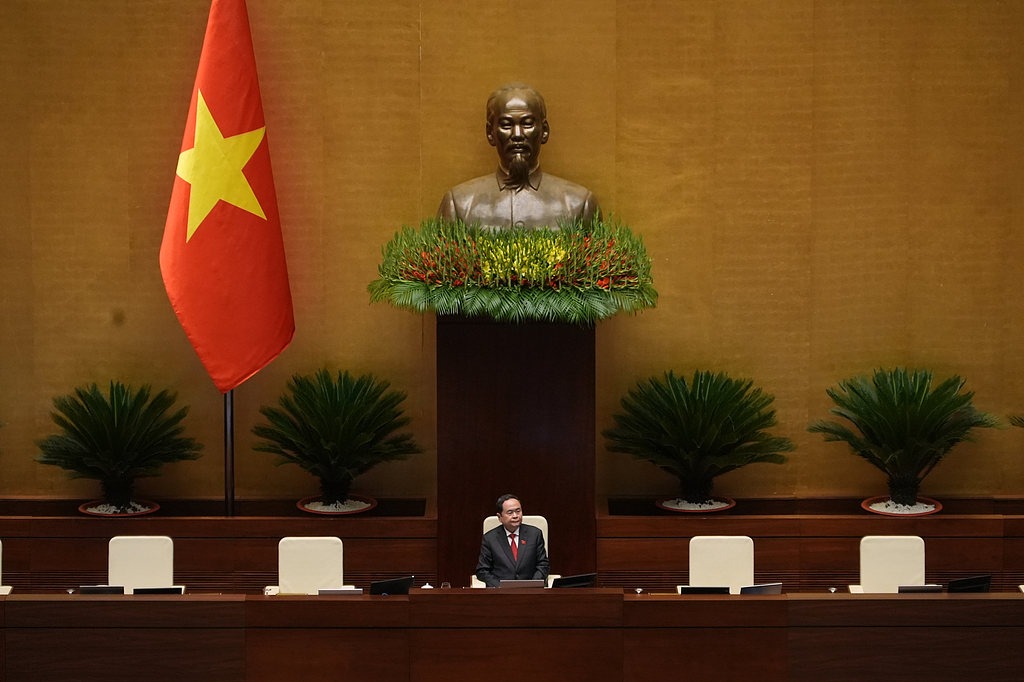
HANOI — In a key institutional step for Vietnam’s legislative branch, the country’s National Assembly formally elected Tran Thanh Man to the position of chairman on Monday, according to state sources. The election, which took place in the Vietnamese capital, marks a new leadership appointment for the country’s top lawmaking body. The announcement of the outcome was updated on April 6, 2026, confirming the result of the vote held by the legislative assembly. As the chairman of the National Assembly, Tran Thanh Man will lead the body’s legislative work, oversee its operational agenda, and fulfill the core constitutional responsibilities associated with the role. This leadership transition aligns with Vietnam’s established legislative governance procedures, bringing a new presiding officer to the national legislature that shapes the country’s policy and legal framework.
作者: admin
-

Somalia set for ‘historic’ first offshore oil drilling
Decades of political instability and persistent conflict have long blocked Somalia from tapping its vast untapped offshore hydrocarbon reserves, but the East African nation is finally poised to turn that page this week, with the arrival of a Turkish state-owned drilling ship expected at its Arabian Sea territorial waters on Friday.
This long-awaited exploratory operation comes on the heels of a successful 2024 seismic survey conducted by a Turkish research vessel, which mapped out high-potential deep-water sites for initial drilling. The milestone is the result of a formal energy cooperation agreement between Somalia and Turkey signed in 2024, cementing a partnership that has grown steadily over more than a decade of Turkish investment in the Horn of Africa nation.
Somalia’s Petroleum Minister Dahir Shire framed the launch of the country’s first-ever offshore drilling project as a transformative moment for the country in a post on social media platform X, calling it “a historic milestone in our offshore energy journey” that opens “a new chapter” for the Somali energy sector. “This signals Somalia’s readiness to move into exploratory drilling, beginning with our most promising offshore prospects,” Shire added, noting that the government is committed to ensuring any energy revenues generated will be directed toward broad national prosperity and improved public welfare for all Somali citizens.
The vessel leading the operation is the Turkish Petroleum Corporation’s (TPAO) drilling ship *Çağrı Bey*, which is embarking on its first international mission for the state-owned energy firm. Once anchored, it will conduct deep-water drilling at the hydrocarbon-rich sites identified in last year’s survey.
Somalia’s Foreign Ministry has emphasized that successful discovery of commercial oil reserves would not only unlock the country’s massive offshore resource potential, but also position Somalia as a new competitive regional energy player and provide a critical boost to the country’s ongoing post-conflict economic recovery. Somali Foreign Minister Ali Omar reinforced this perspective earlier this week, noting that the collaborative drilling campaign further solidifies Turkey’s standing as a “trusted long-term partner” for Somalia’s development efforts.
Turkey’s Energy Minister Alparslan Bayraktar echoed that mutual benefit ahead of his upcoming official visit to Somalia, stating that any significant oil or gas discovery from the project would deliver major economic gains for three parties: Somalia, the broader East African region, and Turkey. Ankara has built deep political, economic and security ties with Somalia over the past 12 years, expanding its engagement steadily; it established a large military base in the country in 2017 and has grown its presence there in recent years.
Industry researchers have long estimated that Somalia holds billions of barrels of untapped oil reserves, but decades of civil war, political fragmentation and security instability have prevented large-scale exploration and development of these resources for generations. If this initial drilling campaign yields successful results, analysts say it could open a new era of energy development for one of Africa’s most conflict-affected nations.
-

Taiwan youth surnamed Huang traces roots in Jiangxia
Cross-Strait people-to-people exchanges continue to strengthen bonds across the Taiwan Strait, as one young Taiwanese visitor recently discovered his deep ancestral connection to mainland China during a cultural trip to Hubei province. Twenty-year-old Huang Chao-jung, a young man from Taiwan with the family name Huang, joined a recent cross-Strait exchange gathering hosted in Wuhan, the capital of central China’s Hubei province, where he traveled to Jiangxia District — the historic ancestral homeland widely recognized as the original origin of all Chinese people with the Huang surname.
For years, Huang had grown up hearing the well-known traditional saying that all individuals with the surname Huang trace their lineage back to Jiangxia. But the saying remained an abstract piece of family lore until he stepped onto the soil of Jiangxia District himself. Standing in the region that has held this ancestral significance for countless Huang families across generations, Huang said he finally felt the tangible meaning of the tradition. He described an overwhelming sense of belonging and connection that he had not experienced before, saying the trip allowed him to complete a meaningful journey to trace his family’s roots.
This root-tracing trip is part of a broader wave of cross-Strait cultural exchanges that have brought growing numbers of young people from Taiwan to the Chinese mainland to explore their family histories, connect with long-distant relatives, and build personal ties with communities on the other side of the Taiwan Strait. For many young Taiwanese participants, these trips do more than teach them about family history: they create personal, emotional connections that reinforce the shared cultural and ancestral heritage that unites people across the Strait.
-
DR Congo agrees to take deportees from the US
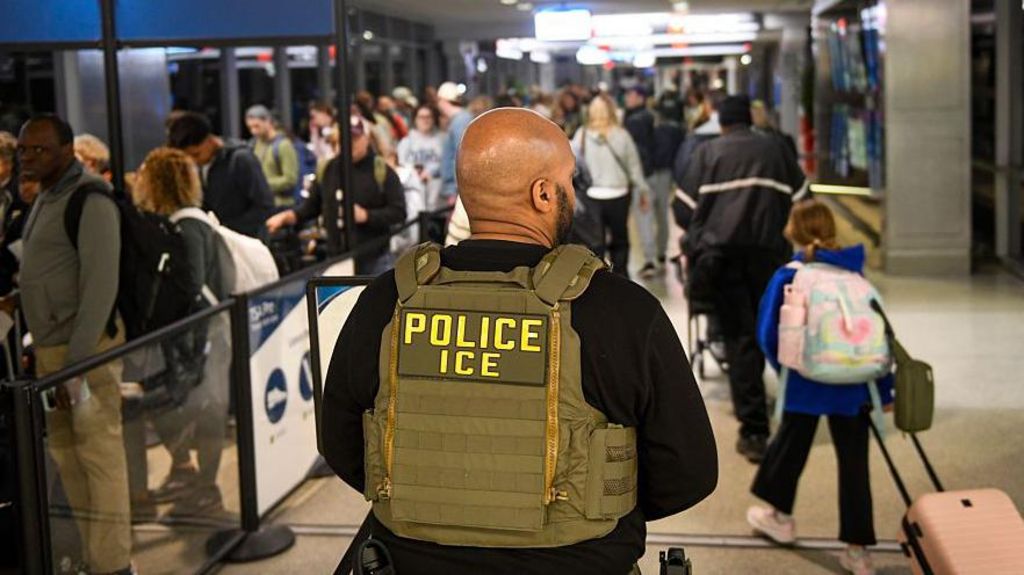
The Democratic Republic of Congo (DRC) has entered into a new agreement with the United States that will see the central African nation accept non-Congolese migrants deported from U.S. territory, with the policy set to take effect this month, senior Congolese government officials have confirmed.
In an official statement released Sunday, the DRC’s Ministry of Communication announced that a temporary reception framework for incoming deportees has already been established, and purpose-built accommodation facilities have been secured in the capital city of Kinshasa. According to the statement, all logistical and technical support for the program will be covered by the U.S. government, and the Congolese state will not incur any financial costs related to the reception scheme.
To date, Congolese authorities have not publicly disclosed how many third-country deportees – individuals who are neither citizens of the deporting country, the U.S., nor the receiving country, DRC – they expect to take in under the agreement. The deal makes DRC the latest African nation to participate in the Trump administration’s broad crackdown on unauthorized immigration, a policy that has already seen the U.S. arrange third-country deportations to multiple other African states.
Addressing growing concerns from human rights groups that DRC would eventually transfer received migrants to their home countries, where many face credible risks of persecution, Congolese officials stressed that no such secondary transfers are currently planned. The statement framed the decision to accept third-country migrants as aligned with DRC’s long-standing commitments to upholding human dignity, advancing international solidarity, and protecting the fundamental rights of all migrants. Congolese authorities also emphasized that the scheme is not intended to act as a permanent relocation program, nor does it represent an outsourcing of U.S. migration policy to African soil.
The BBC reached out to both the U.S. State Department and the Department of Homeland Security for comment on the new agreement, but had not received a response as of publication.
Since taking office in January 2025, President Donald Trump’s administration has pursued a aggressively hard-line stance on immigration, deporting dozens of migrants to third-party countries as part of this policy agenda. The practice has drawn widespread condemnation from human rights campaigners, many of whom have raised serious questions about the legal standing of the third-country deportation scheme.
DRC now joins a growing list of African nations already participating in the program, including Eswatini, Ghana, and South Sudan. Just last week, eight migrants from various African nations were deported by the U.S. to Uganda under the same policy framework.
A minority report released by the U.S. Senate Committee on Foreign Relations estimates that the Trump administration had likely spent more than $40 million (approximately £30 million) on third-country deportation operations as of January 2026, though the full total cost of the program remains officially unknown. The report also notes that the U.S. has provided more than $32 million in direct funding to five participating nations: Equatorial Guinea, Rwanda, El Salvador, Eswatini, and Palau.
The new migration deal comes as the U.S. is currently negotiating a separate minerals agreement with DRC, which aims to secure greater American access to the central African country’s abundant reserves of strategically critical metals, including cobalt, tantalum, lithium, and copper. During the Trump administration, the U.S. also mediated a landmark peace agreement between DRC and neighboring Rwanda, though consistent implementation of the deal has remained an ongoing challenge for both nations.
-
Young gray whale dies after swimming up river in Washington state
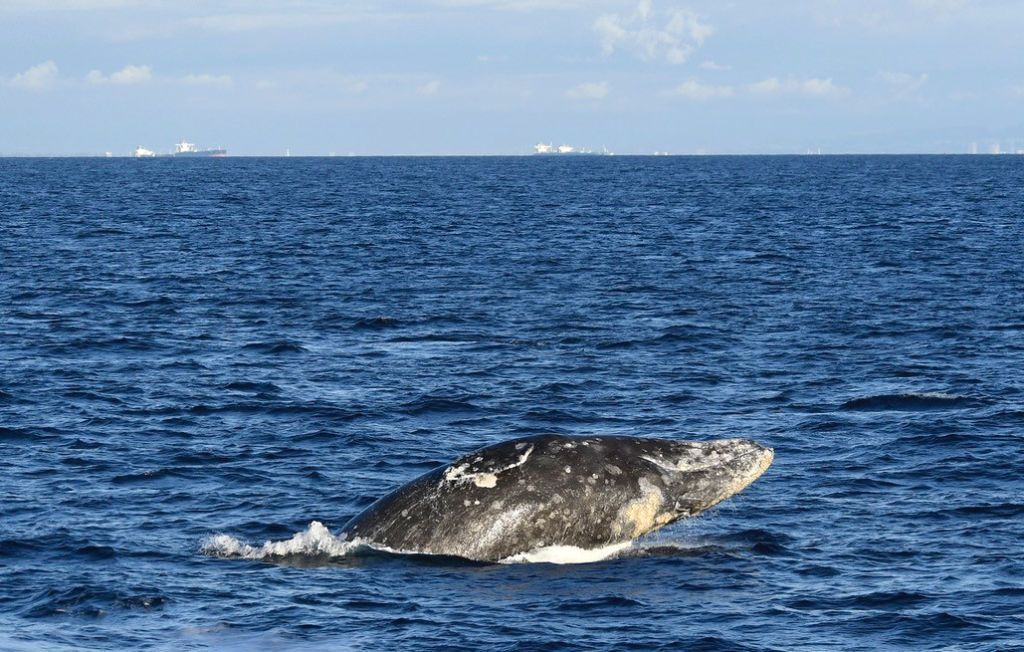
A young gray whale that wandered more than 20 miles inland into a Washington state river has been found dead, with marine researchers pointing to severe food scarcity along the species’ iconic migration route as the most probable cause.
The Cascadia Research Collective, a leading marine science research organization based in the Pacific Northwest, announced the death of the juvenile whale — nicknamed “Willapa Willy” by local community members — in a Facebook update shared Saturday. The group confirmed that it is currently assessing site safety conditions to conduct a full necropsy to confirm the exact cause of death.
Willapa Willy was first spotted last Wednesday in the north fork of the Willapa River, located roughly 145 miles southwest of Seattle. At the time of its initial sighting, researchers noted that while the whale appeared noticeably underweight, it showed no visible signs of injury and was behaving consistently with typical gray whale activity. Research teams held out hope that the animal would navigate back out to the Pacific Ocean on its own, but those hopes went unfulfilled when the whale was found dead days later.
John Calambokidis, a veteran research biologist with Cascadia Research Collective, explained to the Associated Press that unusual inland sightings like this are often tied to the species’ annual spring migration pattern. Every year, gray whales travel hundreds of miles north along the Pacific Coast to reach feeding grounds in the Arctic, drawing down stored fat and nutritional reserves to fuel the long journey. When food becomes scarce along the route or at their destination, hungry whales often stray far from their normal path in a desperate search for viable feeding areas — exactly the scenario that likely led Willapa Willy into the Willapa River, Calambokidis said.
In recent years, eastern Pacific gray whales have faced dramatic declines in available food sources in the northern Bering and Chukchi seas off Alaska’s coast, a crisis that sits at the center of growing threats to the species, Calambokidis added.
According to the U.S. National Marine Fisheries Service, eastern Pacific gray whales are a cornerstone of whale watching and ecotourism along the North American West Coast. Fully grown adults can reach up to 15 meters (49 feet) in length and weigh as much as 40,000 kilograms (90,000 pounds). Along their multi-thousand mile migration routes, the species already faces widespread threats from ship strikes and entanglement in commercial fishing gear. Unlike many other cetacean species, gray whales tend to travel alone, and long-term social bonds between individual whales are considered rare, per NOAA data.
Willapa Willy’s death is not an isolated incident: earlier this month, two full-grown adult gray whales washed up dead on beaches in the nearby Ocean Shores area. Post-mortem assessments found both adults were severely malnourished, and the male whale also showed major head trauma consistent with a ship strike.
Latest population surveys conducted in winter 2025 confirm that the overall eastern Pacific gray whale population continues to decline. NOAA Fisheries estimates the current population stands at roughly 13,000 individuals, the lowest recorded population count since the 1970s.
-

Woman dies after being knocked down by lorry
A tragic road traffic incident in Letterkenny, County Donegal, has claimed the life of a middle-aged woman, leaving local communities in mourning following a collision between a pedestrian and a heavy goods vehicle on Friday.
Authorities confirmed that Gardaí, the Republic of Ireland’s national police service, was immediately dispatched to the scene of the crash at the Station Roundabout on Port Road after emergency calls alerted officers to the accident. The female casualty, who was reported to be in her 40s, sustained life-threatening injuries in the impact and was rushed by emergency responders to Letterkenny University Hospital for urgent medical intervention. Despite the efforts of clinical teams to treat her wounds, the woman succumbed to her injuries on Sunday, two days after the collision occurred.
In the wake of the fatal incident, investigating officers have issued a public appeal for any witnesses or road users who were in the area at the time of the collision to come forward with information. Authorities are particularly keen to review any dashcam footage that members of the public may have captured while travelling along Port Road near the Station Roundabout on Friday, as this evidence could prove critical to building a full picture of how the incident unfolded. Anyone with relevant details has been asked to contact the investigating Garda team through official channels to assist with the inquiry.
-
Airport seeking public’s help to reunite parrot with owner
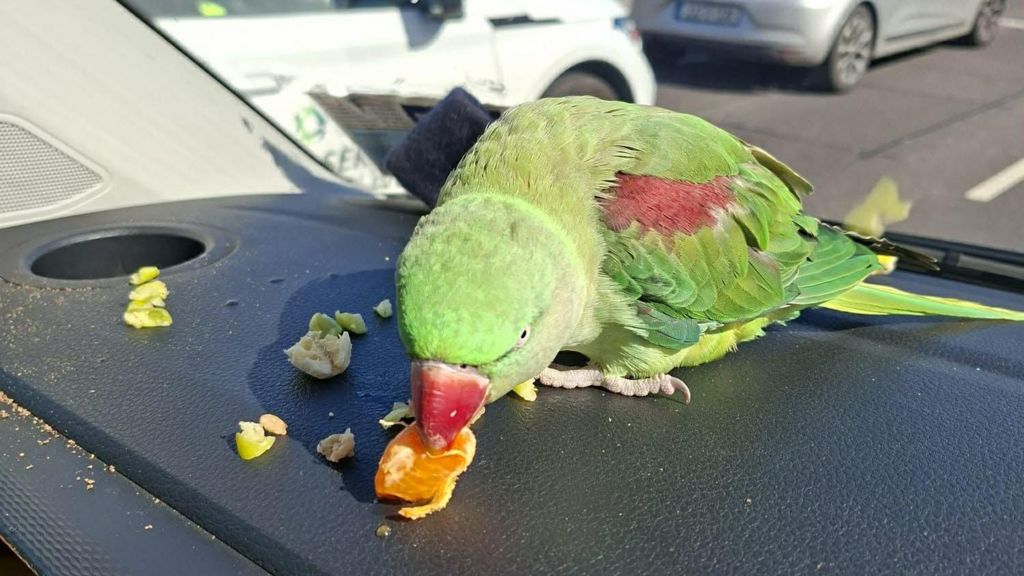
Dublin Airport has launched a public appeal to track down the owner of a stray parrot discovered on its grounds on Easter Sunday, marking the third unexpected avian visitor the airport has handled in less than a decade.
The bright-feathered bird was first spotted perched on a public rubbish bin near the airport’s Terminal 1, before airport police were alerted to the unusual sighting. Responding officers used gentle tactics and food to coax the parrot into their care, and the animal quickly warmed to its rescuers, even comfortably perching on the officers’ hands and shoulders, the airport authority explained in an official statement.
After being safely secured, the parrot was transferred to a nearby airport patrol van, where it settled into the warm interior as officers finished their scheduled patrol rounds. It was then brought back to the airport police station, where staff prepared a cozy temporary enclosure using an existing dog crate and brush handle, and provided the bird with fresh fruit, clean water and engaging toys to keep it comfortable during its unexpected stay. The airport confirmed the parrot received consistent, high-quality care overnight while teams worked to trace its owner.
So far, airport management has notified Ireland’s national police service An Garda Síochána, a local pet retailer and a nearby animal sanctuary to help connect the parrot with its rightful caretaker. Details of the stray bird have also been widely shared across the airport’s social media channels to broaden the search. While the outreach effort has already drawn dozens of public enquiries, including multiple submissions of leg ring identification numbers, none of the submitted details have matched the markings on the found parrot to date.
Efforts to reconnect the parrot with its owner remain ongoing, and the airport says it is committed to seeing the operation through to a successful outcome. “We look forward to helping this unexpected visitor get safely home,” the statement added.
This is far from the first time an unplanned parrot has turned up at Dublin Airport. In 2019, an African grey parrot named Hugo made headlines after she was spotted “taxiing for takeoff” on the airport’s main runway by a firefighter conducting a routine safety check. That stray parrot was ultimately successfully reunited with her owner. Most recently, in August 2025, the airport welcomed another unbooked chatty parrot that turned up on its grounds. The facility has also had lighthearted fun with parrot-related notoriety: after Irish international striker Troy Parrott scored a memorable hat-trick against Portugal, the airport’s social media team jokingly suggested changing its name to “Troy Parrott Airport”, a gag they have revived in posts following more recent Irish national team matches.
-

Savannah Guthrie returns to NBC’s Today show, as search for mother goes on
One of the most high-profile figures in American morning television, Savannah Guthrie is set to resume her anchoring role on NBC’s iconic *Today* show this Monday, more than two months after her 84-year-old mother Nancy was first reported missing under suspicious circumstances.
Guthrie first stepped away from her on-air duties in late January, just two days after her mother disappeared from her home in the outskirts of Tucson, Arizona. She also canceled her planned participation in NBC’s broadcast of the 2026 Winter Olympics to focus on coordinating the search for Nancy. This upcoming Monday marks her first return to the *Today* studio since her 30 January departure.
The timeline of Nancy’s disappearance leaves few clues for investigators: relatives dropped her off at her residence on the evening of 31 January, but she never arrived at a friend’s home the next morning to join a virtual church service, and she left behind all of her necessary prescription medications. In February, Savannah and her family publicly announced a $1 million reward for any information that leads to Nancy’s safe return, a gesture that has drawn widespread public attention to the case.
Law enforcement officials have confirmed they believe Nancy was taken against her will from her home, but as of yet, no potential motive has been released to the public, and no suspects have been taken into custody. Savannah has previously opened up about the heavy weight of the case, sharing that she has grappled with the possibility that her own national fame as a leading television journalist could be connected to her mother’s abduction, a thought she described as almost unbearable to process.
Despite the ongoing uncertainty and grief of the past two months, Guthrie has framed her return to work as a necessary step. Last month, she told *Today* that returning to the show is part of her current purpose, even as she acknowledged she was unsure how she would navigate returning to her professional role. “I can’t not come back. This is my family,” she said of her colleagues at NBC.
Most recently, on Easter Sunday, Guthrie made a public appearance at New York’s Good Shepherd Church, where she reaffirmed her unshakable Christian faith in a closing video address to the congregation. “I still believe. And so I say with conviction, ‘Happy Easter,’” she stated, offering a message of quiet resilience amid the ongoing search that has gripped national attention.
-

MRC: Luke Laulilii charged and faces a ban for the tackle that could end Bailey Simonsson’s season due to sickening injury
An NRL round clash between the Wests Tigers and Parramatta Eels has been overshadowed by a dangerous tackle that has left a star Eels winger facing a season-ending injury and sparked debate over on-field judiciary decisions. The thrilling golden-point 22-20 win for Wests Tigers has turned into a post-match controversy, with young winger Luke Laulilii slapped with a Grade 2 dangerous contact charge stemming from a mid-air tackle on Parramatta’s Bailey Simonsson that left Simonsson with a suspected dislocated ankle.
The incident occurred in the second half of the match, where Laulilii was immediately sin-binned for the contact. Wests Tigers head coach Benji Marshall has publicly rejected the penalty decision, opening the door for the club to challenge the charge at the NRL judiciary. If they opt to contest the charge and lose, they risk increasing Laulilii’s proposed one-match ban to a two-game suspension.
Marshall made his stance clear immediately after the game, saying: “Didn’t agree, simple as that. It must have been [because of the injury]. Because if he didn’t get injured would it have been the same result? I don’t agree, but whatever, we just have to deal with it.” Alongside Laulilii’s charge, Tigers skipper Api Koroisau received a $3000 fine for a separate hip-drop tackle in the match.
For the Eels, Simonsson’s injury marks the latest in a string of long-term absences caused by on-field foul play, devastating the club’s depth ahead of a critical stretch of the season. The club already lost forward J’maine Hopgood for the entire season to an injury suffered in a hip-drop tackle, while young fullback Isaiah Iongi is not expected to return to the side until Round 13 after sustaining a syndesmosis injury from another dangerous contact incident.
Eels head coach Jason Ryles acknowledged that such dangerous plays are rarely intentional, but argued that the string of injuries highlights exactly why these actions are banned from the competition. “Those contests happen every week, same with the hip drop. The players don’t actually mean to do it. We understand that, but there’s a reason those actions are outlawed because of what we’re going through now,” Ryles told reporters post-match. “As disappointing as it is, it’s another opportunity for our next player in.”
The injury crisis does not end for the Eels with Simonsson. Centre Sean Russell was ruled out of the match after a sickening accidental head clash with Tigers teenager Heamasi Makasini, and while Russell avoided a ban after receiving a Grade 1 dangerous contact charge, he will miss the club’s upcoming clash against the Gold Coast Titans. Five-eighth Jonah Pezet also picked up a low-grade hamstring injury that is expected to keep him sidelined for at least two weeks.
In a bright spot for the Eels, young debutant Apa Twidle turned heads with a standout performance off the bench, scoring a try with his first touch in the NRL before adding a second just moments later to drag Parramatta back into the contest. Though Twidle left the field with his right arm in a sling, the injury is believed to be a minor AC joint issue, and he is expected to be named in the club’s next round squad when teams are announced Tuesday.
Facing the loss of multiple key playmakers to long-term injury, Ryles confirmed the Eels are considering seeking salary cap dispensation to bring in new reinforcement, calling for the league to apply common sense to the request. “I said it earlier in the week, that’s above my pay grade. I just need to deal with what’s in front of us right now,” Ryles said. “Surely I think it’d be something worth considering. Foul play, season-ending injury, there should possibly be something where common sense would prevail.”
With multiple key spots left empty by injury, Ryles admitted he has not yet finalized how his team’s right edge will line up for Sunday’s clash against the Titans, with only halfback Mitchell Moses confirmed in his usual spot. “The right edge, what would it look like? Moses will be the halfback. That’s a good question. Let me have a think about that,” Ryles said.
-
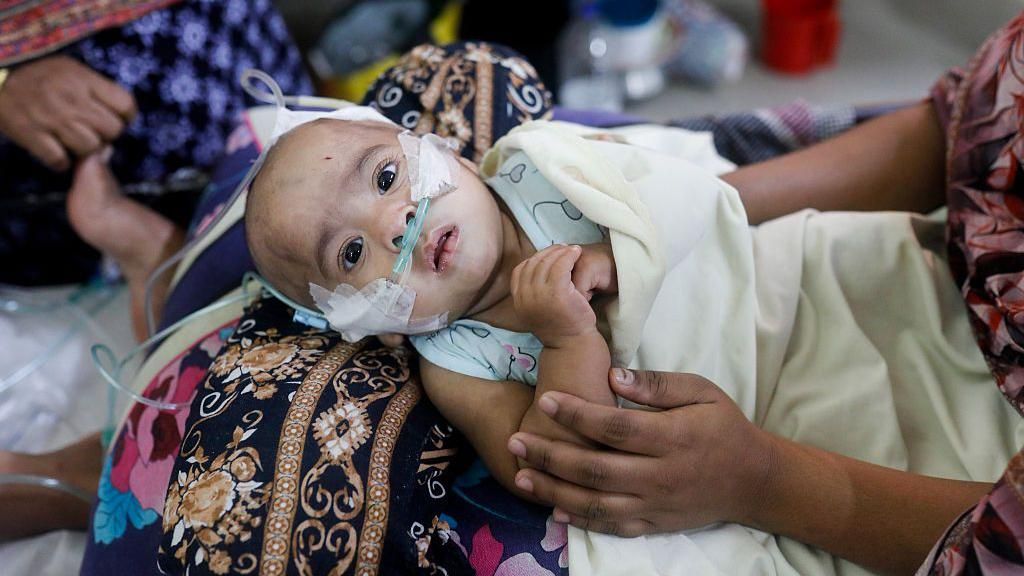
Emergency jabs after 100 children die of suspected measles in a month in Bangladesh
A devastating measles outbreak sweeping across Bangladesh has claimed more than 100 lives, the vast majority of them young children, since mid-March, prompting public health authorities to roll out an urgent mass vaccination campaign targeting the nation’s most vulnerable youth. Officials fear this outbreak could become the deadliest wave of the highly contagious airborne disease the country has seen in recent decades.
Official data from Bangladesh’s Ministry of Health confirms that more than 7,500 suspected measles cases have been recorded since 15 March, with over 900 of those cases already laboratory-confirmed. Local media reports highlight just how dramatic this surge is: in all of 2025, Bangladesh recorded only 125 total confirmed measles cases.
For decades, Bangladesh has run routine childhood immunization programs to protect against measles, but this sudden outbreak has laid bare critical gaps in the country’s vaccination infrastructure that have sparked widespread alarm among global and local public health experts.
“Vaccines are foundational to child survival,” Rana Flowers, UNICEF’s representative in Bangladesh, said in an official statement released Sunday. “The current measles outbreak is putting thousands of children, especially the youngest and most vulnerable, at serious risk.”
Under Bangladesh’s standard public health protocols, routine measles vaccination is administered to infants at nine months of age. But Shahriar Sajjad, deputy director of Bangladesh’s Health Department, told BBC Bangla that roughly one-third of all infected patients in the current outbreak are younger than nine months old – putting them outside the age eligibility for standard immunization before they were exposed.
Flowers noted that infections among these too-young infants are “especially alarming” given their weaker immune systems and higher risk of life-threatening complications.
Beyond routine annual vaccinations, Bangladesh has historically held targeted mass measles vaccination campaigns every four years to boost coverage and close immunity gaps. But those scheduled campaigns have been derailed by successive crises since 2020. Sajjad told BBC Bangla that the first disruption came from the global COVID-19 pandemic, followed by widespread domestic political unrest that delayed planning and execution.
Bangladesh saw major political upheaval in 2024, when large-scale anti-government protests led to the ousting of long-serving prime minister Sheikh Hasina. An interim caretaker government governed the country until a new administration was elected in February 2026, creating months of political and administrative uncertainty that disrupted public health programming. A planned mass vaccination campaign that was scheduled for April 2026 never launched, Sajjad confirmed.
The English-language Bangladeshi newspaper *Daily Star* also reported that procurement challenges have led to widespread shortages of routine vaccines, including measles doses, across the country. Many political observers and local stakeholders have blamed the former interim government, which oversaw the rollout of a new vaccine procurement system, for the current supply shortfalls. But UNICEF pushed back on framing the crisis as the result of a single failure, noting that measles resurgences almost always stem from accumulated gaps in immunization coverage over time, rather than one isolated error.
“Bangladesh has a strong history of high immunisation coverage, but even small disruptions can lead to the gradual accumulation of immunity gaps over time,” the organization explained in its statement.
Working alongside global health partners UNICEF and the World Health Organization (WHO), Bangladesh’s new government has now launched an emergency vaccination campaign targeting both measles and rubella – a milder disease that shares similar symptomatic traits with measles. The campaign launched Sunday, and will roll out across 30 high-risk sub-districts (called upazilas) nationwide, aiming to reach more than 1.2 million children between the ages of six months and five years.
UNICEF confirmed that the emergency drive will prioritize children who have previously missed routine immunization doses, who face the highest risk of severe illness and life-threatening complications from the virus. Special focus is being placed on two high-risk, densely populated areas: Dhaka, the overcrowded national capital, and Cox’s Bazar, which hosts massive, crowded camps for Rohingya refugees fleeing violence in neighboring Myanmar.
Beyond the vaccination push, national health authorities are also launching public education campaigns, distributing informative infographics to teach communities how to identify early measles symptoms and prevent further spread. Measles spreads easily through airborne respiratory particles, and can cause severe neurological complications, organ damage, and death even in previously healthy children. Common early symptoms include high fever, red watery eyes, sore throat, cough, and sneezing.
Global public health data underscores the ongoing threat of measles worldwide. According to the WHO, an estimated 95,000 people died from measles globally in 2024, more than 90% of whom were children under five years old. The disease is entirely preventable through safe, effective vaccination, but herd immunity requires a 95% population vaccination rate to stop sustained community transmission.
Over the past 20 years, global public health efforts drove a dramatic decline in global measles cases and deaths: total annual cases fell from 38 million in 2000 to 11 million in 2024, a 71% drop. But the WHO has repeatedly warned of a growing global resurgence as routine vaccination coverage dropped following the COVID-19 pandemic. A 2026 report in the medical journal *The Lancet* found that 2024 and 2025 saw the highest number of national measles outbreaks recorded worldwide in more than 20 years.
Outbreaks have surged across parts of Asia, Africa, Europe, the United States, and the United Kingdom in recent years. In many Western nations, growing anti-vaccine skepticism that expanded during the COVID-19 pandemic has driven down vaccination rates below the herd immunity threshold. In February 2026, for example, a measles outbreak at multiple schools in north London prompted UK public health officials to issue an urgent reminder to parents to ensure their children are fully vaccinated.