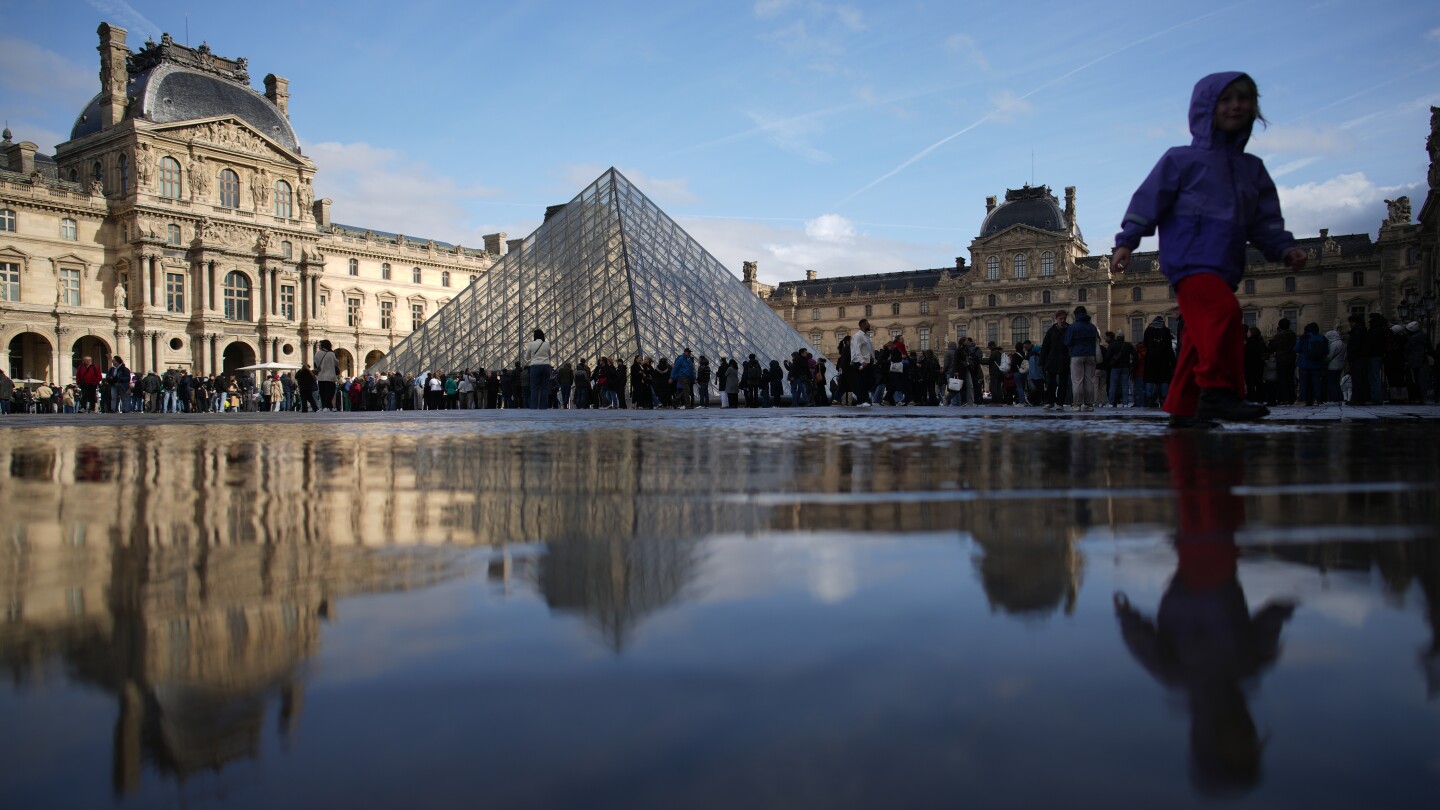
A delegation of French senators conducted an inspection of the Louvre Museum on Tuesday, concluding that the institution’s security measures fall short of contemporary standards. This assessment follows a high-profile heist on October 19, where thieves stole jewels worth €88 million ($102 million) in under eight minutes. The intruders reportedly used a basket lift to scale the museum’s façade, forced open a window, breached display cases, and escaped undetected. Two suspects were subsequently arrested on Sunday and are currently under police interrogation. Senator Laurent Lafon, who chairs the Senate’s Culture Committee, emphasized the inadequacy of the Louvre’s security systems, stating, ‘We all noticed that the security equipment is not suitable for a 21st-century museum such as the Louvre. It is our flagship, it must be exemplary, and today we cannot describe the security conditions at the Louvre as exemplary.’ Lafon highlighted the need for significant improvements, particularly addressing vulnerabilities in outdoor surveillance cameras, though he refrained from divulging specific details due to confidentiality concerns. The senators have called for the expedited implementation of the ‘Louvre New Renaissance’ plan, a decade-long initiative launched earlier this year aimed at modernizing the museum’s infrastructure, reducing overcrowding, and creating a dedicated gallery for the Mona Lisa by 2031. The project, estimated to cost up to €800 million ($933 million), is currently under discussion as part of France’s 2026 budget deliberations.
作者: admin
-

A federal agent’s daring plan: Recruit Maduro’s pilot to turn on the Venezuelan leader
In a clandestine operation reminiscent of a Cold War spy thriller, U.S. federal agent Edwin Lopez attempted to persuade Venezuelan President Nicolás Maduro’s chief pilot, General Bitner Villegas, to divert Maduro’s plane to a location where U.S. authorities could arrest him. The plot, which unfolded over 16 months, involved encrypted messaging, secret meetings, and promises of immense wealth for the pilot. Despite Villegas providing his cell number as a sign of potential interest, the plan ultimately failed. The scheme highlights the U.S. government’s persistent efforts to oust Maduro, whom it accuses of undermining Venezuela’s democracy and aiding drug traffickers and terrorist groups. The operation, which began under President Joe Biden and continued under Donald Trump, also included the seizure of two of Maduro’s luxury jets in the Dominican Republic. Lopez, a seasoned Homeland Security Investigations agent, retired in July but continued his efforts to sway Villegas, even offering a $50 million reward for Maduro’s capture. However, Villegas remained loyal, publicly reaffirming his allegiance to Maduro in a televised appearance. The failed plot underscores the complexities and risks of U.S. efforts to destabilize Maduro’s regime.
-
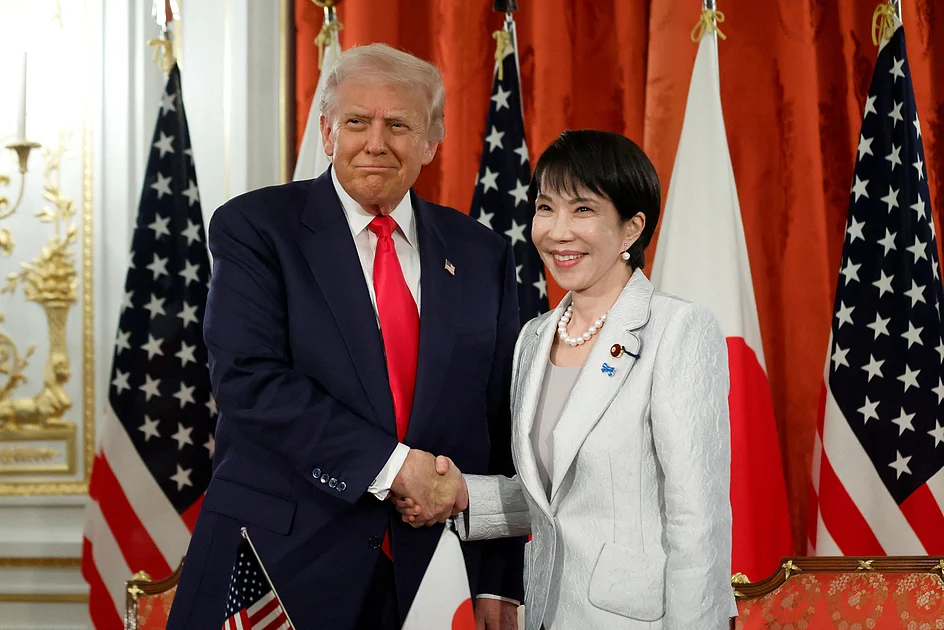
Trump, Japan’s Takaichi sign agreement on critical minerals, rare earths supply
In a significant diplomatic meeting in Tokyo, US President Donald Trump and Japan’s first female Prime Minister, Sanae Takaichi, solidified their nations’ partnership through agreements on critical minerals, rare earths, and military cooperation. The meeting, held at the Akasaka Palace, underscored the strategic alliance between the two countries amid growing regional tensions with China. Trump lauded Takaichi’s commitment to accelerating Japan’s military buildup, including plans to increase defense spending to 2% of GDP, a move aimed at countering China’s assertiveness. Takaichi, in turn, expressed her intention to nominate Trump for the Nobel Peace Prize, citing his role in brokering ceasefires in Cambodia, Thailand, and between Israel and Hamas. The leaders signed a landmark agreement to reduce reliance on China for critical minerals, essential for technologies ranging from smartphones to fighter jets. The deal includes joint projects in magnets and batteries, as well as the development of strategic mineral stockpiles. Takaichi gifted Trump a putter once owned by the late Prime Minister Shinzo Abe, a golf bag signed by Japanese major winner Hideki Matsuyama, and a gold leaf golf ball, symbolizing the personal rapport between the leaders. The meeting also evoked memories of Trump’s close relationship with Abe, who was assassinated in 2022. Takaichi’s gestures and the agreements signed are expected to bolster her political standing domestically, despite her coalition government’s narrow parliamentary majority. Trump’s visit to Japan concluded with a tour of the US naval base in Yokosuka, highlighting the US military’s presence in the region. He will next travel to South Korea for talks with Chinese President Xi Jinping, aiming to resolve the ongoing trade war between the world’s two largest economies.
-

China’s milu deer population grows 200-fold since 1985
China’s remarkable efforts to revive the milu deer population have been celebrated at the 2025 International Symposium on Milu and Ecological Conservation in Beijing. The event, held from October 24 to 25 as part of the Zhongguancun Forum series, brought together over 100 experts from nine countries, including zoologists, ecologists, and conservationists. Since the reintroduction program began in 1985 in collaboration with the United Kingdom, the milu deer population has surged from a mere 77 to approximately 15,000—a staggering 200-fold increase. Initially confined to two reserves in Beijing and Jiangsu province, the deer now inhabit over 100 breeding populations across 27 provinces. Moreover, wild populations have flourished, with six groups totaling more than 6,000 animals thriving in various regions. This extensive network is hailed as the world’s largest and most comprehensive system for milu conservation, setting a global benchmark for wildlife reintroduction efforts.
-
Global experts praise China’s ecological achievements at a seminar in Beijing
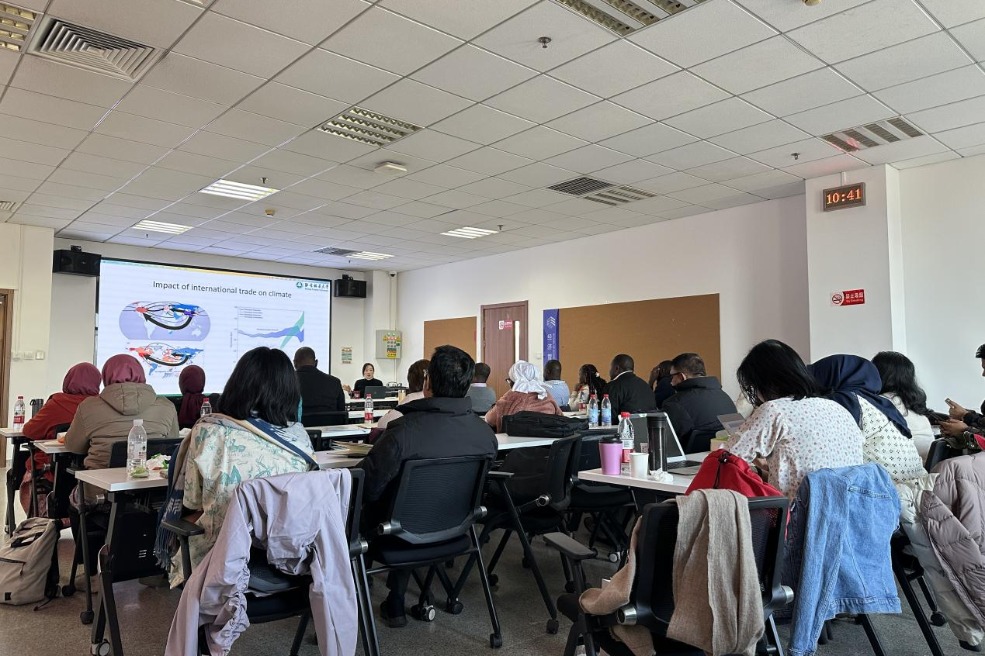
A high-profile seminar on forestry carbon sequestration concluded in Beijing on October 28, 2025, drawing widespread acclaim from global participants for its comprehensive showcase of China’s ecological advancements. The event, spanning two weeks, was jointly hosted by China’s Ministry of Commerce and Beijing Forestry University, attracting 24 delegates from six Asian and African nations. The program seamlessly integrated theoretical discussions on China’s ecological civilization policies with immersive field visits to key ecological sites in Hubei province, offering participants a firsthand look at the integration of ecological preservation into regional development strategies. Dombeu Kaam Rene Maurice, an official from Cameroon with the International Bamboo and Rattan Organization, lauded the seminar’s balanced approach, stating, ‘The insights gained here could revolutionize our approach to combating climate change.’ He also emphasized China’s strategic long-term planning in ecological governance, noting the alignment of ecological targets with the nation’s five-year plans. Karen Chow, a representative from Malaysia’s Ministry of Natural Resources and Environmental Sustainability, highlighted the importance of sustained investment in environmental protection, citing Hubei’s exemplary environmental stewardship as a source of inspiration. Senaratne Gamaralalage Priyantha Bandula, a forestry official from Sri Lanka, acknowledged the seminar’s influence on his country’s perspective on carbon trading and sustainable industrial development, praising China’s leadership in advancing wood-based industries while maintaining environmental integrity. Looking ahead, participants expressed keen interest in fostering deeper collaboration with China in areas such as carbon project development, technical training, and sustainable forest management, viewing the seminar as a pivotal step toward impactful cross-border climate initiatives in the Global South.
-

Debate on dangerous ski training courses flares at the start of Olympic season
Mikaela Shiffrin, the renowned American skier, returned to the slopes with heightened caution after a severe crash last year left her with a punctured abdomen and damaged abdominal muscles. Her injuries, sustained during a World Cup giant slalom race, underscored the inherent risks of both competitive skiing and training. Shiffrin’s experience is not unique. French skier Alexis Pinturault echoed similar concerns, highlighting the unsafe conditions often faced during training sessions. The issue of safety in Alpine skiing gained renewed attention following the tragic death of Italian skier Matteo Franzoso in a preseason training accident in Chile. Franzoso’s death, the third among young Italian skiers in less than a year, has sparked urgent calls for improved safety measures. Shiffrin, who battled post-traumatic stress disorder after her crash, emphasized the need to reassess the risks athletes face. She argued that while skiing inherently involves danger, it is unacceptable to dismiss life-threatening risks as part of the sport. Training courses, often lacking the safety standards of race courses due to financial constraints, pose significant hazards. Smaller crews, fewer safety nets, and limited medical resources exacerbate the risks. Sofia Goggia, the 2018 Olympic downhill champion, likened high-level skiing to Formula 1 or MotoGP, emphasizing the extreme speeds and dangers involved. While increased safety netting is a partial solution, it is not a panacea. The Italian Winter Sports Federation has urged the International Ski and Snowboard Federation (FIS) to establish dedicated training courses with safety standards akin to those of World Cup races. FIS President Johan Eliasch acknowledged the need for improved safety measures, including better scheduling, more medical staff, and enhanced course preparation. However, implementing these changes remains a challenge, particularly for smaller federations with limited resources. The responsibility for safer training courses, according to Austrian coach Roland Assinger, cannot rest solely on local ski resorts. A coordinated effort among national federations is essential. As the skiing community grapples with these issues, the question of who will fund the necessary safety upgrades remains unanswered.
-

Global businesses gather at Hong Kong intl lighting fair, tech light expo
The Hong Kong International Lighting Fair (Autumn Edition) and the 10th Hong Kong International Outdoor and Tech Light Expo commenced on Monday, drawing approximately 3,000 businesses from around the globe. Organized by the Hong Kong Trade Development Council (HKTDC), the event underscores innovation and smart design in the lighting industry. A highlight of the fair is the ‘Connected Lighting Pavilion,’ which features award-winning designs and products from renowned brands in Finland, Germany, the Netherlands, Japan, and other countries. These exhibits demonstrate cutting-edge lighting solutions that have been implemented in major global projects. The expo, running from Tuesday to Friday, will display a diverse array of outdoor, commercial, and industrial lighting products and technologies, all aimed at advancing smart city initiatives. This gathering not only serves as a platform for industry leaders to showcase their latest innovations but also fosters international collaboration in the lighting sector.
-

Rising star James Zijian Wei’s debut recital at Carnegie Hall in New York hailed as ‘incredible’
James Zijian Wei, a 26-year-old Chinese pianist, made a stunning debut at Carnegie Hall’s Zankel Hall in New York City on Sunday, earning widespread acclaim for his performance. The recital, which featured works by Mozart, Beethoven, Scriabin, and Samuel Barber, captivated the audience, earning him multiple standing ovations. Wei’s delicate and melancholic style, combined with his technical mastery, left a lasting impression on attendees. Wendy Zhulkovsky, an audience member from Connecticut, praised his playful footwork and stage presence, calling the performance ‘incredible.’ Wei, who recently won the 2024 Mixon First Prize at the Cleveland International Piano Competition, expressed his joy in sharing music as a universal language. He described performing at Carnegie Hall as a dream come true, emphasizing the venue’s significance. Yaron Kohlberg, artistic director of the Cleveland International Piano Competition, highlighted Wei’s authenticity and maturity, noting his extraordinary control of sound and mastery of the instrument. Wei, who has performed with renowned orchestras worldwide, aims to create his own unique sound, aspiring to be recognized for his distinct musical voice. The recital concluded with Wei expressing his hope that music can bring solace and joy to people, regardless of life’s challenges.
-
Record rainfall causes major flooding in Vietnam, submerging ancient sites
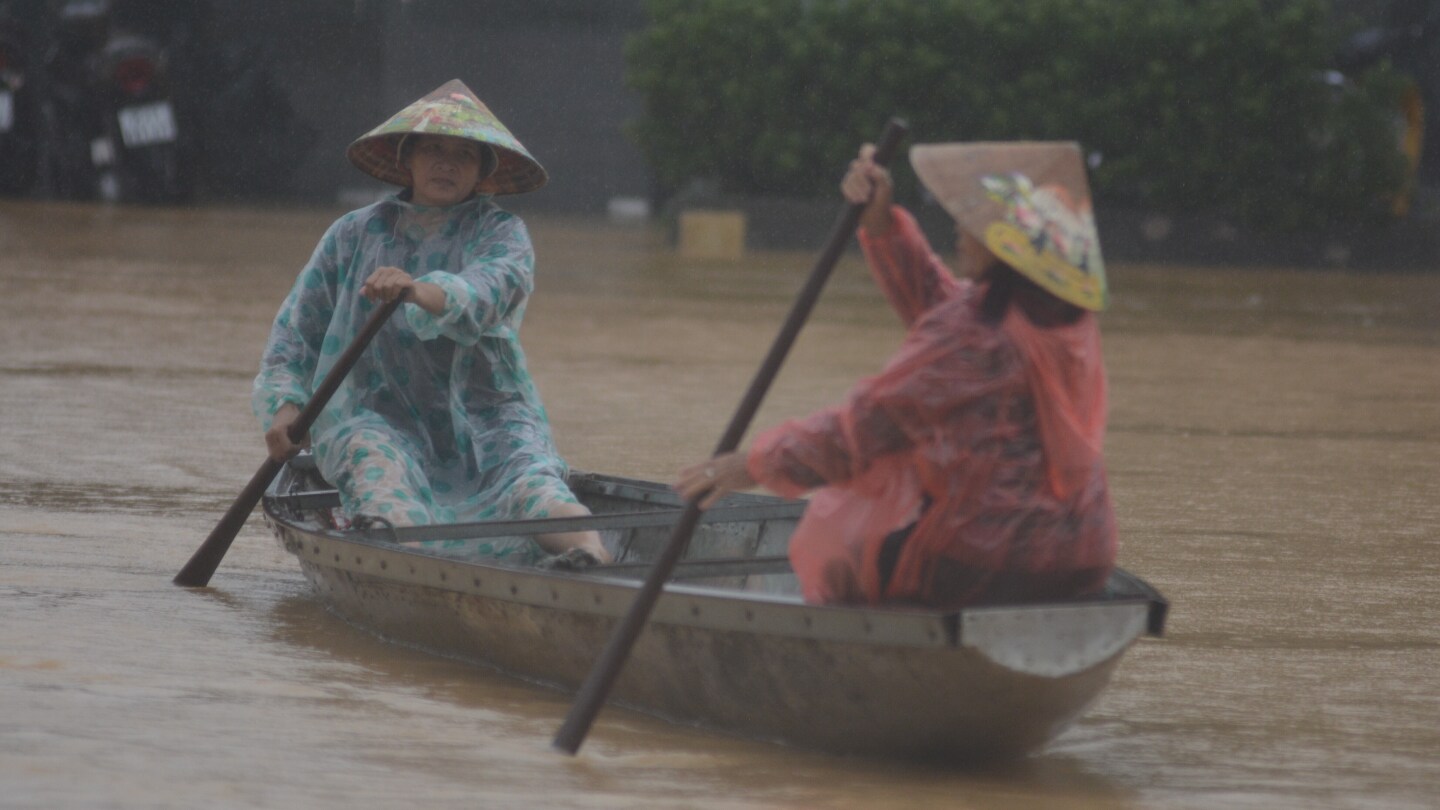
Central Vietnam is grappling with unprecedented flooding triggered by relentless heavy rains, which have submerged homes, farmland, and iconic tourist destinations, including the historic cities of Hue and Hoi An. According to Vietnam’s meteorological department, Hue recorded a staggering 1,085.8 millimeters (42 inches) of rainfall within 24 hours by late Monday, marking the highest volume ever documented in the country. The Perfume River in Hue surged to 4.62 meters (15 feet), while waist-deep floods engulfed Hoi An’s ancient town, forcing tourists to evacuate by boat. Persistent rainfall and water releases from hydroelectric dams caused the Hoai River to rise nearly 2 meters (6.5 feet), exacerbating the crisis. State media reported that 32 of Hue’s 40 residential areas were inundated, with residents resorting to boats to navigate submerged streets. The floods also disrupted the train route between Hanoi and Ho Chi Minh City, stranding thousands of passengers. In a bid to safeguard infrastructure, Vietnam’s railways deployed 19 train carriages loaded with 980 tonnes (1,080 U.S. tons) of heavy stones to stabilize a bridge at risk of being swept away. The Australian nonprofit Blue Dragon Children’s Foundation highlighted that approximately 1,000 people in rural Thua Thien Hue province, including 200 children, are isolated and in urgent need of assistance due to flooding and landslides. Meteorologists had earlier warned of severe rainfall, floods, and landslides as storm Fengshen approached. Experts attribute the intensification of such storms to global warming, which fuels tropical storms with warmer oceans, leading to stronger winds, heavier rainfall, and altered precipitation patterns across East Asia. Vietnam, one of the world’s most flood-prone nations, faces heightened risks with nearly half its population residing in vulnerable areas.
-

India conducts cloud-seeding trial to clear New Delhi’s smog
In a bold move to tackle the persistent air pollution crisis, Indian authorities conducted a cloud-seeding experiment over New Delhi on Tuesday. The initiative aimed to induce rainfall and alleviate the city’s hazardous smog levels, which have sparked widespread public discontent. A specialized aircraft dispersed chemicals into the clouds above select areas of the capital, hoping to trigger precipitation that would cleanse the atmosphere. Despite these efforts, air quality monitors classified the city’s pollution levels as “very poor,” underscoring the severity of the issue. Cloud seeding, a weather modification technique used in drought-prone regions like the western United States and the United Arab Emirates, remains a contentious solution due to its uncertain efficacy. Delhi Minister Manjinder Singh Sirsa revealed that the trial was conducted in collaboration with the Indian Institute of Technology Kanpur, with additional experiments planned in the coming days. He anticipated localized rainfall in the following hours, though experts remain skeptical about the long-term impact of such measures. New Delhi, home to over 30 million people, consistently ranks among the world’s most polluted cities. A recent report by IQAir, a Switzerland-based air quality monitoring database, identified six Indian cities among the top ten most polluted globally, with New Delhi topping the list as the most polluted capital. The city’s air quality deteriorates annually during winter due to crop residue burning in neighboring states, vehicle emissions, and industrial pollutants. While authorities have implemented measures such as construction bans, restrictions on diesel generators, and the deployment of anti-smog guns, critics argue that these are temporary fixes. Krishna Achuta Rao, a professor at the Indian Institute of Technology, New Delhi, emphasized that cloud seeding offers only a fleeting respite and fails to address the root causes of pollution. He advocated for stringent laws targeting emissions from industries, vehicles, and construction activities as the only viable long-term solution. “Cloud seeding is not a cure for pollution. It merely creates the illusion of action,” Rao stated.