作者: admin

  • What do Georgians want from Marjorie Taylor Greene’s replacement?

    What do Georgians want from Marjorie Taylor Greene’s replacement?

    The political landscape of Georgia’s 14th Congressional District enters a decisive phase as voters prepare to select a permanent successor to former Representative Marjorie Taylor Greene. The special election, triggered by Greene’s January resignation to pursue other political ambitions, has advanced to a runoff between Republican contender Clayton Fuller and Democratic challenger Shawn Harris after neither secured an outright majority in the initial voting round.

    This electoral contest represents more than a routine political transition—it serves as a critical barometer of the district’s evolving political priorities. The northwestern Georgia constituency, traditionally conservative, now faces a choice between continuing Greene’s brand of confrontational politics or embracing alternative representation.

    Fuller, running as the Republican standard-bearer, has positioned himself as a continuation of conservative values while promising more focused district advocacy. His campaign emphasizes border security, economic development, and traditional Republican platforms. Harris, his Democratic opponent, has centered his campaign on healthcare accessibility, educational improvements, and bipartisan cooperation—issues he argues were neglected during Greene’s tenure.

    The runoff mechanism, required under Georgia election law when no candidate achieves majority support, extends the electoral process and intensifies campaign efforts. Both campaigns now mobilize their bases while attempting to sway undecided voters and those who supported eliminated candidates in the first round.

    Political analysts observe that this election may reveal whether voters prioritize ideological purity or pragmatic representation, with outcomes potentially influencing campaign strategies in similar districts nationwide. The result will determine who completes the remainder of Greene’s term, with implications for the balance of power in the closely divided House of Representatives.
  • St Basil’s Home for the Aged in Victoria fined $150,000 after Covid outbreak killed 45

    St Basil’s Home for the Aged in Victoria fined $150,000 after Covid outbreak killed 45

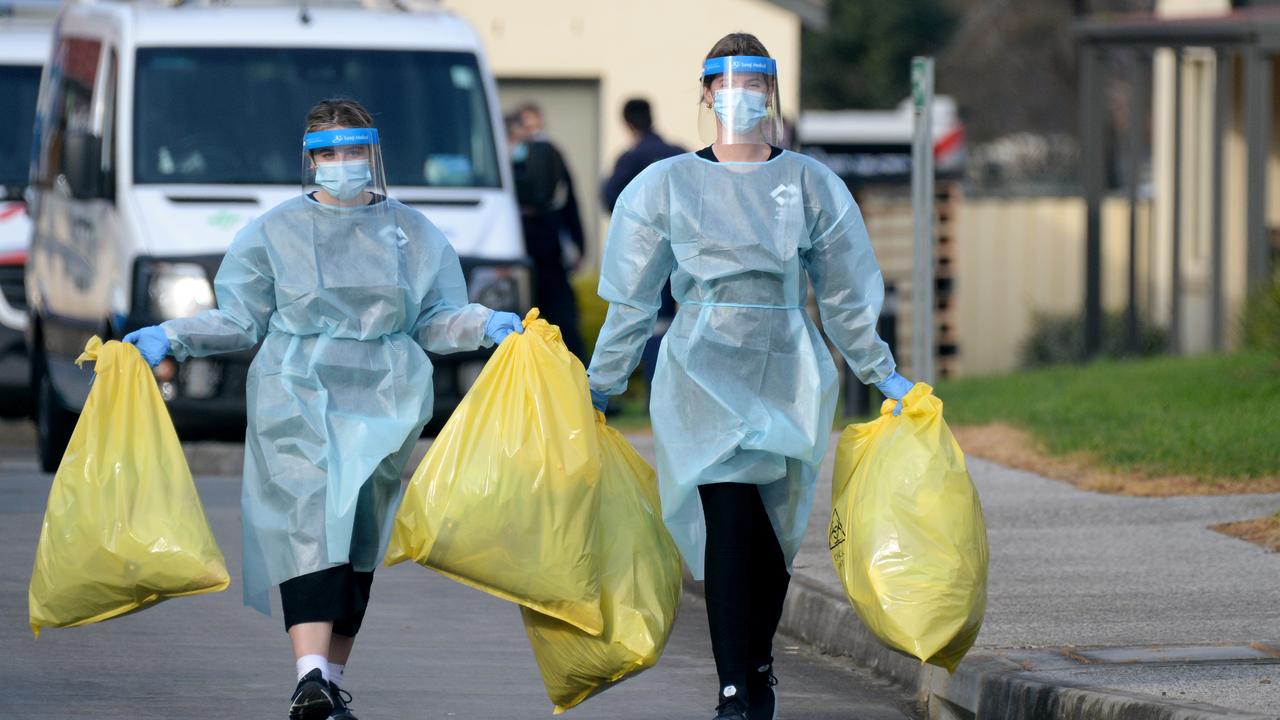
    A Melbourne aged care facility at the epicenter of a devastating COVID-19 outbreak has been convicted and fined $150,000 for critical workplace safety failures. St Basil’s Home for the Aged faced sentencing in Victoria’s County Court after admitting to a single charge of failing to maintain a safe working environment during the pandemic’s initial wave.

    The judicial proceedings revealed that despite organizing five specialized training sessions with external medical experts between March and June 2020, the facility failed to ensure comprehensive staff participation. Court documents confirmed that five employees missed all training sessions, resulting in inadequate pandemic preparedness knowledge among portions of the workforce.

    This training gap proved catastrophic when the facility recorded its first COVID-19 case on July 9, 2020. Within six days, dozens of infections were confirmed among residents and staff, culminating in 45 resident fatalities from COVID-related complications within a single month.

    Judge Trevor Wraight characterized the offense as a “relatively serious breach” of workplace safety protocols, noting that while the nonprofit organization was aware of pandemic risks and had implemented some protective measures, systemic weaknesses directly contributed to the training deficiencies. The court acknowledged the facility’s subsequent efforts to overhaul its safety protocols over the past five years to prevent similar failures.

    The ruling considered the substantial financial and reputational damage already sustained by St Basil’s, which operates as a nonprofit organization. WorkSafe Victoria, the workplace regulator that brought the charges, emphasized that the case specifically addressed training failures rather than directly linking the omissions to individual fatalities.

  • ‘Put our faith in God’: Tehran residents adapt to wartime

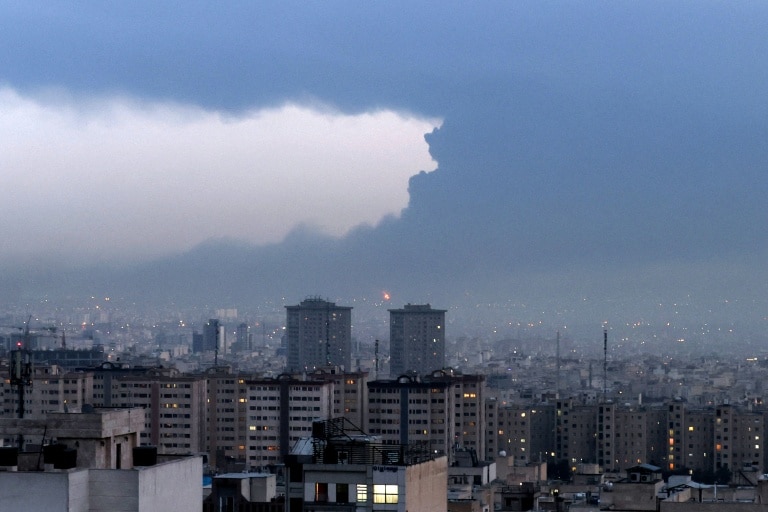
    ‘Put our faith in God’: Tehran residents adapt to wartime

    Tehran’s metropolitan landscape has undergone a dramatic transformation as residents navigate an unprecedented state of wartime existence. The Iranian capital, alongside other urban centers, faces sustained aerial bombardments from Israeli-US forces in a conflict intensity not witnessed since the 1980s war with Saddam Hussein’s Iraq.

    The city’s rhythm has fundamentally altered: educational institutions remain shuttered, commercial activity has significantly diminished, and armored security vehicles now patrol streets once filled with ordinary traffic. Residents have adopted practical survival measures, taping windows to prevent shattering from explosion debris and largely confining themselves to their homes except for essential movements.

    A complex psychological adaptation is underway among Tehran’s populace. While many express remarkable calmness and resilience, the constant uncertainty of attacks creates underlying tension. Residents report no advance warning systems for incoming strikes, forcing them to interpret target patterns independently. Many find solace in believing strikes primarily target institutional structures like police stations, mosques, and military sites rather than residential buildings, though collateral damage remains widespread.

    The social fabric demonstrates remarkable strength with neighbors providing mutual support, including housing for those displaced by destruction. Infrastructure has adapted to crisis conditions: public transportation operates with minimal passengers, delivery services maintain essential goods circulation, and critical neighborhood establishments like bakeries remain operational despite widespread commercial closures.

    Communication networks face severe restrictions, with only domestic intranet services functioning, virtually isolating Iran from global digital connectivity. The visual landscape has changed with the emergence of billboards featuring Mojtaba Khamenei, the newly appointed successor to his father, the slain Supreme Leader, though his public absence since appointment fuels uncertainty.

    Despite the turmoil, religious faith provides comfort for many residents, who combine practical preparations with spiritual resolve. The approaching Iranian New Year (Nouruz) creates poignant contrast to the conflict, with traditional celebrations likely overshadowed by ongoing security concerns. International observers note significant refugee movement, particularly among Afghan migrant workers returning home amid the deteriorating conditions.

  • Jeffrey Epstein had two key aides – why do they still control his money and secrets?

    Jeffrey Epstein had two key aides – why do they still control his money and secrets?

    Two key figures in Jeffrey Epstein’s financial operations—accountant Richard Kahn and attorney Darren Indyke—are facing congressional scrutiny regarding their alleged involvement in the disgraced financier’s sex trafficking network. Appointed as sole executors of Epstein’s estate just two days before his August 2019 jailhouse death, the pair control all of Epstein’s wealth and possessions, including compensation for survivors and sensitive documents now being examined by the House Oversight Committee.

  • Yamal denies Newcastle, Liverpool lose and Atletico thrash Spurs in Champions League

    Yamal denies Newcastle, Liverpool lose and Atletico thrash Spurs in Champions League

    The UEFA Champions League round of 16 delivered a night of breathtaking drama and stunning scorelines, headlined by a miraculous Barcelona escape and a devastating Tottenham collapse.

    At a raucous St. James’ Park, Newcastle United appeared to have secured a historic victory when substitute Harvey Barnes broke the deadlock in the 86th minute, tapping in Jacob Murphy’s cross. However, in a dramatic final twist, Barcelona was awarded a penalty deep into injury time after Malick Thiaw tripped Dani Olmo. Sixteen-year-old phenom Lamine Yamal, who had been largely anonymous throughout the match, stepped up to convert the spot-kick with the last kick of the game, securing a 1-1 draw and completely shifting the momentum ahead of the second leg at Camp Nou.

    The most lopsided affair unfolded in Madrid, where Atletico Madrid inflicted a humiliating 5-2 defeat on a hapless Tottenham Hotspur. The match turned into a personal nightmare for Spurs’ third-choice goalkeeper, Antonin Kinsky. His catastrophic error gifted the opening goal to Marcos Llorente in the 6th minute, setting the tone for a disastrous evening. Antoine Griezmann and a Julian Alvarez brace, the latter also from a Kinsky mistake, put Atletico 3-0 up within just 15 minutes. Coach Igor Tudor took the unprecedented step of substituting his devastated goalkeeper in the first half, but replacement Guglielmo Vicario could not prevent the onslaught. Alvarez added a fifth after the break to complete his brace, rendering consolation goals from Pedro Porro and Dominic Solanke meaningless.

    In other action, Liverpool suffered a concerning 1-0 defeat to Galatasaray in Istanbul for the second time this season. Mario Lemina’s header from a Victor Osimhen knockdown proved decisive, leaving manager Arne Slot with a significant challenge to overturn the deficit at Anfield.

    Meanwhile, Bayern Munich virtually guaranteed their quarter-final berth with an attacking masterclass, demolishing Atalanta 6-1 in Italy. Even without Harry Kane, the German giants were rampant. Michael Olise was the standout performer, contributing a goal and multiple assists in a display that cemented Bayern’s status as tournament favorites.

  • US says wouldn’t be ‘happy’ if Russia giving Iran intel

    US says wouldn’t be ‘happy’ if Russia giving Iran intel

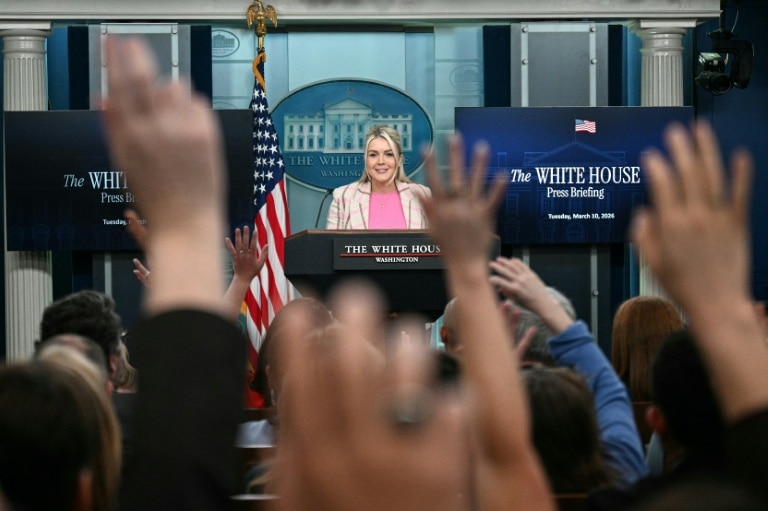
    The White House has conveyed its dissatisfaction with potential intelligence collaboration between Russia and Iran during ongoing Middle Eastern hostilities, while maintaining diplomatic restraint toward Moscow. Press Secretary Karoline Leavitt stated Tuesday that President Trump would not be ‘happy’ if such intelligence sharing were confirmed, following Washington Post reports that Russia had provided Tehran with sensitive information including US naval and aircraft positions in the region.

    Despite these allegations, the administration has adopted a measured response. President Trump characterized his Monday conversation with Vladimir Putin as constructive, noting the Russian leader’s desire to be ‘helpful’ in Middle Eastern matters—even as Putin offered ‘unwavering support’ to Iran’s new leadership.

    In a related development, the US has temporarily suspended certain sanctions on Russian oil exports to India, citing global crude price surges resulting from the Iran conflict. Leavitt clarified that this waiver recognized New Delhi’s previous compliance with US sanctions and represented a temporary measure to address oil supply disruptions. She emphasized that the move wouldn’t provide ‘significant financial benefit to the Russian government at this time.’

    Special Envoy Steve Witkoff, who has led US negotiations with both Russia and Iran, suggested taking Moscow at its word regarding intelligence sharing denials. When questioned about the apparent contradiction between alleged intelligence transfers and sanctions relief, Witkoff acknowledged his lack of intelligence expertise but noted Russia’s official denial during the presidential call.

    The administration continues to navigate complex diplomatic waters as Trump maintains his distinctive approach to US-Russia relations, insisting his personal rapport with Putin remains crucial for potential negotiations regarding Ukraine.

  • US targets Iran mine-laying as war causes oil market havoc

    US targets Iran mine-laying as war causes oil market havoc

    The United States military has launched targeted strikes against Iranian naval assets capable of mining the strategic Strait of Hormuz, as escalating Middle East hostilities continue to destabilize global energy markets. Defense officials confirmed the destruction of 16 Iranian minelaying vessels near the critical waterway, releasing combat footage showing missile engagements against the boats.

    President Donald Trump issued a stark warning to Tehran through social media, threatening unprecedented military consequences should Iran deploy mines in the vital shipping channel. This development comes amid soaring crude oil prices that have increased approximately five percent, briefly surpassing $100 per barrel earlier this week.

    The conflict intensified with Israel conducting simultaneous strikes against targets in Beirut and Tehran. Iranian authorities reported their capital experiencing ‘black rain’ from bombed fuel depots, while Lebanon documented at least 486 fatalities and 1,300 injuries from Israeli attacks between March 2-9.

    Iran’s leadership remains defiant, with Parliament Speaker Mohammad Bagher Ghalibaf, a former Revolutionary Guards commander, explicitly rejecting ceasefire possibilities. ‘We believe the aggressor must be punished and taught a lesson that will deter them from attacking Iran again,’ he stated on social media platform X.

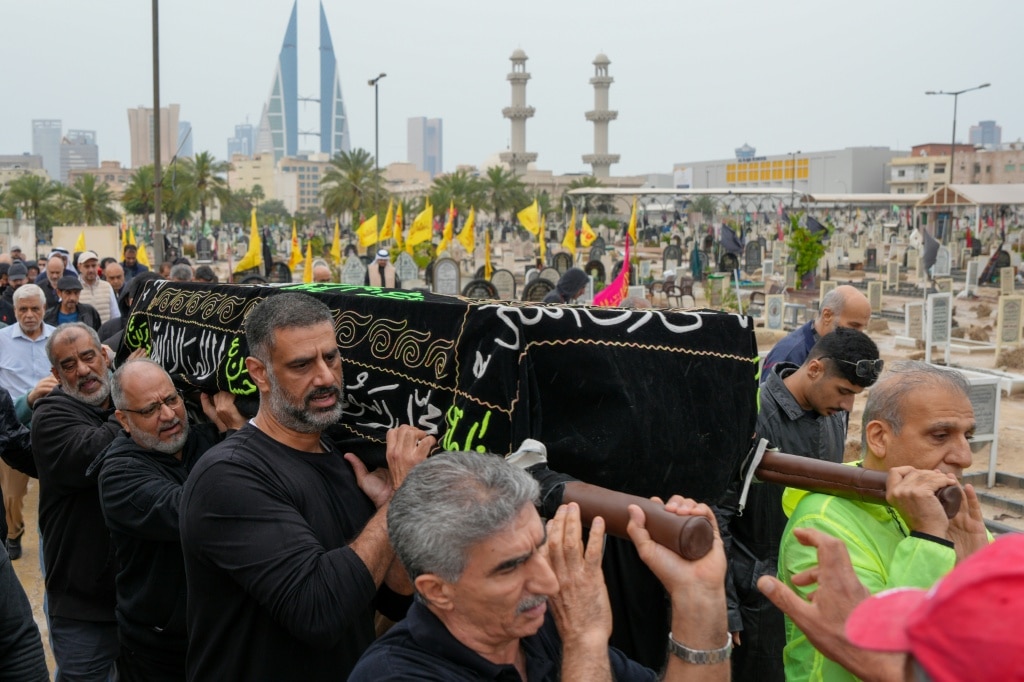
    The conflict originated with Israel’s February 28 strike that killed Iran’s veteran leader Ayatollah Ali Khamenei, subsequently replaced by his son Mojtaba Khamenei. Despite U.S. claims of degrading Iran’s missile capabilities, Revolutionary Guards announced fresh salvos against Israeli cities and American targets regionally, with explosions reported in Bahrain near a major U.S. naval base.

    The economic ramifications continue expanding with attacks on Gulf infrastructure including the UAE’s Ruwais oil refinery closure following drone attacks and Qatar reporting new assaults on LNG facilities. Saudi Aramco CEO Amin H. Nasser warned of ‘catastrophic consequences for the world’s oil markets’ should Hormuz shipping disruptions continue.

    Proxy conflicts have emerged in Iraq and Lebanon, with Iranian-linked fighters casualties in suspected U.S. strikes. The United Nations warned that Hormuz closure could exacerbate fuel and food costs for vulnerable populations worldwide, with Egypt already implementing up to 30% fuel price increases that strain ordinary citizens.

  • AFL 2026: Hawthorn head of footy Rob McCartney addresses his players’ off-season arrest

    AFL 2026: Hawthorn head of footy Rob McCartney addresses his players’ off-season arrest

    Hawthorn Football Club has publicly defended two of its players following their arrest in the United States, characterizing the incident as an uncharacteristic misstep rather than a reflection of their true character. Dylan Moore and Connor Macdonald faced legal consequences during an off-season holiday in Phoenix, Arizona, where they were detained overnight for trespassing violations.

    The incident occurred when Moore, while intoxicated, climbed onto construction equipment—specifically a scissor lift—prompting local authorities to intervene. Despite the players’ otherwise exemplary records, the club implemented significant disciplinary measures in response to the breach of conduct.

    Moore has been removed from his position as vice-captain and has completed an educational program alongside community service requirements. Both players continue to face pending legal proceedings in the United States regarding the trespassing charges.

    Rob McCartney, Hawthorn’s head of football, addressed media concerns on Wednesday, emphasizing the players’ remorse and their otherwise outstanding citizenship throughout their careers. “These two boys in particular have been outstanding citizens over the journey of their time at our club and even before our club,” McCartney stated. He noted the organization’s balanced approach of implementing appropriate consequences while providing wellbeing support to the players.

    The club executive described the punishment—including financial sanctions, leadership removal, community service, and educational requirements—as “absolutely fair and reasonable” given the circumstances. McCartney confirmed that both players demonstrated immediate remorse and willingness to accept consequences for their actions.

  • Trump reportedly wants to seize Iran’s Kharg Island. He floated the idea 40 years ago

    Trump reportedly wants to seize Iran’s Kharg Island. He floated the idea 40 years ago

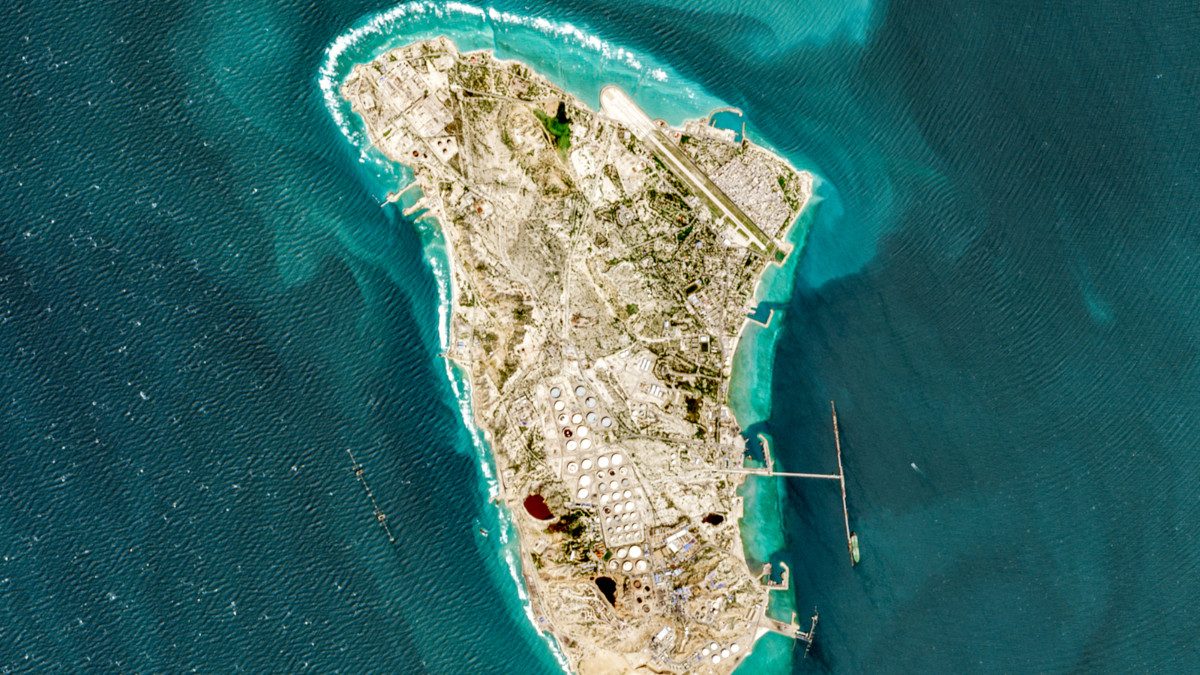
    A recently resurfaced 1988 interview with then-businessman Donald Trump reveals his early consideration of military action against Iran’s critical Kharg Island oil terminal. Speaking to The Guardian, Trump articulated a confrontational approach toward Iran, stating he would “be harsh on Iran” and proposing to “go in and take” Kharg Island in response to any provocation against US assets.

    This historical perspective gains contemporary significance as recent reports from Axios indicate that US and Israeli officials have recently discussed the possibility of seizing this strategic facility, which handles approximately 90% of Iran’s crude oil exports. The parallel between Trump’s 1988 comments and current deliberations highlights remarkable consistency in his strategic thinking regarding Iran.

    The context of Trump’s original remarks was the brutal Iran-Iraq War (1980-1988), which resulted in approximately 500,000 casualties. During this period, the US Navy was actively escorting vessels through the strategically vital Strait of Hormuz and conducting operations against Iranian oil infrastructure and naval mines.

    Trump’s adversarial stance toward Iran appears rooted in the 1979 Iranian Revolution, which overthrew US-backed Shah Mohammad Reza Pahlavi and established the Islamic Republic. The subsequent 444-day hostage crisis, where 52 American diplomats were held captive in Tehran, profoundly shaped the perceptions of many Americans of Trump’s generation.

    Despite this confrontational posture, historical records reveal a more complex US-Iran relationship. During the Iran-Iraq War, the United States and Israel actually sold weapons to Iran, perceiving Saddam Hussein’s secular Iraqi government as a greater threat than the Islamic Republic. Some of these transactions became part of the controversial Iran-Contra affair, where proceeds were illegally diverted to support anti-communist rebels in Nicaragua.

    The potential closure of the Strait of Hormuz, through which approximately 20% of global oil and natural gas supplies transit, represents a significant threat to energy markets. Recent reports indicate that Iran continued loading operations at Kharg Island even after the initiation of US-Israeli military actions, though current operational status remains unclear.

  • ‘Investing in people’: Can China’s new push to boost spending revive the economy?

    ‘Investing in people’: Can China’s new push to boost spending revive the economy?

    In a significant strategic shift, Chinese policymakers are fundamentally reorienting the nation’s economic approach by prioritizing domestic consumption over traditional investment-driven models. This recalibration emerged as the centerpiece of discussions during Beijing’s pivotal Two Sessions meetings, where officials established a modest 4.5%-5% growth target—the most conservative benchmark since 1991.

    The new paradigm represents a substantial departure from decades of reliance on state-directed infrastructure projects, export manufacturing, and property development. Instead, authorities are implementing measures designed to bolster household spending through enhanced social welfare protections. Key initiatives include expanding elderly care services, enforcing paid annual leave mandates, and providing increased support for child-rearing families.

    Central to this transformation is the newly proposed ‘urban-rural resident income growth plan,’ which aims to simultaneously increase disposable incomes while addressing persistent wealth disparities. Officials characterize this approach as ‘investing in people’—a philosophy premised on the notion that financial security regarding healthcare, retirement, and family expenses will naturally stimulate consumer activity.

    This consumption-focused strategy unfolds alongside China’s continued commitment to technological advancement, with the upcoming 15th Five-Year Plan emphasizing artificial intelligence integration and advanced manufacturing capabilities. However, growing global protectionism and weakening international demand have diminished the reliability of export-oriented growth models.

    Premier Li Qiang acknowledged the formidable challenges in his government work report, noting ‘the imbalance between strong supply and weak demand is acute.’ Economic data underscores this assessment: household consumption constitutes approximately 40% of GDP—significantly below the 55% global average and 60% typical in advanced economies.

    Early indicators reveal both promise and limitations in stimulus effectiveness. During the recent Spring Festival holiday, government-distributed vouchers generated a 19% increase in travel revenue, yet average traveler expenditures declined and cinema revenues plummeted—suggesting persistent consumer caution.

    The property market downturn presents particularly complex challenges. Real estate previously accounted for nearly one-quarter of economic activity through direct and ancillary industries, while simultaneously functioning as the primary wealth storage mechanism for Chinese households. With home values declining significantly since 2021, the reverse wealth effect has suppressed consumer confidence and spending propensity.

    Online discourse reflects public skepticism regarding the new policies. Social media platforms feature debates about whether paid leave initiatives genuinely benefit workers or simply function as spending incentives. Many users emphasize that comprehensive labor protections and income stability must precede expectations regarding marriage and childbirth decisions.

    Demographic pressures compound these economic transitions, with declining birth rates, elevated youth unemployment, and deflationary trends creating additional headwinds. Most analysts anticipate a gradual transition toward consumption-led growth, noting that current frameworks appear designed to stabilize rather than dramatically increase consumer spending’s economic share.

    As China enters this new developmental phase, its economic resilience will increasingly depend on psychological factors—specifically, whether households feel sufficiently secure to spend, form families, and ultimately power the consumer economy that Beijing now envisions as its sustainable growth engine.