作者: admin

  • Patchy Italy disability access ‘an insult’ ahead of Games

    Patchy Italy disability access ‘an insult’ ahead of Games

    As Italy prepares to host the world’s premier Paralympic athletes this month, the nation faces mounting criticism over its inadequate accessibility infrastructure. The contrast between Olympic-standard venues and everyday urban obstacles reveals a stark accessibility divide across the country.

    In Rome, navigating the city’s historic streets presents formidable challenges for wheelchair users. Alessandro Bardini, a 48-year-old lawyer and disability rights activist who became paraplegic following a 1998 motorcycle accident, describes the daily struggle: ‘Sometimes, it’s just easier to ride on the road.’ The city’s iconic Sanpietrini cobblestones, while aesthetically pleasing, offer minimal stability and pose significant risks for mobility devices.

    Despite substantial investments exceeding 55 million euros ($64 million) to enhance accessibility around Milan-Cortina Games venues, Rome’s infrastructure remains problematic. Even newly renovated areas demonstrate insufficient consideration for wheelchair accessibility. At Piazza Pia, recently redeveloped for the Vatican’s 2025 Jubilee Holy Year, Bardini notes the presence of ‘a staircase that could have been a ramp’—a design choice he characterizes as ‘an insult to people with motor disabilities.’

    Public transportation presents additional barriers. While 61 of Rome’s 77 metro stations feature elevators, 13 stations rely solely on stairlifts requiring attendant operation. Some stations, including those near iconic landmarks like the Spanish Steps, remain completely inaccessible. The average commute can extend to 40 minutes for a single stop when accounting for accessibility-related delays.

    Rome’s municipal council reports achieving 80% compliance with accessibility standards across its road network and expanding its fleet of specially adapted taxis from 40 to 250 vehicles over five years. However, responsibility fragmentation across 15 boroughs creates maintenance disparities. Bardini attributes the persistent issues to ‘a lack of willpower’ and expresses skepticism that Paralympic attention will drive lasting change, noting that post-Games ‘the spotlight is turned off… everything goes back to how it was before.’

  • US consulate in Dubai affected by drone strike

    US consulate in Dubai affected by drone strike

    DUBAI, UAE – A suspected drone attack targeted the vicinity of the United States consulate in Dubai on Tuesday evening, resulting in a significant fire, according to eyewitness accounts and an official government statement. The incident occurred against a backdrop of escalating regional hostilities, coming just one day after a separate Iranian strike hit the US embassy in Riyadh, Saudi Arabia.

    The Dubai Media Office confirmed the event through an official post on the social media platform X (formerly Twitter), stating: ‘Dubai authorities have confirmed that a fire resulting from a drone-related incident near the US consulate has been successfully contained.’ The announcement sought to reassure the public while acknowledging the security breach.

    Visual evidence provided to media outlets showed plumes of smoke rising from the area surrounding the diplomatic compound, corroborating witness reports of the attack. The precise origin of the drone and the identity of its operators remain under investigation by local and federal authorities in the United Arab Emirates.

    This security incident marks a concerning expansion of regional conflict dynamics, potentially signaling the opening of a new front in the Gulf region. The targeting of American diplomatic installations on consecutive days across two major Gulf Cooperation Council (GCC) nations represents a significant escalation in tensions, which have been heightened by ongoing conflicts across the Middle East.

    Security analysts are examining potential connections between the two attacks and assessing the implications for international diplomacy and regional stability. The US Department of State has yet to release an official statement regarding the Dubai consulate incident, though increased security measures at American diplomatic posts throughout the region are anticipated.

  • ‘It’s too warm’: Greenland’s fishermen are under threat from climate change

    ‘It’s too warm’: Greenland’s fishermen are under threat from climate change

    ILULISSAT, Greenland — For Helgi Áargil, a seasoned fisherman navigating Greenland’s majestic fjords, the rhythms of his profession have become increasingly erratic. Accompanied only by his dog Molly and the shimmering northern lights, Áargil now faces unprecedented uncertainty in waters that have sustained generations. His recent experiences encapsulate the broader crisis: last year, his vessel became trapped in dislodged glacial ice; this season, unusually wet conditions have dominated.

    The Arctic region is warming at approximately twice the global average rate, fundamentally transforming the environmental conditions that have long dictated fishing patterns. This semiautonomous Danish territory, which garnered international attention following former U.S. President Donald Trump’s expressed interest in purchasing it, now confronts a more pressing challenge: the climatic disruption of its economic backbone.

    Fishing constitutes up to 95% of Greenland’s exports, with China serving as its primary market alongside the United States, Japan, and European nations. The industry’s future remains uncertain as marine ecosystems undergo rapid transformation.

    The most dramatic changes affect traditional ice fishermen, who represent approximately half of the local industry. Karl Sandgreen, director of the Ilulissat-based Icefjord Center which documents regional climate change, recalls when fishermen worked atop sea ice measuring 1.5 meters thick. That ice began disappearing around 1997, forcing a transition from ice-based to boat-based fishing.

    While boats provide access to larger fishing areas, they introduce new complications including increased operational costs, pollution contributing to further warming, and potential overfishing. Toke Binzer, CEO of Royal Greenland (the territory’s largest employer), describes the current dilemma as balancing between “too much ice to sail, too little to go out on”—a paradox that has already created significant operational challenges.

    The company supports traditional fishermen through boat financing programs, with repayments deducted from future catches. However, ecological shifts are manifesting in concerning ways: halibut are decreasing in size, a classic indicator of overfishing according to marine biodiversity expert Boris Worm of Canada’s Dalhousie University.

    Worm notes that retreating ice could theoretically increase fish stocks by delivering more nutrients through melted ice and rainfall, boosting plankton populations. However, fish behavior is becoming less predictable as species seek new food sources amid disappearing sea ice algae.

    For fishermen like Áargil, the changes are immediately tangible. Warmer waters are driving fish to deeper, colder depths, making traditional catches increasingly elusive. “It’s too warm,” he observes, gazing across the fjord. “I don’t know where the fish is going, but there’s not so much.”

    With limited economic alternatives—tourism remains underdeveloped—and cultural traditions like dog sledding already compromised by absent sea ice, Greenland faces complex challenges. In Nuuk alone, over 1,000 fishing boats crowd the harbor during summer months, highlighting the industry’s centrality for a territory with just over 50,000 inhabitants.

    The transformation of Greenland’s fishing industry represents both an economic recalibration and a cultural watershed, as climatic forces reshape one of the world’s most vulnerable ecosystems.

  • US and Ecuador forces launch operation to fight drug trafficking

    US and Ecuador forces launch operation to fight drug trafficking

    Ecuadorian and United States military forces have initiated coordinated operations targeting organizations designated as terrorist entities within the South American nation, according to an official announcement from the U.S. Southern Command on Tuesday. The joint mission aims to combat illicit drug trafficking networks that have established significant operational presence in Ecuador, though specific operational details remain classified.

    The development follows Monday’s declaration by Ecuadorian President Daniel Noboa that American forces would participate in a ‘new phase’ of the country’s intensified campaign against drug cartels. Noboa has identified Ecuador’s extensive port infrastructure as a critical vulnerability, noting that approximately 70% of global cocaine shipments now transit through these facilities, creating highly profitable opportunities for transnational criminal organizations.

    Ecuador’s geographical positioning between Colombia and Peru—the world’s two primary cocaine producers—has made it increasingly vulnerable to narcotics trafficking operations. This security collaboration emerges just four months after Ecuadorian voters rejected a constitutional amendment that would have permitted the reestablishment of foreign military bases within the country, dealing a significant political setback to Noboa’s security agenda.

    On Monday, President Noboa convened high-level discussions in Quito with U.S. Southern Command leader General Francis Donovan and Mark Schafer, commander of U.S. Special Operations forces in Central and South America. The meetings produced agreements on enhanced intelligence sharing and coordinated operational activities at key transportation hubs, including airports and seaports.

    The U.S. Southern Command characterized the operations as ‘decisive action against narco-terrorists who have long inflicted terror, violence, and corruption throughout the hemisphere.’ This announcement follows Washington’s temporary deployment of Air Force personnel to the former U.S. military installation in Manta three months ago.

    The Trump administration has demonstrated increased focus on counter-narcotics operations in the region, conducting over 40 lethal strikes against suspected drug trafficking vessels in Caribbean and Pacific waters since September. Recent actions include the high-profile seizure of Venezuelan leader Nicolás Maduro on narco-terrorism charges and tense diplomatic exchanges with Colombian President Gustavo Petro regarding drug interdiction efforts.

  • Australian airfares could rise in weeks as Iran conflict drives up oil prices

    Australian airfares could rise in weeks as Iran conflict drives up oil prices

    Australian consumers should brace for significantly higher air travel expenses within weeks as geopolitical tensions in the Middle East drive global oil prices upward, according to economic experts. The escalating conflict involving Iran has precipitated an 11.5 percent surge in Brent crude oil benchmarks over the past five days, directly impacting aviation fuel costs worldwide.

    University of Technology Sydney economics professor Tim Harcourt indicates that while Australian carriers maintain contingency plans for global disruptions, travelers will likely experience rapid price adjustments. “The transmission from oil prices to airfares typically occurs quite swiftly,” Harcourt explained. “Although passengers often book at fixed rates in advance, airlines possess the flexibility to adjust pricing within weeks of travel dates.”

    The situation intensified as Iran substantially restricted traffic through the critical Strait of Hormuz shipping corridor, prompting major airlines to cancel regional flights and monitor fuel cost fluctuations closely. Both Qantas and Virgin Australia have seen notable declines in their share values this week amid the growing uncertainty.

    Market analysts present contrasting perspectives on the crisis management approach. Primara Research analyst Peter Drennan expressed skepticism toward U.S. assurances regarding oil tanker insurance and naval escorts through the Strait, describing maritime insurance as “a complex, niche, specialist area” that cannot be easily replicated. Meanwhile, independent economic analyst Stephen Innes observed that markets have responded methodically rather than panicking, gradually recalibrating risk assessments for energy-centered global economic challenges.

    The U.S. administration’s commitment to securing vital shipping routes has provided some moderating influence on prices, with President Trump’s pledge to ensure tanker safety acting as a temporary market circuit breaker. This intervention signals Washington’s determination to maintain the flow of oil through the world’s most crucial energy artery despite rising geopolitical temperatures.

    As Brisbane motorists already queued for fuel amid price spike concerns, analysts warn that Australia’s limited oil reserves leave the particularly vulnerable to global energy disruptions, potentially accelerating the impact on transportation costs across the nation.

  • China’s factory activity contracts for a second month

    China’s factory activity contracts for a second month

    HONG KONG (AP) — China’s manufacturing sector contracted for the second consecutive month in February, reaching a four-month low despite potential relief from recent U.S. tariff reductions. The official manufacturing purchasing managers index (PMI) declined to 49 from January’s 49.3, according to Wednesday’s report from the National Bureau of Statistics. The PMI scale operates from 0 to 100, with readings below 50 indicating economic contraction.

    The recent downturn follows December’s brief expansion at 50.1, which interrupted eight consecutive months of contraction. National Bureau of Statistics chief statistician Huo Lihui attributed the February decline to seasonal factors, particularly the extended Lunar New Year holiday period in mid-February.

    Contrasting with government data, a private sector PMI survey by Chinese financial research firm RatingDog presented a more optimistic outlook. Their February reading reached 52.1, up from January’s 50.3, marking the most significant expansion since December 2020 and remaining firmly in growth territory. This private survey typically captures trends among smaller, export-oriented private enterprises more accurately.

    RatingDog founder Yao Yu noted in a statement that overseas demand demonstrated notable strength in February, with new export orders showing substantial growth. The divergent data patterns reflect what ING Bank’s Greater China chief economist Lynn Song described as “a similar trajectory to what we observed in 2025,” with resilient external demand driving growth while domestic consumption remains disappointingly soft.

    Economists identify potential catalysts for improvement in the coming months, including last month’s Supreme Court ruling against reciprocal tariffs that resulted in reduced U.S. duties on Chinese goods. Capital Economics China economist Zichun Huang projected this would provide a “small boost” to exports and manufacturing activity. Additionally, the anticipated April meeting between U.S. President Donald Trump and Chinese leader Xi Jinping could extend the current trade truce between the nations.

    However, analysts caution that domestic demand weaknesses persist, fueled by an ongoing real estate sector downturn that continues to suppress consumption and investment. Attention now turns to China’s annual national congress beginning Thursday, where officials will unveil economic growth targets—with economists anticipating a goal of 4.5% or higher—and approve Beijing’s five-year policy blueprint for 2026-2030, expected to emphasize technological advancement and self-reliance initiatives.

  • Carney says he supports Iran strikes ‘with regret’

    Carney says he supports Iran strikes ‘with regret’

    Canadian Prime Minister Mark Carney has issued a complex diplomatic stance regarding the escalating Middle Eastern conflict during his Indo-Pacific tour, calling for rapid de-escalation while maintaining support for military actions against Iran—a position he characterized as being held “with regret.”

    Speaking to journalists in Sydney on Tuesday, Carney articulated Canada’s longstanding position regarding Iran’s nuclear program, describing it as “a grave global threat” that necessitates neutralization. The Prime Minister notably criticized the methodology of the strikes initiated by the United States and Israel, highlighting their failure to consult with the United Nations or key allies, including Canada, before launching operations over the weekend.

    “We take this position with regret because the current conflict represents another failure of the international order,” Carney stated, emphasizing the tragic nature of the escalating violence. He characterized Iran’s regime as “the biggest exporter of terror in the world” and referenced its nuclear ambitions as particularly concerning, noting that “nobody has a civil nuclear programme that’s buried a mile beneath the desert.”

    The Prime Minister’s press conference also addressed Canada’s delicate diplomatic re-engagement with India, following significant tensions that arose after former Prime Minister Justin Trudeau publicly accused Delhi of involvement in the 2023 assassination of Sikh separatist Hardeep Singh Nijjar. Carney described his recent discussions with Indian Prime Minister Narendra Modi as “frank” and indicated that high-level security dialogues had been reestablished.

    Despite Canadian officials previously suggesting that Indian-linked threats on Canadian soil had ceased, some Canadian Sikh communities continue to express concerns about ongoing risks—claims that India consistently denies. The diplomatic thaw has yielded concrete results, with both nations announcing a landmark nuclear energy agreement alongside partnerships in critical minerals, space, defense, and education sectors.

  • Iran’s missile capability is significantly degraded

    Iran’s missile capability is significantly degraded

    In a significant escalation of military operations, US-Israeli coalition forces have successfully degraded Iran’s air defense capabilities, achieving air superiority over key western regions including Tehran. General Dan Caine, Chairman of the US Joint Chiefs of Staff, confirmed on March 2 that coalition operations have neutralized approximately 200 Iranian air defense systems since hostilities began on February 28.

    The systematic dismantling of Iran’s integrated air defense network has enabled a tactical shift in aerial operations. With long-range Surface-to-Air Missile (SAM) systems rendered largely ineffective in designated corridors, the United States has deployed B-1 Lancer heavy bombers from continental bases—a strategic adjustment necessitated by Britain’s refusal to permit US operations from British territories including Cyprus and Diego Garcia.

    Military analysts report that coalition forces are prioritizing the destruction of mobile transporter erector launchers (TELs), with expectations of accelerated attrition in coming days. Current assessments indicate Iran’s S-300/S-400 systems are largely non-functional, while domestically produced Bavar-373 systems—developed with Chinese HQ-9B technology—have been severely degraded.

    The conflict has witnessed substantial missile exchanges, with Iran launching between 150-200 ballistic missiles toward Israel in initial salvos, achieving less than 5% penetration rates against advanced interception systems including Arrow-3, David’s Sling, and SM-3 interceptors. Subsequent launches have diminished to sporadic barrages of 9-30 missiles as mobile launch capabilities deteriorate.

    Parallel naval operations have targeted Iran’s maritime assets, significantly damaging strategic bases at Bandar Abbas and Chahbahar, thereby reducing Tehran’s capacity to threaten critical oil transit routes through the Strait of Hormuz.

    The campaign has also extended to leadership targeting, with the elimination of General Majid ibn al-Reza, recently appointed acting defense minister, underscoring the comprehensive nature of coalition objectives.

    Despite these developments, NATO officials express concern regarding interceptor missile inventories, emphasizing the necessity of enhanced production capabilities and preemptive destruction of enemy assets as optimal defense strategies.

  • Asian shares extend losses as the war with Iran widens and oil surges higher

    Asian shares extend losses as the war with Iran widens and oil surges higher

    Financial markets across Asia experienced severe declines on Wednesday as escalating geopolitical tensions with Iran triggered a massive global sell-off. The crisis hammered stock indices while sending oil prices sharply higher, creating a perfect storm of economic uncertainty.

    South Korea’s Kospi index led the regional downturn, plummeting 8.1% to 5,321.38 – a drop so severe it triggered automatic trading suspensions. This dramatic collapse came despite ongoing optimism about artificial intelligence boosting tech giants like Samsung Electronics and SK Hynix, demonstrating how energy security concerns are overwhelming sector-specific positive developments.

    Japan’s Nikkei 225 fell 3.4% to 54,346.73, with both Japan and South Korea facing particular vulnerability due to their heavy reliance on Middle Eastern oil and natural gas imports currently threatened in the Persian Gulf region.

    The sell-off extended throughout Asian markets: Hong Kong’s Hang Seng declined 1.4% to 25,408.27, China’s Shanghai Composite dropped 0.5% to 4,100.46, Australia’s S&P/ASX 200 fell 1.8% to 9,130.90, and Taiwan’s Taiex lost 2.9%.

    This Asian market turmoil followed Tuesday’s substantial losses on Wall Street, where the S&P 500 finished 0.9% lower after experiencing an intraday plunge of 2.5%. The Dow Jones Industrial Average pared losses to 0.8%, while the Nasdaq composite declined 1%.

    The core concern driving market behavior centers on how sustained oil price increases might exacerbate global inflation. Benchmark U.S. crude oil climbed 1.2% to $75.46 per barrel, while Brent crude, the international standard, gained 1.5% to $82.61 per barrel.

    These developments have created a complex dilemma for the Federal Reserve, as persistent inflationary pressures could restrict the central bank’s ability to implement planned interest rate cuts in 2026. Such cuts would typically stimulate economic growth and job markets but risk worsening inflation if implemented amid energy-driven price surges.

    Currency markets showed relative stability amid the equity turmoil, with the dollar holding nearly unchanged at 157.55 Japanese yen and the euro experiencing a modest decline to $1.1599.

  • US citizens in the Middle East face ‘mayhem’ trying to get home

    US citizens in the Middle East face ‘mayhem’ trying to get home

    American travelers across the Middle East are facing unprecedented chaos and logistical nightmares as escalating military tensions between the US-Israel alliance and Iran disrupt regional stability. The US State Department has issued urgent advisories for citizens in 14 countries—including Saudi Arabia, UAE, Israel, Qatar, and several neighboring nations—to evacuate immediately via commercial transportation. However, numerous travelers report being effectively stranded due to canceled flights, closed airspace, and insufficient governmental guidance.

    In Dubai, Florida residents Krista Hickman and her husband experienced their vacation devolving into what she described as ‘absolute mayhem.’ After multiple unsuccessful attempts to secure assistance through official channels, the couple resorted to paying $1,000 for a private driver to transport them across the border into Oman. Their experience mirrors that of former Army Major General Randy Manner, who remains trapped at Dubai International Airport amidst operational chaos and uncertain flight availability.

    The State Department acknowledges contact with approximately 3,000 Americans currently seeking evacuation, though spokesperson Dylan Johnson confirmed that nearly 9,000 citizens have successfully returned from the region in recent days. Charter flights are being organized for evacuation from UAE, Saudi Arabia, and Jordan, with President Trump encouraging citizens to register online for government-assisted repatriation efforts.

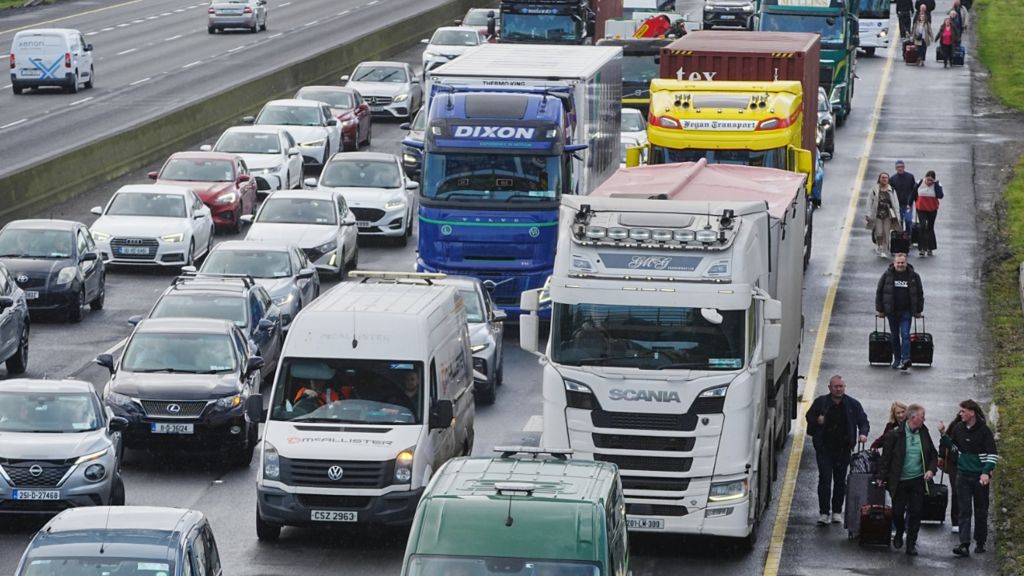
    The human impact extends beyond tourism. Texas resident Harsheet Kummaraguntla revealed his mother became trapped during a layover in Doha when her flight to Dallas abruptly returned to Qatar following airspace closures. Meanwhile, consultant Greg Arnold described the financial strain of securing last-minute flights from Riyadh for his visiting parents, with ticket prices escalating by hundreds of dollars during payment processing.

    Canada has similarly advised against travel to the region, with Foreign Minister Anita Anand seeking Omani airspace access for potential evacuations of its 85,000 registered citizens. The situation remains particularly dire in Lebanon, where NGO worker Nathan Devereaux faces agonizing decisions about evacuating from Beirut amid cross-border strikes between Israel and Hezbollah forces.

    With an estimated 500,000 to one million US nationals residing throughout the Middle East, the evacuation effort represents one of the largest peacetime repatriation challenges in recent history, testing both government response capabilities and the resilience of citizens caught in geopolitical crossfire.