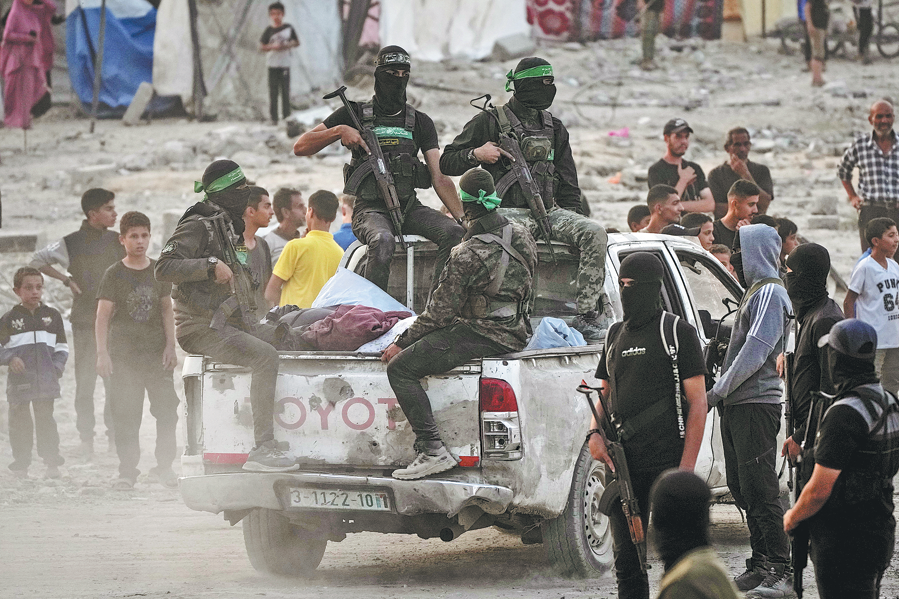
United Nations Secretary-General Antonio Guterres emphasized that any stabilization force deployed in Gaza must derive its legitimacy from a mandate by the UN Security Council. Speaking in an interview with Al Jazeera, Guterres underscored the necessity of a ceasefire that paves the way for a two-state solution and the recognition of an independent Palestinian state. His comments come amid ongoing discussions among Arab and Muslim-majority countries, who recently convened in Istanbul to deliberate on the establishment of an international peace force for Gaza. While some nations expressed reluctance to contribute troops, there was consensus that such a force would require UN Security Council authorization to be effective. Guterres lamented the Security Council’s diminished capacity to address crises, citing the veto power of superpowers often directly involved in conflicts. Since October 2023, the US has vetoed five ceasefire resolutions, the latest in June 2024. Senior Hamas official Moussa Abu Marzouk criticized the proposal for an international force, arguing that it would serve as a substitute for the Israeli army and fail to address Palestinian rights. Meanwhile, eight Palestinian factions, led by Hamas, are set to meet in Cairo to discuss forming a transitional administration for Gaza. Belal Alakhras, a research fellow at the University of Malaya, warned that legitimizing a framework bypassing Palestinian rights through the Security Council sets a dangerous precedent. He urged the international community to focus on recovery and reconstruction rather than imposing interventions that could exacerbate suffering.
作者: admin
-
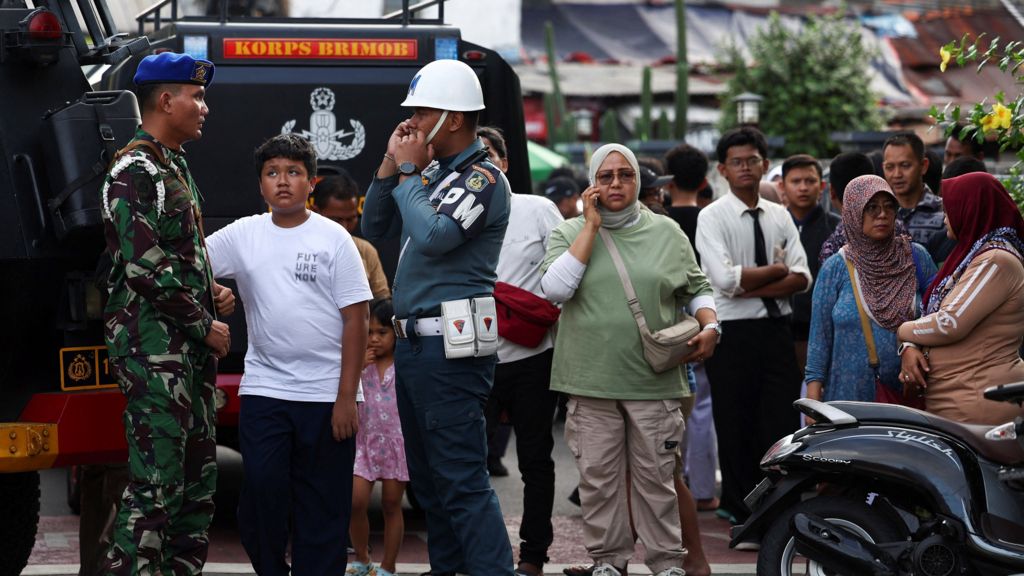
Fifty-four people injured in mosque blast at Jakarta high school
A devastating explosion occurred during Friday prayers at a mosque located within a high school complex in Kelapa Gading, North Jakarta, Indonesia. The incident resulted in injuries to dozens of worshippers, with 54 individuals rushed to hospitals for treatment. Jakarta Metropolitan Police Chief Asep Edi Suheri confirmed the casualties during a televised press briefing, noting that the injuries ranged from minor to severe, including burns. Authorities have launched a thorough investigation into the cause of the explosion, with a bomb disposal team from the Mobile Brigade Corps deployed to conduct a detailed search of the area. The incident has raised concerns about safety and security in public spaces, particularly in places of worship. As the investigation unfolds, the community remains on edge, awaiting further updates from law enforcement officials.
-

Changping builds core of science power
Beijing’s Changping district is poised to become a global leader in science and technology as several national-level laboratories from top institutions like Tsinghua University and Peking University relocate to the area. This strategic move aligns with Beijing’s broader ambition to establish itself as a hub for innovation and technological advancement. Liu Xiaodong, deputy Party chief and head of Changping district, emphasized that the relocation is a significant step in implementing both the city’s development strategy and the nation’s innovation goals. ‘Changping is set to become a new high-tech engine for China and the world,’ Liu stated. Situated adjacent to Haidian, Beijing’s high-tech center, Changping already hosts one-third of the city’s national-level laboratories and boasts the largest concentration of universities and working-age talent in the capital. The district has drawn inspiration from globally renowned university towns like Stanford in the U.S. and Cambridge in the U.K. to develop its own ‘scientist towns’ in Nankou and Machikou. In Nankou, Tsinghua University has collaborated with the district to establish a major national research base, with the first phase already operational and the second phase nearing completion. Meanwhile, Machikou is being developed in partnership with Peking University’s ‘New Campus + New Engineering’ initiative, with the first nine facilities expected to be completed by year-end. The district has also focused on urban renewal and industrial heritage preservation, repurposing old factory buildings to reduce carbon emissions and meet green development goals. The International Association of Science Parks and Areas of Innovation recently held its annual meeting in Changping, further highlighting the district’s growing prominence on the global stage. Ebba Lund, the organization’s CEO, praised Changping as a catalyst for international exchanges and a model for science park development worldwide. Local high-tech companies, such as MicroCyto, have also benefited from the district’s innovation network, which includes expert teams from Peking University and numerous startups. With its ambitious plans and strategic partnerships, Changping is well on its way to becoming a world-class innovation engine, driving regional and national development.
-

Two hospital deaths raise the toll from a retirement home fire in Bosnia to 13 dead
A devastating fire at a retirement facility in Tuzla, Bosnia-Herzegovina, has resulted in the deaths of 13 elderly residents, with two more succumbing to their injuries in the hospital on Friday. The blaze erupted on Tuesday evening on the seventh floor of the boarding house, causing panic as residents scrambled to escape. Initial reports indicate that 11 individuals died from smoke inhalation on the day of the incident. Thirteen others remain hospitalized, according to medical authorities in Tuzla. An official investigation is currently in progress to ascertain the cause of the fire. Local media highlighted that the upper floors of the facility housed elderly residents with limited mobility or chronic illnesses, raising concerns about safety protocols. In the wake of the tragedy, the facility’s manager has resigned. The incident has sparked widespread grief and calls for improved safety measures in care facilities across the region.
-

Ex-NFL star extradited to US to face shooting charge
Former NFL wide receiver Antonio Brown has been extradited from Dubai to the United States to face a second-degree attempted murder charge linked to a shooting incident in May. The Miami Police Department confirmed that Brown, who played for the Pittsburgh Steelers, New England Patriots, and Tampa Bay Buccaneers, was located in Dubai, apprehended, and subsequently extradited to Essex County, New Jersey, by U.S. Marshals. He is currently held in Miami-Dade County Jail awaiting further legal proceedings. The charges stem from an incident in which Brown allegedly seized a gun from a security guard and fired two shots at a man he had previously been in a physical altercation with. No injuries were reported, and no arrests were made at the time. Brown, 37, was briefly detained but later released after providing his account of the events. In a social media post, Brown claimed he was attacked by multiple individuals attempting to steal his jewelry and harm him, contradicting circulating video evidence. Brown, who played a pivotal role in the Tampa Bay Buccaneers’ 2021 Super Bowl victory, now faces serious legal consequences as the case unfolds.
-
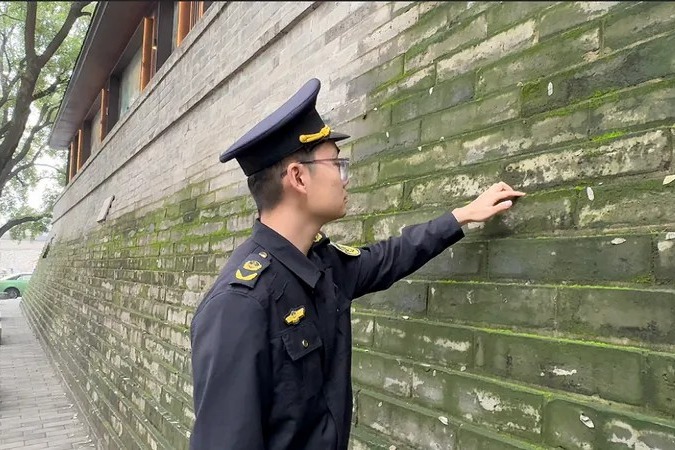
Xi’an City Wall gets health checkup after heavy rains
The historic Xi’an City Wall, a UNESCO World Heritage Site, is undergoing a thorough health assessment following months of heavy rainfall linked to climate change. Since September, Shaanxi province has experienced three prolonged rainy periods, with 87 monitoring stations recording over 20 days of rainfall. The average precipitation reached 314 millimeters, 1.6 times higher than the normal level, marking the second-highest rainfall since 1961. This has raised concerns about the structural integrity of the ancient wall, which dates back to the Ming Dynasty (1368-1644).
Gao Heng, head of the cultural heritage protection department of the Xi’an City Wall Management Committee, highlighted the risks posed by water infiltration. Increased moisture has led to surface deterioration, such as moss and lichen growth, and structural issues, including water seeping into the wall’s rammed-earth core. This can reduce the soil’s bearing capacity, potentially causing localized settlement or collapse.
To mitigate these risks, the committee has implemented a differentiated maintenance approach. Routine measures include sealing cracks and re-leveling surface bricks, while engineering solutions involve re-compacting loose soil and enhancing drainage systems. A key drainage project, approved by the National Cultural Heritage Administration, is underway to divert rainwater from the wall’s foundation.
Technology plays a crucial role in preservation efforts. Since 2018, a ‘digital cabin’ system with over 3,000 sensors has monitored settlement and crack displacement. Drones conduct aerial inspections quarterly, and a four-color warning system assesses risks based on damage severity. In 2023, a comprehensive ‘CT health scan’ using ground-penetrating radar revealed over 1,300 historical cavities and 800 areas of less compact soil within the wall.
Collaboration with local meteorological bureaus and academic institutions ensures specialized weather forecasts and technical support. The committee has also introduced a ‘wall chief’ system, assigning individuals to oversee specific sections for routine monitoring and early issue reporting.
Despite these challenges, Gao emphasized that the wall’s original structure remains intact, with only restored outer layers affected by recent damage. The ongoing efforts aim to safeguard this cultural treasure for future generations.
-

Down to the bones of the matter
The dream of resurrecting dinosaurs, once confined to the realms of science fiction, may become a reality within the next 100 to 200 years, thanks to advancements in artificial intelligence (AI) and genetic technologies. This groundbreaking perspective was shared by leading paleontologists at the international symposium ‘China’s Dinosaurs: From Research to Science Education,’ held in Shanghai from October 28 to 31. The event gathered over 20 top international experts to discuss the future of paleontology and China’s growing influence in the field. While the idea of dinosaur revival sparked lively debate, the symposium also highlighted China’s pivotal role in global dinosaur research, driven by its rich fossil discoveries and innovative public science initiatives. The ongoing ‘China Dinosaur World’ exhibition in Shanghai, featuring 118 representative dinosaur specimens from 12 national institutions, has drawn international acclaim. Experts like Xu Xing, a prominent Chinese paleontologist, emphasized that while current technology cannot resurrect dinosaurs using DNA, new methods involving bone proteins and AI offer promising avenues. British paleontologist Emily Rayfield highlighted AI’s transformative potential in understanding dinosaur biology. However, ethical considerations remain a significant hurdle. The symposium also underscored China’s contributions to paleontology, with nearly one-third of known dinosaur species discovered in the country. The event concluded with a focus on bridging scientific research with public education, as exemplified by the Shanghai exhibition, which has attracted nearly 400,000 visitors and garnered international interest for a global tour.
-

Protesters disrupt an Israeli Philharmonic concert in Paris. 4 people are detained
The Israel Philharmonic Orchestra’s performance in Paris was marred by repeated disruptions as protesters brandished flares and triggered sound alarms, causing panic among the audience and forcing musicians to leave the stage. The incident, which occurred on Thursday night at the Paris Philharmonic concert hall, led to the detention of four individuals. Pro-Palestinian activists also demonstrated outside the venue, highlighting the ongoing tensions surrounding the Gaza conflict spilling into European protests. The French government condemned the disruptions as antisemitic and an attack on cultural freedom. Witnesses inside the hall described a performance fraught with chaos, as the orchestra faced multiple interruptions. Osnat Menache, an official from the Israeli Embassy in Paris, recounted the ordeal, stating that every 10 to 20 minutes, someone attempted to sabotage the concert. Minutes into the performance, loud alarms forced the orchestra to halt and exit the stage. Protesters shouted slogans such as ‘Israel Assassin,’ as reported by Jonathan Arfi, president of France’s national Jewish organization CRIF. Flares were also ignited, with one landing dangerously close to the orchestra. Despite the turmoil, the musicians eventually returned to complete the concert. Interior Minister Laurent Nunez denounced the disruptions on social media, emphasizing that ‘nothing can justify them.’ Earlier, a group of pro-Palestinian musicians had urged the Paris Philharmonic’s director to cancel the event, arguing that it would endorse Israel’s impunity and misuse classical music to whitewash its policies. The group maintained its stance despite a recent ceasefire, citing unresolved historical issues. Arfi criticized the disruptions as an attempt to ‘kidnap culture and arts’ to propagate violent messages within French society. Menache emphasized the French government’s commitment to addressing such antisemitic acts, stating that ‘every antisemitic act should be brought to justice.’
-
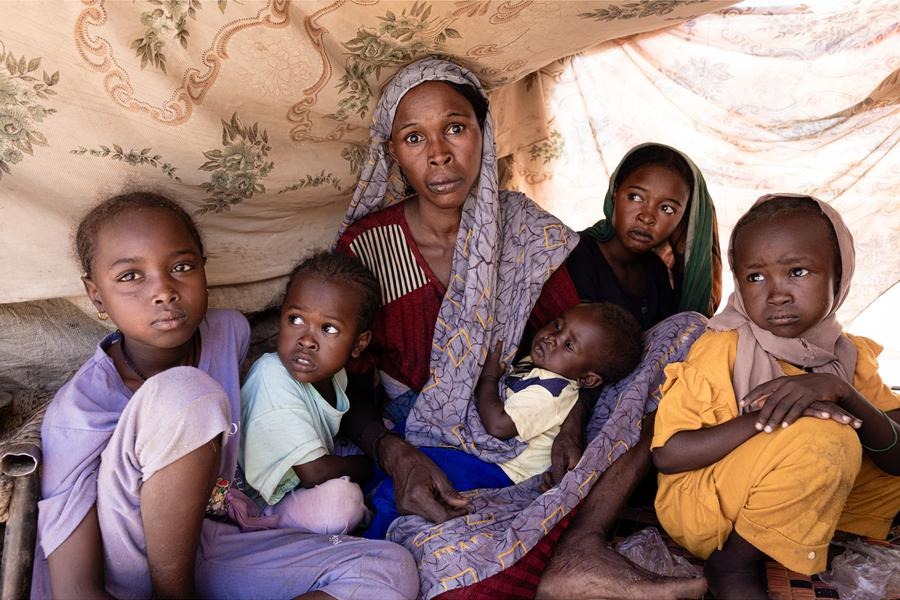
UN, aid partners beef up support for displaced people in Sudan’s North Darfur
The United Nations and its humanitarian partners are intensifying efforts to assist thousands of displaced families in Sudan’s North Darfur region, where a worsening crisis has left communities in dire need of basic necessities. Since the October 26 takeover of El Fasher, the state capital, thousands have fled violence, seeking refuge in areas like Tawila, approximately 40 kilometers west. However, these displaced populations are facing severe challenges, including a lack of food, clean water, shelter, and medical care. The UN Office for the Coordination of Humanitarian Affairs (OCHA) has described the situation as critical, with over 3,000 recent arrivals at the Al Omda displacement camp alone requiring urgent assistance. Many, including injured individuals, people with disabilities, and unaccompanied children, are forced to sleep in the open without proper sanitation or protection from the cold. Similar conditions have been reported in other camps, such as Daba Al Naira and Um Jangour, where more than 6,500 people are without shelter or essential supplies. Additionally, hundreds of families who fled El Fasher on foot have reached Al Dabba in Northern State, enduring days of harsh conditions. Approximately 2,800 people are now sheltering in overcrowded sites with limited access to food, water, or medical aid. Many have lost family members during their arduous journey. With more families expected to arrive in the coming days, OCHA has emphasized the urgent need for food, medical care, psychosocial support, shelter, and warm clothing. While the UN and its partners are mobilizing emergency supplies, available resources remain insufficient. The humanitarian response plan for Sudan is only 28 percent funded, highlighting the need for additional support to address the escalating crisis in Darfur and Kordofan regions.
-
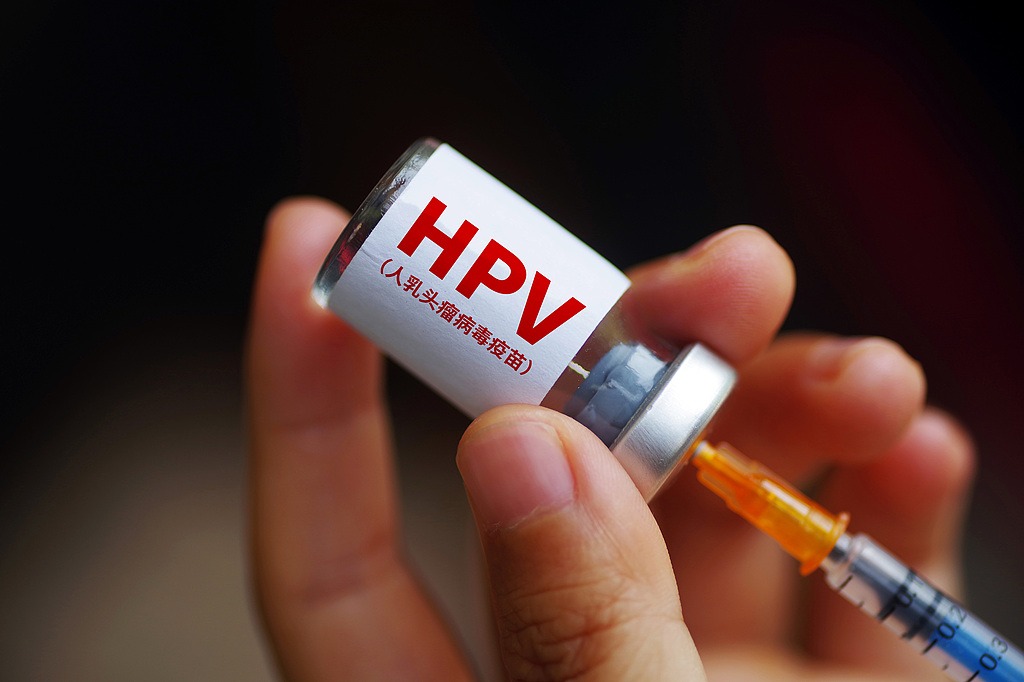
Experts urge disease prevention awareness to boost HPV vaccination
In a concerted effort to combat cervical cancer, health experts are emphasizing the need to increase public awareness and dispel misconceptions surrounding the Human Papillomavirus (HPV) vaccine. HPV, the primary cause of cervical cancer, claimed nearly 350,000 lives globally in 2022, with China accounting for 16% of these fatalities. Starting Monday, China will integrate the HPV vaccine into its national immunization program, offering free bivalent vaccines to 13-year-old girls, administered in two doses six months apart. This initiative, announced by seven government agencies on October 30, aims to bolster public health and reduce cervical cancer rates. As of June, 18 provincial-level regions in China have already provided free HPV vaccinations to eligible girls, benefiting approximately 5 million annually, according to a State Council white paper released on September 19. In Beijing, for instance, seventh-grade girls are eligible for free domestically developed bivalent vaccines targeting HPV strains 16 and 18, which are responsible for 70-80% of cervical cancer cases. Despite these efforts, some parents remain hesitant. Li Yun, a Beijing mother, opted for an imported nine-valent vaccine for her daughter, citing reliability concerns. However, she noted that some parents declined the vaccine, citing fears of adverse effects or the belief that their children were too young to need it. Health experts like Tan Xianjie from Peking Union Medical College Hospital stress the importance of early vaccination, particularly before sexual activity begins, to maximize protection. The World Health Organization has set a global target to ensure 90% of girls receive full HPV vaccination by age 15 by 2030, as part of its strategy to eliminate cervical cancer. In China, the free vaccination policy has already made significant strides, covering many eligible girls and promoting health equity across the nation. Experts like Qiao Youlin from Peking Union Medical College and Zhao Fanghui from the National Cancer Center highlight the long-term benefits of vaccination and the need for continued public education to overcome hesitancy and ensure widespread uptake.