作者: admin

  • Hungarian leader Orbán urges European Union to lift Russian energy sanctions

    Hungarian leader Orbán urges European Union to lift Russian energy sanctions

    BUDAPEST, Hungary — Hungarian Prime Minister Viktor Orbán has formally requested the European Union immediately suspend all sanctions imposed on Russian fossil fuels, citing dramatic energy price increases triggered by ongoing Middle East hostilities. In a social media address on Monday, the Kremlin-aligned leader revealed he had dispatched correspondence to European Commission President Ursula von der Leyen urging comprehensive policy reconsideration.

    The escalating Iran conflict, now entering its second week, has disrupted critical oil and gas transportation routes through the Persian Gulf, generating substantial price volatility across global markets. Orbán convened an emergency governmental session to develop strategies for mitigating gasoline and diesel cost inflation within Hungary.

    This stance aligns with Hungary’s consistent opposition to EU initiatives reducing Russian energy dependence since Moscow’s full-scale invasion of Ukraine in February 2022. Alongside Slovakia, Hungary has preserved and expanded Russian hydrocarbon imports despite continental sanctions. Both nations maintain temporary exemptions from EU prohibitions on Russian oil, historically receiving supplies via the Druzhba pipeline traversing Ukraine.

    However, Druzhba transmissions ceased abruptly on January 27 amid escalating Budapest-Kyiv tensions. Ukrainian authorities attribute the interruption to Russian drone strikes damaging pipeline infrastructure, while Orbán alleges deliberate obstruction by President Volodymyr Zelenskyy’s administration. In retaliation, Hungary has vetoed proposed EU sanctions against Russia and blocked a pivotal €90 billion EU financial assistance package destined for Ukraine.

    With elections approaching in April, Orbán’s government has intensified anti-Ukraine rhetoric, accusing Zelenskyy of engineering energy shortages to influence Hungarian electoral outcomes. Tensions further escalated Thursday when Hungarian authorities detained seven Ukrainian state bank employees and confiscated two armored vehicles transporting substantial cash and gold reserves over alleged money laundering activities. Ukraine maintains the transfers constituted routine interbank operations and denies all financial misconduct allegations.

  • World’s oldest articulated bony fish fossil unearthed in Chongqing

    World’s oldest articulated bony fish fossil unearthed in Chongqing

    A groundbreaking paleontological discovery in China’s Chongqing Municipality has revealed the world’s oldest articulated bony fish fossil, fundamentally altering our understanding of vertebrate evolution. The exceptionally preserved specimen, named Eosteus chongqingensis, was excavated from a site in Xiushan county renowned for its exceptional preservation of ancient life forms.

    Dating back approximately 440 million years to the early Silurian Period, this remarkable fossil represents a pivotal moment in paleontological research. The findings, published in the prestigious journal Nature, effectively push back the evolutionary timeline of jawed vertebrates by nearly 11 million years, providing unprecedented insights into the origins of bony vertebrates that would eventually include humans.

    The research collaboration, spearheaded by the Chongqing Bureau of Planning and Natural Resources in partnership with the Chongqing Institute of Paleontology and led by Chinese Academy of Sciences academician Zhu Min, has yielded the most complete record of jawed vertebrates from the previously poorly understood Silurian Period. The exceptional articulation of the fossil provides researchers with unprecedented anatomical details that were previously unavailable from fragmentary remains.

    This discovery not only underscores Chongqing’s emerging significance as a paleontological research hub but also illuminates critical evolutionary transitions that occurred in ancient marine environments. The fossil’s preservation quality offers scientists a rare window into the anatomical features that characterized early jawed vertebrates, enhancing our comprehension of how life diversified from oceanic habitats to eventually colonize terrestrial ecosystems.

  • Elderly and medical care help Tianjin rank among Asia’s 50 happiest cities, says NPC deputy

    Elderly and medical care help Tianjin rank among Asia’s 50 happiest cities, says NPC deputy

    Tianjin has secured a prestigious position among Asia’s top 50 happiest cities, ranking 10th in the recently released “2025-2026 Top 50 Happiest Cities in Asia” report by the United Nations Human Settlements Programme. The recognition highlights the municipality’s significant advancements in quality-of-life infrastructure, particularly in elderly care services and healthcare accessibility.

    According to National People’s Congress deputy Zhang Boli, honorary president of the China Academy of Chinese Medical Sciences, Tianjin’s achievement reflects systematic improvements across multiple sectors. The city has established a comprehensive network of over 1,800 elder canteens that have collectively served approximately 16 million residents, demonstrating the scale of Tianjin’s commitment to senior welfare.

    The municipality has simultaneously completed construction on 10 intelligent elderly care service complexes, including a facility at the Fuminlu Community Health Service Center in Hedong district that commenced operations last year. These centers incorporate advanced technologies to monitor residents’ health metrics and provide personalized care programs.

    One beneficiary, a 70-year-old woman surnamed Zhang, reported remarkable health improvements after participating in a community-based wellness initiative. “After being identified as overweight during a routine checkup, medical professionals recommended a tailored regimen of baduanjin exercises and dietary adjustments,” she explained. “Within approximately one month, I successfully lost 5 kilograms and returned to a healthy weight range.”

    Beyond elderly care, Tianjin has made substantial investments in traditional Chinese medicine infrastructure. The city has established renowned doctor clinics across multiple medical facilities and implemented TCM interventions specifically designed for age-related and pediatric health conditions. By the conclusion of last year, Tianjin had essentially created a “15-minute traditional Chinese medicine health circle” ensuring widespread access to these services.

    Deputy Zhang emphasized that municipal authorities remain committed to enhancing intelligent and convenient elderly care experiences while continuing to deliver practical benefits for all residents through ongoing public welfare initiatives.

  • Police release images of Oslo US embassy explosion suspect

    Police release images of Oslo US embassy explosion suspect

    Norwegian authorities have launched a high-priority investigation into an explosive device detonated outside the U.S. Embassy in Oslo, releasing surveillance images of a suspect while exploring potential terrorist motivations behind the incident.

    On Monday, Oslo police disseminated two heavily pixelated photographs extracted from security footage, depicting an individual clad in dark attire with facial features concealed, carrying a backpack. The explosion occurred at approximately 01:00 local time on Sunday at the embassy’s consular section entrance in Morgedalsvegen district, causing minor structural damage but no casualties.

    Law enforcement confirmed the device was improvised and deliberately positioned at the building’s entrance. Investigators are examining multiple angles including a since-deleted Google Maps video featuring Iran’s Supreme Leader Ayatollah Ali Khamenei, who was assassinated last month during joint U.S.-Israeli operations in Tehran. While terrorism remains a possible motive, police stated no definitive conclusions have been reached regarding the perpetrator’s intentions.

    The investigation has employed advanced resources including canine units, drones, and helicopters to process the scene. Social media photographs from the incident reveal shattered glass scattered across snow-covered grounds, fractured door panels, and scorch marks on tiled flooring.

    Norwegian Foreign Minister Espen Barth Eide characterized the attack as ‘unacceptable,’ emphasizing the critical importance of diplomatic mission security. The U.S. State Department has concurrently initiated its own investigation into the explosion. Authorities have appealed for public assistance regarding any unusual activity observed between midnight and 02:00 local time on Sunday.

  • China to accelerate smarter, greener transport system in 15th Five-Year Plan

    China to accelerate smarter, greener transport system in 15th Five-Year Plan

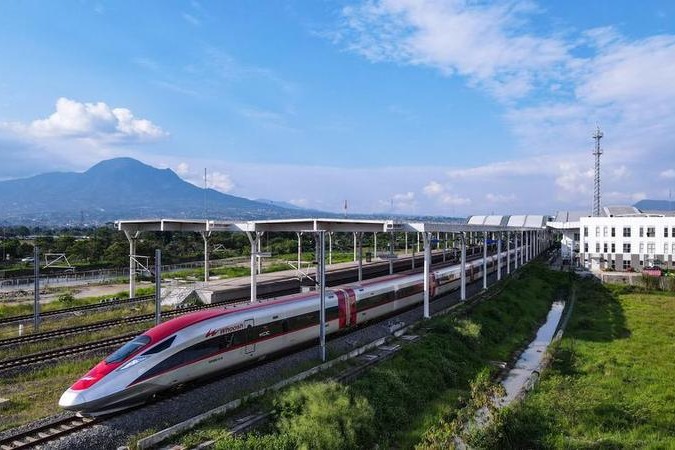
    China is poised to revolutionize its national transportation infrastructure through an ambitious modernization strategy during the 15th Five-Year Plan period (2026-2030). Transport Minister Liu Wei announced the comprehensive initiative during the National People’s Congress session in Beijing, outlining a multi-faceted approach to create an integrated, intelligent, and environmentally sustainable transport ecosystem.

    The blueprint prioritizes four critical development areas: systemic integration, enhanced safety protocols, comprehensive digital transformation, and accelerated green transition. Minister Liu revealed that China’s national comprehensive three-dimensional transport network has already achieved over 90% completion during the previous five-year cycle, with targets set to reach 95% completion by 2030.

    China’s transportation scale demonstrates the system’s critical importance to national economic activity and daily life. Current metrics show approximately 30 million passenger vehicles utilizing expressways daily, alongside 10 million high-speed rail passengers and 2 million air travelers. Urban mobility records indicate 100 million daily metro journeys, with equivalent volumes using public buses and taxi/ride-hailing services. The logistics sector handles an impressive 550 million parcels collected daily across the nation.

    The modernization plan addresses critical vulnerabilities, including more than 120,000 kilometers of roads damaged annually by flooding. Infrastructure resilience projects will focus on reinforcing highways and bridges while implementing advanced digital monitoring systems. Artificial intelligence integration will expand significantly for automated highway inspections, with parallel developments in smart highway networks, automated ports, and intelligent shipping solutions.

    Environmental considerations form a cornerstone of the strategy, with transportation currently accounting for approximately 10% of national carbon emissions. The ministry will pioneer zero-carbon transport corridors and hubs while accelerating the adoption of new-energy vehicles, vessels, and clean transport equipment. Regional integration will receive renewed emphasis through improved intercity commuting networks and multimodal logistics systems designed to enhance transfer efficiency.

    Service enhancements for 2026 include optimized holiday travel support mechanisms, streamlined passenger transfer experiences, modernized expressway service areas, and improved facilities catering to elderly travelers and commercial truck drivers.

  • Bangladesh working with India to extradite 2 suspects in killing of prominent activist

    Bangladesh working with India to extradite 2 suspects in killing of prominent activist

    Bangladesh has initiated formal diplomatic channels with India to secure the transfer of two suspects apprehended in connection with the assassination of prominent political activist Sharif Osman Hadi. The development follows the arrest of Bangladeshi nationals Faisal Karim Masud and Alamgir Hossain by Indian special police during a targeted raid in Bongaon, West Bengal, on Sunday.

    Indian judicial authorities have sanctioned the detainment of both individuals for intensive interrogation, as reported by the Press Trust of India. Bangladesh’s Inspector General of Police, Mohammed Ali Hossain Fakir, confirmed Monday that the Ministry of Foreign Affairs is leveraging the existing extradition treaty between the two neighboring nations to facilitate the suspects’ transfer.

    The victim, Sharif Osman Hadi, emerged as a significant figure during the 2024 political uprising that culminated in the ousting of former Prime Minister Sheikh Hasina after her 15-year administration. Serving as both student leader and spokesperson for the cultural revolution advocacy group Inquilab Mancha, Hadi sustained fatal gunshot wounds in Dhaka on December 12. Despite being airlifted to Singapore for advanced medical intervention, he succumbed to his injuries on December 18.

    Hadi’s tragic demise ignited widespread civil unrest across Bangladesh, with enraged protesters mobilizing in the capital and assaulting the headquarters of the country’s two predominant daily newspapers. The activist had cultivated substantial support among youth demographics and Islamist circles while simultaneously drawing criticism from liberal segments for his radical viewpoints. His supporters have publicly implicated both India and the deposed Prime Minister Hasina—who sought refuge in India following the August 2024 revolution—in orchestrating his assassination.

    Bangladeshi law enforcement had previously identified potential suspects believed to have fled across the border. Indian authorities corroborated this assessment, indicating the arrested individuals were sheltering in the border region with intentions to re-enter Bangladesh.

  • Guinea opposition leader urges ‘direct resistance’ after 40 parties dissolved

    Guinea opposition leader urges ‘direct resistance’ after 40 parties dissolved

    Guinea’s political landscape faces unprecedented consolidation as authorities dissolved 40 opposition parties in a sweeping decree, prompting exiled opposition leader Cellou Dalein Diallo to declare open political warfare against President Mamady Doumbouya’s administration.

    The Ministry of Territorial Administration and Decentralization issued the late Friday decree shuttering headquarters and local offices of numerous political organizations, including the Rally of the People of Guinea (associated with former President Alpha Condé) and Diallo’s Union of Democratic Forces of Guinea. The government mandate additionally prohibits using dissolved parties’ logos, acronyms, and symbols while confiscating all organizational assets.

    Official justification cites non-compliance with legal requirements, specifically failure to submit mandatory financial statements. However, multiple affected parties vehemently dispute these allegations, maintaining full compliance with all legal obligations according to Reuters reports.

    This dramatic political purge occurs merely two months after former junta leader Doumbouya formalized his presidential position through a contested election that excluded key opposition figures. Diallo, responding via social media video statement on Sunday, characterized the decree as a declaration of war against political dissent, asserting that “the head of the junta and his malevolent clique want to rewrite the country’s history by erasing from the political landscape all forces likely to overshadow his nascent one-party state.”

    The opposition leader concluded that peaceful political change through dialogue or democratic processes has become impossible, leaving “direct resistance” as the sole remaining path toward change. Jean-Marc Telliano, former minister and president of the dissolved Rally for the Integrated Development of Guinea, similarly pledged to pursue all legal avenues to restore political rights.

    Doumbouya, who seized power through a 2021 coup overthrowing President Condé, faces mounting international criticism for systematically dismantling democratic institutions and suppressing political freedoms since assuming control.

  • Blast outside Belgium synagogue was ‘antisemitic act’, mayor says

    Blast outside Belgium synagogue was ‘antisemitic act’, mayor says

    An explosion rocked the Belgian city of Liège in the early hours of Monday, causing significant damage to a historic synagogue. The blast occurred at approximately 04:00 local time directly in front of the religious building, shattering windows across the street though fortunately resulting in no injuries.

    Local authorities have characterized the incident as a deliberate antisemitic attack. Liège Mayor Willy Demeyer immediately condemned the explosion as targeting the Jewish community, while Prime Minister Bart De Wever expressed solidarity through social media, stating: “Antisemitism is an attack on our values and our society, and we must combat it unequivocally.”

    The Belgian federal prosecutor’s office, which handles terrorism and organized crime cases, has assumed leadership of the investigation. Police established an extensive security perimeter around the site, closing the street throughout Monday morning as forensic experts examined evidence including scorch marks and debris visible in photographs from the scene.

    Local residents reported being awakened by the powerful blast that shook nearby buildings. One woman residing close to the synagogue told RTBF public broadcaster that she initially mistook the explosion for a gas-related incident.

    Interior Minister Bernard Quintin denounced what he called a “despicable antisemitic act that directly targeted Belgium’s Jewish community.” He confirmed that security measures around Jewish institutions would remain heightened, noting that security services had already been on high alert due to concerns about potential threats motivated by the ongoing conflict in the Middle East.

    The Liège synagogue, constructed in 1899, additionally functions as a museum documenting the history of the city’s Jewish community according to its website. This incident follows recent security concerns in Belgium, including the October arrest of three individuals suspected of plotting a jihadist-inspired drone attack against Prime Minister De Wever and other politicians.

  • Ghana calls on Commonwealth to condemn attack on its peacekeepers in Lebanon

    Ghana calls on Commonwealth to condemn attack on its peacekeepers in Lebanon

    Ghana has issued a formal appeal to the Commonwealth for a decisive condemnation of Friday’s missile strike targeting United Nations peacekeepers in southern Lebanon, which left four Ghanaian soldiers wounded. The attack occurred at approximately 18:00 local time, striking a base of the United Nations Interim Force in Lebanon (Unifil) where the Ghanaian battalion was stationed.

    Addressing Commonwealth counterparts at a meeting in London on Sunday, Ghana’s Foreign Minister Samuel Okudzeto Ablakwa characterized the assault as “an attack on every principle that the UN Charter exists to defend.” While not explicitly attributing responsibility, Ablakwa emphasized the urgent need for investigation and accountability.

    The Ghana Armed Forces confirmed all injured personnel are in stable condition, with three sustaining minor injuries. One critically wounded soldier successfully underwent surgical procedures and is reportedly responding well to treatment.

    Social media documentation revealed extensive damage to battalion facilities, with videos showing significant structural impact and fires at the peacekeeping compound.

    The incident occurs amid escalating cross-border hostilities between Israel and Hezbollah. While Lebanese President Joseph Aoun attributed the strike to Israel, Ghanaian officials have maintained diplomatic caution regarding attribution. The Iranian-backed Shia group had previously claimed rocket and drone attacks targeting Haifa, Israel, citing retaliation for the killing of Iran’s Supreme Leader Ayatollah Ali Khamenei.

    Ghana’s foreign ministry has formally lodged a protest with UN Secretary-General António Guterres, who echoed calls for accountability, stating “those responsible must be held accountable.” As one of the longest-standing contributors to UN peacekeeping operations in Lebanon, Ghana’s appeal carries significant weight in international diplomatic circles.

  • India offered sanctuary to Iranian ship three days before US sank it

    India offered sanctuary to Iranian ship three days before US sank it

    In a significant escalation of hostilities beyond the Middle East, the Iranian warship Iris Dena was sunk by a U.S. submarine on March 4th in international waters off Sri Lanka’s southern coast. The attack resulted in the deaths of at least 87 sailors from a crew of 130, marking a dramatic expansion of the U.S.-Israel military campaign against Iran.

    The incident has cast a spotlight on India’s delicate diplomatic position. Indian Foreign Minister S. Jaishankar confirmed to parliament that Iran had formally requested docking permissions for three of its warships—Iris Dena, Iris Bushehr, and Iris Lavan—on February 28th, the very day the war began. India granted this permission on March 1st. This timing places India in a complex situation, having just days earlier hosted the same vessels for a joint military exercise in Visakhapatnam from February 15th to 25th.

    The post-attack movements of the Iranian fleet revealed a fragmented outcome. While the Iris Dena was destroyed, the Iris Lavan successfully docked in Kochi, India, on March 4th, with its crew currently under Indian naval protection. Minister Jaishankar defended this decision, stating it was ‘the right thing to do.’ Separately, Sri Lanka provided sanctuary to the Iris Bushehr on March 5th after it reported an engine malfunction.

    The sinking has ignited strong international reactions. Iranian Foreign Minister Abbas Araghchi condemned the strike as an ‘atrocity’ committed without warning, thousands of miles from Iran’s shores. In contrast, U.S. Defense Secretary Pete Hegseth boasted of the operation, incorrectly touting it as the first torpedo sinking of an enemy vessel since World War II, though similar incidents have occurred involving the UK and Pakistan. The Iris Dena is among approximately 20 Iranian naval assets destroyed since the conflict’s inception, with President Donald Trump explicitly stating the destruction of Iran’s navy is a key objective.