作者: admin

  • A sweeping biography of Robert McNamara wins $50,000 book prize

    A sweeping biography of Robert McNamara wins $50,000 book prize

    A comprehensive biographical work examining the complex legacy of former U.S. Defense Secretary Robert McNamara has been awarded the prestigious Barbara and David Zalaznick Book Prize in American History. The New-York Historical Society announced on Monday that ‘McNamara at War’ by Philip and William Taubman received the $50,000 honor for its profound exploration of one of America’s most controversial political figures.

    The biography meticulously traces McNamara’s remarkable trajectory from his post-World War II business leadership prominence to his tumultuous tenure as defense secretary during the Vietnam War. The work presents McNamara’s story through the lens of classical Greek tragedy, charting his journey from excellence (arete) through arrogance (hubris), reckless folly (ate), and ultimately punishment for his pride (nemesis).

    McNamara, who served across two Democratic administrations for seven years as defense secretary, departed the Pentagon in February 1968 following announced resignation plans three months earlier. His exit came amid profound disagreements with President Lyndon Johnson and military leadership over Vietnam strategy, occurring simultaneously with the rapidly escalating anti-war movement across the nation.

    The former defense secretary, who passed away in 2009, spent decades expressing profound regrets about the Vietnam conflict he once championed but ultimately deemed unwinnable. The Taubman brothers’ work provides fresh perspective on this deeply divisive period in American history through the prism of McNamara’s personal and professional transformation.

    At an April ceremony, the authors will receive an engraved medal and the distinguished title of American Historian Laureate. They join an esteemed list of previous winners including Robert Caro’s ‘The Passage of Power,’ Ron Chernow’s ‘Washington: A Life,’ and Beverly Gage’s ‘G-Man: J. Edgar Hoover and the Making of the American Century.’

  • Lindsey Graham criticises Israel over targeting Iranian oil facilities

    Lindsey Graham criticises Israel over targeting Iranian oil facilities

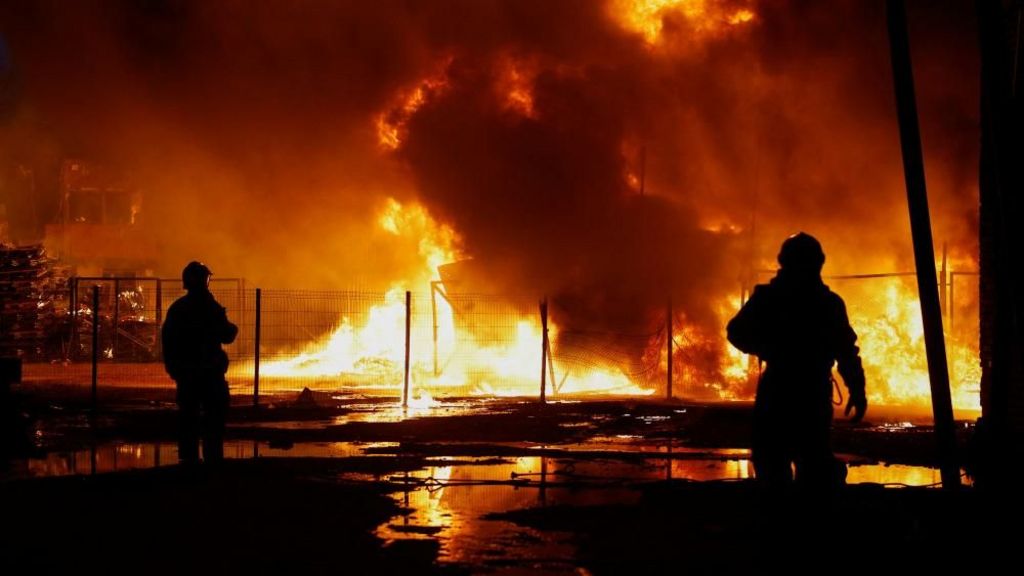
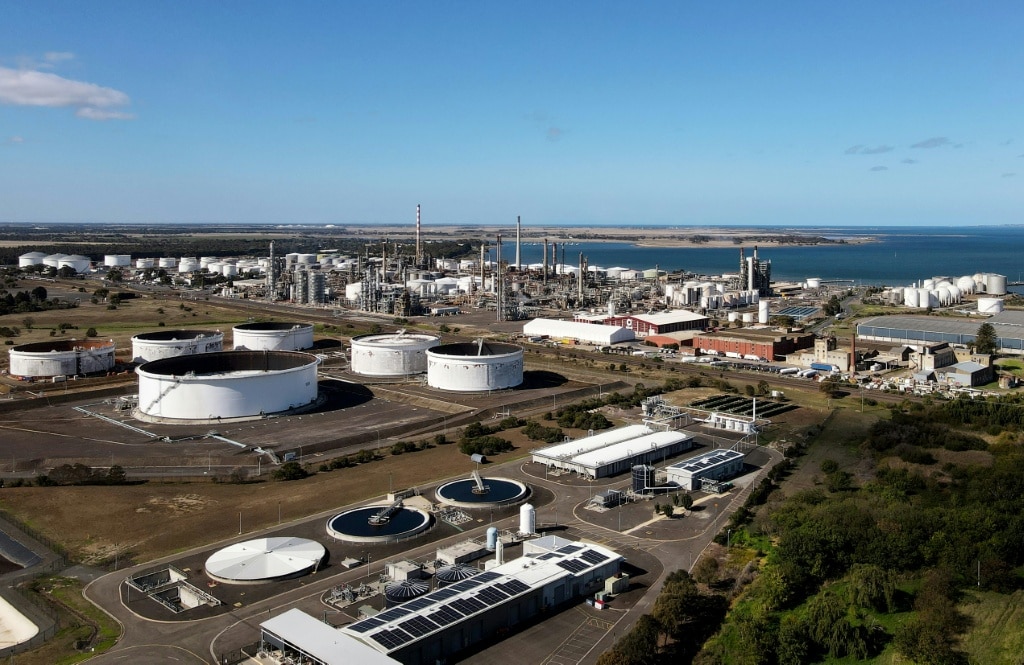
    In a notable shift of tone, prominent US Republican Senator Lindsey Graham, a known hawk and staunch supporter of military action against Iran, has publicly voiced apprehension regarding the scale of recent Israeli airstrikes on Iranian oil infrastructure. The strikes, which targeted over 30 oil depots in locations including Tehran and Karaj, resulted in widespread fires and significant environmental fallout, with residents reporting health issues from polluted air and ‘oily rain’.

    While expressing admiration for Israel’s demonstrated capability to pressure the Iranian regime, Graham utilized social media platform X to issue a caution. He emphasized that the ultimate objective should be the liberation of the Iranian people and the eventual collapse of the current leadership. In this context, he urged strategic target selection to avoid crippling Iran’s oil-based economy, which he deemed essential for the nation’s potential rebirth and prosperity under a new government.

    The extensive scope of the Israeli operation reportedly caught US officials off guard, leading to the first significant disagreement between the two allies since the onset of recent hostilities. According to a report from Axios, which cited informed officials, the strikes far exceeded US expectations following prior notification from Israel. A senior US official was quoted as stating, ‘We don’t think it was a good idea,’ with an adviser to former President Trump adding that the administration disliked the attack due to concerns over oil destruction and potential impacts on gasoline prices.

    In a separate television appearance, Senator Graham framed the conflict in stark economic terms, predicting immense financial gain for the United States. He explicitly linked the campaign against Iran to the situation in Venezuela, asserting that control over the combined 31% of global oil reserves held by the two nations would form a powerful partnership and represent a ‘nightmare for China.’ His comments suggested a strategic connection between US actions against the governments of Iran and Venezuela and a goal of dominating global oil supplies. Graham also forecast a severe escalation of attacks, promising to ‘blow the hell out of these people’ and predicting the regime’s imminent collapse, followed by an era of unprecedented peace and prosperity.

  • France, allies preparing bid to ‘gradually’ reopen Strait of Hormuz

    France, allies preparing bid to ‘gradually’ reopen Strait of Hormuz

    In a significant move to stabilize global energy markets, France is spearheading an international coalition to gradually reopen the critically important Strait of Hormuz. President Emmanuel Macron announced the initiative on Monday during a regional security summit in Cyprus, emphasizing its defensive and supportive nature.

    The strategic waterway, through which approximately 20% of the world’s crude oil transits, has seen maritime traffic virtually cease since the outbreak of intensified Middle East hostilities. The conflict was triggered by US-Israeli strikes on Iran on February 28, which resulted in regional chaos and the death of Iran’s supreme leader.

    Macron articulated the mission’s dual purpose: ensuring international trade security and facilitating the unimpeded flow of gas and oil from the Gulf region. “This is essential for international trade, but also for the flow of gas and oil,” Macron stated during his Cyprus visit, where he met with Cypriot President Nikos Christodoulides and Greek Prime Minister Kyriakos Mitsotakis.

    The French initiative has gained European support, with the European Union confirming readiness to enhance maritime protection operations in the Middle East. This development follows recent security incidents, including Iranian-made drone attacks targeting Cyprus, which Macron characterized as an attack on all of Europe.

    France has already demonstrated its commitment to regional security by deploying the Charles de Gaulle aircraft carrier to the Mediterranean, accompanied by frigate support and air defense units. Macron indicated that this flagship vessel might eventually be deployed to the Strait of Hormuz as part of the multinational effort.

    Concurrently, France maintains its participation in the EU’s Operation Aspides in the Red Sea, where a French frigate helps protect commercial vessels from Houthi rebel attacks. Macron pledged France’s long-term commitment to this mission with two frigates, underscoring the broader objective of ensuring freedom of navigation and maritime security.

    Regarding the broader conflict, Macron offered a sober assessment, warning that profound changes to Iranian leadership cannot be achieved “through American-Israeli bombings alone.” He projected that the intense phase of hostilities could persist for “several days, perhaps several weeks,” emphasizing the need for sustained engagement.

  • A CIA-armed Kurd insurgency in Iran would be risky and reckless

    A CIA-armed Kurd insurgency in Iran would be risky and reckless

    As sustained military operations by American and Israeli forces continue to weaken Iran’s clerical regime, Washington is reportedly considering a strategic partnership with Kurdish factions to escalate pressure on Tehran. This potential alignment targets Iran’s northwestern Kurdish minority, a demographic comprising 8-17% of the population that has endured systematic persecution under the Islamic Republic since its establishment in 1979.

    Multiple intelligence reports indicate that following the outbreak of hostilities on February 28, 2026, the CIA has actively explored arming Kurdish opposition groups to foment internal uprising against Iranian leadership. This strategic consideration has been reinforced by high-level diplomatic engagements, including President Donald Trump’s direct communications with Iraqi Kurdish leaders Masoud Barzani and Bafel Talabani shortly after the initiation of bombing campaigns.

    The geopolitical calculus appears influenced by Israel’s sustained advocacy for U.S.-Kurdish cooperation, leveraging existing intelligence networks among Kurdish populations across Iran, Iraq, and Syria. Kurdish grievances against Tehran’s authorities, intensified by recent events including the 2022 protests following Mahsa Amini’s death and decades of cultural suppression, create apparent conditions for productive collaboration.

    However, Middle East analysts caution that this approach carries significant risks reminiscent of previous Western interventions. The Kurdish people, numbering 30-40 million across four nations, represent history’s largest stateless ethnic group despite early 20th century promises of sovereignty. Their political movements remain fragmented across ideological and national lines, complicating unified action.

    Ethical considerations loom large, as Kurdish communities possess painful historical memories of abandonment by Western powers. The 1975 Algiers Accord, which terminated U.S. support for Iraqi Kurdish rebels without warning, resulted in devastating reprisals and mass displacements. Current Kurdish leadership expresses skepticism about American commitment beyond immediate tactical objectives.

    Regional complications further complicate potential cooperation. Turkey, a NATO ally, considers Kurdish militant groups like the PKK and its Iranian affiliate PJAK as existential threats. Any substantial American arming of these elements would strain relations with Ankara, particularly following delicate ceasefire developments in 2025.

    Military analysts question the practical effectiveness of Kurdish insurgent capabilities, noting assessments that indicate limited capacity for sustaining successful uprising against Iranian forces. The humanitarian implications also raise concerns, as historical patterns suggest Tehran would respond with indiscriminate repression against civilian populations in Kurdish regions.

    The emerging strategy reflects concerning parallels with previous American interventions in Afghanistan and Syria, where short-term tactical advantages yielded long-term destabilizing consequences. Without clear political objectives and sustainable support structures, analysts warn that leveraging Kurdish aspirations against Iran may initiate another cycle of betrayal and regional instability.

  • War in the Middle East: latest developments

    War in the Middle East: latest developments

    The protracted Middle East conflict has entered a perilous new phase, marked by a sharply escalating human cost and expanding geopolitical ramifications. Lebanese health authorities reported a devastating surge in casualties, with the death toll from Israeli strikes climbing to 486 and injuries reaching 1,313—a significant increase from previous figures that underscores the intensifying violence along the southern border.

    The strategic landscape shifted further with Israel’s confirmed elimination of a key Hezbollah commander, Abu Hussein Ragheb, who headed the Iran-backed group’s Nasr unit in southern Lebanon. This targeted strike occurred amid renewed hostilities between Israeli forces and the Lebanese militant organization.

    International responses multiplied as U.S. President Donald Trump prepared to address the nation from his Doral golf club near Miami, announcing his first press conference since authorizing strikes against Iran. The White House indicated the administration was reviewing “all credible options” regarding oil prices, which breached the $100-per-barrel threshold—a psychological marker not seen since Russia’s invasion of Ukraine—before retreating slightly.

    The political dimension deepened as Hezbollah pledged formal allegiance to Iran’s newly appointed supreme leader, Mojtaba Khamenei, who succeeded his father following the elder Khamenei’s death during initial U.S.-Israeli attacks. President Trump expressed dissatisfaction with the new leadership but declined to specify his administration’s approach, simply telling the New York Post: “Not going to tell you. I’m not happy with him.”

    Lebanese President Joseph Aoun delivered a startling condemnation of Hezbollah, accusing the group of deliberately working toward state “collapse” to serve Iranian interests. In virtual discussions with European officials, Aoun asserted that recent missile launches were designed to “plunge Lebanon into aggression and chaos… all for the sake of the Iranian regime’s calculations” and called for direct negotiations with Israel to halt the warfare.

    The humanitarian tragedy continued unfolding as state media confirmed an Israeli tank attack killed a priest in the Christian community of Al-Qlayaa in southern Lebanon. Meanwhile, Trump announced Australia had granted asylum to several members of Iran’s women’s football team who refused to sing their national anthem in protest against the Islamic republic, though some players reportedly feared returning home due to family safety concerns.

    Global economic and security implications widened as Iran’s security chief, Ali Larijani, declared the strategic Strait of Hormuz—a vital corridor for global energy shipments—could not be secured while conflict raged. European leaders responded with plans to enhance maritime operations, with French President Emmanuel Macron announcing preparations for a “purely defensive” mission to reopen the critical waterway once active combat diminishes.

    The United Arab Emirates distanced itself from the conflict, emphasizing it would “not partake in any attacks against Iran” while decrying what it characterized as unwarranted targeting. NATO confirmed intercepting a ballistic missile fired from Iranian territory into Turkish airspace—the second such incident within days—prompting Turkish President Recep Tayyip Erdogan to caution Tehran against “provocative steps.”

  • Starmer calls Trump in bid to mend fraught ties over Iran war

    Starmer calls Trump in bid to mend fraught ties over Iran war

    In a pivotal diplomatic engagement, British Prime Minister Keir Starmer and former U.S. President Donald Trump convened a telephone discussion on Sunday, aiming to reconcile recent disagreements concerning the ongoing military engagement in the Middle East. The conversation, detailed in an official summary from Downing Street, served as a platform to address the United Kingdom’s contentious involvement in the US-Israeli operations against Iran.

    During the exchange, Prime Minister Starmer formally expressed his condolences for the American personnel who lost their lives in Iranian counter-strikes on U.S. installations throughout the Gulf region. The leaders also deliberated on the broader Middle Eastern situation and the specifics of UK-US military collaboration, particularly focusing on the strategic utilization of Royal Air Force (RAF) bases for collective defense initiatives with regional allies.

    This high-stakes dialogue followed a period of significant friction. Initially, Prime Minister Starmer had moved to deny U.S. forces access to the critical British airbase located on Diego Garcia, a strategic Indian Ocean outpost, shortly after the commencement of bombardments on February 28th. This decision prompted a fierce backlash from Trump and pro-war factions within the UK’s political landscape, including members of the Conservative and Reform parties.

    Under mounting pressure, the Starmer administration later revised its stance, permitting U.S. military operations from UK bases for what it classified strictly as ‘defensive’ purposes, such as neutralizing Iranian missile sites that had targeted American assets. This concession, however, did not prevent a public relations broadside from Trump, who took to his Truth Social platform on Saturday to dismiss reported British considerations of deploying aircraft carriers as belated and unnecessary, sarcastically remarking, ‘We don’t need people that join Wars after we’ve already won!’ He had previously drawn an unflattering comparison on March 3rd, stating he was ‘not happy with the UK’ and quipping, ‘This is not Winston Churchill that we’re dealing with.’

    The conflict itself has proven far more protracted and costly than initial U.S. assessments predicted. Originally anticipated to conclude within days, Pentagon officials now reportedly project operations could extend until at least September. The U.S. has acknowledged eight military fatalities and significant damage to its infrastructure across the Gulf due to Iranian retaliation. Iran’s tactical approach has emphasized inflicting substantial geopolitical, economic, and infrastructural costs on the U.S.

    In response, US and Israeli military efforts have concentrated on degrading Iran’s civilian and military infrastructure, aiming to cripple its missile capabilities and instigate internal dissent against the Tehran government. To date, these efforts have not sparked a widespread uprising, but the human cost is severe, with at least 1,300 Iranian casualties reported from the attacks. For Prime Minister Starmer, a former critic of the Iraq War, navigating this military entanglement without direct UK combat involvement remains a central and challenging objective of his foreign policy.

  • Italian skier helps shape Hebei’s Chongli into winter sports destination

    Italian skier helps shape Hebei’s Chongli into winter sports destination

    Two decades after arriving from Italy, Andrea Coatti has become an integral part of Chongli’s remarkable transformation from an unknown mountain town to an internationally recognized winter sports destination. The Italian ski professional, affectionately known as “Yibu” (meaning “one step”) among locals, initially journeyed to Zhangjiakou’s Chongli district in Hebei province without prior knowledge of the area.

    Coatti dedicated his expertise to developing and maintaining ski infrastructure during Chongli’s formative years as a winter sports location. His technical contributions proved instrumental in the region’s development, culminating in his participation in constructing competition venues for the prestigious 2022 Beijing Winter Olympics.

    The Olympic legacy has propelled Chongli into a new era of growth and international recognition. The district now boasts state-of-the-art winter sports facilities connected to Beijing via high-speed rail, making it accessible to enthusiasts worldwide. This connectivity has transformed the once-quiet town into a thriving hub that attracts young skiers and snowboarders from across the globe.

    Chongli’s evolution represents China’s strategic development of winter sports infrastructure and the successful integration of international expertise. The combination of foreign technical knowledge and local implementation has created a destination that meets international standards while maintaining its unique regional character.

  • New career unlocked! Senior care specialist

    New career unlocked! Senior care specialist

    A groundbreaking profession has emerged as a focal point during China’s ongoing Two Sessions political gatherings: the senior care specialist. This newly recognized career path represents a significant shift in how China addresses its aging population challenges while creating opportunities for younger generations.

    China Daily journalist Xia Ji embarked on an investigative journey to understand this developing field, consulting with CPPCC members about the profession’s future prospects. The research culminated in an immersive experience at a senior care community, where Ji shadowed Yi Yi, a Generation Z care specialist, throughout her daily routine.

    The firsthand account reveals a profession that combines technical expertise with emotional intelligence, requiring specialists to navigate complex healthcare systems while providing compassionate companionship. These specialists undergo specialized training in gerontology, mobility assistance, medication management, and emotional support techniques tailored to elderly needs.

    China’s rapidly aging demographic landscape has accelerated demand for qualified care professionals. The official recognition of senior care specialists during the Two Sessions indicates government commitment to standardizing and professionalizing elderly care services nationwide.

    Young professionals like Yi Yi are bringing innovative approaches to traditional care models, incorporating technology-assisted monitoring, personalized activity planning, and intergenerational connection strategies that benefit both caregivers and recipients. The career offers competitive compensation packages and clear advancement pathways, making it increasingly attractive to young Chinese job seekers.

    The transformation of elderly care from informal family responsibility to professionalized service sector reflects broader socioeconomic changes in Chinese society and represents one of the fastest-growing employment categories in the healthcare ecosystem.

  • Zelensky says 11 countries asking Ukraine for drone help against Iran

    Zelensky says 11 countries asking Ukraine for drone help against Iran

    Ukrainian President Volodymyr Zelensky has revealed that eleven nations have formally requested Kyiv’s assistance in developing defense capabilities against Iranian-designed attack drones. The unprecedented international outreach comes as Ukraine continues to withstand nightly barrages of Shahed-136 drones deployed by Russian forces, while similar Iranian-origin systems now threaten stability across the Middle East.

    Speaking on Monday, Zelensky confirmed that multiple countries—including regional neighbors of Iran, European states, and the United States—have sought access to Ukraine’s hard-won expertise in counter-drone warfare. “There is clear interest in Ukraine’s experience in protecting lives, relevant interceptors, electronic warfare systems and training,” the president stated, without identifying the specific nations involved.

    The Ukrainian military has achieved remarkable success against drone threats, consistently neutralizing over 80% of incoming Russian drones through an integrated defense approach. This sophisticated system combines affordable drone interceptors—specially designed aircraft that collide with hostile drones mid-flight—with advanced electronic jamming technology, acoustic detection systems, multi-spectrum radars, anti-aircraft artillery, and fighter jets.

    According to Igor Fedirko, CEO of the Ukrainian Council of Defence Industry, Kyiv has developed a unique “body of knowledge and skills” unmatched globally. “No one in the world has the expertise and experience that we do,” Fedirko emphasized, noting that Ukraine employs combined systems and early warning technologies refined through continuous combat conditions.

    Ukrainian drone specialists are already deploying to the Middle East, with initial teams expected to arrive this week. In exchange for sharing their valuable knowledge, Ukraine has proposed a strategic barter arrangement: trading their proven drone interception capabilities for sophisticated air defense missiles that remain in critically short supply.

    Fedirko underscored that this expertise came at tremendous cost, stating: “These technologies that we paid a huge price for, with the blood and death of citizens and soldiers, cannot be just handed over for free.” The development positions Ukraine, once primarily a recipient of international military aid, as an emerging exporter of cutting-edge defense technology and tactical knowledge.

  • US teacher killed after toilet paper prank goes wrong

    US teacher killed after toilet paper prank goes wrong

    A Georgia high school educator met an untimely death following a devastating accident during what began as a conventional student prank, according to local authorities. The incident occurred when Jason Hughes, a 40-year-old teacher, attempted to intercept students engaged in toilet papering his residence—a traditional high school mischief activity.

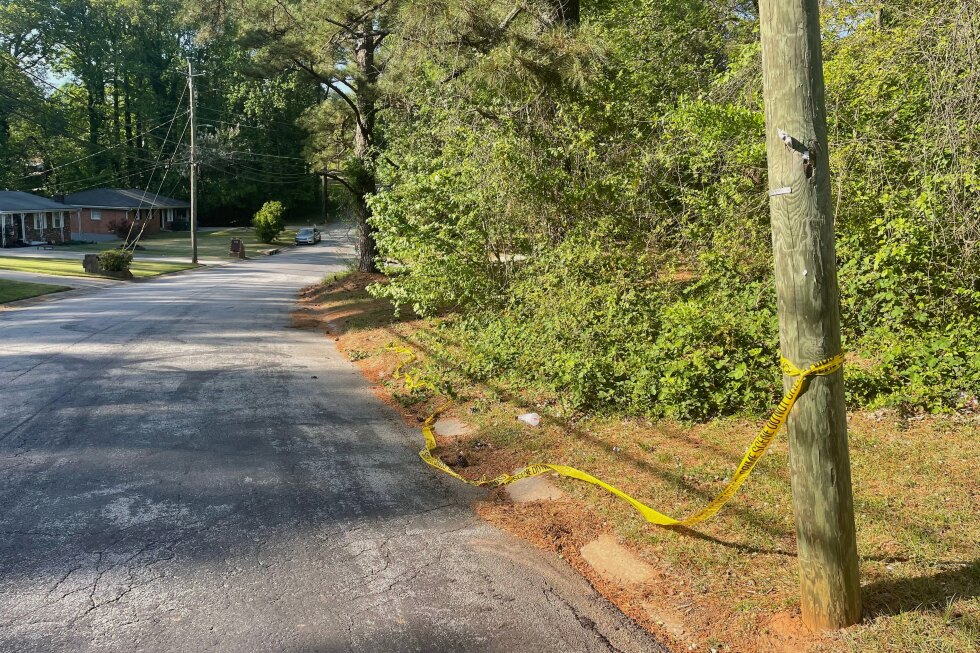
    Emerging from his home to surprise the perpetrators, Hughes lost his footing on rain-slicked pavement and fell. In the ensuing chaos as students fled the scene in two vehicles, one driver unintentionally struck the fallen educator. The Hall County Sheriff’s Office confirmed that despite immediate efforts by the students to render aid before emergency services arrived, Hughes succumbed to his injuries after being transported to a medical facility.

    The driver, 18-year-old Jayden Ryan Wallace, now faces vehicular homicide charges alongside four other students charged with criminal trespass and littering on private property. In a remarkable display of compassion, the Hughes family has publicly advocated for the dismissal of all charges against the students. Laura Hughes, the victim’s spouse and fellow educator at the same institution, characterized her husband as someone who cherished his students and had anticipated the prank with enthusiasm.

    School district representatives memorialized Hughes as a deeply committed teacher, mentor, and coach who commanded widespread respect throughout the educational community. A memorial has been established at the school where Hughes contributed both academically and athletically, serving as a testament to his enduring impact.