作者: admin

  • Hainan FTP off to a good start, sees imports and arrivals soaring

    Hainan FTP off to a good start, sees imports and arrivals soaring

    Hainan Free Trade Port (FTP) has demonstrated remarkable progress in its initial operational phase, achieving substantial growth in foreign investment, duty-free imports, and international tourism. Governor Liu Xiaoming, speaking during the Two Sessions meetings, characterized the island-wide special customs operations launched December 18 as a transformative milestone in China’s economic liberalization agenda.

    The customs framework has triggered significant tariff reforms, expanding zero-tariff coverage from 21% to 74% of all tariff items. Imported goods undergoing at least 30% value-added processing in Hainan now enjoy tariff-free access to mainland China. During the recent Spring Festival holiday period, zero-tariff imports reached approximately 48.6 million yuan ($7.03 million), generating duty savings of 9.42 million yuan. Overall import-export values through local customs ports grew 9% year-on-year in the first two months of operation.

    International enterprises have responded positively to these developments. Siemens Energy (Germany), Mayoly (France), and Singapore’s Fullerton Health Group have established significant operations, with the latter opening Hainan’s first wholly foreign-owned hospital. The province recorded a 45.6% increase in new foreign-invested enterprises during the initial operational period.

    Tourism metrics reflect similarly impressive growth, with 557,700 international transits recorded in the first two months. Visa-free foreign nationals accounted for 141,000 of these arrivals, representing a 62.2% year-on-year increase. Duty-free retail has emerged as a major economic driver, with five new daily consumer goods stores attracting 465,000 visitors within their first two weeks of operation. Offshore duty-free sales during the Spring Festival holiday surged 30.8% alongside a 35.4% increase in shoppers.

    Governor Liu outlined Hainan’s strategic vision to deepen institutional alignment with international frameworks including the Regional Comprehensive Economic Partnership (RCEP) and high-standard trade agreements. The province will optimize port layouts, shorten negative lists for cross-border service trade, and implement coordinated market access systems for domestic and foreign capital. Additional measures include expanding visa-free country lists, enhancing data export management protocols, and leveraging multi-function free trade accounts.

    Positioned within four hours flight time of 21 countries representing 47% of the global population, Hainan aims to become a strategic hub within China’s dual-circulation development paradigm. The province has already established economic partnerships with 41 international free trade zones and attracted investment from 180 countries and regions.

    Industrial development priorities focus on five key sectors: seed breeding technology, marine industries (targeting 40% of provincial GDP), commercial space launches (60 annual launches planned), green technology development, and cross-border e-commerce enabled by advanced data flow policies. These initiatives collectively position Hainan FTP as an emerging platform for global economic integration and innovation.

  • Iran names new leader amid escalating conflict

    Iran names new leader amid escalating conflict

    In a pivotal development reshaping Iran’s political landscape, Mojtaba Khamenei has been formally designated as the nation’s third supreme leader following the fatal joint military operation by the United States and Israel that claimed numerous lives, including children. The 56-year-old cleric, son of the late Ayatollah Ali Khamenei, assumes leadership with strong connections to Iran’s Islamic Revolutionary Guard Corps, marking a significant transition since the 1979 Islamic Revolution.

    Concurrently, China has intensified its diplomatic engagement in the Middle East, with Foreign Minister Wang Yi conducting separate telephone discussions with counterparts from Kuwait and Bahrain. Wang emphasized China’s commitment to regional stability, disclosing that Beijing’s special Middle East envoy has initiated mediation efforts throughout the area. He characterized the ongoing conflict as an unnecessary war benefiting no involved party, while condemning attacks on civilian populations and non-military infrastructure.

    During communications with Bahrain’s Foreign Minister Abdullatif bin Rashid Al Zayani, Wang advocated for immediate cessation of military activities and reaffirmed the principle of respecting national sovereignty and territorial integrity. Iranian diplomats, led by Foreign Minister Seyed Abbas Araghchi, concurrently pledged unwavering loyalty to the new supreme leader, framing the appointment as crucial for preserving national sovereignty.

    The geopolitical turbulence has triggered substantial economic repercussions, with oil prices surging over 25% to peak levels unseen since 2022. Major Middle Eastern producers including Iraq, Kuwait, and the United Arab Emirates have curtailed output amid market instability and concerns regarding prolonged shipping disruptions in the strategically vital Strait of Hormuz.

    Military confrontations persist as Israel conducted strikes against Iranian internal security command centers and missile sites shortly after the leadership transition. Saudi Arabia reported intercepting drones targeting its Shaybah oilfield, while the UAE contained a fire at a Fujairah oil facility.

    Beyond energy security concerns, the conflict threatens critical water infrastructure throughout the arid region. Hundreds of coastal desalination plants supplying millions remain vulnerable to missile and drone attacks. Bahrain has already accused Iran of damaging one facility, though water distribution continues uninterrupted. Earlier, Iran reported that a U.S. airstrike disabled a desalination plant serving 30 villages near the Strait of Hormuz.

    With no immediate resolution apparent, the U.S. State Department has ordered nonessential personnel to evacuate Saudi Arabia following a drone incident at the Riyadh embassy, while President Trump affirmed that any ceasefire decision would be coordinated with Israeli leadership.

  • Trump says will waive some oil sanctions as Iran war roils markets

    Trump says will waive some oil sanctions as Iran war roils markets

    In a significant policy shift addressing global energy market turmoil, U.S. President Donald Trump announced Monday his administration would temporarily suspend certain oil-related sanctions to increase supply and curb rising prices. The decision comes as military confrontations between U.S.-Israeli forces and Iran, including Tehran’s retaliatory strikes across the Gulf region, have severely disrupted energy and transportation sectors, bringing vital shipping activities in the Strait of Hormuz to a virtual standstill.

    Speaking after discussions with Russian President Vladimir Putin, Trump revealed the sanctions relief strategy without specifying which countries would benefit. ‘We’re waiving certain oil-related sanctions to reduce prices,’ Trump stated, adding that Chinese President Xi Jinping was also part of these considerations. The administration may maintain this sanctions relief if regional conflicts resolve satisfactorily, with Trump remarking, ‘Maybe we won’t have to put them on. There’ll be so much peace.’

    The announcement follows earlier temporary authorization for India to purchase Russian oil and comes as the Treasury Department, under Secretary Scott Bessent, considers expanding sanctions relief for Russian oil exports. These measures authorize transactions through April 3, 2026, including from vessels previously blocked under various sanctions regimes.

    Analysts suggest the policy reflects administration concerns about the economic impact of soaring crude prices on American consumers ahead of crucial midterm elections. The Carnegie Russia Eurasia Center noted that conflicts with Iran and Venezuela have inadvertently benefited Russia by redirecting major importers toward Russian oil. ‘Now that those supplies are compromised, the primary beneficiary is Russia, which is ready to increase oil exports to China,’ the center observed, adding that Trump’s actions highlight how ‘the only reliable option is pipelines and roads from Russia.’

    The sanctions waiver presents a complex dilemma for Washington, balancing global energy market stability against efforts to limit Russian revenues amid the ongoing conflict in Ukraine. Russian oil and gas revenues hit a five-year low in January as Western sanctions continue affecting the nation’s economy.

  • China exports surge in first two months of the year despite Trump tariffs

    China exports surge in first two months of the year despite Trump tariffs

    China’s export economy has demonstrated remarkable resilience in the opening months of 2026, with official data revealing a surprising 20% increase in overseas shipments during January and February. This performance substantially exceeded economist forecasts by nearly threefold, positioning China to potentially surpass its record-breaking 2025 trade surplus.

    The robust export growth emerges against a complex backdrop of domestic economic challenges, including subdued consumer spending, demographic constraints, and ongoing property market instability. Beijing’s customary practice of combining January and February trade data effectively neutralized distortions caused by the variable timing of the Lunar New Year celebrations.

    Electronics exports served as the primary growth engine, with significant contributions from agricultural and manufactured goods. Regional analysis reveals particularly strong performance in European markets (27.8% growth) and ASEAN nations (approximately 30% increase), though exports to the United States declined by over 10% following tariff implementations and trade rebalancing measures.

    This export surge arrives at a critical juncture as China recently adjusted its annual growth target to 4.5%-5%, down from 2025’s 5% benchmark. The timing is especially significant with the anticipated April meeting between Chinese President Xi Jinping and US President Donald Trump, who is scheduled to visit China amid ongoing trade negotiations.

    Global economic dynamics further complicate the picture, as Asian nations including China navigate disruptions in energy markets stemming from the US-Israeli conflict with Iran, highlighting the interconnected nature of contemporary international trade relationships.

  • Western Australia has selected its successor to accomplished coach Adam Voges

    Western Australia has selected its successor to accomplished coach Adam Voges

    In a significant development for Australian domestic cricket, former Test spinner Beau Casson has been officially named as the new head coach of Western Australia’s men’s cricket team. The 43-year-old, who represented Australia in a single Test match in 2008 and made 53 first-class appearances for both Western Australia and New South Wales during his playing career, emerged as the successful candidate following an extensive selection process.

    Casson’s appointment comes after he served as a highly-valued assistant to departing coach Adam Voges, who announced his resignation in November after establishing one of the most successful records in Australian domestic coaching history. Despite not securing Sheffield Shield or One Day Cup victories this season, Voges was instrumental in crafting WA’s golden three-year period of success.

    The newly appointed coach has built an impressive coaching resume since transitioning from his playing career, taking on various assistant and pathway roles in Sydney before returning to Western Australia. Industry sources revealed that Tim MacDonald, another of Voges’ assistants, did not formally apply for the position in a show of support for Casson’s candidacy.

    At Tuesday’s official announcement alongside general manager Kade Harvey and chief executive John Stephenson, Casson expressed his enthusiasm for the new role: ‘I am excited to be given the opportunity to take on the position of head coach. I’ve thoroughly enjoyed working with Adam Voges and the coaching staff over the past seven seasons and take pride in our collective achievements during that period.’

    Casson emphasized his commitment to continuing Voges’ legacy while implementing his own vision: ‘Adam created an environment that brought out the best in all our players, which is something I’m looking forward to building upon. I want our players to strive for excellence and have the best opportunity to push for higher honors. I’m confident we have the playing group that can bring WA more success in both formats of the game.’

    This coaching appointment occurs amidst potential widespread changes across Australia’s domestic coaching landscape. Brad Haddin has emerged as the favorite to coach New South Wales following the dismissal of veteran mentor Greg Shipperd, while Queensland coach Johan Botha faces increasing pressure despite the Bulls being Victoria’s only challenger in the Shield competition this summer. Meanwhile, Chris Rogers’ contract situation in Victoria remains unresolved despite coaching a near-perfect Shield campaign to date.

  • At the convent of Leonardo’s ‘Last Supper,’ Dominican friars still live, pray and welcome visitors

    At the convent of Leonardo’s ‘Last Supper,’ Dominican friars still live, pray and welcome visitors

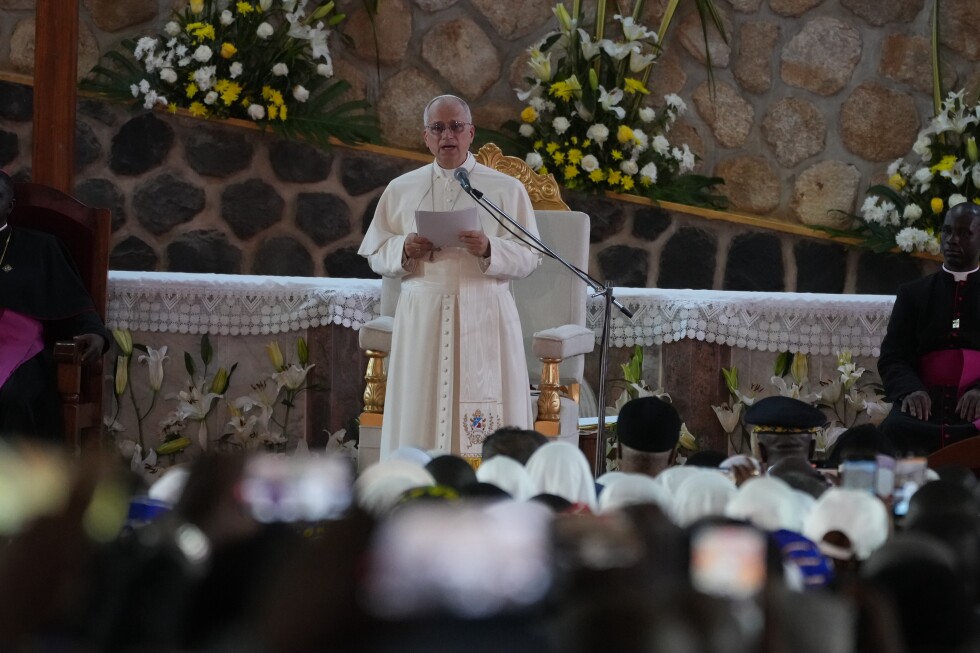
    Within the hallowed walls of Santa Maria delle Grazie in Milan, a living Dominican community maintains its spiritual practices just steps away from one of art history’s most celebrated masterpieces. While Leonardo da Vinci’s “The Last Supper” draws countless visitors to the former refectory, twelve priests and nine novices continue their monastic traditions in the adjacent basilica and convent.

    The current friars, including Reverend Paolo Venturelli, experience the famous mural from a unique perspective. Venturelli prefers to view the painting from across the room where it was originally created in the 1490s at the request of Milan’s ruler Ludovico Sforza. “From there, the painting looks as though it were painted in the middle of the refectory,” Venturelli observes. “It unleashes all kinds of human and spiritual reactions.”

    Historical circumstances have created a physical separation between the friars and the artwork that was originally created for their order. Following Napoleon’s suppression of religious houses in the 18th century, the refectory passed into state control. Today known as the Cenacolo Vinciano, it is managed by Italy’s Regional Directorate of Museums of Lombardy. “We don’t go often because we have to ask permission to enter,” Venturelli explains, noting that preservation rules limit visits to just 15 minutes for everyone, including friars. “It no longer belongs to us.”

    The Dominican community maintains an active religious presence despite the tourist crowds. Dressed in their iconic white robes or brown winter capes, the friars are regularly seen within the basilica. Many visitors who come specifically for Leonardo’s masterpiece also discover the spiritual significance of the adjacent church. “We came to see Leonardo’s Last Supper but we also wanted to see the church because it’s quite special,” noted Maria Teresa Bruzzi, a recent visitor from Genoa.

    The friars provide multiple services to both locals and tourists, including confessions in several languages. Reverend Llewellyn Muscat, prior of the community, explains: “Confessions are very much sought after and we maintain this service for the citizens of Milan but also for all visitors.” The friars accommodate speakers of Italian, English, Maltese, French, and German.

    The intellectual legacy of the Dominicans remains evident throughout the convent, where halls contain dozens of shelves filled with books. “Reading is part of our identity,” Muscat emphasizes. The friars follow a routine shaped by study, prayer, and ministry, with some teaching at local Catholic institutions or collaborating with the cultural center that organizes conferences and events.

    For the Dominicans, “The Last Supper” represents more than artistic achievement—it embodies their continuing spiritual connection. “For us, it does not awaken an emotion about something that belongs to the past,” Muscat reflects. “It is like a continuation in which we eat together with Jesus and his apostles, as though his words are also spoken to us.”

    The current refectory where the friars actually dine is located deep within the convent’s labyrinth-like structure, away from tourist traffic. It features several square tables rather than the long table depicted in Leonardo’s masterpiece. While appreciating their functional dining space, Muscat acknowledges the community’s historical connection to the famous painting: “Maybe one day the old refectory will belong to us again.”

  • Arsenal favourites against Leverkusen in Champions League last 16

    Arsenal favourites against Leverkusen in Champions League last 16

    The UEFA Champions League round of 16 kicks off with compelling fixtures featuring Europe’s elite football clubs. Arsenal enters their match against Bayer Leverkusen as clear favorites following a flawless group stage performance where they secured victory in all eight matches. The Premier League leaders, pursuing their first European championship title, face a Leverkusen squad undergoing significant reconstruction after losing coach Xabi Alonso and multiple key players during the summer transfer window.

    In Paris, reigning champions PSG confront Chelsea amidst concerning form fluctuations. The French champions recently suffered a defeat to Monaco, narrowing their Ligue 1 advantage to a single point. This matchup marks the first encounter between the clubs since Chelsea’s decisive 3-0 victory in last year’s Club World Cup final.

    The most anticipated clash features Real Madrid and Manchester City, meeting in the knockout phase for the fifth consecutive season. The Spanish giants face considerable challenges with injuries potentially sidelining Kylian Mbappé and Jude Bellingham for the first leg. Manchester City approaches the fixture with confidence despite uncertainty surrounding Erling Haaland’s availability due to an ankle concern.

    Simultaneously, Norwegian contenders Bodo/Glimt continue their remarkable European campaign against Sporting Lisbon. The Arctic Circle-based team achieved stunning victories against Manchester City and Atlético Madrid during the group phase, followed by eliminating Inter Milan in the playoffs. Sporting arrives with impressive credentials of their own, having remained undefeated in twelve consecutive matches and previously defeating PSG during the group stage.

  • ‘Double whammy’ of fuel prices, rate hike fears hit Aussie households

    ‘Double whammy’ of fuel prices, rate hike fears hit Aussie households

    Australian households are confronting a severe economic squeeze as consumer confidence experiences a dramatic decline, driven by a convergence of escalating fuel expenses and anticipated interest rate increases. Recent surveys from major financial institutions Westpac and ANZ reveal a notable downturn in consumer sentiment over the past week, primarily attributed to surging global oil prices.

    AMP Chief Economist Shane Oliver identifies this situation as a ‘potential double whammy’ for mortgage-holding households, noting that rising fuel prices contribute directly to inflationary pressures that may necessitate monetary policy tightening. Current projections indicate fuel prices have surged approximately 40 cents per liter within a single week, translating to an estimated additional $730 annual burden on household budgets.

    The economic implications extend beyond immediate consumer spending patterns. NAB Chief Economist Sally Auld warns that sustained higher oil prices could drive inflation toward 5% in coming months, noting that ‘energy prices feed into almost every part of the economy’ and create widespread supply chain cost pressures.

    This presents particular challenges for the Reserve Bank of Australia, which must balance controlling inflation against risks of suppressed economic growth. Despite these pressures, economists anticipate the RBA will maintain current rates in March before potentially implementing increases in May, which would elevate the official cash rate to 4.1%.

    Survey data reveals nuanced consumer perspectives. While Westpac’s overall confidence index registered a modest 1.2% increase to 91.6 in March (remaining below the 100-point optimism threshold), responses collected in the final three survey days showed significantly lower confidence levels at just 84 points, coinciding with escalating Middle East tensions and subsequent 30% increases in oil futures.

    Concurrently, ANZ-Roy Morgan data indicates inflation expectations have reached 5.5% for the next twelve months—the highest level in three years—while perceptions of family financial situations and broader economic conditions have deteriorated markedly.

  • Team lists: Ezra Mam returns to the Broncos starting side as the Wests Tigers unleash teenage freak

    Team lists: Ezra Mam returns to the Broncos starting side as the Wests Tigers unleash teenage freak

    The Brisbane Broncos have implemented strategic roster adjustments following their disappointing 26-0 season-opening defeat against the Penrith Panthers, with coach Michael Maguire reversing his controversial selection decision regarding playmaker Ezra Mam.

    Mam has been restored to the starting five-eighth position after being surprisingly relegated to the bench for the Panthers clash. The dynamic playmaker’s return signals Maguire’s intention to inject more offensive creativity into the lineup as they prepare to face the Parramatta Eels this weekend.

    The Eels may receive their own offensive boost with veteran winger Josh Addo-Carr potentially returning from a thumb injury that sidelined him for just one week. Parramatta has made defensive adjustments, dropping Brian Kelly to reserves after his poor performance in Melbourne, while promoting Jack Williams to starting prop and inserting Kelma Tuilagi into the back row due to J’maine Hopgood’s suspension.

    Injury concerns continue to plague several teams across the league. Penrith remains without representative forward Liam Martin (calf strain) as they prepare for their Bathurst fixture, while the Roosters have received positive news with Maroons rookie Robert Toia cleared from a foot injury. However, Sydney will be without enforcer Spencer Leniu due to a hamstring injury sustained during warm-ups last week.

    Additional team developments include Wests Tigers starting teen sensation Heamasi Makasini at center for their Leichhardt Oval opener against North Queensland, while Melbourne could see Jack Hetherington make his club debut after being named on the bench for their Wollongong trip.

  • Search called off after Indonesia landfill collapse kills seven

    Search called off after Indonesia landfill collapse kills seven

    Indonesian search and rescue teams have terminated operations following a catastrophic landslide at the nation’s largest open-air landfill, which resulted in seven fatalities. The incident occurred Sunday afternoon at the Bantargebang waste site, located merely 25 kilometers from Jakarta, after prolonged heavy rainfall triggered the collapse that buried multiple trucks and food stalls beneath tons of debris.

    Desiana Kartika Bahari, head of Jakarta’s search and rescue agency, confirmed the recovery of three bodies on Sunday and four additional victims on Monday. Six individuals were successfully rescued alive during the intensive operation that employed backhoes, canine units, and thermal drone technology to locate casualties. Authorities have verified that all missing persons have been accounted for.

    The National Disaster Mitigation Agency (BNPB) has initiated weather modification procedures to mitigate further rainfall intensity. This sophisticated technique involves dispersing sodium chloride particles via helicopter to induce premature precipitation over ocean areas rather than populated regions.

    The Bantargebang facility, spanning over 110 hectares and containing approximately 55 million tonnes of waste, represents one of the planet’s largest open landfills. The Jakarta metropolitan area and its satellite cities (collectively known as Jabodetabek), housing about 42 million residents, generate an estimated 14,000 tonnes of daily waste.

    President Prabowo Subianto recently warned that most Indonesian landfills would exceed capacity by 2028 as the nation phases out such facilities. The government has committed $3.5 billion to develop 34 waste-to-energy plants within two years, converting garbage into electricity through incineration processes.

    This tragedy echoes a 2005 landfill disaster in West Java that claimed 143 lives when methane gas explosions combined with heavy rains caused catastrophic collapse.