作者: admin

  • Trump wants to pick Marjorie Taylor Greene’s replacement. Will Georgia voters listen?

    Trump wants to pick Marjorie Taylor Greene’s replacement. Will Georgia voters listen?

    In northwest Georgia’s 14th congressional district, voters are navigating a complex political landscape in a special election to replace former Representative Marjorie Taylor Greene, whose abrupt resignation has created unexpected electoral dynamics. Despite her absence from the ballot, Greene’s controversial legacy continues to shape voter sentiment in this traditionally Republican stronghold.

    The election features a crowded field of 17 candidates from both major parties, with former President Donald Trump’s endorsed candidate, ex-district attorney Clay Fuller, facing unexpected resistance from voters who value independence over presidential directives. Greene’s departure from Congress in January followed a very public feud with Trump, primarily over his initial opposition to releasing Epstein files—a cause she had vigorously championed.

    Multiple Republican candidates are vying for support, including state Senator Colton Moore, who embodies Greene’s combative style but emphasizes his commitment to not abandoning his post. Moore’s campaign leverages his reputation as one of Georgia’s most conservative lawmakers, drawing parallels to Trump’s political persona through strategic imagery.

    Democratic candidate Shawn Harris, a retired brigadier general who previously lost to Greene, sees opportunity in the fractured field. Despite the district’s strong Republican leanings, Harris believes Greene’s absence levels the playing field enough to potentially force a runoff election.

    The special election process mandates that if no candidate secures over 50% of votes, a runoff between the top two contenders will occur on April 7. The winner will complete Greene’s term and immediately begin campaigning for the regular midterm election in November.

  • Uber rolls out women-only option in the US

    Uber rolls out women-only option in the US

    Uber has officially launched its controversial Women Preferences feature across the United States, enabling female drivers and passengers to request gender-matched connections through the ride-hailing platform. The nationwide rollout follows a successful pilot program that demonstrated increased comfort levels for women both as riders and drivers, according to company statements.

    The feature represents Uber’s response to longstanding safety concerns expressed by its female users, who have consistently demanded greater control over their transportation experience. Through the app, women can now either pre-schedule trips with female drivers or adjust their preferences to prioritize gender-matched connections. The option extends to teen accounts where available, permitting parents to request women drivers for their children.

    This strategic move unfolds against a backdrop of legal challenges in California, where drivers have initiated a class action lawsuit alleging discriminatory practices against male drivers. The plaintiffs contend that the feature creates an unequal playing field by potentially granting female drivers access to a broader passenger base. Uber has countered these allegations by filing a motion to move the case to private arbitration, citing contractual agreements signed by drivers during registration.

    In legal documents, Uber defends its position by arguing that the feature aligns with public policy interests in enhancing safety rather than violating California’s Unruh Act, which prohibits business-related sex discrimination. The company maintains that approximately 20% of its US driver workforce consists of women, though demographic distribution varies significantly across metropolitan areas.

    Notably, Uber isn’t alone in facing legal scrutiny over gender-based matching features. Competitor Lyft confronts similar litigation regarding its women and non-binary prioritization option introduced in 2024. These developments occur alongside a recent $8.5 million court judgment against Uber in a separate sexual assault case, where the company unsuccessfully argued that it shouldn’t be held liable for criminal acts committed by independent contractors using its platform.

    The Women Preferences feature already operates in over 40 countries for drivers and seven nations for riders, including markets like Spain, Brazil, and Saudi Arabia. Uber’s San Francisco headquarters indicates plans to appeal recent court decisions while continuing to expand safety-focused features globally.

  • Russia and Ukraine both claim front-line progress with US-brokered talks on hold

    Russia and Ukraine both claim front-line progress with US-brokered talks on hold

    KYIV, Ukraine — The protracted conflict between Russia and Ukraine enters its fourth year with both nations asserting contrasting battlefield narratives. Ukrainian military officials report successful counteroffensive operations reclaiming significant territory, while Moscow maintains its invasion continues to advance.

    Ukrainian forces have recently liberated nearly all of the southeastern Dnipropetrovsk industrial region, expelling Russian troops from over 400 square kilometers (150 square miles), according to Maj. Gen. Oleksandr Komarenko. In an interview with RBC-Ukraine published Tuesday, Komarenko described the frontline situation as challenging yet manageable, with intense combat persisting near Pokrovsk in eastern Ukraine and Oleksandrivka in the south.

    Despite these claimed successes, Russia’s relentless aerial assaults on civilian areas continue unabated. Overnight drone strikes targeted two Ukrainian cities, injuring at least 14 civilians including two children, emergency services reported Tuesday. Ukraine’s air force stated it intercepted 122 of the 137 drones launched by Russian forces during the nocturnal attacks.

    The diplomatic landscape remains equally contentious. Kremlin aide Yuri Ushakov asserted that President Vladimir Putin informed former U.S. President Donald Trump of Russia’s “successful advances” in Ukraine, suggesting this momentum should encourage Kyiv toward negotiated settlement. This position contrasts sharply with Ukraine’s repeated demands for a lasting peace agreement and European accusations that Moscow feigns interest in talks while continuing military aggression.

    International dimensions further complicate the conflict. U.S.-mediated negotiations between Russia and Ukraine remain suspended as Washington’s attention shifts toward the Iran conflict, diverting global focus from Ukraine’s struggle against Russia’s larger military. The Kremlin anticipates potential financial benefits from rising oil prices due to Middle East tensions, reduced Western attention on Ukraine, depletion of Western arsenals, and diminished NATO military support for Kyiv.

    Meanwhile, President Volodymyr Zelenskyy seeks to leverage Ukraine’s battle-tested drone technology through potential supplies to the United States and Gulf partners, hoping to gain diplomatic advantage against Moscow while securing advanced American air defense systems to counter Russian attacks.

    The Institute for the Study of War, a Washington-based think tank, suggests recent Ukrainian counterattacks may disrupt Russia’s planned 2026 offensive campaign, though independent verification of battlefield conditions remains challenging.

  • The Timberwolves are focused on a push toward the NBA playoffs. And the World Baseball Classic, too

    The Timberwolves are focused on a push toward the NBA playoffs. And the World Baseball Classic, too

    While the Minnesota Timberwolves prepare for their crucial NBA matchup against the Los Angeles Lakers on Tuesday night, a significant portion of the organization’s attention will be diverted to an entirely different sporting event happening in Houston. The World Baseball Classic has provided an unexpected but welcome diversion for the team amidst their intense Western Conference playoff race.

    The source of this cross-sport fascination stems from Dante Nori, son of Timberwolves assistant coach Micah Nori, who has emerged as a breakout performer for Team Italy in the international baseball tournament. The younger Nori’s impressive performance—including a two-home run game against Brazil—has captured the imagination of the entire Timberwolves organization, from head coach Chris Finch to co-owner and baseball legend Alex Rodriguez.

    Micah Nori confirmed he will be multitasking during Tuesday’s events: “I will be watching the Timberwolves, but at 6 o’clock Pacific time, I will be focused on the Italians and the Americans in the WBC, for sure.” The assistant coach expressed appreciation for how invested the organization has become in his son’s success, noting that numerous staff members have been sending videos and pictures of themselves watching Dante’s games.

    The baseball connection runs deep in the Nori family lineage. Micah’s father, Fred Nori, played college baseball at Indiana before spending several seasons in professional baseball. Micah himself played baseball at Indiana, batting a team-best .365 as a senior before transitioning to basketball scouting and coaching.

    Dante Nori’s path to baseball represented a conscious choice made during middle school when he realized his height would likely cap at 5-foot-9. “It was a very easy choice,” Dante remarked. “Just keep the cleats on and play baseball.”

    The Timberwolves’ unique connection to the tournament extends beyond the Nori family. Team co-owner Alex Rodriguez, the 14-time All-Star and three-time MVP, has taken a personal interest in Dante’s development, offering advice and encouragement during their interactions in Minnesota.

    This intersection of baseball and basketball within the Timberwolves organization creates a distinctive sports narrative during the crucial final stretch of the NBA season, demonstrating how professional sports communities can rally around emerging talent across different athletic disciplines.

  • Chinese heavy equipment giants ride AI wave at expo

    Chinese heavy equipment giants ride AI wave at expo

    At the recently concluded CONEXPO-CON/AGG, North America’s premier construction equipment trade show in Las Vegas, Chinese heavy machinery manufacturers demonstrated groundbreaking advancements in artificial intelligence and automation that are reshaping the global industry landscape.

    The event, held from March 3-7, became a showcase for how AI and robotics are transforming traditional construction equipment. Industry experts highlighted that automation addresses critical challenges including labor shortages and operational hazards while delivering substantial efficiency improvements. According to technology consultant Nick Espinosa of Security Fanatics, these technologies can boost productivity by nearly 15% while reducing costs by approximately 12%.

    Chinese manufacturer SANY captured significant attention with its demonstration of remotely operated excavation technology. Visitors experienced operating an excavator located in China from Las Vegas using an “intelligent cab” with joystick controls and live camera feeds across 10,000 kilometers. Jeremiah Percival of PAF Excavation & Dredging, who tested the system, noted: “It was very cool. With minimal familiarization time, operators could become proficient with the entire setup.”

    Beyond remote operation, SANY displayed multiple AI-powered innovations including grade control systems, fleet management platforms, and AI service assistants designed to enhance equipment maintenance efficiency.

    The emergence of Chinese manufacturers represents a strategic shift in the industry historically dominated by century-old Western brands like Caterpillar, John Deere, and Case IH. Rather than directly competing with established players, Chinese companies are leveraging their technological agility in areas including industrial internet, artificial intelligence, and smart manufacturing.

    As Vivin Hegde, founding partner of Zacua Ventures, observed during the conference: “Capital follows problems, and the most pressing problem today is labor shortages. The industry is looking at automation in both software and hardware.”

    Feng Ruoyu, XCMG’s senior brand manager, acknowledged the competitive landscape while emphasizing China’s different approach: “We talk about overtaking on a different track. Our advantages lie in areas like AI and intelligent manufacturing. Being younger gives us more room to make bold changes without legacy burdens.”

  • Alexander Butterfield, who revealed Nixon Watergate tapes, dies aged 99

    Alexander Butterfield, who revealed Nixon Watergate tapes, dies aged 99

    Alexander Butterfield, the pivotal White House official whose congressional testimony unveiled the secret recording system that ultimately ended Richard Nixon’s presidency, passed away at age 99 on Monday. His wife Kim confirmed his death to U.S. media outlets.

    Butterfield, who served as White House deputy chief of staff and later headed the Federal Aviation Administration, delivered one of the most consequential disclosures in American political history during Senate hearings in July 1973. When questioned by Republican Senator Fred Thompson about listening devices in the Oval Office, Butterfield revealed that President Nixon had maintained a comprehensive audio recording system that documented all presidential conversations.

    This testimony proved catastrophic for the Nixon administration, providing investigators with irrefutable evidence of the president’s involvement in the Watergate cover-up. The scandal originated from the 1972 break-in at the Democratic National Committee headquarters, where five operatives with White House connections attempted to install surveillance equipment.

    Butterfield, an Air Force veteran entrusted with White House security, had personally supervised the installation of the recording system under Nixon’s directives. His admission that “everything was taped… as long as the president was in attendance” triggered a constitutional crisis and year-long legal battle that culminated in the Supreme Court ordering Nixon to surrender the tapes.

    The audio evidence proved so damaging that Nixon resigned in August 1974—the only U.S. president to do so—facing certain impeachment by the House of Representatives. Thousands of hours of recordings eventually became public through the National Archives.

    In later reflections, Butterfield told the Associated Press he recognized the tapes contained “dynamite” but hadn’t anticipated Nixon’s resignation, noting “it had never happened before.” John Dean, another former Nixon aide, praised Butterfield for upholding his “heavy responsibility of revealing something he was sworn to secrecy on… He stood up and told the truth.”

    After resigning from the FAA in 1975, Butterfield transitioned to California’s private business sector, leaving behind a legacy that permanently altered the relationship between the American presidency and governmental transparency.

  • Asia-Pacific braces for oil crisis amid Mideast tensions

    Asia-Pacific braces for oil crisis amid Mideast tensions

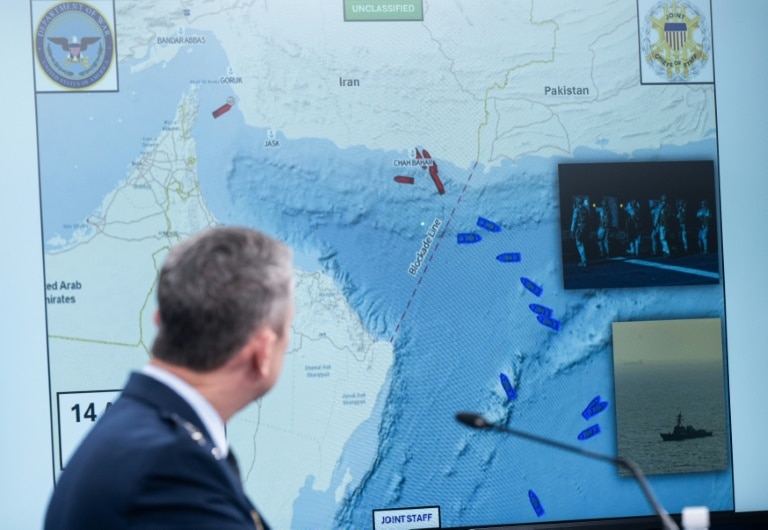
    The Asia-Pacific region is confronting an imminent energy security crisis as crude oil prices surge past $120 per barrel, driven by escalating Middle East tensions and critical supply disruptions. Gulf producers including Kuwait, the United Arab Emirates, and Iraq have announced significant output cuts following the closure of the Strait of Hormuz—a vital maritime corridor for global oil shipments.

    This price surge marks the first time Brent crude has exceeded $100 per barrel during Asian trading since July 2022, sending shockwaves through import-dependent economies. Governments across the region are implementing emergency measures to mitigate economic damage and ensure domestic energy stability.

    South Korean President Lee Jae-myung has called for immediate price controls on domestic fuel and expansion of a 100 trillion won market stabilization fund. Vietnam’s Finance Ministry proposed eliminating tariffs on gasoline and oil products, while Philippine President Ferdinand Marcos Jr. seeks congressional emergency powers to reduce petroleum excise taxes.

    Thailand has taken particularly drastic action, suspending all petroleum product exports, increasing mandatory oil reserve obligations for traders from 1% to 3%, and securing emergency imports from the United States and West Africa. Japanese Prime Minister Sanae Takaichi acknowledged the government is considering protective measures while maintaining the current fiscal budget framework.

    Financial markets reacted violently to the crisis, with South Korea’s KOSPI plunging 5.96%, Japan’s Nikkei 225 dropping 5.2%, and Australia’s ASX 200 hitting one-month lows. Economic analysts warn the situation represents a ‘stagflationary shock’ that could severely impact regional growth prospects.

    According to Priyanka Kishore of Asia Decoded, ‘Sustained high oil prices will negatively impact nearly all Asia-Pacific economies due to their continued significant reliance on oil imports, despite diversification efforts.’ Nomura analysts identified Thailand, South Korea, and India as particularly vulnerable due to their high net energy imports and concentration risk with Middle Eastern suppliers.

    The crisis highlights the region’s persistent energy dependency, with Alicia Garcia-Herrero of Natixis noting that except for net exporters like Malaysia and strategically prepared China, soaring prices are ‘mostly terrible for everybody’ in the Asia-Pacific.

  • Policy push to deepen trade with SE. Asia

    Policy push to deepen trade with SE. Asia

    China’s strategic pivot toward domestic consumption as a primary economic driver is poised to significantly enhance trade relations with Southeast Asia, according to economic analysts. This policy shift, outlined in the recent Government Work Report presented to China’s top legislative body, emphasizes elevating living standards and amplifying consumer spending to fortify the nation’s economic foundation.

    Positioned at the heart of East Asia’s production network, China’s sustained growth holds profound implications for regional economic stability. Yangchoon Kwak, a senior economics professor at Rikkyo University in Tokyo, noted that expanding Chinese domestic demand will likely increase imports of capital goods and intermediate products from Japan, South Korea, and ASEAN member states, potentially stimulating broader regional economic activity.

    The Association of Southeast Asian Nations currently recognizes China as its largest trading partner and principal market. An export-oriented bloc, ASEAN stands to gain substantially from heightened Chinese consumption patterns. This development aligns with Indonesia’s status as a leading commodity exporter within ASEAN, with companies like cocoa trader Surya Kakao International already monitoring Chinese market trends for potential increased imports of cocoa derivatives.

    China’s announcement of a 4.5-5% GDP growth target for the year, accompanied by expansionary fiscal measures including ultra-long special treasury bonds and local government special-purpose bonds, has been characterized as realistic amid global economic headwinds. Experts suggest these policies will not only strengthen China’s domestic economy but also serve as a crucial catalyst for global trade and investment recovery.

    Beyond economic dimensions, analysts emphasize that China’s ‘neighborhood diplomacy’ with ASEAN remains a foreign policy priority. This commitment is expected to manifest through continued support for regional organizations, multilateral frameworks like the Lancang-Mekong Cooperation mechanism, and sustained infrastructure development initiatives including the Belt and Road Initiative, further deepening Sino-ASEAN relations.

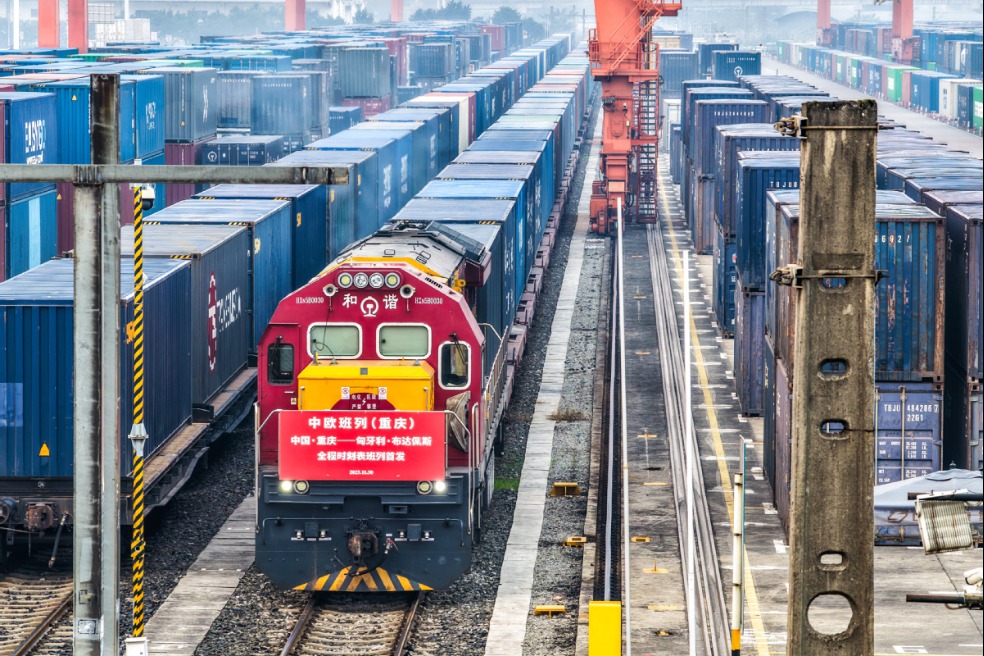
  • African firms favor China for business deals

    African firms favor China for business deals

    A comprehensive survey by Standard Bank reveals a significant reorientation in African trade patterns, with businesses increasingly favoring China and Asian markets over traditional Western partners. The Africa Trade Barometer, which surveyed over 2,000 companies across 10 African nations representing 68% of sub-Saharan Africa’s GDP, indicates a pronounced pivot toward Eastern economic alliances.

    The data demonstrates that 35% of African enterprises now prefer Asia as their primary trading partner, with China maintaining its dominant position as the leading source of inputs for 67% of respondents. This preference is attributed to competitive pricing, extensive product variety, and exceptional supplier responsiveness from Chinese partners.

    Conversely, North America ranked as the least preferred trading partner, selected by merely 4% of businesses. Philip Myburgh, Head of Trade at Standard Bank’s business and commercial banking unit, identified high shipping costs and recent policy shifts as contributing factors to this decline. The expiration of the US African Growth and Opportunity Act in September 2025, coupled with new tariffs ranging from 10% to 30%, has accelerated this trade diversion.

    The research anticipates continued expansion of China-Africa trade relations, particularly as African economies depend on Chinese inputs to drive industrialization efforts. This outlook is strengthened by China’s recent announcement of implementing zero tariffs on goods from 53 African countries with diplomatic relations, effective May 1, 2026.

    Grace Mutembo, Zambia’s High Commissioner to South Africa, welcomed the tariff elimination as a transformative opportunity for African exporters. Zambia, which maintains longstanding economic ties with China including infrastructure projects like the Tanzania-Zambia Railway refurbishment, seeks to increase value addition in agriculture and mining before exporting to Chinese markets.

    Experts emphasize that African exporters must enhance production capacity and comply with technical requirements—including health standards, supply chain logistics, and financial arrangements—to fully capitalize on Chinese market access. Sandile Swana, former business lecturer at the University of the Witwatersrand, stressed the importance of understanding these comprehensive market requirements for successful trade engagement.

  • Learning the art of seeing beyond limitation

    Learning the art of seeing beyond limitation

    In February 2026, an extraordinary journey through Fujian province revealed profound insights about perception and social inclusion. Accompanying Wang Yongcheng—the National People’s Congress’s sole visually impaired deputy among nearly 3,000 representatives—journalist Cao Yin discovered that true vision extends far beyond physical sight.

    Wang, 58, demonstrated exceptional awareness despite his blindness, knowing intimate details about every disabled resident encountered during their travels. In Nanjing county, his conversation with blind massage therapist Wu Bojie uncovered an unexpected challenge: Wu and his colleagues struggled to create promotional videos due to inability to focus smartphone cameras. Wang immediately pledged to organize specialized training, declaring, “If we can master smartphones and computers, short videos won’t be a problem either.”

    The deputy’s approach reflects a deeper philosophy: “It’s not that people are inhumane, but unaware; not that they don’t understand, but lack knowledge; not that they don’t care, but issues are overlooked.” This perspective has driven tangible solutions—advocating for large-print textbooks for visually impaired students and working with civil authorities to make nursing homes accessible for blind seniors.

    Wang’s heightened sensitivity to unspoken needs—developed through attentive listening to pauses, tones, and silences—challenges conventional reporting methods. His ability to perceive what sighted observers miss demonstrates how navigating the world differently can become a unique strength. As Auguste Rodin noted about beauty, society’s problems aren’t hidden but require attention, patience, and will to address—qualities Wang embodies in his legislative work.