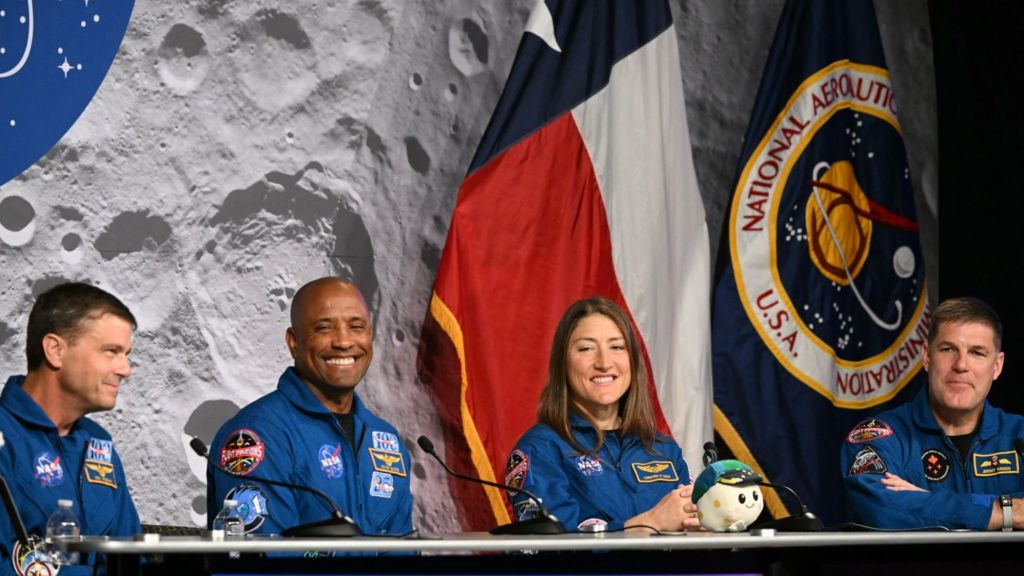
In a highly anticipated public appearance marking their first address to media after completing a groundbreaking 10-day lunar journey, the four members of NASA’s Artemis II mission opened up about their experiences, offering vivid firsthand accounts of their voyage around the Moon and the final dramatic splashdown that brought them safely back to Earth. This mission represents a critical milestone in humanity’s effort to return humans to the lunar surface after more than half a century, making the crew’s insights invaluable for scientists, engineers, and space enthusiasts around the globe. During the press conference, the astronauts shared personal anecdotes about observing the Moon’s craters and desolate landscapes from their spacecraft, described the unique sensation of floating in deep space while looking out at both the Moon and our home planet, and walked reporters through the final minutes of their return to Earth, as their capsule slowed through the atmosphere and parachuted into the Pacific Ocean. They also addressed questions about the technical challenges the team overcame during the mission, praised the work of thousands of ground control personnel who supported the flight every step of the way, and spoke to the broader significance of the Artemis program, which aims to establish a long-term sustainable presence on the Moon and prepare for future human missions to Mars. This mission served as a final full test of NASA’s deep space exploration systems, including the Space Launch System rocket and Orion capsule, before the Artemis III landing mission currently targeted for 2026. The crew’s remarks shed new light on how the systems performed in real deep space conditions, providing critical data that will help engineers refine preparations for the upcoming landing attempt.
作者: admin
-
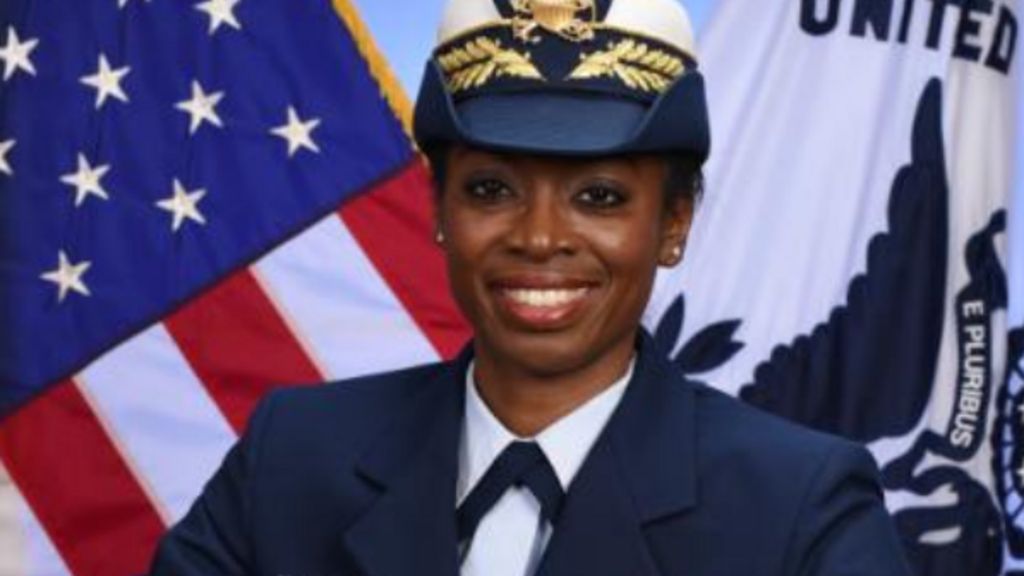
Trump picks Erica Schwartz as next head of CDC
President Donald Trump has announced his nomination of Dr. Erica Schwartz, a retired Coast Guard rear admiral with deep ties to his first presidential administration, to serve as the permanent director of the U.S. Centers for Disease Control and Prevention (CDC), filling a leadership vacancy that has stretched on for months.
Schwartz, who brings a multi-disciplinary background to the role, holds a medical degree from Brown University, a law degree from the University of Maryland and a master’s in public health, and spent 24 years in the U.S. Public Health Service Commissioned Corps. During Trump’s first term in office, she served as deputy surgeon general, but departed government service after the 2020 election when the incoming Biden administration passed her over for the acting surgeon general post.
In a post shared on his Truth Social platform, Trump praised the nominee, writing, “It is my honour to nominate the incredibly talented Dr Erica Schwartz, MD, JD, MPH, as my Director of the CDC. She is a star!”
The CDC has operated without a Senate-confirmed director since the September ousting of previous leader Susan Monarez, who was removed just under one month into her tenure following high-profile clashes with U.S. Health and Human Services Secretary Robert F. Kennedy Jr. over his approach to vaccine policy. Monarez later detailed her ousting in a Wall Street Journal op-ed, saying she was fired for refusing to automatically approve vaccine recommendations from a new advisory panel Kennedy stacked with prominent vaccine skeptics. Since Monarez’s departure, National Institutes of Health Director Jay Bhattacharya has filled the role on an interim basis.
Schwartz’s nomination marks the second attempt by the Trump administration to fill the top CDC post. Trump’s first pick, former Florida Congressman Dave Weldon, a longstanding vaccine critic, saw his nomination withdrawn earlier after it became clear he lacked the Senate support needed for confirmation.
The CDC has undergone sweeping upheaval since Kennedy took the helm of the Department of Health and Human Services, including large-scale staff firings and a major restructuring that Kennedy has framed as a necessary effort to cut back on what he calls “bureaucratic sprawl”. Kennedy’s controversial overhauls to national vaccine policy have sparked widespread alarm among the scientific community, including many current and former CDC staffers. A number of senior officials resigned in protest following Monarez’s ousting, and in March a federal judge issued an order blocking the majority of Kennedy’s vaccine policy changes from taking effect.
-
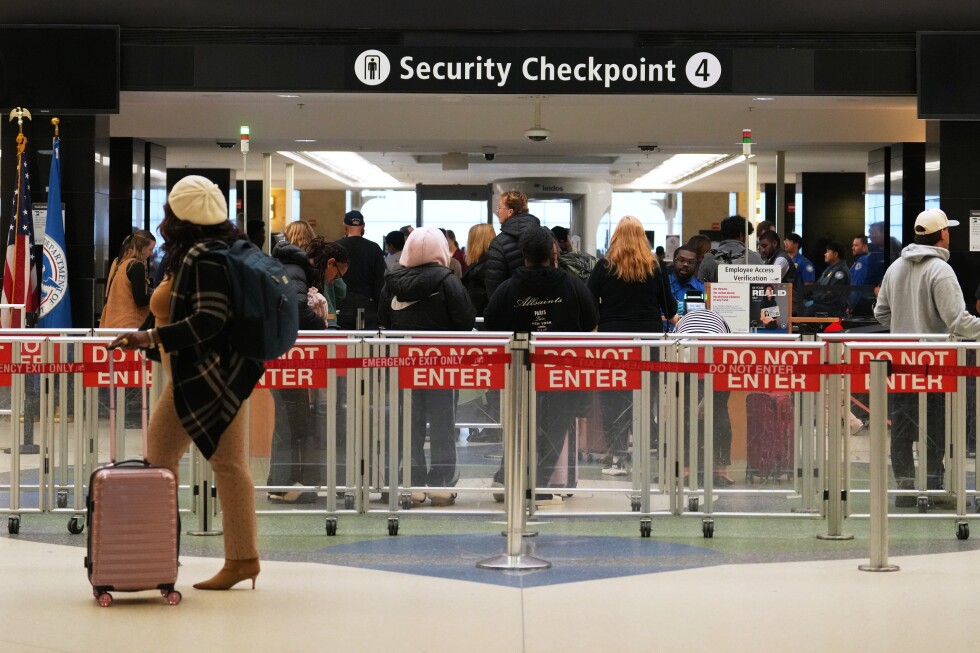
China urges travelers to avoid Seattle airport after 20 scholars were denied entry to the US
SEATTLE – In an official advisory that has escalated cross-border travel tensions, Chinese government authorities have warned Chinese travelers to exercise extreme caution and avoid entering the United States through Seattle-Tacoma International Airport, citing repeated allegations of harassment by U.S. Customs and Border Protection (CBP) officers against Chinese visitors.
The latest triggering incident, detailed in a public post on X (formerly Twitter) from China’s Consular Affairs division, involved a group of around 20 Chinese academics holding valid U.S. visas who were traveling to the U.S. to attend an academic conference. Upon arrival at the Seattle airport, all of these scholars were subjected to what the Chinese agency described as “unreasonable inspections” by CBP personnel, and were ultimately barred from entering the country.
Following the release of the advisory, multiple media outlets sent information requests and inquiries for comment to relevant parties on Thursday, including CBP’s national spokesperson, the Chinese Embassy in Washington D.C., and the Chinese Consulate General in San Francisco. As of the latest update, no official responses have been issued to address the claims.
In its public statement, China’s foreign ministry and diplomatic missions in the U.S. emphasized that incidents of targeted harassment against Chinese scholars at the Seattle port of entry have been continuous. The agencies urged all Chinese citizens planning travel to the United States to prioritize their personal safety and security, and strongly advised rerouting away from Seattle-Tacoma International Airport for entry.
Beyond the warning to avoid the Seattle entry point, Chinese officials also urged prospective Chinese travelers to thoroughly familiarize themselves with all U.S. entry regulations and prepare necessary documentation in advance to mitigate potential disruptions. A translated excerpt from the advisory notes, “If you face questioning from U.S. law enforcement personnel, you should remain calm and respond in a rational manner.”
Demographic data from Pew Research Center collected in 2019 shows that the greater Seattle metropolitan area is home to one of the largest Chinese-American communities in the U.S., ranking sixth nationally with an estimated 166,000 Chinese residents in the region.
-

Garda vehicle rammed by NI registered car
A violent incident in rural County Monaghan, Republic of Ireland, has left two Irish police officers (gardaí) hospitalized and triggered a widespread manhunt for a fleeing suspect on Thursday afternoon, local law enforcement confirmed. The incident unfolded in two connected phases, beginning just before 11:30 a.m. local time when two plain-clothes gardaí on routine patrol stopped to question a man in his 20s. What started as a routine interaction quickly escalated: the suspect became physically aggressive and assaulted one of the attending officers before fleeing into nearby open fields. An initial search operation failed to locate the man, leaving law enforcement searching for leads.
Less than two hours later, shortly after 1 p.m., a marked garda patrol car was traveling along the R184 route in Tullycorbett when it was deliberately rammed by an Audi vehicle registered in Northern Ireland. Immediately after the collision, both people inside the Audi abandoned the vehicle and ran from the scene, prompting an emergency, large-scale search of the surrounding area.
Quick action from responding officers led to the arrest of the passenger, the same 20-something man linked to the earlier assault on the plain-clothes officers. However, the driver of the striking vehicle remains at large. Law enforcement has released a public description of the at-large suspect: he is also in his 20s, of medium height and build, and was last seen wearing a dark grey tracksuit top paired with grey tracksuit bottoms.
The two gardaí in the rammed patrol car, one male and one female, were transported to Our Lady of Lourdes Hospital in Drogheda to receive medical assessment for their injuries sustained in the collision. As of Thursday afternoon, the search operation is still active, with specialized resources deployed including regional armed support units and the garda air support unit to cover the large search area.
Gardaí have issued a public appeal for information, asking any member of the public who was traveling along the R184 in Tullycorbett on Thursday, or anyone with details about the Audi vehicle or the at-large suspect that have not yet shared their information to contact local law enforcement immediately.
-

New garden unveiled to celebrate Shanghai-Hamburg friendship
On April 16, 2026, a symbolic new public green space — the Hamburg Garden — was officially opened to visitors in Shanghai’s bustling downtown Xintiandi neighborhood, Huangpu District. The launch of this installation, a featured attraction of the 2026 Shanghai International Flower Show, marks a major celebration of the 40th anniversary of the sister city friendship between Shanghai, China and Hamburg, Germany.
Designed as a living tribute to the decades-long bond between the two major port cities, the garden masterfully blends the characteristic minimalist, natural aesthetic of northern German landscape design with distinct cultural markers tied to Hamburg. Every element of the space is intentionally crafted to reflect the deep connection between the two regions, turning a floral installation into a tangible symbol of cross-cultural partnership.
The opening ceremony drew a diverse group of high-level guests from both cities. Attendees included Ma Yinghui, Director of the Foreign Affairs Office of the Shanghai Municipal People’s Government; Gao Hongjian, Director of the Shanghai Landscaping and City Appearance Administrative Bureau; and a cross-party delegation of members from the Hamburg Parliament, led by Carola Veit, the parliament’s president.
Speaking at the ceremony, Veit highlighted the historic nature of the project, noting that this marks the first time a German city has been featured as a dedicated guest participant in the Shanghai International Flower Show. She emphasized that the garden’s design, which prominently features bridges and blooms, carries profound symbolic meaning for the relationship between the two cities. “The garden is a beautiful symbol for the partnership and friendship because there are bridges and flowers, and so there’s always hope,” Veit said.
The project represents more than a horticultural exhibition; it stands as a lasting public monument to people-to-people exchange and decades of collaborative friendship between the two port cities, inviting residents and visitors of Shanghai to engage with German culture and learn more about the longstanding bilateral connection.
-
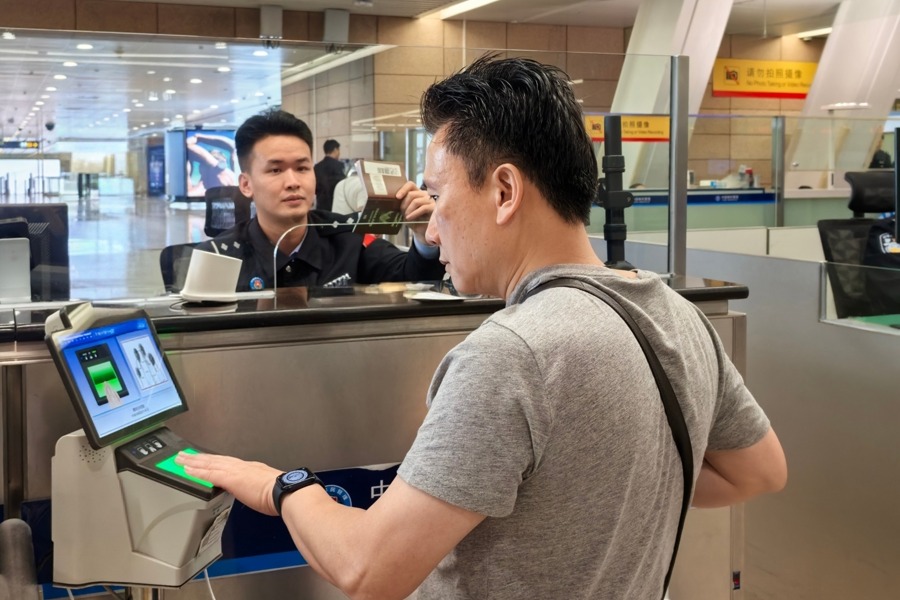
Shanghai airport sees Thai visitor surge for Songkran Festival
As Thailand’s iconic water festival Songkran kicks off, the country’s cultural celebration has delivered a notable boost to cross-border travel between China and Thailand, with official data showing a sharp uptick in Thai visitor arrivals at Shanghai Pudong International Airport this year.
Figures released by the Shanghai General Station of Immigration Inspection confirm that between April 8 and April 15, the port processed nearly 20,000 incoming Thai passengers. That figure accounts for 13% of all international arrivals entering China through Pudong International Airport over the period, with an average daily arrival volume topping 2,400 people — marking a 30% increase compared to the same seven-day window in March 2026.
The ongoing travel boom between the two neighboring Southeast and East Asian nations is largely anchored in the mutual visa-free policy that came into force in recent years. Official 2025 full-year data underscores this momentum: the total number of Thai passengers entering China via Pudong International Airport hit 360,000 last year, pushing Thailand to fourth place among all source countries for international arrivals at the port.
Two-way travel flows are equally robust in the opposite direction. In 2025, roughly 680,000 Chinese mainland residents departed for Thailand through Pudong, with around 300 weekly commercial flights connecting the two countries to support sustained demand.
To accommodate the unexpected surge in Thai visitors during the Songkran holiday period, local immigration authorities have rolled out a suite of targeted service adjustments to keep passenger processing efficient and smooth. These measures include real-time dynamic monitoring of arrival passenger flows, pre-inflight reminders for visitors to complete digital entry declarations before landing, dedicated on-site guidance for large tour groups, and specialized volunteer services offering Thai-language assistance to reduce language barriers for incoming travelers.
Industry analysts note that the latest arrival data reflects deepening people-to-people ties between China and Thailand, with cultural festivals acting as a natural catalyst for growth in cross-border tourism, aviation, and related service sectors.
-

Denis Sassou N’Guesso sworn in for another term in Republic of Congo, extending 42-year rule
On a busy Thursday in the Republic of Congo, long-serving leader Denis Sassou N’Guesso officially took office for another five-year presidential term during a well-attended inauguration ceremony held at a stadium in Kintélé, a small community located just north of the national capital Brazzaville. The venue was filled to capacity with supporters and dignitaries gathered to mark the start of his new mandate.
-
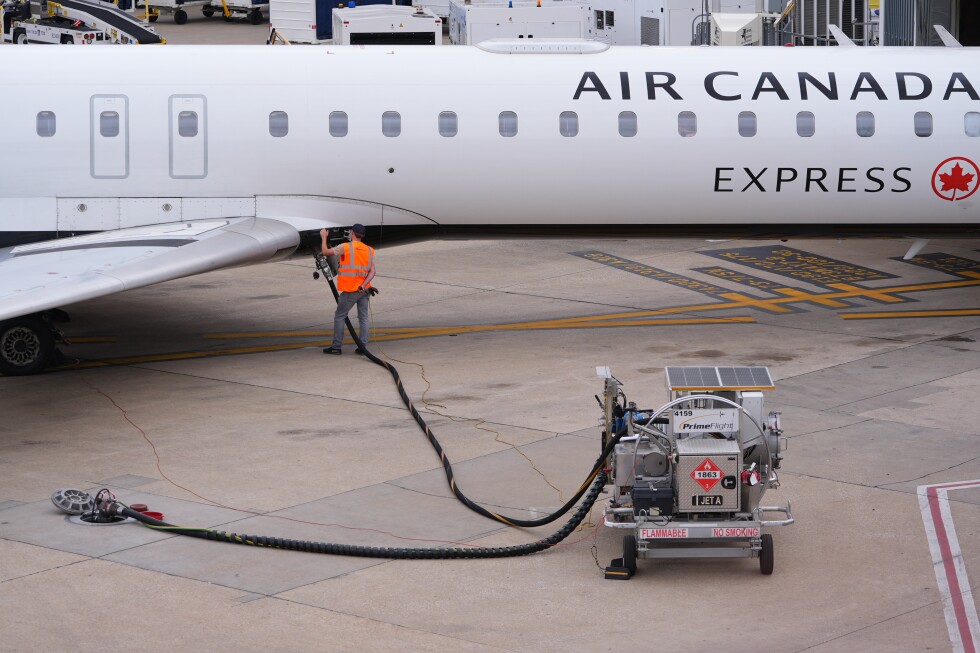
Jet fuel supplies are lagging. What does that mean for airlines and travelers?
As the peak summer travel season rapidly approaches, a looming jet fuel crisis driven by the Iran war and the effective closure of the Strait of Hormuz threatens to upend global air travel within just a matter of weeks, bringing steeply higher ticket prices and widespread flight cancellations if crude oil supplies do not resume quickly. In an exclusive interview with the Associated Press published Thursday, Fatih Birol, executive director of the International Energy Agency (IEA), warned that Europe currently holds only roughly six weeks of usable jet fuel inventories, warning the global economy is barreling toward what he calls the largest energy crisis in modern history.
Normally, most European nations maintain jet fuel stockpiles sufficient to last multiple months, according to a new IEA report published this week. For global airlines, jet fuel — a kerosene-based refined petroleum product — represents the single largest operating expense, accounting for approximately 30% of total carrier costs, data from the International Air Transport Association shows. Since the outbreak of the war, jet fuel prices have already roughly doubled, and industry analysts warn that physical supply shortages could be the next critical blow to the sector.
“Every passing day that the Strait of Hormuz remains shut, Europe is edging closer to supply shortages,” explained Amaar Khan, head of European jet fuel pricing at energy market analytics firm Argus Media. Khan noted that the strategic waterway accounts for roughly 40% of Europe’s jet fuel imports, and no shipments have passed through the strait since hostilities began.
The latest IEA data underscores the severity of the supply crunch: multiple European countries currently hold less than 20 days of jet fuel coverage, a level not seen since 2000 when the agency began standardized tracking. Stockpiles have not dropped below 29 days since the early stages of the COVID-19 pandemic in 2020, and the report warns that if inventories fall below 23 days, physical shortages will begin to emerge at major airports, triggering immediate flight cancellations and forced demand reduction.
Which regions face the greatest risk? Industry analysts note that Asia-Pacific economies are the most dependent on Middle Eastern crude and jet fuel supplies, followed closely by Europe. While most of Europe’s jet fuel is refined domestically, an estimated 20% to 25% of total regional supply has been taken offline by the conflict, according to Jacques Rousseau, managing director at energy investment firm Clearview Energy Partners.
To offset near-term gaps, the United States — a major global crude producer with excess jet fuel refining capacity — has drastically ramped up exports to Europe, shipping roughly 150,000 barrels per day in April, around six times the typical monthly volume. For the U.S. domestic market, Rousseau noted that significant supply shortages are unlikely, though consumers will still face higher prices. “I tell my kids … we’re not so much going to run out of supply,” Rousseau said. “It’s just going to cost more here, whereas in different parts of the world you could actually get to a point where there’s just no fuel.”
Globally, the closure of the Strait of Hormuz has cut off 10 million to 15 million barrels of daily crude oil supplies to global markets, according to Pavel Molchanov, senior investment strategist at Raymond James & Associates. “There are exactly the same refineries in exactly the same places in Asia and Europe, but if there is not enough oil for those refineries to operate, it’s going to lead to physical supply disruption,” Molchanov explained. While the IEA has authorized the release of 400 million barrels of crude from member states’ emergency reserves, Molchanov added that these supplies will not reach the market quickly enough to offset the near-term shortage. “It could take until the end of the year to get all of those barrels onto the market,” he said.
For consumers planning summer travel, the impacts will extend far beyond higher base airfares, according to Christopher Anderson, a professor of operations, technology and information management at Cornell University. “This is no longer just a fuel-price story. For airlines, it is now a network-planning story,” Anderson said. “Higher fuel costs matter, but so do longer routings, reduced scheduling flexibility and greater uncertainty about what demand will look like even a few weeks out.” If the supply disruption continues into the peak June to August travel season, Anderson added, travelers can expect later booking windows, more frequent schedule changes, and far fewer discounted low-fare tickets.
Airlines have responded to the crisis with a mix of caution and proactive cost-cutting, with many already passing elevated fuel costs directly to consumers. Multiple major carriers have already announced flight cuts, capacity reductions, and price adjustments to adapt to the new market conditions.
Dutch flag carrier KLM announced Thursday it will cut 160 flights next month, equal to roughly 1% of its total European route network, citing rising kerosene costs that have rendered a small number of flights no longer financially viable. U.K. budget carrier easyJet reported Thursday that it expects a pretax loss of 540 million to 560 million pounds (approximately $731 million to $758 million) for the first half of fiscal 2026, though CEO Kenton Jarvis noted that overall consumer travel demand remains strong, with Easter 2025 marking the carrier’s busiest ever Easter travel period. Both KLM and easyJet told the AP they are not currently experiencing direct fuel supply shortages, and declined further comment on the IEA’s warning.
Germany’s Lufthansa announced Thursday that it is accelerating the permanent shutdown of its regional feeder airline CityLine, originally planned for 2026, to immediate implementation, in response to labor unrest and sky-high fuel prices. The move will also remove 27 older, less fuel-efficient aircraft from the Lufthansa group fleet permanently.
U.S. major carrier Delta Air Lines, which operates dozens of daily flights to European destinations, said Thursday it is monitoring the potential jet fuel supply issue on the continent but does not expect near-term operational disruptions. Delta purchased a Philadelphia refinery in 2012 specifically to hedge against jet fuel price volatility, a move that is helping the carrier absorb current cost increases.
Beyond capacity cuts, dozens of airlines around the world have already passed higher fuel costs to consumers through a range of fee and fare adjustments. All four of the largest U.S. carriers — Delta, United, American Airlines, and Southwest Airlines — along with JetBlue, have raised checked baggage fees in recent weeks. United CEO Scott Kirby warned in a recent internal memo to staff that sustained elevated fuel prices could add $10 billion in annual costs for the carrier. “For perspective,” Kirby wrote, “in United’s best year ever, we made less than $5B.”
Overseas carriers have taken similar action: Hong Kong’s Cathay Pacific recently increased fuel surcharges by roughly 34% across all its route network, while Air India added up to $280 in supplementary fees to select long-haul routes earlier this month. Emirates, Lufthansa, and KLM have also implemented incremental fare and fee adjustments to keep pace with ongoing jet fuel price volatility.
-

Hungary’s Orbán says ‘complete renewal’ needed within his party after election loss
BUDAPEST, Hungary – Four days after a historic electoral earthquake brought an abrupt end to Viktor Orbán’s 16 consecutive years as Hungary’s prime minister, the long-serving populist nationalist leader announced Thursday that his ruling Fidesz party must undergo a complete organizational and ideological renewal to remain a relevant force in Hungarian politics. The landslide defeat handed a two-thirds parliamentary supermajority to Orbán’s center-right challenger, the Tisza party, led by former Orbán ally Péter Magyar, who has already begun moving quickly to form a new government.
The scale of Fidesz’s loss triggered immediate widespread speculation that Orbán, who has served as Fidesz’s party president almost continuously since the early 1990s, would step down from his leadership post. But in an exclusive interview with a pro-Orbán YouTube channel, Orbán made clear he has no intention of exiting the political stage, saying he is already working to rebuild the party from the ground up.
“This is not a matter of swapping out one or two positions,” Orbán explained. “In its old form, the Hungarian right-wing community can no longer function. We need a complete renewal.” He added that the election result marked the close of an entire political era, one defined by his populist nationalist leadership that upended Hungarian democratic norms and strained Budapest’s ties with the European Union and NATO.
Sunday’s poll delivered a stunning rebuke of Orbán, a close ally of former U.S. President Donald Trump and Russian President Vladimir Putin, who publicly acknowledged defeat just hours after polls closed, describing the outcome as “painful.” Orbán opened up about his personal reaction to the loss Thursday, saying election night sent him on an “emotional roller coaster” that left him feeling “pain and emptiness” in the aftermath. “I too believed we would win,” he said. “We had large crowds of supporters everywhere, and I expected victory.”
Even in defeat, however, Orbán pushed back against narratives that Fidesz has been fully rejected by the Hungarian public, pointing out that the party retained a solid core of support: nearly 2.4 million Hungarians cast ballots for Fidesz in the country of 9.5 million people. “We cannot pretend the entire country rejected our government,” he noted.
Magyar, who defected from Orbán’s circle to launch an anti-corruption campaign focused on pocketbook issues including failing public health care and inadequate public transport, has moved swiftly to cement his transition to power. He has pledged to repair Hungary’s frayed relationships with EU institutions and NATO, a key foreign policy shift from Orbán’s confrontational, Euroskeptic course. Following a private meeting with Hungary’s sitting president on Wednesday, Magyar told reporters he had received confirmation that the inaugural session of the new parliament – where he is all but certain to be confirmed as prime minister – will likely be held on May 6 or 7, matching his push for an accelerated transfer of power.
-

Chinese study sheds light on Kawasaki disease treatment
For nearly 20 years, the global medical community has been locked in a contentious debate over whether adjunct hormone therapy can cut the risk of dangerous cardiovascular complications in children with Kawasaki disease, a poorly understood systemic vasculitis that disproportionately affects young kids. Now, a landmark five-year clinical study led by Shanghai’s Children’s Hospital of Fudan University, in partnership with 28 additional medical institutions across China, has delivered a clear, data-backed answer that is reshaping clinical guidelines worldwide.
Kawasaki disease, which triggers inflammation of blood vessels throughout the body, is diagnosed annually in 1 out of every 1,000 children under age 4 in China, and incidence rates are rising across East Asia, the region with the world’s highest prevalence of the condition. While a standard international treatment protocol exists, 10 to 20 percent of patients still develop coronary artery lesions — the disease’s most life-threatening complication — and 0.5 to 1 percent of treated children develop giant coronary artery aneurysms that compromise long-term health and survival. For decades, researchers have searched for additional therapies to improve outcomes, leading to conflicting investigations into the benefits of hormone therapy to reduce inflammation. Past studies were limited by small sample sizes, inconsistent hormone dosing protocols, and heterogeneous patient populations, leaving clinicians around the world with conflicting guidance and widespread uncertainty in daily practice.
Launched in 2021, this new multicenter randomized controlled trial — the largest study of its kind ever conducted globally — enrolled more than 3,200 participants, with 3,058 patients completing full follow-up for the study’s primary endpoint. Researchers compared rates of coronary artery complications between patients who received hormone therapy alongside standard treatment and those who received standard treatment alone, assessing outcomes at two weeks, one month, and three months after disease onset. The trial found no statistically significant difference in coronary artery lesion rates between the two groups. Even more critically, the research revealed that for patients who do not respond to initial standard treatment, adding hormone therapy actually increases the risk of developing coronary complications.
The study’s findings were published online Thursday in the *New England Journal of Medicine*, one of the world’s most prestigious general medical publications. Global medical experts have hailed the research as a transformative contribution to Kawasaki disease care, noting that it will immediately cut unnecessary hormone overuse in treatment, while providing a critical foundation for future research into targeted therapies.
Jane W. Newburger, a leading U.S. cardiologist specializing in pediatric cardiovascular disease, emphasized that future research must move beyond broad anti-inflammatory approaches like hormone therapy to identify the specific biological drivers of tissue-level inflammation, which will enable development of targeted treatments for children at highest risk of life-threatening complications.
Wang Yi, president of the Children’s Hospital of Fudan University, noted that the landmark findings will open new avenues of investigation into Kawasaki disease. The hospital treats more than 7,000 international pediatric patients annually, most with complex, life-threatening conditions, and Wang added that leading high-impact research like this trial will advance clinical practice globally, strengthen medical discipline development, and support Shanghai’s growing role as an international medical hub.
The study addresses a longstanding gap in global pediatric care, offering clarity that will immediately improve clinical decision-making and set the trajectory for the next generation of life-saving treatments for this high-stakes childhood disease.