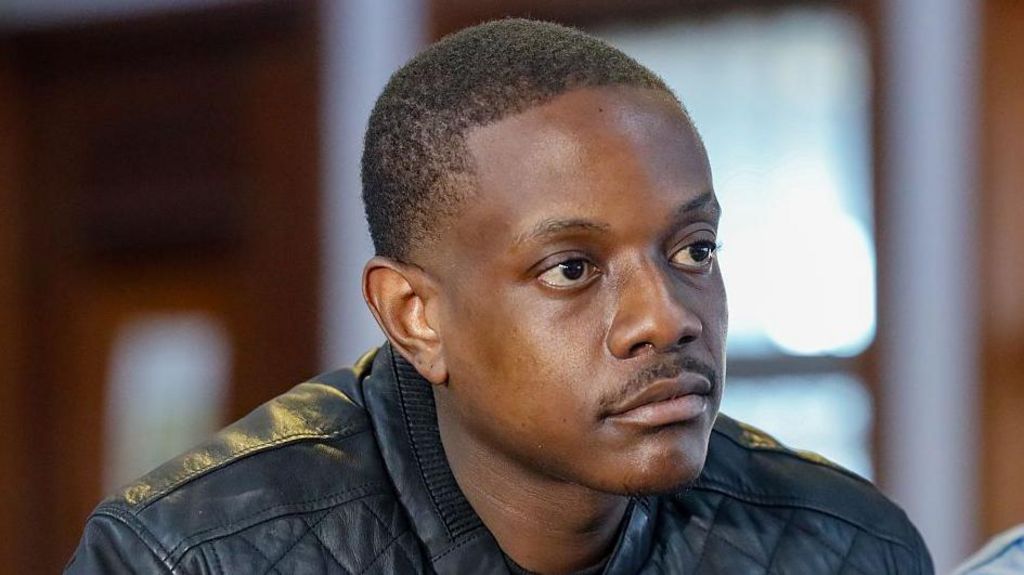
Almost two months after his arrest over a shooting that left a 23-year-old security guard critically injured in South Africa’s Johannesburg, Bellarmine Mugabe, the youngest son of Zimbabwe’s late long-ruling former president Robert Mugabe, has entered guilty pleas to two of the charges against him: pointing a firearm and unlawful presence in South Africa. The 28-year-old entered the pleas following a pre-trial deal with prosecutors, leaving the original attempted murder charge against him unresolved as the National Prosecuting Authority (NPA) of South Africa has not issued any public comment on the status of that count. Mugabe appeared alongside his 33-year-old co-accused Tobias Matonhodze at the Alexandra Regional Court on Friday, with both men having remained in custody since their arrest on 19 February. Matonhodze has pleaded guilty to four separate charges: attempted murder, defeating the ends of justice, unlawful immigration and illegal possession of ammunition. According to prosecution accounts, the shooting broke out following a heated altercation between the two accused and the victim at Mugabe’s residential property in Hyde Park, one of Johannesburg’s most affluent suburban neighborhoods. As the victim attempted to flee the scene, he was shot twice in the back, and was rushed to a nearby hospital in critical condition. Law enforcement officers launched a full search of the property following the incident, but have not yet recovered the weapon used in the attack. Lawyers representing both defendants informed the court that their clients are willing to voluntarily return to Zimbabwe at their own cost if the court chooses not to hand down custodial sentences. Sentencing hearings have been scheduled for 24 April, the NPA confirmed. This high-profile case has already been marked by multiple procedural delays, with two postponements of Mugabe’s initial bail application since his arrest. This is not the first time Bellarmine Mugabe, one of two children Robert Mugabe shared with his second wife Grace, has run afoul of the law. In 2024, he was arrested on allegations of assaulting a police officer at the Zimbabwean border town of Beitbridge. Though he was granted bail after that arrest, a warrant was subsequently issued for his detention when he failed to appear for scheduled court proceedings, according to Zimbabwe’s state-owned *Herald* newspaper. Just one year later, in June 2025, he was taken into custody again for an alleged assault on a security guard at a mining site in Mazowe, located roughly an hour’s drive north of Zimbabwe’s capital Harare. That case remains pending before Zimbabwean courts. Robert Mugabe, the former Zimbabwean leader, held presidential power for 37 years before he was removed from office in a 2017 military-led coup, and he died in 2019 at the age of 95.
作者: admin
-

ICC’s anti-corruption unit is investigating alleged corruption charges against Cricket Canada
International cricket’s governing body has launched a formal investigation into multiple serious corruption claims leveled against Cricket Canada, following the broadcast of an explosive investigative documentary that centered on potential match fixing during Canada’s 2024 T20 World Cup fixture against New Zealand.
The Canadian Broadcasting Corporation (CBC) released the documentary *Corruption, Crime and Cricket* on Friday, which brought a series of alarming claims to public attention. One of the most high-profile allegations targets Canada’s national team captain Dilpreet Bajwa, specifically focusing on his performance in the fifth over of the June match against New Zealand, a fixture of the co-hosted tournament held in India and Sri Lanka.
Bajwa, 22, was only appointed to the captaincy three weeks before Canada kicked off their World Cup campaign. During the over in question, New Zealand had already lost two wickets for 35 runs when Bajwa stepped in to bowl. The captain opened the over with a no-ball, followed by a leg-side wide, before ultimately conceding 15 runs from the six deliveries. This unusual sequence of plays has now drawn formal scrutiny from the International Cricket Council’s (ICC) Anti-Corruption Unit (ACU).
In an official statement provided to the Associated Press, Andrew Ephgrave, interim general manager of the ICC’s integrity unit, confirmed the regulator is aware of the allegations laid out in the CBC documentary. “Consistent with its established operating procedures, the ACU is not in a position to comment on the substance of any allegations contained within it,” Ephgrave added, declining to share further details while the investigation is ongoing.
The match-fixing claim tied to the New Zealand fixture is not the only controversy raised in the documentary. The program also featured interviews with former Canada national team head coach Pubudu Dassanayake, who alleged that outside parties exerted improper, undue influence over team selection decisions for the 2024 T20 World Cup squad.
Beyond corruption and selection interference claims, the documentary also exposed deep structural and administrative issues within Cricket Canada. It revealed that Canadian national team players did not receive their full share of 2024 T20 World Cup prize money on time, and that the entire roster went without official contracts starting in July 2024. Players were only placed on four-month retainer contracts in the lead-up to this year’s tournament, highlighting persistent financial instability for the country’s top cricket athletes.
-
China launches high-precision greenhouse gas detection satellite
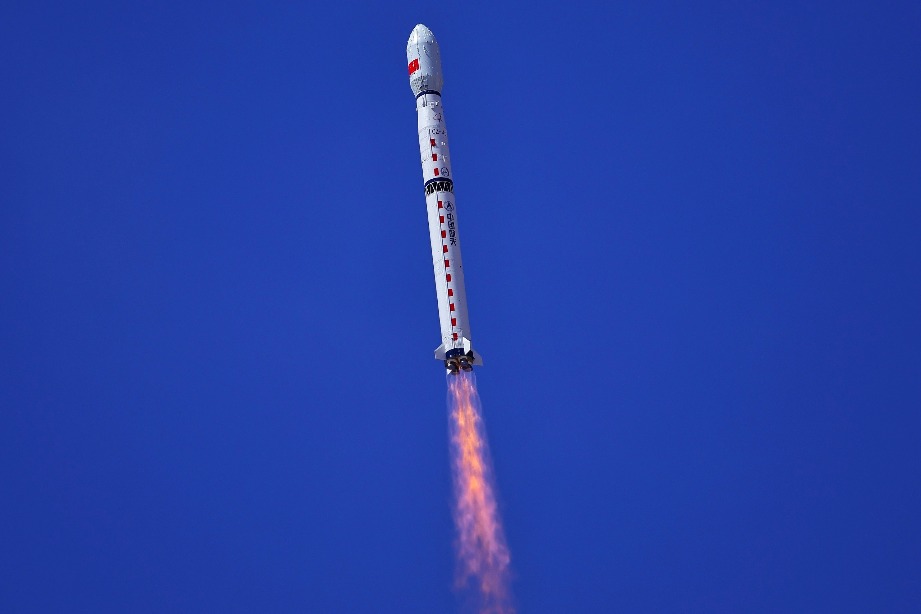
In a milestone for global climate monitoring efforts, China successfully launched a high-precision greenhouse gas detection satellite into its planned orbit on Friday, using a Long March 4C carrier rocket. The liftoff occurred at 12:10 p.m. Beijing Time at the Jiuquan Satellite Launch Center, located in the Gobi Desert of Northwestern China.
This mission marks the 638th flight operation of China’s Long March series carrier rockets, one of the most active and reliable rocket families in global space operations. The newly deployed satellite is designed to deliver accurate, large-scale measurements of greenhouse gas concentrations across the globe, filling critical data gaps that support climate change research and international emission reduction policy implementation.
Unlike general atmospheric monitoring satellites, this new platform is equipped with advanced high-resolution detection instruments that can capture precise data on key greenhouse gases including carbon dioxide and methane, enabling scientists to track emission sources, monitor absorption processes, and verify the effectiveness of climate action initiatives around the world.
The launch comes amid growing global urgency to enhance climate observation infrastructure, as nations work toward meeting the carbon reduction goals outlined in the Paris Agreement. This new satellite capability is expected to contribute valuable open data to the global climate science community, supporting more informed decision-making for climate adaptation and mitigation strategies worldwide.
-
Chinese veto of Hormuz draft resolution helps de-escalate Iran tensions: envoy
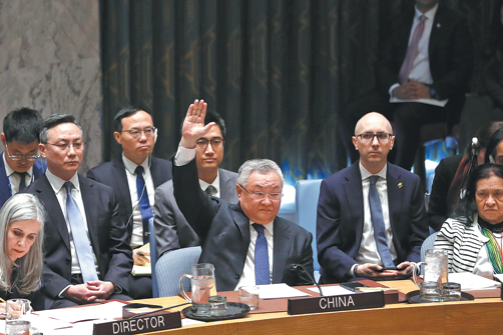
UNITED NATIONS – At a United Nations General Assembly meeting focused on Security Council veto practices this Thursday, China’s top permanent representative to the UN, Fu Cong, offered a clear, detailed defense of Beijing’s April 7 veto of a Gulf-backed Security Council draft resolution focused on the Strait of Hormuz, framing the move as a critical step that prevented already heightened tensions between Iran, the United States and Israel from boiling over into full-scale expanded conflict.
Fu emphasized that in casting its veto, Beijing did not act out of narrow self-interest, but to uphold foundational international fairness and justice, defend the core purposes and principles enshrined in the UN Charter, and block dynamics that would have dragged more actors into the regional confrontation. Far from undermining stability, Fu argued, the veto created critical space for the temporary ceasefire that has since taken hold and opened a pathway to the direct dialogue and negotiations that all parties now need to resolve long-running disputes.
“China’s vote was a choice made out of responsibility for regional peace and for the millions of people who call this region home,” Fu told the assembled delegates. “It stands on the right side of history, and it will withstand the test of time.”
Fu went on to outline Beijing’s nuanced approach to the crisis, noting that China carefully considered the draft resolution and fully recognizes the legitimate, serious security concerns that Gulf Arab states hold regarding navigation security in the strategically vital waterway. Even so, Fu stressed that any action taken by the UN Security Council must be geared explicitly toward cooling tensions, not amplifying them. He argued that the draft resolution risked granting a false veneer of legitimacy to unapproved military operations by outside powers, opening the door to widespread authorization of the use of force that would only pour fuel on already smoldering conflict and drive full-scale escalation.
Fu clarified China’s position on key issues at play: Beijing does not condone any Iranian attacks against Gulf states, and firmly supports the principle that unimpeded, safe passage for all international shipping through the Strait of Hormuz, one of the world’s busiest and most economically critical maritime chokepoints, must be fully protected. He added that China calls on Iranian authorities to implement proactive, concrete measures to restore normal, uninterrupted navigation through the strait as quickly as possible.
At the same time, Fu condemned the escalating military deployment and targeted economic blockade that the United States has implemented in the region, calling these actions deeply dangerous and irresponsible. He reminded delegates that the navigation crisis in the Strait of Hormuz is not an isolated conflict, but a spillover effect of broader escalating tensions across Iran and the wider Middle East. Only a full, lasting ceasefire across the region, he argued, can create the fundamental conditions needed to ease the crisis long-term.
Fu welcomed the recent ceasefire announcement reached by relevant regional parties, and expressed Beijing’s backing for every diplomatic effort that moves the region closer to a permanent end to hostilities. He specifically highlighted the recent direct negotiations between U.S. and Iranian officials held in Pakistan as a positive, promising step forward on the path to de-escalation.
Moving forward, Fu said, all relevant parties must honor the terms of the existing ceasefire, remain committed to the path of dialogue and direct peace talks, stick to the principle of resolving all outstanding disputes exclusively through political and diplomatic channels, and take tangible, consistent actions to reduce regional tensions rather than inflame them. The international community, he added, must continue to ramp up its diplomatic engagement to push for peace talks, and must clearly and unequivocally reject any actions that seek to break the ceasefire or escalate confrontation between rival parties.
Fu also emphasized the need for all actors to respect Lebanon’s full sovereignty, security and territorial integrity, warning that any escalation of tensions along the Israel-Lebanon border could unravel the existing ceasefire framework and destabilize the entire region.
As a trusted, sincere friend and strategic partner to all Middle Eastern nations, Fu said, China has remained closely attuned to shifting regional dynamics, maintained a consistent objective and impartial stance, and carried out intensive, behind-the-scenes mediation with all rival parties to advance the cause of peace talks. Beijing stands ready, he concluded, to continue supporting efforts to reduce tensions, build positive relations between rival regional states, and play a constructive role in building a foundation for lasting, enduring peace and stability across the entire Middle East.
-

France’s foreign minister says 85-year-old widow detained by ICE returns home
In a development that has sparked diplomatic friction between France and the United States, an 85-year-old French woman, widowed by a former U.S. Army captain, has returned to her home country after being held in U.S. immigration custody for over a month. French Foreign Minister Jean-Noël Barrot confirmed the veteran’s widow arrived back in France on Friday morning, framing the repatriation as an outcome that brings a measure of closure to French authorities.
The case began on April 1, when U.S. Immigration and Customs Enforcement (ICE) agents took Marie-Thérèse Ross into custody in Alabama. According to the U.S. Department of Homeland Security, Ross was detained after she overstayed the 90-day tourist visa she had entered the country on. Public records from Calhoun County confirm Ross married William Ross, a long-time Alabama resident and retired U.S. Army captain, in April of the previous year. William Ross passed away just months after the wedding, in January, his family’s obituary confirms.
Following her arrest, Ross was transferred to a federal immigration detention center based in Louisiana to await processing for deportation. Speaking to reporters during an official visit to the southern French city of Montpellier on Friday, Barrot acknowledged the French government’s satisfaction at securing her return, but did not shy away from harsh criticism of ICE’s handling of the case.
While Barrot declined to offer detailed commentary on the specific circumstances of Ross’ detention, he emphasized that several tactics employed by the agency are misaligned with France’s accepted standards of treatment for immigration detainees. He described the methods used as unacceptable to the French government, referencing unelaborated claims of “violence that raised our concerns” among French diplomatic officials.
Ross’ case is not an isolated incident: she is one of thousands of immigrants targeted for detention and deportation under the Trump administration’s aggressive mass deportation policy push. The policy reversed earlier executive guidelines that granted greater leniency to spouses of active-duty U.S. service members and military veterans, a change that has left hundreds of family members of veterans vulnerable to detention despite their longstanding ties to the United States.
-

Palestinians hand over suspect in 1982 attack on Jewish restaurant in Paris
Four decades after one of Paris’s most infamous anti-Semitic terror attacks, a long-sought key suspect has been extradited to France to face justice, marking a major milestone in a cold case that has haunted the country for generations. On Thursday, the Palestinian National Authority handed over 72-year-old Hicham Harb — also known by his legal name Mahmoud Khader Abed Adra — to French authorities, fulfilling an extradition request issued last September by France’s National Anti-Terrorism Prosecutor’s Office (PNAT).
Upon Harb’s arrival at Paris’s Villacoublay air force base, investigating officials immediately took him into custody. He stands accused of both organizing the 1982 assault on the Jo Goldenberg restaurant in the Rue des Rosiers, a historic Jewish neighborhood in Paris’s Marais district, and serving as one of the attack’s active gunmen.
The details of the 1982 attack remain chilling: attackers first launched a grenade into the crowded dining space before at least three armed men stormed in, opening fire with automatic machine guns on diners as they scrambled to escape. The violence left six people dead and more than 20 others injured, and until now, no defendant has ever been convicted for the killings.
The Rue des Rosiers attack was widely attributed to the Abu Nidal Organization, a violent Palestinian splinter faction that split from the Palestine Liberation Organization in the 1970s. Led by notorious militant Abu Nidal — who was killed in Iraq in 2002 — the group carried out a wave of deadly attacks across the globe through the 1980s, killing roughly 900 people in total, including plane hijackings, airport shootings, assassinations, and a deadly attack on a Greek cruise ship.
Judicial movement in the case gained momentum last year, when France’s highest court, the Court of Cassation, ordered a trial for six total suspects connected to the attack. Three of those suspects are being tried in absentia, currently residing in the West Bank, Jordan, and Kuwait. Two other suspects are already in French custody: Norwegian citizen Abou Zayed, who is also accused of being one of the attack’s gunmen, and Hazza Taha, who faces charges of hiding the weapons used in the assault. Zayed’s legal team has repeatedly denied any involvement in the 1982 attack on his client’s behalf.
Following Harb’s extradition, his son Bilal al-Adra has publicly denounced the transfer as illegal, claiming the suspect has no guarantee of receiving a fair trial in the French judicial system. Despite these claims, Paris courts have already rejected an appeal to move the case from a special judicial panel to a jury trial.
French President Emmanuel Macron has publicly praised the Palestinian Authority for its cooperation in the extradition, framing the handover as tangible proof of the productive judicial cooperation that has emerged since France officially recognized a Palestinian state in September 2025. French Foreign Minister Jean-Noël Barrot, who met with victims’ families last year, reiterated the government’s commitment to securing accountability. Forty-four years after the attack, Barrot noted that justice is finally within reach, saying, “Faced with anti-Semitism and terrorism, France never forgets and never gives up.”
-
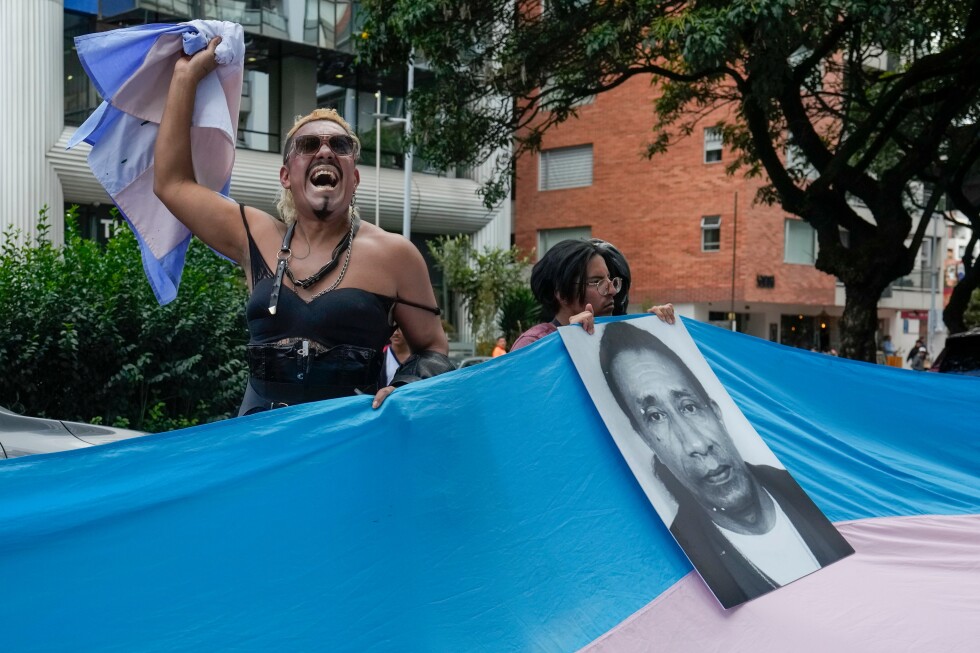
A transgender teen’s case in Ecuador opens path for others seeking legal recognition
For Lorena Bonilla, the name she chose for her 17-year-old transgender daughter carries deep meaning: in Spanish, Amada translates to “beloved,” a reflection of the unconditional love that turned a family’s private fight for inclusion into a landmark victory for LGBTQ+ rights across Ecuador.
Amada’s years-long legal battle, alongside a second case decided in early 2026 by Ecuador’s Constitutional Court, has formally opened a pathway for transgender adolescents across the country to update their legal name and gender marker on official government records. This breakthrough comes two years after transgender adults in Ecuador secured the same right, following decades of grassroots advocacy that culminated in a 2024 national reform.
The court’s rulings have been widely celebrated by LGBTQ+ rights organizers across Latin America, a region where conservative and religious right movements have rapidly gained political influence in recent years. But activists and researchers warn that the legal victory does not erase the deep social and institutional barriers that transgender Ecuadorians still navigate daily.
“In Ecuador, powerful political, religious, and social groups still frame gender recognition for young trans people as an inherent threat to society,” explained Cristian González Cabrera, a LGBTQ+ rights researcher at Human Rights Watch. “This hostile rhetoric translates directly to institutional pushback: long processing delays, unjustified application denials, and open discrimination from state officials.”
Bonilla and her family experienced this systemic hostility firsthand nearly a decade ago. When Amada was 9 years old in 2018, school authorities turned her away from enrollment, arguing her birth certificate did not match her gender identity. “We applied to 14 different schools, and not a single one would admit her,” Bonilla recalled. “That’s when we knew we had to fight to change her name on official documents.”
An initial lower court ruling sided with the family and granted Amada the right to update her identity documents, but the national civil registry appealed the decision. A higher court ultimately reversed the ruling, ordering that Amada’s passport and national ID retain her birth name and assigned sex at birth. For the Bonilla family, that decision felt like a devastating step backward.
Across Ecuador, progress in LGBTQ+ rights has historically been driven by judicial rulings rather than legislative or executive action, a pattern that mirrors other Andean nations including Colombia and Peru. “The legislative and executive branches are designed to represent majority opinion, and LGBTQ+ people are constantly sidelined and ignored,” said Christian Paula, president of the Pakta Foundation, a legal advocacy group that supports trans people in gender recognition cases. “Turning to the courts for these wins exposes the deep lack of openness and sensitivity to trans issues within Ecuador’s governing institutions.”
Three of the most significant advances for LGBTQ+ rights in Ecuador have come via court orders: the decriminalization of homosexuality in 1997, a 2009 ruling that allowed the first trans woman to change her legal name, and the 2019 legalization of same-sex marriage. Each of these decisions has sparked fierce backlash from conservative and religious groups, a trend that repeated after the 2026 adolescent gender recognition rulings.
In a post on X following the Constitutional Court’s decision, André Santos, president of one of Ecuador’s most prominent conservative organizations, accused the court of overstepping its constitutional authority. Santos has also repeatedly opposed school policies that allow trans students to use uniforms and restrooms aligned with their gender identity. Ecuador’s national conference of Catholic bishops echoed the criticism, releasing a statement claiming that allowing adolescents to pursue gender recognition “poses serious risks to their overall physical and psychological development.”
Ecuador’s current president, Daniel Noboa, has not aligned himself with the most harshly anti-trans rhetoric adopted by other conservative leaders across Latin America, but his administration has shown little to no public support for LGBTQ+ rights. As a candidate, Noboa ran on a platform that explicitly pledged to “defend the traditional family,” and since taking office, his policy agenda has been overwhelmingly focused on rising violent crime and national economic instability, pushing gender equity and LGBTQ+ issues entirely off the executive agenda.
Diane Rodríguez, a trans lawyer and president of Guayaquil-based LGBTQ+ advocacy group Silueta X, says the real concern lies within Noboa’s cabinet. She points to current Education Minister Gilda Alcívar, who has repeatedly rejected the inclusion of what she labels “gender ideology” in public school curricula. This anti-gender climate shapes daily life for trans Ecuadorians, Rodríguez says, including her own experience as a parent. Rodríguez is raising a 4-year-old daughter with her partner, a trans man, and the pair faced significant barriers enrolling their child in local schools. “We had trouble getting her signed up because people see me and assume that just because I’m trans, I’m going to ‘convert’ their children,” Rodríguez said.
Silueta X publishes an annual report tracking killings of LGBTQ+ people across Ecuador, a dataset that reveals a disturbing upward trend in anti-trans violence. The organization’s first report in 2013 documented just two murders of LGBTQ+ Ecuadorians, but that number has risen steadily every year. The 2025 report recorded 30 killings, 21 of which were trans women.
For the Bonilla family, the path to advocacy began long before the Constitutional Court’s ruling. Amada first told her parents she was a girl when she was just 3 years old, asking for a princess-themed birthday party. Raised in conservative Catholic households, Bonilla and her husband Mauricio Caviedes initially assumed Amada was confused, and dressed her as a prince for the party. It took several years for the couple to unlearn the harmful narratives they had absorbed, including pushing back against psychologists who claimed Amada had developmental issues or that the couple were poor parents.
“People say the most ruthless things, and they have no idea what families like ours go through every single day,” Caviedes said. “I hope that comprehensive education about trans issues will one day change that, so people can understand who we really are.”
As the family learned more about the trans community and fought Amada’s legal battle, their private struggle grew into a public movement. Bonilla and Caviedes became full-time activists, bringing their children to protests and rights conferences, advocating for same-sex marriage and other LGBTQ+ causes, and founding a support organization for families with trans children. At its launch, the group counted 25 member families with trans children of varying ages, the oldest of whom was just 12. “That was the only way we could fight the state,” Bonilla explained.
The family relocated to Canada during the COVID-19 pandemic, and Bonilla says she deeply values the welcoming environment their new home has provided for Amada. But she has no plans to stop advocating for trans rights in her home country. Today, Amada is an honors student who dreams of becoming a pediatric nurse, shaped by years of watching her parents support trans community members fighting to access non-discriminatory health care. Though Amada has never chosen to speak publicly on camera, her landmark case has created a lasting legacy for trans youth across Ecuador.
“People still stereotype trans people, assuming our destiny is to be sex workers or to live our whole lives in hiding,” Bonilla said. “But we want every parent to know that one day their trans child can grow up to be whatever they want to be.”
-

London police, some in protective clothing, probe discarded items near Israeli Embassy
LONDON – London’s Metropolitan Police confirmed Friday it has launched an active investigation into a suspicious incident involving multiple discarded items discovered in the immediate vicinity of the Israeli Embassy, located in one of the city’s most exclusive districts. Law enforcement officials have stressed that the embassy itself did not suffer any direct attack, but a multi-officer response including specialized personnel in protective gear has been deployed to systematically search the area surrounding the embassy, which sits adjacent to the upscale Kensington Gardens neighborhood.
To support the ongoing investigation, authorities have established a full police cordon around the site, limiting public access to both the gardens and nearby surrounding blocks. Visible law enforcement presence at the scene includes multiple police vans, and a large white forensic tent has been erected to secure the area as evidence is collected and examined.
Detectives are currently working to determine whether the unidentifiable items found near the embassy are connected to an online video that circulated prior to the discovery, which claimed the diplomatic site would be targeted by drones loaded with hazardous materials. Counter Terrorism Policing London has confirmed it is aware of the threatening video and is coordinating with local investigators on the case.
At this point in the inquiry, a police spokesperson noted that there is no current indication of elevated risk to general public safety. Even so, officials are urging London residents and visitors to steer clear of the restricted area to allow responding officers to complete their work without disruption or unnecessary safety risks.
-
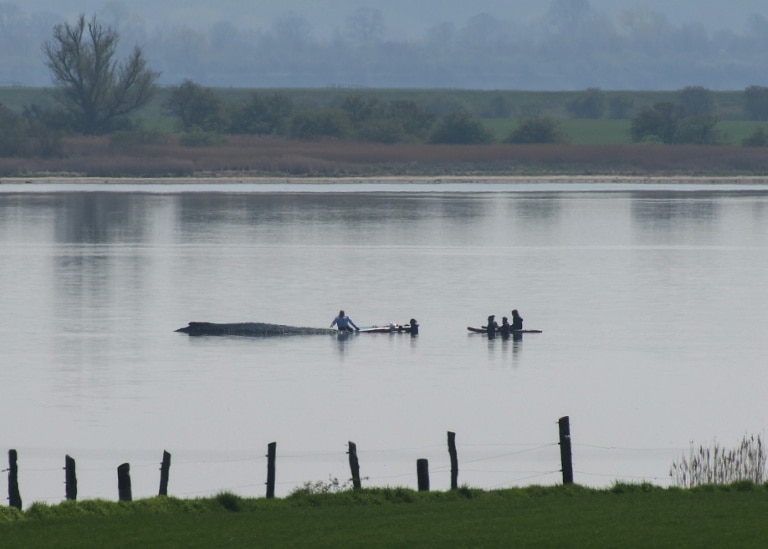
Rescue for whale stranded off German coast in ‘decisive phase’
A months-long struggle for survival of a 13.5-meter humpback whale stranded off Germany’s Baltic Sea coast has reached a critical turning point, with a last-ditch private rescue operation entering its decisive phase, regional officials confirmed Friday.
The whale’s ordeal stretches back to late March, when it was first spotted trapped on a sandbank near the northern German city of Luebeck. After managing to free itself from the initial stranding, the large marine mammal only traveled a short distance east along the coast before becoming stuck again near Poel Island, close to Wismar.
By early this month, official observers held a grim outlook: they said the whale had been too severely weakened by its weeks-long displacement from its natural Atlantic habitat to survive, and expected the animal to die. That prognosis shifted dramatically this week, when state authorities approved an unconventional rescue plan put forward by two private entrepreneurs. Unlike earlier proposals that were scrapped over fears they would kill the animal, the new plan relies on inflatable cushions to lift the weakened whale, which will then be transported out to open water on large pontoons.
On Friday, Till Backhaus, environment minister for the state of Mecklenburg-Western Pomerania, announced the operation had entered its decisive window, and confirmed the mammal now has a tangible chance at survival. Rescue teams were spotted Friday approaching the whale’s location to carry out pre-lifting preparations, and observers noted the animal has shown increased activity in recent days, including repeatedly lifting and flapping its tail above the water’s surface.
Backhaus added he was encouraged by the whale’s current state, noting it “is in a better condition than some had suspected.” Rescuers emphasized they are moving at a deliberate, cautious pace to avoid causing additional stress to the animal, and have not set a firm timeline for when the full lifting and transport will be carried out.
The whale, nicknamed “Timmy” by much of the German press, has captured widespread public attention across the country. The prolonged struggle has sparked public demonstrations in support of continuing rescue efforts, though the outcry has also turned extreme in some cases: some social media posts targeting state officials have included violent threats of death. Earlier rescue proposals, including a plan to use a large catamaran to move the whale, were previously rejected after experts concluded the animal would not survive the stress of that method.
-

Shenzhou XXI astronauts complete third spacewalk
On April 17, 2026, the China Manned Space Agency announced a key milestone in China’s low-Earth orbit space program: the three-person crew of the Shenzhou XXI mission, stationed aboard the country’s operational Tiangong space station, has successfully completed its third extravehicular activity (EVA), more commonly known as a spacewalk.
The outing, which concluded in the early hours of Friday Beijing time, saw two mission members — mission commander Senior Colonel Zhang Lu and spaceflight engineer Major Wu Fei — wrap up approximately five and a half hours of work outside the orbital outpost before re-entering the Wentian science module at 1:36 a.m. local time. The third member of the Shenzhou XXI team, payload specialist Zhang Hongzhang, an academic researcher from the Chinese Academy of Sciences, remained inside the station throughout the EVA to coordinate operations and provide critical in-station support to his extravehicular crewmates.
Working in tandem with ground control teams back on Earth and leveraging the station’s onboard robotic arm for maneuvering support, Zhang and Wu completed all pre-planned tasks scheduled for the spacewalk. These included the installation of protective space debris shields, designed to shield critical station components from micrometeoroid and orbital debris impacts, as well as comprehensive inspections of the condition of EVA support equipment stored outside the station.
This spacewalk marks not only a routine operational milestone for the Shenzhou XXI mission but also a historic first for China’s human spaceflight program. It is the 27th spacewalk conducted by Chinese astronauts since the country began its extravehicular activity program, and it is the seventh spacewalk for mission commander Zhang Lu. At 49 years old, the Hunan Province native now holds the new national record for the most spacewalks completed by any Chinese astronaut. Zhang previously notched four spacewalks during his first mission, the six-month long Shenzhou XV expedition that launched in November 2022, demonstrating his extensive experience and reliability in leading complex extravehicular operations.