作者: admin

  • China positions itself as force for global stability at its annual Congress

    China positions itself as force for global stability at its annual Congress

    As international tensions escalate in the Middle East, China has demonstrated unwavering focus on its domestic agenda, using its recently concluded National People’s Congress to reinforce its commitment to technological advancement and economic transformation. The annual legislative gathering, which serves as China’s premier political event, formally approved a comprehensive five-year plan prioritizing cutting-edge innovation over immediate consumption stimulus.

    The blueprint, passed with near-unanimous support (2,758 votes for, one against, and two abstentions), positions artificial intelligence, robotics, and other emerging technologies as central to China’s strategy for achieving superpower status in the 21st century. While acknowledging the need to boost domestic spending, the plan maintains technology development as the primary allocation for government resources, with consumption measures expected to evolve gradually through expanded social security and healthcare benefits.

    Concurrent with its technological push, the legislature enacted several significant laws, including controversial ethnic unity legislation that critics argue promotes assimilation over cultural autonomy. The government maintains these measures foster national cohesion and shared economic development among ethnic groups.

    Environmental targets within the plan drew international scrutiny for their conservative approach, focusing on reducing emissions intensity rather than absolute carbon reductions. The 17% intensity reduction target could permit overall emissions to increase by approximately 3% as the economy expands—a departure from global practices favoring absolute reduction commitments.

    The Congress also addressed workplace reform, with proposals for enhanced ‘right to rest’ protections gaining substantial social media traction. These included measures to limit after-hours work communications and increase minimum statutory leave from five to ten days, reflecting concerns about intense workplace competition while potentially stimulating domestic consumption through increased leisure time.

    Amid these developments, Chinese officials characterized their steady development approach as providing ‘stability and certainty’ to a turbulent global landscape, with Foreign Minister Wang Yi declaring China is ‘forging ahead at full speed in building a great country.’

  • China steps up diplomatic push for peace in Mideast

    China steps up diplomatic push for peace in Mideast

    China has significantly escalated its diplomatic engagement to de-escalate mounting tensions in the Middle East, deploying high-level envoys and conducting intensive communications with key regional stakeholders. The intensified mediation efforts come as concerns grow regarding potential regional spillover effects and humanitarian consequences from ongoing hostilities.

    Foreign Minister Wang Yi has maintained an exceptionally active diplomatic schedule, conducting eleven separate telephone discussions with counterparts from Russia, Oman, Iran, France, Israel, Saudi Arabia, the United Arab Emirates, Kuwait, Bahrain, Qatar and Pakistan over a ten-day period. These conversations represent a strategic outreach to nations directly involved in the conflict, neighboring Gulf states, and global powers with regional influence.

    At a recent press briefing in Beijing, Foreign Ministry spokesman Guo Jiakun reiterated China’s consistent position advocating for immediate ceasefire implementation, renewed dialogue, and political resolution through negotiation channels. Guo emphasized China’s dual role as both a permanent UN Security Council member and a longstanding partner to Middle Eastern nations, committing to ongoing efforts that promote peace, advocate for equitable solutions, and facilitate communication between conflicting parties.

    Complementing these diplomatic exchanges, Special Envoy Zhai Jun has embarked on an intensive shuttle diplomacy mission throughout the region. During his tour, Zhai conducted high-level meetings in Riyadh with Gulf Cooperation Council Secretary-General Jasem Mohamed Albudaiwi and Saudi Foreign Minister Faisal bin Farhan Al Saud. His itinerary subsequently included discussions in the UAE with Deputy Prime Minister and Foreign Minister Sheikh Abdullah bin Zayed Al Nahyan. Regional leaders expressed appreciation for China’s mediation initiatives and acknowledged Beijing’s balanced and impartial stance.

    The conflict, now entering its twelfth day, has resulted in significant civilian casualties and infrastructure damage according to reports from Iran’s UN ambassador Amir Saeid Irabani, who cited over 1,300 civilian fatalities and destruction of approximately 9,669 civilian sites since military operations commenced on February 28.

    Foreign Minister Wang, speaking during the annual legislative sessions in Beijing, characterized the conflict as an avoidable tragedy that serves no nation’s interests. He underscored historical lessons from the region demonstrating that military force inevitably exacerbates hostilities and generates new crises rather than delivering sustainable solutions.

    Academic experts analyzing China’s diplomatic offensive note that the comprehensive approach—combining ministerial communications, United Nations advocacy, and special envoy deployment—reflects both a consistent dedication to peaceful conflict resolution and the responsible international engagement expected of a major global power. Tang Zhichao, a Middle East specialist at the Chinese Academy of Social Sciences, observed that China’s refusal to adopt partisan positions distinguishes its approach from certain Western nations and aligns with the principles of the Global Security Initiative, which emphasizes sovereignty respect, territorial integrity, and addressing legitimate security concerns of all involved parties.

  • AI boom sends electricity bills in US skyrocketing

    AI boom sends electricity bills in US skyrocketing

    A silent crisis is brewing across American households and businesses as electricity bills reach unprecedented heights, driven substantially by the artificial intelligence revolution’s insatiable energy appetite. The convergence of accelerated AI infrastructure investment, an aging power grid, and seasonal demand spikes has created a perfect storm in energy markets.

    Kurt Borchardt, co-owner of Artisanal Brew Works in Saratoga Springs, New York, experienced this shock firsthand when his brewery’s electricity bill suddenly doubled within a single month. ‘Our electric bill doubled in one month. Almost a $3,000-$4,000 jump on a single bill,’ Borchardt recounted, describing the devastating impact on his business during its traditionally slow winter season. The brewery’s energy costs have now become its second-largest expense after rent, severely squeezing profit margins.

    This personal story reflects a national pattern. Recent data from the US Bureau of Labor Statistics reveals that while overall inflation increased 2.4 percent in the twelve months ending January, electricity prices surged by 6.3 percent during the same period. Unlike volatile gasoline prices, electricity costs have demonstrated a steady upward trajectory, creating sustained financial pressure across the economy.

    The primary catalyst behind this energy crunch stems from massive computing facilities powering artificial intelligence applications. According to Lawrence Berkeley National Laboratory, data centers accounted for approximately 4.4 percent of total US electricity consumption in 2023. Projections indicate this share could escalate to between 6.7 and 12 percent by 2028, depending on economic growth patterns.

    This demand surge is already manifesting in capacity markets. PJM Interconnection, the nation’s largest grid operator serving 13 states and Washington D.C., recently reported that its latest capacity auction fell short of reliability requirements by 6,623 megawatts for the 2027-28 delivery year. ‘This auction leaves no doubt that data centers’ demand for electricity continues to far outstrip new supply,’ stated Stu Bresler, PJM’s executive vice-president of market services and strategy.

    Economists warn that persistently elevated utility costs could undermine economic momentum. ‘Higher energy costs will act as a drag on growth and competitiveness for US firms and heighten affordability issues facing US households,’ explained Aaron Pacitti, economics professor at Siena University. ‘Since demand from data centers and AI is unlikely to subside anytime soon, these price increases will act as a modest headwind to growth.’

    The structural challenges extend beyond mere demand growth. In many regions, utility companies procure electricity through wholesale markets where prices spike when demand outpaces supply. This mechanism affects all consumers simultaneously, regardless of their individual consumption patterns, creating widespread economic repercussions that extend from manufacturing sectors to household budgets.

  • North Korea vow no more protests in Women’s Asian Cup

    North Korea vow no more protests in Women’s Asian Cup

    In a significant shift from their previous conduct, the North Korean women’s football team has formally committed to maintaining sideline decorum during their upcoming AFC Women’s Asian Cup quarter-final match against host nation Australia. This pledge comes directly from coach Ri Song Ho, who addressed journalists in Perth on Thursday through an interpreter.

    The commitment follows a controversial incident during Monday’s group stage encounter against China, where North Korean players staged a four-minute on-field protest. The dispute erupted when Chinese forward Wang Shuang, formerly of Tottenham Hotspur, scored during first-half stoppage time. The North Korean squad vehemently demanded video review assistance, resulting in coach Ri receiving a yellow card for his involvement in the confrontation amid audible disapproval from spectators.

    Friday’s match at Perth Rectangular Stadium presents multiple high-stakes opportunities for both teams. Beyond securing a semi-final position, the outcome carries implications for qualification to the 2027 FIFA Women’s World Cup in Brazil, with the tournament’s top six finishers earning automatic berths.

    North Korea enters the contest with a rejuvenated squad, having successfully defended their Under-17 World Cup title in Morocco last year before capturing the Under-20 World Championship in Colombia this year. Talented striker Choe Il Son, who contributed to both youth tournament victories before advancing to the senior national team, expressed confidence in her squad’s preparedness.

    “We recognize Australia’s formidable quality,” Choe stated. “We will demonstrate mutual support and perform at our maximum capacity. Our team possesses considerable talent, and we have undertaken meticulous preparations. We anticipate showcasing our capabilities on the pitch.”

    The match will feature Australia’s veteran striker Sam Kerr as the sole remaining participant from the teams’ memorable 2010 final encounter, which concluded 1-1 before Australia prevailed on penalties.

  • Advisers align wisdom and strength

    Advisers align wisdom and strength

    Beijing witnessed the conclusion of the fourth session of the 14th National Committee of the Chinese People’s Political Consultative Conference (CPPCC) on Wednesday, with political advisers pledging to channel their collective expertise toward supporting China’s modernization objectives. The closing ceremony at the Great Hall of the People was attended by President Xi Jinping, along with other senior leaders, signaling the importance of this consultative body in national governance.

    Wang Huning, Chairman of the CPPCC National Committee, delivered a pivotal address outlining the advisory body’s strategic direction for the forthcoming 15th Five-Year Plan period (2026-30). He emphasized the necessity of conducting前瞻性研究 (forward-looking research) on critical economic and social matters to generate substantive policy recommendations. Wang further stressed the CPPCC’s commitment to serving the people while strengthening consensus-building through united front mechanisms to harness positive energy from Chinese communities worldwide.

    Following the session, committee members expressed their dedication to implementing the discussed initiatives across various sectors. Chen Xu, President of the China Public Diplomacy Association, highlighted the clarified development pathway for the 15th Five-Year Plan, particularly emphasizing people-to-people diplomacy in preparation for the 33rd APEC Economic Leaders’ Meeting scheduled for November in Shenzhen.

    Environmental representative Yan Qin revealed extensive deliberations on the ‘Beautiful China’ initiative, advocating for standardized national carbon accounting protocols—a crucial foundation for carbon trading mechanisms and ecological valuation. She additionally praised the draft environmental code presented to the National People’s Congress as a historic milestone reflecting China’s ecological civilization theories.

    The session culminated in the approval of several key documents, including resolutions on the Standing Committee’s work report, proposal handling reports, and a political resolution solidifying the advisory body’s consensus positions.

  • South Korean lawmakers pass law to manage Seoul’s pledge of $350 billion in US investments

    South Korean lawmakers pass law to manage Seoul’s pledge of $350 billion in US investments

    South Korea’s National Assembly has enacted landmark legislation establishing a framework for $350 billion in U.S. investments, a move designed to avert the reinstatement of punitive tariffs by the Trump administration. The legislation passed overwhelmingly with a 226-8 vote on Thursday, creating a specialized public corporation to oversee and manage the massive investment commitment.

    The legislative action occurs against a backdrop of escalating trade tensions, with the Trump administration simultaneously launching new investigations into manufacturing practices of key U.S. allies including South Korea, Japan, and China. These probes could potentially lead to additional import taxes if American officials determine trading partners engage in unfair practices.

    This development follows months of delicate negotiations between Seoul and Washington, culminating in a November agreement where South Korea committed $200 billion toward U.S. semiconductor and high-tech industries, plus an additional $150 billion for American shipbuilding sectors. In exchange, Washington reduced reciprocal tariffs on South Korean goods from 25% to 15%.

    The agreement, forged during an October summit between President Trump and South Korean President Lee Jae Myung, includes protective measures capping annual investments at $20 billion to safeguard South Korea’s foreign currency reserves. Despite the legislation’s passage, opposition lawmakers expressed significant concerns about South Korea’s economic vulnerability and the potential for investments that might contradict national business interests.

    Progressive Party representative Son Sol voiced strong opposition, stating, ‘We cannot be the money machine Trump wants us to be,’ highlighting concerns about insufficient legislative oversight mechanisms within the bill. The legislative process had faced considerable delays due to opposition resistance, prompting Trump to threaten in January to restore 25% tariffs on South Korean automobiles, pharmaceuticals, and other key exports.

  • Djokovic ousted by Draper at Indian Wells as Alcaraz marches on

    Djokovic ousted by Draper at Indian Wells as Alcaraz marches on

    In a stunning upset at the BNP Paribas Open, British tennis sensation Jack Draper eliminated 24-time Grand Slam champion Novak Djokovic in a gripping three-set battle that lasted two hours and 21 minutes. The defending champion secured his quarter-final berth with a hard-fought 4-6, 6-4, 7-6(5) victory, marking Djokovic’s earliest exit from the Indian Wells tournament since 2018.

    The match reached its climax in a decisive third-set tiebreaker where Draper demonstrated remarkable resilience against the Serbian legend. Despite Djokovic establishing a 4-3 lead in the tiebreak, the 22-year-old British player mounted a spectacular comeback, winning four of the final five points to seal the monumental victory.

    Meanwhile, world number one Carlos Alcaraz continued his impeccable form with a commanding 6-1, 7-6(2) win against Norway’s Casper Ruud. The Spanish phenomenon has maintained an unblemished 15-0 record for the 2026 season, having already captured the Australian Open and Qatar Open titles earlier this year. Alcaraz’s performance showcased his characteristic explosive shot-making and court coverage, particularly dominant during the first set which he described as ‘unplayable.’

    In other tournament developments, fourth seed Daniil Medvedev advanced comfortably with a 6-2, 6-4 victory over American Alex Michelsen, while 2021 champion Cameron Norrie defeated Australian qualifier Rinki Hijikata 6-4, 6-2. Norrie’s victory sets up an intriguing quarter-final clash against Alcaraz, recalling their encounter at last year’s Paris Masters where the British player emerged victorious.

    Draper, who has recently returned from a six-month absence due to an arm injury, expressed immense pride in his achievement against the player he considers ‘the greatest tennis player there is.’ He now prepares to face Medvedev in Thursday’s quarter-finals, seeking to continue his remarkable comeback story at the prestigious Masters 1000 event.

  • China to approve ‘ethnic unity’ law condemned by rights groups

    China to approve ‘ethnic unity’ law condemned by rights groups

    China’s National People’s Congress is poised to enact controversial ethnic unity legislation that has drawn significant criticism from human rights organizations worldwide. The new law formally establishes Mandarin Chinese as the mandatory ‘national common language’ across educational institutions, government operations, and public spaces throughout the country.

    The legislation represents a substantial shift from previous policies that recognized linguistic diversity among China’s 55 officially recognized ethnic minorities. According to government statements, the law aims to strengthen social cohesion during a period of unprecedented social transformation. It specifically criminalizes what it terms ‘violent terrorist activities, ethnic separatist activities, or religious extremist activities.’

    Human rights experts have expressed grave concerns about the potential impact on minority communities including Uyghurs, Mongolians, and Tibetans. Yalkun Uluyol, a China researcher at Human Rights Watch, characterized the legislation as a ‘significant departure’ from Deng Xiaoping-era policies that protected minority language rights.

    The law mandates educational institutions to utilize Mandarin as the primary instructional language and requires teenagers to achieve ‘a basic grasp’ of Mandarin upon completing compulsory education. Erika Nguyen from PEN America noted that ‘the law targets spaces where children are most likely to encounter their mother tongue, with the intent being to sever children’s ties with their identity, history, and culture.’

    A recent collaborative report by PEN America and the Southern Mongolian Human Rights Information Center revealed that over 80% of Mongolian language websites in China have been censored or banned. The legislation also extends beyond China’s borders, applying legal liability to overseas individuals who ‘engage in activities that undermine ethnic unity’ or incite ‘ethnic separatism.’

    Economic implications are also significant, as Mandarin fluency becomes a prerequisite for professional advancement, potentially marginalizing non-Mandarin speakers in the job market. The legislation continues China’s decades-long policy approach toward cultural assimilation of minority groups into the Han majority.

  • Checkpoints, air strikes and hope: a Tehran resident tells her story

    Checkpoints, air strikes and hope: a Tehran resident tells her story

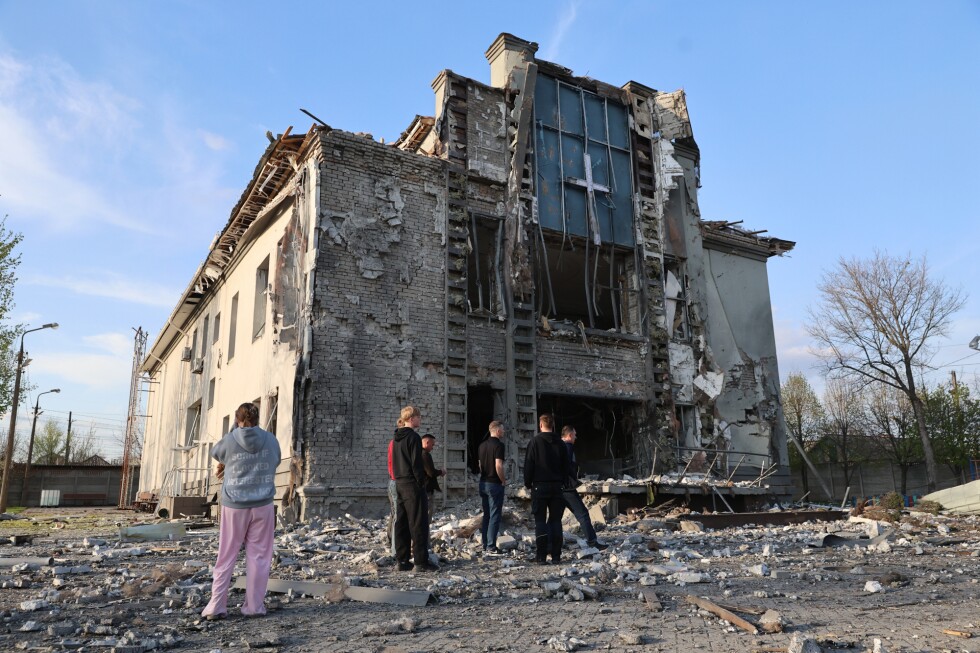
    Amidst the reverberations of conflict, a Tehran resident in her thirties provides a harrowing firsthand account of daily existence in Iran’s capital. Speaking under condition of anonymity for security reasons, she describes a city caught between fragile hope and pervasive fear.

    The economic landscape has deteriorated severely, with many professionals like herself facing complete work stoppages and surviving on dwindling savings. While initial waves of evacuation occurred among those living near strategic targets, migration has slowed due to financial constraints and ambiguous security assurances. Basic commerce continues surprisingly, though rationing has intensified with gasoline limits reduced from 30 to as low as 5 liters per person at some stations.

    Security infrastructure has collapsed dramatically, with even minor police stations shuttered and military bases extensively damaged. The regime’s presence now manifests primarily through proliferating checkpoints where authorities reportedly search phones for derogatory content about leadership. Nightly pro-regime motorcades of approximately 50 vehicles circulate through streets chanting religious slogans, creating a surreal contrast to the widespread destruction.

    The physical impact of aerial assaults emerges through visceral accounts: a friend’s mother residing opposite Gisha’s Public Security Police station had windows completely blown out, while the Niloufar Square police station bombardment was so catastrophic it physically expanded the square’s dimensions. A local shopkeeper salvaged merely few boxes from obliterated premises.

    Emotionally, residents oscillate between desperation and determination. The night rumors spread of Khamenei’s death, rooftop celebrations erupted until security forces responded with random aerial and window-directed gunfire. Many citizens now believe foreign intervention represents the only viable path to regime change, rejecting ceasefire appeals in favor of persistent conflict.

    Sleep patterns vary dramatically across Tehran’s vast expanse. While some areas experience relative quiet, residents near strategic targets like Mehrabad airport spend nights huddled in bathrooms fearing structural collapse, with many resorting to sedatives to manage trauma-induced insomnia.

  • Video shows moment point-blank gunshot misses Indian politician

    Video shows moment point-blank gunshot misses Indian politician

    A chilling assassination attempt against prominent Kashmiri political leader Farooq Abdullah was captured on video, showing a gunman firing at point-blank range and miraculously missing his target. The incident, which occurred during a public engagement, sent shockwaves through Indian political circles. Security personnel immediately apprehended the lone suspect, who remains in custody for interrogation. Abdullah, an 86-year-old veteran politician and former Chief Minister of Jammu and Kashmir, emerged physically unscathed from what authorities are investigating as a deliberate assassination attempt. The footage, which rapidly circulated across social media platforms, depicts the tense moments before and after the gunshot, highlighting the persistent security challenges facing Indian politicians in the contested region. Government officials have condemned the attack and pledged enhanced security measures for public figures while investigations continue to determine the motive and possible affiliations of the apprehended suspect.