作者: admin

  • China to speed up revisions of food safety standards

    China to speed up revisions of food safety standards

    China is embarking on a comprehensive revision of its national food safety standards, prioritizing premade dishes, pesticide residue testing, and cold-chain transportation protocols. The State Council’s Food Safety Office announced this accelerated regulatory modernization effort on March 12, 2026, as part of a broader update to the country’s food safety legislation.

    The initiative establishes enhanced cross-departmental coordination mechanisms to facilitate joint inspections and enforcement operations. Key focus areas include school cafeteria safety, food delivery service compliance, and preventing unauthorized food additive usage. The office will implement both regular and targeted crackdowns to address persistent public concerns regarding food safety violations.

    Regulatory scrutiny will intensify across critical sectors including agricultural production, storage logistics, e-commerce food sales, and import controls. Authorities will enforce a zero-tolerance policy toward violations, applying stringent penalties for non-compliance. This approach aims to create robust regulatory frameworks grounded in comprehensively updated safety standards.

    Addressing particular concerns about school nutrition, the program will expand technological integration through kitchen livestreaming systems to increase transparency in food preparation areas. Additional measures include strengthening collective procurement systems for school food supplies and implementing regular joint inspections to prevent substandard ingredients from entering educational institutions.

    The regulatory enhancement strategy also involves improving inspection precision and proactively identifying potential risks before they escalate into public health concerns. This preemptive approach represents a shift toward more sophisticated food safety management systems.

    This initiative follows the National Health Commission’s February release of draft national standards specifically addressing the rapidly expanding premade food industry, indicating coordinated efforts across government agencies to modernize China’s food safety ecosystem.

  • Ancient observatory in Xizang marks spring sowing season with rituals

    Ancient observatory in Xizang marks spring sowing season with rituals

    In the highlands of Tibet, an ancient astronomical tradition marking the agricultural new year resumed with ceremonial grandeur at the historic Dakpo Observatory in Maldrogungkar county. On Thursday, corresponding to the 21st day of the first Tibetan month, local farmers and herders gathered at this centuries-old site to witness the precise celestial alignment that traditionally inaugurates the spring sowing season.

    Dressed in vibrant traditional attire, participants brought ritual offerings including butter tea and chemar—a ceremonial vessel filled with grains symbolizing prosperity and abundance. The pivotal moment occurred as the first beam of sunlight penetrated through a specially designed aperture in the observatory structure, striking a calibrated measuring stone with exact precision. This photometric event, meticulously calculated through ancestral astronomical knowledge, serves as Tibet’s official natural signal for initiating spring planting and irrigation activities across the region’s central agricultural zones.

    Dorje, assistant researcher at the Xizang Institute of Astronomy and Calendrical Calculation and secretary-general of the Xizang Astronomy and Calendar Society, emphasized the site’s unique cultural significance. “The Dakpo platform represents the only operational astronomy observatory of its kind in the region, maintaining an uninterrupted 300-year legacy,” he stated. “It functions as a comprehensive system integrating celestial observation, mathematical calculation, and temporal guidance—a cornerstone of Tibet’s distinctive astronomical traditions.”

    Beyond its agricultural scheduling function, the observatory’s sophisticated methodology enables calculation of solar terms, seasonal pattern monitoring, and even weather prediction capabilities. The ritual celebration incorporated educational components including scientific lectures, cultural performances, and community services such as free medical consultations, blending ancient wisdom with contemporary community engagement. This enduring practice demonstrates the sophisticated integration of astronomical science with agricultural practicality, preserving a living cultural heritage that continues to guide Tibet’s farming communities in harmonious synchronization with natural cycles.

  • NPC deputy calls for national policy to integrate sports and tourism

    NPC deputy calls for national policy to integrate sports and tourism

    Li Chu, Party Secretary of Guilin and deputy to China’s 14th National People’s Congress, has formally advocated for enhanced national policies to accelerate the integrated development of sports, tourism, and rural revitalization initiatives. The proposal draws upon Guilin’s demonstrated success in leveraging its distinctive karst topography to create a synergistic model combining athletic activities with tourism infrastructure.

    Speaking at the ongoing NPC sessions, Deputy Li highlighted how Guangxi’s premier tourist destination has strategically positioned sports as a central catalyst for comprehensive development. The city has constructed over 14,000 specialized sports facilities while innovatively transforming its natural landscapes into competition venues and recreational spaces.

    The integrated approach generates substantial economic benefits through approximately 400 annual public participation events and nearly 30 major international competitions biennially. This sports-tourism nexus has effectively connected urban attractions with countryside resources, stimulating growth in rural homestays, agricultural product sales, and local service industries.

    Li’s policy recommendations include issuing national-level implementation guidelines, establishing dedicated funding mechanisms for outdoor sports infrastructure, and streamlining land use approval processes. These measures would enable regions with comparable geographical advantages to pursue differentiated development strategies while supporting national rural revitalization objectives.

  • AFA president Claudio Tapia appears in Buenos Aires court in tax case

    AFA president Claudio Tapia appears in Buenos Aires court in tax case

    BUENOS AIRES, Argentina — Claudio Tapia, President of the Argentine Football Association (AFA), made his inaugural court appearance on Thursday amid mounting legal scrutiny over alleged financial misconduct. The hearing, presided over by Federal Judge Diego Amarante who specializes in economic crimes, centers on accusations that Tapia and four other AFA directors improperly withheld approximately 19 billion pesos ($13 million) in social security taxes during 2024 and 2025.

    The case, initiated by the Customs Revenue and Control Agency, has resulted in travel restrictions prohibiting Tapia and his associates from leaving Argentina. The football executive arrived at the federal courthouse accompanied by legal counsel but declined to make any public statements to the gathered press corps.

    This investigation represents just one facet of multiple ongoing probes into Tapia’s financial management and personal assets. Additional legal proceedings allege more serious offenses including tax evasion and money laundering. Under Argentine law, the deliberate withholding of national taxes beyond 30 days of their due date carries potential prison sentences ranging from two to six years.

    The AFA has vehemently denied all allegations, characterizing them as politically motivated persecution by the administration of President Javier Milei. The association has vigorously defended Tapia’s leadership tenure, which began in 2017 and has overseen unprecedented success for Argentine football including the national team’s victory in the 2022 World Cup and consecutive Copa América titles in 2021 and 2024.

    Legal experts indicate Tapia may exercise his right to remain silent or submit a written defense rather than provide oral testimony as the case progresses through Argentina’s judicial system.

  • Rapper-politician Balendra Shah’s party wins Nepal election

    Rapper-politician Balendra Shah’s party wins Nepal election

    Nepal’s political landscape has undergone a dramatic transformation with the Rastriya Swatantra Party (RSP) achieving an unprecedented electoral victory that positions 35-year-old rapper-turned-politician Balendra Shah to become the country’s next prime minister.

    The recently concluded parliamentary elections, the first since youth-led protests toppled the previous government in 2022, resulted in the RSP securing 182 seats in the lower house. While falling just two seats short of a supermajority, this represents the most substantial mandate for any single party in Nepal in decades. The established political forces—Nepali Congress with 38 seats and Communist Party of Nepal UML with 25—trailed significantly behind the newcomer party.

    This electoral outcome is particularly remarkable given Nepal’s mixed political system, which combines first-past-the-post and proportional representation methodologies specifically designed to prevent single-party dominance. The RSP’s ascent is nothing short of extraordinary for a party founded merely in 2022, when it placed fourth in that year’s election.

    Shah, whose political experience is limited to his current role as Kathmandu mayor, represents a seismic shift in Nepalese politics. His victory was underscored by a decisive win against former Prime Minister KP Sharma Oli in the Jhapa 5 constituency, traditionally considered Oli’s stronghold. In another symbolic defeat, Gagan Thapa, leader of the historically dominant Nepali Congress, lost his seat to an RSP candidate.

    The election, which saw approximately 60% turnout among Nepal’s 19 million eligible voters, reflects widespread demand for change following last year’s protests that began against social media restrictions but escalated into broader demonstrations against political stagnation, unemployment, economic inequality, and nepotism. Tragically, 77 protesters died during the unrest, with a BBC investigation revealing that police were authorized to use lethal force against unarmed demonstrators.

    Government formation is expected to take at least one week as the RSP navigates coalition building, marking the beginning of a new political era in Nepal led by a generation demanding substantive reform.

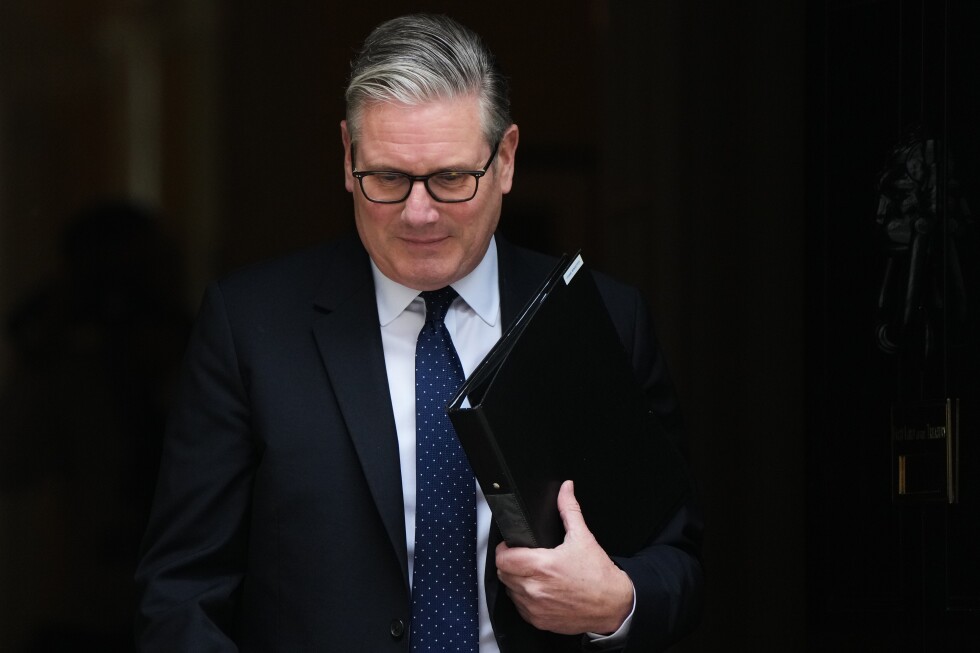
  • Starmer’s pick of Epstein ‘pal’ as top British envoy haunts prime minister

    Starmer’s pick of Epstein ‘pal’ as top British envoy haunts prime minister

    British Prime Minister Keir Starmer faces mounting political pressure following the disclosure of government documents revealing his deliberate appointment of Peter Mandelson as U.S. ambassador despite explicit warnings about the former minister’s connections to convicted sex offender Jeffrey Epstein.

    The nearly 150 pages of released documentation, representing merely a fraction of the anticipated thousands of pages yet to be made public, detail how Starmer overruled senior advisers who highlighted Mandelson’s ‘reputational risk’ factors. The vetting checklist prominently emphasized Mandelson’s friendship with Epstein—whom he reportedly called his ‘best pal’—and his controversial history in previous Labour governments, including two financial scandals that forced his resignation.

    Then-Cabinet Secretary Simon Case had cautioned that political appointments to diplomatic posts carried greater personal risk for the prime minister than traditional career diplomat selections. Starmer ultimately dismissed Mandelson in September when evidence emerged showing continued contact with Epstein after his 2008 conviction for sex crimes involving a minor.

    The prime minister now claims Mandelson misled him regarding the depth of their relationship, though released documents have yet to substantiate this assertion due to ongoing police investigations. Mandelson was briefly arrested last month on allegations of transmitting sensitive government information to Epstein over a decade ago, though he faces no sexual misconduct accusations and maintains his innocence.

    Legal experts suggest the document release represents merely ‘the thin end of the wedge,’ with subsequent batches likely to intensify scrutiny of Starmer’s judgment. Conservative leader Kemi Badenoch has accused the prime minister of lying to Parliament about the appointment process, while some Labour members have joined calls for his resignation.

    The escalating crisis has been partially overshadowed by Middle Eastern conflicts, with Starmer demonstrating cautious diplomacy regarding U.S.-Israeli military actions against Iran. His restrained approach, while criticized by some international partners, appears aligned with British public sentiment regarding limited involvement in foreign conflicts.

  • Morrissey calls off concert in Spain after local festivities deprived him of sleep

    Morrissey calls off concert in Spain after local festivities deprived him of sleep

    VALENCIA, Spain — British music icon Morrissey has abruptly called off his scheduled performance in Valencia, attributing the cancellation to severe sleep disruption caused by the city’s ongoing Las Fallas festival. The former frontman of The Smiths issued an official statement through his website on Thursday morning, just hours before the concert was set to commence.

    The declaration explained that Morrissey had undertaken an extensive two-day road journey from Milan, arriving in Valencia on Wednesday. However, his attempts to rest were repeatedly interrupted by festival activities that penetrated his hotel accommodations. The statement specifically referenced ‘loud techno singing’ and persistent ‘megaphone announcements’ that prevented adequate sleep, ultimately leaving the artist in what was described as a ‘catatonic state.’

    Notably, the communication emphasized that ‘the show is not canceled’ but rather ‘rendered impossible due to circumstances,’ creating ambiguity regarding potential rescheduling options and refund availability for ticket holders. This incident occurs during Morrissey’s promotional tour for his latest album ‘Make-up Is a Lie,’ marking his first studio release in six years and his fourteenth solo project since departing the influential 1980s band The Smiths.

    The Las Fallas festival, recognized by UNESCO as an intangible cultural heritage event in 2016, features vibrant street parties, pyrotechnic displays, and the ceremonial burning of elaborate papier-mâché sculptures. While celebrated as a purification ritual by cultural authorities, the festival’s auditory intensity has now unexpectedly impacted the city’s musical programming. Morrissey, known both for his musical legacy including hits like ‘How Soon Is Now?’ and his vocal animal rights activism—particularly against Spanish bullfighting—has added another chapter to his history of unpredictable concert occurrences.

  • International passenger train service links China, DPRK

    International passenger train service links China, DPRK

    A new chapter in Sino-Korean transportation commenced on Thursday as international passenger rail service officially resumed between Dandong, China and Pyongyang, North Korea. The inaugural departure marked a significant milestone in cross-border connectivity between the neighboring nations.

    The five-carriage train embarked on its maiden journey at 10:00 AM Beijing Time from the border city of Dandong, with scheduled arrival in the North Korean capital at 6:07 PM local time. The service establishes a reliable daily transportation link, with return trips from Pyongyang departing at 10:26 AM local time and reaching Dandong by 4:23 PM Beijing Time.

    Dandong Railway Station has undergone comprehensive preparations to accommodate international travelers. The facility now features bilingual displays in both Korean and Chinese throughout the international departure hall, including train schedules, electronic information screens, and service counters.

    Passenger excitement was palpable during the inaugural run. One North Korean traveler expressed enthusiasm about returning home via rail, having purchased her ticket immediately upon learning about the resumed service the previous day.

    Border authorities implemented streamlined procedures to ensure efficient operations. Song Ping, a representative from Dandong Exit-Entry Frontier Inspection Station, confirmed that specialized measures have reduced the entire train’s inspection process to under 30 minutes, significantly enhancing travel convenience.

    An executive from China State Railway Group’s international department emphasized the service’s broader significance, noting that this railway connection will function as both a crucial transit corridor for cross-border movement and a symbolic bridge reinforcing bilateral relations between China and North Korea.

  • US military ‘not ready’ to escort tankers through Hormuz Strait: energy secretary

    US military ‘not ready’ to escort tankers through Hormuz Strait: energy secretary

    U.S. Energy Secretary Chris Wright stated on Thursday that American military forces remain unprepared to provide naval escorts for oil tankers navigating the critical Strait of Hormuz, citing the full concentration of military assets on offensive operations against Iran. This declaration comes amidst escalating tensions following attacks on commercial vessels in the region that have triggered significant volatility in global oil markets.

    The ongoing military confrontation with Iran has created what the International Energy Agency characterizes as the most substantial supply disruption in the history of the global oil market. With approximately one-fifth of worldwide crude shipments typically passing through the strategically vital waterway, the effective shutdown of the Strait of Hormuz has propelled oil prices beyond the $100 per barrel threshold.

    President Donald Trump’s administration had previously committed to implementing protective escort services and reinsurance facilities for international shipping companies to stabilize energy markets. However, Secretary Wright clarified that these protective measures cannot be immediately implemented, explaining that all military resources are currently dedicated to neutralizing Iran’s offensive capabilities and the industrial infrastructure supporting them.

    Despite the current limitations, Wright expressed confidence that escort operations would likely commence before the conclusion of the month. His remarks followed a controversial social media post earlier this week that erroneously claimed escort missions had already begun, subsequently retracted by the White House.

    Confronting domestic political pressure over rising gasoline prices, President Trump emphasized through his Truth Social platform that preventing Iranian nuclear weapons development remains his paramount priority, outweighing concerns about energy costs. The administration simultaneously pursued multilateral solutions through the International Energy Agency, securing an unprecedented agreement to release 400 million barrels from strategic petroleum reserves.

    The United States committed 172 million barrels through a swap mechanism that anticipates replenishment of 200 million barrels to the Strategic Petroleum Reserve within one year. Concurrently, the administration granted temporary sanctions waivers for certain Russian oil shipments already en route to China, which Secretary Wright characterized as a pragmatic solution rather than sanctions relief for Moscow.

    These developments occurred alongside the first diplomatic contact between Russian and American officials since the conflict’s inception, with Kremlin envoy Kirill Dmitriev describing discussions as productive and noting Washington’s growing recognition of Russian oil’s significance to global market stability.

  • China plans 2026 pioneer satellite launch for low-latitude remote sensing constellation

    China plans 2026 pioneer satellite launch for low-latitude remote sensing constellation

    China is advancing its space technology capabilities with the development of the Wuyang Constellation, the nation’s first integrated remote sensing and communication satellite network specifically designed for low-latitude regions. According to the Institute of Aerospace Remote Sensing Innovations at Guangzhou University, the project will initiate its preliminary phase with the deployment of three pioneer satellites around 2026, with the inaugural launch scheduled for this year to test critical technologies and operational frameworks.

    The ambitious initiative, a collaborative effort between Guangzhou University, the Guangzhou Municipal People’s Government, and the State Information Center, targets comprehensive coverage between 35 degrees north and south latitude. This strategic positioning aligns with China’s Greater Bay Area development objectives while serving regions including Southeast Asia, Africa, and South America.

    Between 2026 and 2028, developers plan to expand the constellation with 25 application satellites capable of delivering daily full coverage of low-latitude zones with emergency response times under 30 minutes. The project’s ultimate vision involves establishing a commercial network of 1,008 satellites by approximately 2035, creating a real-time remote sensing system for global low-latitude monitoring.

    Professor Gu Xingfa, Chairman of the Chinese National Committee for Remote Sensing, revealed that the Wuyang Constellation will feature advanced high-resolution, wide-swath full-spectrum payloads. This technological sophistication will enable the creation of a ‘material fingerprint’ spectral database, essentially upgrading remote sensing capabilities from basic imagery to sophisticated physical measurement and analysis.

    The constellation’s deployment will occur in phases, gradually covering 15 southern Chinese provinces and 99 low-latitude countries and territories worldwide. The system promises to deliver ‘sense-while-you-send, use-while-you-get’ intelligent services specifically designed for disaster prevention, ecological monitoring, agricultural management, and resource conservation.

    Commercial participation is already underway, with over 20 core enterprises signing agreements to contribute to satellite development and data services. The project has established a dedicated commercial space innovation center to integrate research, incubation, application development, and investment opportunities. By 2030, organizers anticipate achieving more than 95% real-time remote sensing coverage in target regions while stimulating industrial investment exceeding 10 billion yuan (approximately $1.45 billion).