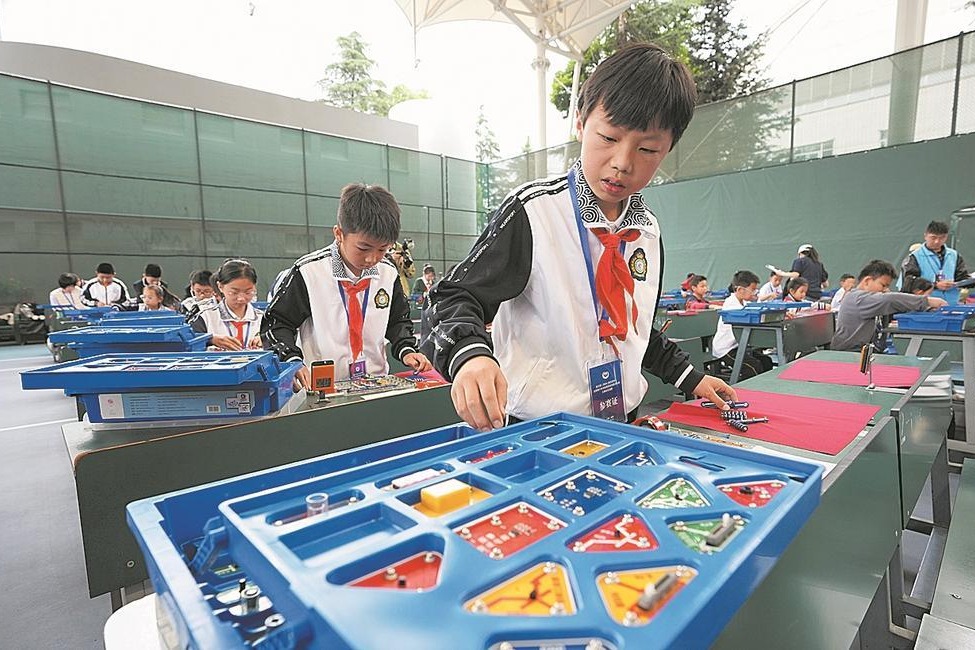
China has introduced a groundbreaking guideline aimed at bolstering science and technology education in primary and secondary schools. The initiative seeks to foster curiosity, creativity, and hands-on learning among students, laying the foundation for a self-reliant nation with a robust talent pool. By 2030, the plan envisions a well-structured system featuring an enhanced curriculum, superior teaching quality, and advanced evaluation methods. The Ministry of Education, along with six other departments, unveiled the guideline during a recent press conference. Tian Zuyin, Director of the Department of Basic Education, emphasized that this move aligns with the principles set forth at the fourth plenary session of the 20th Central Committee of the Communist Party of China, which stressed the importance of a coordinated education and science system. The guideline outlines specific objectives for different educational stages. Lower primary students will engage in playful, life-oriented activities to spark curiosity, while senior primary students will undertake hands-on experiments and project-based tasks. Middle school students will tackle cross-disciplinary projects addressing real-world issues, and high school students will explore cutting-edge scientific advancements and conduct experimental research. The plan also advocates for the integration of scientific and humanistic education, encouraging students to consider the societal, environmental, and ethical implications of technological progress. Assessment methods will be diversified to reduce reliance on examinations, thereby alleviating the burden on teachers and students. The establishment of the UNESCO International Institute for STEM Education in Shanghai underscores international recognition of China’s efforts in this domain. Provinces like Zhejiang, Jiangsu, and Chongqing have already taken proactive steps, incorporating technology into curricula and investing in science labs. With over 1,150 science museums and numerous national science education bases, China is well-positioned to cultivate the next generation of innovators. Xu Xuejun, Vice-President of Tongji University, highlighted the importance of early education in building a strong foundation for long-term scientific and technological advancement.
作者: admin
-

Singles Day success offers lessons for US businesses
The unprecedented success of China’s Singles Day, the world’s largest retail festival, has sparked a call for US businesses to explore the untapped potential of the solo economy. Originally conceived as a playful counter to Valentine’s Day, Singles Day, celebrated on November 11, has evolved into a global shopping extravaganza, generating $202 billion in sales last year. This year, Chinese e-commerce giants like Alibaba and JD.com extended the event from October 9 to November 11, leveraging AI to enhance efficiency, personalize recommendations, and provide real-time assistance. Remarkable sales figures included Apple’s Tmall store selling more iPhones in the first two hours than it did in an entire day the previous year, and JD.com reporting a 300 percent surge in apparel imports within five days. Peter McGraw, a marketing and psychology professor at the University of Colorado Boulder, emphasizes the rising singles population in the US, which constitutes nearly half of the adult population, and the emerging ‘solo economy.’ He argues that the US could benefit from a similar event, though cultural and timing challenges, such as Veterans Day on November 11, pose significant obstacles. McGraw suggests that a US version might require a new date, like November 1, and an ’emotional hook’ to resonate with consumers. He also highlights the broader lesson for US companies: singles represent a fast-growing and diverse consumer segment with significant commercial opportunities. Frank Calvino, an editor at Cross-Border Magazine, views Double 11 as a reflection of China’s consumer culture and a strategic opportunity for global brands. Despite the growing presence of international brands on Chinese e-commerce platforms, US consumer awareness of Singles Day remains low, with less than 20 percent of US consumers aware of the event, according to a recent survey.
-
Arrival of vessel sparks fears of strike in Venezuela
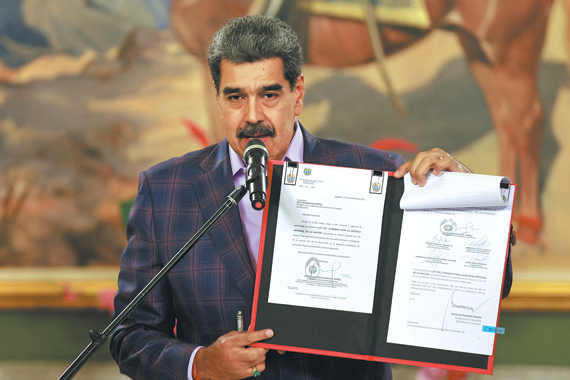
The arrival of the USS Gerald R. Ford, the world’s largest aircraft carrier, in Latin America has heightened military tensions in the region, sparking fears of a potential conflict with Venezuela. The vessel, part of a US Naval Forces Southern Command deployment, entered the area on Tuesday, following orders issued nearly three weeks ago to combat drug trafficking. However, Venezuelan President Nicolas Maduro has accused the US of fabricating a pretext for war, vowing that Venezuela is prepared to defend its sovereignty. Maduro emphasized the nation’s readiness for an armed struggle to protect its legacy. The US has conducted strikes on approximately 20 vessels in international waters since early September, resulting in at least 76 fatalities. While Washington claims these actions target drug traffickers, no evidence has been provided to substantiate these claims. Human rights experts have condemned the strikes as extrajudicial killings. In response, Colombia’s President Gustavo Petro has suspended intelligence sharing with the US, a decision he announced on X, stating it would remain in effect as long as the missile attacks continue. Similarly, the UK has reportedly ceased intelligence cooperation with the US on suspected drug-trafficking vessels in the Caribbean, citing concerns over the legality of the strikes. A spokesperson for UK Prime Minister Keir Starmer declined to comment on the matter, reiterating the government’s policy of not discussing security or intelligence issues. The escalating military presence and actions in the region have raised alarms over the potential for a broader conflict.
-
Cambodia evacuates a village on disputed border with Thailand as tensions rise
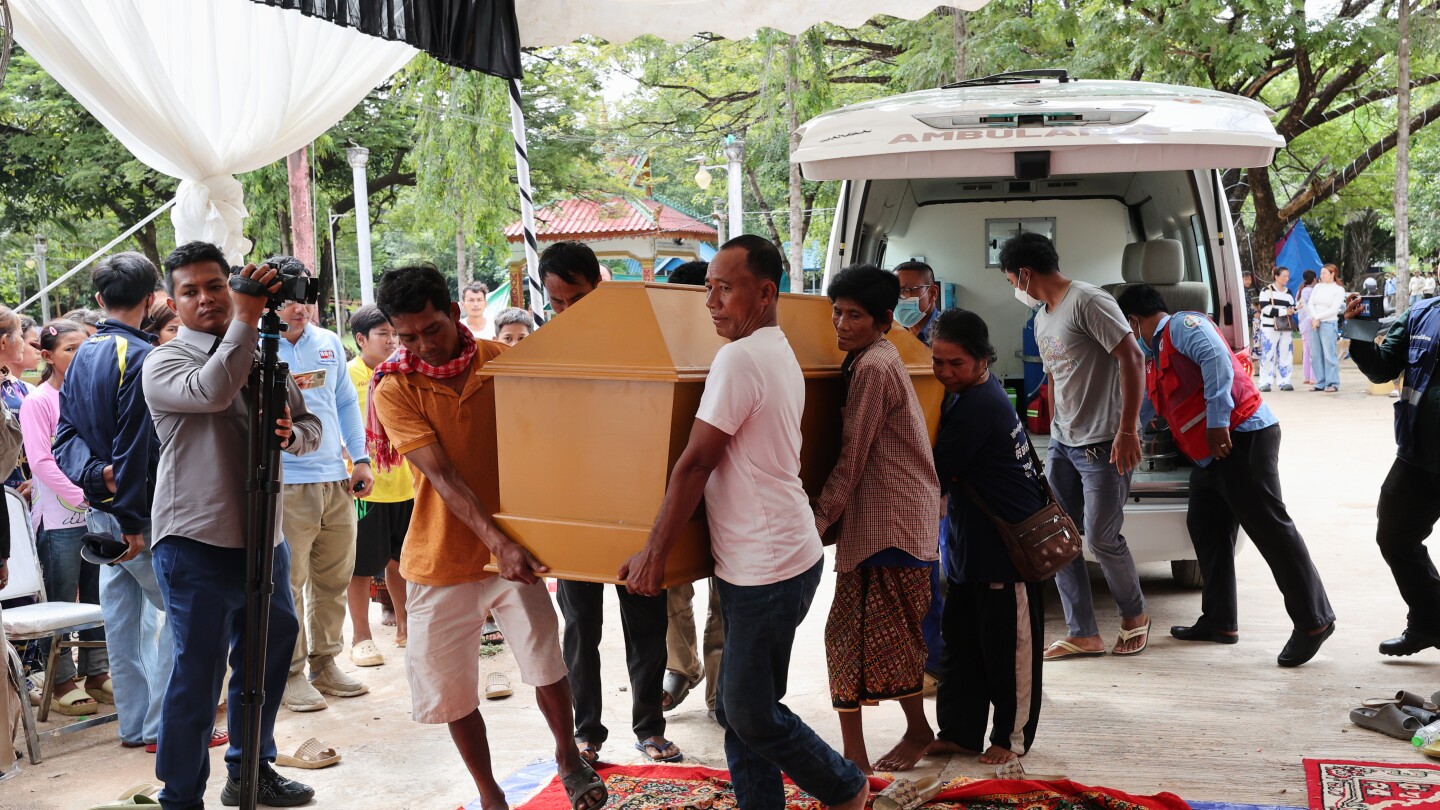
Cambodia has evacuated hundreds of residents from a village near its disputed border with Thailand following a deadly shooting incident that has reignited long-standing tensions between the two nations. The evacuation occurred on Thursday, a day after a Cambodian villager, Dy Nai, was reportedly killed and three others were wounded in the crossfire. The incident took place in Prey Chan village, located in Cambodia’s northwestern province of Banteay Meanchey, with approximately 250 families relocated to a Buddhist temple 30 kilometers from the border. Provincial Vice Governor Ly Sovannarith confirmed the evacuation. The shooting marks the latest escalation in a series of conflicts that have plagued the border region. Earlier this week, a Thai soldier lost a foot to a land mine explosion while patrolling the area, prompting Thailand to accuse Cambodia of violating a ceasefire agreement brokered in October. Thailand has since suspended its adherence to the truce and demanded an apology and investigation from Cambodia. Cambodian Prime Minister Hun Manet called for an independent probe into the shooting, accusing Thai forces of provocative actions aimed at instigating confrontations. Meanwhile, Thailand’s army spokesperson, Maj. Gen. Winthai Suvaree, denied Cambodia’s claims, stating that Thai forces only fired warning shots in response to Cambodian gunfire. The border dispute between the two nations dates back centuries, with competing territorial claims rooted in a 1907 map drawn during Cambodia’s French colonial rule. The International Court of Justice awarded sovereignty of the Preah Vihear temple to Cambodia in 1962, a decision that continues to fuel Thai resentment. The October ceasefire agreement failed to address the underlying causes of the conflict, leaving the region vulnerable to further violence.
-
Suicide bombing in Pakistan kills 12
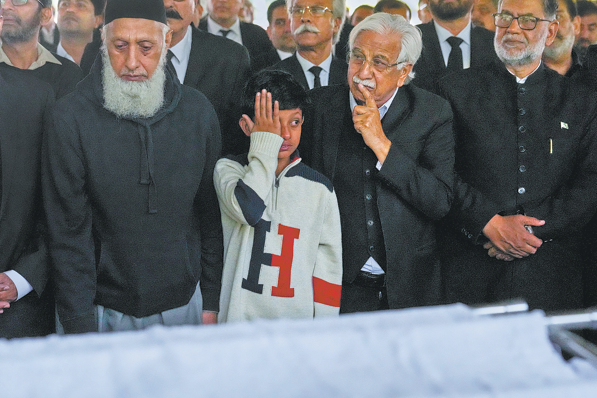
A devastating suicide bombing outside the District Judicial Complex in Islamabad, Pakistan, on Tuesday afternoon resulted in the deaths of at least 12 individuals, according to Interior Minister Mohsin Naqvi. The attack occurred at 12:39 pm when the assailant, unable to breach the court premises, detonated explosives outside the building. Initial investigations suggest a possible connection to a recent incident in Khyber Pakhtunkhwa Province. Naqvi emphasized that identifying the perpetrator, whether local or foreign, is a top priority, vowing that those responsible will face justice. The banned militant group Tehreek-i-Taliban Pakistan (TTP) claimed responsibility for the attack, threatening further violence, though conflicting reports emerged as a breakaway faction, Jamaat-ul-Ahrar, also claimed involvement before retracting the statement. The blast caused significant damage to nearby vehicles and instilled widespread panic among bystanders. Forensic teams and police have cordoned off the area to gather evidence, while grieving families mourned their loved ones at an Islamabad hospital. The Islamabad Bar Council condemned the attack, declaring a three-day strike and urging enhanced security measures for the legal community and citizens. President Asif Ali Zardari and Prime Minister Shehbaz Sharif denounced the act as a cowardly terrorist attack, extending condolences to the victims’ families and demanding a swift investigation. Pakistan has accused the Pakistani Taliban and other militants of operating from Afghanistan with Indian support, allegations both Kabul and New Delhi have denied. The Taliban administration in Kabul expressed sorrow over the incident but refuted claims of harboring attackers.
-
Japanese students obtain firsthand insight in China
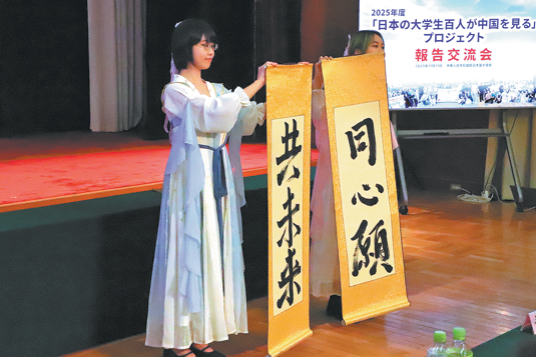
A group of Japanese students who participated in an exchange program to China shared their transformative experiences at an event in Tokyo on Tuesday. The program, titled ‘100 Japanese University Students Visiting China,’ provided participants with a unique opportunity to explore China’s cultural heritage, technological advancements, and urban modernization. Koharu Hayakawa, a student from Chuo University, spent a year studying in Tianjin and was particularly struck by China’s ability to balance modernization with the preservation of its cultural identity. During visits to Hongcun and Xidi villages in Anhui province, Hayakawa observed that these popular tourist destinations maintained a strong sense of everyday life, dispelling his earlier assumptions of over-commercialization. He also noted regional differences in lifestyle, cuisine, and technology use, which deepened his appreciation for China’s diversity. The program included trips to Anhui and Henan provinces, where students explored Mount Huangshan, Huizhou culture, and innovative companies like Mixue Ice Cream and Tea. Reiji Nomachi, a student at Nihon University, was impressed by China’s rapid technological advancements, particularly in the electric vehicle sector. He highlighted the affordability, fast-charging capabilities, and longevity of Chinese EVs, noting that China’s adoption of this technology far surpasses that of Japan. Both Hayakawa and Nomachi emphasized the importance of firsthand experience in understanding China, encouraging others to share their experiences to foster friendly relations between Japan and China. Otohiko Endo, head of the Japan-China New Century Association, stressed the need for fresh and creative perspectives in youth exchanges, urging young people to face differences bravely and turn brief encounters into lasting relationships. Zhao Baogang, minister counselor at the Chinese embassy in Tokyo, underscored the significance of firsthand experience, especially in light of the 80th anniversary of the victory in the Chinese People’s War of Resistance Against Japanese Aggression. Despite media speculation about ‘anti-Japanese sentiment,’ students encountered genuine warmth and friendliness from the Chinese people. Sun Ran, editor-in-chief of Live Japan and head of the visiting delegation, announced the establishment of a youth friendship association to provide a long-term platform for continued exchange and mutual understanding.
-
Summit offers Africa chance to redefine role
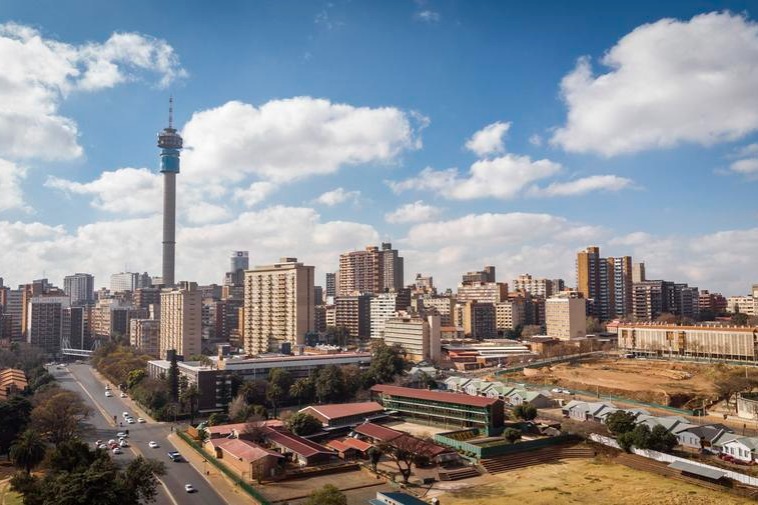
The upcoming G20 summit in Johannesburg, South Africa, marks a pivotal moment for Africa to redefine its role in the global economy. Analysts emphasize that the continent must leverage this platform to advocate for fair trade, industrial transformation, and stable market access. Amid a turbulent global trade system, Africa faces challenges such as rising protectionism and uncertainty over the renewal of the African Growth and Opportunity Act (AGOA), which has historically granted tariff-free access to the US market for sub-Saharan countries since 2000. The US’s recent imposition of reciprocal tariffs on key African exports, including South Africa’s auto, wine, and citrus industries, has further exacerbated concerns. Trade experts warn that these tariffs, ranging from 10 to 50 percent, threaten industries, jobs, and rural incomes across the continent. Despite these challenges, African leaders remain optimistic about constructive engagement with the US to safeguard historical trade ties. South Africa’s Minister of International Relations, Ronald Lamola, has described ongoing trade talks as ‘very positive,’ with hopes for AGOA’s renewal by year-end. The G20 summit also offers Africa a unique opportunity to advocate for stable, rules-based economic agreements and to strengthen regional integration through the African Continental Free Trade Area (AfCFTA). Experts urge African leaders to use this platform to demand fair competition, discourage unilateral tariff actions, and promote long-term trade stability. As Africa hosts its first G20 summit, the continent stands at a crossroads, with the potential to shape the global economic agenda and secure its rightful place at the decision-making table.
-
Retired medical workers urged to support seniors
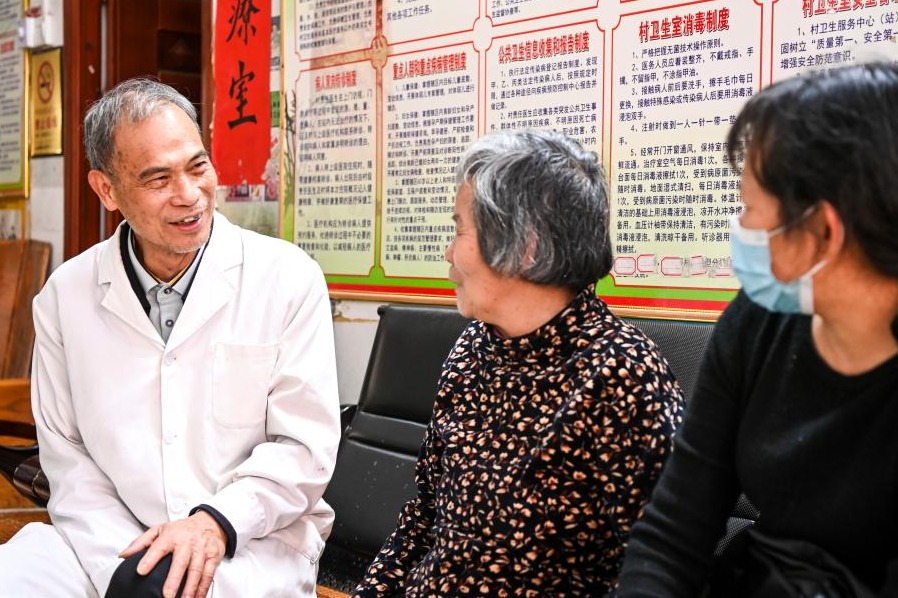
In response to the escalating demands of an aging population, Chinese authorities have introduced a nationwide initiative to engage retired medical workers in integrated medical and elderly care institutions. This program, spearheaded by the National Health Commission and four other government bodies, aims to leverage the expertise of retired professionals to enhance the quality of care for seniors. Ten provincial-level regions, including Beijing, Chongqing, Hebei, Jilin, and Jiangsu, have been selected as pilot zones to develop scalable models for nationwide implementation. The initiative operates on a voluntary basis, allowing retired doctors, nurses, pharmacists, technicians, and administrative staff to contribute their skills in areas such as diagnosis, rehabilitation, nursing, and mental health support. With China’s elderly population surpassing 310 million in 2024, accounting for 22% of the total population, the integration of medical and elderly care has become a critical strategy. The program also encourages partnerships between care facilities and local hospitals, particularly those specializing in geriatric medicine, rehabilitation, and hospice care. Retired professionals will be offered flexible working hours, competitive remuneration, and additional benefits, ensuring their rights and well-being are protected. The initiative not only addresses the growing care needs but also provides retirees with meaningful opportunities to remain active in their field. Wei Qingzhuo, a retired medical professional from Shandong province, shared his positive experience working at a private elderly care center in Beijing, highlighting the convenience and harmonious work environment. By 2027, authorities aim to establish at least one integrated medical and elderly care institution in every county-level region, marking a significant step forward in addressing China’s demographic challenges.
-

US calls for international action to cut weapons supply to Sudan paramilitaries
US Secretary of State Marco Rubio has urgently called for international intervention to sever weapons supplies to Sudan’s paramilitary Rapid Support Forces (RSF), following reports of widespread atrocities in el-Fasher. Speaking at the conclusion of a G7 foreign ministers’ meeting in Canada, Rubio detailed systematic crimes committed by the RSF, including murder, rape, and sexual violence against civilians. Sudan’s military has accused the United Arab Emirates (UAE) of arming the RSF and sending mercenaries through African nations, allegations the UAE has consistently denied. The RSF, engaged in a civil war with Sudan’s army since April 2023, recently captured el-Fasher after an 18-month siege, gaining control over all major cities in the western Darfur region. Rubio emphasized that women and children have been primary targets of the RSF’s brutal actions, describing the atrocities as ‘horrifying’ and demanding an immediate end to the violence. He urged partner nations to join the US in addressing the crisis and dismissed the RSF’s claims that rogue elements were responsible for the killings, asserting that the attacks were systematic. Rubio also expressed concerns that thousands of civilians expected to flee el-Fasher may have perished or are too malnourished to escape. Highlighting the RSF’s reliance on external arms supplies, he called on weapon-providing countries to cease their support. The G7 joint statement condemned the escalating violence in Sudan, labeling the conflict as the ‘world’s largest humanitarian crisis.’
-
Games mascots steal the spotlight with their athletic fin-esse
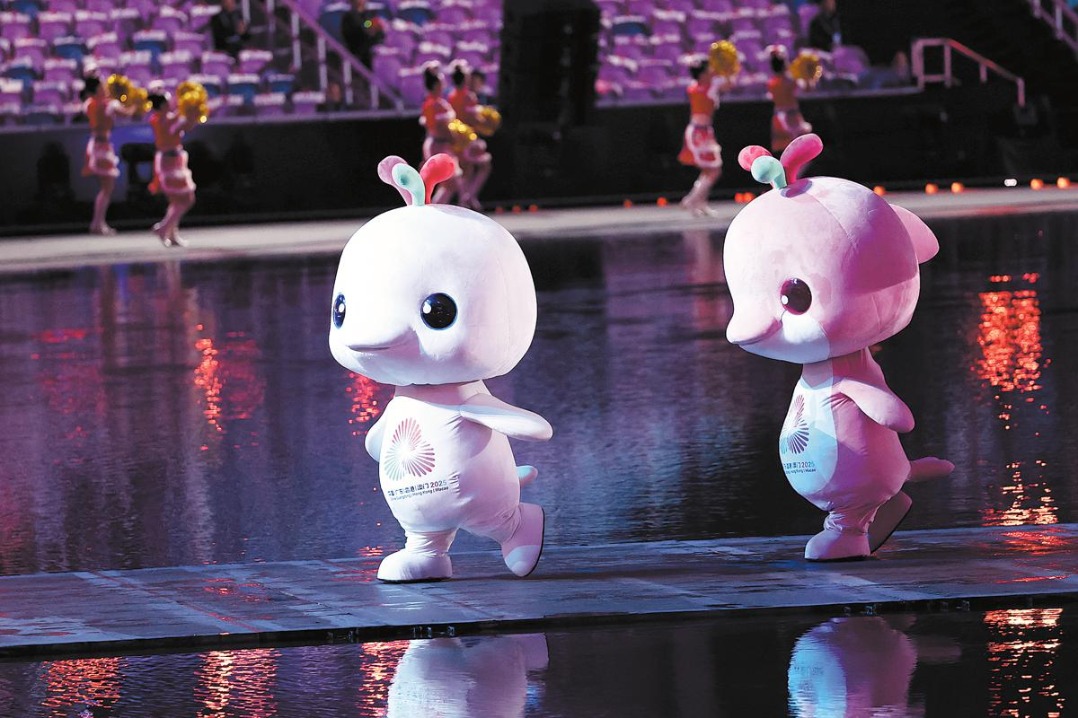
The 15th National Games has witnessed an unexpected phenomenon as the mascots, Xi Yangyang and Le Rongrong, inspired by the Chinese white dolphin, have captured the hearts of audiences across the three host regions. Designed by Liu Pingyun, the creative mind behind the Beijing Winter Olympics’ Bing Dwen Dwen, these mascots showcase a significant evolution in athletic expressiveness. Unlike Bing Dwen Dwen’s limited mobility, Xi Yangyang and Le Rongrong feature a two-heads-tall proportion, enabling smoother and more dynamic movements. This design enhancement not only allows for versatile graphic depictions of various sports but also provides live performers inside the costumes with greater flexibility. Their energetic performances, including break dancing, rapid tail spins, and headstands, have electrified venues like the Dongguan Basketball Center, driving the crowd into a frenzy of cheers. Social media has been ablaze with viral videos and memes of their antics, with many hailing them as the most energetic mascots ever seen. The performers, a group of 23 martial artists from the Foshan Huangfeihong International Martial Arts School, were selected for their physical prowess, discipline, and teamwork. Their rigorous training since late July has paid off, bringing the mascots to life with natural and lively portrayals. The Chinese white dolphin, the mascots’ biological inspiration, carries profound symbolic meaning. Known as the ‘giant panda of the sea,’ it represents the maritime culture of the Guangdong-Hong Kong-Macao Greater Bay Area and embodies unity, perseverance, and endeavor. The dolphins’ annual return to the Pearl River Estuary symbolizes a deep connection to their homeland, reflecting the strong bonds among the people of Guangdong, Hong Kong, and Macao. This symbolism is particularly relevant given the Games’ historic joint hosting, marking a new era of regional cooperation. Liu Pingyun emphasized the challenge of transforming the unfamiliar marine creature into approachable, engaging characters. The final design features rounded bodies, human-like limbs, and distinctive blue, green, and yellow adornments atop their heads, representing water spraying from their blowholes. Despite their design, the mascots have sparked a wave of online humor, with many affectionately dubbing them the ‘great bay chickens,’ a nod to Cantonese cuisine and culture. This grassroots rebranding has made the mascots more approachable, drawing people in and helping them connect more deeply with the cultural and athletic spirit they represent.