
In a dramatic escalation of tensions between the United States and Iran in the Persian Gulf, former US President Donald Trump has announced that American naval forces have intercepted and seized an Iranian-flagged ship attempting to enter the strategic waterway as part of a newly implemented naval blockade. The confirmation of the seizure came via a post on Trump’s own social media platform, Truth Social, where he detailed the sequence of events. According to Trump’s account, the vessel ignored multiple radio warnings from the US Navy to halt its progress, prompting US naval personnel to move in and take control of the ship. This incident marks the first seizure of an Iranian ship since the United States formally launched its blockade of Iranian ports in the region, breaking previous weeks of relatively limited confrontation along key maritime trade routes. The Iranian government has swiftly condemned the action, labeling it a clear violation of an existing ceasefire agreement between the two nations. Iranian officials have characterized the seizure as an “act of armed piracy” and have issued a formal warning that Tehran will carry out retaliatory measures in the near future in response to what it calls an unprovoked act of aggression against its sovereign maritime rights. The confrontation has sent immediate ripple effects across global security circles, with observers warning that the incident could reignite broader instability in the already volatile Middle East, a region that remains central to global energy supplies and international maritime trade.
作者: admin
-
Doubts cast on fresh US-Iran talks
Tensions between the United States and Iran have spiked dramatically following a violent naval confrontation near the Strait of Hormuz, throwing a fragile two-week ceasefire into jeopardy and casting deep uncertainty over plans for a new round of diplomatic negotiations set to kick off this week. The escalation, which unfolded over the weekend, has sent global oil markets climbing and raised fears that the two nations will return to open conflict that has already claimed thousands of lives.
On Sunday, US President Donald Trump confirmed that a US Navy guided-missile destroyer operating in the Gulf of Oman intercepted the Iranian cargo vessel *Touska*, damaging the ship’s engine room before US Marines seized control of the craft. The operation marks the first publicly acknowledged interception of an Iranian commercial ship since Washington imposed a naval blockade on Iranian ports just one week ago.
Iran quickly condemned the seizure as an act of “armed piracy” and launched immediate retaliation, deploying drones to strike US military vessels in the region, according to recent official statements. The clash comes just 48 hours before the existing ceasefire, which has held for two weeks, is scheduled to expire on Wednesday.
In the wake of the confrontation, Iranian Foreign Ministry spokesman Esmail Baghaei announced Monday that Tehran has no immediate plans to participate in new talks with Washington. Though he stopped short of closing the door on future diplomacy entirely, Baghaei harshly criticized the US for violating the terms of the existing truce, pointing to the cargo ship seizure, the ongoing naval blockade, and repeated delays in implementing a parallel ceasefire in Lebanon as clear proof that Washington is not serious about diplomatic progress.
The incident is not the only factor derailing negotiations. Ahead of the Hormuz clash, Trump had announced that US negotiators, led by Vice-President JD Vance, planned to travel to Islamabad, Pakistan—host of the first, inconclusive round of talks—on Monday. Just days earlier, Trump issued a stark threat: if Iran rejected US negotiating terms, the US would destroy every bridge and power plant across Iranian territory. Iran responded with its own vow to retaliate against power stations and desalination plants in Gulf nations that host US military bases if any of Iran’s civilian infrastructure comes under attack.
Despite the recent escalation, there remains mixed messaging from Tehran over the future of talks. Ebrahim Azizi, a prominent member of the Iranian Parliament, told Al Jazeera Monday that Iran is still willing to proceed with negotiations, but has set non-negotiable red lines that Washington must respect. Any final decision to send an Iranian delegation to Islamabad, Azizi added, is contingent on Washington delivering clear, positive signals that it is prepared to respect Iran’s core demands.
The breakdown in trust has already had tangible global economic impacts. In early trading on Monday, international benchmark Brent crude climbed to roughly $95 per barrel, a more than 30% increase from the price recorded when the current round of US-Iran fighting began. Iranian First Vice-President Mohammad Reza Aref emphasized the stakes of the standoff in a social media post Monday, noting that “The security of the Strait of Hormuz is not free. The choice is clear: Either a free oil market for all, or the risk of significant costs for everyone.” Aref added that stable global fuel prices can only be secured through a permanent, guaranteed end to all economic and military pressure on Iran and its regional allies.
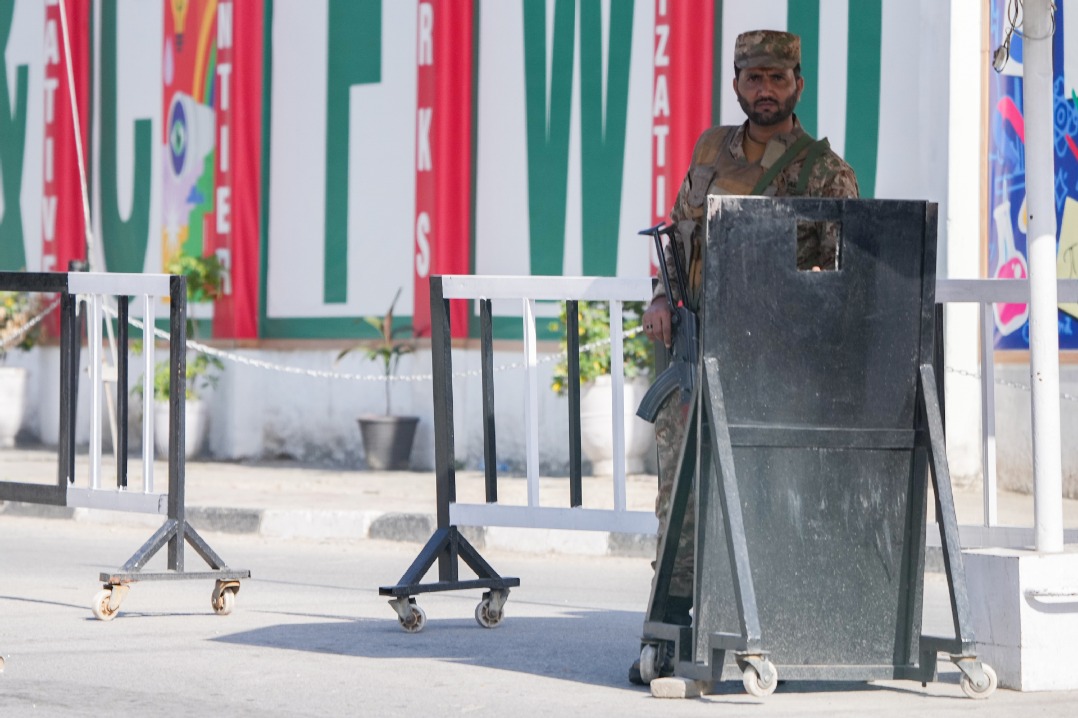
Regional mediators led by Pakistan, which has taken on the role of host for the talks, have ramped up diplomatic efforts to de-escalate tensions and get negotiations back on track. On Sunday, Pakistani Prime Minister Shehbaz Sharif held a 45-minute phone call with Iranian President Masoud Pezeshkian, updating the Iranian leader on recent consultations with leaders from Saudi Arabia, Qatar, and Turkiye. Sharif stressed that sustained regional diplomacy is critical to building consensus for a lasting peace between Washington and Tehran. In preparation for potential talks, Pakistani authorities have placed the capital city of Islamabad on high security alert, deploying nearly 20,000 personnel from police, paramilitary forces, and the regular army to secure the venue and surrounding areas, according to unnamed police sources.
Beyond the immediate standoff over the Strait of Hormuz and the naval blockade, the long-disputed Iranian nuclear program remains a core point of contention between the two sides. Last Friday, Trump said the US was prepared to reach a deal with Iran to remove Tehran’s enriched uranium stockpile. CNN, citing anonymous informed sources, reported that Washington is offering to unfreeze $20 billion in Iranian assets held abroad in exchange for Tehran handing over its entire enriched uranium stockpile. But Iranian Deputy Foreign Minister Saeed Khatibzadeh has already rejected the proposal outright, calling it “impossible”.
Foreign policy analysts warn that a quick, comprehensive resolution to the decades-long standoff is out of reach, even if talks do resume. Alex Vatanka, a senior fellow at the Middle East Institute, noted that military action cannot secure open navigation through the Strait of Hormuz, nor can it resolve the US’ concerns over Iran’s nuclear program. “The idea of a grand bargain in the short term is impossible to achieve,” Vatanka told Al Jazeera. “The best you can do is some kind of agreement of a basic framework. And then you have to go and quickly build on it. It will take at least months, if not years.”
The current impasse threatens to push the two countries back into full-scale conflict, which has already killed at least 3,300 people in Iran and 13 US service members, while deepening a global energy crisis.
-

Blue Origin rocket grounded after satellite ‘mishap’
Blue Origin, the private space exploration firm founded by Amazon billionaire Jeff Bezos, has been forced to ground its flagship New Glenn rocket following a botched satellite launch that has triggered a formal investigation overseen by U.S. aviation regulators. The incident, which unfolded Sunday during only the third operational flight of the next-generation heavy-lift rocket, saw the vehicle fail to deliver an AST SpaceMobile communications satellite to its targeted low Earth orbit, rendering the $insured payload completely unusable.
In public comments following the failure, Blue Origin CEO Dave Limp confirmed that the root cause of the malfunction traces to insufficient thrust generated by one of the rocket’s engines. “We clearly didn’t deliver the mission our customer wanted, and our team expects,” Limp acknowledged, adding that the company is already working through a root-cause analysis to identify necessary fixes. The U.S. Federal Aviation Administration (FAA), which regulates commercial space launch activities in the United States, has formally required Blue Origin to lead a full mishap investigation, with regulators overseeing every stage of the process.
“The FAA will oversee the Blue Origin-led investigation, be involved in every step of the process and approve Blue Origin’s final report, including any corrective actions,” an agency spokesperson confirmed. No timeline for the completion of the probe has been released, and the FAA noted that it will make a final determination on when New Glenn can return to active launch operations only after reviewing the investigation findings and approving any planned corrective changes. Limp expressed confidence that the company would address the issue quickly, stating that the investigation would allow the team to “learn from the data and implement the improvements needed to quickly return to flight operations.”
Market reaction to the launch failure was immediate: AST SpaceMobile, the company that owned the lost satellite, saw its share price drop more than 6% in trading on Monday. While AST confirmed that the financial loss from the destroyed payload would be covered by insurance, the firm declined to disclose the exact value of the lost asset. The satellite was intended to expand global mobile phone connectivity, a fast-growing segment of the satellite industry that has drawn investment from some of the world’s largest technology firms.
The failed launch comes at a critical moment for Blue Origin, which had already lined up a dozen New Glenn launches for the remainder of 2025, including its own upcoming TerraWave project that plans to deploy thousands of connectivity satellites to low Earth orbit. Blue Origin is not the only Amazon-linked firm expanding into this space: Amazon itself recently closed an $11 billion acquisition of a satellite manufacturer and operator to advance its competing Project Leo, which aims to build out a large low Earth orbit connectivity constellation.
Both Blue Origin and Amazon currently find themselves playing catch-up to SpaceX’s Starlink network, founded by billionaire Elon Musk. Starlink already operates thousands of functional connectivity satellites in orbit, providing global internet access to consumers and businesses even in remote, hard-to-reach regions of the world. Starlink has become one of SpaceX’s most profitable business segments, and the company is widely expected to hold its initial public offering later this year in what market analysts predict could become one of the largest public listings in history.
-

China tightens supervision of addictive drugs to curb abuse
In a targeted move to rein in the misuse of controlled pharmaceutical substances, Chinese authorities announced sweeping new regulatory measures for two high-risk addictive drugs on Monday, April 20, 2026. The updated rules, jointly issued by the National Medical Products Administration, the Ministry of Public Security, and the National Narcotics Control Commission, apply to oral pregabalin and all compound medications containing guaifenesin, establishing end-to-end oversight across every segment of the two products’ industrial supply chains.
Starting with the source of production, provincial drug regulatory bodies are now mandated to enforce rigid production quotas for the two substances, a policy designed to cut off excess supply that could be diverted for illicit abuse. Digital sales channels face an outright ban: the circular explicitly prohibits online retail of these medications, as well as any unlicensed offline sales through unapproved vendors.
For brick-and-mortar retail pharmacies, a series of strict operating requirements have been put in place to secure access to the drugs. All eligible stocks must be stored in locked, designated cabinets managed by specially assigned staff, and dispensing can only proceed when a customer presents a valid, official medical prescription. Pharmacies are required to log full, detailed transaction records covering every sale, including the drug’s name, dosage specifications, total quantity sold, manufacturer information, batch number, purchase date, and the buyer’s full name and government-issued identification number. All prescriptions must also be retained on file for regulatory inspection.
For formulations that were previously available over the counter, the new rules cap single-transaction sales at a maximum of five minimum packaging units to reduce the risk of bulk diversion. Sales to any minor are strictly prohibited under all circumstances. If pharmacy staff or licensed pharmacists identify suspicious purchasing behavior—such as repeated bulk purchases or inconsistent prescription documentation—they are required to immediately deny the sale and report the incident to local law enforcement and drug regulators.
To boost oversight transparency and responsiveness, the circular also mandates the rollout of a full-chain digital traceability system that tracks every unit of the two medications from factory to end consumer. This system will be paired with expanded drug abuse monitoring and early warning infrastructure across all levels of regulation. Provincial regulators are required to add oral pregabalin and guaifenesin-containing compounds to their priority drug abuse monitoring rosters, and any emerging signs of clustered, regionally concentrated abuse or growing misuse trends must be investigated immediately and reported to the national drug regulator for coordinated response.
-

Tianjin surgeon impresses foreign delegation with 40-minute procedure
During a recent international medical exchange visit hosted by Tianjin Hospital, a senior Chinese orthopedic surgeon has drawn widespread praise from a visiting delegation of orthopedic specialists from Malaysia, Jordan, and Armenia after completing a highly complex shoulder procedure in less than an hour.
Cao Jiangang, director of the hospital’s Department of Sports Injuries and Arthroscopy, performed an arthroscopic suture repair to treat a massive rotator cuff tear — a procedure that requires extreme precision and years of specialized training — in just 40 minutes, all while being closely observed by the international visiting team.
The speed of the operation came as a major surprise to many delegates. Qutibeh Abdelqader Ahmed Darwish, a member of the Jordan Sports Medicine Federation and medical supervisor for Jordan’s national sports team, noted that a comparable procedure in his home country would usually take more than three hours to complete. He attributed the remarkable efficiency to two key factors: seamless coordination across the entire surgical team and access to cutting-edge surgical instruments that streamline complex steps of the operation. Darwish added that beyond the impressive speed, the procedure delivered exceptional technical outcomes and aligns fully with the highest leading international standards for orthopedic care, with a documented high long-term success rate for this approach at Tianjin Hospital.
Johan Ahmad, a consultant orthopedic surgeon from Malaysia’s KPJ Damansara Specialist Hospital, also highlighted the institutional strengths that enabled the successful, efficient procedure. He pointed to Tianjin Hospital’s rigorous, detailed preoperative planning process, where multidisciplinary medical teams collaborate closely to combine clinical assessments and advanced imaging to pinpoint the exact location and severity of lesions before entering the operating room. The hospital also maintains clear contingency protocols to address any unexpected complications that may arise during surgery, a practice Ahmad called a model for standardized care. Following the demonstration, Ahmad announced that he plans to send trainee doctors from his facility to Tianjin Hospital to receive hands-on training in these advanced techniques.
Xu Weiguo, Party secretary of Tianjin Hospital, emphasized that the institution has long prioritized open international medical collaboration. He said the hospital welcomes medical professionals from across the globe to exchange knowledge, with the goal of sharing advanced orthopedic techniques, China’s prevention-focused approach to sports rehabilitation, and insights from the country’s public healthcare system with the international medical community.
The demonstration, held in mid-April 2026, marks another milestone in China’s growing engagement with global healthcare networks, showcasing the maturity of specialized surgical care developed in leading Chinese medical centers.
-

Forum explores integration of copyright protection with accessible reading services
A high-level national forum focused on reconciling robust copyright protection with expanded accessible reading services kicked off Monday in Nanchang, the capital of east China’s Jiangxi Province. The convening brought together policymakers, disability advocacy leaders and cultural officials to advance a core goal: making reading rights more inclusive for marginalized groups and lifting the quality of China’s nationwide public reading initiatives.Organized jointly by the Publicity Department of the Communist Party of China Central Committee and the China Disabled Persons’ Federation, the forum framed the protection of reading access for people with disabilities as a foundational pillar of China’s people-centered development approach. Beyond advancing cultural inclusion, attendees emphasized that guaranteeing equal reading access is a critical step toward upholding broader societal fairness and justice.A key highlight of the discussions was the landmark national regulation on promoting public reading, which entered into force across China in February 2026. The policy centers on closing gaps in reading resources across different population groups, prioritizing the protection of reading rights for vulnerable key demographics, and includes explicit, targeted provisions to expand accessible formats and uphold reading access for people with disabilities.As authorities work to build out a comprehensive national accessible reading ecosystem aligned with the new regulation, forum participants called for scaled-up investment in technology-driven copyright management. Leveraging digital innovation to both strengthen copyright protection and streamline authorized access to accessible reading materials, they argue, will allow service providers to deliver far more convenient, affordable reading options for people with disabilities.In addition to domestic policy and infrastructure priorities, forum organizers also committed to deepening international exchanges and cooperation on accessible reading initiatives. The move is designed to share China’s progress in advancing cultural inclusion and collaborative problem-solving on equitable access to information with the global community.
-

AFL 2026: Collingwood gun Nick Daicos speaks on his role resting as a forward
AFL superstar Nick Daicos of Collingwood has cemented his status as one of the league’s most dynamic young talents after a match-winning standout performance against Carlton, and he’s now pushing to retain his flexible dual-position role that draws direct advice from his football royalty father Peter Daicos.
In a tense Thursday night clash, Daicos turned the tide of the game in a spectacular final-quarter comeback that lifted the Magpies to a narrow five-point win over the Blues. While primarily a starting midfielder, Daicos spent stretches of the decisive final term resting inside Collingwood’s 50-metre arc as a forward, a tactical shift that paid immediate dividends for his side. He notched one goal from his own boot as a midfielder, and played a critical role in setting up two more majors to spark the Magpies’ late comeback.
For Daicos, experimenting with the forward role is more than just a tactical adjustment: it’s a chance to put guidance from his father, legendary AFL forward Peter Daicos, into real-game practice. “I love playing up forward and I think it gives us a different look as a team,” Daicos told reporters post-game. “It also allows more players to roll through the midfield for us. We’ve got so many strong midfielders. Being a dynamic team, players switching positions, it works in our favour and whatever the coach thinks, wherever he thinks my best position, I’m happy to play.”
The young star added that he has learned the nuances of forward play directly from his father’s decades of experience in the league. “I get a lot of forward craft from Dad and I love it. I think anytime I watch his highlights, he was an amazing forward with such good craft. Anytime he gives me footy advice in general I love listening because I think he’s one of the smartest football people I’ve come across. I am very lucky to have him in my corner.”
Collingwood’s comeback relied on a seven-goal final quarter that overcame a sluggish start in front of goal that had left the side trailing heading into the final break. Daicos acknowledged that while the team’s ability to deliver under pressure is a major strength, the playing group will review why their attacking momentum has failed to materialize earlier in recent matches.
“Absolutely, that’s something we’ll definitely look through today, is how do you find that balance of trying to attack,” Daicos said. “We don’t want to be down heading into the last quarter … we want to be proactive with it, come out this week in the first quarter and kick seven goals. We’ll work out the mental side of things and why that is happening, but the ability to kick seven goals (in a quarter) when the game is on the line is also a strength as well.”
-
US singer D4vd charged with murder stemming from death of missing teenage girl
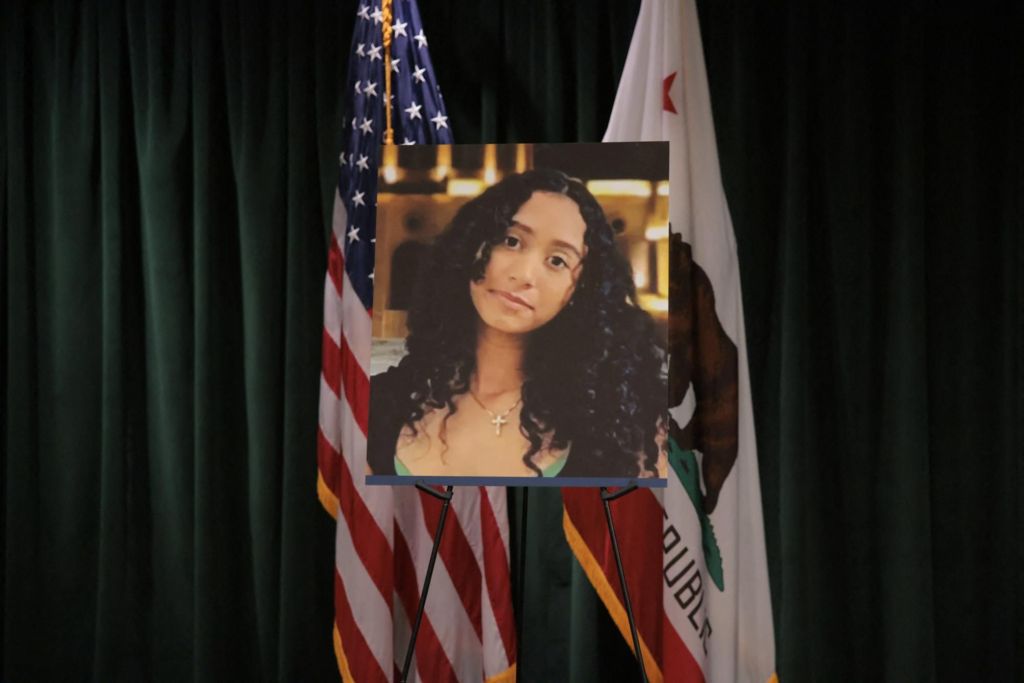
Rising American indie-pop musician D4vd, legally known as David Anthony Burke, 21, is facing three counts of first-degree murder over the 2025 killing of 14-year-old Celeste Rivas Hernandez, Los Angeles County prosecutors announced in a public press conference.
According to District Attorney Nathan Hochman, Rivas Hernandez visited Burke’s Hollywood Hills residence on April 23, 2025, and was never seen or heard from again after that meeting. Five months later, on September 8, 2025, investigators recovered the teen’s dismembered, decomposed remains from the trunk of a Tesla vehicle registered to Burke’s Texas address. The remains were discovered at a Hollywood tow yard, where the vehicle had been impounded.
Prosecutors have outlined three aggravated special circumstances attached to the murder charges. First, they allege Burke lay in wait to carry out the killing. Second, they claim the murder was committed for financial gain: Hochman stated Rivas Hernandez was threatening to expose Burke that night, which would have endangered his fast-growing, lucrative music career. Third, prosecutors say Burke killed Rivas Hernandez to eliminate her as a witness to prior sexual offenses he is alleged to have committed. Additional charges against Burke also include multiple counts of sexual assault of a minor and corpse mutilation. Hochman confirmed that prosecutors could pursue the death penalty in the case if Burke is convicted.
Burke was arrested last week and remains in custody without bond. He is scheduled to be arraigned Monday at a downtown Los Angeles court. His legal team has issued a forceful denial of the allegations following his arrest, stating that factual evidence in the case will prove Burke did not kill Rivas Hernandez and is not responsible for her death. The BBC has reached out to his attorneys for additional comment ahead of the arraignment, but has not received a further response.
Los Angeles Police Department Chief Jim McDonnell addressed widespread public criticism over the seven-month gap between the discovery of Rivas Hernandez’ remains and the filing of charges. He defended the investigation’s pace, emphasizing that the priority was to build a solid case that would not be jeopardized by premature disclosure of details.
“ My duty is not to fuel speculation. It’s to deliver justice, and that requires patience and discipline on everybody’s part,” McDonnell said. He noted that the degraded condition of the remains, which had been left undiscovered for months, delayed efforts to determine an official cause of death and degraded key evidence. Hochman echoed that explanation, adding that investigators had to interview dozens of witnesses, some of whom were uncooperative, and thoroughly process all available evidence before moving forward with charges. He urged any member of the public with additional information about the case to contact authorities.
Before his arrest, D4vd had become one of the fastest rising young stars in indie pop. A Houston native, he first gained an online following as a teenager posting Fortnite gameplay content before teaching himself music production. He broke into the mainstream in 2023 with the viral hit singles *Here With Me* and *Romantic Homicide*, and released his debut EP *Petals To Thorns* that same year. He earned a spot on *Variety*’s 2023 Young Hollywood list and opened for Grammy-winning artist SZA on her SOS world tour. He released his first full-length studio album in April 2025, and at the time of his arrest he had 22 million monthly listeners on Spotify and nearly four million followers on TikTok. When remains were first discovered in the singer’s vehicle in September 2025, Burke was mid-world tour. He immediately canceled all upcoming tour dates and withdrew from public view. He was publicly named as a target of a grand jury investigation into Rivas Hernandez’ death in court documents released in February 2025. It remains unclear how the grand jury process will move forward following the filing of formal charges. Rivas Hernandez’ family has not issued any public statement about the case to date.
-
Israel flattening civilian buildings in southern Lebanon during truce, say commanders
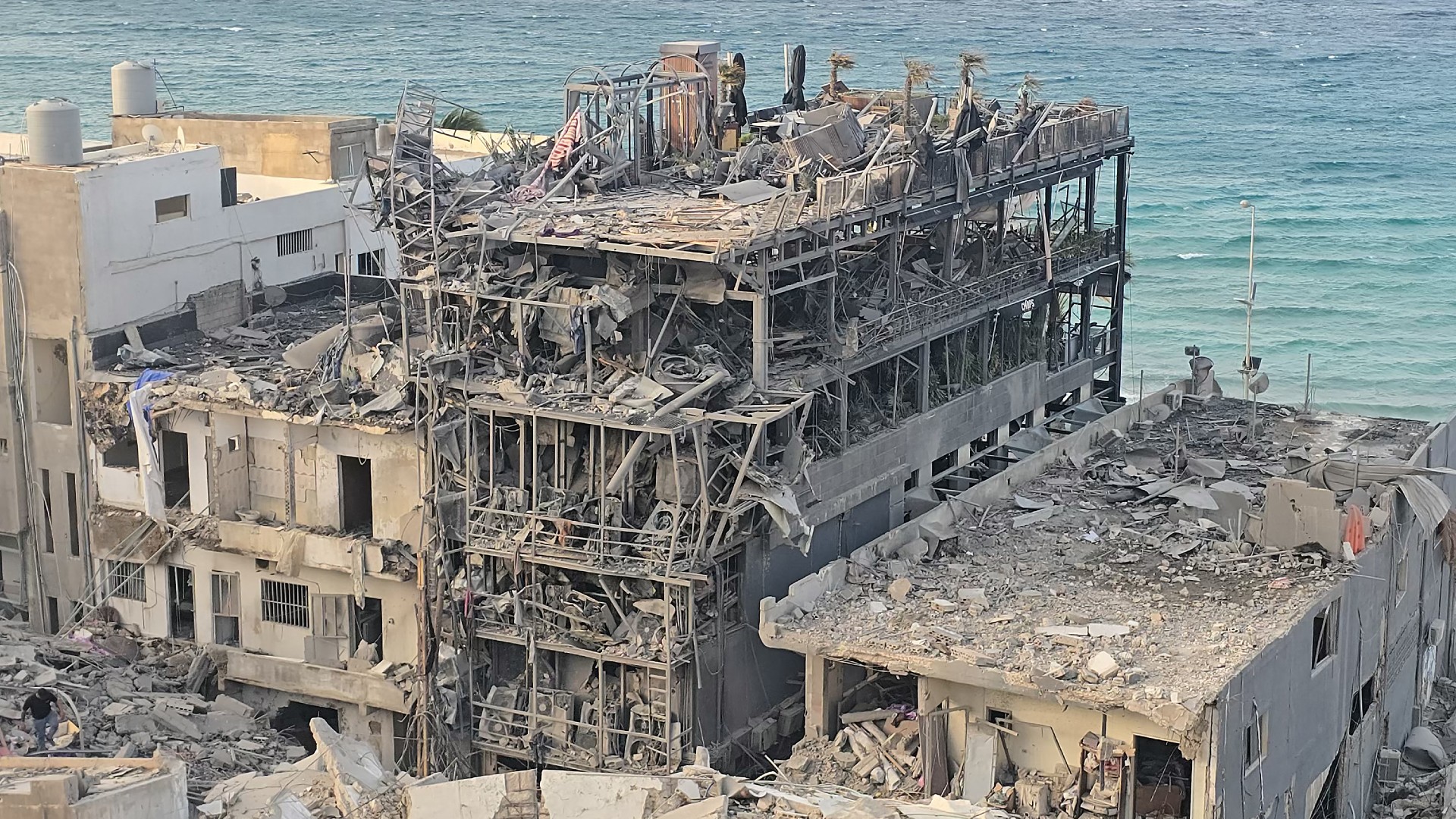
A fresh expose published in Israeli newspaper Haaretz on Sunday has revealed that the Israeli military has continued the systematic demolition of civilian buildings across southern Lebanon, even after a 10-day ceasefire agreement halted formal open hostilities last Thursday. The ceasefire, which brought a temporary end to months of deadly large-scale conflict, has not put a stop to state-backed destruction of residential and public infrastructure in border-area villages, according to senior Israeli army commanders who spoke to the outlet on condition of anonymity.
Per the sources, the demolition operation is being carried out by paid Israeli civilian contractors deployed with heavy civilian engineering equipment, including dozens of excavators. Contractors are compensated either through a fixed daily wage or via performance-based payments tied to the number of structures destroyed and the total scope of the work. Multiple sources confirm that some of these contractors have prior experience carrying out similar demolition work in the Gaza Strip, with one witness noting that roughly 20 excavators were operating simultaneously in a single southern Lebanese village alone.
The operation targets schools, residential homes and other civilian sites as part of an official Israeli policy framed as “cleaning up the area,” a tactic directly modeled after widespread destruction campaigns Israel carried out in Gaza starting in October 2023. All destruction is occurring south of the so-called “yellow line” — a boundary unilaterally drawn by Israel roughly 20 kilometers south of the Litani River — which Israeli forces are barred from crossing under the terms of the current ceasefire agreement.
Haaretz’s sources confirmed that one of the core strategic goals of the demolition campaign is to prevent displaced Lebanese residents from returning to their homes in border communities adjacent to Israel. The Israeli military is even using advanced digital tracking tools, including specialized statistical systems, to monitor and quantify the number of buildings destroyed across different operational sectors to measure progress on the campaign.
The policy of widespread demolition was explicitly announced by Israeli Defense Minister Israel Katz last month, who confirmed that “All houses in villages near the border in Lebanon will be demolished in accordance with the Rafah and Beit Hanoun models in Gaza.” At the time, Katz also stated that after the conclusion of Israel’s offensive in Lebanon, the Israeli military would retain full security control over the entire territory extending north to the Litani River.
The current conflict between Israel and Hezbollah erupted after US-Israeli airstrikes targeting Iran killed Iranian Supreme Leader Ali Khamenei in early March, prompting a retaliatory cross-border rocket barrage from the Iran-backed militant group. Since that escalation, the Lebanese Ministry of Health reports that Israeli attacks have killed at least 2,294 people across Lebanon — including 100 rescue workers and healthcare employees — and wounded more than 7,500 others. The violence has also displaced roughly 1.2 million Lebanese people nationwide, destroying all bridges crossing the Litani River, including the critical Qasmiyeh bridge that formed the last major transport link between southern Lebanon and the rest of the country. In the immediate aftermath of the new ceasefire taking effect, workers hastily constructed a makeshift crossing to accommodate tens of thousands of displaced residents seeking to return to their homes.
Even before the current ceasefire, there have been repeated violations of prior truce agreements. A United Nations assessment found that Israel violated the 2024 ceasefire brokered by the Biden administration more than 10,000 times over the course of one year, and has maintained five permanent military outposts inside Lebanese territory since that agreement was reached. Last week, Haaretz also reported that the Israeli military has been constructing additional new outposts inside southern Lebanon despite the terms of the current truce. Just hours before the latest ceasefire went into effect, an Israeli airstrike on a residential complex in the southern Lebanese city of Sour killed 11 people and wounded 35 more.
-

Exploring global goods at Linyi RCEP expo
On April 20, 2026, one of East Asia’s most anticipated regional trade events kicked off at the Linyi International Expo Center: the fifth iteration of the RCEP (Shandong) Import Expo. This year’s gathering has drawn participation from more than 400 international product suppliers and over 5,300 domestic and overseas buyers, marking one of the largest and most high-profile editions of the expo since its launch.
Running for three days, the exhibition space is organized into 18 dedicated national pavilions spanning a total of 1,200 individual booths, showcasing a vast, diverse assortment of goods sourced from markets across the globe. China Daily Website’s foreign expert Douglas Dueno is on-site to guide audiences through the wide range of international products on display, highlighting the expo’s role in bringing global merchandise directly to Chinese and regional buyers.
Conceived as a strategic platform to advance trade cooperation under the Regional Comprehensive Economic Partnership agreement, the expo fills a key niche in strengthening cross-border connectivity between RCEP member economies and global trading partners. By bringing international suppliers face-to-face with bulk and retail buyers from China and beyond, the event fosters new commercial partnerships, expands market access for imported goods, and reinforces Linyi’s growing reputation as a vital hub for regional trade in northern China.