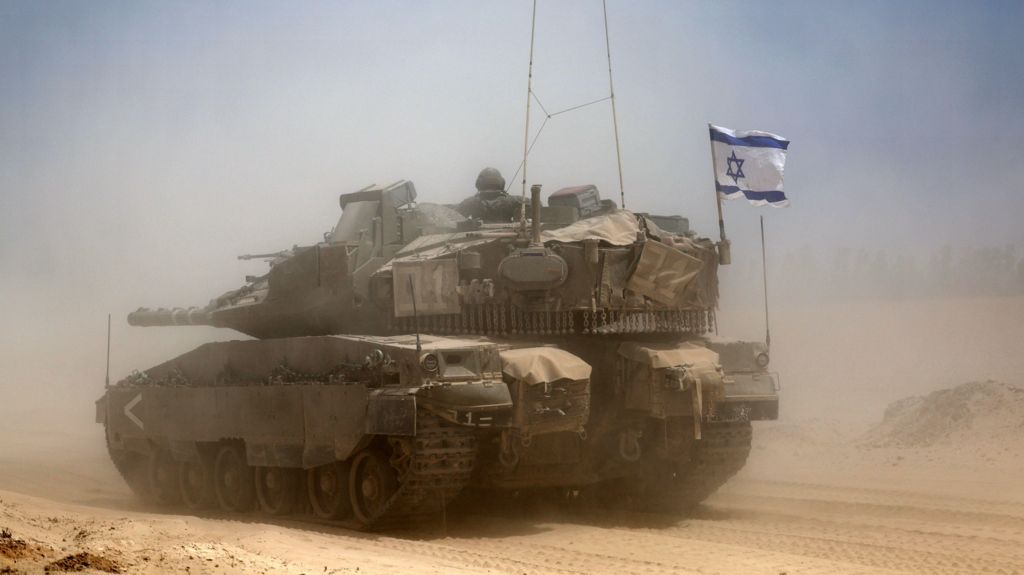
Germany has decided to recommence its arms exports to Israel, marking a significant shift in its policy following a ceasefire in Gaza that has held for over a month. The German government announced that the resumption of military equipment sales will begin on November 24, reversing its earlier suspension imposed in August due to concerns over the use of such equipment in the Gaza Strip. Germany, which ranks as the second-largest arms supplier to Israel after the United States, had halted shipments in response to Israel’s approval of a ground offensive aimed at capturing Gaza City. The ceasefire, which took effect on October 10, has been deemed ‘stabilized’ by German authorities, providing the basis for lifting the suspension. A German government spokesperson emphasized the importance of adhering to the ceasefire agreements, ensuring humanitarian aid delivery, and maintaining an orderly process. The initial suspension was prompted by Israel’s plan to occupy Gaza City, which drew widespread condemnation, including from Germany, a long-standing ally of Israel. Chancellor Friedrich Merz had expressed deep concern over the suffering in Gaza while affirming Israel’s right to self-defense. Between 2020 and 2024, Germany accounted for 33% of Israel’s military arms imports, primarily warships and torpedoes, including components for Merkava tank engines. Moving forward, decisions on arms exports will be made on a case-by-case basis. The conflict, which began with a Hamas-led attack on October 7, 2023, has resulted in significant casualties, with over 69,000 Palestinians killed according to Hamas-run health authorities. Since the ceasefire, Hamas has returned 20 living hostages in exchange for Palestinian prisoners and detainees, along with the remains of 25 deceased hostages.
作者: admin
-

Polish PM says railway explosion was ‘unprecedented act of sabotage’
Polish Prime Minister Donald Tusk has labeled an explosion on a railway line near Warsaw as an ‘unprecedented act of sabotage,’ vowing to bring the perpetrators to justice regardless of their affiliations. The incident, which occurred on Sunday, targeted a critical supply route to Ukraine, raising concerns over the security of Poland’s railway infrastructure. Tusk, who visited the site, confirmed the damage was deliberate and likely intended to derail a train, though no casualties were reported. Poland’s Special Services Minister, Tomasz Siemoniak, suggested a ‘very high chance’ that foreign intelligence services orchestrated the attack, hinting at Russia’s involvement without explicit naming. This incident follows a series of suspected hybrid warfare tactics attributed to Moscow, including parcel bombings and arson attacks. Investigators are also probing a second suspicious event on the same railway line, where a packed train was forced to halt abruptly, believed to be another act of sabotage. The explosion near Mika, approximately 100km southeast of Warsaw, was detected early Sunday morning, with photographs revealing a missing section of track. Despite the damage, no injuries were reported among the few passengers and staff on board. Poland’s Interior Minister confirmed the use of explosives, though details remain undisclosed due to the ongoing investigation. Local residents reported hearing a significant blast the previous evening, initially mistaking it for a gas explosion or falling drone. Authorities have collected substantial evidence, including security camera footage, to identify those responsible. This attack marks the first direct assault on Poland’s railway network, which serves as a vital military supply line to Ukraine. Experts speculate the sabotage aimed to psychologically intimidate Poland into reducing its support for Ukraine. Polish officials have pledged to prosecute those involved ‘ruthlessly,’ emphasizing that there is ‘no place on earth they can hide.’ However, the government faced criticism over the delayed detection of the damage and the possibility of such sabotage occurring. Officials defended their response as swift and effective, dismissing criticism as ‘untrue and insulting.’ This incident underscores the escalating tensions in the region and the vulnerabilities of critical infrastructure in the face of hybrid warfare tactics.
-
Ukraine to get up to 100 French-made Rafale fighter jets
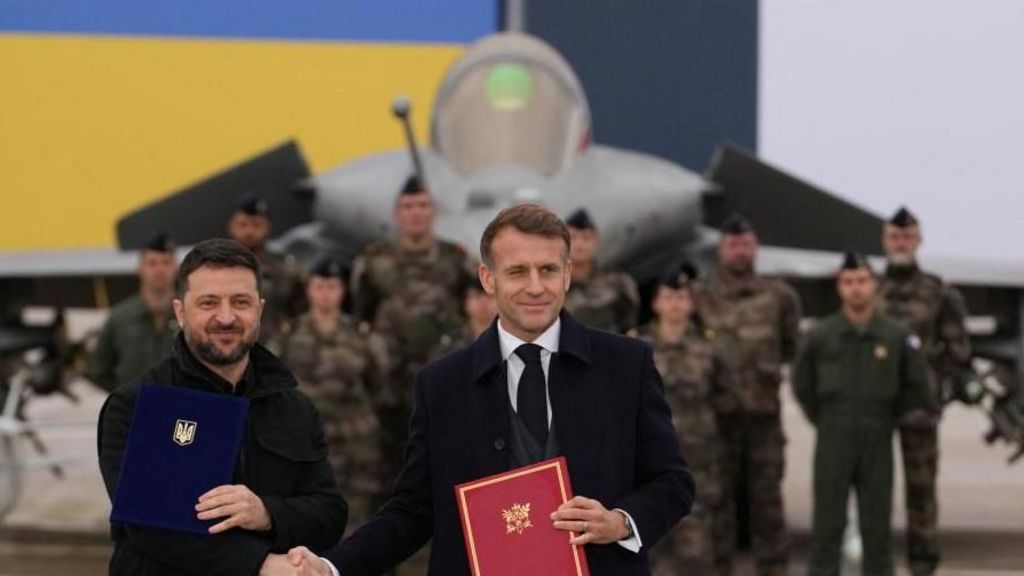
In a landmark agreement aimed at bolstering Ukraine’s defense capabilities, France has committed to supplying up to 100 Rafale F4 fighter jets and advanced air defense systems to Kyiv. The deal, signed by Ukrainian President Volodymyr Zelensky and French President Emmanuel Macron at a Paris air base, marks a significant step in Ukraine’s efforts to counter relentless Russian aggression. Zelensky described the pact as ‘historic,’ emphasizing its critical role in safeguarding Ukrainian lives. Deliveries of the Rafale F4 jets are slated for completion by 2035, with joint production of interceptor drones commencing this year. Financial specifics remain under negotiation, with France reportedly seeking EU funding and access to frozen Russian assets—a contentious proposal that has divided the 27-member bloc. The agreement also includes the provision of ‘very strong French radars,’ eight air defense systems, and other cutting-edge weaponry. This comes as Russia intensifies its drone and missile strikes on Ukraine, targeting energy and rail infrastructure and causing widespread blackouts. Recent attacks in Balakliya claimed three lives and injured 15 others, underscoring the urgency of bolstering Ukraine’s defenses. Macron highlighted the strategic importance of the Rafale jets, stating, ‘That’s what’s needed for the regeneration of the Ukrainian military.’ The French president also expressed his commitment to helping Ukraine prepare for future challenges. Ukraine’s air force already operates French Mirage warplanes and US-made F-16s, with plans to acquire Sweden’s Gripen fighter jets. Following his visit to France, Zelensky will travel to Spain to seek additional military and economic support. Meanwhile, Ukraine has secured a gas deal with Greece, ensuring vital supplies of US liquefied natural gas will flow into the country this winter via a Balkan pipeline. Since Russia’s full-scale invasion in February 2022, Moscow has occupied approximately 20% of Ukrainian territory, with slow but persistent advances along the front lines despite heavy casualties. The France-Ukraine defense pact represents a significant escalation in Western support for Kyiv as the conflict enters its third year.
-

Lanka probes claims of cruelty to elephants gifted by Thailand
Sri Lanka has launched an official investigation into allegations of mistreatment involving two elephants gifted by Thailand decades ago. The elephants, presented as symbols of diplomatic friendship in 1980 and 2001, are reportedly suffering under the care of Buddhist temples. Environment Minister Dammika Patabendi confirmed that a panel of veterinarians has been appointed to assess the animals’ health and living conditions. The probe follows concerns raised by Thailand, which has reportedly expressed interest in repatriating the elephants. Animal rights activists in Sri Lanka have also been contacted by Thai authorities seeking updates on the elephants’ welfare. Elephants hold a sacred status in Sri Lanka, revered as national treasures and Buddhist symbols. However, reports of cruelty by private owners and monks have tarnished this reputation. In 2023, Sri Lanka repatriated a Thai elephant named Muthu Raja, also known as Sak Surin, after allegations of neglect and abuse surfaced. The illegal trade of elephant calves has further exacerbated conservation challenges, with mothers often killed to capture their young. Human-elephant conflicts have also escalated, resulting in significant losses for both species. Sri Lanka is home to an estimated 7,000 wild elephants, but their survival remains under threat.
-

Poetic autumn scenery unveiled at 99 Dragon Pools in Yunnan
The 99 Dragon Pools, nestled within the Laojun Mountain National Park in Lijiang, Yunnan province, have unveiled their most breathtaking autumn spectacle. As the season transitions, the high-altitude basins are adorned with drifting clouds and mist, resembling a delicate white scarf draped over the landscape. The pools, often referred to as the heart of Laojun Mountain, shimmer like vivid blue-green gems embedded within the ancient forests. The surrounding foliage, now ablaze with autumnal hues, casts a mesmerizing reflection on the crystal-clear waters, creating a scene of unparalleled natural beauty. This annual transformation attracts nature enthusiasts and photographers alike, eager to capture the serene and poetic ambiance of this unique location.
-

Ice-and-snow tourism scenic area opens in NE China
China Snow Town, a premier ice-and-snow tourism destination in Heilongjiang Province, officially opened its doors to visitors on November 17, 2025. Located in Mudanjiang City, the scenic area has curated over 30 cultural and tourism activities, blending traditional folk customs, modern performances, and cutting-edge light shows to create an immersive winter experience. The region, known for its extended snow season, witnessed its first snowfall on October 17 this year, six days earlier than in 2024. With snow depths reaching up to 2 meters during peak season, the area attracts global tourists, drawing a record 1.45 million visitors last winter. Heilongjiang’s ice-and-snow economy has become a significant contributor, achieving a market value of 266.17 billion yuan ($37.6 billion) in 2024, with tourism alone accounting for 182.33 billion yuan. China’s ambitious plan to develop its ice-and-snow economy aims for a total market value of 1.2 trillion yuan by 2027 and 1.5 trillion yuan by 2030, positioning it as a key driver of economic growth.
-

UK threatens visa bans on three African countries ahead of asylum overhaul
The United Kingdom has issued a stern warning to Angola, Namibia, and the Democratic Republic of Congo, threatening to halt visa issuance to their nationals unless these countries agree to repatriate their citizens deemed as criminals or irregular migrants. This announcement, made by the UK Home Office on Monday, precedes a significant overhaul of the nation’s asylum system, described as the most comprehensive in modern history. Home Secretary Shabana Mahmood is set to unveil these reforms, which aim to address the contentious issue of illegal migration, particularly the surge of asylum seekers crossing the English Channel from France. The UK government has criticized the three African nations for their lack of cooperation in facilitating the return of migrants, giving them a one-month ultimatum to comply. The proposed measures, inspired by Denmark’s stringent asylum policies, include ending automatic benefits for asylum seekers, reducing refugee protections, and shortening the duration of refugee status from five years to 30 months. Additionally, refugees will face stricter conditions for permanent residency, with the waiting period extended from five to 20 years. These reforms have sparked criticism from charities and opposition lawmakers, who argue that they create unnecessary hardship for refugees and hinder their integration into society.
-
UAE: Endangered migratory bird on Red List observed in Wasit Reserve
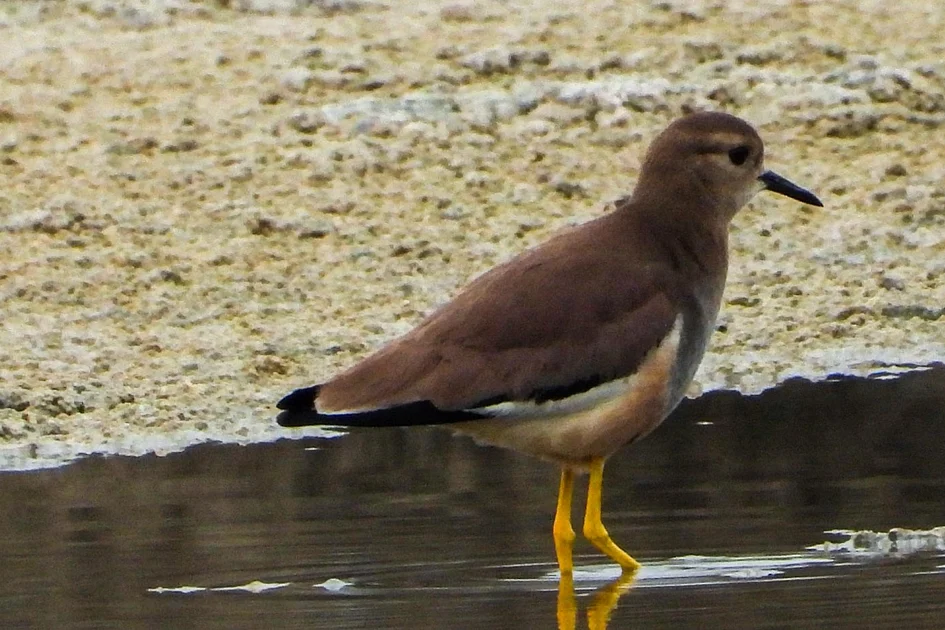
In a significant ecological discovery, the White-Tailed Lapwing, an endangered migratory bird, has been observed in the Wasit Nature Reserve in the UAE. This medium-sized wader, scientifically known as Vanellus leucurus, is listed on the UAE’s Red List of threatened species, as confirmed by Sharjah’s Environment and Protected Areas Authority. The bird is easily recognizable by its white belly and tail, brown upper plumage, long legs, and pointed bill, which it uses to forage for insects and worms in wetland habitats. The White-Tailed Lapwing breeds in Central Asia and migrates to regions such as India, the Middle East, and North Africa during winter. During breeding season, it exhibits territorial behavior, engaging in aerial and vocal displays to protect its nest. The sighting highlights the importance of wetland conservation efforts in the UAE and underscores the region’s role as a critical habitat for migratory species. This discovery also raises awareness about the need to protect endangered species and their ecosystems, particularly in the face of environmental challenges.
-

Federal agents arrest 81 people in Charlotte immigration crackdown
Charlotte, North Carolina, became the latest focal point of President Donald Trump’s immigration enforcement strategy as federal agents arrested 81 individuals in a swift five-hour operation over the weekend. The crackdown, dubbed ‘Operation Charlotte’s Web’ by US Customs and Border Patrol official Greg Bovino, targeted individuals with ‘significant criminal and immigration history,’ according to Bovino’s social media post. The operation’s name, inspired by a popular children’s book, has done little to quell public outrage. Protesters took to the streets on Saturday, condemning the Trump administration’s aggressive tactics, which included masked, heavily armed agents in unmarked vehicles. North Carolina Governor Josh Stein, a Democrat, sharply criticized the operation, accusing agents of racial profiling and endangering citizens. The Department of Homeland Security (DHS) also reported an incident where a US citizen allegedly rammed a law enforcement vehicle, injuring an officer. While DHS has not specified the duration of the raids, the ongoing crackdown in Chicago, which began in September, suggests a prolonged enforcement effort. Bovino hinted at further actions, leaving Charlotte residents anxious about what lies ahead.
-

Louvre Museum closes offices and a gallery over structural fragility concerns
The Louvre Museum in Paris has announced the temporary closure of certain employee offices and a public gallery due to structural vulnerabilities. The decision follows a technical report highlighting the fragility of beams supporting the second level of the museum’s Sully wing. The report, submitted on Friday, cited ‘recent and unforeseen developments’ as the cause, though no further details were provided. As a precaution, 65 employees will be relocated for three days while experts assess the damage. Additionally, the Campana Gallery, which houses antique Greek ceramics and is located beneath the affected offices, will also be closed temporarily. This development comes as the Louvre continues to recover from last month’s high-profile heist of crown jewels valued at over $100 million. The museum’s Sully wing is a key focus of its ambitious renovation plans, which were unveiled earlier this year.