作者: admin

  • Hebei wetland welcomes peak season for spring migratory birds

    Hebei wetland welcomes peak season for spring migratory birds

    The Nandagang Wetland in Cangzhou, Hebei province, has transformed into a breathtaking avian spectacle as it enters the peak season for spring migratory birds. This ecological haven is currently hosting an extraordinary gathering of five nationally protected bird species, creating the most impressive avian assembly witnessed in the wetland in recent years.

    Among the shimmering mudflats and waterways, rare and protected species including the Siberian white crane, hooded crane, red-crowned crane, Oriental stork, and white-naped crane have converged in unprecedented numbers. The remarkable congregation represents a significant ecological event that highlights the wetland’s crucial role as a migratory stopover and habitat.

    The presence of these first-class protected species demonstrates the wetland’s improving environmental conditions and conservation value. Bird enthusiasts and conservationists have reported that the current gathering surpasses previous years in both diversity and numbers, offering a rare opportunity to observe these magnificent birds in their natural habitat.

    The wetland’s management has implemented measures to protect the visiting species while allowing for responsible observation. This spring migration period not only provides a visual feast for nature lovers but also serves as an important indicator of regional biodiversity health and conservation success in Hebei province.

  • Brazilian academic: Protectionism is unsustainable

    Brazilian academic: Protectionism is unsustainable

    In a striking critique of contemporary economic trends, prominent Brazilian political scientist Dawisson Belém Lopes has declared protectionism fundamentally unsustainable for long-term global prosperity. The professor of international and comparative politics at Brazil’s Federal University of Minas Gerais identified a paradoxical shift among nations that previously championed free-market principles but are now embracing restrictive trade measures.

    Lopes presented his analysis against the backdrop of increasing trade barriers implemented by several developed economies. He argued that such protectionist approaches ultimately hinder worldwide economic advancement and create artificial constraints on international cooperation. The academic emphasized that historical evidence consistently demonstrates how isolationist policies lead to market inefficiencies, reduced innovation, and ultimately lower living standards across both developed and developing nations.

    Highlighting China’s economic trajectory as a compelling case study, Lopes pointed to the tangible benefits of maintaining open markets and committing to free trade principles. He noted that nations embracing globalization and international exchange have demonstrated stronger resilience during economic downturns and more sustainable development patterns.

    The professor’s comments arrive during a period of significant reevaluation of global trade relationships, with multiple nations reconsidering their strategic economic positioning. Lopes concluded that the temporary advantages gained through protectionist measures inevitably give way to long-term disadvantages, making cooperation and open exchange the only viable path forward for truly sustainable global development.

  • Trump’s failed strong-arming of allies on Iran shows that pressure is losing its effect

    Trump’s failed strong-arming of allies on Iran shows that pressure is losing its effect

    PARIS (AP) — In a stark demonstration of deteriorating transatlantic relations, U.S. President Donald Trump’s demands for military assistance in the Iran conflict have been met with resounding rejection from traditional allies. The president, adopting a transactional approach to international relations, has attempted to leverage decades of U.S. security guarantees to compel allied nations to contribute naval forces to secure the Strait of Hormuz—a critical maritime passageway for global oil transportation.

    The response from European powers has been notably unified in its opposition. The United Kingdom, historically America’s closest military partner, has explicitly refused involvement in what Prime Minister Keir Starmer characterized as a conflict ‘with no clear endgame.’ British officials have emphasized that any military deployment would require both international legal justification and a comprehensive strategic plan, neither of which they believe currently exists.

    France has adopted a similarly cautious position, with President Emmanuel Macron stating that while naval escorts might be considered feasible eventually, such operations would only be viable after active combat subsides. Germany’s Defense Minister Boris Pistorius echoed this sentiment, asserting that European nations seek diplomatic solutions rather than military escalation.

    The widespread refusal follows months of diplomatic strain between the Trump administration and European allies. Recent tensions have included trade disputes, controversial remarks about allied military contributions in Afghanistan, and renewed American interest in acquiring Greenland—all contributing to what analysts describe as historically low levels of goodwill toward the current U.S. administration.

    Retired Lt. Gen. Ben Hodges, former commanding general of the U.S. Army in Europe, observed that European leaders are increasingly recognizing that diplomatic appeasement strategies toward Trump yield limited benefits. This shift represents a fundamental transformation in how traditional allies perceive American leadership on the global stage.

    Despite possessing potential leverage through European dependence on Middle Eastern energy exports and need for continued U.S. support regarding Ukraine, Trump’s demands have thus far failed to generate the desired international coalition. The administration now faces the prospect of managing an escalated Middle Eastern conflict with notably limited international military support.

  • Hittler faces Zielinski as French town’s election contest goes viral

    Hittler faces Zielinski as French town’s election contest goes viral

    The tranquil French commune of Arcis-sur-Aube, with its modest population of 2,785 residents, has unexpectedly become the epicenter of international attention due to an extraordinary electoral coincidence involving its mayoral candidates’ surnames. Current mayor Charles Hittler, seeking re-election in Sunday’s municipal runoff, finds himself at the center of a viral storm simply because of his family name’s phonetic similarity to the notorious German dictator.

    The situation has escalated beyond occasional jokes that Hittler has endured throughout his life. Social media platforms have been inundated with satirical posts drawing parallels between the electoral contest and the historical conflict between Adolf Hitler and modern Ukrainian leader Volodymyr Zelensky—particularly since one of Hittler’s opponents bears the surname Zielinski.

    In an exclusive interview with the BBC, an exasperated Hittler revealed the personal toll of this unexpected fame: ‘The situation has gone completely crazy. My wife is in tears. We’ve seen online articles falsely claiming that 37% of Arcis residents are Hitlerites. People should be discussing our town’s policies, not our names.’

    The mayor’s family history reveals why he never changed his controversial surname. His father, a shepherd from Alsace near the German border, was conscripted into Nazi Germany’s forced labor program during World War II. Despite recommendations to change the name in 1949, the administrative complexity and financial burden prevented the alteration. Today, only a few Hittlers remain in France, with most family members either altering pronunciation to ‘Hit-lay’ or adopting maternal surnames to avoid embarrassment.

    Remarkably, Hittler’s daughter and daughter-in-law—both retaining the surname—are concurrently running for municipal council positions in other French towns. ‘Once you establish your reputation, the name becomes secondary. People eventually see the person behind the name,’ Hittler explained.

    The electoral dynamics extend beyond nominal coincidences. While Hittler represents center-right policies, his opponent Antoine Renault-Zielinski belongs to the far-right Patriot movement—a significant detail in a region where the National Rally party traditionally performs strongly. The 28-year-old customs officer, whose Polish mother contributed the latter part of his hyphenated surname, maintains philosophical perspective: ‘I understand why people find this amusing, though personally it doesn’t make me laugh. At least our town is on the map now.’

    Historical ironies abound: Arcis-sur-Aube’s name was adopted by a town near Odesa in Ukraine after German immigrants named their settlement Artsyz following Napoleon’s 1814 battle against Austrian, Prussian, and Russian armies. The French town also happens to be the birthplace of revolutionary leader Georges Jacques Danton.

    As Sunday’s runoff approaches with Hittler maintaining a narrow lead over Zielinski and third candidate Annie Soucat, the world watches a municipal election that has transcended local politics through the unpredictable power of onomastic coincidence.

  • Celebrations in Morocco but devastation in Senegal after Afcon decision

    Celebrations in Morocco but devastation in Senegal after Afcon decision

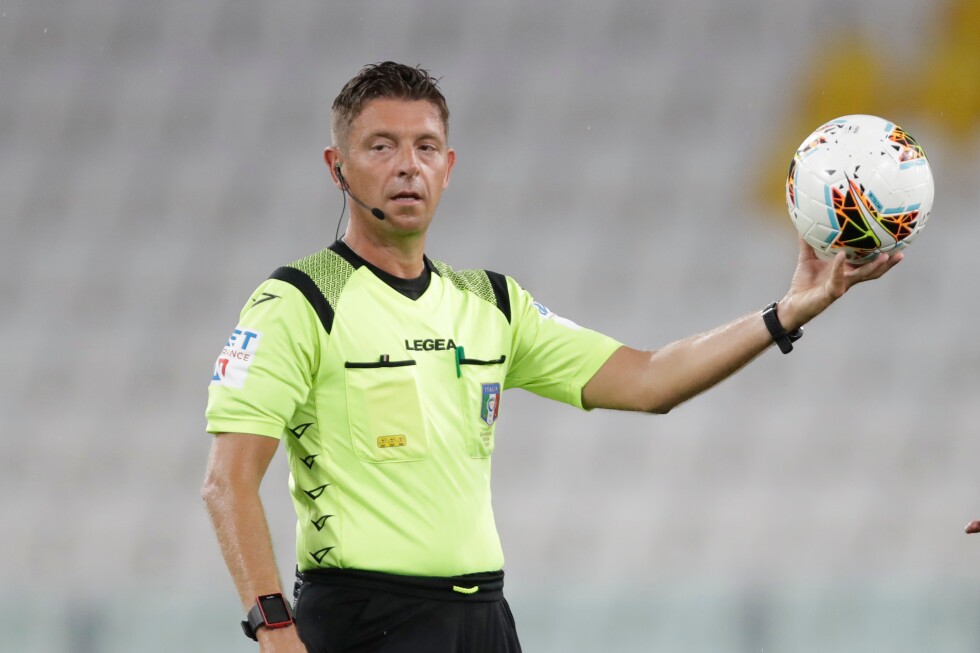
    African football has been plunged into unprecedented controversy after the Confederation of African Football (CAF) stripped Senegal of their Africa Cup of Nations title and awarded the championship to tournament hosts Morocco. The dramatic decision comes two months after the contentious final in Rabat that ended with Senegal’s controversial pitch walkout.

    The governing body ruled that Senegal’s national team violated competition regulations by abandoning the field in protest of a refereeing decision during the final match. Although the match eventually resumed and Senegal secured a 1-0 victory, CAF determined the walkout constituted an automatic forfeiture under tournament rules.

    The announcement triggered diametrically opposite reactions across both nations. Moroccan cities erupted in spontaneous celebrations as ecstatic supporters flooded streets waving national flags, sounding car horns, and igniting flares in triumphant displays. Local media captured scenes of jubilant fans in Tangier and other cities experiencing what journalist Jalal Bounour described as “a sleepless night of great excitement and joy.”

    Many Moroccans expressed a profound sense of justice restored, with one woman telling sports channels: “The entire Moroccan people are out in every city happy with our cup. The cup has returned to us, the cup that was denied to us.” Another supporter admitted to being in “complete shock” at the unexpected reversal.

    Meanwhile, Senegal responded with outrage and accusations of institutional corruption. In the capital Dakar, the news landed like a bombshell, with young fan Daouda Seck telling AFP: “I’m stunned. Football no longer exists. This is not football. No-one here understands or accepts this decision.”

    The Senegalese government announced it would formally appeal the decision, warning that the ruling “undermined CAF’s credibility” and calling for an “independent international investigation into suspected corruption within CAF’s governing bodies.” This sentiment was echoed by student Ralf Nonga, who insisted that “the best team won on the pitch, and that should be respected off it.”

    Local media reflected the national mood, with one Senegalese newspaper leading with the headline: “The inside story of an unprecedented scandal.” The controversy has raised fundamental questions about sports governance, competitive integrity, and the balance between regulatory enforcement and competitive fairness in African football.

  • South Lebanon residents flee death and destruction

    South Lebanon residents flee death and destruction

    A relentless stream of vehicles extends along Lebanon’s southern coastline, carrying thousands of displaced civilians seeking refuge from escalating hostilities between Israeli forces and Hezbollah militants. The ancient port city of Sidon has become an unexpected sanctuary for those fleeing what Israel has designated as a red zone—a 14 percent segment of Lebanese territory south of the Zahrani River under urgent evacuation orders.

    The humanitarian situation has reached critical levels with over one million Lebanese citizens forcibly displaced from their homes. Reception centers have exceeded capacity, forcing families to sleep in vehicles or along the seafront. Nidal Ahmad Chokr, a 55-year-old from Jibchit village, described his harrowing escape: “Bakers died while making bread in the village square and municipal workers were martyred while using bulldozers.” He fled with minimal possessions—only a towel, underwear, and essential medications.

    Jihan Kaisi, director of an NGO assisting displaced persons, reported that Sidon’s schools are sheltering three times their intended capacity. “Families arrive with terrified eyes in the middle of the night,” she stated, visibly distressed about turning people away due to lack of space.

    Safaa al-Tabl, a 37-year-old mother of five from Kharayeb village, recounted three days of continuous drone surveillance and attacks before her family’s escape. “They were targeting people, houses. It was all happening right in front of our eyes. I saw bodies,” she recalled emotionally, speaking about her tulip-filled home that represented her childhood memories and national identity.

    The current conflict evokes traumatic memories of Israel’s 22-year occupation of southern Lebanon (1978-2000) and the destructive 2006 war. While Israel describes its ground operations as “limited,” many evacuees fear expanded military actions.

    Mustafa Khairallah, an elderly man using canes, emphasized the unprecedented nature of this conflict: “In the south, we’re very resilient, we’re used to bombardments… Now they’re targeting civilians more and more.” His statement was punctuated by the sound of distant explosions near Sidon.

    Economic realities prevent complete evacuation. Haidar Bitar, a 28-year-old entrepreneur from Nabatiyeh, explained that years of economic crisis have left many without resources to flee. “Before, rent was $100 or $200. Now, you have to pay $1,000 and three months upfront,” he noted, describing how the conflict has driven prices exponentially higher.

    Despite the overwhelming force, Bitar expressed conviction that Israel cannot easily defeat Hezbollah: “They fight night and day. They know where to hide above and below ground.” The militant group, though weakened, has signaled preparedness for prolonged confrontation, maintaining significant support among its base.

  • What to know about the meningitis outbreak in England causing angst among university students

    What to know about the meningitis outbreak in England causing angst among university students

    A severe meningitis outbreak in Kent, southeast England, has resulted in two fatalities and triggered an extensive public health intervention. UK Health Secretary Wes Streeting characterized the situation as unprecedented due to the rapid surge of cases, with the count rising to 20 confirmed infections within days of the first diagnosis on Friday.

    The victims include a university student from the University of Kent and a pupil from a local school. In response, health authorities have implemented emergency measures, distributing thousands of antibiotic doses and vaccinations to students at the Canterbury campus. The outbreak has been traced to a bacterial strain, specifically meningococcal sepsis, which causes infection of the brain and spinal cord membranes and can prove fatal without prompt treatment.

    Epidemiologists identified a potential super-spreader event at Club Chemistry, a nightclub in Canterbury, between March 5-7. Many of those affected attended the venue during this period. Nationwide medical professionals have been instructed to provide antibiotics to anyone who visited the club on those dates, regardless of their current location.

    Meningitis, though rare in the UK with approximately 350 annual cases, spreads efficiently in densely populated environments like university accommodations. The bacteria can remain dormant in the nose or throat, transmitting through respiratory droplets or close personal contact.

    Amid heightened public anxiety, reminiscent of COVID-19 precautions, some residents have resumed mask-wearing and social distancing. Health officials emphasize that antibiotics remain the primary tool for containment, with over 2,500 doses already administered. Vaccinations targeting the meningitis B strain are also being offered, though availability through private pharmacies has been limited.

    With an incubation period of up to 14 days, additional cases are anticipated. However, scientists have not yet determined if this strain exhibits heightened virulence. Health Secretary Streeting assured the public that the outbreak does not currently constitute a national incident, expressing confidence in containment measures preventing wider dissemination.

  • Argentina make pitch to host 2035 Rugby World Cup

    Argentina make pitch to host 2035 Rugby World Cup

    Argentina has officially launched an ambitious campaign to host the 2035 Rugby World Cup, potentially marking the first time the prestigious tournament would be held in South America. The Argentine Rugby Union, under President Gabriel Travaglini, is spearheading a regional bid that would include collaboration with neighboring nations Brazil, Chile, and Uruguay.

    World Rugby chief executive Alan Gilpin is currently conducting a fact-finding mission in Argentina to assess the country’s capabilities ahead of formal bid submissions scheduled for the latter half of 2026. This preliminary evaluation represents a crucial step in the selection process.

    “Our vision is to deliver a World Cup that truly reflects the passion and remarkable development rugby has achieved throughout our territory,” stated Travaglini, emphasizing the transformative potential of hosting the event.

    The South American bid faces significant competition from several global contenders. Japan and Spain have recently confirmed their intentions to bid for the tournament, while Italy has previously expressed interest. Additionally, rumors persist of a joint Middle East bid involving Saudi Arabia, Qatar, and the United Arab Emirates.

    Argentina’s rugby credentials are substantial. The national team, Los Pumas, has participated in all ten previous Rugby World Cups and reached the semi-finals in three of the past five tournaments. Despite being ranked among the world’s top eight rugby nations, Argentina remains the only team in that elite group never to have hosted a World Cup match.

    The country boasts several modern, multi-purpose stadiums capable of hosting international matches. These include the 57,000-capacity Estadio Mario Alberto Kempes in Córdoba, the 25,000-seater Estadio San Juan del Bicentenario, and the 30,000-capacity Estadio Único Madre de Ciudades in Santiago del Estero. Most notably, Buenos Aires’ Estadio Más Monumental, home to football club River Plate, stands as South America’s largest stadium with a capacity exceeding 85,000.

    World Rugby’s recent hosting strategy has balanced commercial considerations with expansion into new markets. The 2019 tournament in Japan marked the first time the event was held in Asia, while the United States is set to host in 2031. France (2023) and Australia (2027) represent traditional rugby nations that have hosted multiple times.

    The selection timeline will see World Rugby conduct thorough site visits and assessments before identifying a preferred host in May 2027. The final recommendation will be put to a vote in November of that year, determining which nation or region will host the 2035 tournament.

  • Mass funeral held in Kabul for victims of strike on hospital that Afghanistan blames on Pakistan

    Mass funeral held in Kabul for victims of strike on hospital that Afghanistan blames on Pakistan

    KABUL, Afghanistan — Amid falling rain and somber atmosphere, mass funerals commenced in Kabul on Wednesday for victims of a devastating airstrike that targeted a drug rehabilitation facility earlier this week. The incident has dramatically intensified the ongoing conflict between Afghanistan and Pakistan, now entering its third week of sustained hostilities.

    Afghan authorities maintain that the strike on Omid Addiction Treatment Hospital resulted in 408 fatalities and 265 injuries, though these figures remain unverified by independent sources. The 2,000-bed medical facility, which had been recently expanded as part of the Taliban government’s initiative to combat widespread drug addiction, was struck around 9 p.m. on Monday near Kabul’s international airport.

    Pakistan’s government has categorically denied targeting civilian infrastructure, with Information Minister Attaullah Tarar asserting in an interview that operations specifically targeted “terrorist infrastructure and military setups.” Tarar claimed the strikes hit an ammunition depot in Kabul, resulting in subsequent explosions that caused collateral damage.

    This conflict represents the most severe escalation between the neighboring nations in recent history, characterized by repeated cross-border clashes and airstrikes within Afghan territory. The fighting began in late February when Afghanistan launched retaliatory attacks following Pakistani airstrikes, effectively disrupting a Qatar-brokered ceasefire established in October.

    The international community has expressed growing concern over the deteriorating situation, particularly given the region’s vulnerability to militant organizations including al-Qaida and the Islamic State group seeking to exploit the instability. Pakistan formally declared itself in “open war” with Afghanistan last month, marking a significant deterioration in bilateral relations.

    As recovery efforts continue, authorities report that bodies are still being extracted from the smoldering hospital wreckage. Victims from Kabul province received mass burials while those from other regions were transported to their home provinces for funeral services.

  • Advertised salaries are rising but soaring bills crush any gains

    Advertised salaries are rising but soaring bills crush any gains

    New data from Australia’s leading employment platform reveals a paradoxical economic situation where rising advertised salaries provide little respite for households grappling with escalating living expenses. According to the latest figures, advertised salaries increased by 0.4% in February compared to the previous month, marking a 3.9% annual increase and accelerating to 4.2% growth over the past six months—the fastest pace recorded since early 2024.

    Despite these nominal wage improvements, Seek’s Chief Economist Blair Chapman emphasizes that Australian families face mounting financial pressure from multiple fronts. “Consumer prices have resumed rapid growth, mortgage costs continue climbing, and global uncertainties are creating additional upward pressure on household expenses,” Chapman stated.

    The economic challenges have been exacerbated by recent monetary policy decisions, with the Reserve Bank of Australia raising the official cash rate from 3.85% to 4.1%. Major financial institutions promptly transferred this increase to consumers through higher borrowing costs. Simultaneously, geopolitical tensions in the Middle East have driven global oil prices from $79 to over $140 per barrel, translating directly to a 10-cent-per-litre increase at Australian fuel pumps for every $14.07 per barrel price surge.

    Compounding these financial pressures, Australia’s job market shows concerning contraction signals. Job advertisements declined by 0.5% in January, marking the seventh consecutive monthly decrease. Year-over-year comparisons reveal a 2.6% reduction in available positions. Regional analysis indicates New South Wales experienced the most significant decline at 1.1%, followed by Victoria (1.0%) and Queensland (0.8%). Western Australia emerged as the sole region recording positive growth with a 0.2% increase.

    Chapman attributes this downward trend to “broad caution in the labour market” likely to persist amid growing global uncertainties. The economist specifically addressed technological concerns, noting that while automation through AI might seem a plausible explanation, current data does not support significant negative impact on job advertisement volumes.