作者: admin

  • ‘Clumsy’: Tit-for-tat strikes on energy assets gift Iran another tactical lever

    ‘Clumsy’: Tit-for-tat strikes on energy assets gift Iran another tactical lever

    Recent US strategic decisions regarding Iranian energy infrastructure have inadvertently granted Tehran significant escalation dominance in an increasingly volatile regional conflict, according to high-level Arab officials speaking with Middle East Eye. The situation developed after Israel’s strike on Iran’s South Pars gas field, which energy analysts had long considered a worst-case scenario trigger for retaliatory attacks on critical energy production sites.

    Iran’s response targeted Qatar’s Ras Laffan natural gas facilities, effectively demonstrating their capacity to impact global energy markets. This tit-for-tat exchange has revealed fundamental miscalculations in US foreign policy approach, with one Arab official characterizing American actions as “clumsy” alliance management.

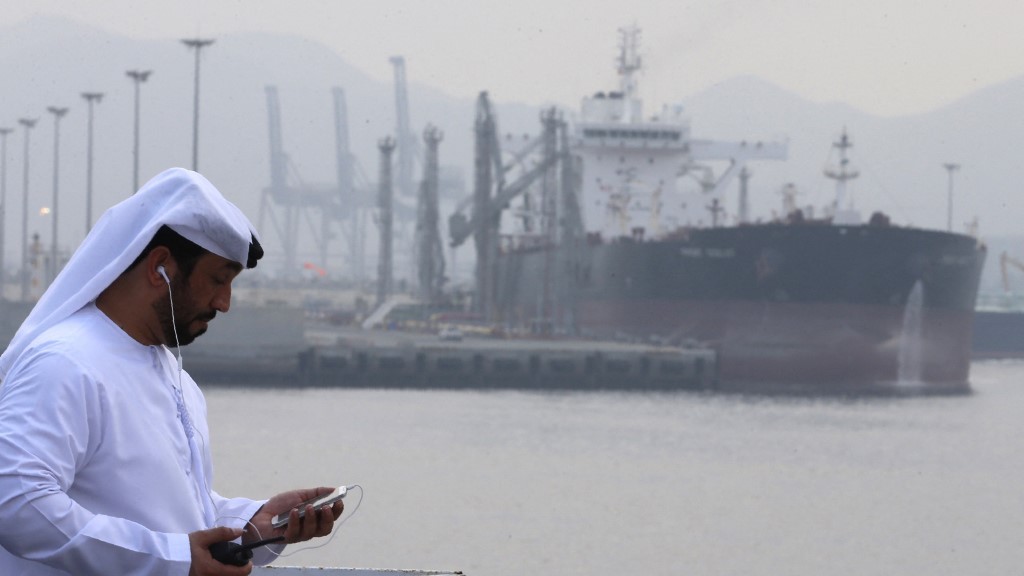
    The strategic landscape has shifted substantially since Iran established de facto control over the Strait of Hormuz, creating a ‘safe’ shipping corridor through its territorial waters while charging vessels for transit access. This development represents a significant geopolitical setback for Washington, which has failed to secure this crucial maritime passageway.

    Alan Eyre, Iran expert and diplomatic fellow at the Middle East Institute, assessed the Israeli strike as a “strategic blunder” apparently motivated by the Trump administration’s desire to impose costs on Iran for controlling the vital waterway. While Iran has demonstrated calculated responses to US and Israeli actions, Eyre cautioned against overstating Tehran’s position, noting that Iran “has less to lose and is doing things that it knows are risky because they have to.”

    The attack on Qatar’s facilities proved particularly damaging, eliminating 17% of its LNG export capacity with repairs expected to take three to five years. This triggered a 20% surge in European natural gas prices, highlighting the global economic implications of regional conflicts.

    Despite President Trump’s public denial of prior knowledge regarding the Israeli strike, Arab diplomats and former US officials expressed skepticism about these claims. Dan Shapiro, former US ambassador to Israel, stated there was “zero chance” Israel would conduct such an operation without US Central Command’s full awareness and approval.

    Iranian Foreign Minister Abbas Aragchi explicitly warned that future attacks on Iranian infrastructure would meet with unrestrained response, emphasizing that any resolution to the conflict must address damage to civilian sites. Meanwhile, the US faces limited options to address rising energy prices, with discussions emerging about potentially lifting sanctions on Iranian oil—a move that would contradict current offensive actions against Tehran.

  • Mortgage holders warned to brace for interest rates hitting a 17-year high

    Mortgage holders warned to brace for interest rates hitting a 17-year high

    Australian mortgage holders face the prospect of intensified financial strain as monetary markets project a potential return to 17-year peak interest rates. Financial analysts now forecast that the Reserve Bank of Australia (RBA) may implement three additional 25-basis-point increases before year-end, potentially elevating the cash rate to 4.85%—a threshold unseen since November 2008 during the global financial crisis.

    This tightening monetary policy responds to persistent domestic inflation pressures compounded by emerging geopolitical tensions. IG Market analyst Tony Sycamore notes that money markets currently predict approximately 67 basis points of RBA rate hikes through December. The escalation follows the central bank’s recent increase to 4.1%, with Governor Michele Bullock acknowledging possible recession risks if inflation remains untamed.

    The international monetary landscape exhibits parallel trends, with the US Federal Reserve, Bank of England, and European Central Bank maintaining hawkish stances. This synchronized response primarily addresses energy price surges stemming from Middle Eastern conflicts. Crude oil prices have skyrocketed from approximately $79 to over $155 per barrel within three weeks, directly impacting Australian fuel costs by 10 cents per liter for every $14 per barrel increase.

    Morningstar strategist Lochlan Halloway emphasizes that while Middle East instability introduces additional inflationary risks, Australia’s core challenge remains domestic economic overheating. Recent economic data reveals 2.6% annual GDP growth exceeding non-inflationary capacity estimates, alongside unexpectedly low unemployment and robust private demand.

    Global X investment strategist Justin Lin warns that rising energy costs will permeate broader consumer expenses: “Beyond pain at the pump, Australians will confront elevated grocery bills as increased crude and gas prices elevate diesel and fertilizer expenses, placing global food systems on an inflationary trajectory.” Food and alcohol constitute 17.44% of Australia’s consumer price index.

    Governor Bullock maintains that controlling inflation remains paramount despite potential economic contraction: “The best contribution we can make to full employment and investment is achieving low, stable inflation. We must remain focused on this objective even amid external shocks.” The RBA targets 2-3% inflation, contrasting with the current 3.8% rate.

  • Australians told to shelter in place as Tropical Cyclone Narelle hits Queensland

    Australians told to shelter in place as Tropical Cyclone Narelle hits Queensland

    A major weather emergency unfolded across northern Australia on Friday as Tropical Cyclone Narelle made landfall, bringing catastrophic winds and torrential rainfall to the Cape York Peninsula in Far North Queensland. The powerful storm system initially struck the coast as a severe Category 4 cyclone with wind gusts reaching 220 km/h (137 mph) before weakening to Category 3 intensity, according to the Bureau of Meteorology.

    The cyclone’s impact has been widespread, with emergency services reporting significant damage including roof losses, downed trees, and power outages affecting approximately 3,500 homes across regional Queensland. While the small community of Coen (population 350) was initially expected to bear the brunt of the storm, residents north of the town reported substantial structural damage, with one local describing “losing roofs everywhere” in interviews with the ABC.

    Queensland Premier David Crisafulli warned that many residents were experiencing the strongest winds witnessed in the region “for a long, long time,” noting that the cyclone system contained “a lot of rain” that threatened already saturated catchments. Meteorological authorities forecast up to 500mm of rainfall in some areas, creating dangerous flash flooding conditions across the peninsula.

    Emergency response efforts have been mobilized comprehensively, with police and rescue crews deploying helicopters, boats, medical teams, and additional electrical crews to affected areas. State Disaster Coordinator Chris Stream urgently advised residents to shelter in place, cautioning against any false sense of security during the eye’s passage and emphasizing that “we cannot underestimate the potential risk to life.”

    The cyclone’s effects extended surprisingly far south, with the tourist destination of Port Douglas—approximately 400km from the landfall location—experiencing significant beach erosion. Further south in Cairns, northern beaches suffered substantial erosion as well.

    Meteorological projections indicate Narelle will continue moving across the Cape York peninsula, potentially affecting predominantly Indigenous communities, before crossing the Gulf of Carpentaria. Weather experts warn that warm waters in the Gulf could cause the cyclone to reintensify as it approaches the Northern Territory. As a precautionary measure, hundreds of residents from the remote community of Numbulwar have already been evacuated to Darwin.

  • ‘It takes money to kill bad guys’: Pentagon requests $200bn from Congress for Iran war

    ‘It takes money to kill bad guys’: Pentagon requests $200bn from Congress for Iran war

    The United States Department of Defense is formally requesting a substantial $200 billion appropriation from Congress to finance ongoing military operations against Iran. This revelation, initially reported by The Washington Post and confirmed by administration officials, signals a significant escalation in financial commitment to the conflict.

    Secretary of War Pete Hegseth defended the massive funding request, stating, ‘Substantial resources are required to combat adversarial forces. We are engaging with congressional leadership to secure necessary funding for completed operations, future contingencies, and comprehensive ammunition replenishment that exceeds previous levels.’

    President Trump, during a joint appearance with Japan’s Prime Minister, characterized the expenditure as a ‘minimal investment to maintain our nation’s military superiority.’ The administration contends that weapons depletion from previous engagements in Afghanistan and donations to Ukraine have created critical supply shortages.

    Concurrent with the funding request, the State Department expedited major arms transactions totaling over $16 billion to key regional allies. The United Arab Emirates secured an $8 billion package including advanced drone systems, missile defense radar, and precision-guided munitions. Kuwait received an equivalent allocation for air defense systems, while Jordan obtained $70.5 million in aircraft maintenance support for its US-manufactured fleet.

    Secretary of State Marco Rubio invoked emergency authority to bypass standard congressional review procedures for these foreign military sales, citing urgent US security interests.

    Despite these military preparations, President Trump offered contradictory assessments, predicting a swift resolution while simultaneously acknowledging the conflict’s protracted nature. ‘This engagement will conclude shortly,’ he asserted during diplomatic meetings, while simultaneously describing operations as an unavoidable ‘excursion’ necessary for global security.

    Recent polling indicates significant public skepticism, with nearly two-thirds of Americans anticipating large-scale ground troop deployment to Iran—a scenario only supported by 7% of respondents. The President’s approval rating showed minimal movement, increasing marginally to 40% since hostilities commenced on February 28.

    Israeli Prime Minister Benjamin Netanyahu confirmed Israel’s responsibility for attacking Iran’s critical South Pars natural gas facility, which provides 80% of Iran’s domestic energy. Retaliatory strikes reportedly targeted Qatar’s Ras Laffan natural gas infrastructure, with QatarEnergy confirming substantial damage.

    Netanyahu asserted Israeli military success, claiming Iran’s uranium enrichment and ballistic missile capabilities have been effectively neutralized after weeks of sustained aerial bombardment. He simultaneously proposed alternative energy transportation routes bypassing the Strait of Hormuz, suggesting pipeline infrastructure through the Arabian Peninsula to Israeli ports.

    Qatar emerged as the first Gulf nation to demand unconditional immediate cessation of hostilities, while a coalition of Western nations including Canada, the UK, France, Germany, Italy, the Netherlands, and Japan expressed readiness to ensure strategic maritime passage security. These nations endorsed coordinated strategic petroleum reserve releases and increased production to stabilize global energy markets affected by regional volatility.

  • ‘He won’t play’: Souths forced into late changes for Tigers clash as club prepares for emotional tribute to Bondi victim

    ‘He won’t play’: Souths forced into late changes for Tigers clash as club prepares for emotional tribute to Bondi victim

    South Sydney Rabbitohs face a significant challenge in their upcoming NRL encounter against the Wests Tigers, as head coach Wayne Bennett confirmed a series of late roster changes due to mounting injuries. Star outside back Campbell Graham has been officially ruled out of Saturday’s match in Gosford, sidelined by a persistent shoulder issue sustained during last week’s fixture. His absence is compounded by the loss of Euan Aitken, who is battling a severe cork injury that has limited his training throughout the week.

    In response to these setbacks, the Rabbitohs will introduce Moala Graham-Taufa for his club debut on the right wing. Recruited from the New Zealand Warriors during the offseason to address depth in the outside backs, Graham-Taufa brings highly regarded skills despite a delayed start to his season due to an earlier injury. Bennett expressed strong confidence in the debutant, noting his successful return last week in the NSW Cup and the positive development he received at his former club.

    The team’s structure receives a boost with the return of halfback Jamie Humphreys from a two-week suspension dating back to the final game of last season. Bennett emphasized the critical importance of rebuilding the halves combination between Humphreys and five-eighth Cody Walker, describing on-field partnerships as essential to the game and vital for the club’s aspirations to return to finals football.

    Beyond the competitive aspects, the match will carry profound emotional significance. Summer Bee, sister of the late Matilda Bee who was tragically killed in the Bondi Junction attack last December, will lead the team onto the field alongside record-breaking try-scorer Alex Johnston. Matilda was a participant in the club’s community initiative, Souths Cares, and her family will be in attendance for the tribute. This poignant moment follows Summer’s involvement in last week’s pre-game ceremonies for the Roosters-Rabbitohs derby, continuing a gesture of solidarity and remembrance within the rugby league community.

  • Troubled Spurs face Forest showdown, Chelsea need top-four surge

    Troubled Spurs face Forest showdown, Chelsea need top-four surge

    The English Premier League’s relegation struggle reaches a critical juncture this weekend as Tottenham Hotspur prepare for a decisive confrontation with Nottingham Forest. Both clubs find themselves perilously close to the drop zone, with Spurs holding a mere one-point advantage over their opponents heading into Sunday’s matchup.

    Tottenham defender Pedro Porro characterized the impending contest as a ‘final’ for both squads, acknowledging the severe consequences of defeat. A loss combined with a West Ham victory would see Tottenham plummet into the relegation positions for the first time this season. Despite their recent Champions League elimination against Atletico Madrid (7-5 aggregate), Spurs demonstrated improved form with a 3-2 victory in the second leg, offering glimpses of hope for their survival campaign.

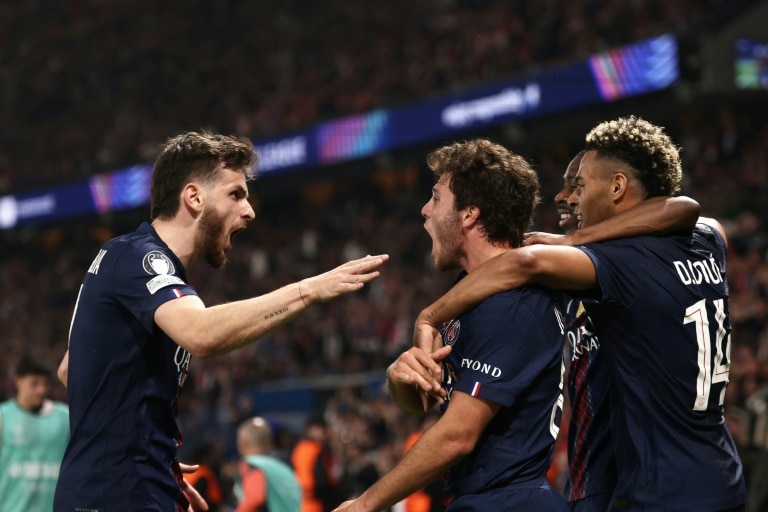
    Meanwhile, Chelsea confront their own challenges following a humiliating 8-2 aggregate defeat to Paris Saint-Germain in the Champions League. The Blues’ 3-0 loss at Stamford Bridge provoked visible discontent among supporters, who voiced their frustration throughout the match. Currently positioned sixth in the Premier League, Chelsea must regroup quickly for their encounter against Everton to maintain hopes of Champions League qualification through domestic performance.

    The Premier League’s European qualification landscape remains fluid, with fourth place currently guaranteeing Champions League access while fifth position may potentially secure entry through UEFA’s performance metrics. Liverpool, fresh from their 4-0 demolition of Galatasaray, travel to Brighton with manager Arne Slot emphasizing the necessity of maintaining consistency despite numerous setbacks throughout their campaign.

    This weekend’s fixtures feature several consequential matches including Bournemouth versus Manchester United on Friday, followed by Saturday encounters between Brighton and Liverpool, Fulham and Burnley, Everton and Chelsea, plus Leeds against Brentford. Sunday’s schedule includes the Tyne-Wear derby between Newcastle and Sunderland preceding the critical relegation six-pointer at Tottenham Hotspur Stadium.

  • Trump gets approval for gold coin in his likeness

    Trump gets approval for gold coin in his likeness

    A presidential advisory commission exclusively appointed by former President Donald Trump has authorized the creation of a commemorative gold coin bearing his likeness, generating significant political controversy. The approved design, confirmed by officials on Thursday, depicts Trump standing with clenched fists atop a desk on one side, while the reverse showcases an eagle with outstretched wings perched atop a bell-shaped object.

    The coin commemorates America’s 250th anniversary since founding, though it carries no monetary value as legal tender. While official pricing remains undisclosed, comparable commemorative coins issued by the US Mint typically command prices exceeding $1,000.

    US Treasurer Brandon Beach expressed enthusiasm for the project, stating: “We are thrilled to prepare coins that represent the enduring spirit of our country and democracy. There is no profile more emblematic for the front of such coins than that of our serving president.” Beach clarified that this design would differ from Trump imagery planned for two additional coins: a circulating $1 piece and a separate one-ounce gold coin.

    The approval process proved contentious from its inception. Last October, Trump dismissed all six members of the US Commission of Fine Arts, replacing them with personally selected appointees. Another advisory body, the Citizens Coinage Advisory Committee, had previously refused to place Trump’s coin on its February agenda for discussion.

    Historical precedent adds another layer to the controversy. As noted by committee member Donald Scarinci, no democratic nation since the 1776 Declaration of Independence has issued coins featuring democratically elected leaders during their active service. “Only those nations ruled by kings or dictators display the image of their sitting ruler on the coins of the realm,” Scarinci remarked during the February deliberations.

    The Commission of Fine Arts declined to comment when approached by AFP regarding the design approval, despite multiple media outlets having obtained and published images of the proposed coin.

  • Australia and Japan meet in the final of an internationally charged Women’s Asian Cup

    Australia and Japan meet in the final of an internationally charged Women’s Asian Cup

    SYDNEY — The Women’s Asian Cup soccer tournament culminates this Saturday with a highly anticipated final match between Australia and Japan, marking their third championship encounter in the past four tournaments. What began as a relatively low-profile competition three weeks ago eventually captured global attention, primarily due to the poignant participation of an Iranian team directly affected by ongoing Middle East conflicts.

    The Iranian squad, which had departed their homeland prior to recent military actions involving the United States and Israel, became an unexpected focal point throughout the tournament. Initially, seven team members received asylum from the Australian government, though five subsequently chose to return home, leaving only two players remaining under Australia’s protection.

    Japan secured their place in the final with a commanding 4-1 semifinal victory over South Korea in Sydney on Wednesday. Meanwhile, Australia advanced through a thrilling 2-1 win against defending champions China in Perth, courtesy of a spectacular winning goal from superstar striker Sam Kerr.

    Japanese coach Nils Nielsen, the Greenland-born Danish strategist who previously led Denmark to a runner-up finish in the 2017 Women’s Euros, hinted that his team has yet to reveal their full potential. “Please don’t tell Australia, but we have played better than we did today,” Nielsen remarked following the semifinal. “We needed to find an extra gear, and we did.”

    The mutual respect between coaches was evident as Nielsen specifically praised Australian players, including Kerr, whom he described as “one of the world’s best strikers.” Australian head coach Joe Montemurro reciprocated the admiration, emphasizing Kerr’s “immense presence and aura within the squad.”

    Kerr, whose tournament tally now stands at four goals, reflected on her previous Asian Cup experience as a 16-year-old when Australia claimed the 2010 title against North Korea via penalties. “I had no idea what I was in for,” Kerr recalled. “It was probably only until three Asian Cups later that we hadn’t won anything that I realized, ‘Oh, that was actually a big moment.’” Now 32, the legendary striker prepares for another potentially historic moment in Saturday’s final.

  • Australia PM heckled at Sydney mosque Ramadan event

    Australia PM heckled at Sydney mosque Ramadan event

    Australian Prime Minister Anthony Albanese encountered vocal protests during an Eid al-Fitr ceremony at Sydney’s Lakemba Mosque on Friday, highlighting deepening tensions within the nation’s Muslim community regarding the government’s position on the Israel-Gaza conflict.

    Accompanied by Home Affairs Minister Tony Burke, the prime minister attended morning prayers upon invitation from community leaders, marking the first such prime ministerial visit since the October 7th escalation of Middle Eastern hostilities. During proceedings, multiple attendees interrupted the event with chants of ‘genocide supporters’ and demands for the politicians to leave the premises.

    The Lebanese Muslim Association, which administers the mosque, subsequently issued a formal statement acknowledging heightened emotions while defending their engagement strategy with elected officials. ‘Choosing to engage with the leadership of this country is not a betrayal of our concerns,’ the organization stated. ‘It is how we give them a voice.’

    Law enforcement removed one particularly vocal protester from the premises, though no charges were filed according to Australian Associated Press reports. The incident represents the latest in a series of politically charged encounters at Australian Islamic events, following similar disruptions during last year’s federal election campaign.

    Security concerns have intensified for the Lakemba community, with the mosque receiving multiple threatening letters in recent months that prompted police investigations. Despite the reception, Prime Minister Albanese characterized his participation as ‘an honor’ in social media posts featuring photographs of him greeting worshippers.

  • Dozens of boys and young men are dying in South Africa’s traditional circumcision rites

    Dozens of boys and young men are dying in South Africa’s traditional circumcision rites

    In the rolling hills of South Africa’s Eastern Cape province, a cultural tradition meant to mark the transition to manhood has instead become a recurring tragedy. The recent death of 22-year-old Lamkelo Mtyho—a healthy young man with no known medical conditions—has exposed the dangerous underbelly of the nation’s initiation ceremonies, where at least 48 other boys and young men perished in the latest seasonal round.

    This deeply secretive practice, shrouded in cultural significance and participant silence, continues despite mounting deaths. Families like Mtyho’s grant their blessing for registered initiation schools, expecting their sons to return as culturally knowledgeable men. Instead, many receive the devastating news that their children collapsed from dehydration or succumbed to septic wounds in remote settings far from medical help.

    The practice occurs twice annually, with the next season beginning in June. While government-regulated schools exist with strict health standards, economic inequality drives many toward illegal operations. In the OR Tambo municipality alone, lawmakers found more illegal schools (68) than legal ones (66) during a 2022 visit.

    South African authorities have attempted reform through the 2021 law requiring initiation schools to meet rigorous safety standards, including proper surgical tools, hygiene training, and HIV awareness. Yet enforcement remains challenging due to the ritual’s sacred secrecy and remote locations. Recent months have seen at least 46 arrests related to illegal schools, including traditional surgeons, nurses, and complicit parents.

    Cultural leaders acknowledge the crisis. Morena Mpembe, a traditional leader overseeing a registered school in Phuthaditjhaba, emphasizes that initiation teaches respect and cultural values, but condemns how illegal operations are “damaging the initiation’s image.” Former Health Minister Zwelini Mkhize told parliament that 476 young people died in initiation ceremonies over a five-year period—”unacceptable and should never have happened.”

    For grieving families like Mtyho’s grandmother Nozinzile, the loss is personal and permanent. Her eldest grandson, who aspired to become “the man of the house,” now exists only in memory and the unfinished chores he left behind.