作者: admin

  • New Zealand wins the toss and bowls in the 3rd T20 against South Africa

    New Zealand wins the toss and bowls in the 3rd T20 against South Africa

    AUCKLAND, New Zealand — The decisive third match of the Twenty20 cricket series between New Zealand and South Africa commenced at Eden Park on Friday, with the five-game contest perfectly poised at 1-1. New Zealand skipper Mitchell Santner seized the initiative at the toss, electing to field first in a strategic move aimed at utilizing the pitch conditions.

    The series momentum has swung dramatically. South Africa initially dominated, securing a convincing seven-wicket victory in the opening match. New Zealand responded emphatically, leveling the series with a commanding 68-run triumph in the second encounter, setting the stage for a high-stakes showdown in Auckland.

    Team selections revealed tactical adjustments from both camps. The Proteas introduced right-arm pace bowler Lutho Sipamla, replacing Ottneil Baartman in their bowling attack. The Black Caps, meanwhile, made a single change to their lineup, recalling all-rounder Bevon Jacobs to the side in place of Josh Clarkson.

    The confirmed lineups for the crucial fixture are:

    New Zealand: Devon Conway, Tom Latham, Tim Robinson, Nick Kelly, Bevon Jacobs, Mitchell Santner (captain), James Neesham, Cole McConchie, Kyle Jamieson, Ben Sears, Lockie Ferguson.

    South Africa: Wiaan Mulder, Tony de Zorzi, Connor Esterhuizen, Rubin Hermann, Jason Smith, Dian Forrester, George Linde, Gerald Coetzee, Keshav Maharaj (captain), Nqobani Mokoena, Lutho Sipamla.

    The outcome of this match grants the winner a significant psychological and tactical advantage heading into the final two games of the closely fought series.

  • Awesome foursome: Panthers put on terrifying masterclass as wingers combine for five moments of magic

    Awesome foursome: Panthers put on terrifying masterclass as wingers combine for five moments of magic

    The Penrith Panthers have delivered a commanding statement to the National Rugby League (NRL) with a spectacular 40-4 demolition of the Sydney Roosters at Allianz Stadium, solidifying their position as the team to beat in the 2024 premiership race. The match showcased an exhibition of offensive brilliance and defensive mastery that left the Roosters reeling.

    While winger Brian To’o produced an early contender for Try of the Year with an extraordinary double-kick effort that left defenders baffled, it was his counterpart Tom Jenkins who stole the spotlight with a phenomenal four-try performance. Jenkins’ remarkable haul brings his season total to eight tries in just three games, marking an incredible return to form after his disappointing finals demotion last season.

    The Panthers’ offensive explosion was complemented by an impregnable defense that has conceded a mere 10 points across their opening three matches. The team’s strategic dominance was evident during a devastating 12-minute period where they scored four unanswered tries, completely dismantling the Roosters’ game plan.

    Nathan Cleary demonstrated why he remains the league’s premier playmaker, orchestrating attacks with surgical precision while consistently evolving his ball-playing capabilities. The performance was further highlighted by Paul Alamoti’s blistering speed that created scoring opportunities, including a perfectly executed play that resulted in a Dylan Edwards try.

    Despite the Roosters’ early promise with a fourth-minute try from Robert Toia and multiple first-half line breaks, Trent Robinson’s squad proved incapable of penetrating Penrith’s disciplined defensive structure. The highly-touted Roosters spine featuring James Tedesco, Sam Walker, Reece Robson, and Daly Cherry-Evans failed to make significant impact against the Panthers’ relentless pressure.

    The comprehensive victory signals a dramatic resurgence for Penrith, who finished at the bottom of the table after 12 rounds last season, now appearing stronger than ever as they pursue redemption and their fifth premiership title.

  • Australian shares tumble for third week on recession, rate hike fears

    Australian shares tumble for third week on recession, rate hike fears

    Australia’s financial markets concluded their third consecutive week in negative territory as mounting concerns over interest rate hikes and spiraling energy costs triggered recession warnings from leading economists.

    The benchmark S&P/ASX 200 index declined 69.40 points (0.82%) to settle at 8428.40, while the broader All Ordinaries index dropped 62.40 points (0.72%) to 8628.30 during Friday’s trading session. Seven of the eleven market sectors finished in negative territory, with materials and financial stocks leading the downturn with losses of 1.61% and 1.09% respectively.

    Mining giants faced significant pressure, with BHP retreating 1.82% to $47.47, Rio Tinto plunging 2.93% to $146.92, and Fortescue declining 0.42% to $18.96. The banking sector similarly struggled, as Commonwealth Bank fell 0.9% to $175.64, NAB dropped 2.25% to $45.57, Westpac decreased 1.05% to $40.70, and ANZ surrendered 1.13% to $36.60.

    The healthcare sector provided a rare bright spot, advancing 1.20% with CSL gaining 2.88% to $138.50, Sigma Healthcare surging 4.51% to $2.78, and Telix Pharmaceuticals climbing 2.74% to $12.75.

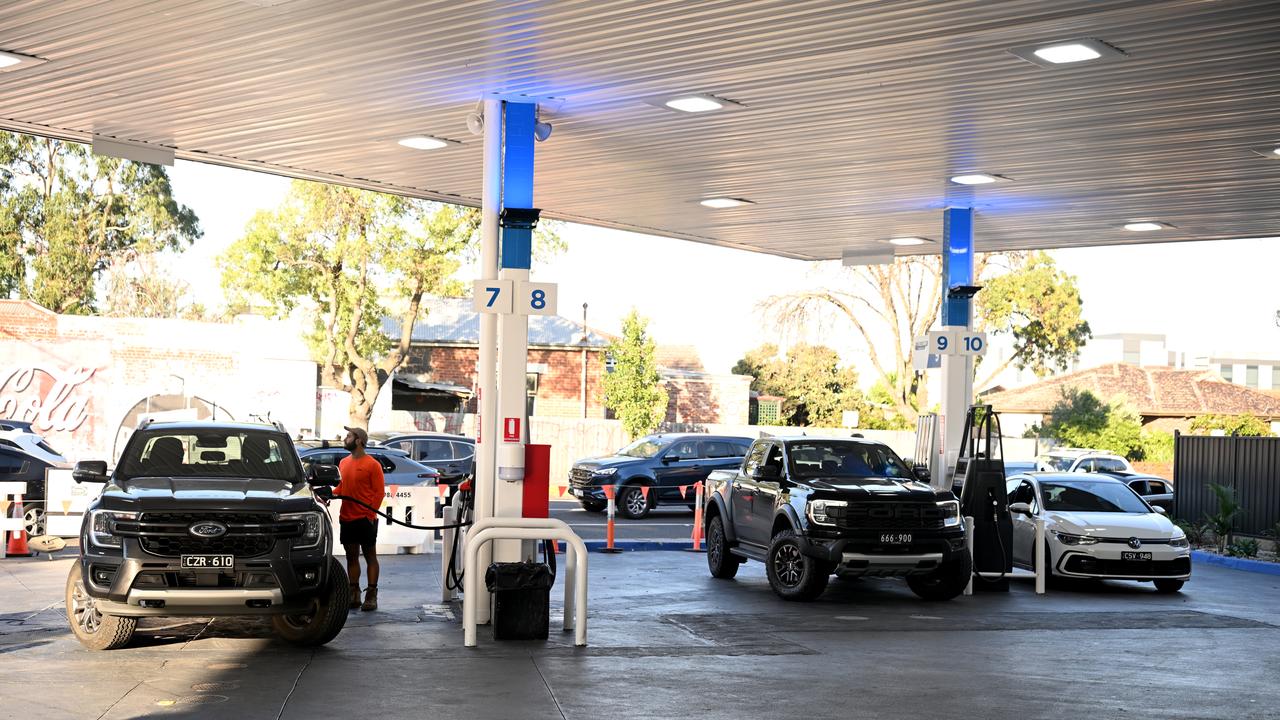
    Market analysts attributed the sustained sell-off to growing anxiety over energy-driven inflation and anticipated monetary tightening. AMP’s Head of Investment Strategy Shane Oliver warned that soaring fuel prices, currently averaging $2.38 per liter in capital cities, could reduce household disposable income by approximately $103 monthly when combined with recent mortgage rate increases.

    IG Market analyst Tony Sycamore noted that money markets now price in 67 basis points of additional rate hikes from the Reserve Bank of Australia by year-end, potentially elevating the cash rate to 4.85%—a level not seen since November 2008. This monetary policy trajectory aligns with hawkish responses from major central banks globally, including the US Federal Reserve and European Central Bank.

    In corporate developments, Coles Group edged 0.75% higher to $21.59 after announcing more frequent fuel levy reviews, while Humm Group shares jumped 2.84% to $0.72 following regulatory review applications regarding takeover disclosures.

  • Israel strikes ‘decimated’ Iran as war roils markets

    Israel strikes ‘decimated’ Iran as war roils markets

    The Middle East conflict entered a dangerous new phase on Friday as Israel launched fresh strikes against Tehran, with Prime Minister Benjamin Netanyahu declaring Iran was being “decimated” in the ongoing hostilities. The Israeli military confirmed targeting “infrastructure of the Iranian terror regime” in the capital, which has endured near-daily bombardment since the war began on February 28.

    Netanyahu asserted at a press conference that the conflict had effectively neutralized Iran’s uranium enrichment capabilities and ballistic missile production as the confrontation approaches its fourth week. “We are winning and Iran is being decimated,” the Israeli leader stated, while predicting the war would conclude “a lot faster than people think” without providing specific timelines.

    The Iranian response has intensified with retaliatory attacks on Israel and Gulf nations, particularly targeting energy infrastructure that has triggered global concerns about potential energy supply disruptions. Several explosions were reported over Jerusalem Thursday night, while the United Arab Emirates, Kuwait, and Saudi Arabia all reported missile and drone attacks during the Eid al-Fitr observances marking Ramadan’s conclusion.

    The conflict’s regional expansion has proven devastating for Lebanon, where health officials report over 1,000 fatalities from Israeli airstrikes targeting Hezbollah strongholds. Lebanese President Joseph Aoun has renewed calls for truce negotiations, which French officials indicated would require Israel’s participation.

    Energy markets have experienced significant volatility following Iranian missile strikes on Qatar’s massive Ras Laffan natural gas complex, which Qatar’s state energy company estimates could cause $20 billion in annual lost revenue and require five years for complete restoration. The attacks have driven natural gas prices upward and maintained oil prices near $100 per barrel, though crude prices saw modest relief during early Asian trading in response to Netanyahu’s optimistic timeline predictions.

    The human toll continues to mount across the region, with many families canceling traditional Eid celebrations amid displacement and economic hardship. Beirut resident Aziza Ahmad captured the somber mood: “There’s nothing to celebrate. Maybe it’s different for the rich, but the joy of Eid is missing here… We have no money, and the displaced people can’t even go back home.”

    International diplomatic efforts remain complex, with former President Trump acknowledging coordination with Israel while distancing himself from specific operations. Pentagon officials indicated no clear endpoint for the conflict, emphasizing that resolution would occur “at the president’s choosing” when strategic objectives are achieved.

  • Nasa’s Moon rocket Artemis rolls back to pad for possible April launch

    Nasa’s Moon rocket Artemis rolls back to pad for possible April launch

    NASA has initiated the meticulous transport of its colossal Space Launch System (SLS) rocket for a second rollout to Launch Pad 39B at Florida’s Kennedy Space Center. This critical maneuver follows extensive repairs to resolve a technical issue that previously halted launch preparations.

    The 98-meter (322-foot) rocket, paired with the Orion spacecraft, embarked on its slow four-mile journey from the Vehicle Assembly Building (VAB) to the coastal launch complex. The massive Crawler-Transporter-2, a veteran NASA vehicle dating back to 1965, carries the approximately 5,000-tonne assembly at a deliberate pace not exceeding 1 mph. This cautious speed minimizes structural stress on the multi-billion dollar system during transit.

    Engineering teams recently completed repairs addressing a helium system malfunction in the rocket’s upper stage that forced the mission’s postponement in March. Specialists working within the VAB replaced suspect components and renewed batteries in critical systems before conducting comprehensive retests.

    Upon reaching the launch pad, technicians will perform several days of verification procedures including reconnecting the launch tower, conducting pressure tests on the revised helium system, and executing simulated countdown sequences using the actual flight computers and networks.

    The Artemis II mission represents humanity’s first crewed lunar flyby in over five decades, featuring astronauts Reid Wiseman, Victor Glover, Christina Koch, and Jeremy Hansen. The crew has entered pre-flight quarantine protocols and will participate in final rehearsals at Kennedy Space Center as NASA targets early April launch opportunities beginning April 1st.

    Mission managers will review all test data before making a final launch decision. If successful, this ten-day mission will orbit the Moon’s far side before returning to Earth, paving the way for subsequent Artemis missions including planned lunar surface landings.

  • Fire at South Korean auto parts factory injures at least 53

    Fire at South Korean auto parts factory injures at least 53

    A major industrial fire erupted at an automotive components manufacturing facility in Daejeon, South Korea, on Friday afternoon, resulting in significant casualties and prompting a large-scale emergency response. The incident, which occurred at approximately 1:17 p.m. local time, has left at least 53 individuals injured, with 24 sustaining serious wounds, according to Daedeok District Fire Chief Nam Deuk-woo.

    Emergency authorities continue search operations for 14 individuals potentially trapped within the facility, utilizing mobile signal tracking technology to locate missing personnel. While officials have not confirmed any life-threatening conditions among the injured, witness accounts describe a rapid escalation of the blaze accompanied by what sounded like an explosion, leading to dense gray smoke enveloping the industrial complex.

    The structural integrity of the affected building has been severely compromised, preventing firefighting teams from entering due to collapse risks. Response efforts have prioritized containing the fire’s spread to adjacent facilities and securing hazardous chemicals present on-site.

    Injury patterns reveal varied trauma mechanisms, with some victims suffering from smoke inhalation while others sustained injuries from emergency building evacuations. The incident has mobilized substantial resources, including over 250 emergency personnel and approximately 100 specialized vehicles deployed to the scene.

    South Korean President Lee Jae Myung has ordered full mobilization of all available personnel and equipment to support containment and rescue operations. The cause of the fire remains under investigation by authorities, who have not yet determined the exact sequence of events that led to the rapid propagation of the blaze.

  • Matildas battle Japan in do-or-die Asian Cup final to chase ‘once in a lifetime’ glory

    Matildas battle Japan in do-or-die Asian Cup final to chase ‘once in a lifetime’ glory

    Australian football stands on the precipice of history as the Matildas prepare for their decisive Women’s Asian Cup final confrontation against Japan at Sydney’s Olympic Stadium. The championship match represents more than mere silverware—it symbolizes the culmination of a sixteen-year quest for major tournament glory for Australia’s celebrated golden generation of women’s footballers.

    The pathway to Saturday’s final saw Australia narrowly overcome reigning champions China 2-1 in a tense semi-final encounter, while Japan delivered a commanding 4-1 victory against South Korea, setting the stage for a classic tactical showdown between two footballing powerhouses.

    Defender Ellie Carpenter articulated the team’s profound motivation, characterizing the occasion as a “once in a lifetime opportunity” for squad members approaching the twilight of their international careers. “It’s been 16 years since we lifted that trophy,” Carpenter reflected. “This will probably be the last semi-final we play on home soil in a major tournament. For us footballers, we want to inspire the next generation and we did that at the World Cup—this is another opportunity for us tomorrow.”

    Head coach Joe Montemurro emphasized the significance beyond athletic achievement, noting: “It’s a real important point for football but also for an amazing generation of players that have an opportunity that they have worked so hard for. I am so excited for them but more importantly for the nation and what it means.”

    The final is anticipated to draw a capacity crowd to the 83,000-seat Olympic Stadium, though ticketing availability scans revealed remaining vacancies hours before kickoff. This follows scrutiny of attendance figures during the Perth semi-final, where 35,170 spectators populated a stadium designed for 60,000, creating visual gaps in broadcasting coverage.

    Montemurro dismissed underdog narratives ahead of the final, asserting: “There are no favorites in the final. Japan seem to find solutions in whatever situation you throw at them. As much of a great team as they are, they do have a couple of weaknesses. If we find some continuity and some rhythm with the ball we could do some good things in the game.”

    The absence of captain Sam Kerr from pre-match media engagements raised eyebrows, but Montemurro assured journalists the team was “sharing the love” with press responsibilities and confirmed Kerr’s full fitness and readiness.

    Transport NSW advised spectators to utilize complimentary public transportation included with match tickets, anticipating significant congestion from concurrent sporting events including the GWS Giants versus St Kilda AFL match at nearby ENGIE Stadium.

    Meteorological conditions may introduce additional challenges, with forecasts predicting intermittent showers throughout Saturday and potential afternoon thunderstorms.

    Victory would provide crucial momentum building toward next year’s FIFA Women’s World Cup in Brazil, cementing the Matildas’ legacy while inspiring future generations of Australian football talent.

  • The war in Iran raises pressure on Ukraine while Russia prepares new offensives

    The war in Iran raises pressure on Ukraine while Russia prepares new offensives

    As U.S.-mediated peace negotiations remain suspended amid Middle Eastern hostilities, Russian President Vladimir Putin appears poised to intensify military operations against Ukraine. This strategic shift occurs amid growing fractures within Western alliances and concerns over diverted military resources.

    Russia’s war economy is experiencing unexpected financial reinforcement from surging global oil prices, substantially bolstering Moscow’s military budget. Concurrently, U.S. air defense capabilities face significant strain from Iranian attacks in the Gulf region, raising alarms about depleted resources available for Ukrainian support during the fifth year of sustained conflict.

    European allies have reiterated commitments to sustain assistance, yet internal disputes over a crucial €90 billion European Union loan package reveal deepening challenges in maintaining unified support. The refusal of NATO members to deploy naval assets to secure the Strait of Hormuz has provoked strong criticism from President Donald Trump, exposing additional geopolitical fissures with potential consequences for Ukrainian defense efforts.

    Ukrainian President Volodymyr Zelenskyy has attempted to maintain Washington’s engagement by offering military expertise in countering Iranian drone technology, deploying over 200 specialists to the Gulf. This overture has been dismissed by Trump, who asserted that American forces require no assistance from Kyiv.

    Military analysts indicate Russian forces are preparing for renewed offensive operations across the 1,200-kilometer front line. The Institute for the Study of War reports intensified artillery barrages and drone attacks aimed at weakening Ukrainian defenses before anticipated ground assaults. Russian objectives reportedly include securing remaining Ukrainian-held territories in Donetsk and establishing bridgeheads toward key industrial centers.

    Ukrainian forces have launched counteroffensives in Dnipropetrovsk and Zaporizhzhia regions, successfully complicating Russian operational planning. According to assessments, these tactical victories force Moscow to choose between defensive responses and allocating resources for planned offensive operations elsewhere along the front.

    The nature of combat has evolved from initial rapid maneuvers to protracted attrition warfare characterized by small-unit engagements in urban environments. Drone surveillance has limited large-scale troop movements, while Russia has increasingly employed long-range strikes against Ukrainian energy infrastructure.

    Personnel recruitment presents challenges for both nations. Following Russia’s unpopular mobilization of 300,000 reservists, military planners have shifted toward volunteer recruitment and foreign fighters attracted by financial incentives. Current estimates suggest approximately 700,000 troops are engaged on each side.

    Peace negotiations remain stalled with fundamental disagreements persisting. Moscow demands Ukrainian withdrawal from four annexed regions, NATO membership renunciation, military reduction, and cultural concessions. Kyiv insists on ceasefire arrangements with security guarantees and maintains territorial integrity claims.

    European nations accuse Russia of deliberately prolonging negotiations while pursuing military advantages, though Moscow rejects European participation in peace talks. Kremlin officials have stated they would consider European monitoring forces as legitimate targets.

    Analyst Sam Greene of King’s College London characterizes Moscow’s strategy as engaging Washington sufficiently to prevent Ukrainian military advantages while keeping European involvement minimized without enabling substantive diplomatic progress.

    The U.S. has granted Russia temporary sanctions waivers for oil shipments already in transit, drawing criticism from European and Ukrainian officials. Trump has increasingly portrayed Zelenskyy as obstructing potential peace agreements, claiming Putin demonstrates greater readiness for diplomatic resolution.

    Zelenskyy has expressed growing concern that Middle Eastern conflicts are negatively impacting Ukraine’s military position, noting postponed negotiations, Russian financial benefits from elevated oil prices, and potential shortages of critical air defense systems including Patriot missiles.

  • What to know about Denmark’s election that follows a standoff with the US over Greenland

    What to know about Denmark’s election that follows a standoff with the US over Greenland

    Danish citizens are preparing to cast their votes in a consequential general election that will determine the nation’s leadership for the coming four-year term. This political contest emerges against the backdrop of a notable diplomatic confrontation with former U.S. President Donald Trump regarding Greenland’s status within the Danish realm.

    Prime Minister Mette Frederiksen, strategically timing the election announcement last month, appears to be capitalizing on her firm handling of the Greenland territorial dispute. The 48-year-old Social Democratic leader, who has governed since 2019, seeks an unprecedented third consecutive term. Her administration has garnered international recognition for steadfast support of Ukraine against Russian aggression while maintaining restrictive immigration policies.

    Despite facing declining popularity due to rising living costs, Frederiksen experienced a resurgence in polling numbers following her government’s navigation of the Greenland crisis. The situation escalated in January when Trump briefly threatened tariffs against European nations opposing U.S. sovereignty claims over the Arctic territory.

    Election analyst Kasper Møller Hansen from the University of Copenhagen predicts Frederiksen will likely retain power, though potentially with her party’s weakest performance yet, possibly falling short of their 2022 vote share of 27.5% while maintaining first place.

    The prime minister faces challenges from center-right opponents, including Defense Minister Troels Lund Poulsen’s Liberal Party and Alex Vanopslagh’s Liberal Alliance, which advocates for tax reduction, bureaucratic simplification, and nuclear energy adoption. However, Vanopslagh’s admission of past cocaine use may undermine his campaign.

    Immigration policy remains a heated issue, with Frederiksen proposing stricter measures including an “emergency brake” on asylum applications and enhanced deportation protocols for convicted foreign nationals. Denmark received only 1,961 asylum applications last year, dramatically fewer than the 21,000 processed during the 2015 migration crisis.

    Domestic concerns including cost of living, pension reforms, and even agricultural policy regarding pig production levels have emerged as unexpected campaign issues. The left-wing Alternative party advocates for substantial reductions in animal production and improved welfare standards.

    The election will also test Greenland’s political leadership, where Prime Minister Jens-Frederik Nielsen faces governance challenges after coalition fractures emerged during the campaign period.

    Voters will elect representatives to the 179-seat Folketing, including two seats each from Greenland and the Faroe Islands. With over 4.3 million eligible voters, high participation is anticipated, building upon the 84.2% turnout recorded in the 2022 election.

  • High oil prices knock down stocks and erase Wall Street’s hopes for a cut to interest rates

    High oil prices knock down stocks and erase Wall Street’s hopes for a cut to interest rates

    Wall Street experienced a significant downturn on Friday as escalating oil prices and shifting Federal Reserve policy expectations rattled investors. The S&P 500 declined 1.5%, marking its fourth consecutive weekly decline—the longest such streak in twelve months. The Dow Jones Industrial Average dropped 443 points (1%) while the Nasdaq composite tumbled 2% amid broad-based selling pressure.

    The market deterioration accelerated alongside a sharp reversal in oil markets. Brent crude, the international benchmark, surged 3.3% to settle at $112.19 per barrel, while U.S. benchmark crude gained 2.3% to reach $98.32. Concurrently, Treasury yields jumped substantially, with the 10-year yield climbing to 4.38% from 4.25% just a day earlier—representing a dramatic increase from the 3.97% level observed before recent geopolitical tensions.

    According to CME Group data, traders have virtually eliminated bets on Federal Reserve rate cuts for 2024, with some market participants now pricing in potential rate hikes by 2026—a scenario considered highly improbable before recent developments. This paradigm shift reflects growing concerns that prolonged energy price inflation might force central banks to maintain restrictive monetary policies.

    Ann Miletti, Head of Equity Investments at Allspring Global Investments, noted that sustained elevated oil prices could ultimately dampen economic activity sufficiently to prevent Fed tightening. However, she warned that if current conditions persist for three months, investor caution would increase substantially as businesses struggle to adapt to suddenly higher energy costs.

    The selling pressure affected approximately 75% of S&P 500 constituents, with small-cap stocks particularly impacted. The Russell 2000 index fell 2.3%, reflecting heightened sensitivity to interest rate expectations among smaller companies. Super Micro Computer plummeted 33.3% following allegations against company executives regarding unauthorized technology transfers, though FedEx gained 0.8% after reporting stronger-than-expected quarterly earnings.

    Globally, European and Asian markets followed Wall Street lower, while gold prices declined to $4,574.90 per ounce—further challenging its traditional status as a safe-haven asset during periods of market uncertainty.