作者: admin

  • Louise Minchin taken to hospital with frostbite during Artic challenge

    Louise Minchin taken to hospital with frostbite during Artic challenge

    BBC presenter Louise Minchin has been hospitalized after developing frostbite during an extreme Arctic cycling expedition in Canada’s Northwestern Territories. The 57-year-old journalist was participating in the Inuvik Weekend Warrior Fat Bike Challenge—a three-day, 300-mile (483km) race across frozen rivers and remote Arctic wilderness—to raise funds for the Duke of Edinburgh’s Award.

    Minchin and her teammate, Guinness World Record endurance athlete Mimi Anderson, 61, were forced to abandon the challenge just 14 hours into the event after encountering life-threatening conditions. Despite extensive preparation for sub-zero temperatures, they faced wind chills plummeting to -36°C (-33°F), with ambient temperatures reaching -40°C (-40°F).

    The broadcaster announced their withdrawal on Friday evening, noting that the team had completed approximately 140 kilometers before determining that continuing would pose ‘a huge risk.’ Minchin shared updates from her hospital bed via Instagram, stating: ‘We are out of the race but we are safe, warm and being well looked after. Turns out we were right to stop. We both have frostbite.’

    Medical authorities indicate that frostbite can develop within minutes under such extreme conditions, particularly affecting extremities like fingers and toes. Symptoms progress from numbness and skin discoloration to severe tissue damage if exposure continues.

    Fellow television personalities, including Susanna Reid and Helen Skelton, have expressed support and admiration for the attempt. Minchin and Anderson remain hospitalized but are reported to be ‘in good spirits’ while receiving treatment.

  • Iranians mark Eid as Trump mulls winding down war

    Iranians mark Eid as Trump mulls winding down war

    As Iranian worshippers gathered for Eid al-Fitr prayers marking the end of Ramadan, the traditional celebrations unfolded against a backdrop of heightened military tensions and nuclear facility attacks. The spiritual occasion, typically led by Iran’s supreme leader, saw Ayatollah Mojtaba Khamenei remaining absent from public view following his recent ascension to power after his father’s death in a U.S.-Israeli strike.

    In central Tehran’s Imam Khomeini grand mosque, judiciary head Gholam Hossein Mohseni Ejei presided over overflowing prayers, with worshippers spilling into surrounding streets. The religious observance coincided with reports of renewed attacks on Iran’s Natanz nuclear facility, which hosts underground centrifuges for uranium enrichment. Iran’s atomic energy organization confirmed the complex was targeted, though no nuclear material leakage was reported.

    The conflict, now entering its fourth week, has triggered global energy market disruptions with oil prices surging past $105 per barrel and the strategic Strait of Hormuz facing blockages. In a significant policy shift, the U.S. Treasury announced temporary sanctions relief for Iranian oil already loaded onto vessels before March 20, allowing deliveries through April 19.

    President Donald Trump signaled potential de-escalation, stating military objectives were nearly met and considering winding down Middle East operations. However, contradictory deployments emerged as U.S. media reported thousands of additional marines heading to the region, suggesting possible ground operations.

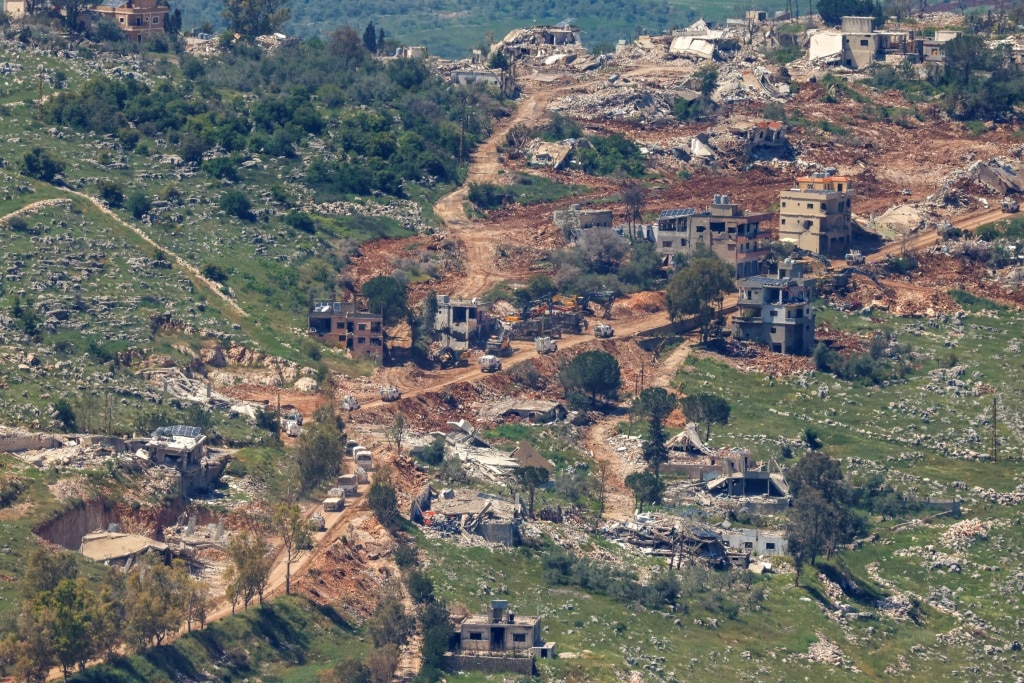
    The conflict has expanded beyond Iran-Israel hostilities, with Lebanon experiencing regular Israeli bombardments targeting Hezbollah strongholds. Lebanese health authorities reported over 1,000 fatalities and one million displaced persons, while Israel confirmed two soldier casualties in southern Lebanon.

    Russian President Vladimir Putin reaffirmed Moscow’s alliance with Tehran, offering support during what he termed ‘severe trials.’ Meanwhile, Trump criticized NATO allies as ‘cowards’ and demanded they secure the Strait of Hormuz, emphasizing that the U.S. should not bear sole responsibility for safeguarding the critical waterway.

    Iranian Foreign Minister Abbas Araghchi announced Tehran would impose shipping restrictions on countries involved in attacks against Iran while offering assistance to neutral vessels. The multifaceted conflict continues to reshape regional alliances and global energy markets with no immediate resolution in sight.

  • Megaproject expected to unlock vast potential

    Megaproject expected to unlock vast potential

    Kenya has inaugurated a monumental infrastructure endeavor—the 263-kilometer Standard Gauge Railway extension from Naivasha to Kisumu—designed to catalyze economic transformation in the nation’s western regions. This strategic project connects to the existing Chinese-built Nairobi-Mombasa line, creating an integrated transport network that penetrates Kenya’s agricultural heartlands while extending toward vital trade routes across East and Central Africa.

    President William Ruto emphasized the project’s critical role in consolidating Kenya’s position as the logistical nexus for the region during Thursday’s launch ceremony in Narok. “A railway terminating at Naivasha remains incomplete,” Ruto stated, “as it fails to reach western Kenya’s primary production zones or integrate with Kisumu’s lake transport ecosystem on Lake Victoria.”

    The railway’s implementation addresses pressing logistical challenges. Current transport inefficiencies see cargo from Mombasa Port requiring over 100 hours to reach Kampala, Uganda, despite nearly 70% of the port’s 7.37 million metric tons of first-half 2023 cargo being Uganda-bound. The new corridor will directly link Nairobi’s industrial district with key agricultural zones—Narok, Bomet, Kericho, and Nyamira—before terminating at Kisumu’s commercial hub.

    Economic revitalization stands as a central objective. Western Kenya produces substantial tea, maize, sugar, and rice harvests, while Lake Victoria sustains extensive fishing industries. The railway is projected to reduce transport costs, increase freight capacity, generate employment during construction, and alleviate road congestion by transitioning cargo from trucks to rail.

    China Communications Construction Company (CCCC) will execute the project as part of the Belt and Road Initiative framework. Chairman Song Hailiang committed to implementing enhanced environmental safeguards, building upon the ecological protection model established by the Nairobi-Mombasa line—a project previously recognized by the UN Environment Programme. “Green design and low-carbon construction will be implemented throughout the route,” Song affirmed, “with alignment optimized to avoid ecologically sensitive areas.”

    Kenyan officials highlighted the project’s significance for regional integration under the African Continental Free Trade Agreement, anticipating strengthened trade connections across East and Central Africa through this transformative infrastructure development.

  • Trump remark mars US-Japan talks

    Trump remark mars US-Japan talks

    A high-stakes meeting between Japanese Prime Minister Sanae Takaichi and US President Donald Trump at the White House on Thursday was marred by diplomatic awkwardness and concerns over escalating military cooperation in the Asia-Pacific region. The discussions, primarily focused on the ongoing US-Iran conflict and Japan’s potential role, took an unexpected turn when Trump invoked Japan’s 1941 attack on Pearl Harbor to justify lack of consultation with allies regarding recent strikes against Iran.

    During an Oval Office press conference, Trump responded to a Japanese reporter’s question about allied consultation with startling historical analogy: “We wanted surprise. Who knows better about surprise than Japan? Why didn’t you tell me about Pearl Harbor?” Prime Minister Takaichi’s visibly surprised reaction captured the diplomatic discomfort of the moment.

    Despite this strained exchange, Trump expressed appreciation for Japan’s support regarding Iran, contrasting it favorably with NATO’s response, though without specifying Japan’s potential contributions. Earlier, Takaichi had made the controversial assertion that Trump alone could bring world peace, drawing immediate criticism from Japanese opposition leaders who characterized the statement as “shocking” and “a serious problem.”

    The meeting produced significant bilateral agreements, including over $70 billion in new US energy investments and enhanced defense cooperation. The White House announced Japan’s commitment to rapidly strengthening its defense capabilities and increasing its military budget. Both nations affirmed plans to deploy advanced capabilities in Japan and advance joint missile production initiatives.

    Regional security experts expressed deep concern about these developments. Da Zhigang of the Heilongjiang Provincial Academy of Social Sciences warned that US-Japan military collaboration “is driven by ulterior motives and severely undermines security in the Asia-Pacific region.” Professor Zhang Yulai of Nankai University noted that the partnership serves mutual interests: the US seeks to reduce financial burdens of troop deployment, while Japan aims to overcome post-war military constraints toward becoming a “normal country.”

    The so-called “denial defense posture”—a recent Japanese military development goal—represents a significant departure from the nation’s traditional exclusively defense-oriented policy. Analysts caution that this shift, combined with joint missile development and advanced military deployments, will likely intensify regional arms races and increase conflict risks throughout the Asia-Pacific.

    The meeting occurred against a backdrop of domestic opposition in Japan, where over 10,000 citizens rallied outside Tokyo’s Diet building protesting constitutional revisions and long-range missile plans, highlighting the contentious nature of Japan’s military expansion.

  • Vietnam to break ground on new high-speed rail line

    Vietnam to break ground on new high-speed rail line

    Vietnam is poised to commence construction on a transformative high-speed railway infrastructure project next month, marking a significant milestone in the nation’s transportation development strategy. The Hanoi-Quang Ninh high-speed rail line, scheduled for groundbreaking ceremonies on April 12, represents a critical component of Vietnam’s broader economic modernization agenda.

    This advanced railway system will span approximately 120 kilometers, connecting four major provinces and cities: Hanoi, Bac Ninh, Hai Phong, and the strategically important port province of Quang Ninh. The fully electrified, double-track standard-gauge railway will achieve operational speeds up to 350 kilometers per hour, dramatically reducing travel time between the capital Hanoi and Quang Ninh from the current three-hour road journey to merely 30 minutes.

    The project gains particular significance given Quang Ninh’s status as home to UNESCO World Heritage Site Halong Bay and its unique geographical position sharing both land and maritime borders with China’s Guangxi Zhuang autonomous region. This connectivity assumes greater importance within the context of Vietnam-China bilateral relations, where infrastructure linkages are increasingly viewed as strategic imperatives.

    VinSpeed, the high-speed rail subsidiary of Vietnamese conglomerate Vingroup, has been designated as the primary investor and construction lead for this ambitious undertaking. The company has established a strategic partnership with German industrial giant Siemens for the supply of rolling stock and integrated subsystem technologies. Project timelines indicate targeted completion and operational readiness by 2028.

    Concurrently, Vietnam is advancing additional railway initiatives, including the ongoing first-phase construction of the Lao Cai-Hanoi-Hai Phong line designed to interface directly with China’s rail network. These developments occur alongside progress on the national North-South high-speed line connecting Hanoi with Ho Chi Minh City, scheduled for investment before 2030.

    At a recent meeting convened at Lang Son Province near the China-Vietnam border, General Secretary To Lam of the Communist Party of Vietnam Central Committee emphasized that enhanced railway connectivity must be recognized as a “strategic breakthrough” in bilateral economic cooperation. He articulated that strengthened rail ties would propel trade relations into a more substantive, effective, and sustainable phase while serving as a powerful catalyst for infrastructure modernization, logistics cost reduction, and enhanced global supply chain integration.

  • ‘BTS is everything for us’: K-pop fans gather in Seoul for comeback show

    ‘BTS is everything for us’: K-pop fans gather in Seoul for comeback show

    Seoul transformed into a global epicenter of pop culture as an estimated 260,000 devoted fans, both domestically and internationally, flooded the city to witness a historic musical event. The occasion was the long-awaited collective performance of K-pop supergroup BTS, their first since announcing a hiatus for mandatory military service in 2022. The atmosphere was electric with palpable anticipation, underscoring the group’s unwavering global influence.

    The event, more than a concert, served as a powerful testament to the unique bond between the seven-member ensemble and their massive fanbase, known as ARMY. The streets surrounding the venue buzzed with excitement as fans, many adorned in official merchandise and coordinating their outfits in the group’s signature colors, participated in pre-event celebrations. The collective sentiment was perfectly captured by one fan who stated, ‘BTS is everything for us,’ a declaration echoed by countless others in attendance.

    This gathering marks a significant milestone in the Hallyu wave, demonstrating the potent economic and cultural impact of K-pop. Local businesses experienced a substantial surge, with hotels fully booked and retail sales soaring. Industry analysts are closely monitoring the event’s success as a barometer for the genre’s sustained global appeal and its capacity to drive tourism. The performance is widely seen not just as a ‘comeback,’ but as a triumphant return that solidifies BTS’s legacy as a defining act of a generation, setting the stage for their planned full group activities in 2025.

  • Tehran warns of ‘zero restraint’

    Tehran warns of ‘zero restraint’

    Iran has issued a severe warning that it will respond with “zero restraint” if Israeli forces continue targeting its infrastructure, dramatically escalating tensions in the ongoing Middle East conflict. The stark declaration came from Iranian Foreign Minister Seyed Abbas Araghchi, who stated via social media platform X that Iran’s previous responses represented “a fraction of our power” and that restraint was only exercised out of respect for de-escalation requests.

    The diplomatic warning coincides with reports of a $200 billion Pentagon funding request to Congress to sustain military operations, which Iranian officials have characterized as a “trillion-dollar ‘Israel First tax’” about to impact the American economy. US Defense Secretary Pete Hegseth acknowledged the substantial funding request while declining to establish a definitive timeframe for the conflict’s resolution.

    Regional analysts interpret Iran’s position as demonstrating both confidence and readiness to continue hostilities. Dina Yulianti Sulaeman, director of the Indonesia Center for Middle East Studies, noted that “Iran doesn’t actually want to attack civilian infrastructure, but if Iran is attacked again, it will respond with a much more massive response.”

    The conflict has expanded beyond direct military engagements, with Iran implementing a “selective blockade” of the strategically vital Strait of Hormuz, permitting only vessels from approved nations to transit the critical waterway. According to maritime reports, at least nine ships had navigated through a designated corridor near Iran’s Larak Island as of Wednesday.

    Civilian populations across the Gulf region face increasing disruption as security concerns prompted authorities in Qatar, Kuwait, and the United Arab Emirates to restrict traditional Eid al-Fitr outdoor prayers and celebrations. Multiple Gulf nations reported renewed Iranian drone and missile attacks early Friday, just before the commencement of the Eid holiday.

    The escalation continues despite internal opposition within US security circles, as evidenced by the resignation of Joe Kent from his position as director of the US National Counterterrorism Center. Kent reportedly departed in protest of military action against Iran, asserting the country “posed no imminent threat” to American interests and attributing the conflict to “Israeli pressure” and Tel Aviv’s influential lobbying efforts.

  • Matisse’s last years cut out — but not pasted — at Paris expo

    Matisse’s last years cut out — but not pasted — at Paris expo

    A groundbreaking exhibition at Paris’s Grand Palais unveils the remarkable twilight years of Henri Matisse’s artistic journey, revealing an unexpected surge of creativity despite immense personal and historical challenges. ‘Matisse 1941-1954,’ opening Tuesday, presents 320 diverse works including paintings, sketches, textiles, and the artist’s iconic gouache cut-outs that defined his final creative period.

    The retrospective chronicles a profoundly difficult era marked by Nazi occupation—during which Matisse was labeled a ‘degenerate’ artist—and a near-fatal surgery in 1941 that left him partially disabled. Contrary to popular belief that he abandoned painting during this period, exhibition curator Claudine Grammont emphasizes that Matisse actually produced 75 paintings alongside his revolutionary cut-out works.

    ‘This represents the most prolific moment of his career,’ states Grammont, former director of the Matisse Museum in Nice. ‘It’s truly his apotheosis—a state of nonchalance, detachment, and ultimately, a moment of grace.’ The exhibition showcases seminal series including ‘Blue Nudes,’ ‘Jazz,’ and the monumental ‘La Gerbe’ (The Sheaf), demonstrating how the aging artist developed ‘a new iconographic vocabulary’ through his cut-out technique.

    Visitors will encounter four of the now-ubiquitous ‘Blue Nudes’ that have become cultural touchstones, along with the complete ornamentation for the Vence Chapel. The exhibition design recreates the intimacy of Matisse’s studio, with spacious rooms housing large gouache cut-outs once pinned to his walls. Grammont notes that Matisse often worked at night due to insomnia, producing 40 works in 1950 alone—an extraordinary output for an octogenarian.

    The exhibition runs until July 26, offering a comprehensive look at how physical limitation and historical turmoil ultimately fueled rather than hindered one of modern art’s most significant creative explosions.

  • Russian drone attack kills two in Ukraine ahead of talks in US, officials say

    Russian drone attack kills two in Ukraine ahead of talks in US, officials say

    A Russian drone assault on the southeastern Ukrainian city of Zaporizhzhia has resulted in two fatalities and left two children, aged 11 and 15, injured. The attack occurred on Saturday, casting a shadow over forthcoming diplomatic discussions between Ukrainian and American officials scheduled to take place in the United States.

    Local authorities confirmed the strike targeted a residential area, underscoring the continued vulnerability of civilian zones in the ongoing conflict. Zaporizhzhia, one of four southeastern regions annexed by Russia in 2022 despite lacking full territorial control, has endured frequent military assaults since the initiation of full-scale hostilities.

    The upcoming US-mediated negotiations face significant challenges, having previously failed to halt combat operations or modify Moscow’s fundamental demands. Primary agenda items include organizing a new trilateral dialogue involving Russia and addressing tensions between Ukrainian President Volodymyr Zelensky and US President Donald Trump. The American leader has previously characterized Zelensky as the principal impediment to peaceful resolution.

    Complicating diplomatic efforts, the Trump administration recently implemented a one-month waiver easing sanctions on nations purchasing Russian oil—a move welcomed by the Kremlin but criticized by Ukrainian advocates as eroding Western consensus on economic pressure against Moscow.

    President Zelensky contends that resource diversion due to Middle East conflicts has created critical missile shortages for Ukrainian forces. He further alleges that Russian President Vladimir Putin seeks prolonged confrontation between the US, Israel and Iran to weaken international support for Kyiv.

    In a strategic exchange, Ukraine has offered its advanced drone technology to the United States, potentially enhancing capabilities against Iranian threats while strengthening bilateral cooperation amid evolving geopolitical dynamics.

  • Russian strike on Zaporizhzhia kills 2 as Ukraine seeks to move forward peace talks

    Russian strike on Zaporizhzhia kills 2 as Ukraine seeks to move forward peace talks

    A Russian drone assault on the southeastern Ukrainian city of Zaporizhzhia resulted in multiple civilian casualties Saturday morning, according to regional governor Ivan Fedorov. The attack destroyed a private residence, killing one man and one woman while leaving two children wounded.

    This lethal incident occurred against the backdrop of intensified diplomatic efforts to restart suspended peace negotiations. Ukrainian President Volodymyr Zelenskyy confirmed Thursday that an official delegation had been dispatched to the United States with the primary objective of resuming trilateral discussions involving Russia, which have remained stagnant since the recent escalation of Middle East conflicts.

    Kremlin spokesman Dmitry Peskov indicated Friday that a renewed round of U.S.-mediated negotiations between Moscow and Kyiv would likely convene in the near future, characterizing the current pause as temporary. However, Western European officials have consistently accused Russian President Vladimir Putin of employing deliberate delay tactics in negotiations while continuing military operations aimed at territorial acquisition.

    The geopolitical landscape has shifted substantially since February 28th, when Israeli and U.S. strikes on Iran redirected international attention from Ukraine’s ongoing defense efforts. This diversion coincides with Russia experiencing unexpected financial benefits through temporary U.S. waivers on oil sanctions, while Ukraine faces critical cash shortages despite promised European Union assistance totaling 90 billion euros.

    Additional priorities for Ukrainian officials during U.S. engagements include maintaining Washington’s authorization for NATO member states to procure American weaponry for subsequent transfer to Ukrainian forces. The White House has not formally confirmed any scheduled meetings with the Ukrainian delegation, though reports suggest discussions were anticipated to occur in Miami later Saturday.