作者: admin

  • 3D crime scene glasses, drug-detecting patches: UAE students display forensic tech at forum

    3D crime scene glasses, drug-detecting patches: UAE students display forensic tech at forum

    Dubai became the epicenter of forensic science innovation as UAE university students unveiled cutting-edge technological solutions at the Forensic Evidence Forum on Thursday. The event, hosted by the Dubai Police General Department of Forensic Science and Criminology in celebration of World Science Day, demonstrated how emerging technologies are poised to transform criminal investigations and public safety protocols.

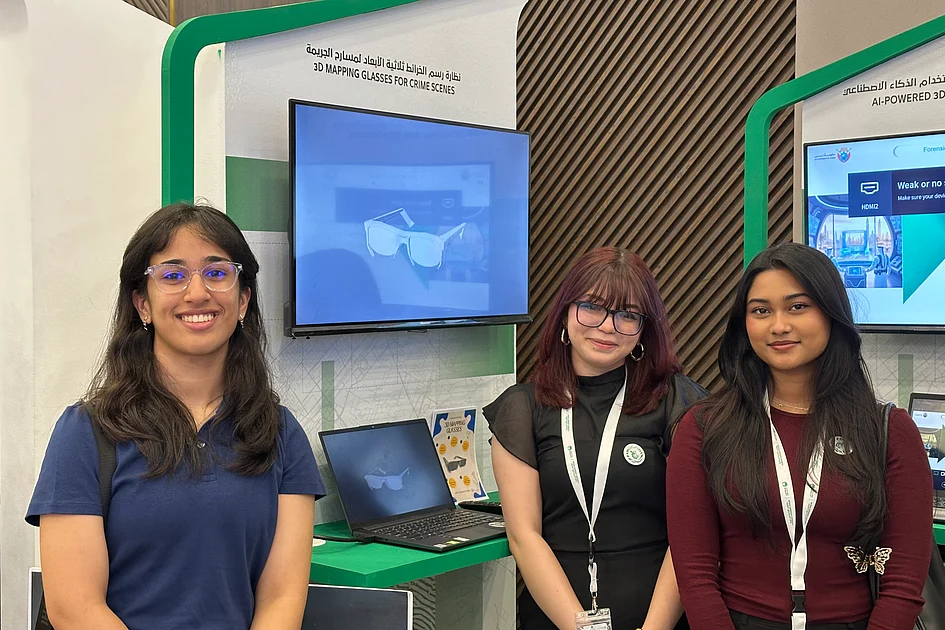
    Under the theme ‘Innovate. Connect. Solve.’, the forum showcased remarkable advancements including AI-enhanced 3D mapping glasses developed by Amity University Dubai students. The team of Khadija Ashraf, Cerusha Pereira, Neola D’Souza, and Rim Issa created eyewear equipped with LiDAR sensors that generate instant three-dimensional crime scene replicas, eliminating traditional sketching and photographic methods. The intelligent system incorporates artificial intelligence to automatically identify and tag evidence such as weapons, shell casings, and footprints through voice command recognition. A groundbreaking ‘twin live viewing’ feature enables real-time collaboration between field investigators and headquarters-based experts, with future iterations planned to include virtual reality reenactments for courtroom presentations.

    Concurrently, Amity University student Farhana Shaju presented a revolutionary Smart Wearable Biosensor Patch designed for rapid narcotics detection. The innovative patch analyzes sweat samples to identify substances of abuse within five minutes, dramatically accelerating the screening process for law enforcement officers. This technology offers particular utility in identifying impaired drivers and conducting preliminary cadaver examinations, providing crucial initial results while maintaining laboratory confirmation as the definitive standard.

    Beyond crime scene applications, Al Ain University software engineering students demonstrated iCare—an AI-driven mobile application addressing medication management challenges for elderly and disabled individuals. Developed by Abrar Hamdi, Mohammed Tariq, Shahd Adel, and Umama Binte Sayed, the system employs optical character recognition to interpret medical prescriptions, incorporates an intelligent chatbot for user assistance, and delivers customized reminder notifications to prevent missed doses with automatic rescheduling capabilities.

    The forum highlighted Dubai Police’s strategic commitment to academic partnerships and technological innovation in forensic sciences. By engaging directly with the next generation of forensic specialists, the event provided a compelling vision of how digital transformation will continue to revolutionize justice administration and public safety mechanisms across the UAE and potentially global law enforcement communities.


  • Institute to build space data centers

    Institute to build space data centers

    Beijing’s aerospace technology sector is pioneering an innovative solution to the global computing power shortage exacerbated by artificial intelligence’s exponential growth. The Beijing Astro-future Institute of Space Technology, under director Zhang Shancong’s leadership, is developing orbital data centers that leverage the unique advantages of space environment to overcome terrestrial limitations.

  • Horta Inta-A sworn in as transitional president of Guinea-Bissau

    Horta Inta-A sworn in as transitional president of Guinea-Bissau

    In a significant political development, senior military officer Horta Inta-A assumed the role of transitional president of Guinea-Bissau on Thursday, November 27, 2025, following the armed forces’ declaration of complete state control. The swearing-in ceremony, broadcast live on national radio, marks a pivotal moment for the West African nation.

    Inta-A, previously serving as chief of staff of the Guinea-Bissau army and later as special chief of staff to the president since 2023, pledged to address the country’s persistent challenges during his one-year transitional term. In his inaugural address, he emphasized that the military’s intervention was necessary to ‘prevent the disintegration of the state’ amid escalating political instability.

    The newly installed leader outlined his administration’s priorities, committing to combat widespread corruption and drug trafficking—two critical issues that have historically undermined national stability and governance. Inta-A extended an appeal for cooperation to all citizens and political factions, urging collective efforts to ensure an orderly transition process.

    This political shift occurred just one day after the armed forces announced their complete takeover of state power through a national television broadcast. Military authorities justified their actions as a necessary response to alleged attempts by certain political figures to destabilize the country, though specific details about these alleged destabilization efforts were not provided.

    The international community continues to monitor the situation closely as Guinea-Bissau, with its history of political volatility and military interventions, enters this period of transitional governance under military leadership.

  • China expands state-level job services markets to boost labor allocation

    China expands state-level job services markets to boost labor allocation

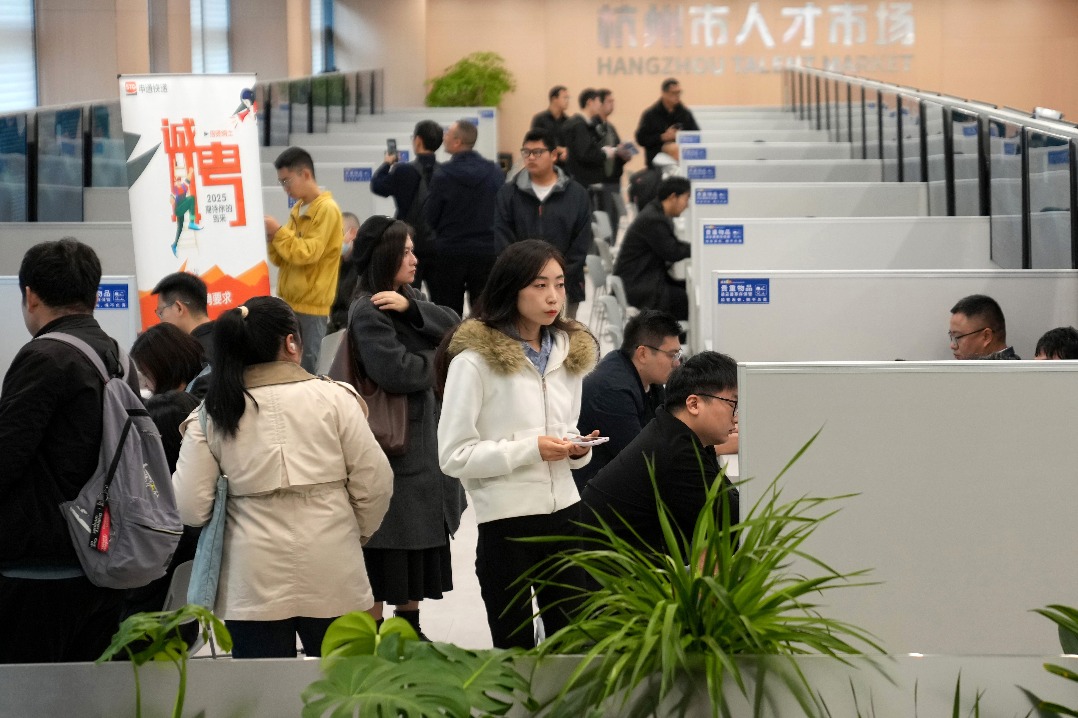
    China has strategically developed an extensive national infrastructure of talent markets and human resource service centers to enhance labor allocation across key economic sectors. Official data released Thursday reveals the establishment of 36 national talent markets alongside 29 specialized human resource industrial parks, creating a comprehensive framework aimed at addressing employment challenges and workforce distribution.

    The announcement came during a press briefing preceding the third National Human Resource Services Industry Development Conference in Wuhan, Hubei Province. This network of national facilities, complemented by regional specialized parks, constitutes an integrated service system specifically designed to optimize employment services and industrial talent allocation nationwide.

    Since the commencement of the 14th Five-Year Plan period (2021-2025), China’s employment services sector has experienced substantial growth, now providing essential services to approximately 300 million workers and over 50 million employers annually. This expansion reflects the government’s concerted effort to modernize labor market mechanisms and improve workforce mobility.

    Authorities are particularly focused on aligning human capital with critical economic drivers, including advanced manufacturing capabilities, digital economy initiatives, and modern service industries. This strategic approach aims to bridge persistent gaps between talent availability and sector-specific requirements, thereby mitigating labor shortages in vital industries.

    The upcoming Wuhan conference (November 28-29) will demonstrate these initiatives through practical application, featuring a large-scale recruitment drive offering more than 40,000 positions targeting university graduates and overseas students. Opportunities will concentrate on emerging fields such as artificial intelligence development and the burgeoning low-altitude economy sector, highlighting China’s commitment to future-oriented workforce development.

  • Asian alliance to preserve cultural heritage draws global attention

    Asian alliance to preserve cultural heritage draws global attention

    A transnational initiative dedicated to safeguarding Asia’s cultural treasures is capturing worldwide interest as it expands its global footprint and deepens international collaboration. The Alliance for Cultural Heritage in Asia, initially established in 2021, has evolved into a significant force in heritage conservation, attracting participation from diverse nations beyond the Asian continent.

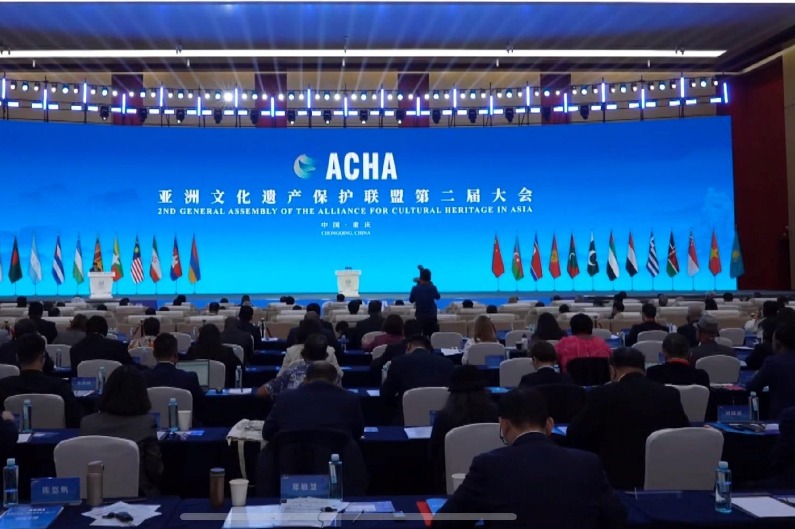
    During its recent second general assembly and third council meeting in Chongqing, the alliance convened over 200 specialists and representatives from 33 countries and international organizations. The gathering served to evaluate progress and chart future directions for the collaborative framework.

    Rao Quan, Director of China’s National Cultural Heritage Administration, emphasized the alliance’s growing influence: “We are pleased to observe how the alliance has transcended geographical limitations and amplified its global impact. It facilitates not only intra-Asian cultural exchange but also fosters genuine dialogue between Asia and other world regions.”

    The alliance has generated substantial practical outcomes since its inception, enabling advancements in ancient civilization research, collaborative archaeological excavations, historical site rehabilitation, and museum professional development. China alone has implemented 11 heritage preservation and restoration initiatives with nations including Cambodia, Uzbekistan, Myanmar, Nepal, Kyrgyzstan, and Kenya, while conducting 49 joint archaeological investigations with 28 countries internationally.

    Notable projects include the Sino-Uzbek collaboration restoring Khiva’s ancient city to its former vitality and ongoing archaeological research between China and Saudi Arabia at al Serrian, a port ruin site near Mecca that reveals new insights about the ancient Maritime Silk Road.

    Myanmar’s Vice-Minister of Religious Affairs and Culture, Nu Mra Zan, highlighted the tangible benefits of international cooperation, citing Chinese assistance following earthquake damage to Mandalay’s historical monuments. “This demonstrates how international collaboration helps address our challenges,” she noted. “Our experiences confirm that cooperative efforts yield optimal outcomes.”

    The Chongqing Consensus emerged from the assembly, advocating enhanced regional cooperation to address shared risks, increased application of scientific and technological solutions, and mutual learning to advance collaborative development.

    Significantly, the alliance welcomed new participants including Greece, Kenya, Cuba, and Malaysia, bringing total membership to 16 member states, four partner states, and four observer states. Despite its European location, Greece recognizes shared values with the alliance, as articulated by Despoina Zernioti of Greece’s Corfu Museum of Asian Art: “Greece—a culture with global influence—shares the alliance’s commitment to protecting, understanding, and promoting cultural heritage.”

    Concurrently, Egypt and China signed agreements strengthening collaboration in world heritage nomination, management, and conservation, signaling deeper future cooperation in heritage documentation, artifact preservation, site management, capacity building, and risk mitigation.

  • ‘Scared and desperate’ – the South Africans who claim they were duped by Zuma’s daughter to fight for Russia

    ‘Scared and desperate’ – the South Africans who claim they were duped by Zuma’s daughter to fight for Russia

    A disturbing case of international deception has emerged as South African citizens find themselves trapped in Ukraine’s war-torn Donbas region after being allegedly recruited under false pretenses. Multiple sources confirm that approximately two dozen men were lured to Russia with promises of security training programs, only to be forced into combat operations alongside Russian forces.

    The recruitment scheme allegedly involves high-profile political figures, including Duduzile Zuma-Sambudla, daughter of former South African President Jacob Zuma and current MP for the uMkhonto weSizwe (MK) opposition party. While Zuma-Sambudla denies intentional wrongdoing, claiming she herself was deceived, victims’ families provide chilling accounts of their relatives’ ordeal.

    One identified only as ‘Sipho’ for safety reasons described through voice messages how recruits were presented with contracts in Russian they couldn’t understand, then transported to frontlines within Ukraine. His brother Xolani, campaigning for his return in South Africa, reveals the group initially believed they were signing up for legitimate bodyguard training for the MK party.

    The situation has triggered formal investigations by South Africa’s elite Hawks police unit, examining potential charges including human trafficking, illegal recruitment, and fraud. The case has further complicated diplomatic relations, with the South African government acknowledging distress calls from 17 confirmed citizens in Donbas but remaining largely silent on rescue efforts.

    Family members report the recruits face extreme danger, with one reportedly wounded by shrapnel and others describing regular drone attacks. The victims consistently express desperation to return home, with Sipho noting in audio recordings: ‘Things you see in the movies, we’re seeing it live.’

    The scandal has exposed internal divisions within the Zuma family, with half-sister Nkosazana Zuma-Mncube filing police reports alleging her relative knowingly deceived recruits. The MK party has scheduled a press conference to address what it terms the ‘Russia-Ukraine matter,’ while international attention grows regarding mercenary recruitment practices in conflict zones.

  • Chancay Port becomes new trade gateway

    Chancay Port becomes new trade gateway

    Peru’s Chancay Port has completed its inaugural year of commercial operations, establishing itself as a pivotal maritime gateway transforming Sino-Latin American trade dynamics. The facility, which marked its first anniversary on November 15, has rapidly gained significance amid growing cargo flows between China and South American nations.

    According to Carlos Aquino, Professor of International Economics at Peru’s National University of San Marcos, the port is already reshaping regional trade patterns. “The volume of cargo departing directly for China continues to increase, encompassing not only Peruvian exports but also goods from Ecuador, Chile, and Colombia,” Aquino noted. This direct routing reduces transit duration by approximately ten days, yielding an estimated 30 percent reduction in freight expenses.

    Customs data reveals substantial trade growth through the port, with Chinese imports via Chancay exceeding $759 million in value during 2025. Vehicles and machinery constitute the primary commodities, while 79 percent of customs declarations designate China as their destination, underscoring the deepening commercial relationship.

    Javier Eduardo Franco Castillo, Peru’s Customs Administration Chief, emphasized the nation’s commitment to enhancing trade security and efficiency, stating: “We continue to facilitate international logistics chains and combat smuggling to support trade with the world’s main economies, including China, our principal trading partner.”

    The port’s emergence has stimulated competitive responses within Peru’s maritime sector. The country’s largest port at Callao is undertaking infrastructure upgrades to remain competitive, now offering direct connections to Chinese and Asian ports. This heightened competition has already reduced freight costs for both Peruvian exporters and importers.

    Beyond port operations, Chancay’s influence extends to broader infrastructure development. Aquino highlighted how increased goods movement is revitalizing proposals for highway projects and the long-discussed bi-oceanic railway connecting Peru and Brazil. Additionally, two export-processing zones planned near the port could enable Peru’s transition from raw material exports to value-added manufacturing.

    The port’s improved efficiency particularly benefits perishable agricultural exports including blueberries, grapes, and avocados, while Chinese imports such as electronics, automobiles, and industrial machinery have become more affordable. Chancay has also emerged as a crucial entry point for Chinese electric vehicles expanding across South American markets.

    Aquino concluded that Peru is evolving into both the entry point for Chinese and Asian goods in South America and the exit port for South American exports to China and Asian markets, positioning Chancay to become a major logistics hub connecting China and Latin America.

  • Canadian minister resigns from cabinet over oil pipeline deal

    Canadian minister resigns from cabinet over oil pipeline deal

    In a dramatic display of political dissent, Canadian Languages Minister Steven Guilbeault tendered his resignation from Prime Minister Mark Carney’s cabinet on Thursday, directly opposing a newly signed oil pipeline agreement between the federal government and Alberta province.

    The resignation occurred mere hours after Ottawa and the oil-rich western province finalized a memorandum of understanding to advance development of a private-sector pipeline project. This infrastructure initiative aims to transport a minimum of 1 million barrels daily of low-emission bitumen from Alberta’s oil sands to international markets.

    Guilbeault, who has served as official languages minister since May and held the Canadian identity and culture portfolio since March, articulated his opposition through a formal statement posted on social media platform X. ‘I remain one of those for whom environmental issues must remain front and center,’ declared the former environment and climate change minister. ‘That is why I strongly oppose the Memorandum of understanding between the federal government and the government of Alberta.’

    The controversial agreement confirms federal support for a pipeline that would enable bitumen exports from a strategic deep-water port to Asian markets, representing a significant expansion of Canada’s energy export capabilities. Guilbeault’s departure highlights the ongoing tension within the Canadian government between economic development priorities and environmental commitments, particularly concerning fossil fuel infrastructure projects.

    The timing of this resignation, occurring on the same day as the agreement’s signing, delivers a substantial political blow to the Carney administration and underscores the deep ideological divisions within the governing coalition regarding climate policy and resource development.

  • S. Korea’s 4th rocket launch successful

    S. Korea’s 4th rocket launch successful

    South Korea has triumphantly entered a new chapter in its space exploration journey with the successful fourth launch of its domestically developed Nuri space rocket on Thursday. The landmark event, which occurred at 1:13 AM from the Naro Space Center in Goheung, represents a significant milestone in the nation’s aerospace capabilities and marks a strategic shift toward private sector integration in space technology development.

    The 200-metric-ton launch vehicle, carrying a 516-kilogram primary satellite and twelve secondary payloads, achieved orbital insertion despite experiencing a minor delay due to abnormal pressure sensor readings prior to liftoff. President Lee Jae-myung celebrated the achievement as demonstrative of South Korea’s technological self-reliance and a foundation for future generations, pledging continued government support for scientific innovation and space sector investment.

    This launch distinguishes itself as the first to feature comprehensive private sector participation throughout the entire process. Hanwha Aerospace spearheaded the manufacturing and assembly operations using government-transferred technology, under the supervision of the Korea Aerospace Research Institute. This collaboration signals a deliberate transition from government-led to private-driven space industry development, which Deputy Prime Minister Bae Kyung-hoon characterized as a crucial turning point for the nation’s space ecosystem.

    The primary satellite will conduct advanced space science research, including detailed observations of Earth’s auroras. According to Professor Shin Dong-hyuk from the Korea Advanced Institute of Science and Technology, this research will significantly enhance GPS accuracy in South Korea by improving space weather monitoring capabilities.

    The Nuri program, initiated in 2021, has demonstrated remarkable progress following an initial unsuccessful launch. The current mission represents increased payload capacity compared to previous launches. With additional launches planned for 2026 and 2027, and potential expansion into 2028, South Korea is positioning itself as an emerging force in the global space industry.

  • Death toll from floods in Thailand reach 145 as receding water reveals widespread damage

    Death toll from floods in Thailand reach 145 as receding water reveals widespread damage

    BANGKOK — Catastrophic flooding across twelve southern Thai provinces has resulted in at least 145 confirmed fatalities, according to official statements released Friday. The devastating deluge, triggered by torrential rainfall, has impacted approximately 1.2 million households and 3.6 million residents throughout the region.

    Government spokesperson Siripong Angkasakulkiat confirmed during a Bangkok news conference that the majority of casualties occurred in Songkhla province, which alone recorded 110 deaths. The death toll saw a significant increase as receding floodwaters enabled rescue teams to access previously submerged residential areas, particularly in Hat Yai, the south’s largest urban center.

    While flood levels have subsided across most affected zones, certain locations continue to experience elevated water levels. The Meteorological Department reported decreased rainfall but issued ongoing thunderstorm warnings for specific areas.

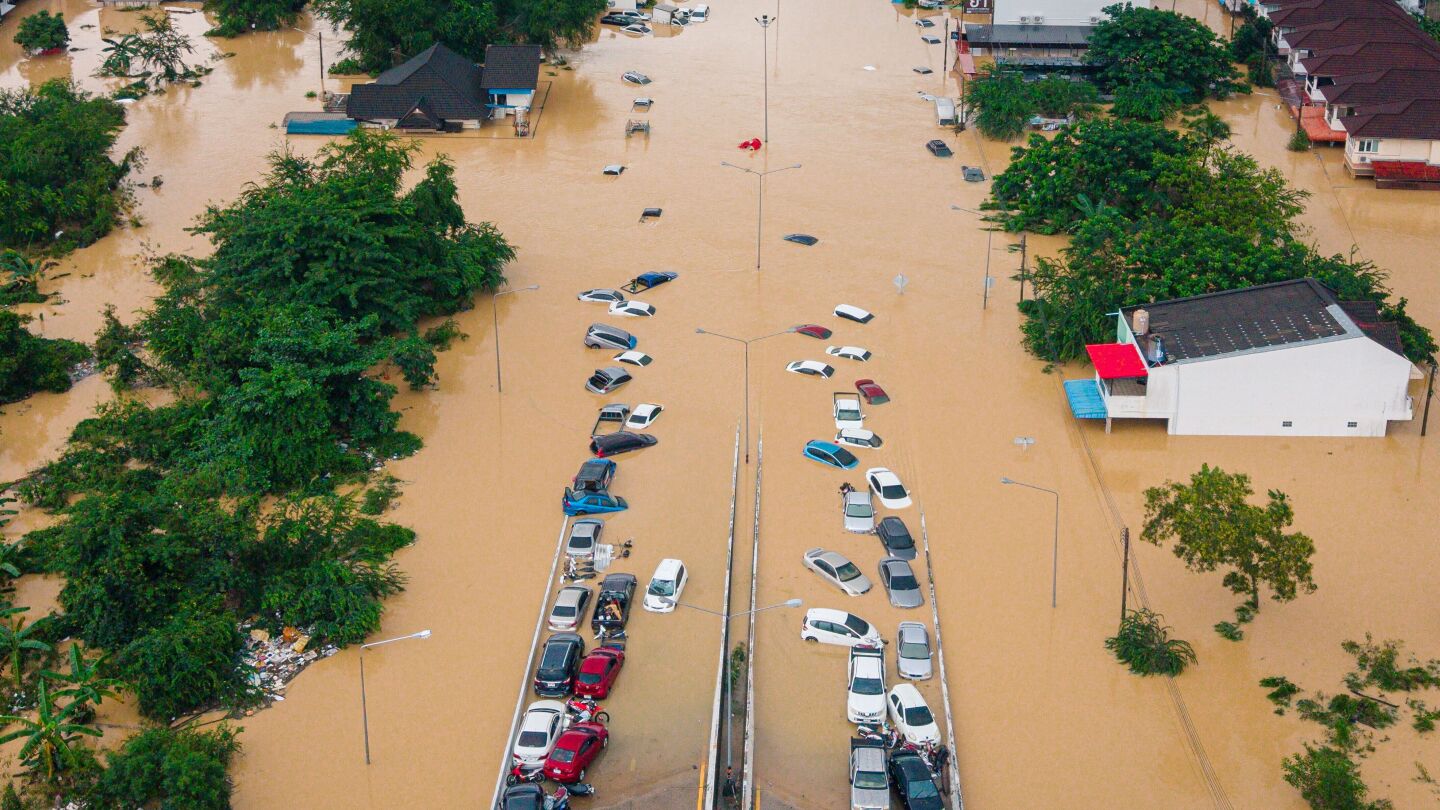
    The scale of destruction became increasingly visible as waters retreated, revealing overturned vehicles, collapsed infrastructure, and extensive debris accumulation. Powerful currents had swept away automobiles, leaving them stacked atop one another, while damaged roads and fallen power poles rendered many areas inaccessible. Household appliances and personal belongings lay scattered throughout flooded neighborhoods, illustrating the overwhelming force of the floodwaters that stranded thousands of residents and submerged low-rise buildings.