作者: admin

  • Experts share ideas on advancing human rights

    Experts share ideas on advancing human rights

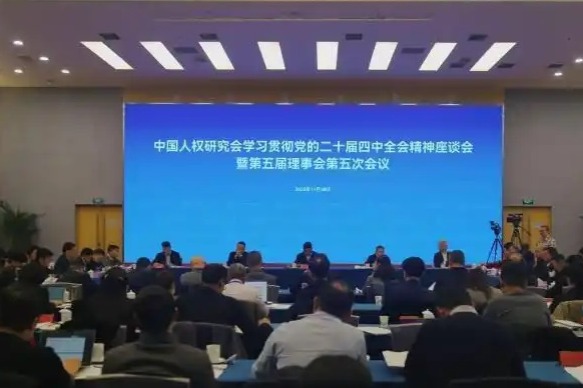
    China is poised to significantly advance its human rights framework through both domestic policy implementation and enhanced international cooperation, according to expert discussions at a major symposium organized by the China Society for Human Rights Studies on Friday. The gathering brought together over 170 specialists from diverse sectors to formulate strategies for human rights advancement during the nation’s critical transition between five-year planning periods.

    The symposium focused on implementing directives from the fourth plenary session of the 20th Central Committee of the Communist Party of China, which emphasized comprehensive human rights development as a cornerstone of national policy. Padma Choling, president of the hosting organization, highlighted that the Recommendations for the 15th Five-Year Plan period (2026-30) establish promoting all-around human rights advancement as a key national priority.

    Central to China’s human rights philosophy is the principle that “the ultimate human right is for people to lead a happy life,” Choling stated. This approach emphasizes ensuring equitable distribution of modernization benefits and improving welfare through sustainable development. The strategy includes strengthening international cooperation, particularly with Belt and Road Initiative partners and Global South nations, while increasing China’s participation in multilateral institutions and global rule-making processes.

    Legal experts addressed judicial protections, with Li Xiao, former inspector of the Supreme People’s Court research office, emphasizing the need to balance leniency and severity in criminal enforcement while rigorously maintaining evidence-based judgments and presumption of innocence principles.

    Rural development received significant attention, with China Foundation for Rural Development deputy secretary-general Ding Yadong outlining programs that ensure farmers’ dignity through improved living conditions and development opportunities. These initiatives include expanding agricultural machinery access and providing skills training to support rural revitalization.

    Media representation emerged as another critical focus. China Daily deputy editor-in-chief Xing Zhigang noted that while Western media narratives often dominate global human rights discourse, support from Global South countries for China’s human rights achievements continues growing. He advocated for proactive agenda-setting to counter what he described as hypocritical Western narratives with double standards.

    In the technological sphere, Beijing Institute of Technology’s science and technology human rights center director Qi Yanping called for integrating human rights ethics and legal values into digital governance. This includes refining information rights standards and embedding dignity concepts into technology design to ensure digital intelligence serves broader societal benefits.
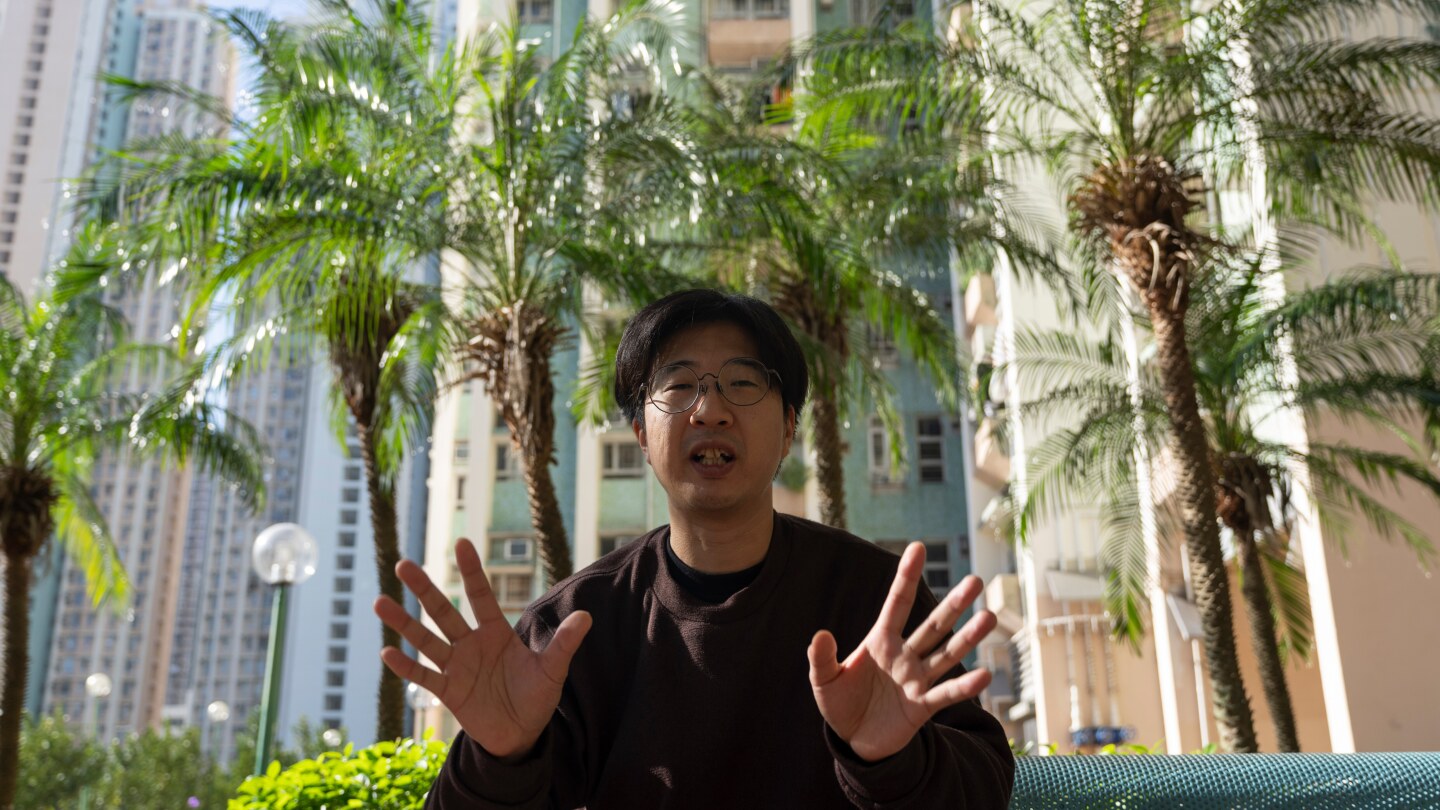

  • Grateful to be alive, residents who escaped the Hong Kong apartment blaze wonder what comes next

    Grateful to be alive, residents who escaped the Hong Kong apartment blaze wonder what comes next

    A catastrophic fire that erupted Wednesday afternoon at Hong Kong’s Wang Fuk Court complex has been extinguished after raging for over 40 hours, marking the city’s most devastating blaze since 1948. The inferno, which engulfed seven of the complex’s eight buildings, has officially claimed 128 lives with approximately 200 residents still unaccounted for, according to latest reports.

    The tragedy unfolded with terrifying speed when flames ignited on bamboo scaffolding shrouded in nylon netting—safety installations meant for ongoing construction work. The fire rapidly consumed polystyrene panels covering windows, shattering glass and creating pathways for the blaze to penetrate residential units. Strong winds facilitated the fire’s jump between buildings in the densely packed complex.

    Authorities have launched a comprehensive investigation into multiple safety failures, including whether the scaffolding netting met fire-resistant standards, why windows were covered with highly flammable foam panels, and why building fire alarms remained silent during the emergency. Law enforcement has already apprehended eleven individuals, including construction company directors, engineering consultants, scaffolding subcontractors, and renovation project managers.

    Resident William Li, 40, described his narrow escape from his second-floor apartment after being alerted by his wife. “Everything went black before my eyes,” Li recounted to The Associated Press. “I thought to myself: I’m in serious trouble.” Despite initially detecting no signs of danger, Li found himself trapped by impenetrable black smoke when he attempted to exit his unit just eight minutes after the warning call.

    The Wang Fuk Court complex, located in Tai Po’s suburban neighborhood north of Hong Kong’s urban center, houses over 4,600 residents, more than one-third of whom are seniors aged 65 or older according to Midland Realty data based on the 2021 census. The district represents one of Hong Kong’s designated “new towns” developed in the late 1970s, accommodating approximately 300,000 of the city’s 7.5 million residents across diverse socioeconomic backgrounds.

    Survivors now face devastating losses and uncertain futures. Seventy-year-old Ding Chan, who worked multiple jobs while her husband worked as an electrician, lamented the destruction of their home that took over a decade to pay off. “Where am I going to stay?” she asked, expressing the anxiety shared by hundreds displaced by the disaster.

    The government has activated emergency assistance protocols, while community support has emerged through massive volunteer efforts and donations. Approximately 900 residents were relocated to emergency shelters, with off-duty medical professionals, social workers, and counselors providing critical support.

    Li documented his harrowing experience on social media, generating overwhelming community response with his post receiving over 1,000 comments and nearly 10,000 shares. His account described hearing explosions, considering jumping from his window, and ultimately sheltering two disoriented neighbors while awaiting rescue. Firefighters eventually reached his unit via scaffolding, conducting daring rescues amid falling debris and extreme heat.

    The emotional toll was palpable during Li’s reunion with his family. “My wife cried until her tears were completely dry,” he shared. “My daughter immediately rushed over to hug me saying ‘daddy didn’t die.’”

    Despite the outpouring of immediate support, residents face long-term challenges. Li noted the practical limitations of aid: “No matter how many supplies are given, they are of little use—we can only carry what our two hands can hold.” The incident has raised urgent questions about construction safety standards and emergency preparedness in Hong Kong’s densely populated residential areas.

  • Private firm enters missile production

    Private firm enters missile production

    In a significant development within China’s defense technology sector, private aerospace enterprise Lingkong Tianxing Technology has entered the hypersonic weapons arena with its newly unveiled YKJ-1000 missile system. This advancement marks a notable expansion beyond the traditionally state-dominated defense contracting landscape.

    The Beijing-based company publicly demonstrated the YKJ-1000 system through actual launch footage released on its official WeChat platform. The visual documentation reveals a sophisticated two-stage weapon system comprising a booster rocket and a hypersonic glide vehicle equipped with dual engines. The missile achieves remarkable performance parameters with a maximum operational range of 1,300 kilometers and peak velocity reaching Mach 7 (approximately 8,575 km/h), while maintaining a powered cruise duration of six minutes.

    Notably, the system features autonomous launch capability from containerized units, eliminating dependency on external support infrastructure. The demonstration footage illustrates the missile’s advanced operational capabilities, including mid-flight trajectory adjustment, autonomous navigation, and evasive maneuverability against naval defense systems. Additional testing sequences confirm successful terminal phase target engagement in desert environments.

    Company representatives have addressed circulating speculation regarding production costs, clarifying that internet claims of a 700,000 yuan (approximately $99,000) per-unit price are inaccurate. However, the firm has developed innovative manufacturing approaches utilizing standardized industrial components that enable cost-effective mass production compared to traditional aerospace-grade custom parts.

    Defense analyst Wu Peixin contextualized the system’s strategic value, noting that such hypersonic platforms create scalable defensive networks that can complement more sophisticated systems like the DF-17 while effectively depleting adversaries’ expensive interceptor inventories.

    The baseline YKJ-1000 has commenced mass production, with an enhanced intelligent variant incorporating artificial intelligence for decision-making and swarm coordination capabilities currently under development. This achievement precedes the company’s planned 2026 test flight of its ‘Cuantianhou’ supersonic technology demonstrator, which will incorporate revolutionary ram-rotor detonation engine technology.

  • Russian attacks kill 2 in Kyiv as diplomatic efforts to end the war in Ukraine gain momentum

    Russian attacks kill 2 in Kyiv as diplomatic efforts to end the war in Ukraine gain momentum

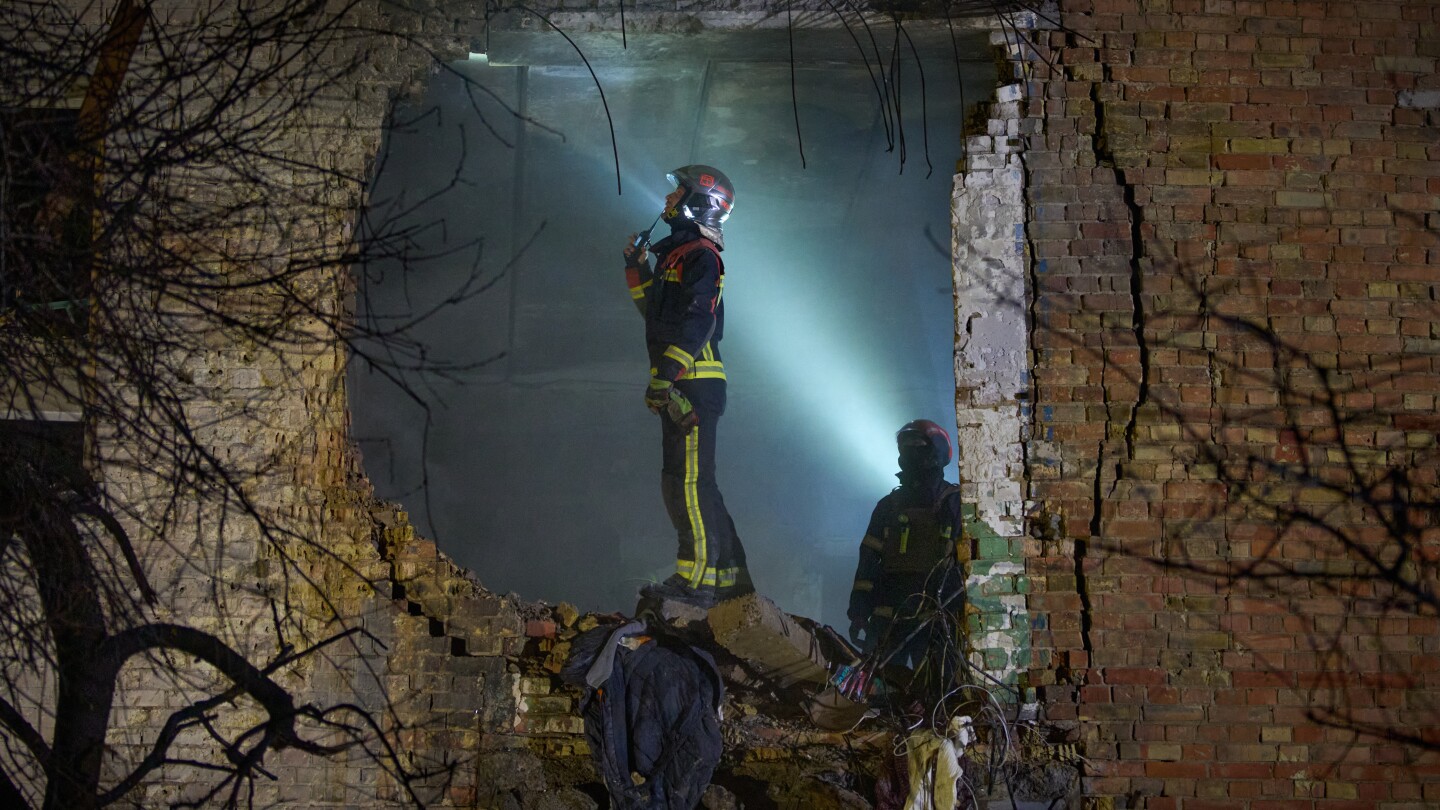
    KYIV, Ukraine — A deadly barrage of Russian missiles and drones struck Ukraine’s capital in the early hours of Saturday, resulting in multiple casualties and infrastructure damage just as diplomatic efforts to end the conflict intensified. According to Kyiv’s military administration, the assault killed at least two civilians and wounded 29 others, with falling debris from intercepted drones causing significant damage to residential structures in the western districts.

    The attack coincided with preparations for high-stakes peace negotiations between Ukrainian and American officials scheduled for the weekend. An anonymous official from Ukraine’s presidential administration confirmed that diplomatic teams were set to meet in the United States, followed by anticipated talks between U.S. representatives and Russian President Vladimir Putin in Moscow later next week.

    This diplomatic push follows former President Donald Trump’s recently unveiled 28-point peace proposal, which has drawn criticism for its perceived favorability toward Russian interests. The proposal prompted urgent consultations from European leaders concerned about the implications of potential concessions to Moscow.

    In a related development, Ukrainian President Volodymyr Zelenskyy announced the resignation of his chief of staff Andrii Yermak, who also served as lead negotiator with U.S. counterparts. The departure followed an unprecedented anti-corruption search of Yermak’s residence, creating potential complications for Ukraine’s negotiating position during a period of intense diplomatic pressure.

    Trump confirmed the deployment of special envoys Steve Witkoff and Army Secretary Dan Driscoll to facilitate discussions with Russian and Ukrainian officials respectively, while suggesting the possibility of direct leader-level talks pending progress in preliminary negotiations.

  • Natl capacity to recycle now exceeds supply

    Natl capacity to recycle now exceeds supply

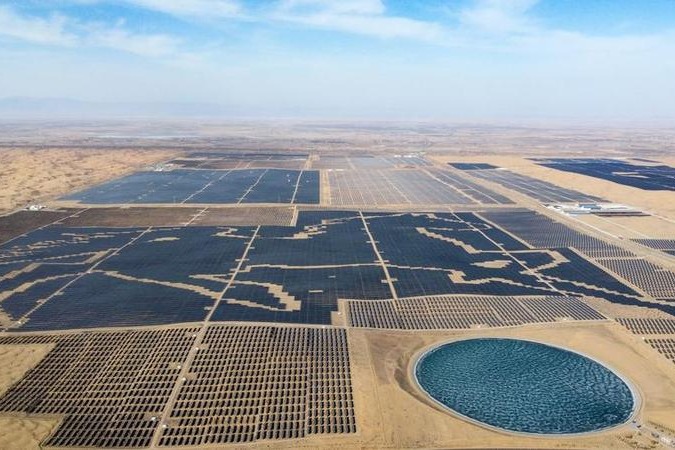
    China has developed substantial recycling capabilities for retired renewable energy equipment that now significantly exceed the nation’s current waste volumes, leaving specialized recycling plants operating below capacity. This revelation came from Guo Yijun, Director-General of the Ministry of Ecology and Environment’s Department of Solid Wastes and Chemicals, during a recent press conference.

    According to official projections, China anticipates processing approximately 1.5 to 2 million metric tons of decommissioned photovoltaic modules, 500,000 tons of wind turbine blades, and 1 million tons of power batteries by 2030. These estimates, however, are based on product lifespans and may not fully reflect actual disposal levels as some equipment will find secondary markets for reuse.

    The nation’s recycling infrastructure has expanded rapidly, with current annual capacity reaching approximately 2 million tons for solar panels and about 1 million tons for wind turbine components. Additionally, 148 Ministry of Industry and Information Technology-certified companies now possess a combined annual capacity of 2.5 million tons for processing discarded power batteries.

    Guo addressed concerns that China’s rapidly expanding renewable energy sector might generate unmanageable waste streams, noting that the current reality demonstrates the opposite situation—recycling capacity outstrips supply. He described the phenomenon using the Chinese expression “cannot eat their fill,” indicating recycling facilities are operating below their potential.

    The official also highlighted China’s robust capacity for recycling conventional discarded products, including home appliances and vehicles. More than 90 qualified enterprises with a combined annual capacity of 180 million units recycled approximately 95 million home appliances in 2024, generating nearly 2 million tons of recycled materials. Similarly, China’s network of over 1,900 certified end-of-life vehicle recycling facilities processed 8.46 million vehicles in 2024, representing a 64 percent year-on-year increase.

    Despite these advancements, Guo cautioned about emerging overcapacity risks in vehicle dismantling, noting that regional commerce authorities have repeatedly warned market participants to make rational investment decisions to prevent resource waste and disorderly competition.

  • Three days of mourning begin after Hong Kong’s deadliest fire in decades

    Three days of mourning begin after Hong Kong’s deadliest fire in decades

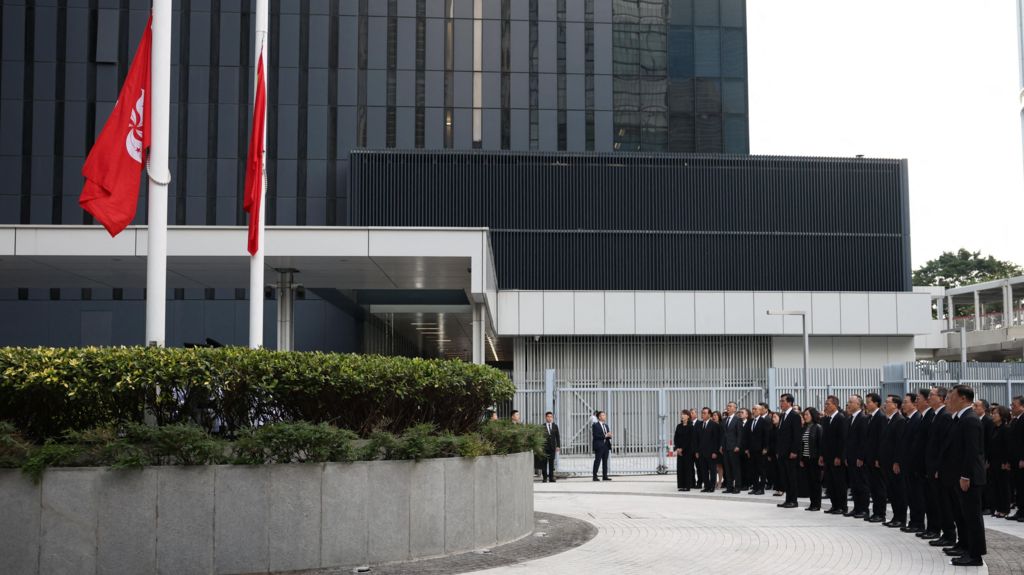
    Hong Kong has commenced an official three-day mourning period following the deadliest structural fire to strike the city in over eight decades. The solemn observance began Saturday morning with a ceremony outside government headquarters, where city leader John Lee and other senior officials stood in silent tribute for three minutes. National and regional flags were lowered to half-mast across the territory as the confirmed death toll reached 128 individuals, with hundreds more still unaccounted for following Wednesday’s devastating blaze.

    The fire rapidly consumed multiple towers within the Wang Fuk Court residential complex, originally constructed in 1983 to house approximately 4,600 residents across 1,984 apartments. Despite the efforts of more than 2,000 firefighters who battled the flames for nearly 48 hours, the inferno spread through seven of the complex’s eight tower blocks. Preliminary investigations indicate that polystyrene materials and protective netting installed during renovation work contributed to the fire’s rapid escalation, exacerbated by the bamboo scaffolding enveloping the structures.

    Authorities have launched multiple investigations into the tragedy, resulting in eleven arrests to date. Three individuals face manslaughter charges while eight others—including engineering company directors and scaffolding subcontractors—were detained Friday on suspicion of corruption related to the renovation project. The Independent Commission Against Corruption (ICAC) is leading the corruption probe amid public outrage over alleged safety violations.

    Hong Kong’s Labour and Welfare Secretary Chris Sun revealed that government inspectors had conducted 16 separate safety checks at Wang Fuk Court since renovation work began in July 2024. Residents however reported malfunctioning fire alarms and apparent negligence by the renovation contractors. The government has established public memorial sites throughout Hong Kong where citizens can pay respects and sign condolence books, as investigators continue evidence collection at the disaster scene.

  • Beijing passes new regulations to protect Great Wall

    Beijing passes new regulations to protect Great Wall

    The Beijing Municipal Government has enacted groundbreaking legislation specifically designed to safeguard one of humanity’s most iconic historical monuments. On November 28, 2025, the Standing Committee of the Beijing Municipal People’s Congress approved comprehensive new regulations that establish robust legal frameworks for the protection, management, and cultural preservation of the Great Wall segments within China’s capital territory.

    This pioneering legislation, scheduled to take effect on March 1, 2026, represents China’s first specialized regulatory framework for Great Wall conservation since the comprehensive revision of the national Law on the Protection of Cultural Relics earlier in 2025. The regulations establish precise jurisdictional boundaries encompassing not only the physical structure of the Wall itself but also extend protection to associated cultural artifacts and the surrounding environmental landscape.

    A significant aspect of the new legislation mandates enhanced collaborative preservation efforts across the Beijing-Tianjin-Hebei regional corridor and calls for coordinated conservation strategies among all provincial-level administrations along the Great Wall’s extensive route. This regional cooperation mechanism aims to address conservation challenges through a unified approach rather than fragmented local initiatives.

    The Beijing section of this UNESCO World Heritage Site presents particular conservation challenges, spanning six administrative districts—Pinggu, Miyun, Huairou, Changping, Yanqing, and Mentougou—with a combined length exceeding 520 kilometers. This portion comprises 461 distinct segments whose construction dates range from the Northern Qi Dynasty (550-557 AD) through the Ming Dynasty (1368-1644 AD). The Badaling segment, among the most visited sections, received UNESCO World Heritage designation in 1987, underscoring the global significance of these preservation efforts.

  • Death toll from floods and mudslides in Sri Lanka rises to 123, with 130 people still missing

    Death toll from floods and mudslides in Sri Lanka rises to 123, with 130 people still missing

    COLOMBO, Sri Lanka — Catastrophic flooding and devastating mudslides triggered by Cyclone Ditwah have claimed 123 lives in Sri Lanka, with approximately 130 individuals still unaccounted for, according to official reports released Saturday. The nation’s disaster management center confirmed that the severe weather event has forced nearly 44,000 residents from their homes, now seeking refuge in emergency shelters.

    The tropical cyclone, which intensified in the eastern seas bordering Sri Lanka, has unleashed relentless downpours since last week, with conditions dramatically deteriorating on Thursday. The torrential rains have submerged residential areas, agricultural fields, and critical transportation infrastructure while triggering catastrophic landslides predominantly in the central highlands renowned for tea cultivation.

    Authorities anticipate the death toll will continue to rise as emergency teams struggle to access multiple regions cut off by overnight mudslides, as evidenced by social media documentation of the widespread destruction. In response to the escalating crisis, the Sri Lankan government has implemented widespread closures of educational institutions and public offices while postponing scheduled examinations.

    Critical infrastructure has suffered extensive damage with most reservoirs and river systems overflowing their banks. Numerous roadways have been rendered impassable due to debris accumulation including rocks, mudslides, and fallen trees, prompting authorities to suspend passenger rail services and implement widespread road closures across affected regions.

    By Friday, floodwaters moving downstream from the hardest-hit central regions began inundating areas surrounding the capital city of Colombo, which had experienced relatively less rainfall. Meteorological officials indicate Cyclone Ditwah is projected to track toward India’s southern coastline by Sunday, with Sri Lanka expected to experience continued rainfall as the storm system passes over the country’s northern territories.

  • An archaeologist is racing to preserve Sudan’s heritage as war threatens to erase its cultural past

    An archaeologist is racing to preserve Sudan’s heritage as war threatens to erase its cultural past

    In the subdued lighting of Paris’s French National Institute for Art History, Sudanese archaeologist Shadia Abdrabo meticulously examines photographic evidence of Neolithic pottery dating back to 7,000 B.C. Her presence in France represents a critical emergency mission: to create a comprehensive digital inventory of Sudan’s cultural heritage while her homeland suffers devastating conflict.

    The devastating civil war between Sudan’s Rapid Support Forces (RSF) and Sudanese Armed Forces (SAF), erupting in April 2023, has precipitated a cultural catastrophe of unprecedented scale. Multiple museums have been systematically looted and destroyed, including the regional museums in El Geneina and Nyala which were nearly obliterated. Most alarmingly, Khartoum’s National Museum—housing approximately 100,000 artifacts spanning millennia—was ransacked by militias who documented their destruction through social media videos.

    This institution contained priceless treasures including prehistoric relics from the Kerma Kingdom, artifacts from the Napatan era of Kushite rule, remains of the pyramid-building Meroitic civilization, and later Christian and Islamic collections. Among the most significant losses were mummies dating to 2,500 B.C.—some of the world’s oldest and most archaeologically important—along with royal Kushite treasures.

    UNESCO has raised urgent alarms about the systematic plundering, noting the threat to Sudanese culture has reached unprecedented levels. According to cultural heritage advocate Ali Nour, protective measures proved tragically insufficient: “While applications were being drafted, sites were being emptied. While risk assessments were reviewed, entire archives vanished.”

    Abdrabo’s personal connection intensifies her mission. “I’m from Nubia, from the north, an area filled with monuments, archaeological sites and ancient life,” she explains, referencing a region that once rivaled ancient Egypt in power and wealth. Having fled Khartoum with her sisters as conditions deteriorated, she now works against time with funding until April 2026 to complete her digital preservation project.

    The challenge is monumental. Datasets arrive in various formats—spreadsheets, handwritten inventories, decades-old photographs—and she has documented merely 1,080 objects thus far, representing approximately 20% of the national museum’s collection alone. Despite support from institutions like the Louvre and British Museum, the task remains overwhelmingly solitary.

    International response has been hampered by insufficient media coverage compared to similar cultural emergencies in Afghanistan and Iraq, according to researcher Meryam Amarir. However, the recently established Sudan Cultural Emergency Recovery Fund, involving institutions like the University of Michigan’s Kelsey Museum, aims to coordinate global recovery efforts.

    Geoff Emberling of the Kelsey Museum emphasizes the historical significance: “Ancient Sudan was connected through trade and military activity with Egypt, the Mediterranean world and Mesopotamia, and was the source of much of the gold available in the region. If we’re interested in these ancient cultures, then we have to be interested in Sudan.”

    For Abdrabo, the emotional weight is palpable. “I cry when I talk about this,” she confesses. “My only goal is to bring back as much as possible, to do as much as I can for Sudan.” Beyond immediate destruction, she fears the war’s consequences—displaced populations, militia activity—will continue endangering cultural artifacts long after hostilities cease. Her database represents both a race against time and an act of cultural resistance, preserving what remains of Sudan’s heritage for future generations.

  • Pope visits Istanbul’s Blue Mosque at start of day of meetings with Turkey’s religious leaders

    Pope visits Istanbul’s Blue Mosque at start of day of meetings with Turkey’s religious leaders

    ISTANBUL, Turkey — Pope Leo XIV commenced an intensive day of diplomatic and spiritual engagements in Istanbul on Saturday with a symbolically significant visit to the iconic Blue Mosque. The pontiff, following traditions established by his predecessors, toured the magnificent Ottoman-era mosque accompanied by Turkey’s head of religious affairs, who explained the architectural details including its soaring tiled dome and intricate Arabic inscriptions.

    The visit generated particular attention regarding interfaith prayer protocols. Imam Asgin Tunca of the Blue Mosque revealed he had extended an invitation for the Pope to worship within the sacred space, describing it as ‘Allah’s house.’ While the Pope respectfully declined to pray, he expressed appreciation for the atmosphere and spiritual significance of the mosque, walking through the carpeted interior in white socks after removing his shoes.

    Notably absent from the papal itinerary was the Hagia Sophia, the UNESCO World Heritage site whose controversial conversion from museum to mosque in 2020 drew international criticism, including from the Vatican. This omission highlighted the delicate diplomatic balance of the visit.

    The day’s agenda progressed with a private meeting with Turkey’s Christian leaders at the Syriac Orthodox Church of Mor Ephrem, followed by ecumenical prayers with Patriarch Bartholomew, spiritual leader of the world’s Orthodox Christians, at the patriarchal Church of Saint George.

    The visit built upon Friday’s historic gathering in Iznik, where Pope Leo joined Christian leaders at the site of the A.D. 325 Council of Nicaea to mark its 1,700th anniversary. Standing among the ancient ruins, the religious leaders recited the Nicaean Creed—the foundational statement of Christian faith produced by the original council that remains universally accepted across most Christian denominations.

    The Pope emphasized the urgent need to ‘overcome the scandal of divisions’ and nurture unity, particularly during times ‘marked by many tragic signs’ threatening human dignity. This gathering represented a significant moment in the centuries-long effort to reunite Christianity, bringing together Catholic, Orthodox, and other Christian representatives at the very location where their shared creed originated when Eastern and Western churches were still united.

    The visit concluded with a Catholic Mass at Istanbul’s Volkswagen Arena for Turkey’s small Catholic community, numbering approximately 33,000 in a predominantly Sunni Muslim nation of 85 million people.